Month: October 2013

London Falling by Paul Cornell

Posted October 7, 2013 by Michael @ Knowledge Lost in Fantasy / 0 Comments

London Falling by Paul CornellTitle: London Falling (Goodreads)
Author: Paul Cornell
Series: Shadow Police #1
Published: Tor, 2012
Pages: 400
Genres: Fantasy
My Copy: Library Book

Buy: AmazonBook DepositoryKindle (or visit your local Indie bookstore)

Detective Inspector James Quill is about to complete a major drag bust, the type of bust that will launch his career. Then his prize witness went and got himself killed in custody. This mysterious death leads Quill to be recruited by intelligence analyst Lisa Ross into a special CID unit. The murder of his witness suspect Rob Toshack was not a normal one and soon Quill and the team find themselves investigating London’s sinister magical underground.

I’ve said this before, I have a hard time with fantasy but I overcome that by reading books like London Falling. This is a dark and gritty London police procedural/urban fantasy novel; I read it for the mystery and it’s an easy way into the world of fantasy. I’ve had some decent success with this tactic and now I’m faced with the problem of reading urban fantasy and not fantasy.

Let’s get all excited about the author for a moment. For those who don’t know who Paul Cornell is, he has written for Marvel and DC comic books as well as on the TV shows Robin Hood, Primeval, Casualty, Holby City and Coronation Street. The most important achievement and all that really matters is his involvement on Doctor Who; even writing a number of the novels and creating a spin off companion in Bernice Summerfield.

I will admit that I picked this book up solely based on the Doctor Who involvement but I read it because of the dark mystery. I don’t know what it is about English police procedures but for me I think they are far superior; they are not afraid to go dark and the whole police culture over in London in particular is fascinating. With so many cameras filming people’s every move it is interesting to see that the crime rate is still high. I suppose there are not enough men to watch and police every camera but the whole scene fascinates me.

I’ve read the first book in the Ben Aaronovitch series and while that was good, I found this was better. Aaronovitch adds humour to his novel and Peter Grant is a blundering rookie, whereas James Quill is as hard-boiled as they come and you know how much I enjoy that.  The only major issue I had was because this novel tells the story of the CID unit of four people, it is told in a third person perspective and I like the first person perspective in a novel like this just so I can get into the protagonist’s head. This wasn’t a major problem, more of a personal preference.

The book starts off as a police procedural and near the start I was hoping it would turn into something like The Wire but as the magical elements slowly got introduced the book departed from that whole feel and turned into a real urban fantasy affair. The book has a lot of flaws but I enjoyed the noir-ish style and was willing to forgive any shortcomings.

I believe this is the making of a new urban fantasy series and book two, The Severed Streets comes out in April next year.  If you are interested in London based police procedurals and want to try an urban fantasy novel then this is the one to go for you and obviously if you enjoy The Dresden Files series, I would recommend this one as well. It is rare for me to find a series to be excited about, I thought I had that in the Bobby Dollar series but I was disappointed with the second book, let’s hope this isn’t the case with this series too.


Player One by Douglas Coupland

Posted October 6, 2013 by Michael @ Knowledge Lost in Speculative Fiction / 0 Comments

Player One by Douglas CouplandTitle: Player One (Goodreads)
Author: Douglas Coupland
Published: Windmill Books, 2011
Pages: 246
Genres: Speculative Fiction
My Copy: Library Book

Buy: AmazonBook DepositoryKindle (or visit your local Indie bookstore)

Player One tells the story of five people trapped in an international airport during a global disaster. Over the next five hours, these lives are changed forever;  a single mother waiting for an online date, an airport cocktail lounge bartender, a pastor on the run, a cool blonde bombshell incapable of love and a mysterious person known as Player One. The novel follows the interactions of these five people as they react to the chaos as we slowly find out just what happened.

Douglas Coupland masterfully explores human interactions in the midst of a disaster as well as looking at things like human identity, religion and sociology in this sharp and to-the-point novel. Coupland is a bestselling author that writes some very easy to read post modernism and is often dealing with topics such as religion, Web 2.0 technology, human sexuality, and pop culture. This is my first Douglas Coupland novel but it isn’t the last of them. He reminds me a little of a modern Kurt Vonnegut with his philosophical approach to science fiction. Think a modern Cat’s Cradle where the disaster dealing with modern issues rather than those of the atomic age.

I’m finding this novel really hard to review because honestly, I don’t want to give anything away. This is the kind of novel you enjoy more if you don’t know too much about it. I don’t want to give the impression that this is a heavily philosophical novel, Coupland writes in a way that is accessible for readers of all ages. Almost like a YA novel but for a more serious reader you have all these ideas worth exploring; this is the stuff I have the most fun with. I just love a complex novel that seems basic on the surface but if you are willing, you can spend hours trying to analyse.

I don’t think this reads like a post-apocalyptic fiction, but it does feel like this is the right genre. The entire novel takes place in a bar over five hours and feels more like a postmodernist novel rather than anything else. I’m not going to spend time trying to work out what genres to fit this into but rather just wrap up this review.

I know this is a little short but I really don’t want to give too much away. Just tell people to try it, maybe not the type of novel for females but if you like Vonnegut or like the sound of this novel then maybe this is for you. I’ll be interested in hearing people’s thoughts on this book. I’m sorry this is a weird review but better to say too little than too much. It’s only 200 pages long so won’t take too much effort to try.


Why do I Avoid Big Books?

Posted October 5, 2013 by Michael @ Knowledge Lost in Literature / 0 Comments

I’ve talked a little about my fear of large novels previously but I think this time to revisit this topic once again. More and more large books are turning up in my to-read lists and while I’m excited to read them, a book so large often puts me off. I do read large books but it seems to be on a rare occasions. Yet there seems to be more large novels still waiting that haven’t been read. Is there any way to motivate myself or force myself to spend the time reading a book over 800 pages?

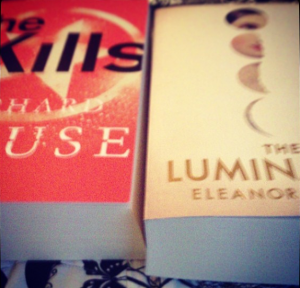
It is not the classics that have calling my name; sure I want to get to War and Peace, The Brothers Karamazov and even In Search of Lost Time but there are some very recent releases that look interesting too. Including A Naked Singularity by Sergio De La Pava, The Kills by Richard House, The Luminaries by Eleanor Catton and The Goldfinch by Donna Tartt. I’m sure there are books that aren’t classics or recent releases that are deserve to be read as well that are over 800 pages, they just feel like a huge investment.

This month I’m reading The Pillars of the Earth by Ken Follett which sits at 973 pages and while I’m enjoying it so far, that is a big investment of time. I have read some great big books, including Anna Karenina, Les Misérables and Infinite Jest but if I want to compare the time investment of those books compared to reading two books, it seems to take so much more time. Now it is your turn, let me know what your thoughts are about big books; have you read some good ones? Are there any on your shelves that are scaring you? And do you have any tips to motivate yourself.


The Mysteries of Udolpho by Ann Radcliffe

Posted October 4, 2013 by Michael @ Knowledge Lost in Classic, Gothic / 0 Comments

The Mysteries of Udolpho by Ann RadcliffeTitle: The Mysteries of Udolpho (Goodreads)
Author: Ann Radcliffe
Published: Oxford World's Classics, 1794
Pages: 693
Genres: Classic, Gothic
My Copy: Library Book

Buy: AmazonBook DepositoryKindle (or visit your local Indie bookstore)

Emily St. Aubuert was imprisoned by her evil guardian, Signor Montoni. We follow her misadventures from his dark fortress in the Apennines as she suffers physical and psychological terror. The Mysteries of Udolpho is told in a dream-like hallucination that gives the reader a sense of Emily’s psychological state.

Writing a synopsis for this novel was one of the hardest things about this review. There are so many fragments in this book which makes it difficult to summarise what this book is about. Written in four volumes, Ann Radcliffe’s gothic romance manuscript has reported to have been brought for £500 in 1794, I’m not sure if that takes into account the inflation, if not that seems huge I can’t imagine an author receiving that much for a book nowadays.

This classic novel is a quintessential gothic romance but there are fragments of so many other genres with the supernatural, psychological mysteries that fill the pages. I really wanted to enjoy this book but I found it incredible wordy and at the time I was not in the right frame of mind for it, but I will do my best to be fair. The major downfall for me was the extensive descriptions of the landscapes; in particular Pyrenees and Apennines which while stunning just caused the book to drag on.

Emily is orphaned after the death of her father and taken in by her aunty Madame Cheron who married an Italian brigand Count Montoni. As romance between Emily and Valancourt, Montoni became increasingly frustrated and Cheron disapproved, believing him too poor, until she realised his aunt is Madame Clairval. When Count Montoni and Madame Cheron married he refused to allow Emily to married as he figured he could sell her. The major theme I got from this novel was the idea of indifference and the cruelty that can go along with it. Count Montoni is the definition of the gothic villain archetype; evil, sinister, greedy, and motivated by money. Even his marriage to Madame Cheron is for mercenary reasons and tried to force her to sing over her estates.

The novel is not all dark and gothic, I did mention that this was a gothic romance.  Emily’s devotion to Valancourt is unshakeable and his heart seems to belong to her as well. He does make some mistakes and his behaviour eventually causes Emily to renounce him but even after that her thoughts were always towards him. The devotion or loyalty is always fighting against the gothic themes of this novel as you expect from a novel like this. Even the romance between Annette and Ludovico’s is not always happy, especially when he locks her up for her safety. Gothic romance is an unusual genre and you always get a sense that the entire book is fighting to counteract the romance, but then this is the type of book I enjoy.

This is a hard novel to review, there are so many plot lines and if I go off and talk about each of them this post will just go on and on. I know trying to condense the review down to a blog post doesn’t really do the book justice but I tried to focus on the main plot line. While the book felt wordy and dragged on,  this was an interesting book, one I feel needs to be revisited sometime in the future. It would be interesting what I can pull out of the book once I have improved my critical reading skills. Have you read this classic? If so I would love to know your thoughts on it.


Guest Post: The Problem with Literature

Posted October 3, 2013 by Guest Post in Guest Posts, Literature / 0 Comments

Want to be the next Shakespeare? Forget literature. Shakespeare wasn’t trying to write enlightened literary fiction. He was writing the Elizabethan equivalent of daytime television – easily digestible, relatable stories (mostly stolen from elsewhere and given a quick spit and polish to make them look and sound new) that would appeal to an audience of mostly illiterate working-class people. He didn’t care about being a great artist or creating work that would last for centuries. He just wanted to make money.
I think modern literary authors forget that. They want to create art. They want to be taken seriously. God forbid their work be mistaken for trashy pulp fiction. God forbid it be accessible. True art, according to the modern literary author, is by nature elitist. In order to understand it, one must have more sophisticated tastes than the types of people who read mass-produced romances or pulpy sci-fi thrillers. One has to be discerning. Every great literary author wants to be remembered as the next iconic genius.

Except that our last iconic genius wrote exactly the kinds of fiction these aspiring greats treat with such derision. Hamlet, King Lear, Macbeth – these might be timeless classics, but to The Bard, they were how he paid the bills, and to the people who paid to see his plays performed, they were the equivalent of a good popcorn flick. We talk about Shakespeare, Kit Marlowe, Dickens, Conan Doyle as though they were trying to create enduring works of highbrow literature. They weren’t; they were writers working at their trade. It just so happens that they were very good at it, which is why we still enjoy their work today. But they had no lofty aspirations, no desire to be seen as anything more than working writers. Oh, sure, Shakespeare enjoyed the patronage of two successive monarchs. I’m not denying that he was a master wordsmith and a well-regarded one at that. But to the people who crowded into the globe to watch his work play out on stage, he was nothing more than an entertainer. Not an artiste, not a figure of reverence. He wrote theatre for the masses. He was Elizabethan England’s answer to JK Rowling, not Vonnegut.

If Shakespeare were alive today, he’d probably be writing for some wildly successful primetime drama. Dickens and Conan Doyle, were they to stick to the serial formats they preferred, would probably find a home in graphic novels. Byron was something of a poseur, but he wrote his generation’s equivalent of Harlequin romances. Jane Austen, the Bronte sisters? They’d have been penning this summer’s hottest chick lit. And you know what? There’s nothing wrong with that. There’s absolutely nothing wrong with writing things that people will enjoy just because they’re fun. There’s nothing wrong with writing to entertain, to captivate, to thrill. And just because work is engaging and accessible, doesn’t mean it can’t also be challenging, thought-provoking and enduringly popular.

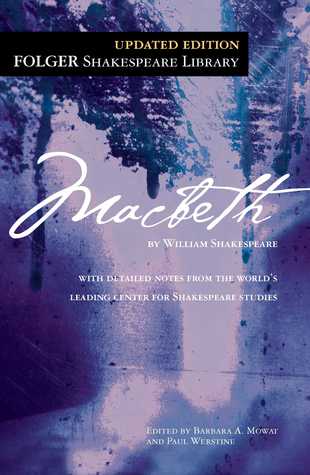
The Bard was a genius at his craft, no doubt about it. I just came home from a fantastically staged production of Macbeth, a play still enjoyed by audiences around the world centuries after Shakespeare’s death. I hope to one day pass on my love of Shakespeare to my children. But I’ll also pass on my love of fantasy novels, detective mysteries, cheesy sci-fi and even the odd paranormal romance. Why not? Fiction is meant to be fun. Sure, it can also be a lot of other things, but if we don’t enjoy reading it on some level, what’s the point?

If you’re writing for an audience of people who think enjoying fiction for its own sake is below them, you’ll never be the next Shakespeare, or the next Marlowe, or the next Dickens or Mark Twain or Agatha Christie or Jane Austen. Hell, you won’t even be the next JK Rowling (and believe me – someday, we’ll talk about her work with the same reverence we reserve for the works of long-dead white men today). Don’t focus on creating literature. Focus on creating great entertainment. Take your readers somewhere new. Give them a means of escaping. Take an old story and make it sing again. Make it fun, for heaven’s sakes, because I can guarantee you that five hundred years from now, we won’t be talking about dry and dusty tomes written by pretentious poseurs with delusions of grandeur. We’ll be talking about what was popular, just like we do now. We’ll be talking about theatre for the masses. We’ll be talking about this generation’s Shakespeares. And if you’re not willing to do what he did – to write for all people, to amuse, to engage, to entertain – then you’ll never be one of them.

Read More


Longbourn by Jo Baker

Posted October 2, 2013 by Michael @ Knowledge Lost in Historical Fiction / 0 Comments

Longbourn by Jo BakerTitle: Longbourn (Goodreads)
Author: Jo Baker
Published: Knopf Doubleday, 2013
Pages: 368
Genres: Historical Fiction
My Copy: ARC from Netgalley

Buy: AmazonBook DepositoryKindle (or visit your local Indie bookstore)

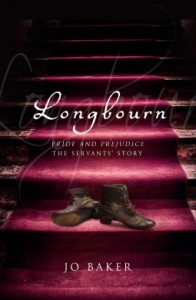
Longbourn follows the daily lives of the servants of the Bennet house. Sarah is an orphaned housemaid who spends her day doing laundry, polishing the floor and emptying chamber pots. The house is blooming with romance and heartbreak, not just for the Bennet sisters. One day a mysterious new footman arrives and the servants’ hall is under threat of been completely upended.

A unique reimagining, this novel tells the story of Pride and Prejudice told from the people serving the Bennet’s. I get the sense that this book was inspired more by Downton Abbey more than Jane Austen but never really seems to live up to either. All the drama of Bingley, Wickham, Mr Collins and Mr Darcy play out as a background characters for the drama that is happening with the servants.

I only read Pride and Prejudice earlier this year and absolutely loved it so I was a little wary of trying a spin off novel. The idea of a novel in the style of Downton Abbey did interest me but I felt let down. I got nether Austen’s wit and humour nor the drama for Downton. Some of Austen’s memorable characters didn’t seem to line up too well in this novel either; Mr Bennet comes to mind, his sarcastic humour appears completely absent in this novel. This could be written off as the servant’s perception of the Bennets and other characters.

There are some redeeming qualities in Longbourn; the novel seemed historically accurate, and while I don’t know for sure if this is correct, it did felt like this novel aligns with what I’ve read in Pride and Prejudice. Also I have to admire the way Jo Baker wrote; she is no Jane Austen but the prose was still elegant and I found myself continuously being impressed with her style while always looking for ways she may have ruined Austen’s masterpiece.

I always felt like the Bennets were wealthy enough to allow Mr Bennet to be a man of leisure but not enough to stop Mrs Bennet from worrying. So when servant hall in Longbourn seem smaller than what you would normally expect, it didn’t come as a surprise to me. The arrival of a new footman means that Mr Bennet has finally given into the demands of his wife and in comes the mysterious James. While the servant’s seem pleased with the new addition, Sarah doesn’t and soon she becomes aware of his interests towards her. You can probably guess where this is going and I won’t spoil it for you.

I spent most of the book worried that Baker will do damage to a true classic and I think this did detract from my enjoyment but for the most of it I was pleasantly surprised with the outcome. I did how ever feel as if this novel dragged on in parts and the fact that this was marked as a book for Downton Abbey fans seemed completely wrong. If you are a Downton fan I would recommend The Remains of the Day by Kazuo Ishiguro well before I recommend Longbourn.