Author: Michael @ Knowledge Lost

Boyhood Island by Karl Ove Knausgård

Posted July 21, 2015 by Michael @ Knowledge Lost in Contemporary / 0 Comments

Boyhood Island by Karl Ove KnausgårdTitle: Boyhood Island (Goodreads)
Author: Karl Ove Knausgård
Translator: Don Bartlett
Series: Min Kamp #3
Published: Harvill Secker, 2009
Pages: 496
Genres: Contemporary
My Copy: Library Book

Buy: AmazonBook Depository (or visit your local Indie bookstore)

Boyhood Island is the third book in the Karl Ove Knausgård’s six volume autobiographical novel, My Struggle (Min Kamp). While Knausgård talked in great length about his father in A Death in the Family (My Struggle #1) this is a more in depth look at his relationship with his parents. With the focus being on his childhood, Boyhood Island allows Karl Ove to reflect on his adolescence in a “coming of age” style novel.

I will admit that I have been enjoying the Min Kamp, but there is something about A Death in the Family that really worked for me. The way he talked about his father with lines like “Dad had got what was coming to him, it was good that he was dead,” in the midst of what felt a lot like a midlife crisis really worked for me. A Man in Love was a more tender novel, allowing Karl Ove to explore his relationship with his wife. I think the swing from a dark and bitter first novel to the tenderness of the second really allowed me to discover the range in Knausgård’s writing and I was very captivated by this.

When it came to Boyhood Island, I was disappointed that we were going back to his relationship with his father. I felt like A Death in the Family dealt with that issue; although in not great detail but enough to have the highlights. This book felt like we were going over the same material again but in far greater detail. The coming of age style worked when talking about Karl Ove’s life but I never felt like there was anything new to cover when it came to talking about his father.

There are some interesting insights in Boyhood Island that are well worth exploring, I just did not think it lived up to the other books in the series. I am keen to check out Dancing in the Dark, which covers Knausgård’s college years, I have a feeling there will be a return to form for this author. I am half way through Min Kamp so I feel like I might as well complete it. Karl Ove Knausgård is a very impressive writer and the range on display between each novel is what draws me to his novels. Although I have never read anything other than these autobiographical novels, I am interested in seeing how he writes in his other books.


Enclothed Cognition & The Stanford Prison Experiment

Posted July 18, 2015 by Michael @ Knowledge Lost in Psychology / 0 Comments

The Lucifer EffectWhile reading The Lucifer Effect: Understanding How Good People Turn Evil by Philip G. Zimbardo, I have found myself thinking a lot about the Stanford prison experiment. This psychological experiment was led by Zimbardo and this book is his first full account of what actually happened. The Stanford prison experiment was a study into the psychological effects of the prison experience which was conducted at Stanford University in 1971. The funding for this experiment was provided by the U.S. Office of Naval Research, with interest from both the Navy and Marine Corps into the relationship between military guards and prisoners.

I first learnt about the Stanford prison experiment thanks to watching Veronica Mars (“My Big Fat Greek Rush Week” S03E02). However reading through The Lucifer Effect, I did not expect there to be so many different psychological ideas going on at once. I know simulating an environment will need different researchers and involve a lot of analysis but I kept thinking of different things that will need to be looked at and the list kept growing and growing. Take for example the experiences the prisoners would feel, disorientation, de-personalisation (as well as dehumanisation) and so much more. It was interesting that the guards took on this mentality that this experiment was looking at prisoner behaviour and felt the need to take on the role of a stereotypical guard.

The term “enclothed cognition” sprung to mind while reading the book. An idea that the clothes that you wear can psychologically influence you. Within an experiment of enclothed cognition, some people are asked to perform brain exercises; half were dressed in a lab coat. The results ended up with the group wearing the lab coat performing better than the others. They then went on to give everyone a lab coat, half were told it was a painter’s coat and the others, a doctor’s coat. The results were similar, with the people wearing what they thought was a doctor’s coat performing better than the others. The application of a military uniform and reflective sun glasses seemed to have a dominating affect towards the treatment of the prisoners.

There is a lot more worth talking about, with the Stanford prison experiment but I will live it with those few ideas. I am working through The Lucifer Effect slowly and I might add more posts about what I have been thinking. However I would like to mention that there is a movie called The Stanford Prison Experiment about to be released about what happened in this study that looks fascinating. I am very interested in seeing how it translates but I am sure it will be traumatising.


There But For The by Ali Smith

Posted July 16, 2015 by Michael @ Knowledge Lost in Literary Fiction / 0 Comments

There But For The by Ali SmithTitle: There But For The (Goodreads)
Author: Ali Smith
Published: Penguin, 357
Pages: 2011
Genres: Literary Fiction
My Copy: Library Book

Buy: AmazonBook DepositoryKindle (or visit your local Indie bookstore)

A dinner party in a posh home in Greenwich took a sudden turn when Miles, one of the guests, leaves the table mid meal and locks himself in an upstairs room. He refuses leave and the diverse group of neighbours tell their story of the events trying to make sense of Miles motivations. There But For The is told in four points of view: Anna, who is in her forties; Mark, a man in his sixties; May, a woman in her eighties and ten year old Brooke.

Genevieve Lee sets out to host an elaborate dinner in her elegant Greenwich home; her husband Eric has planned to serve scallops and chorizo. However these people are a little different to the people that normally run in the couple’s social circles. The story revolves around Miles Garth who is now an unwanted guest of the Lee’s, after he locked himself away in an upstairs bedroom. However the book really looks at the four narrators and their connection between everyone else.

There tells a story of Anna, a social worker, who knew Miles thirty years ago. Genevieve found her email address in Miles phone and invited her in the hope of persuading him to leave. But follows Mark who is a photo-researcher, who invited Miles to the dinner party. Mark is mourning his old love and, at times, his dead mother speaks to him in rhymes. For is set entirely in the mind of eighty year old May. She is suffering from dementia but also has regular contact with Miles. The revolves around ten year old Brooke, who is the daughter of two of the party guests and the only one that has made contact with Miles since he locked himself in the room.

Where this book shines is in the writing; it is full of what has been now considered Ali Smith’s trademark wit and puns. It is an exploration into humanity, centred on a whimsical yet devastating dinner party. The stand out for me is the way that Smith masterfully used identity shifts and language gaps to explore language in what is essentially a locked-room mystery. This writing style may cause issues for some people but I was just in awe of just how clever If For But The really was.

As this is the first Ali Smith novel that I have read, I am unsure what to say about her as a writer. If all books are anything like If For But The then I would have to call her a master at puns, wordplays, metaphors and pretty much linguistics in general. There is plenty of buzz around her latest book How to Be Both, so I will save my opinion until I have read at least that novel. I am very confident I will be a new fan of Ali Smith but as I say, I have to experience more of her writing.


Walking the Camino

Posted July 14, 2015 by Michael @ Knowledge Lost in Documentary / 0 Comments

camino-poster

Camino de Santiago is commonly known as just the Camino or Way of St. James. It is a popular pilgrimage people take to the Cathedral of Santiago de Compostela in Galicia where many believe the apostle St. James the Great is buried. Recently I watched a documentary called Walking the Camino: Six Ways to Santiago which got me thinking a lot about the pilgrimage. I should first point out I am not Catholic, as were many of the people in the documentary but I found it interesting to explore what motivates people to take on such a huge task.

There are many routes you can take to walk the Camino, however the Camino Francés (The French Way) is the most common option. This is a 780km walk that starts off in Saint-Jean-Pied-de-Port on the French side of the Pyrenees and while there is no set agenda, according to the itinerary found on Wikipedia, takes 29 days to walk. This is just an example itinerary and it involves a 20-40km walk each day to the next town on the route.

The Camino de Santiago has mainly been a spiritual pilgrimage but while watching the documentary Walking the Camino it seems that nowadays it is a fitness challenge or a journey of self-discovery. A 780km walk would not be easy and I do not think I could ever complete it but I love the idea of slowing down and reflecting. The whole idea of no schedules and no worries (apart from the task at hand) would allow for time to reflect on life.

I found this documentary fascinating and I feel like completing the Camino would really be an impressive (and pretentious) feat. I have considered trying to complete it but that much walking really worries me. The idea of walking through Spain looking at the country side and eating the food is very appealing. I have only visited one town along the Camino, which is Santo Domingo de la Calzada but the medieval architecture and art is enough to entice people. Has anyone considered walking the Camino?

Read More


Monthly Kickoff – July 2015

Posted July 1, 2015 by Michael @ Knowledge Lost in Monthly Kickoff / 0 Comments

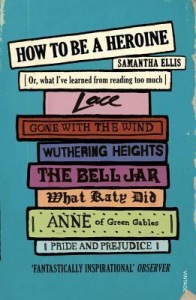
How To Be a HeroineThe second half of the year is upon us; it really is hard to believe the year has gone this far. How has everyone’s reading been for the past six months? I have personally had a great half-year reading and hope the next six months are just as productive. This month’s theme is books about books and we are reading How to be a Heroine by Samantha Ellis. I am so pleased with the choice and looking forward to some good discussions over on the Goodreads threads.

As a reminder, August will be an indigenous theme and we are reading The Diary of a Part-Time Indian by Sherman Alexie, which I am sure will spark some interesting discussions. I have read this book before and I am still trying to decide if I should re-read it or not. September’s theme has been decided and it was almost going to be science fiction but urban fantasy just pulled in front by one vote. Also, don’t forget you can join in on all this fun over at Goodreads and you can help us pick our themes and books by voting in the polls.

I am currently reading A Little Life by Hanya Yanagihara and One Night in Winter by Simon Sebag Montefiore; both of these novels are really enjoyable so far. I also plan to read Nest by Inga Simpson for my real life book club and Limonov by Emmanuel Carre?re (translated from the French by John Lambert), which is a biography about Russian poet (and so much more) Eduard Limonov. Other than that, I would love to read The Lucifer Effect: Understanding How Good People Turn Evil by Philip G. Zimbardo. After that, I will just see what will happen, what are you planning to read this month?


Monthly Review – June 2015

Posted June 30, 2015 by Michael @ Knowledge Lost in Monthly Reading / 5 Comments

Double IndemnityAs I look back at the first half of 2015, I tend to wonder where all the time went but I also think about the 55 books I have read so far this year. As most people know, I have decided to do some more re-reading and focus on translated fiction; in particular Russian literature, where I am determined to specialise and become somewhat of an expert. Sure, it is a big task but there is something about the challenge that excites me. It has revitalised a joy for literature that I feel was missing. This does not mean I am going to stop reading and reviewing other things, I just have a goal in mind.

However, this has not translated too well to my blogging at the moment. Ever since taking a few weeks off to go to New Zealand, I have struggled to get back into reading and reviewing. I did get sick for a few weeks and I was feeling stressed with work but I plan to get back into the swing of things. I did think maybe BookTubing was causing me to neglect my blogging but I do not think that this is the case, but only time will tell. I am still determined to have my blog document my reading journey and BookTube is just allowing me to explore different options and hopefully get better.

I have read a very small amount in June, nothing too bad; I managed to finish six books this month. The first was a very interesting book called Sweetland by Michael Crummey, which explored the concept of isolation and heritage. The story started off a little shaky and I found myself being more interested in the secondary characters but then it really kicked into high gear. This novel was picked for my real life book club and I am not sure if I would have read it otherwise, but I am glad I did. One thing I love about book club is having books picked for me to read and discuss; I have discovered so many gems because of it.

I also read The Russian Debutante’s Handbook, which is the first novel by Gary Shteyngart. I love Shyteyngart and have wanted to read everything he has written. I would have disliked this book if I did not know anything about Gary Shyteyngart or have read his memoir Little Failure. There are a lot of autobiographical elements, which I may have missed if I had not been interested in this writer. I also read a novel, which might well be my favourite for 2015, Girl at War by Sara Novic. This is the perfect book for me, it reminds me of my love for All That is Solid Melts into Air last year and A Constellation of Vital Phenomena the year before. There is something about these books that I love, I think it is my interest in the eastern bloc and the people’s struggle that I am drawn to.

Next I read How To Be a Heroine by Samantha Ellis, a literary memoir where the author went back to all her old favourites and looked at the women within the books. This was part literary criticism but I had issues with the author’s opinions towards the theories and really effected my enjoyment of the memoir. I then picked up Dog’s Heart by Mikhail Bulgakov, which was translated by Antonina W. Bouis, to continue my interest in Russian literature and Bulgakov as well. This novella is also known as Heart of a Dog but this depends on the translation. Finally I read Double Indemnity for the Literary Exploration book club, which was a re-read for me and I posted a review for this book yesterday.

I am starting to get back into the swing of things and I hope to get back to reading and blogging as well. I am currently reading a heavy book that happens to be over 700 pages as well and that is A Little Life by Hanya Yanagihara, I am enjoying the novel but it is taking some time to work through it. Also I am reading One Night in Winter by Simon Sebag Montefiore, I am loving this novel and I do not want it to end, so I think I have been taking my time with the book. That was my reading month; it was not my best but it also was not that bad. How was your reading month?

Read More


Double Indemnity by James M. Cain

Posted June 29, 2015 by Michael @ Knowledge Lost in Book of the Month, Pulp / 0 Comments

Double Indemnity by James M. CainTitle: Double Indemnity (Goodreads)
Author: James M. Cain
Published: Vintage, 1936
Pages: 114
Genres: Pulp
My Copy: Personal Copy

Buy: AmazonBook DepositoryKindle (or visit your local Indie bookstore)

When small time insurance man Walter Huff meets Phyllis Nirdlinger, her beauty quickly seduced him. The wife of a wealthy oil executive convinces him to help get rid of her husband, but not before a substantial policy was taken out on him. Accident insurance often causes suspicion but when Phyllis’ husband dies from what looks like a train accident, double indemnity kicks in and Walter’s bosses suspect foul play.

James M. Cain is the master at noir with books like The Postman Always Rings Twice, Mildred Pierce and recently The Cocktail Waitress was released posthumously.  Double Indemnity is one of his most notable pieces of work and was adapted into the 1944 classic film noir movie of the same name. The movies screenplay was written by fellow master of pulp Raymond Chandler and has been dubbed culturally, historically, and aesthetically significant by the US Library of Congress.

Double Indemnity is a clause often found in accident insurance policies where the issuer agrees to pay double (or more) if the accident happens in certain conditions. It is often used to make the policy more appealing but applies to low risk incidents. Death by train accident is one of these examples and when Phyllis’ husband died in these conditions the insurance company was naturally suspicious.

This classic pulp novel follows Walter Huff who plots the perfect murder all for the beautiful Phyllis Nirdlinger. What he didn’t count on was that he was seduced into helping a femme fatale and now he was under her thumb. In true James M. Cain style, Double Indemnity holds nothing back, both in style and plot. Everything you expect in a 1930s noir novel can be found in this thrilling novella.

This is a re-read for me of Double Indemnity and I must admit I was so happy to return to the style of James M. Cain. Everything you expect from the pulp style and dialogue can be found within this classic story. I know I need to dive into some more of Cain’s novels, with some re-reads and completing his bibliography. I have no words to describe the feeling of returning to a much-loved author and I know I need to re-watch the movie. If you have never read Cain or anything from the classic pulp genre, then you can never go wrong with a book like Double Indemnity.


H is for Hawk by Helen Macdonald

Posted June 28, 2015 by Michael @ Knowledge Lost in Non-Fiction / 0 Comments

H is for Hawk by Helen MacdonaldTitle: H is for Hawk (Goodreads)
Author: Helen Macdonald
Published: Vintage, 2014
Pages: 300
Genres: Non-Fiction
My Copy: Paperback

Buy: AmazonBook DepositoryKindle (or visit your local Indie bookstore)

Helen Macdonald has always had a fascination with birds, since a young age she was determined to become a falconer. She would read books on the topic; one book in particular had stuck with her, The Goshawk by T. H. White. When Helen lost her father, grief struck her in a big way, and soon her obsession in training her own goshawk was her own way out. H is for Hawk is a memoir on both dealing with grief and obsession.

I heard so much about this book and when it was assigned for book club, I was excited. Although in the back of my mind, my thoughts on falconry were sceptical. I find falconry to be a barbaric and cruel practice that is no longer required within our culture. To starve and cage a raptor for your own amusement seems unnecessary. With these thoughts going into the book, I had a hard time appreciating the memoir.

I know Helen Macdonald repeatedly stated that she was not starving the goshawk, I still thought of it as a cruel practice. I learned a lot about falconry, some stuff was interesting but there was so much information to process. The book never changed my feelings towards falconry, only cemented them and that become my fundamental problem with H is for Hawk. I enjoyed the parts about The Goshawk and I love reading memoirs about reading books but there was not enough there to hold my interest.

I thought I would try annotating this book, it is a habit that I want to start and thought it would be fun. However I did have to stop with the annotation, as I started to feel like Helen Macdonald was over playing her grief just to make the story more interesting. I did not want to be the heartless person that criticises the author’s emotions, especially when it comes to grief. So I quickly abandoned my annotations and I continued to try to get into the habit.

While H is for Hawk has some wonderful writing, I had a very difficult time enjoying this book. I wanted Helen Macdonald to return to talking about The Goshawk through out the entire memoir. I am interested in seeing what Macdonald will do next, she certainly can right. I hope her next book, whatever that may be, will be something I can get behind.


What You See in the Dark by Manuel Muñoz

Posted June 26, 2015 by Michael @ Knowledge Lost in Crime / 0 Comments

What You See in the Dark by Manuel MuñozTitle: What You See in the Dark (Goodreads)
Author: Manuel Muñoz
Published: Algonquin Books, 2011
Pages: 272
Genres: Crime
My Copy: Library Book

Buy: AmazonBook Depository (or visit your local Indie bookstore)

When a famous actor and director arrives in Bakersfield, California (1959) scouting film locations for an upcoming movie about madness, the local gossip columns begin to speculate why they are here. However, when a murder at a roadside motel is discovered, this dusty, quiet town is turned on its head. Unfolding the same way the Hitchcock’s movie Psycho, almost frame for frame. No one ever predicted that life would rival anything that this director could capture on the screen.

Manuel Muñoz has been dazzling the world with his short story collections for a while now, often been compared to Junot Díaz or Daniel Alarcón. What You See in the Dark is his debut novel and it explodes onto the scene to explore the deliciously sinister side of desire. Heavily influenced by Psycho, Muñoz tries to capture that iconic feel of this classic movie.

What I found fascinating about this novel is the way it did try to mimic Hitchcock’s Psycho, trying to capture the feel and style. While it does not always work I was very impressed with just how much did translate to the page. Manuel Muñoz is a very impressive writer and I went into this book expecting something light and fluffy but ended up being captivated by the style.

What You See in the Dark is a very stylistic novel that tried and often succeeded in playing with the imagery, however it often did stick to what novels do far better than movies, and that is the internal monologues. The book is not without its flaws, there are times where it tries too hard at mimicking Hitchcock and there are other times where it feels flat or dry. In the end, this was an enjoyable book with a perfect title. What do you see in the dark? Hitchcock knows and he has the answer.


Monthly Review – May 2015

Posted May 31, 2015 by Michael @ Knowledge Lost in Monthly Reading / 1 Comment

Wolf TotemMay has been a big month for me. I have been preparing for a trip to New Zealand and I also took time off before hand to get some reading done. In fact, I have scheduled this post in advance, so it will be posted on the right day. This does mean I will not be talking about my entire month of reading but just the highlights upon writing this. If you do want to see a full monthly wrap up, you will just have to subscribe to my YouTube channel and wait for it to be posted. I think I went into May with eleven reviews I still needed to write, and then add all the books I have read so far and I am so far behind. I get on a roll with my reading and it is much more fun reading than writing reviews. About a year ago I wrote my book blogging manifesto, which I have been reflecting on. So much has changed but my goals are still the same. I just need to remind myself to get back into writing more frequently.

Looking at the Literary Exploration book club, we tackled translated fiction this month (a favourite of mine) and we read Wolf Totem, a Chinese novel by Jiang Rong and translated by Howard Goldblatt. I am glad we finally got to books in translation and I hope it encouraged many people to read more novels from other countries. As a reminder next month we are moving onto hard-boiled/noir theme and reading Double Indemnity by James M. Cain and I am looking forward to re-reading this classic.

This month has been a wonderful month for reading but I am still very behind in blogging. Highlights of the month have included Get Shorty by Elmore Leonard, Aquarium by David Vann, The Two Faces of January by Patricia Highsmith and a re-read of Anna Karenina for my Russian lit project. However, I am packing some great books to take away with me, including more Russian classics, so I think by the time this post goes up, I would have had a wonderful month. I am sad that I was not able to do a longer wrap up post talking about my entire reading month but a much need vacation was a better option. I will be back to a normal wrap up next month; but I would love to know what everyone else read this month.

Read More