Author: Michael @ Knowledge Lost

The Wives of Los Alamos by TaraShea Nesbit

Posted May 9, 2014 by Michael @ Knowledge Lost in Historical Fiction / 2 Comments

The Wives of Los Alamos by TaraShea NesbitTitle: The Wives of Los Alamos (Goodreads)
Author: TaraShea Nebit
Published: Bloomsbury, 2014
Pages: 240
Genres: Historical Fiction
My Copy: ARC from Publisher

Buy: AmazonBook Depository (or visit your local Indie bookstore)

It wasn’t until the attack on Pearl Harbour in 1941 that the Americans really got involved in the Second World War and they did this in a big way. It was often referred to as Project Y, a secret laboratory that sourced scientist from all over the country to help the allies in their war efforts. The Laboratory was located in Los Alamos, New Mexico and the secret project was The Manhattan Project.

TaraShea Nebit’s debut novel The Wives of Los Alamos explores the birth of the atomic age. Although many may have wondered what it was like for the wives of these scientist. The secrets their husbands had to keep and somehow convince their wives and families to move to an undisclosed location. If we took the time and really thought about what it would have been like, we might have come up with the same answers as Nebit.

However TaraShea Nebit did the research (resources used are mentioned at the end of the novel) and then set out to write this unique novel. The Wives of Los Alamos is written in the collective voice of the wives of Los Alamos, which takes a while to get used to. The plural first person perspective is rather odd and it tends to keep the reader at arm’s length and never really allows an intimate look at the feelings these women must have been going through. With lines like “We married men just like our fathers, or nothing like them, or only the best parts.“ I get the sense that the author is generalising the feelings and while I appreciate the research she did, this type of writing feels more like speculation rather steaming from truth.

I find it difficult to review this novel, there is no protagonist and the plot is a very basic look at different aspects of life set out to drive the book along. TaraShea Nebit is very clever and the novel pushes the reader to actually imagine what life would be like for these families. In a time where everyone is concerned with war these families are uprooted and forced to live with a completely different sets of worries in mind. Secrecy can tear families apart and the importance of The Manhattan Project demands that this secret be kept. I can’t imagine a life like this but The Wives of Los Alamos offers some idea.

I found it difficult to connect with the women in the story, they were nameless and faceless. Their collective voices all sang the same tune but really people are not all the same that I never got a look into the emotions and thoughts of just one of the women. A biography from one of these women would have been better; The Wives of Los Alamos gives you a taste but left me wanting so much more.

This was a fascinating novel but it never went into any great detail of the social complexities facing these families. I would have liked to explore the psychological effects this great secret had on the family and relatives. Even have a peek into the cultural effects of birth of the atomic age, considering the Los Alamos National Laboratory played key roles in both the Atom and Hydrogen bomb. It is a fascinating period of American history and science, The Wives of Los Alamos has whet my appetite and I might look at some of the books TaraShea Nebit mentioned at the end.
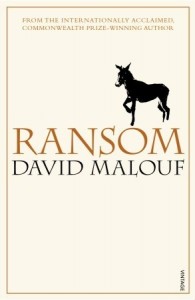

Ransom by David Malouf

Posted May 8, 2014 by Michael @ Knowledge Lost in Historical Fiction / 0 Comments

Ransom by David MaloufTitle: Ransom (Goodreads)
Author: David Malouf
Published: Vintage, 2009
Pages: 240
Genres: Historical Fiction
My Copy: Paperback

Buy: AmazonBook Depository (or visit your local Indie bookstore)

While Ransom is a retelling of Homer’s Iliad, this doesn’t mean this is just a bite-sized simplification of the epic poem. I will admit that I’ve not read Iliad or The Odyssey by Homer; for some reason I’m scared to do so, even though I’ve managed epic poems that some may consider hard to read (The Divine Comedy and Paradise Lost). I’ve heard it said that you don’t really need to read Iliad to enjoy Ransom but I would have to disagree, I think David Malouf’s novel is inviting the reader to look at the poem in the way he interprets it. There are gaps that Malouf expects the reader to know and understand and without any prior knowledge to The Iliad and the war on Troy they can feel lost and confused.

Ransom starts at the point where Priam’s son Hector is slayed by Achilles and mainly focuses on the two characters. I’m not sure about Iliad and I’m not going to speculate on what Homer was trying to say in the poem but I will look at what Malouf is saying. Ransom is a novel on human grief, love and even revenue in an intimate and rather tender approach to the subject matter. The emphasis is on the human emotions behind the story that plays out during the Trojan War. Although the novel explores the emotions of both Achilles and Priam, not really caring about any of the other characters so we only really get to experience the ideas of grief and revenge.

The main point on reading this novel was to explore the idea of intertextuality or the relationship between two interconnecting pieces of text. While I can’t say I’ve had much experience with intertextuality, the only novel that springs to mind is The Amazing Adventures of Kavalier and Clay; I suspect there is a little interconnectivity in all novels. Intertextuality covers everything from modernisations, parodies, reimaginings and anything that borrows from a different text.

This often makes me wonder, at what point do we stop studying intertextuality and more a look at plagiarism? The concept of intertextuality and plagiarism feels like a very thin line. Ransom for example is a retelling of Iliad where David Malouf wants the reader to explore this classic poem the way he sees it. This is his interpretation of what he feels Homer was trying to say. Doesn’t mean it is the only interpretation, Malouf is just taking his ideas and exploring it further.

One day I will get around to reading Iliad and The Odyssey; I’m saving them for when I have some time to read critically and take the time to full understand the two epic poems. Once I’ve done that, I think I might revisit Ransom, see if I get something out of it. I did enjoy Malouf’s style and it was an interesting novel to read but I really need to read the original first.


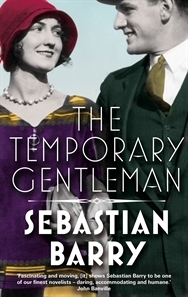
The Temporary Gentleman by Sebastian Barry

Posted May 4, 2014 by Michael @ Knowledge Lost in Historical Fiction / 2 Comments

The Temporary Gentleman by Sebastian BarryTitle: The Temporary Gentleman (Goodreads)
Author: Sebastian Barry
Published: Faber & Faber, 2014
Pages: 270
Genres: Historical Fiction
My Copy: Paperback

Buy: AmazonBook DepositoryKindle (or visit your local Indie bookstore)

Sebastian Barry is often credited for the way he captures the quintessential Irish life, especially with the McNulty family. The Temporary Gentleman tells the story of Jack McNulty, an Irish engineer that gets commissioned into the British Army in the Second World War. I will admit that this is my first Sebastian Barry novel but I had a fair idea on what I was getting myself into. The title alone gave me an idea of the type of man this is following, only temporarily a refined gentleman. It was also the idea that Jack wanted to be a gentleman but thought his social-economical background prohibited that.

The Temporary Gentleman serves are a retrospective of Jack’s life as he reflects on the choices he made along the way. But unlike similar stories like this, Jack wasn’t a nice person; in fact he was a real bastard. A drunk and a degenerate gambler, he not only ruined he own life but that of his wife, Mai. He joined the army to escape, not a honourable thing to do but I get a sense that Jack may of felt like this was the only time he was a gentleman.  Leaving Africa would mean he would have to return to his past, but is this what makes he such a bastard?

I will admit that I went into The Temporary Gentleman with the idea that this was a post-colonial novel; I expected it to explore the effects of empiricism of Kenya as they were working toward their independence. I only guess that from the synopsis and I guess you can say there was some glimpses of this, the way the Kenyans treated Jack as an ex Major. In hindsight, if I was to look at this novel as post-colonial, I should have been focusing on the imperial effects England had over Ireland. Considering this took place after the Irish War of Independence (1919-1921) and the Irish Civil War (1922-1923).

However I decided to look at this novel through the lens of psychoanalytical theory. I’m no expert at literary theories but I do try and this was a very in-depth and psychological look at Jack McNulty and the way he sees himself. A look at his mistakes and narcissism and how damaging his choose are for him and the people close to him. The Temporary Gentleman almost serves as a psychological profile and if I knew more about psychology I would try to analyse it.

I have to except that my literary criticism skills are still very lacking, I might have been able to handle this novel through the lens of post-colonialism but it was too focused on Jake McNulty to get much out of it. Psychoanalytical theory is something I’m very interested in and possibly my next focus in the world of literary criticism. All I can really say is that Barry makes it impossible to sympathise with Jack at all.

Sebastian Barry appears to know his craft; his approach to the novel was expertly executed. The prose in The Temporary Gentleman makes the whole experience bearable; you can help but enjoy the writing while grinding your teeth at Jack McNulty. I don’t feel like I can truly recommend this novel, there are plenty of unlikeable characters that are more thrilling to read about but I will be returning Sebastian Barry in the future.


How do you pick an imprint for classics?

Posted May 3, 2014 by Michael @ Knowledge Lost in Literature / 8 Comments

Every publisher seems to have their own classics section. Penguin Random House now control most of the market (Penguin Classics, Modern Classics, Signet Classics, Vintage Classics, etc). So how do you choose which collection to buy from? Do you even pay attention to the publisher? When I first started hording collecting books, I didn’t pay too much attention and went for the prettier cover but I’m beginning to wonder if this is a decent solution.

1-05-2014 11-38-14 AM

Sure, I would love to own every book released in the Pulp! the Classics; they are fun and I do own a few of them already but buying a classic because of their covers isn’t really effective. Not all editions are the same, in particular translated classics. When picking up a Russian classic do you know which translator to pick? Do you spend time researching the best translator or do you have a publisher you can trust?

I’ve often contemplated this question and since studying at university I’ve noticed that they often recommend two publishers more than any other; Norton Classics and Oxford World Classics. While they don’t have the best covers, I’ve had the greatest success with Oxford World Classics, to the point that I don’t want to buy any other editions. If asking the internet which translation of a novel I should read, for War and Peace it is Louise and Aylmer Maude and for Crime and Punishment, Jessie Coulson is often the answer. They are the translators used in the Oxford World Classics.
I’m not sure what it is, I just trust Oxford World Classics more than any other and they often offer some great questions to ask yourself in the back of the novel. My new found love for Oxford World Classics and the reason for this post is not to give a sales pitch or anything like that; I’m just curious if others think about this topic in as much detail as I do. If so, which publisher do you trust over all others?


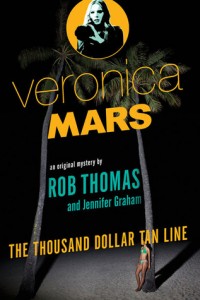
The Thousand-Dollar Tan Line by Rob Thomas & Jennifer Graham

Posted May 2, 2014 by Michael @ Knowledge Lost in Crime / 2 Comments

The Thousand-Dollar Tan Line by Rob Thomas & Jennifer GrahamTitle: The Thousand-Dollar Tan Line (Goodreads)
Series: Veronica Mars #1
, 2014
Pages: 324
Buy: AmazonBook DepositoryKindle (or visit your local Indie bookstore)

Veronica Mars is quite possibly one of the most interesting characters on TV. She’s intelligent, witty and snarky; think Philip Marlowe meets Nancy Drew. First of all, if you haven’t seen the TV show, I highly recommend you do so first. Watch the show then the movie and then you’ll be ready to read this novel. This new series takes place after the events of the movie, which means not only do I have to avoid spoiling the novel, but I must also try and avoid any major spoilers of the movie. I’m sure there will be spoilers from the TV show (mild spoilers from the movie as well) but that really can’t be helped.

Veronica Mars is back in the land of sun, sand, rich entitled kids, crime and corruption otherwise known as Neptune, California. A town that has no middle class, you are either rich or you are considered low class, and the Sheriff, he comes down hard but only on those below the poverty line. When a girl goes missing at spring break, a media frenzy follows but the Sheriff’s department are not being helpful. Veronica is hired to find the girl but this leads her into a dangerous underground of drug and organised crime.

All your characters are back, with one surprise. I’m pleased to report that everyone and everything in Neptune felt authentic and I’m so happy to see that Mac had a bigger role as Veronica’s sidekick. There is one major flaw in this movie, it changed perspectives; the TV show and movie are all told in a first person narrative but the book is in third person. Which is strange, Veronica Mars’ first person narration is iconic to the brand and also a vital part of the neo-noir style. While that noir style is still evident in the novel it just didn’t feel the same.

Another major flaw in the novel is the missing ‘bigger’ mystery. It was what made the TV show so great; ‘who killed Lilly Kane’ is what got me addicted to the show and each season had a new mystery to solve. I would have liked to see this return in the new book series but much to my disappointment it didn’t. These books are marketed to fans of the Veronica Mars brand and taking away pieces that make the show/movie great really does not do this novel or the others any justice.

I am a marshmallow (if you don’t know what that is then maybe this book isn’t for you) so I obviously loved this novel and enjoyed being back in Neptune. I will be reading any Veronica Mars novel that gets released and backing any kickstarters for any more possible movies. It was fun to stay in Veronica Mars’ world but I would like to know what happened in the ten years between the TV show ending and the movie. I’m hoping this series will tell me more about Veronica’s university and FBI years.


Monthly Review – April 2014

Posted April 30, 2014 by Michael @ Knowledge Lost in Monthly Reading / 2 Comments

The MagiciansApril has been an interesting month; I expected to get heaps of reading done and, to one extent, I have done just that. But also, I got rather sick during my time off and that did limit some of the reading time I was so excited about. Overall April was a great month, with plenty of books read and some extra time off work. I hope everyone else’s April was just as fruitful without any illnesses.

This month our book club read was The Magicians by Lev Grossman as part of our fantasy challenge. This was an interesting selection, more coming of age than fantasy, check out my review to find out what I thought. Next month we are going to dive into The Secret Garden by Frances Hodgson Burnett. This is a classic novel and is part of our children’s literature theme; I can’t remember what this is about so this will be a new experience for me and I will also be using the novel for The Literary Exploration Reading Challenge. If you’re not aware, the book discussion and everything else will be happening over on the Goodreads forums, so feel free to join in there.

I read some decent books in April included the first Veronica Mars novel The Thousand-Dollar Tan Line plus others along the lines of The Fever by Megan Abbott, The Wives of Los Alamos and Summer House with Swimming Pool by Herman Koch. The biggest highlight will have to be The Sorrows of Young Werther by Johann Wolfgang von Goethe, which will probably get read over and over again. What have you been reading this month and what were the highlights?

Read More


The Magicians by Lev Grossman

Posted April 29, 2014 by Michael @ Knowledge Lost in Book of the Month, Fantasy / 4 Comments

The Magicians by Lev GrossmanTitle: The Magicians (Goodreads)
Author: Lev Grossman
Series: The Magicians #1
Published: Thorndike Press, 2009
Pages: 691
Genres: Fantasy
My Copy: Library Book

Buy: AmazonBook DepositoryKindle (or visit your local Indie bookstore)

Quentin Coldwater is about to graduate high school; his future is catching up with him.  Suddenly an offer to a very exclusive private college has become a real possibility, but this is no ordinary university, this is a school of magic. Not only will Quentin have the normal college experience of sex, love, booze and friendship, he will also discover his magical abilities. Not just a coming-of-age novel, Quentin will also discover that the world of Fillory from a children’s fantasy series he obsesses over is very real.

Lev Grossman’s The Magicians on the surface reads like a cliché fantasy novel but there is something deeper here. If you think of The Magicians as a homage to series like Harry Potter, The Golden Compass and Narnia, you can focus on the coming-of-age element of the novel. I found similarities to The Neverending Story but if I looked deeper I would say this is more of a magical version of The Catcher in the Rye. Quentin Coldwater follows the Holden Caulfield archetype, full of angst, self-loathing and all the normal teenage boy awkwardness, almost to the point where he could be considered an antihero.

Quentin not only has to work through his new found magical abilities, this only takes a side plot to what is really happening in The Magicians. The novel depicts and often amplifies the prototypical teenage boy experience, the depression, angst and emotional carelessness. The idea of magic being a gift turns out to be more a curse for Quentin. Unlike Harry Potter this novel looks at the magic being a curse, choosing Brakebills to get an education was possibly a downfall in his adolescent life, or at least that would be how Quentin will view it.

This is not an escapist novel; in many cases The Magicians is anti-fantasy. Viewing magic as a curse was an interesting way to view life and the fantasy genre. While it does this in a very interesting way, the homage to children’s fantasy novels was a bit over the top, while trying to avoid being a cliché; it ended up falling face first into the formulaic. I would have liked to explore the ideas of education and growing up with a gift/curse more than the actual fantasy elements but that might have risked alienating the target audience.

The Magicians is not without its flaws; in fact this novel could have been so much better if it took a more focused approach. The coming of age elements were interesting, the homage and Fillory parts of the novel were annoying and I think it would have worked out better without them. If the next books in the series continue to explore magic as a curse, I will gladly read it but I’m not interested in the Fillory story arch.


What I Hate about Book Blogging

Posted April 26, 2014 by Michael @ Knowledge Lost in Literature / 12 Comments

As much as I love book blogging and have no desire to slow down anytime soon, there is one thing that annoys me. It is not exactly a huge problem and I think this falls under the category ‘First World Problems’ but it has been coming an increasing annoyance for me. I’m not talking about the lack of commenting (I know I’m guilty of this) or the struggle to be part of the crowd of first readers, who boost about all the wonderful ARC’s they read. I’m even not complaining about the lack of male book bloggers or the excess of blogs talking about the exact same thing, this is something completely different.

I started book blogging in April 2012 as a way to track my reading journal. I have an autodidactic blog where I previously discussed literature, but I found myself losing focus on what that blog was all about. I transferred most of my literary posts onto this blog and started blogging passionately about the books I’ve read, loved and hated. I love the way this blog documents my reading journey but the problem is the fact that it only covers my journey from 2012 onwards.

I started reading in 2009 when the reading bug hit me hard; in that time I read some fantastic books but they don’t show up on my blog. I’m at a point in blogging were I want to make reference to books I read before I started blogging but I have no post to link it to. This isn’t a huge problem but it is something that has become increasingly annoying.

I’m now at a stage in my book blogging where I want to go back and re-read a lot of those great or interesting books just so I can blog about them. This also means if I ever want to write a blog post on every book that is on the ‘1001 Books you must Read Before you Die’ list (a life goal of mine) then I will have to re-read over 50 of the books on the list. I was just wondering if I’m the only one who feels this way or if anyone has gone to the extreme of re-reading most of the books from their past just to blog about them?