Author: Michael @ Knowledge Lost

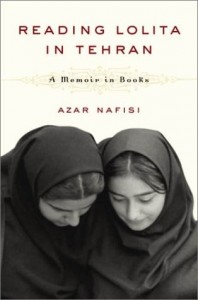
Reading Lolita in Tehran by Azar Nafisi

Posted February 10, 2013 by Michael @ Knowledge Lost in Non-Fiction / 0 Comments

Reading Lolita in Tehran by Azar NafisiTitle: Reading Lolita in Tehran (Goodreads)
Author: Azar Nafisi
Published: Hodder, 2003
Pages: 347
Genres: Non-Fiction
My Copy: Library Book

Buy: AmazonBook Depository (or visit your local Indie bookstore)

Reading Lolita in Tehran is a memoir of books read by Literature professor Azar Nafisi’s literature class during the revolution (1978-1981) up until her departure in 1997. Divided into four sections “Lolita”, “Gatsby”, “James”, and “Austen”, this memoir explores the lives of the students in a private literature class and the books that brought them all together. This is an inspired blend of memoir and literary criticism, and a moving look at the power of art and its ability to change and improve people’s lives.

I really enjoyed this book; the blend of literary criticism and memoir was really what hooked me. I especially loved the first part that focused on Lolita and the themes of oppression, authority figures trying to assert their dominance through events and a runaway convict. It was just an interesting insight from these Iranian students. It really made me want to read Lolita again and try to see what more I can get out of the book; luckily for me I might get that chance soon with the Literary Exploration book club.

I didn’t feel as strong of a connection with the other parts of this book, but I think I was just blown away by the insights into Lolita that the others didn’t have the same impact. The Great Gatsby looked at dreams and adultery all from the Iranian prospective. While Gatsby is about the American dream it was interesting to see it from a totalitarian mindset. James looks at some works of Henry James during the time of the Iran-Iraq war and the government who wants to control the liberal-minded. Lastly Austin looks at Jane Austin novels as well as the idea of abusive husbands, blindness and empathy.

This book comes together really well; you get to know these Iranian students and as well as explore some interesting ideas about the books from a perspective completely different to your own. While I would have preferred more literary criticism, I really got a lot of joy from reading this. There is a strong feminist theme throughout this book (since most of the students were women) that I suspect was the main draw card for many of the female readers of this book, and rightly so, this was an interesting look at these women. But for me, it was all about the books
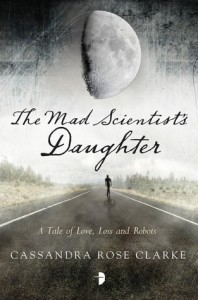

The Mad Scientist’s Daughter by Cassandra Rose Clarke

Posted February 9, 2013 by Michael @ Knowledge Lost in Speculative Fiction / 4 Comments

The Mad Scientist’s Daughter by Cassandra Rose ClarkeTitle: The Mad Scientist’s Daughter (Goodreads)
Author: Cassandra Rose Clarke
Published: Angry Robot, 2013
Pages: 400
Genres: Speculative Fiction
My Copy: ARC from Netgalley

Buy: AmazonBook DepositoryKindle (or visit your local Indie bookstore)

Cat’s life was not ever going to be normal; the daughter of a mad scientist can never be easy. When her father created an android to be her tutor, she was a little afraid to begin with but soon Finn became her best friend. While Finn is programmed to assist his owners, this billion dollar construction becomes a whole lot more to Cat. The Mad Scientist’s Daughter is a coming of age novel with a science fiction twist.

While this is a coming of age type novel, it’s both Cat and Finn that have to try and find their place in the world. Cat, as she grows up into an intelligent woman, and Finn, as the government look into granting rights to the increasing android population. As a young girl who grows up with only one person to talk to, it comes as no surprise to see that she forms a strong emotional bond with Finn, but I can’t help but wonder if the author took it a little too far. I can fully accept this young adult to fall in love with the android that has always been there when she needs it the most, but the sex, seemed a little weird and really threw me out of the story. I’m not going to debate the idea of sex and androids because I’m sure there a many thoughts on this concept; just for this novel it really threw me off.

There really are some interesting concepts coming through in this novel. Firstly the interesting science fiction twist on the coming of age novel; not only does Cat grow and struggle though life, I really thought the idea of Finn finding himself in an evolving world was explored in a decent way. Then the concept of loving someone that can never love you back. It’s clear that Cat is in denial at times, hoping that Finn will return her feelings but always getting hurt by the fact that he doesn’t; this is a long struggle she deals with and created a great emotional impact for the protagonist and the reader. Finally the increased population with robotics; this was never explored as well as someone like Isaac Asimov did but it was still interesting to read Cassandra Rose Clarke on this subject.

At times this dragged on a long time, but I found myself being fully absorbed in the novel only to be yanked out with the sex scenes. I’m not sure if they really needed to be in the book; I think they could have portrayed the love Cat has for Finn without it. It was these sudden jerks that destroyed this book for me.  I tend to think the author was adding a bit of controversy to get the book talked about but for me it didn’t make me want to ponder the concept, it just made me want to resort to skim reading.


Joseph Anton by Salman Rushdie

Posted February 8, 2013 by Michael @ Knowledge Lost in Non-Fiction / 0 Comments

Joseph Anton by Salman RushdieTitle: Joseph Anton (Goodreads)
Author: Salman Rushdie
Published: Jonathan Cape, 2012
Pages: 633
Genres: Non-Fiction
My Copy: Personal Copy

Buy: AmazonBook DepositoryKindle (or visit your local Indie bookstore)

On February 14 1989, Salman Rushdie got a call asking how he felt about being sentenced to death. The call was from a journalist who told him that the Ayatollah Khomeini has put a fatwa on him. His novel The Satanic Verses was accused of being “against Islam, the Prophet, and the Quran.” This is a memoir of the 10 years he went into hiding and was under police protection because of this fatwa.

When they asked Rushdie to pick an alias the first thing he did was think of the writers he respected, in this case Joseph Conrad and Anton Chekhov. This is a memoir of complete honesty about the effect his novel The Satanic Verses had on his life. I found Rushdie to be very honest about the whole situation, from the bonds formed, the struggles, the fears and the idea of freedom of speech.

One thing that really stood out to me was the use of a third person narrator; a rarity in a memoir but it seemed to really work. It was like Salman Rushdie was telling a story of someone else. I’m not sure if Rushdie was trying to look at the situation from another perspective or if he felt like the situation changed who he was, but it really worked.

I remember The Satanic Verses and I know I had to research Islam to understand the book, but I never thought of it as a religious insult; I always viewed the book as one man’s struggle to make sense of his religion in a culture completely different. The importance of this book and its literary achievements really was out shadowed by the controversy. In Joseph Anton, Rushdie really does try to look at the entire situation in a unique way.

Salman Rushdie’s healing process is displayed on the page for everyone to see, but you can still see the bitterness and animosity in his narrative. This is what I found made this book so great; the author never held back and never tried to hide his emotions. It would have been a scary time of his life and I’m glad to understand what he went through a lot more than I expected.


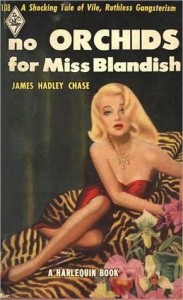
No Orchids for Miss Blandish by James Hadley Chase

Posted February 6, 2013 by Michael @ Knowledge Lost in Pulp / 0 Comments

No Orchids for Miss Blandish by James Hadley ChaseTitle: No Orchids for Miss Blandish (Goodreads)
Author: James Hadley Chase
Series: Dave Fenner #1
Published: Pan Macmillan, 1969
Pages: 188
Genres: Pulp
My Copy: Personal Copy

Buy: AmazonBook Depository (or visit your local Indie bookstore)

Dave Fenner has been hired to find Miss Blandish, kidnapped three months ago; the police have not found her despite the ransom being paid. The suspected kidnappers have disappeared, but the heiress is in the hands of Ma Grisson and her scary henchman Slim, who has wiped out their rivals and taken possession of the girl. The closer Fenner gets the more horrifying the situations appears; in No Orchids for Miss Blandish.

James Hadley Chase has a written a very raw book with No Orchids for Miss Blandish and you can see the obvious James M Cain influence though out this book. But you can’t really fault Chase for that, Cain was a master at noir and it feels like he has taken the genre to a whole new level. For a book written in 1938 I was surprised to see how violent and sexualised this novel is. But on reflection there was no real mention, Chase just hints very obviously and leaves the rest to the reader’s imagination.

From the very start this book hooks you in and takes you on a very dark journey. Written in three viewpoints you get an interesting perspective of what is going on. This was a gruesome depiction of gang life that puts a lot of the noir successors to shame; James Hadley Chase knows how to hit hard with his disturbing characters, fast pace and realistic violence.

Sure, this book may travel into the realms of predictable but this book moves so fast you don’t have time to stop and think about that. Dave Fenner has the makings of a good protagonist and I can’t wait to see where Chase takes him. There are actually two versions of No Orchids for Miss Blandish, the 1938 version which I was lucky to have read and the 1962 revision, because James Hadley Chase thought the world of 1939 too distant for a new generation of readers. When I get a chance I plan to read the revised edition; I’ve heard that it doesn’t really lose any of the raw and realism but it does have the odd mention of televisions.


The Unbearable Lightness of Being by Milan Kundera

Posted February 4, 2013 by Michael @ Knowledge Lost in Literary Fiction / 0 Comments

The Unbearable Lightness of Being by Milan KunderaTitle: The Unbearable Lightness of Being (Goodreads)
Author: Milan Kundera
Translator: Michael Henry Heim
Published: Faber & Faber, 1984
Pages: 314
Genres: Literary Fiction
My Copy: Personal Copy

Buy: AmazonBook Depository (or visit your local Indie bookstore)

The Unbearable Lightness of Being is an existential novel about two men, two women, a dog and their lives. The book takes place in Prague in the 1960s and 1970s and explores the artistic/intellectual life of Czechoslovakian society during this Communist period. Tomáš is a womanising surgeon and intellectual, his wife Tereza is a photographer struggling with all her husband’s infidelities. Sabina a free spirited artist and Tomáš’s mistress and Franz is a professor and also a lover or Sabina. Then there is Karenin, the dog with an extreme disliking to change.

I know the synopsis doesn’t really do much to make this novel interesting but that’s just the basics of it. Really, this is a novel challenging Nietzsche’s concept of eternal recurrence. A concept which hypothesizes that the universe has been recurring, and will continue to recur. This book explores the idea that people only have one life to live and what occurs will only occur once and never again. The book also explores love and sex and whether the two are connected; for Tomáš they are not but for Tereza they are.

There is a lot more philosophical aspects to understand but as I don’t have much knowledge in those areas lets focus on the novel. This was surprisingly easy to read and lyrical and almost dreamlike feel to it but then there is a lot of emotional devastation as well. Not just with Tomáš’s actions but with the communist control over everyone.

From the very start you while see the gorgeous poetic prose within Milan Kundera’s writing and the unique plot concept will initially drive this book for the reader. Then you will continue reading it for the devastating beauty of love, sex, jealously, politics and existence. Once you finish, you might reflect on the philosophical and existential nature of this book. In the end it’s just one of those books that sounds a little weird and unappealing but is really worth reading.


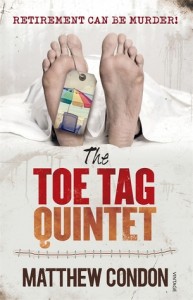
The Toe Tag Quintet by Matthew Condon

Posted February 2, 2013 by Michael @ Knowledge Lost in Crime, Short Stories / 0 Comments

The Toe Tag Quintet by Matthew CondonTitle: The Toe Tag Quintet (Goodreads)
Author: Matthew Condon
Published: Random House, Vintage, 2012
Pages: 341
Genres: Crime, Short Stories
My Copy: ARC from Netgalley

Buy: Book Depository (or visit your local Indie bookstore)

Retirement can be murder! Former Sydney detective recognises someone from his workdays in his retirement home in the Gold Coast. In his hey days, this unnamed detective had to deal with some of the most murderous criminals in Australian history. But in retirement things are so much more deadly in this collection of five novellas originally published in The Courier Mail.

This is a real joy to read but there is something that just doesn’t sit right with me. There is nothing wrong with Matthew Condon’s writing; I think he is great.  I’ve just come to the burning realisation that I’m not a fan of cosy crime. I don’t know why but I can’t seem to find what is cosy about crime.

The characters within this book are great; this old school detective is witty, strong and could have had the making of a hard-boiled character if this wasn’t a cosy crime novel. He was smart and a skilled detective but this was too cosy, I mean who says “Up yours” nowadays and then there is the censored language, it just seems weird.

There are some great elements in these novellas, the humour, the wit and the well-crafted plots. But for me I never could get past the cosiness of these crime stories. They didn’t feel realistic enough and as much as I tried I couldn’t get past this fact. I’m interested to read some more Matthew Condon, he’s skilled writer and maybe he will do better at true crime or non-fiction or the contemporary novels he wrote in the past.


Monthly Review – January 2013

Posted January 31, 2013 by Michael @ Knowledge Lost in Monthly Reading / 0 Comments

As the first month of 2013 comes to a close, it has been amazing to see how much excitement people are having towards both The Shadow of the Wind and the Literary Exploration Reading Challenge. For those who don’t know about the reading challenge, there is still time to join in the fun, so check out my introductory post here.

I’ve been off to a flying start this year, I’ve read twenty books, a feat I’m not sure how I managed, but I’ve had so much fun doing so. Nine of those books go towards the Literary Exploration Reading Challenge and you can find my own record of the challenge here. I’m thinking about trying to read two books for each genre this year and I’m keeping a record of every book and which genre it best fits into on that page as well, just to see which genres need more attention in my exploring.

Highlights of the month for me include; the highly talked about Wool by Hugh Howey, the bittersweet Big Ray by Michael Kimball and the existential The Unbearable Lightness of Being by Milan Kundera. But the one I really thought deserves high praise is Kazuo Ishiguro’s The Remains of the Day, a novel of great beauty, decorum and love lost. I haven’t reviewed these books yet but keep an eye out, they will come. So what have you been reading this month?

Monthly Reading

  • Big Ray by Michael Kimball
  • Black Vodka: Ten Stories by Deborah Levy
  • Crooked Little Vein by Warren Ellis
  • Gangster Squad: Covert Cops, the Mob, and the Battle for Los Angeles by Paul Lieberman
  • In the Midst of Death by Lawrence Block
  • Outlander by Diana Gabaldon
  • Reading Lolita in Tehran by Azar Nafisi
  • Retribution Falls by Chris Wooding
  • Revenge: Stories by Yoko Ogawa
  • The Big Nowhere by James Ellroy
  • The Dark Winter by David Mark
  • The Mad Scientist’s Daughter by Cassandra Rose Clarke
  • The Pirates! In an Adventure with Scientists by Gideon Defoe
  • The Remains of the Day by Kazuo Ishiguro
  • The Silver Linings Play Book by Matthew Quick
  • The Sins of the Fathers by Lawrence Block
  • The Toe Tag Quintet by Matthew Condon
  • The Unbearable Lightness of Being by Milan Kundera
  • Wool by Hugh Howey

The Shadow of the Wind by Carlos Ruiz Zafón

Posted January 30, 2013 by Michael @ Knowledge Lost in Book of the Month, Crime, Historical Fiction / 0 Comments

The Shadow of the Wind by Carlos Ruiz ZafónTitle: The Shadow of the Wind (Goodreads)
Author: Carlos Ruiz Zafón
Translator: Lucia Graves
Series: Cemetery of Forgotten Books #1
Published: Penguin, 2001
Pages: 487
Genres: Crime, Historical Fiction
My Copy: Personal Copy

Buy: AmazonBook Depository (or visit your local Indie bookstore)

Barcelona, 1945; Spain is still dealing with the aftermaths of the Spanish Civil War. An antiquarian book dealer’s son, Daniel, who is mourning the recent loss of his mother, finds comfort in a book called The Shadow of the Wind by Julián Carax. When he decides to hunt down more books by this mysterious author, he is shocked to find someone is on a mission to destroy every copy of Carax’s books. It is possible that Daniel may in fact have the very last copy of a Julián Carax book.

I think I‘m in love…with The Shadow of the Wind. This book has everything you really want in a story; it’s epic, mysterious, and full of adventure, as well as being haunting and beautifully written. The story is set in post–Spanish Civil War Barcelona, and follows the story of a teenage boy, who adopts a book, from the secret library known as the Cemetery of Forgotten Books. The boy becomes obsessed with this book and tries to track down the obscure author of this book.

This is an epic story of murder, madness, doomed love and secrets; while this book may seem over the top, Carlos Ruiz Zafón shows extraordinary control over the plot and language. The atmosphere in the book is beautifully created; it makes me want to go back to Barcelona. But while there is this beauty in the scenery, there is this underlining gothic feel to the whole book that just works really well for a reader like me.

Though the synopsis doesn’t really give you an exciting representation of this book, I can say this book is addictive and a joy to read. I think I became obsessed with this book. It’s like a cult following, where not just the protagonist that is obsessed but the reader becomes obsessed too. I want to adopt a book now.

This book just has something in it for everyone; it’s a rare find to find a book that can cater to such a wide range of people and I think The Shadow of the Wind did just that. If you enjoy this book check out the rest of the series, I thought the prequel; The Angel’s Game was wonderful and really need to get onto The Prisoner of Heaven in the future. It’s been a long time since I’ve read this book (this is an old review) but when the series completes, I plan to read them all again.


What I Talk About When I Talk About Running by Haruki Murakami

Posted January 26, 2013 by Michael @ Knowledge Lost in Non-Fiction / 0 Comments

What I Talk About When I Talk About Running by Haruki MurakamiTitle: What I Talk About When I Talk About Running (Goodreads)
Author: Haruki Murakami
Translator: Philip Gabriel
Published: Knopf Doubleday, 2007
Pages: 180
Genres: Non-Fiction
My Copy: Library Book

Buy: AmazonBook Depository (or visit your local Indie bookstore)

What I Talk About When I Talk About Running is a memoir by Haruki Murakami where he talks about his interest in running. From running for pleasure to competing in over twenty marathons and an ultramarathon. Part training log, travelogue and reminiscence, this is a memoir of Murakami’s passion for running.

Now I’m not a runner and I don’t think I ever will be but I like to read about people being passionate about a topic and although this was brief, the passion was not in short supply. Most people know Haruki Murakami for his postmodern novels which include Hard-Boiled Wonderland and the End of the World, Norwegian Wood, The Wind-Up Bird Chronicle and 1Q84. This is an unusual memoir, not just because it only focuses on one interest, but because I don’t think any other authors have written something like it.

The book tries to explore why he is so passionate about running and why he runs. For a non runner reading this book for its memoir aspects, it’s just interesting the approach he takes. It’s like seeing Murakami’s thought process on the page; not offering tips or anything, just being nostalgic about past runs or discussing plans for a marathon or just tracking his daily runs.

For me this is nothing special, but for people obsessed with running this would be an interesting read. I read just to see the passion he has towards running, as well as the fact it was mentioned in Metroland and I want to be a book hipster. I was surprised how well this worked, like a stream of conscious of Haruki Murakami’s love of running.


The Slap by Christos Tsiolkas

Posted January 25, 2013 by Michael @ Knowledge Lost in Literary Fiction / 53 Comments

The Slap by Christos TsiolkasTitle: The Slap (Goodreads)
Author: Christos Tsiolkas
Published: Allen & Unwin, 2008
Pages: 485
Genres: Literary Fiction
My Copy: Personal Copy

Buy: AmazonBook Depository (or visit your local Indie bookstore)

To celebrate Australia Day (January 26th) Book’d Out and Confessions from Romaholics have hosted a blog hop/giveaway. In celebration of Australian literature I am giving away a copy of one of my favourite Australian novel (open internationally).

At a suburban barbeque, one slap will change the lives of these people. Christos Tsiolkas unflinchingly looks at domestic life in the Australian suburbs in the twenty first century. The slap and its consequences cause everyone to question their own families and the way they live, their expectations, beliefs and desires. A gripping novel of loyalty and happiness, compromise and truth from the very start to the end.

You’ll either love it or hate it; Christos Tsiolkas’ controversial novel The Slap is heavy reading and very confronting and it all starts with a Slap. The Slap starts at a barbeque for group of family and friends, when one adult slaps an unrelated child the universal tension begins. The book changes perspectives of the different characters at the Barbeque to show different emotions and feelings about the events.

The Slap goes through topics like Discipline, Child Raising, Family Life, Adultery, Friends verse Family, Gossip and Multiculturalism. While the characters are extremely flawed and sometimes you want to slap them, don’t let that put you off. If you are not a fan of course language, be warned it does feature very heavily in this book. Apart from that the writing, the characters and plot are well crafted, I have noticed women seem to hate this book more than men, it could be because of the subject matter. But it doesn’t matter whether you think the child deserved to be slapped (He did), or if the adult should have known better (he should have) this book is going to challenge you in one way or another.

The Slap will play with your emotions all the way through this book and you will rage at the characters and want to slap them senseless. But the turmoil and the internal monologue of all the characters was done really well and makes for an excellent read. It’s like you have an intimate look into the head of all the characters involved in this one incident at a barbeque. It’s a compelling read all the way to the end.


To celebrate Australia Day, I am giving away a copy of this book to one of my lucky readers. Entries are open to all my readers as I plan to send a copy of this book via book depository, so if you would like to win a copy of this book, enter below.

a Rafflecopter giveaway

Make sure you pop over to Book’d Out to see the others involve in this blog hop with other chances to win.