Shortlisted for the National Book Award for Translated Literature 2018
Have you ever read a novel that you felt was completely pointless? That is how I feel about Trick by Domenico Starnone. The novel follows the story of Daniele Mallarico a successful illustrator coming to the end of his career who was asked by his daughter to look after his grandson Mario. Set over 72 hours we follow Daniele struggling with his own thoughts towards his illustrations and dealing with his four-year-old know-it-all grandson.
I admit I identified with the solitude and grumpiness of Daniele and was constantly feeling frustrated with Mario. I have no idea how someone deals with a young child that thinks they know everything. Especially when that child wants to do everything because they know how to do it, but, when something goes wrong, breaks down. Daniele’s daughter and son-in-law think that Mario is independent and will look after himself but this is far from the reality.
This is a very plot driven novel and I felt like the characters were too flat. I liked Daniele but in reality I do not know him. An aging illustrator who likes to live alone is the extent of the character. It is hard to write children, so Mario read like a bratty teenager who is in reality a four-year-old. The relationship of Mario’s parents seems like a more interesting narrative but that all happens off the page.
I am disappointed with Trick and am glad that it was a quick read. Translated by Jhumpa Lahiri, this seems to be the main reason Domenico Starnone is getting attention. I plan to give Starnone one more chance with Ties but if that reads similar to Trick, I probably will never return to his writing. I just expect more from my literature.
Longlisted for the National Book Award for Translated Literature 2018
After reading Love by Hanne Ørstavik, it felt rather strange to go to Wait, Blink by Gunnhild Øyehaug. Not because they are both by Norwegian authors but because they both take a small slice of the everyday and explore it. Although that is pretty much the end of the similarities. Wait, Blink reads very differently, it is contemporary look into the life, mainly three woman at different stages of their lives.
Wait, Blink is riddled with pop-culture references, mainly looking at the connection between art and love. While it also feels like Gunnhild Øyehaug is trying to understand this obsession western films have with women in oversized men’s shirts. The novel makes references to film scenes where a women is in an oversized men’s shirt and how it is often a symbol used to represent sex. One of the key example talked about was Sofia Coppola’s 2003 film Lost in Translation starring Scarlett Johansson. Interestingly enough Yngvild Sve Flikke adapted this novel in 2015 and called it Women in Oversized Men’s Shirts (Kvinner i for store herreskjorter).
This novel had a very contemporary feel to it which made it a very quick read. The film as well as other pop-culture references worked for a geek like myself. At the heart of the novel it felt like a poetic look into the lives of three different women. The way they navigated through their own lives and romantic situations were very different. Although I have to disagree with the subtitle of this book; “A Perfect Picture of Inner Life”.
While this is a novel that explores the inner lives of these women, it felt more like a snapshot into their worlds. We have three different women at different stages of their lives but because they are different people, it is hard to get a perfect picture of inner life. This is small glimpses into the lives of three women and while I would love to follow them further (especially Sigrid the young literary student) we only see a fragment and nothing more. From the National Book Award longlist for Translated Literature, Wait, Blink is one of my favourites and I am pleased it is getting some attention.
Shortlisted for the National Book Award for Translated Literature 2018
There is something hypnotic about Love by Hanne Ørstavik that has really stayed with me. Set over a cold night in Norway the novel follows Vibeke and Jon, a mother and son living in a small town. It is the night before Jon’s birthday and we follow them throughout the night. They may be a family but they are on separate journeys.
What really drew me to this book is the uneasy feeling I constantly had around these two different characters. They lived together but they felt separated. There was a tension in the air the entire time and I was never sure if I should trust any characters in the novel. This tension is what made Hanne Ørstavik’s Love a compelling read. The mother/son relationship is not what you expect and feels odd but that is what is driving the novel.
“The sound of the car. When he’s waiting he can never quite recall it. I’ve forgotten, he tells himself. But then it comes back to him, often in pauses between the waiting, after he’s stopped thinking about it. And then she comes, and he recognizes the sound in an instant; he hears it with his tummy, it’s my tummy that remembers the sound, not me, he thinks to himself. And no sooner has he heard the car than he sees it too, from the corner of the window, her blue car coming round the bend behind the banks of snow, and she turns in at the house and drives up the little slope to the front door.”
It is rare to read a novel where the mundane feels so thrilling. Love is a novel of the everyday life but written almost in a way a thriller would be written. The shifting narrative helps keep the two connected while the plot is showing the disconnection between the two. It really was a brilliant way to have two characters remain connected and disconnected at the same time.
The emotional tension Hanne Ørstavik created in Love is what makes this a standout read. Martin Aitken was able to provide a brilliant translation from the Norwegian and I can see myself dipping into this one again and again. I have not been able to stop thinking about this one and I feel like the way Ørstavik was able to manipulate the reader, but in a good way. It her ability to make the everyday feel eerie, mixed with her masterful storytelling. It is hard to keep that tension at the best of times but Love makes it look easy.
For the past few months it has felt like I have really slowed down in my reading, and that felt a little demoralising. Granted, to use the world ‘demoralising’ when referring to one’s reading life is very much a first world problem. To think my biggest problems in my life is about my reading journey really does mean that I have a pretty great life. I am currently in a period of uncertainty with my job where I am unsure if I will be made redundant and yet my concern is directed towards how many books I have read in a single month. As much as I would love to keep my current job, I feel at ease around the whole situation, one path leaves me with work, the other leads to a pay out and more reading time. While I do experience a little worry, it only comes in short waves and honestly I feel like they would be stupid to get rid of me.
Getting back to my reading month, I started off by finishing The Shape of the Ruins. I had put this one aside for the entire month of August because it was Women in Translations Month. Which makes me feel like I have done this book a disservice. Setting down a book normally is caused by not enjoying what I am reading but in this case I was literally distracted by other books. I am more interested in being a part of this great reading event. Juan Gabriel Vásquez is an amazing writer and I feel like my recent discovery of his books is one of the highlights of the year, but when women in translation month came along I could not stop myself from focusing on that event. Do you ever get that feeling? Sometimes I want to go into the new month with a clean slate but there will always be other books to distract my reading journey. I have found my reading niche, and I am happy that my focus is solely on translations, probably because I am now being distracted by less books than before.
One of the highlights of September was a weekend away from everything. My wife had to go down to Brisbane for work, and I decided to come along for the ride. I had a few days in a hotel room with some books I wanted to read. This was an amazing experience. I took down Aracoeli, Fever and Spear and Wait, Blink to occupy my time. There is something refreshing about stepping away from the distractions of your life to focus on some reading. I think this reignited the passion within me and kicked my reading back into normal gear. I was not experiencing a reading slump but I think I was lacking the motivation to read as frequently as I normally do. As far as the three books are concerned, Fever and Spear was the clear highlight. I think I am not smart enough to fully appreciate Aracoeli, but I will get there and Wait, Blink was just a fun quirky read.
The National Book Award in America last year announced that they had added a translated literature award and this month we finally got to see what was on their first longlist. My initial reaction to the list was one of curiosity, mainly because I was unfamiliar with half the picks. There were some obvious choices like Flights which won the Man Booker International prize this year. However The Beekeeper is an interesting pick, mainly because it is the only non-fiction book to make the list. I do feel like I should read the entire longlist just to be a part of the conversation. I listen to a podcast called The Three Percent Podcast which focuses mainly on translations and the publishing world, and just listening to the way they talk so critically about this longlist makes me envious. I know I have only recently focused on reading translations but I hope to be able to get to a point in my life where I can just scoff at a longlist the same way as the hosts. This kind of reaction happens all the time when an award like the Man Booker International longlist is announced. I feel like that kind of familiarity towards the choices is definitely a reading goal for me. Out of the ten books picked, I had only read one of the books picked (Flights), but at the end of this month I have completed three more (Wait, Blink, Love and Trick). Two others are currently being read (Comemadre and Disoriental). Which is leaving me in a really good position to complete the rest of the list, which are Aetherial Worlds,The Beekeeper, One Part Woman and The Emissary. Expect to see reviews from all these books in the next few months.
I finished off the month reading African Psycho, which is obviously a parody on American Psycho but I think I enjoyed it more. Not because there was anything special about the novel, mainly because it was a very different book to what I expected. Half the book I felt was a struggle, and that seemed to be the author emulating that obsession found in American Psycho, but the ending really pulled the whole book together. Finally I ended the month on a low note, The Silence of the Girls, which was the book club pick for October. It was a boring retelling of the Trojan War told from the perspective of a female slave. There was so much potential in exploring the fears this woman might have faced but Pat Barker missed the opportunity. This was told from the first person perspective of the slave so we could hear her thoughts, but for the most part the author wrote lines like “I was scared” regarding a situating with nothing more. You know that old writing advice “show don’t tell”? Pat Barker should have listened to that advice. Just writing about this is making me angry and I have said more about this novel than the others because this will be the last time I put any effort into writing about The Silence of the Girls.
I mentioned that I am currently reading Comemadre and Disoriental. I also mentioned that I want to complete the National Book Awards longlist for translated literature, so I do need to mention that again. I have been feeling very motivated and I hope to take that opportunity to write more. I still have a few reviews to write but I also want to get back into BookTube. I love talking about literature and looking for as many ways to do so as possible. Have you seen The Literary Discord? For those who do not know, Discord is like a modern day forum, it was created mainly for games as a place to build communities, but other communities have utilised it as well, including me when I created The Literary Discord as another place to talk about literature. My plan to return to BookTube is to push myself to speak about books that do not get enough attention (translations). It is a way to practise speaking and develop my voice. I have this blog and my podcast that I am passionate about, I hope to be able to bring that same passion back to BookTube, because I lost it. I hope this new found energy continues for me and I hope you have all had a great reading month.
When an Italian booktuber (Bruno) offers some recommendations for great Italian authors to check out, I am going to pay attention. In his video, he recommended Alberto Moravia and Elsa Morante, who were married for twenty years. Comparing Elsa Morante to Elena Ferrante peaked my interest and the recommendation given was her last novel Aracoeli. A melancholic novel about an aging man attempting to recover his past and get his life on track. Stuck in a dead-end job for a small publishing house, 43 year old Manuel travels to the home town of his mother Aracoeli, to try and understand her.
People that have a deep understanding of psychology would get more from Aracoeli than I did but what struck me is his obsession with his mother. I do believe that Manuel is a very unreliable narrator so all his thoughts and feelings have to be considered before discovering the truth. His self-loathing I could handle but I was often frustrated with his short-sightedness. It was difficult to like this character because I found myself constantly trying to analyse him, never sure if I was understanding who he truly was.
Aracoeli was an enigma as well, mainly because we are constantly inside Manuel’s had. I never felt like I was fully understanding this character, and when the novel talks about how she contracts an incurable disease (syphilis is implied) or how she was a nymphomaniac I spent more time wondering about her situation. She was a victim of her circumstances and the way women were treated. Reading Aracoeli felt more like sifting through all that is going on to find the truth, but that is part of its appeal.
If I am to compare Elena Ferrante to Elsa Morante, it would be in relation to the way both wrote about the treatment of women. Both wrote incredibly complex Neapolitan women trying to navigate their way through life. I think Ferrante is a much easier read but I might consider Morante a much more rewarding experience.
I do not begin to understand the complexity of Aracoeli and I know it will be many read throughs before I even scratch the surface. I love novels like this because they make you work for a much more rewarding experience. I may not understand Aracoeli now but I hope to in the future. There is so much despair and destruction in the book, but I find myself pondering it weeks after I finished it. I have to return to Aracoeli, it is the type of book that leaves you no other choice.
There is something almost genre bending about Javier Marías’ Fever and Spear. To call it a spy novel would do it a huge disservice. The best way I could describe this novel is to call it a character study. Our narrator, Jacques Deza has recently separated with his wife and, to put some distance between the two, has moved from Madrid to London where he meets an old friend, Sir Peter Wheeler. Deza is recruited into Her Majesty’s secret service where he starts investigating the shady underbelly of international business.
“How can I not know today your face tomorrow, the face that is there already or is being forged beneath the face you show me or beneath the mask you are wearing, and which you will only show me when I am least expecting it?”
Look, the plot to this is not really important, and this makes it rather difficult to write about this novel. Fever and Spear is the first book in the Your Face Tomorrow trilogy, and it appears to be some kind of metaphysical thriller, meaning it explores the philosophical notions of metaphysics in the form of a thriller. I talked about literary thrillers in my review of Purge and how difficult it is to find good examples of the genre. I mentioned The 7th Function of Language and In the First Circle as great examples and I seem to have stumbled across another one with Fever and Spear.
“One should never tell anyone anything or give information or pass on stories or make people remember beings who have never existed or trodden the earth or traversed the world or who, having done so, are now almost safe in uncertain, one-eyed oblivion. Telling is almost always done as a gift, even when the story contains and injects some poison, it is also a bond, a granting of trust, and rare is the trust or confidence that is not sooner or later betrayed, rare is the close bond that does not grow twisted or knotted and, in the end become so tangled that a razor or knife is needed to cut it.”
I struggle to find the words to describe how much I enjoyed this novel. There is something about the way Javier Marías explored the past, present and the future that makes it difficult to write about. I had such an amazing experience here and I want to tout this book out but I lack the words. Needless to say, I would have picked up Dance and Dream (book two) right away if I had access to it, and I did not have a huge reading pile.
I might attempt to review Fever and Spear again in the future, I know I will reread it many times. I need to read the entire trilogy to see if I can get my thoughts straight. I know this is no way to review something you connected with, but my thoughts about this novel do not seem to fall into place. I write this mainly to try and make sense of my opinion. I do not think it helped. I hope I have said enough to at least convince someone to give Javier Marías a go, if not Fever and Spear.
Longlisted for the Man Booker International Prize 2019
Juan Gabriel Vásquez is quickly becoming a new favourite of mine. Having read The Sound of Things Falling and now The Shape of the Ruins, I cannot help but appreciate his style. I compared him to Roberto Bolaño in my previous review, mainly because they both like to insert themselves into the narrative. Bolaño has his alter ego Arturo Belano show up in a few of his novels. Whereas Juan Gabriel Vásquez just used the same name for his characters. I am positive this are not just a character that shares the same name. His approach to literature is to explore Columbian history in a fictionalised account, but I think that these characters are just a device to tell the reader how the past has affected him.
The Sound of Things Falling looks on the impact the Pablo Escoba had on Colombia. While The Shape of the Ruins is focused on the murders of both Rafael Uribe Uribe in 1914 and Jorge Eliécer Gaitán in 1948. Rafael Uribe Uribe’s political ideas lead to the establishment of Guild socialism and trade unions in Colombia, while Jorge Eliécer Gaitán was leader of a populist movement in Colombia. Their political ideology were very different but Vásquez uses the investigations into their deaths as a way to look at Colombia. Particularly how it lead to a ten year civil war known as La Violencia.
Within the novel these two political figures are often referenced in relation to two different facts. Rafael Uribe Uribe was the inspiration for the character General Buendia in Gabriel García Márquez’s in One Hundred Years of Solitude and Jorge Eliécer Gaitán is referred two as the Colombian J.F.K. Which to my mind made me automatically look at this novel as a way to explore the cultural significance of these two murders as well as Colombia on the world stage. Particularly the cycle of violence that is constantly putting the country in the news.
I find it difficult to review a novel like The Shape of the Ruins, not because there is not much to say, quite the opposite. In fact, it is because I do not know the history of Colombia well enough to voice any interesting opinions. Books like this are often referred to as autofiction, which is a literary term that refers to a fictionalised autobiography. Most works of fiction have elements of truth within the characters but these books are using the experience and history to build a story around it. I read translations because I want to understand the world a little better, and I appreciate the chance to learn their history in the process. This is why I love authors like Juan Gabriel Vásquez.
To be fair, I have been obsessed with Latin American history for a few months and I have so much to read and learn. I turn to Juan Gabriel Vásquez as a new default recommendation. He will sit next to Roberto Bolaño as some of my favourite authors from South America. There are plenty more authors to explore on this continent but I have to recommend Ariana Harwicz, Mariana Enríquez, Pola Oloixarac and Samanta Schweblin as well. These four have all been recently translated and make up some of the exciting emerging female authors coming out of the continent, although these four are all from Argentina.
Having read Juan Gabriel Vásquez in the past, I would recommend starting with The Sound of Things Falling. There is something about exploring the effects the drug cartels had on the country that appealed to me. The Shape of the Ruins is also a great novel and if you care more about the political landscape then jump straight to this novel. I have a few more novels to read from Juan Gabriel Vásquez, which I probably will not read this year, but they will be coming up soon. Please recommend me a Vásquez to try next, or just recommend me an author that has a similar style.
I love a good literary thriller but I rarely find one that really impresses me. There is something about taking genre fiction and using it to explore social issues. If done right it provides us with a fast paced narrative full of thrills but will also leave the reader with plenty to think about. A recent example that comes to my mind is The 7th Function of Language by Laurent Binet. Then there is Purge. The 7th Function of Language was able to blend literary theory in a fast paced plot, while Purge takes more an approach to explore the complex social and political issues facing Estonia after the Soviet collapse.
Aliide Truu is an elderly woman living in the Estonian countryside which keeps her isolated from the outside world and all the tragic events happening around her. One day she discovers another woman looking into her kitchen window, who turns out to be Zara, the granddaughter of her sister Ingel. Zara is on the run from the Russian mafia, after they forced her into the sex trade. Purge is an unflinching novel that explores the obstacles women face in this rapidly changing society.
“Those who poke around in the past will get a stick in the eye.”
Both women have their past and secrets which they rather not discuss. For Aliide, an escape from the current political issues felt like only answer. A feeling that feels all too familiar with the current state of the world. However what we truly know about Aliide is still surrounded in mystery. It is rather Zara’s life that is the major focus, exploring the corruption and the sickening world of human trafficking. All of which feels like a direct result of that power vacuum in the country.
“She found it hard to believe that there would be any bold moves, because too many people had dirty flour in their bags, and people with filthy fingers are hardly enthusiastic about digging up the past.”
Setting the novel in 1992 allows the reader to explore an Estonia that was going through many recent political changes. In the late 1980s Estonia saw many political arrests for crimes against humanity. This brought great resistance against the Russification of Estonia, especially with the collapsing Soviet Union, which lead to their eventual independence in 1991. The country’s social and political values were changing, for better or for worse, this lead to the emerging Russian mafia.
The bleak exploration into Estonian life from the perspective of two women with different pasts tends to remind me of the Soviet novels I have read in the past. Novels that look at both political and social issues that a country faces. For Sofi Oksanen, it allowed her to focus on the hardships facing women of the country as well. The style and fast paced narrative of Purge reminds me specifically of the Aleksandr Solzhenitsyn novel In the First Circle. Both exploring the effects of the Soviet era on the people within the narratives. In the First Circle focuses on life during the Soviet era while Purge is looking more at the after effects.
I have read Sofi Oksanen before and found her to be very bleak. The novel When the Doves Disappeared just felt dense and I found myself struggling to get through it. It is a novel I would love to dip into again at some point, but I think Purge offered me much more. With Purge, I have a new found appreciation for Sofi Oksanen and the novel motivates me to read more from her. Purge is a novel I highly recommend, but be warned, Baltic literature tends to be very bleak.
I talked a little about my vacation to Tasmania but I want to take some time to talk about Melbourne. After spending two wonderful weeks exploring what Tasmania had to offer, we finished off with a weekend in Melbourne to attend the Melbourne Writers Festival. There has been sparks of negativity going around about the festival, often directed at the new artistic director, Marieke Hardy. Most of the complaints were directed towards how different the program was this year. The festival had adopted a theme of ‘a matter of life and death’. Which was interpreted as a grim topic but in reality there was so much to discuss.
I know we struggled to pick what events we wanted to attend and had to make some heavy sacrifices in order to accommodate everything. The biggest sacrifice was missing out on seeing J.M. Coetzee. However the events we did attend were all amazing and well worth our time. Starting with Written on the Body, a conversation with essayist Ashleigh Young. I wanted to see this event because I want to find new ways to improve my writing and I was looking for inspiration. Ashleigh Young runs a blog called EyelashRoaming and I have to admit that I think this helped me spark my passion. I feel the need to devote more time writing essays rather than reviews, maybe in the style of journalist articles or just creative non-fiction. I need to practise and craft my skills. I probably should write about a topic and see where it takes me. I am obsessed with literature but maybe I need to write about other topics as well. We shall see where this leads me or if I will fall back into old habits.
Next we heard Masha Gessen talk about her new book The Future is History: How Totalitarianism Reclaimed Russia in her talk The Fifth Estate. I admit I have not read anything from Gessen but I am interested in learning about Russian history. Again this was an event to understand more about the process involved in non-fiction writing. While this event did not give me any writing sparks, it was worth hearing Masha Gessen speak. How do you get to a point where you can be considered an authority of a topic? I will pick up some Gessen books in the future, I think there is so much to learn and she just seems like a writer I should be following.
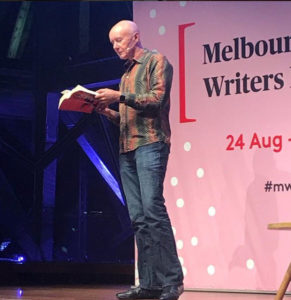
Irvine Welsh reading from Dead Men’s Trousers
Irvine Welsh was next, with his event Redemption. I have read Welsh before and while I have not read Trainspotting I thought it would be good to see him talk about his new book Dead Men’s Trousers. Besides, he was being interviewed by the amazing Omar Musa, and this was my chance to see him speak as well. I am completely clueless about drug culture so when Irvine Welsh started talking about Dimethyltryptamine (DMT), I had no idea what he was talking about. I am a fan of transgressive literature, so a chance to see Irvine Welsh was one I had to take, though I can honestly say I may never read his novels in the future. From the outside, I feel like Welsh is a little self-destructive but that is very judgemental, however it feels like it links with his writing style. Although I think maybe Welsh has slowed down in his old age. If I wrote fiction, I have an idea to write about someone who wishes to be a writer and thinks that being self-destructive is the way to approach that dream (sort of an auto-biographical look at my past but taking it much further).
I feel like I was the only male in the next event, which was called Sacred Texts: The Book That Made Me a Feminist. This had writers Neko Case, Maxine Beneba Clarke, Michelle Law, Hollie McNish and Emily Nussbaum all in conversation with Zoya Patel about literature, television, music and movies. I love an event that is just a casual conversation about books, it is what I look for when picking an event, as well as picking a podcast. I was pleased to discover Emily Nussbaum who gave plenty of great TV show recommendations. We actually watched Claws on her recommendation. This is the type of event that made me excited to talk about literature and disappointed not many men showed up. The first book that made me a feminist was probably Frankenstein.
Leigh Sales was hosting an event called A Toast: Leigh Sales’s Dream Dinner Party. Being a fan of her podcast Chat 10 Looks 3, we made sure we had tickets. This event had Leigh talking to Lachy Hulme (Romper Stomper), Tony Martin (Martin Molloy), Jan Sardi (Shine) and Samantha Winston (Wentworth) about movies. While I would have preferred to have a talk about literature, like I said before, I like the casual conversation approach. The final event was a conversation about the SBS mini-series Homecoming Queens. Yumi Stynes talks with show creators Corrie Chen and Michelle Law as well as Yassmin Abdel-Magied. This was an amazing event, it was just nice to see four women talking about representation and their own thoughts on the state of the media and pop-culture. If you have never seen Homecoming Queens, I highly recommend you checking it out. I believe it is still on SBS On Demand. We may not have met the amazing Michelle Law but we did meet her mother. Before the event we were casually talking about Michelle and Benjamin Law, when we discovered their mother was standing in front of us.
The Melbourne Writers Festival, to me seems to be doing something far more interesting than the standard writer’s festival. The themed events offered a continuity between the events but still leaving it up to interpretation. I was pleased to see a lot of diversity in the events and speakers. I hope Marieke Hardy continues on as the artistic director, I expect a lot of great events in the future. I just hope I get a chance to see some of them.
August is Women in Translations month, which means there is a big influx of people reading translations, even the publishers and big bookish media seem to promote the event. This feels like a double edge sword for me, while I love that more people are reading from my corner of the bookish world, there are plenty of cringe worthy moments to be had as well. There are people who like to make themselves the authority of the topic despite showing no interest previously in the male/female balance in the world of translations. Admittedly this reaction I have is just my grumpiness coming to play and in reality I should be thankful to see so many people participate in a month dedicated to reading women in translations. For those that did not want to dedicate a whole month, some BookTubers even put together a Women in Translations readathon, but I will not be discussing my problem with readathons here.
I had planned my reading month, thinking that while vacationing around Tasmania I would have more reading time than expected. I packed four books to read during the trip, plus a kindle but I only managed to complete one novel during that entire trip, and it was not even a book I was enjoying. Prior to my vacation, I had read Convenience Store Woman, a book that I still think about to this day. The hype surrounding this book is justified. I also read The Door with my wife, which was discussed on the latest episode of Lost in Translations. Before my trip, I scheduled six reviews for my blog, all being women in translations. I am pleased to say, that I am pretty much up to date with reviewing, as I have made the choice not to review every book I read. I want to spend more time writing essays and improving my writing abilities so while reviews seem to be an important aspect of my blog, I hope this means that I will write more.
Tasmania was an amazing experience, I have not been there before and I really enjoyed the cold weather. I got to experience snow falling for the first time, most non-Australians might think this is not as special as I make it out to be. The book I read while away was Oneiron; it was not for me, and I really struggled to get through it. I understand what Laura Lindstedt was trying to do by putting these women in this situation and have them reflect on their lives but I was disappointed. I did however start Aracoeli and I am having a much better experience. Elsa Morante is a wonderful writer and for those who do not know her, she is one of the authors that influenced the writing of Elene Ferrante.
During my trip I visited bookstores every chance I got, which did leave me with a much heavier bag by the end of the trip. I wanted to limit my purchasing by focusing on expanding my women in translation collection but I failed at that. So many stores seemed to have a very limited selection for translations, which is fast becoming the biggest downside of my reading niche. The feeling of leaving a bookstore empty handed is heart breaking for a book lover. However, if I started to complain about the amount of books I did end up purchasing, I would be lying to myself. I have so many amazing books to read, I just need to find the time.
After Tasmania we stopped in Melbourne for the weekend and attended the Melbourne Writers Festival. This year had an amazing line up and I think I want to write about what I saw in a different post. The festival has inspired me to be more active in my blogging and to write more pieces, so let’s see if it pays off. The final book I read before going back to work was Sofi Oksanen’s novel Purge. Previously I read When the Doves Disappeared which I liked but did not love, honestly, I think Purge is a far superior novel. Because it was Women in Translations month, I think it is necessary to check my reading stats to see if I have a balanced reading life this year. I am pleased to say that 75% of my reading have been translations, which is indicative of my passion. With 52% being books written by women. I hope to maintain this balance, but I know how easy it is to have the statistics change.

 Title: Trick (Goodreads)
  Title: Wait, Blink (
 Title: Love (
 For the past few months it has felt like I have really slowed down in my reading, and that felt a little demoralising. Granted, to use the world ‘demoralising’ when referring to one’s reading life is very much a first world problem. To think my biggest problems in my life is about my reading journey really does mean that I have a pretty great life. I am currently in a period of uncertainty with my job where I am unsure if I will be made redundant and yet my concern is directed towards how many books I have read in a single month. As much as I would love to keep my current job, I feel at ease around the whole situation, one path leaves me with work, the other leads to a pay out and more reading time. While I do experience a little worry, it only comes in short waves and honestly I feel like they would be stupid to get rid of me.
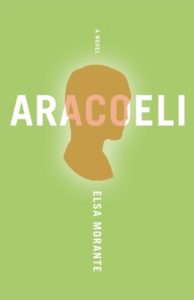 Title: Aracoeli (
 Title: Fever and Spear (
 Title: The Shape of the Ruins (
 Title: Purge (
 I talked a little about my vacation to Tasmania but I want to take some time to talk about Melbourne. After spending two wonderful weeks exploring what Tasmania had to offer, we finished off with a weekend in Melbourne to attend the Melbourne Writers Festival. There has been sparks of negativity going around about the festival, often directed at the new artistic director, Marieke Hardy. Most of the complaints were directed towards how different the program was this year. The festival had adopted a theme of ‘a matter of life and death’. Which was interpreted as a grim topic but in reality there was so much to discuss.