Category: Crime

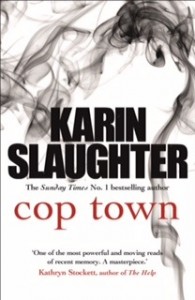
Cop Town by Karin Slaughter

Posted July 3, 2014 by Michael @ Knowledge Lost in Crime / 0 Comments

Cop Town by Karin SlaughterTitle: Cop Town (Goodreads)
, 2014
Pages: 416
Buy: AmazonBook Depository (or visit your local Indie bookstore)

Karin Slaughter is a prolific crime writer whose novels mainly are in the Will Trent or Grant County series. She is a writer I never thought about picking up, mainly because I avoid bestseller crime novels (they are too formulaic) and I don’t like the idea of starting a series that already has so many novels to catch up on. Can you imagine trying to catch up on something like Sue Grafton’s Kinsey Millhone (currently on book 23) series? When I saw that Cop Town was a new standalone novel by Slaughter, I knew this was my chance to try her without making a huge investment.

Cop Town is a police procedural focusing on two female officers working for the Atlanta PD in 1974. Kate Murphy is a beautiful new recruit that comes from a wealthy family; she is determined to make it on her own. Maggie Lawson is a hardened no-nonsense type officer from a cop family that has been on the force for a while now. Right off the bat you can pretty much guess the themes within this book; sexism, racism, police corruption/brutality and that is before even understanding what type of crime is involved in the book. However, the central mystery within this novel revolves around the search for a cop killer, but for me this plot took a backseat to the themes.

I feel like Cop Town mainly focused on the gender imbalance in society, though set in 1974 the reader can still see just how far we have come toward sexual equality (not far at all). I want to focus on two little incidences that happen in the book that highlight this and don’t give away any spoilers. Firstly there was an incident in the novel were Kate was basically told by a married man that ‘wives are for babies and women like you are for fun’. Lines like that are not just a feminist issue but it also shows a fundamental flaw in our social thinking. The idea that sexual satisfaction can’t happen in a marriage is still a very real problem nowadays and too often portrayed in the media.

The second issue involved Maggie, with a cop killer on the loose her uncle forcefully asks her to quit the force to keep safe. This scene made me think that the biggest risk to Maggie’s safety was her family more than the cop killer. The idea of wanting a woman to quit the force while you plan to remain and do something about this issue is problematic and raises many questions about equality. I’m not going to go into too much detail about my thoughts with these two scenes but I thought it would be nice to just highlight what this book is dealing with while avoiding spoilers.

Normally when I read a crime novel, I read it for plot and I tend to stick to the ones that dive into the dark and twisted. The exception is obviously hard-boiled and noir but I will admit that even if Cop Town doesn’t fit my preferences in crime novels I was glad to read it. The themes that this novel explores made this both an enjoyable and compelling read, even if I didn’t think much of the plot. Can’t say I will revisit Karin Slaughter again, however if another standalone novel offers a similar experience I may reconsider.
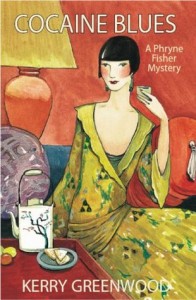

Cocaine Blues by Kerry Greenwood

Posted May 24, 2014 by Michael @ Knowledge Lost in Crime / 2 Comments

Cocaine Blues by Kerry GreenwoodTitle: Cocaine Blues (Goodreads)
Author: Kerry Greenwood
Series: Phryne Fisher Mystery #1
Narrator: Stephanie Daniel
Published: Poisoned Pen Press, 1989
Pages: 175
Genres: Crime
My Copy: Audiobook

Buy: AmazonBook DepositoryKindle (or visit your local Indie bookstore)

Miss Phryne Fisher is a fantastic character; I first encountered her in the TV show Miss Fisher’s Murder Mysteries. I prefer my mystery novels to be dark and hard-boiled but in the effort to be a literary explorer, I decided to pick up the first in the Phryne Fisher novels. What I love about the TV show plays a small part in this cosy crime novel.

Set in 1920’s Melbourne, Cocaine Blues follows Miss Fisher as she tries to hunt down an illegal abortionist who is leaving so much damage that the women are lucky to make it out alive. While cocaine is fast rising as the drug of choice in high society, Phryne Fisher finds herself caught up in web of smuggling, corruption and Turkish baths. Cocaine Blues’ mystery may be basic and the resolution far too convenient but this book sets up Phryne Fisher as a private detective that will solve a mystery with style and grace.

This novel is evidently focusing on the lifestyle of a 1920s socialite; take out the mystery and you are still left with a trendy Jazz age story with a strong heroine. The demographic for this novel is clearly focused towards woman; Kerry Greenwood often takes time to describe every inch of Phryne’s outfit and style. Almost to a point where I got a little angry by it, but this translates well to television as visual element is one of the reasons that make the show so great.

Phryne Fisher is a wealthy flapper with plenty of spare time; she is a strong willed feminist and a sensual being that shocks high society in 1920s Melbourne. She seems to have a wealth of knowledge but I can’t seem to pick her age, I gather she must be middle aged with all her life skills but Kerry Greenwood never mentions her age. She takes the time to go into great detail about everything she is wearing, why not give us an idea of her age.

I might be biased towards the TV show Miss Fisher’s Murder Mysteries but I think that captured Phyrne’s personality and the essence of what Greenwood was trying to write far better than this novel. It was fun to read and I enjoyed experiencing Phryne Fisher’s personality on the page. However I think the TV adaptation does a far better job with all the other characters, including Dot, Bert and Cec. Unfortunately Jack Robinson only got a look in and I’m finding it hard to remember if Hugh Collins even appeared.

If you are looking for a cosy crime novel with a strong kick-ass female detective then Cocaine Blues might be worth checking out. There are currently twenty books in the Phryne Fisher series. Also, as I mentioned a few times, the TV series is excellent. I don’t know if I will read any more in the series, it really depends if I need any light fillers to read and if I have access to the next book. I doubt I’ll ever run out of books to read but who knows maybe another dip into the world of Miss Fisher might be calling me and I can read the next book in the series, Flying Too High.


The Thousand-Dollar Tan Line by Rob Thomas & Jennifer Graham

Posted May 2, 2014 by Michael @ Knowledge Lost in Crime / 2 Comments

The Thousand-Dollar Tan Line by Rob Thomas & Jennifer GrahamTitle: The Thousand-Dollar Tan Line (Goodreads)
Series: Veronica Mars #1
, 2014
Pages: 324
Buy: AmazonBook DepositoryKindle (or visit your local Indie bookstore)

Veronica Mars is quite possibly one of the most interesting characters on TV. She’s intelligent, witty and snarky; think Philip Marlowe meets Nancy Drew. First of all, if you haven’t seen the TV show, I highly recommend you do so first. Watch the show then the movie and then you’ll be ready to read this novel. This new series takes place after the events of the movie, which means not only do I have to avoid spoiling the novel, but I must also try and avoid any major spoilers of the movie. I’m sure there will be spoilers from the TV show (mild spoilers from the movie as well) but that really can’t be helped.

Veronica Mars is back in the land of sun, sand, rich entitled kids, crime and corruption otherwise known as Neptune, California. A town that has no middle class, you are either rich or you are considered low class, and the Sheriff, he comes down hard but only on those below the poverty line. When a girl goes missing at spring break, a media frenzy follows but the Sheriff’s department are not being helpful. Veronica is hired to find the girl but this leads her into a dangerous underground of drug and organised crime.

All your characters are back, with one surprise. I’m pleased to report that everyone and everything in Neptune felt authentic and I’m so happy to see that Mac had a bigger role as Veronica’s sidekick. There is one major flaw in this movie, it changed perspectives; the TV show and movie are all told in a first person narrative but the book is in third person. Which is strange, Veronica Mars’ first person narration is iconic to the brand and also a vital part of the neo-noir style. While that noir style is still evident in the novel it just didn’t feel the same.

Another major flaw in the novel is the missing ‘bigger’ mystery. It was what made the TV show so great; ‘who killed Lilly Kane’ is what got me addicted to the show and each season had a new mystery to solve. I would have liked to see this return in the new book series but much to my disappointment it didn’t. These books are marketed to fans of the Veronica Mars brand and taking away pieces that make the show/movie great really does not do this novel or the others any justice.

I am a marshmallow (if you don’t know what that is then maybe this book isn’t for you) so I obviously loved this novel and enjoyed being back in Neptune. I will be reading any Veronica Mars novel that gets released and backing any kickstarters for any more possible movies. It was fun to stay in Veronica Mars’ world but I would like to know what happened in the ten years between the TV show ending and the movie. I’m hoping this series will tell me more about Veronica’s university and FBI years.


Big Bad Wolf by Nele Neuhaus

Posted April 17, 2014 by Michael @ Knowledge Lost in Crime / 0 Comments

Big Bad Wolf by Nele NeuhausTitle: Big Bad Wolf (Goodreads)
Series: Bodenstein & Kirchhoff #6
, 2014
Pages: 404
Buy: Book Depository (or visit your local Indie bookstore)

After finishing The New York Trilogy I needed something light, something I didn’t have to analyse. I picked up Big Bad Wolf because I enjoyed Snow White Must Die so much. I’m not saying that I can’t analyse a novel like this one (you can analyse every text), I just think at times some light reading is needed. Big Bad Wolf tells the story of a crime that happened on the river Main near Frankfurt. Investigators Pia Kirchhoff and Oliver von Bodenstein are back to investigate the crime, as the case progresses they find it taking them into a pit of evil and cruelty in the midst of a middle class utopia.

I am trying to make an effort to read more translated fiction; I loved Snow White Must Die which is book four in the series but only the first one to be translated into English. This is book six in the same series and I have to wonder why a publisher would publish books in such a weird order; this was a similar issue that happened with Jo Nesbø. I understand that a publisher would want to translate the novels that will sell the best but if Nele Neuhaus’ popularity continues to grow at this rate we will have another Nesbø situation.

Everything I loved about Snow White Must Die is absent in Big Bad Wolf; I think the problem is that Pia Kirchhoff and Oliver von Bodenstein are considered the main protagonists while Snow White Must Die focused more on the life of a man who served ten years for a crime he didn’t commit. That is what fascinated me but Big Bad Wolf is just another crime novel.

I’ve read so many great crime novels now that I find most of them clichéd and formulaic, Big Bad Wolf isn’t that bad but I’m looking for books that do something different and fresh with the genre. There are some decent moments in Big Bad Wolf, some unexpected twists but I wanted more. The novel is darker than most popular crime novels but keeps to the standard formula. One thing I did find difficult about this novel was the amount of view points, making it difficult at times to understand what was going on but this is an acceptable method for building suspense.

I highly recommend Snow White Must Die, if you haven’t tried some German translated crime before then this might be a good starting point. As for Big Bad Wolf, I’m disappointed with the end result but others might enjoy it more than I do. I hope Nele Neuhaus’ other novels are more like Snow White Must Die but I won’t be in a hurry to try her works again.


The New York Trilogy by Paul Austen

Posted April 13, 2014 by Michael @ Knowledge Lost in Crime, Literary Fiction / 2 Comments

The New York Trilogy by Paul AustenTitle: The New York Trilogy (Goodreads)
Author: Paul Auster
Published: Penguin, 1987
Pages: 308
Genres: Crime, Literary Fiction
My Copy: Audiobook

Buy: AmazonBook DepositoryKindle (or visit your local Indie bookstore)

If you want to try a metafictional detective novel, then look no further than The New York Trilogy by Paul Austen. Originally published sequentially as City of Glass, Ghosts and The Locked Room, these three interconnecting stories have been since collected into a single volume. Heavily influenced by the post-modernist movement, this novel blends elements of neo-realism, soft-boiled fiction and of course, metafiction. Even the pulp style cover (illustrated by Art Spiegelman) has a metafictional style to it.

I really wish I had a better grasp on post-modernism; there is a lot of literary theory that must go into fully understanding a novel like The New York Trilogy. My level of understanding of post-modernism might hinder this review but I will do my best to add something valuable here. Starting with a look at any example of one of the narrators; such as the one known as Peter Stillman, or is he? Maybe his name is something entirely different; maybe it is Paul Auster. This gives you an idea of just how you have to read this book; continuously questioning everything and assuming things are not as they have been told. This does make the novel difficult to read, I had to take my time with it and reread almost everything.

The first story City of Glass follows a detective fiction writer that becomes a private investigator. This unnamed narrator explores layers of identity and reality; often to Paul Auster (the author), Paul Auster (the writer), Peter Stillman (the mark), the other Peter Stillman (the son) and finally Daniel Quinn (the protagonist). The story follows this narrator as he descends into madness as the reader follows close behind. This is story that explores the relationship between the author, characters and the reader in a twisted kind of way. Essentially asking us to consider who has the real power in this relationship?

Ghosts follows the story of a private eye called Blue who is hired to follow Black; he has been hired by White to write down everything Black does. Only problem is that Black doesn’t do too much apart from sit and write all day, which means Blue spends all day sitting and writing. This is a story that explores the issue of who has the real power, the author or their characters. Paul Auster is showing us his views towards writing (sitting and watching what the character does).

Finally in The Locked Room, the title suggests that the story is referencing the locked room mystery archetype. It tells the story of a writer that doesn’t have the creativity to produce any fiction. When a childhood friend disappears, he has been hired to write his works and determine if they should be published. While one this job he finds himself taking the place of his friend and becoming husband and father to his family. This final story looks at the relationship between character and reader and asks us to consider if we are under the control of the author or do we interpret what is happening for ourselves.

It is interesting that a novel like The New York Trilogy can leave you perplexed and confused but when you try to articulate what happened and slowly dissect the novel into its three parts it all makes sense. I’m often surprised with how much I get out of a post-modern novel, especially since I often freak out and feel like I have not understood it. Then it all makes sense and I often wonder how I did not pick up on this while reading or after reading the novel. I hope I’ve made enough sense out of The New York Trilogy, a bizarre novel that requires very close attention but I’ve conquered it and I feel proud.


After the Armistice Ball by Catriona McPherson

Posted February 12, 2014 by jus_de_fruit in Crime, Guest Posts / 1 Comment

After the Armistice Ball by Catriona McPhersonTitle: After the Armistice Ball (Goodreads)
Author: Catriona McPherson
Series: Dandy Gilver #1
Published: Carroll & Graf, 2005
Pages: 303
Genres: Crime
My Copy: Paperback

Buy: AmazonBook Depository (or visit your local Indie bookstore)

The Duffy Family claim their diamonds have been stolen while visiting the Esslemont’s for the Armistice Ball. Mrs. Esslemont asks Dandy Gilver to use her skills of snooping and gossiping to investigate this further. It is Scotland in 1923 and it seems a world vastly different to my own. I think a good book can make you feel included in these unfamiliar places, but for most of the book, I felt like a foreign observer.

I never really enjoyed the protagonist Dandy Gilver. My husband will frequently remind me that you don’t need to like the characters to enjoy a book, and while I partly agree, my distaste towards Dandy definitely impacted on my enjoyment of this book.  The reason I picked up this book is because I love the concept of the ladies of the 1920s solving crimes.  I thoroughly enjoy Miss Fisher’s Murder Mysteries on TV, though I’ve yet to read the books myself. Maybe my expectations were just too high. The only character I truly enjoyed was Dandy’s Lady’s maid who was so full of sass and pretentiousness, that I wish she featured more in this story.

Throughout the book, I always felt like I knew what was going to happen before the characters themselves. I would be expecting some sort of twist, because surely it can’t be that obvious, but pages later, Dandy and friends come to the realization that I had already had. The only time when something didn’t seem obvious was in the final chapter. I can’t even say what it is without some major spoiler alerts. But they make this discovery during the investigation and someone asks about the person connected to it, and Dandy just says “Isn’t it obvious?” and then the person she is with realizes as well. But I’ve never worked that out.  If anyone has read it, please tell me the answer? Did I miss something during the book when I got bored and started skimming?  By the end of the book, I don’t care who stole the diamonds, but I do want to know the answer to this question. I have tried google, and I haven’t found a confirmed answer.

I have read in some reviews that this series gets better as it goes along. Maybe the author needed some time to find her feet as she developed the characters, but I don’t feel the need to be part of this world again and will be giving the rest of the series a miss.


Guest Review: The Flavours of Love by Dorothy Koomson

Posted January 27, 2014 by jus_de_fruit in Crime, Guest Posts, Thriller / 0 Comments

Guest Review: The Flavours of Love by Dorothy KoomsonTitle: The Flavours of Love (Goodreads)
Author: Dorothy Koomson
Published: Quercus, 2013
Pages: 429
Genres: Crime, Thriller
My Copy: Paperback

Buy: AmazonBook Depository (or visit your local Indie bookstore)

I came across this book at the bookshop while looking for Christmas presents for my husband. He was with me at the time and saw my reaction when I read the synopsis on the back. Cooking and murder and secrets! So much that interested me. The Flavours of Love tells the story of Saffron Mackleroy and her family after the murder of her husband 18 months earlier. The killer of her husband has started sending letters to Saffron to make her aware that she is being watched. And on top of all that, she has all the usual family drama to deal with. Her teenage daughter has some very confronting issues to deal with, the younger son is withdrawing from life, her husband’s aunt has been asked to leave her nursing home. This story is more than just about trying to solve a murder; it’s about how to survive life.

Dorothy Koomson’s writing was very compelling. I was mesmerized from the first chapter and at the end of the night, I had to force myself to put the book down to get some sleep, as I knew I wouldn’t ever find a place I would willingly stop. It was so great to get to Friday night and know I could stay up as late as I wanted and power through the last half of the book. It was after 4am when I got to bed, knowing the family was safe again after Joel’s killer had been caught.

This book could have easily just focused on the murder aspect, but it incorporated so many other things. It gave me so much to reflect upon about my own relationships and how I might cope in a similar circumstance but I hope I never have to find out. Losing the love of your life would be devastating, but then you have to send the kids back to school, return to work, keep paying bills. Life goes on and doesn’t slow down when tragedy strikes. And there are all those little things, the little neuroses that your spouse would be able to talk you through, and to suddenly lose that voice of reason and do things you might not have done in the past. So many little things that we take for granted in the normality of our lives.

I loved learning about the love that Saffron and Joel shared with little flashback scenes to their life together, while they were dating and married. There is so much magic in this book amongst all the tragedy and drama that is revealed between the pages. I wasn’t really sure of the genre to class this book as when I started it, but wanted to include it in my Literary Exploration Challenge. I eventually settled on Thriller, because I certainly felt thrilled all the way through it as all the secrets were unraveled.

I don’t think I’d ever heard of Dorothy Koomson before, but she is now firmly planted on my radar and I will be hunting down her other books to read.

This is a guest post by Mary; not only is she my wonderful wife, she is also my editor and helps moderate the Literary Exploration group on Goodreads. Big thanks to her for this post and everything she does to help me with this blog.


The Sign of Four by Arthur Conan Doyle

Posted January 16, 2014 by Michael @ Knowledge Lost in Classic, Crime / 0 Comments

The Sign of Four by Arthur Conan DoyleTitle: The Sign of Four (Goodreads)
Author: Arthur Conan Doyle
Series: Sherlock Holmes #2
Published: Penguin, 1890
Pages: 152
Genres: Classic, Crime
My Copy: Paperback

Buy: AmazonBook DepositoryKindle (or visit your local Indie bookstore)

Mary Marston’s father disappeared and suddenly she has started receiving several large pearls. Now a mystery letter tells her she is a wronged woman, so she seeks out Sherlock Holmes to ask for help. This case leads Holmes down a path that involves the East India Company, India, the Indian Rebellion of 1857, a stolen treasure, and a secret pact among four convicts and two corrupt prison guards.

Scottish born Arthur Ignatius Conan Doyle was the third of ten siblings to Charles Altamont Doyle, an Irish artist who suffered from alcoholism, and Mary Foley, who was also Irish. In his youth he led a street gang called the Baker Street Irregulars. He then went on to be a medical student at Edinburgh University where he was mentored and influenced by Joseph Bell. Bell was a forensic surgeon and considered a pioneer in the field; he also was the inspiration for Sherlock Holmes.

The Sign of Four was written in 1890 but it was set in 1888 which is the same year as the Jack the Ripper murders. In fact by modern standards the distance between 221B Baker Street (the home of Sherlock Holmes) and the Whitechapel district is less than ten kilometres apart. The living conditions of the East End of London even before the Whitechapel Murders could be described as, in the words of Holmes in A Study of Scarlet “that great cesspool into which all the loungers and idlers of the Empire are irresistibly drained”. Naturally after the Ripper killings the public were in a panic; in comes the literary hero, here to fight crime, dispense justice and protect the streets of London, here is Sherlock Holmes.

It is important to note that historical context didn’t start or stop with the Ripper murders. In order to understand The Sign of Four better, the events of the Indian Rebellion of 1857 must also be taken into account. The four convicts in the title are connected to this to uprising. There is no single reason for the rebellion unless you consider colonialism as the cause. It was a mix of economic, political, social and much more that caused, in the terms of the British, ‘the mutiny’. Without going into too much detail about the rebellion, imperialism or even the use of the word ‘savages’, it is important to understand the basis and mindset of the time to analyse the text fully.

While The Sign of Four is a book that reflects the ideals of the late nineteenth century, some ideas, like justice are still relevant. The Indian Rebellion may no longer be considered mutiny or a crime; the way justice was dispensed in the end still remains a satisfactory resolution for the readers. It is still fair to say that the idea of being a hero to women and sexual justice is very real in the modern world. Conan Doyle highlighted the prejudice between both sexes but this stereotype remains very relevant in current times. The principle of moral rightness; equity is still an issue today.

There was a lot I got out of this novel, especially when it comes to justice, sexual equality and historical context. I was surprised with the start of this novel; the cocaine use from Sherlock was a little shocking. I knew there were references in this novel but I didn’t expect what I read. The whole idea of dulling his mind when he is not solving a mystery is an interesting one. Not really justifiable but the excuse got me thinking about his passion and how people manage when they are not doing what they enjoy.

I’m not sure if it was because I was studying this novel but this was the first Sherlock Holmes novel I’ve read where everything clicks and the symbolism and motifs hit me. I feel like I need to reread the other Holmes novels and see what I’ve missed. This book will have a special place in my heart now; the book that opened my eyes to Sir Arthur Conan Doyle’s brilliance. Am I weird for loving books that teach me? Most people read for enjoyment, but I feel more satisfied when I’ve discovered something about a book and the world.


And Then There Were None by Agatha Christie

Posted December 29, 2013 by Michael @ Knowledge Lost in Book of the Month, Classic, Crime / 2 Comments

And Then There Were None by Agatha ChristieTitle: And Then They Were None (Goodreads)
Author: Agatha Christie
Published: St. Martin's Griffin, 1939
Pages: 264
Genres: Classic, Crime
My Copy: Audiobook

Buy: AmazonBook DepositoryKindle (or visit your local Indie bookstore)

Ten people have been invited to have a holiday on Soldier Island; when they arrived they thought they had nothing in common. Soon they find out all of them have become complacent with the death (or deaths) of other human beings. One by one they all die, but who is the one that is there to seek revenge on the others?

And Then There Were None was originally titled Ten Little (I would rather not say) after the British nursery rhyme. The US edition used this title (which is also the last line of the rhyme) as well as changing the song to Ten Little Indians. Once again the novel was revived and now the song title has been changed to Ten Little Soldiers. Apart from the offensive name of the book originally, this novel was wildly successful and introduced a very common crime trope into the world. Ten people trapped in a house on an island trying to work out who is killing them off one by one. I’m sure you can think of many films, shows and books that have paid homage to this theme.

This classic crime novel looks at the idea of administrating justice; who has the right to judge others, and what happens when the law fails. I’m going to try to avoid spoilers and tell you who the killer is but most people would have read this and probably remember who the perpetrator was. The killer believes the others are complacent and in most facts while they deny being guilty publically are living tormented lives. Not everyone, but it was interesting to see that kind of turmoil and I was a little upset to see that wasn’t explored in greater detail. Having said that, I think the torment played out more in the symbolism and motifs. I’m thinking about the dreams and hallucinations (the guilty consciences of the victims are explored here) or the storm; a symbol of violence that cuts them off from the world.

The killer has set out to commit the perfect crime and it looks good on paper but I never really bought into it. While reading this novel I had a feeling that the cosy crime approach is playing against the story. If you think about the mess made from the violent murders, wouldn’t help the police work out what happened in the end? I’m sure they wouldn’t rely on the handwritten accounts, the evidence would be inconsistent. Making this far from a perfect crime (sorry this is hard to explain without spoilers).

This was my first Agatha Christie novel and while I enjoyed it there is one thing that frustrated me. I hate crime novels that hold back important pieces of evidence and expect the reader to work out what happened. I always feel like the author is trying to be smug but really it is just poorly executed writing. It wasn’t so bad in this novel but I get the feeling it is a common occurrence in all her novels and I can’t stand that. You have to make a great protagonist to make up for the withholding of information. It works better as a first person narrative; the unreliable narrator is more likely to forget to tell you important clues.

I will read some more Christie, I hope I’m mistaken about the withholding of clues. And Then There Were None had no real protagonist but maybe a Hercule Poirot, Miss Jane Marple or Tommy and Tuppence mystery hide this a little better. I suspect Murder on the Orient Express will be my next Agatha Christie read but who knows. I prefer my detectives a little more Hard-Boiled so it might be awhile between Christie novels.


Under a Silent Moon by Elizabeth Haynes

Posted December 20, 2013 by Michael @ Knowledge Lost in Crime / 1 Comment

Under a Silent Moon by Elizabeth HaynesTitle: Under a Silent Moon (Goodreads)
Author: Elizabeth Haynes
Series: Detective Inspector Louisa Smith #1
Published: Sphere, 2013
Pages: 384
Genres: Crime
My Copy: ARC from Edelweiss

Buy: AmazonBook DepositoryKindle (or visit your local Indie bookstore)

A suspected murder in a farm outside a small English village, a young woman was found dead with blood all over the cottage. At the same time the police are called in to investigate what looks like a suicide by driving into a quarry. DCI Louisa Smith and her team are assigned this case, they discover a link between the two deaths, a link that sealed the fate of these two woman. It all happened one dreadful cold night under a silent moon.

Elizabeth Haynes’s novel Into the Darkest Corner was one of the best books I read in 2011. I still have both Revenge of the Tide and Human Remains sitting on my shelf and I probably should read them soon. I decided to read Under a Silent Moon first because it is her latest offer and I was interested to read her take on the police procedural genre. This is a new direction for this author and I really wanted to see how her style translated.

What I loved about Into the Darkest Corner was how dark and disturbing that psychological thriller was. It was the type of book that I loved but couldn’t recommend to everyone because it might have contained triggers; it felt too realistic and unsettling. Some of her dark psychological style is definitely in this novel but there is something so different about Under a Silent Moon.

The novel felt like a very technical police procedural, I have no idea how a detective investigates crimes, my knowledge comes from men like Philip Marlowe who are hard-boiled and so smart that you often miss the clues (sometimes I think the clues never existed in the novel). I’m not sure how accurate or researched this novel was, but I think it worked well; she got that balance between technical and plot right. I liked how this book had police reports, notes and other documents to help drive the plot and give the reader a deeper insight into the crimes.

The major problem I had was that I wanted something darker; this felt too much like a generic crime thriller but Elizabeth Haynes style was evident and I like how detailed the book was. It was a slightly different take on the police procedurals I’ve read but it also felt the same. I also didn’t think much of the characters, there could have been more to them and I know this is the start of a series so I suspect that will come in future books.

In turn, I want to like all the uniqueness of Under a Silent Moon; I definitely like Hayne’s style but I just think there are too many crime novels that are similar. Sure, they all sell well, I just like when I book stands above the rest. There are so many things that were great about this novel, and I will be reading the next chapter in the series when it gets released. I think I prefer the dark psychological thriller style found in Into the Darkest Corner and was secretly hoping for something like that. I probably should try Revenge of the Tide and Human Remains first but if you haven’t read Elizabeth Haynes before and are not afraid of something that will disturb you, then I recommend Into the Darkest Corner instead.