Kafka on the Shore by Haruki Murakami

Posted April 29, 2015 by Michael @ Knowledge Lost in Book of the Month, Magical Realism / 0 Comments

Kafka on the Shore by Haruki MurakamiTitle: Kafka on the Shore (Goodreads)
Author: Haruki Murakami
Translator: Philip Gabriel
Published: Vintage, 2002
Pages: 480
Genres: Magical Realism
My Copy: Library Book

Buy: AmazonBook DepositoryKindle (or visit your local Indie bookstore)

Kafka on the Shore tells the story of a fifteen year old book named Kafka who runs away from home to find his mother and sister. Although the alternate chapters tell the story of Nakata; a strange old man who has the ability to talk to cats. Like many of Haruki Murakami’s books, Kafka on the Shore blends pop culture with magical realism in order to explore the psyche of the characters involved.

It is often hard to try and give an overview of a Murakami book because they tend to come out weird and I do not want to give the impression that his novels are not worth attempting. For Kafka on the Shore, the magical realism allows the reader to explore the psychological mind of fifteen year old Kafka Tamune. Not only is Kakfa a young man discovering his sexuality, Sigmund Freud would probably suggest that he also has an Oedipus complex and has developed an unhealthy obsession with his mother and sister.

According to Freud, an Oedipus complex stems from the unconscious mind and normally caused by the repression of a mother (or father) figure. Freudian psychoanalysis theory suggests that this is a key psychological experience needed for normal sexual development. However if it is unsuccessful at resolving it may lead to neurosis, paedophilia, or homosexuality. Without going into the problematic thinking of Sigmund Freud, this does make for an interesting analysis of Kafka’s journey throughout the book, especially with his interactions between Sakura and Miss Saeki.

If we continue looking at this novel through the lens of psychoanalysis theory, we might even get some interesting insights into Nakata. I always thought the loss of mental faculties was due to the psychological trauma, he experienced as a young boy. He was one of sixteen schoolchildren picking mushrooms in a field trip towards the end of World War II, when they were all rendered unconscious from a mysterious light in the sky. However it has also been suggested that maybe Kafka and Nakata are two different parts of the same person.

Every time I read a Haruki Murakami, I am reminded of his brilliance (with the exception of 1Q84), and I want to explore more of his works. I am also reminded that I need to learn a whole lot more about psychoanalytical theories, and how much it would help with books like Kafka on the Shore. For me this was a bildungsroman book about sexual development and memories. However, I found myself more interested in the chapters centred on Kafka over those about Nakata but maybe that was because I understood them a little better.

Yet again Haruki Murakami has impressed me with Kafka on the Shore and I am eager to pick up more of his books. I know magical realism can be scary for some people but I love the way Murakami uses it to explore the mind. My only real criticism of this book is that it was a little bloated and could have been trimmed down a little and still achieve the same. This might be due to an aversion to big books that I really need to overcome and not a true reflection on Murakami. I highly recommend giving this author a go if you have never tried him but Kafka on the Shore is not a good starting point; may I suggest trying Norwegian Wood first.


The Yellow Wallpaper and Other Stories by Charlotte Perkins Gilman

Posted April 28, 2015 by Michael @ Knowledge Lost in Short Stories / 0 Comments

The Yellow Wallpaper and Other Stories by Charlotte Perkins GilmanTitle: The Yellow Wallpaper and Other Stories (Goodreads)
Author: Charlotte Perkins Gilman
Published: Dover Thrift, 1892
Pages: 70
Genres: Short Stories
My Copy: Personal Copy

Buy: AmazonBook DepositoryKindle (or visit your local Indie bookstore)

In the title story “The Yellow Wallpaper” Charlotte Perkins Gilman tells the story of a woman on the verge of a nervous breakdown. A specialist recommends that she takes rest cure; a treatment in which has her lying in bed all day and only allowed two house of intellectual activities a day. After a few months of staring at the walls, things are far from improving.

While this is a collection of short stories, I am focusing on the title story simple because it gives you a sense of what to expect when reading Charlotte Perkins Gilman. “The Yellow Wallpaper” explores the decline of the protagonist’s health, both physically and mentally. Written in a series of diary entries, the story not only looks at depression but, on a deeper level, gender roles. The doctor and her husband are portrayed as repressors; while their intentions are to help her heal they never take into account her own opinion.

This in turn critiques that position of the woman, especially when it comes to the institution of marriage. Gilman looks at marriage as a hierarchy; the male is actively working and knows what is best for the house, while the wife is put in charge of the domestic jobs (cooking, cleaning and so on). The wife becomes a second class citizen; a servant only there to serve her husband. When the protagonist of “The Yellow Wallpaper” gets sick she is demoted further and her role becomes similar to a petulant child.

While I have focused on the story “The Yellow Wallpaper”, these similar themes are found throughout this collection. What I found so satisfying is the way Charlotte Perkins Gilman uses irony to express her opinions. The use of both verbal and dramatic irony is found in all her stories but I enjoyed the sarcasm the most. There is a lot of symbolism and motifs within the stories well worth exploring that really empathises her point.

I loved this collection of short stories by Charlotte Perkins Gilman, there are so many interesting topics worth exploring and I used “The Yellow Wallpaper” to emphases and provide a glimpse into what you can expect. I am determined to read a whole lot more of Gilman’s works, I fell in love with her writing style and got so much pleasure out of reading these stories. The Yellow Wallpaper and Other Stories is a collection of stories well worth picking up and adding to your personal library.


The Unamericans by Molly Antopol

Posted April 21, 2015 by Michael @ Knowledge Lost in Short Stories / 4 Comments

The Unamericans by Molly AntopolTitle: The Unamericans (Goodreads)
Author: Molly Antopol
Published: Atlantic Books, 2014
Pages: 261
Genres: Short Stories
My Copy: Library Book

Buy: AmazonBook DepositoryKindle (or visit your local Indie bookstore)

The world of short stories has had a rocky history, but every now and then there are authors that make you excited about a collection of stories again. When I think about great short story collections, I think Raymond Carver with his book What We Talk About When We Talk about Love, George Sanders (especially his recent collection Tenth of December) and now Molly Antopol with her debut collection The UnAmericans. Even I have to admit that I have often struggled with short stories but then something like The UnAmericans comes along and I feel ready to take on more collections.

Molly Antopol is a lecturer at Stanford University where she teaches as part of their writing program. In 2013, she was one of the recipients of the “5 Under 35” award from the National Book Foundation, which highlights five young writers to watch and she has been someone well worth watching. Her debut, The UnAmericans was nominated for countless awards including the National Jewish Book Award and the National Book Award. Though her collection of short stories did not take home any major awards, this is the start of a very promising career for Molly Antopol and is someone I plan to follow closely.

The UnAmericans is a collection full of stories about families, heritage, identity and all the things that define us as humans. With a strong focus on immigration this book is a post 9/11 exploration into America. Exploring the lives of all those people that might have felt excluded as American due to difference in heritage, skin colour, religion, and political or moral beliefs. While it does not typically focus on America or events post 9/11, it is the kind of story that could have only been told after a tragedy like that day.

Each character is richly developed, coming from places like Kiev, Prague, Tel Avid and Soviet Moscow, the stories all explore the same similar themes but in away that never feels repetitive or preachy. Antopol appears to be interested in exploring peoples differences and similarities and trying to get the message across that we are all the same. All the different places these people live in and they all want the very same things, love and acceptance. While their heritage often plays a big part in their identity it doesn’t make them UnAmerican; we are all humans.

I was extremely impressed and it made me want to read more short stories; if Molly Antopol can give so much depth into her characters as she did in The UnAmericans then it makes me excited for the rest of the genre. I did go on to read another collection of short stories right after this one, this time it was by Charlotte Perkins Gilman. I hate to say it; The UnAmericans was great but then going on to read The Yellow Wallpaper and Other Stories, changed everything yet again.


Red April by Santiago Roncagliolo

Posted April 18, 2015 by Michael @ Knowledge Lost in Crime, Thriller / 2 Comments

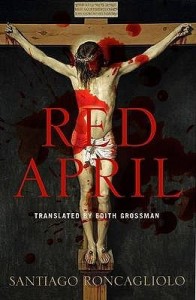
Red April by Santiago RoncaglioloTitle: Red April (Goodreads)
Author: Santiago Roncagliolo
Translator: Edith Grossman
Narrator: Jonathan Keeble
Published: Atlantic Books, 2011
Pages: 288
Genres: Crime, Thriller
My Copy: Audiobook

Buy: AmazonBook DepositoryKindle (or visit your local Indie bookstore)

Associate District Prosecutor Felix Chacaltana Saldivar does everything by-the-book, he is organised and knowledgeable on the laws of the land but this tends to rub people the wrong way. When a body is found burnt beyond recognition, Chacaltana’s life is never going to be the same. The investigation into this unique murder leads the associate District Prosecutor to question the choices the government are making. Set during Holy Week in Peru, Red April is a chilling political thriller that explores a twisted murder and a morally bankrupt government.

Red April takes place during Lent 2000, mainly in the Peruvian city of Ayacucho and follows a methodical prosecutor as he investigates a bizarre crime. These were the final days of Alberto Fujimori who vacated the presidency and fled the country in November 2000 due to a major corruption scandal and allegations of human rights violations. When Fujimori came to power in 1990, Peru was dominated by two terrorist organisations, the Maoist group Sendero Luminoso and the Marxist-Leninist organisations known as Túpac Amaru Revolutionary Movement (MRTA). It was not until about 1997 when most of this internal conflict resolved, but this was achieved by the Grupo Colina, which was a death squad made up of members of the Peruvian Armed Forces.

Set in the early 2000s, this novel explores that period of time where people loved Alberto Fujimori for making them feel safe but corruption is becoming a big problem. Even the main protagonist struggled with the idea of not supporting the president. Saying something like “the terrorist killed my mother, brother and sister but since the president took office, no one else from my family has been killed. Why would I vote for somebody else?” This hold on the past is something that runs strong throughout the novel, particularly with Associate District Prosecutor Felix Chacaltana Saldivar who holds on to the memory of his mother. The book is set during Lent and then Holy Week which is a time of reflection and to remember the past, when Christ died for the sins of the world.

Peru is a very religious country, in the 2007 census only 2.9% identified as non-religious, with 81.3% claiming to be Roman Catholic. The Catholic Church is a very important part of the country, even Article 50 of its constitution states that “[the Church is] an important element in the historical, cultural, and moral development of the nation.” The city of Ayacucho, in which the majority of this novel is set. lays claim to 33 Catholic Churches (one for every year of Jesus’ life) and hosts a large religious celebration during Holy Week every year. When reading Red April you quickly learn just how important religion is to the Peruvian people and the plot of the novel.

One of the things that fascinated me about Red April is the culture depicted within the book. Santiago Roncagliolo did not shy away from depicting the dark themes or the problematic political situation that Peru faces. He questions the counter-terrorism strategies of the Fujimori government but also depicts the overall sense of relief that the people had when terrorist organisations were dealt with. The corrupt government and the bureaucratic nightmare that Felix lived through all gave a sense of the political landscape. The Associate District Prosecutor did everything to the letter of the law, including sending rapists to prison; however this made him an outcast, even the rape victims got angry that they were unable to marry their attackers and get their reputation intact.

One reason I read a lot of translated fiction is because I find it interesting to explore different cultures and worlds. The Peru depicted in Red April is so foreign to me that I could not help but be spellbound by the cultural differences. Red April was the 2011 winner of the International Foreign Fiction Prize (IFFP), a literary award I have started to follow closely now that I read more books in translation. The novel was translated into English by Edith Grossman and is a book that I picked up in order to read more books from South America. I am very glad to have read Red April, not only is it an excellent mystery/thriller but as you can see it was an interesting insight into Peru.


The World According To Garp by John Irving

Posted April 14, 2015 by Michael @ Knowledge Lost in Contemporary / 6 Comments

The World According To Garp by John IrvingTitle: The World According To Garp (Goodreads)
Author: John Irving
Published: Black Swan, 1978
Pages: 603
Genres: Contemporary
My Copy: Library Book

Buy: AmazonBook Depository (or visit your local Indie bookstore)

This is the story of T.S. Garp, named after his biological father Technical Sergeant Garp. His mother, Jenny Fields was a determined nurse who wanted a child but not a husband. She eventually becomes a feminist icon before being killed by a crazed man for what she said in her autobiography A Sexual Suspect. Garp went on to become a writer as well and The World According to Garp tells the story of his life.

This is my first attempt into the writing of John Irving’s writing and I was impressed with what I read. Many people recommend starting with some of his other books (A Prayer for Owen Meaning or The Cider House Rules) but I think I made the right choice with The World According to Garp. What stood out to me within the book was the constant struggle that T.S. Garp experienced his entire life. Even his decision to become a writer was made in the effort to get a girl. This was a struggle with lust and the way it took over his whole life. It was like he had no control over his own sexual desire but then again he never really tried. Lust took over everything within Garp’s life but other characters also struggled as well. I really enjoyed the way that Irving explores the beauty and destructiveness of sex and desire.

This is not just a novel the focuses on lust, this is also a book that explores life and death. It is fair to say that T.S. Garp had a fascination with death, especially when his book The Pension Grillparzer saw seven of the nine main characters die. Even his third novel The World According to Bensenhaver featured many death scenes. There are so many more scenes about death, you can look at the death of Garp and his mother and see the similarities and symbolism.

There were moments where I was worried that this book would turn transphobic but the way John Irving treated the character Roberta was done really well. Gender roles play a big part in this book, starting from Garp’s mother rejecting a man and deciding to raise her child alone. The novel also explores feminism, the women’s rights movement and misogyny.  What I loved about this book is that there are so many issues tacked within the pages, when I thought I understood the major theme it offers something different.

I like how The World According to Garp explored the whole life of Garp from birth to death. Written like Garp was telling the story, it still covers parts of his life that he could not possibly know, including his birth and his death. I was really impressed with John Irving’s style of writing that I plan to read so many more of his books. I hear A Prayer for Owen Meaning is the next book I should tackle but I would love other suggestions too.


Monthly Review – March 2015

Posted March 31, 2015 by Michael @ Knowledge Lost in Monthly Reading / 2 Comments

Fear and Loathing in Las VegasI started March with a lot of work stress and as a result I thought I would not get much reading done. All I wanted was to play video games or watch TV. The month never improved workwise but I still had a productive reading month; I was actually surprised with how much I read. As for my adventures on BookTube, things are still going well, I am enjoying the experience and I feel like I am slowly improving. Hopefully this will translate into my writing as well. I have also been looking at other way to improve my writing, I may join Hitrecord and try their writing challenges or just try my hand at short stories. However, I might just do some research and wait till work gets a little less stressful.

It did take me over ten days to finish my first novel this month. Sadly that novel was not enjoyable and I wish I had not spent so much time with the book. That novel was The Severed Streets by Paul Cornell, I really enjoyed the first book in the series, London Falling and was expecting so much more. Thankfully the next book was better; it was Fear and Loathing in Las Vegas by Hunter S. Thompson, however I cannot work out if I had read it before or not. I guess because the movie is so memorable I thought I had read the book; I would have a record of reading Fear and Loathing if I had.

The longlist for the IFFP (The Independent Foreign Fiction Prize) was announced this month and reminded me that I want to read more books in translation. As most people know, my current reading challenge is more books in translations and some rereads (at least one of each, every month). This month I read the 2011 IFFP winner, Red April by Santiago Roncagliolo (translated by Edith Grossman). I did the reading diversity tag on BookTube this month and realised I needed to read a lot more books from South America; Red April is by an author from Peru. While it did follow many of the tropes found in crime fiction, it still found this to be a fascinating read; I loved exploring Peruvian culture. My reread for the month was The Stranger by Algerian author Albert Camus (translated by Matthew Ward), which was a lot better than I remember it being, I must have a better grip on the themes this time round.

I also picked up some short story collections to read this month, firstly The UnAmericans by Molly Antopol and then The Yellow Wallpaper and Other Stories by Charlotte Perkins Gilman. The UnAmericans was a contemporary collection that dealt mainly with immigrants living in America. While this was a great collection, The Yellow Wallpaper and Other Stories blow it out of the water. I was sucked in by Charlotte Perkins Gilman’s style blending gothic with feminist ideas, I highly recommend reading this collection. I am not sure what Charlotte Perkins Gilman’s other books are like but I am curious to find out.

The highlight this month was Mr. Kiss and Tell by Rob Thomas and Jennifer Graham, which is the second book in the Veronica Mars series. I am a huge Veronica Mars fan and while this book was not as good as the first one, it was nice to return to Neptune. Followed by Something Coming Through by Paul McAuley which was very average and A Young Doctor’s Notebook by Mikhail Bulgakov (translated by Hugh Alpin) after binge watching the TV adaptation. So that was seven books read in March, which was as many as February but still a very decent reading month. I currently have four books on the go at the moment and I hope April will be a much better month both in reading and work.

Read More


Fear and Loathing in Las Vegas by Hunter S. Thompson

Posted March 30, 2015 by Michael @ Knowledge Lost in Book of the Month, Classic / 2 Comments

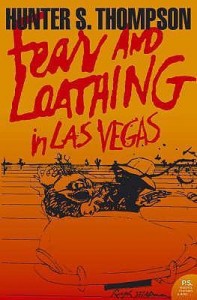
Fear and Loathing in Las Vegas by Hunter S. ThompsonTitle: Fear and Loathing in Las Vegas (Goodreads)
Author: Hunter S. Thompson
Artist: Ralph Steadman
Published: Harper Perennial, 1971
Pages: 230
Genres: Classic
My Copy: Paperback

Buy: AmazonBook Depository (or visit your local Indie bookstore)

Journalist, Raoul Duke heads to Las Vegas with his attorney Dr Gonzo in order to cover the Mint 400 motorcycle race. After experimenting with some recreational drugs, LSD, ether, cocaine, cannabis and alcohol, their assignment was quickly abandoned. What follows is a series of hallucinogenic trips that end in disaster from trashed hotel rooms, car wrecks and much more. Fear and Loathing in Las Vegas: A Savage Journey to the Heart of the American Dream is a roman à clef, with autobiographical elements in which Hunter S. Thompson writes a retrospective of the 1960s countercultural movement.

Hunter S. Thompson was a journalist, but he was best known for his novel Fear and Loathing in Las Vegas. While working in Journalism he coined the term Gonzo journalism which is a writing style he adopted for his first person narratives. The style is a combination of fact and fiction that allows Thompson a more personal approach to his articles. Combining elements of sarcasm, humour, exaggeration and profanity it allowed a first person look into social criticism. Fear and Loathing in Las Vegas was a result of Gonzo journalism and was originally published as a two part series in Rolling Stone magazine in 1971.

When thinking about the life of Hunter S. Thompson, I find it hard to imagine him as someone who  critiques the 1960s counterculture. I think of him saying things like “I hate to advocate drugs, alcohol, violence, or insanity to anyone, but they’ve always worked for me.” Thompson has often stated that this novel was an exploration into the death of the American Dream but his views on counterculture are so fascinating. Drawing inspiration from his two favourite novels The Great Gatsby and On The Road, Thompson combines ideas of travelogue and the American Dream and goes on to show the reason why drug use was not the answer to social problems.

Fear and Loathing in Las Vegas is a pretty confronting novel; the descriptions of drug-induced hazes and lurid hallucinogenic trips are very vivid and confronting. I am pretty sure I have read this book in the past but I had not marked it as read on Goodreads, LibraryThing or even the spreadsheet I keep. However going into the novel everything felt so familiar and I cannot tell if it was due to the movie adaptation or if I have actually read the book before.

The experience of reading Fear and Loathing in Las Vegas is enhanced by the illustrations done by Ralph Steadman. My edition of the book stated in the introduction that Hunter S. Thompson requested the art to be done by Steadman because he believed this illustrator really understood the concept of Gonzo journalism. The novel is an interesting book and well worth exploring, and I was interested to see the satirical side and surprised at the way Thompson criticised his own lifestyle in this autobiographical novel.


The Severed Streets by Paul Cornell

Posted March 27, 2015 by Michael @ Knowledge Lost in Fantasy / 0 Comments

The Severed Streets by Paul CornellTitle: The Severed Streets (Goodreads)
Author: Paul Cornell
Series: Shadow Police #2
Published: Tor, 2014
Pages: 400
Genres: Fantasy
My Copy: Library Book

Buy: AmazonBook Depository (or visit your local Indie bookstore)

Detective Inspector James Quill is a member of the Shadow Police, a squad dedicated to solving supernatural crimes. When an invisible murderer kills a high profile cabinet minister in an unusual way, the Shadow Police are called to solve it. Things take a turn when the lead detective from the squad goes missing. Things start to fall apart; can Quill solve this mystery and bring the team back together?

I was really enjoying the Peter Grant series by Ben Aaronovitch lately and I thought I would look for more urban fantasy novels that centred around a detective, when I remembered London Falling. I loved this book which was the first in the Shadow Police series; it was dark gritty and blended police procedural with urban fantasy really well. I read it a while ago and thought it was time to try book two, The Severed Streets. Unfortunately this book did not hold up and suffered the same fate as Happy Hour in Hell by Tad Williams (book two in the Bobby Dollar series).

While London Falling went for a dark and gritty, noir feel to it, The Severed Streets seemed to go in a different direction. It felt too gimmicky and I felt like Paul Cornell was offered a book deal based on this series but had already run out of ideas. First of all, the book is set in London, so it obviously had to reference the 1800s Whitechapel murders. Jack the Ripper has been done to death, especially in urban fantasy; I was immediately reminded of The Name of the Star by Maureen Johnson. Also this book has Neil Gaiman as a character and I never enjoy it when they use living people as characters. It is a little hit and miss when a book includes a famous person who is deceased but when it comes to living people, it is normally always a miss.

I feel so angry about this book but mainly because I went in thinking it would be like London Falling. I would have been better off not reading this book and just letting the first novel remain a standalone. Take out Jack the Ripper and Neil Gaiman or replace these characters, and it might have been a decent book. However, for me, it was just a gimmick that did not work. I will not be continuing with the Shadow Police and I have to start my search for a new dark, gritty urban fantasy series to enjoy.


The Buried Giant by Kazuo Ishiguro

Posted March 24, 2015 by Michael @ Knowledge Lost in Historical Fiction, Magical Realism / 9 Comments

The Buried Giant by Kazuo IshiguroTitle: The Buried Giant (Goodreads)
Author: Kazuo Ishiguro
Published: Allen & Unwin, 2015
Pages: 352
Genres: Historical Fiction, Magical Realism
My Copy: ARC from Publisher

Buy: AmazonBook Depository (or visit your local Indie bookstore)

The Buried Giant is set in a post-Arthurian Britain that is covered in a strange mist…a mist of unknowing. Axl and Beatrice have not seen their son in years; they barely remember him. One day the couple decide to leave their town and set off to find their son. They expect to run into difficulties, they are old and do not remember much, but nothing can prepare them for what they will discover along the way.

This is the first Kazuo Ishiguro in over a decade and I was very excited to get my hands on this novel. I have heard many people say that The Buried Giant is unlike anything Kazuo Ishiguro has ever done but that is what is brilliant (and annoying) about this author. Never Let Me Go and The Remains of the Day are also unlike anything else Ishiguro has written. He has an amazing ability to write something different every time and use the genre and the plot as an allegory to explore different themes.

As you may have guessed, The Buried Giant explores the theme of memories; in particular, lost memories. Ishiguro uses the tropes found in fantasy and Arthurian literature to explore these themes. Like the ideas of myths and legends that make for great stories but (generally speaking) the ideas and context behind them are often lost or forgotten about. On their journey Axl and Beatrice meet Sir Gawain which sets up the metaphor of the mist of unknowing. Just how did King Arthur and the Britons come to peace with the Saxon’s?

The more I read Kazuo Ishiguro, the more I love his use of language. He writes beautifully and yet he is not satisfied in just using words to get his message across. He uses imagery and plot as well as genre tropes to help drive his message. Now that I have discovered this, it almost makes me want to retry reading Never Let Me Go for the second time to just explore this depth, as well as his other novels. However I am sure that The Remains of the Day will also remain my favourite.

I was completely fascinated by The Buried Giant and I found myself regularly putting the novel down just so I could dwell on the chapters I have read. There is a lot within the book worth exploring and I know I have only scratched the surface. A re-read of this book may conjure up many more themes and imagery, for now I can dwell on the ones I discovered this time around. While The Buried Giant is unlike anything he has ever written, the beauty and complexity will remind you that you are enjoying a novel by Kazuo Ishiguro.