The Paris Wife by Paula McLain

Posted January 23, 2014 by Michael @ Knowledge Lost in Historical Fiction / 0 Comments

The Paris Wife by Paula McLainTitle: The Paris Wife (Goodreads)
Author: Paula McLain
Published: Virago, 2011
Pages: 392
Genres: Historical Fiction
My Copy: Paperback

Buy: AmazonBook DepositoryKindle (or visit your local Indie bookstore)

Forget everything you know about Ernest Hemingway because Paula McLain has set out to change that in The Paris Wife. This stunning novel follows a fictionalised account of Ernest Hemingway and his first wife Hadley Richardson. McLain’s version of Hemingway starts off as a tender man, with a crush on an older woman; he is persistent and full of love; nothing like what I know of the man.

The Paris Wife begins in the Chicago in 1920; it is here we meet Hadley and Ernest. Slowly we watch the two fell in love and get married. Soon after they have relocated to Paris where they meet other expatriate authors, such as James Joyce, Ezra Pound and F. Scott Fitzgerald. The love shared between Hadley and Ernest is nothing short of beautiful, while it lasted.

If you know much about Ernest Hemingway, you know this whirlwind romance wasn’t going to last, I’m not spoiling anything by mentioning this. In fact it is mentioned on the back of the book. What I found most interesting about The Paris Wife is the way it is written in a first person perspective. My calculations from the clues in the book, is that Hadley was narrating this account at least thirty-four years after her divorce from Hemingway.

This presents a unique perspective of Ernest Hemingway, the pain and suffering would have been mostly gone and we get a distorted opinion of this famous author. Paula McLain’s masterfully presented Hemingway in such a way that I began to re-evaluate my personal opinion of the man. He was depicted as loving and caring, a struggling author with big dreams but also suffering from the torments of war. This eventually all came crashing down and my opinions where back to how I originally felt about this author; it takes some talent to be able to pull that kind of writing off.

This is the kind of novel you take to Paris. The atmosphere of 1920’s Paris was stunning, I could picture it and I wanted to go back to France and enjoy this city all over again. Unfortunately I don’t live in the world of Midnight in Paris, so I will have to stick with the modern city. Mentions of Shakespeare and Company were particularly special for me as I have very fond memoirs of that wonderful bookstore.

Fictionalised accounts are tricky and should always be taken with a giant grain of salt but I was happy to see Ms McLain ended this book with a note about her research including sources for her research. While this doesn’t mean I’m going to take the entire story as true, it does provide me with some reassurances that the author intended to keep as close to the facts as possible. This meant that at times the novel did feel more like a biography but the story was compelling enough to keep the book enjoyable.

One thing that bothered me after reading some reviews about this book is the people who hated this book because of the ‘unlikeable character’ when referring to Hemingway. I’ve always thought of the author as an unlikeable person (the man was a dick). What I was impressed with is the fact that Paula McLain managed to alter my opinion and try to look at things from another perspective. He was self-destructive and often came across as a man with no remorse but seeing his downward spiral on the page is what made this journey interesting.

I read this book for Jazz Age January; it was a good excuse to pick up The Paris Wife. I did in fact enjoy the novel but not in the sense that I would recommend it, I just think it was an interesting journey and look at Ernest Hemingway. There were flaws in the novel but you have to respect the way McLean worked the reader. I knew the Fitzgeralds and Hemingway had a falling out but now I suspect it was a case of them siding with Hadley during the break up. I will have to research some more to know for sure.


Top Ten Tuesday: On My Reading Wishlist

Posted January 21, 2014 by Michael @ Knowledge Lost in Top Ten Tuesday / 0 Comments

toptentuesdayIt’s Tuesday again which means time for another round of Top Ten Tuesday; I like joining in on this meme because I have a set topic to work with. Top Ten Tuesday is a book blogger meme that is hosted by The Broke and the Bookish and this week the theme is: Things on My Reading Wishlist. Which is described as “if you could make authors write about these things you would… Could be a specific type of character, an issue tackled, a time period, a certain plot, etc”. I wasn’t really interested in doing that topic so I’ve decided to highjack this topic and tell you which Non-Fiction books are on my wishlist or shelf to read this year.

  •  Difficult Men: Behind the Scenes of a Creative Revolution: From The Sopranos and The Wire to Mad Men and Breaking Bad by Brett Martin
  • The Dark Path: A Memoir by David Schickler
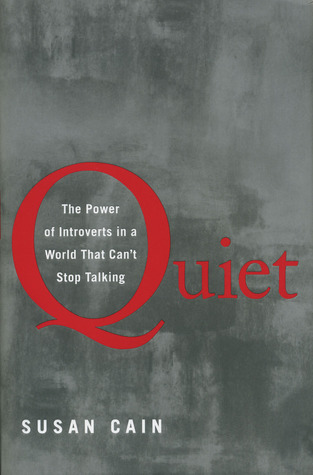
  • Quiet: The Power of Introverts in a World That Can’t Stop Talking by Susan Cain
  • Savage Art: A Biography of Jim Thompson by Robert Polito
  • On Literature by Umberto Eco


  • Ways of Seeing by John Berger
  • A Short History of Nearly Everything by Bill Bryson
  • Hothouse: The Art of Survival and the Survival of Art at America’s Most Celebrated Publishing House, Farrar, Straus, and Giroux by Boris Kachka
  • Iron Curtain: The Crushing of Eastern Europe, 1944-1956 by Anne Applebaum
  • Exquisite Corpse: Surrealism and the Black Dahlia Murder by Mark Nelson and Sarah Hudson Bayliss

Some of these books are already on my self, so I hope to read them soon. Others I’m really excited to read. Feel free to offer me some recommendations on good Non-Fiction to read.


Little Failure by Gary Shteyngart

Posted January 20, 2014 by Michael @ Knowledge Lost in Non-Fiction / 7 Comments

Little Failure by Gary ShteyngartTitle: Little Failure (Goodreads)
Author: Gary Shteyngart
Published: Random House, 2014
Pages: 400
Genres: Non-Fiction
My Copy: ARC from Edelweiss

Buy: AmazonBook DepositoryKindle (or visit your local Indie bookstore)

Gary Shteyngart is best known for his prolific blurbing; they even did a documentary about it. Few people may know that when he isn’t blurbing books he hasn’t read, he has written a book or three. He has enjoyed critical acclaim from his three books, including winning the Stephen Crane Award for First Fiction, the National Jewish Book Award for Fiction and being named one of The New Yorker magazine’s “20 under 40” luminary fiction writers. He now tells the story of Gary Shteyngart, born to Jewish parents in Leningrad, USSR (that’s St. Petersburg, Russia for those too old or too young to know Leningrad) and migrated to America at seven.

As those that follow me on twitter will know, I’ve been a little obsessed with Gary Shteyngart as of late. This is mainly because I was excited to read his memoir Little Failure and also because I like his style. Granted I’ve only read one novel of his, Super Sad True Love Story but it remains in my top ten books of all time. Reading through Little Failure just reminded me what I liked about Gary Shteyngart. I rewatched all his book trailers (they are well worth checking out), and a whole heap of interviews. I even ordered the two books of his I was missing; The Russian Debutante’s Handbook and Absurdistan, which I plan to read this year.  I might even re-read Super Sad True Love Story again as I have more to say about the book and the world.

Little Failure is a memoir that focuses mainly on Gary Shteyngart’s life as a Russian born immigrant living in America. This was during the time of the Cold War so we see the struggles he had to go through as a kid, even to the extent where pretending to be a German was a better option. Leningrad to Queens would have been a cultural shock and Gary Shteyngart lays himself bare when it comes to his struggles with his family and school. There are other parts, I felt were only brushed over; his relationships, wanting to be a writer, his marriage. I would have liked to know more about these things but maybe there is another memoir for him.

I was surprised to learn how much of Super Sad True Love Story was autobiographical. There was a lot of Gary in his character Lenny and knowing that his wife is Korean I wonder how similar to Eunice she is. I will be paying careful attention to his other novels; now that I know a lot more about his life, the context is very revealing. It makes me want to read biographies of some of my favourite authors and then re-read my favourite books to see what is similar. I know, I’ve come late to the whole ‘non-fiction’ party (I’ve blogged about my struggle with non-fiction) but I’m starting to get it.

If you’ve not read this author before, you need to remember he is satirist with a strong focus on culture, especially as an outsider. His Russian and Jewish culture plays a big part in his writing style; I’m a huge fan of Russian literature as well as satire, so it’s no wonder I enjoy his works. Shteyngart’s father always told Gary not to be a stereotypical Jewish writer, meaning not to be self-loathing. I never thought self-loathing was a Jewish trait, I always thought that was part of the formula for all good books. This is a trait of humanity and I personally love books with an internal struggle, it makes it feel so real. Not sure about this tangent but I think it speaks to the style and what to expect from Shteyngart, his novels and this memoir.

I really enjoyed learning about this author and I can’t wait to read his other books. So keep a look out for a review of The Russian Debutante’s Handbook and Absurdistan in the coming year. You might even get another review of Super Sad True Love Story. I hope Shteyngart writes another memoir later about his life as a husband and a writer, I would be interested to know about that part of his life. This was an entertaining and funny memoir about Jewish/Russian/American life as a child; well worth reading.


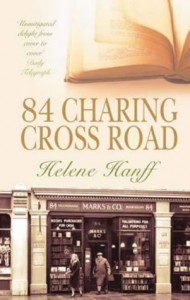
84 Charing Cross Road by Helene Hanff

Posted January 18, 2014 by Michael @ Knowledge Lost in Non-Fiction / 0 Comments

84 Charing Cross Road by Helene HanffTitle: 84 Charing Cross Road (Goodreads)
Author: Helene Hanff
Published: Virago, 1970
Pages: 230
Genres: Non-Fiction
My Copy: Library Book

Buy: AmazonBook Depository (or visit your local Indie bookstore)

84 Charing Cross Road documents twenty-year of correspondences between Helene Hanff and Frank Doel. Helene was an American writer while Frank the chief buyer of Marks & Co, an antiquarian bookseller located at the eponymous address in London, England. Starting out as a request for obscure classics, the book follows the blossoming relationship with Helene and the people of Marks & Co. Followed by The Duchess of Bloomsbury Street, a collection of diary entries of Helene’s trip to England and the tour of bookshops.

Helene noticed an ad in the Saturday Review of Literature and first contacted the shop in 1949. This started a beautiful love story found in this book, not between Helene and Frank but rather a love of books. This is the type of book you read if you are a book lover; it makes me wish I could correspond with a bookstore (or a book lover) about books. Can you imagine this happening with Amazon or Book Depository? Nowadays we have twitter (which I’m always on talking about my love of books) but 140 characters sometimes are not enough to say what you want to say.

I went into this book a little unsure, a collection of letters between a book lover and a bookseller, how great can this book really be? What I found was that the silver tongue and wit of Helene Hanff really made this book for me. You know that feeling in writing where you not sure if the person is being sarcastic or not, I started off wondering this but so found she had a wicked sense of humour and I’m so glad the people of Marks & Co never took offense (or they didn’t appear to). This might have been their (Frank Doel and the others that wrote to Helene) professional nature that slowly changed into a friendship, once they started to get to know each other and understood her sense of humour.

One of the major problems I had with this book is not really a problem but a personal preference, which has to do with grammar and formatting. I understand they tried to keep the writing the same as the letters but I wouldn’t mind if they fixed it a little to add punctuation and correct it. Another thing that throws me was the missing letters, I know things get lost but when you are absorbed in a conversation about a book (like Pride and Prejudice) it is disappointing to not know what happened.

The edition of 84 Charing Cross Road I borrowed from the library also came with The Duchess of Bloomsbury Street. This is the travel diary of Helene Hanff’s time visiting London. Looking at details of this book the term ‘zesty memoir’ is mentioned a few times, but I felt it to be a disappointment in comparison. It was entertaining but it didn’t have the banter or wit I expected, it just felt like a step by step play of everything Helene did while visiting London. While these two books work as companion pieces The Duchess of Bloomsbury Street was too one sided for my taste. Think of it like a sequel, once you finish 84 Charing Cross Road you’ll probably want to know what happened on her trip to London.

84 Charing Cross Road has been made into a movie and a stage play; I’ve not seen them but I’m interested to see how this book translates into another medium. I love how the book is promoted with the line “so begins a love affair”; this is a love affair with books. I managed to write this entire review without mentioning this is an epistolary book that I feel the need to mention my achievement. Highly recommend that you get your hands on both novels and reading them, especially if you are a lover of books.


The Sign of Four by Arthur Conan Doyle

Posted January 16, 2014 by Michael @ Knowledge Lost in Classic, Crime / 0 Comments

The Sign of Four by Arthur Conan DoyleTitle: The Sign of Four (Goodreads)
Author: Arthur Conan Doyle
Series: Sherlock Holmes #2
Published: Penguin, 1890
Pages: 152
Genres: Classic, Crime
My Copy: Paperback

Buy: AmazonBook DepositoryKindle (or visit your local Indie bookstore)

Mary Marston’s father disappeared and suddenly she has started receiving several large pearls. Now a mystery letter tells her she is a wronged woman, so she seeks out Sherlock Holmes to ask for help. This case leads Holmes down a path that involves the East India Company, India, the Indian Rebellion of 1857, a stolen treasure, and a secret pact among four convicts and two corrupt prison guards.

Scottish born Arthur Ignatius Conan Doyle was the third of ten siblings to Charles Altamont Doyle, an Irish artist who suffered from alcoholism, and Mary Foley, who was also Irish. In his youth he led a street gang called the Baker Street Irregulars. He then went on to be a medical student at Edinburgh University where he was mentored and influenced by Joseph Bell. Bell was a forensic surgeon and considered a pioneer in the field; he also was the inspiration for Sherlock Holmes.

The Sign of Four was written in 1890 but it was set in 1888 which is the same year as the Jack the Ripper murders. In fact by modern standards the distance between 221B Baker Street (the home of Sherlock Holmes) and the Whitechapel district is less than ten kilometres apart. The living conditions of the East End of London even before the Whitechapel Murders could be described as, in the words of Holmes in A Study of Scarlet “that great cesspool into which all the loungers and idlers of the Empire are irresistibly drained”. Naturally after the Ripper killings the public were in a panic; in comes the literary hero, here to fight crime, dispense justice and protect the streets of London, here is Sherlock Holmes.

It is important to note that historical context didn’t start or stop with the Ripper murders. In order to understand The Sign of Four better, the events of the Indian Rebellion of 1857 must also be taken into account. The four convicts in the title are connected to this to uprising. There is no single reason for the rebellion unless you consider colonialism as the cause. It was a mix of economic, political, social and much more that caused, in the terms of the British, ‘the mutiny’. Without going into too much detail about the rebellion, imperialism or even the use of the word ‘savages’, it is important to understand the basis and mindset of the time to analyse the text fully.

While The Sign of Four is a book that reflects the ideals of the late nineteenth century, some ideas, like justice are still relevant. The Indian Rebellion may no longer be considered mutiny or a crime; the way justice was dispensed in the end still remains a satisfactory resolution for the readers. It is still fair to say that the idea of being a hero to women and sexual justice is very real in the modern world. Conan Doyle highlighted the prejudice between both sexes but this stereotype remains very relevant in current times. The principle of moral rightness; equity is still an issue today.

There was a lot I got out of this novel, especially when it comes to justice, sexual equality and historical context. I was surprised with the start of this novel; the cocaine use from Sherlock was a little shocking. I knew there were references in this novel but I didn’t expect what I read. The whole idea of dulling his mind when he is not solving a mystery is an interesting one. Not really justifiable but the excuse got me thinking about his passion and how people manage when they are not doing what they enjoy.

I’m not sure if it was because I was studying this novel but this was the first Sherlock Holmes novel I’ve read where everything clicks and the symbolism and motifs hit me. I feel like I need to reread the other Holmes novels and see what I’ve missed. This book will have a special place in my heart now; the book that opened my eyes to Sir Arthur Conan Doyle’s brilliance. Am I weird for loving books that teach me? Most people read for enjoyment, but I feel more satisfied when I’ve discovered something about a book and the world.


Top Ten Tuesday: 2014 Debuts I’m Excited For

Posted January 14, 2014 by Michael @ Knowledge Lost in Top Ten Tuesday / 7 Comments

toptentuesdayIt’s Tuesday again which means time for another round of Top Ten Tuesday; I like joining in on this meme because I have a set topic to work with. Top Ten Tuesday is a book blogger meme that is hosted by The Broke and the Bookish and this week the theme is: Top Ten 2014 Debuts I’m Excited For. This sounds a little similar to 2014 Releases I’m Dying to Read but I will see if I can think of some debut novels I’m excited about.

I don’t pay enough attention to what is being released to know what I want to read. I hope to discover some more from this week’s Top Ten Tuesday.


The Echo by James Smythe

Posted January 10, 2014 by Michael @ Knowledge Lost in Literary Fiction, Science Fiction / 0 Comments

The Echo by James SmytheTitle: The Echo (Goodreads)
Author: James Smythe
Series: The Anomaly Quartet #2
Published: Harper Voyager, 28-01-2014
Pages: 320
Genres: Literary Fiction, Science Fiction
My Copy: ARC from Edelweiss

Buy: AmazonBook DepositoryKindle (or visit your local Indie bookstore)

Twenty years after the Ishiguro vanished, two brilliant scientists have been asked to help answer the many questions surrounding this disappearance. Identical twins Tomas and Mirakel Hyvönen have been interested in space travel since children. Not space, just the equipment. Can that find the Ishiguro, will they solve the mystery or will this just lead to more questions.

This is the sequel to The Explorer, so it is going to be hard reviewing this book without giving anything away. Already I might have said too much about the first book but I highly recommend reading The Explorer anyway. This series is off to a fantastic start and I’m already eager for the next book, which unfortunately may not be till next year.

If you have never read James Smythe before, I recommend him highly. His books The Explorer and The Machine book made my top books of 2013; that is a rare and incredible feat since I had so many books to pick from. Smythe writes literary science fiction that not only keeps you on the edge of your seat; they will also get you contemplating humanity.

The Echo has that philosophical and bleak style you come to expect from James Smythe. While this book sounded like there weren’t any thrilling moments, I was wrong; I was addicted to this book as much as The Explorer and it kept me up late at night. I love the way this author looks at life and sanity; there is so much he wants to say and I’m beginning to wonder if the planned four books series is enough.

I really want to say more about this novel but I’m afraid anything I do say will be a spoiler. I hate leaving a review so short but I highly recommend this series and that is all I can really tell you. James Smythe has another book coming out this year, so I have something to look forward to. I’m sure The Testimony will also be read during the course of 2014 as well.


Top Ten Tuesday: Top Ten Goals/Resolutions For 2014

Posted January 7, 2014 by Michael @ Knowledge Lost in Top Ten Tuesday / 6 Comments

toptentuesdayIt’s Tuesday again which means time for another round of Top Ten Tuesday; I like joining in on this meme because I have a set topic to work with. Top Ten Tuesday is a book blogger meme that is hosted by The Broke and the Bookish and this week the theme is: Top Ten Goals/Resolutions For 2014. I don’t really have goals for the year, except for reading ones. Here is what I want to achieve this year.

  • Complete the Literary Exploration Reading Challenge
  • Read more Non-Fiction
  • Read bigger books
  • Take my time with a book in order to read more critically
  • Continue reviewing every book and document my reading journey
  • Be willing to abandon more books
  • Create a better way to track books read
  • Clean up my Edelweiss/Netgalley eARC list
  • Exercise more

Monthly Review – December 2013

Posted December 31, 2013 by Michael @ Knowledge Lost in Monthly Reading / 2 Comments

and then there were noneThis is the end of 2013 and what a great year we have had. Let’s have a quick look back at the year for the book club on Goodreads and our books of the months. For me some of the highlights included; The Bell Jar, The Strange Case of Dr. Jekyll and Mr Hyde, Lolita, Hard-Boiled Wonderland and the End of the World, The Fault in our Stars and The Shadow of the Wind. We seem to consistently get great books to read, including this month’s book And Then There Were None. I wasn’t sure what to expect, this was my first Agatha Christie and while I had some issues, I will read her again.

Next month we are reading an espionage novel, which will be Tinker, Tailor, Soldier, Spy by John le Carré. I’ve read this novel and really enjoyed it, so I’m excited to see what others think; the movie is pretty great too. I hope everyone had a great holiday period and look forward to the great things to come in 2014. If you’re not aware, the book discussion and everything else will be happening over on the Goodreads forums, so feel free to join in there.

This has also been a great year for this blog too, which spawned last year from the Goodreads book club. I originally hoped this would be a source for all things book club related but turned into a book journal of my life as a literary explorer. I’m glad it did turn into what it is today; I’ve had so much fun book blogging and sharing my bookish thoughts. For my favourite books of 2013, check out the post but I wanted to share some of my favourite posts.

As always this month lead me to discover some great books including The Explorer and The Echo by James Smythe, Maddaddam by Margaret Atwood, Careless People by Sarah Churchwell and a reread of Frankenstein. I thought maybe James Smythe (he made my top books of 2013 list twice) or even Frankenstein would be the highlights of the month but it was actually a non-fiction book; 84 Charing Cross Road by Helene Hanff. It’s only a collection of letters between a book lover and a second-hand book store but for any book lover, it reads like a love letter to books.

Read More


My Top Five Reads of 2013

Posted December 30, 2013 by Michael @ Knowledge Lost in Top 5 / 4 Comments

As 2013 comes to an end, it is time to do that “Best of” post. I know it’s one of those posts you are either sick of or love seeing but I have to share my favourites. It’s been a great year; over 160 books read, some amazing books and some painful ones (see Twilight and New Moon). Like last year I’m going to split my list into “Best of 2013 (released this year)” and all other novels, but as I want to focus more on Non-Fiction too I’m adding “Best Non-Fiction of 2013” to the mix.

Top Five Reads Released in 2013
5. The Unknowns by Gabriel Roth
4. Tenth of December by George Saunders
3. The Explorer by James Smythe
2. A Constellation of Vital Phenomena by Anthony Marra
1. The Machine by James Smythe

Top Five Reads in 2013
5. The People of Forever Are Not Afraid by Shani Boianjiu
4. The Virgin Suicides by Jeffrey Eugenides
3. Pride and Prejudice by Jane Austen
2. The Bell Jar by Sylvia Plath
1. If on a Winter’s Night a Traveler by Italo Calvino

Top 5 Non-Fiction Reads in 2013
5. The Monsters: Mary Shelley and the Curse of Frankenstein by Dorothy & Thomas Hoobler
4. Paddle Your Own Canoe: One Man’s Fundamentals for Delicious Living by Nick Offerman
3. Careless People: Murder, Mayhem and the Invention of The Great Gatsby by Sarah Churchwell
2. Perv: The Sexual Deviant in All of Us by Jesse Bering
1. 84 Charing Cross Road by Helene Hanff

Now it’s your turn to let me know of your favourite books, the new releases and the older books. It doesn’t matter; just what you discovered and loved.