Z: A Novel of Zelda Fitzgerald by Therese Anne Fowler

Posted February 22, 2013 by Michael @ Knowledge Lost in Historical Fiction / 0 Comments

Z: A Novel of Zelda Fitzgerald by Therese Anne FowlerTitle: Z: A Novel of Zelda Fitzgerald (Goodreads)
Author: Therese Anne Fowler
Published: St. Martin's Griffin, 2013
Pages: 384
Genres: Historical Fiction
My Copy: ARC from Netgalley

Buy: AmazonBook Depository (or visit your local Indie bookstore)

The beautiful and reckless Southern belle Zelda Sayre first met Lieutenant Francis Scott Key Fitzgerald at an Alabama country club dance in 1918; she was seventeen at the time. Scott had a big dream, to be a rich writer and he wanted Zelda to join him on this ride of a lifetime. Taking a chance on him, their life soon became a whirlwind of glamour and fame. Z is a fictionalised account of Zelda Fitzgerald and her life with the dashing F. Scott Fitzgerald who everyone wants to meet.

This Side of Paradise (1920)

The novel starts off with Zelda just shy of her 18th birthday, when she meets Scott, a man with big dreams and unlike all the others. The novel The Romantic Egotist was rejected multiple times and almost killed Scott’s dreams, but it was Zelda who kept pushing him to try again. Their attraction blossoms quickly and soon they find themselves engaged. Scott goes off to try and makes a life for them; Zelda doesn’t take too kindly to waiting and with a bit of pushing they are married. Just a little after This Side of Paradise is released with great success. The popularity of this novel turns them into celebrities; everyone wanted to get to know this new author and his scandalous wife.

The Beautiful and Damned (1922)

Life is good with their new found fame for this newlywed couple, but both are passionate people and slowly this started to cause issues. Firstly with the success of Sinclair Lewis’ novel Main Street, the popularity of This Side of Paradise fadeds quickly and soon this couple found themselves struggling to make ends meet. With all the short stories and  eventually the release of The Beautiful and Damned, which was largely based on their marriage, they were able to get back to living beyond their means.

The Great Gatsby (1925)

Scott began working on a new novel, which he was very passionate about. So passionate in fact that their marriage suffered again and Zelda planned on leaving. With a lot of beginning she eventually stayed and Scott continued to work on the novel that would eventually become The Great Gatsby. He was so passionate about what this novel would become, he could envision what was wrong with the drafts and what needed to be fixed to make it work, when it was released with mixed results, it really hurt him.

Save Me the Waltz (1932)

When Scott became friends with Ernest Hemingway, he started to spend most of his time with him. Scott loved truly loved Hemingway (platonically presumably) and with all the time he spent with him, Zelda and their daughter Scotty felt left out. Due to either boredom or isolation, Zelda’s behaviour became increasingly erratic and eventually she was diagnosed as a schizophrenic. Her novel Save Me the Waltz is a semi autobiographical account of her life and marriage.

Tender Is the Night (1934)

The failure of Save Me the Waltz, and her husband’s scornful criticism of her book by calling it “plagiaristic” and her a “third-rate” writer crushed her spirits and she never wrote creatively again. Scott became an increasingly heavy drinker, which caused many health problems for him as well, but while Zelda was hospitalised, he managed to write Tender is the Night, a book about the rise and fall of a promising young psychoanalyst and his wife (who was also his patient). These were the darkest years of their lives together and this was reflected in this novel.

The Love of the Last Tycoon (1941)

Zelda found out her husband had died of a heart attack from her parents, first thinking something was wrong with Scotty. His death, his legacy and her life afterwards were never really explored in this book. We do know that they were in debt when he died and most of his life insurance went towards covering those costs. His unfinished novel The Love of the Last Tycoon was completed by his friend, the literary critic, Edmund Wilson, based on the notes Scott had written but this wasn’t explored either.

I was really interested in reading about Zelda Fitzgerald after seeing Alison Pill’s brief performance of her in Midnight in Paris. I was more interested in her life than his; she seemed like a real fiery person and Z does really explore the first part of her life really well. The major problem I had was that I didn’t really find out enough about the struggles they faced from the 1930’s onwards. The bulk of the book takes place in the 1920’s and then really skips over their marriage and health issues. It completely missed life after his death all together.

I also had issues with the writing style, it just felt too modern and didn’t feel like how a person would talk in the 1920’s. To put it in perspective in the author notes at the end Therese Anne Fowler used the terms “Team Scott” and “Team Zelda” and the novel felt it was using modern phrases like this as well. While it was an interesting look at their lives, I can’t help wonder how much is actually true; fictionalised accounts of historical events are great but sometimes you need to know when creative licensing is in effect. I might have to read the biography Zelda by Nancy Milford and Save Me the Waltz to really know more about her life. I’m not sure why learning more about her life is more important than his life, but I’m just going to go with it.

Z is a great look at the quintessential “Flapper” of the Jazz Age and the Roaring Twenties but for me I wanted more of the other stuff. Glamour and Fame do have their hardships but it looks like they are nothing compared to what happened next. I really enjoyed learning about Scott and Zelda Fitzgerald; they had an interesting life and I know there was so much to cover. I know more about their lives than I thought I would and while I’m still not sure how much is true, it’s enough to make me want to continue exploring; right after I read every novel written by the Fitzgerald’s as well as Main Street by Sinclair Lewis.


Truth by Peter Temple

Posted February 19, 2013 by Michael @ Knowledge Lost in Crime / 0 Comments

Truth by Peter TempleTitle: Truth (Goodreads)
Author: Peter Temple
Published: Text, 2009
Pages: 287
Genres: Crime, Literary Fiction
My Copy: Personal Copy

Buy: AmazonBook Depository (or visit your local Indie bookstore)

Inspector Stephen Villani stands in a luxury apartment, a young woman dead in the bath. He finds certainties of his life crumbling after the discovery of this murder. His four months as the acting head of the Victoria Police homicide squad have not gone well; first, two Aboriginal teenagers are shot dead and there is also no progress on the killing of a man in front of his daughter. A novel about murder, corruption, treachery and ultimately the Truth.

I didn’t realise this was the sequel to The Broken Shore when I started this novel but seeing Inspector Stephen Villani was only a minor character in the first book I thought it was ok to continue. But I wonder if I should have read them in order, because Truth never really clicked with me.

The novel was very difficult to read and hold my attention; the flashbacks, the sheer amount of characters and attempts at complexity made it really difficult to know what is what in this novel. It tried to be a gritty police procedural with some political aspects but never really seemed to click. While the main plot could have worked well, the flashbacks and cast size turned this book into a difficult book.

I’m surprised this book won the Miles Franklin award; I know a lot of people that loved The Broken Shore and hated this book so I can’t help but wonder if this book won based on the love of its predecessor. It was interesting to see Peter Temple’s character Jack Irish making an appearance in the book.

I just don’t see the appeal to this book but it wasn’t the writing style that made this book so hard to read. While this is the first Peter Temple book I’ve read, I can see why he is one of Australia’s better crime writers. I will try The Broken Shore sometime just to see why one was so loved and this one was so hated.


Les Misérables by Victor Hugo

Posted February 14, 2013 by Michael @ Knowledge Lost in Classic / 0 Comments

Les Misérables by Victor HugoTitle: Les Misérables (Goodreads)
Author: Victor Hugo
Translator: Lee Fahnestock, Norman MacAfee
Published: Signet, 1862
Pages: 1463
Genres: Classic
My Copy: Personal Copy

Buy: AmazonBook Depository (or visit your local Indie bookstore)

This is the story of Jean Valjean, a man seeking redemption after serving nineteen years in prison for stealing a loaf of bread to feed his starving relatives. When everyone else turns their back on him, it was a Bishop that showed him immense kindness and inspires him to do the same to everyone else. He finds him eventually appointed mayor of Montreuil-sur-Mer but then back on the run hunted by police inspector named Javert.

That is a very brief outline of what this book is about, as the book is about 1400 pages.  If I tried to go into more detail it could be too big for a one paragraph synopsis, but I think people are familiar enough with this novel to know the basic plot of this book. I decided to read the book because of the recent adaption; yes I know it was an adaptation of the musical but I still wanted to read the book first so I’d have a better understanding of the plot.

This novel covers some very interesting topics from the nature of the law and the idea of grace, politics, justice, romance and moral philosophy. All this weaved into the plot but then you find yourself reading huge chunks of text outlining the battle of Waterloo, religion, the construction of the Paris sewers and urban design of Paris. These digressions really threw me off with the book and honestly think that if the editor removed them, the book would have been more accessible and readable.

There is a lot to offer within the book and I would say I could easily read it again (not now but in the future) and explore the sense of compassion and love that is in this book. It’s a heart breaking story but I will admit I cried more in the adaptation than I did in the book. I know I haven’t mentioned the French Revolution which is a huge part of this book, but it really is hard to review a book that is so packed with ideas and still cover the plot points as well.

While this book did take a while to get through and at times I was struggling to enjoy it. In the end I found this to be worth the journey. Now that I’ve also seen the most recent movie adaptation I would probably recommend people just watch that. But if you are interested in digesting a book this size and exploring the ideas it raises or you just love to read great literature then make sure Les Misérables is on your to-read list.


One for the Books by Joe Queenan

Posted February 13, 2013 by Michael @ Knowledge Lost in Non-Fiction / 0 Comments

One for the Books by Joe QueenanTitle: One for the Books (Goodreads)
Author: Joe Queenan
Published: Viking, 2012
Pages: 256
Genres: Non-Fiction
My Copy: ARC from Netgalley

Buy: AmazonBook DepositoryKindle (or visit your local Indie bookstore)

Joe Queenan is a humourist, critic and author from Philadelphia who become an avid reader as a means of escape from a young age. One for the Books is a memoir where Queenan tries to come to terms with his eccentric reading style.  Joe Queenan is not your typical reader, and One for the Books is not your typical book about books.

 Joe Queenan is a very odd and particular reader, he knows what he likes and this book is not really humorous but more self-deprecating. I thought I was a bitter and jaded person but Queenan puts me to shame, throughout the book it feels like he will never be satisfied and will always be a cranky reader. Even some of his opinions towards books and book collecting seem outlandish and weird for a reader like me but it works for him and you can’t really argue with that.

I was looking forward to reading about someone who is a grump with a passion for book and while this was explored in this book, I think he took it too far sometimes. I know it is his personal opinions but the way he talked about hating people giving him books or even recommending books to him was just a little too far; he is old and set in his ways but I tend to think a little kindness towards others, especially when giving you a gift isn’t too much to ask for.

Joe Queenan is like that weird relative that everyone has; not sure what he is thinking, always set in his ways and you don’t want to get him drunk. This book is really interesting and I enjoyed his approach to this book. While his opinions differ from my own in some aspects, he really does love reading and this doesn’t always come through in the book but you know it is there.

One for the Books is really different to any other book related memoir I’ve read and that is what makes it so interesting. If you don’t want to read about a grumpy old man’s opinions towards reading then you don’t want to read this book. If you want something different then give it ago. I’m happy to have read this book; it makes me feel almost normal when it comes to my opinions on reading and books.


Young Philby by Robert Littell

Posted February 12, 2013 by Michael @ Knowledge Lost in Thriller / 0 Comments

Young Philby by Robert LittellTitle: Young Philby (Goodreads)
Author: Robert Littell
Published: Bloomsbury, 2013
Pages: 261
Genres: Thriller
My Copy: ARC from Publisher

Buy: AmazonBook Depository (or visit your local Indie bookstore)

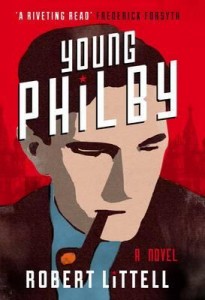
Kim Philby could possibly be the most notorious double agent in espionage history. Recruited by the Secret Intelligent Service during World War II, he began spying for the Russians on the British intelligence service. Robert Littell’s Young Philby follows what little we know about his early years up till what made him a great double (or should we say triple?) agent.

Kim Philby was a real high-ranking British intelligence officer who worked as a double agent serving as both an NKVD and KGB operative. Robert Littell takes what little we know about this famous spy and tries to recount a fictionalised version of his life, but does it really cover the truth? It’s hard to recount a story when you don’t know the real thoughts that went through the person’s head and I think this was the one major thing that was lacking. I can understand, being a fictionalised version of his life, the author didn’t want to speculate on his motivations, but I really wanted more on his psychological profile.

As an espionage novel goes, this is no John le Carré; there is a sense of complexity with the double agent idea but I found it really easy to follow. I love le Carré’s ability to write these massively complex espionage novels that really take you on a journey of the unexpected and I would have liked a bit more of that from Robert Littell but he was probably confined to the facts. This was a compelling read and I love a good spy story but I think the narrative did need a little more work to put it among the great espionage novels.

Fast pacedand shifting perspectives really helped driving this novel and the cover alone makes this book worth purchasing. If you don’t know much about the life of Kim Philby, this would be a good place to start; learn about the Cambridge Five, the defection to Russia or just explore a good cold war spy story. I’m glad I got a chance to read Young Philby; I didn’t know much about the man but he did have an interesting life. These fictionalised accounts of history may not be 100% accurate but they do make it easier to get a sense of what happened.


Reading Lolita in Tehran by Azar Nafisi

Posted February 10, 2013 by Michael @ Knowledge Lost in Non-Fiction / 0 Comments

Reading Lolita in Tehran by Azar NafisiTitle: Reading Lolita in Tehran (Goodreads)
Author: Azar Nafisi
Published: Hodder, 2003
Pages: 347
Genres: Non-Fiction
My Copy: Library Book

Buy: AmazonBook Depository (or visit your local Indie bookstore)

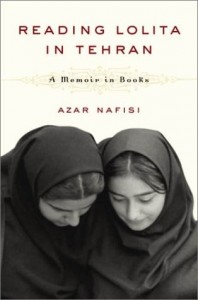
Reading Lolita in Tehran is a memoir of books read by Literature professor Azar Nafisi’s literature class during the revolution (1978-1981) up until her departure in 1997. Divided into four sections “Lolita”, “Gatsby”, “James”, and “Austen”, this memoir explores the lives of the students in a private literature class and the books that brought them all together. This is an inspired blend of memoir and literary criticism, and a moving look at the power of art and its ability to change and improve people’s lives.

I really enjoyed this book; the blend of literary criticism and memoir was really what hooked me. I especially loved the first part that focused on Lolita and the themes of oppression, authority figures trying to assert their dominance through events and a runaway convict. It was just an interesting insight from these Iranian students. It really made me want to read Lolita again and try to see what more I can get out of the book; luckily for me I might get that chance soon with the Literary Exploration book club.

I didn’t feel as strong of a connection with the other parts of this book, but I think I was just blown away by the insights into Lolita that the others didn’t have the same impact. The Great Gatsby looked at dreams and adultery all from the Iranian prospective. While Gatsby is about the American dream it was interesting to see it from a totalitarian mindset. James looks at some works of Henry James during the time of the Iran-Iraq war and the government who wants to control the liberal-minded. Lastly Austin looks at Jane Austin novels as well as the idea of abusive husbands, blindness and empathy.

This book comes together really well; you get to know these Iranian students and as well as explore some interesting ideas about the books from a perspective completely different to your own. While I would have preferred more literary criticism, I really got a lot of joy from reading this. There is a strong feminist theme throughout this book (since most of the students were women) that I suspect was the main draw card for many of the female readers of this book, and rightly so, this was an interesting look at these women. But for me, it was all about the books


The Mad Scientist’s Daughter by Cassandra Rose Clarke

Posted February 9, 2013 by Michael @ Knowledge Lost in Speculative Fiction / 4 Comments

The Mad Scientist’s Daughter by Cassandra Rose ClarkeTitle: The Mad Scientist’s Daughter (Goodreads)
Author: Cassandra Rose Clarke
Published: Angry Robot, 2013
Pages: 400
Genres: Speculative Fiction
My Copy: ARC from Netgalley

Buy: AmazonBook DepositoryKindle (or visit your local Indie bookstore)

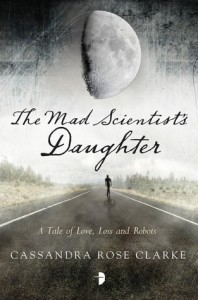
Cat’s life was not ever going to be normal; the daughter of a mad scientist can never be easy. When her father created an android to be her tutor, she was a little afraid to begin with but soon Finn became her best friend. While Finn is programmed to assist his owners, this billion dollar construction becomes a whole lot more to Cat. The Mad Scientist’s Daughter is a coming of age novel with a science fiction twist.

While this is a coming of age type novel, it’s both Cat and Finn that have to try and find their place in the world. Cat, as she grows up into an intelligent woman, and Finn, as the government look into granting rights to the increasing android population. As a young girl who grows up with only one person to talk to, it comes as no surprise to see that she forms a strong emotional bond with Finn, but I can’t help but wonder if the author took it a little too far. I can fully accept this young adult to fall in love with the android that has always been there when she needs it the most, but the sex, seemed a little weird and really threw me out of the story. I’m not going to debate the idea of sex and androids because I’m sure there a many thoughts on this concept; just for this novel it really threw me off.

There really are some interesting concepts coming through in this novel. Firstly the interesting science fiction twist on the coming of age novel; not only does Cat grow and struggle though life, I really thought the idea of Finn finding himself in an evolving world was explored in a decent way. Then the concept of loving someone that can never love you back. It’s clear that Cat is in denial at times, hoping that Finn will return her feelings but always getting hurt by the fact that he doesn’t; this is a long struggle she deals with and created a great emotional impact for the protagonist and the reader. Finally the increased population with robotics; this was never explored as well as someone like Isaac Asimov did but it was still interesting to read Cassandra Rose Clarke on this subject.

At times this dragged on a long time, but I found myself being fully absorbed in the novel only to be yanked out with the sex scenes. I’m not sure if they really needed to be in the book; I think they could have portrayed the love Cat has for Finn without it. It was these sudden jerks that destroyed this book for me.  I tend to think the author was adding a bit of controversy to get the book talked about but for me it didn’t make me want to ponder the concept, it just made me want to resort to skim reading.


Joseph Anton by Salman Rushdie

Posted February 8, 2013 by Michael @ Knowledge Lost in Non-Fiction / 0 Comments

Joseph Anton by Salman RushdieTitle: Joseph Anton (Goodreads)
Author: Salman Rushdie
Published: Jonathan Cape, 2012
Pages: 633
Genres: Non-Fiction
My Copy: Personal Copy

Buy: AmazonBook DepositoryKindle (or visit your local Indie bookstore)

On February 14 1989, Salman Rushdie got a call asking how he felt about being sentenced to death. The call was from a journalist who told him that the Ayatollah Khomeini has put a fatwa on him. His novel The Satanic Verses was accused of being “against Islam, the Prophet, and the Quran.” This is a memoir of the 10 years he went into hiding and was under police protection because of this fatwa.

When they asked Rushdie to pick an alias the first thing he did was think of the writers he respected, in this case Joseph Conrad and Anton Chekhov. This is a memoir of complete honesty about the effect his novel The Satanic Verses had on his life. I found Rushdie to be very honest about the whole situation, from the bonds formed, the struggles, the fears and the idea of freedom of speech.

One thing that really stood out to me was the use of a third person narrator; a rarity in a memoir but it seemed to really work. It was like Salman Rushdie was telling a story of someone else. I’m not sure if Rushdie was trying to look at the situation from another perspective or if he felt like the situation changed who he was, but it really worked.

I remember The Satanic Verses and I know I had to research Islam to understand the book, but I never thought of it as a religious insult; I always viewed the book as one man’s struggle to make sense of his religion in a culture completely different. The importance of this book and its literary achievements really was out shadowed by the controversy. In Joseph Anton, Rushdie really does try to look at the entire situation in a unique way.

Salman Rushdie’s healing process is displayed on the page for everyone to see, but you can still see the bitterness and animosity in his narrative. This is what I found made this book so great; the author never held back and never tried to hide his emotions. It would have been a scary time of his life and I’m glad to understand what he went through a lot more than I expected.


No Orchids for Miss Blandish by James Hadley Chase

Posted February 6, 2013 by Michael @ Knowledge Lost in Pulp / 0 Comments

No Orchids for Miss Blandish by James Hadley ChaseTitle: No Orchids for Miss Blandish (Goodreads)
Author: James Hadley Chase
Series: Dave Fenner #1
Published: Pan Macmillan, 1969
Pages: 188
Genres: Pulp
My Copy: Personal Copy

Buy: AmazonBook Depository (or visit your local Indie bookstore)

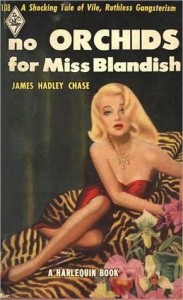
Dave Fenner has been hired to find Miss Blandish, kidnapped three months ago; the police have not found her despite the ransom being paid. The suspected kidnappers have disappeared, but the heiress is in the hands of Ma Grisson and her scary henchman Slim, who has wiped out their rivals and taken possession of the girl. The closer Fenner gets the more horrifying the situations appears; in No Orchids for Miss Blandish.

James Hadley Chase has a written a very raw book with No Orchids for Miss Blandish and you can see the obvious James M Cain influence though out this book. But you can’t really fault Chase for that, Cain was a master at noir and it feels like he has taken the genre to a whole new level. For a book written in 1938 I was surprised to see how violent and sexualised this novel is. But on reflection there was no real mention, Chase just hints very obviously and leaves the rest to the reader’s imagination.

From the very start this book hooks you in and takes you on a very dark journey. Written in three viewpoints you get an interesting perspective of what is going on. This was a gruesome depiction of gang life that puts a lot of the noir successors to shame; James Hadley Chase knows how to hit hard with his disturbing characters, fast pace and realistic violence.

Sure, this book may travel into the realms of predictable but this book moves so fast you don’t have time to stop and think about that. Dave Fenner has the makings of a good protagonist and I can’t wait to see where Chase takes him. There are actually two versions of No Orchids for Miss Blandish, the 1938 version which I was lucky to have read and the 1962 revision, because James Hadley Chase thought the world of 1939 too distant for a new generation of readers. When I get a chance I plan to read the revised edition; I’ve heard that it doesn’t really lose any of the raw and realism but it does have the odd mention of televisions.


The Unbearable Lightness of Being by Milan Kundera

Posted February 4, 2013 by Michael @ Knowledge Lost in Literary Fiction / 0 Comments

The Unbearable Lightness of Being by Milan KunderaTitle: The Unbearable Lightness of Being (Goodreads)
Author: Milan Kundera
Translator: Michael Henry Heim
Published: Faber & Faber, 1984
Pages: 314
Genres: Literary Fiction
My Copy: Personal Copy

Buy: AmazonBook Depository (or visit your local Indie bookstore)

The Unbearable Lightness of Being is an existential novel about two men, two women, a dog and their lives. The book takes place in Prague in the 1960s and 1970s and explores the artistic/intellectual life of Czechoslovakian society during this Communist period. Tomáš is a womanising surgeon and intellectual, his wife Tereza is a photographer struggling with all her husband’s infidelities. Sabina a free spirited artist and Tomáš’s mistress and Franz is a professor and also a lover or Sabina. Then there is Karenin, the dog with an extreme disliking to change.

I know the synopsis doesn’t really do much to make this novel interesting but that’s just the basics of it. Really, this is a novel challenging Nietzsche’s concept of eternal recurrence. A concept which hypothesizes that the universe has been recurring, and will continue to recur. This book explores the idea that people only have one life to live and what occurs will only occur once and never again. The book also explores love and sex and whether the two are connected; for Tomáš they are not but for Tereza they are.

There is a lot more philosophical aspects to understand but as I don’t have much knowledge in those areas lets focus on the novel. This was surprisingly easy to read and lyrical and almost dreamlike feel to it but then there is a lot of emotional devastation as well. Not just with Tomáš’s actions but with the communist control over everyone.

From the very start you while see the gorgeous poetic prose within Milan Kundera’s writing and the unique plot concept will initially drive this book for the reader. Then you will continue reading it for the devastating beauty of love, sex, jealously, politics and existence. Once you finish, you might reflect on the philosophical and existential nature of this book. In the end it’s just one of those books that sounds a little weird and unappealing but is really worth reading.