Publisher: Penguin Random House

The Story of My Purity by Francesco Pacifico

Posted October 10, 2015 by Michael @ Knowledge Lost in Contemporary / 0 Comments

The Story of My Purity by Francesco PacificoTitle: The Story of My Purity (Goodreads)
Author: Francesco Pacifico
Translator: Stephen Twilley
Published: Hamish Hamilton, 2010
Pages: 293
Genres: Contemporary
My Copy: Library Book

Buy: AmazonBook DepositoryKindle (or visit your local Indie bookstore)

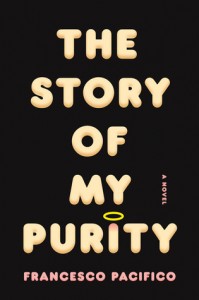
Thirty year old Piero Rosini wants to live a life of purity, wholly dedicated to God with a dream of become a modern day saint. Living in a sexless marriage, Piero spends his days working in a conservative Catholic publishing house. Although this publishing house was not conservative enough; they plan to publish a book that makes the claim that Pope John Paul II was secretly Jewish. He plans to leave and start an ultraconservative publishing house, where he can have more control over the content being released. The Story of My Purity is a novel that explores religion in relationship to faith, freedom and purity.

Living life with the idea of becoming a modern day saint, trying to do everything right and be perfect really sets up the satirical nature of this novel. Saint Augustine of Hippo’s autobiographical book Confessions comes to mind when I think about the difference between Saints and people who try to live a sinless life. I found that this novel really dealt with the idea of spirituality and religion in an interesting way. There is an exploration with the idea of freedom and faith when it comes to organised religion (in this case the Catholic Church).

A little understanding of theology really helps understand The Story of My Purity and the humour behind it. Firstly, when it comes to the seven deadly sins; it is alright to feel envy, greed and so on. The Church’s teaching on the seven deadly sins, is that these are gateways that can lead to trouble, so we should be aware of these feelings and learn to understand them. Although, there have been a lot of misconceptions around the deadly sins, that have led to the concept of Catholic guilt.

For Piero Rosini, he never learned to manage his lust, he went to a priest for help and was told not to think about women. Piero really took this advice on board to the point that he was unable to get an erection to consummate his one marriage. His sexless marriage was a result of him constantly trying to not think about sex, or feel a sexual attraction to his own wife. Although it proves impossible to not have sexual thoughts, and Piero’s life of purity began to unravel with the help of an attraction to his sister-in-law and spam emails.

The satirical nature of this novel comes from the fact people do not understand what the Church says about sex. Pope John Paul II did 129 lectures on the Theology of the Body, going through the Churches views on sex and sexuality. These lectures are about understanding your body, your desires and attraction. The theology should never feel restrictive by religion, rather we should be free and it should correct people’s misassumptions on the Churches teaching. Although the author may not have written this as a satire and this was actually his thoughts on Catholicism.

Unfortunately The Story of My Purity was not a great book, I loved viewing the book as a satire and exploring the theology behind it. However it did take a direction that I did not enjoy and ended up falling on its face. I am fascinated by theology and I feel like this could have been a great novel. The predictability of the book was just too much of a stumbling block for me. I am curious on Francesco Pacifico thoughts on Catholicism; I viewed the book as satire and would hate to think of it as anything else. I have also done a video review on this novel, if you are curious; although I think I talk about all the same ideas.


By Night In Chile by Roberto Bolaño

Posted October 7, 2015 by Michael @ Knowledge Lost in Literary Fiction / 6 Comments

By Night In Chile by Roberto BolañoTitle: By Night In Chile (Goodreads)
Author: Roberto Bolaño
Translator: Chris Andrews
Published: Vintage, 2000
Pages: 130
Genres: Literary Fiction
My Copy: Library Book

Buy: AmazonBook Depository (or visit your local Indie bookstore)

In a feverish daze, Jesuit priest Father Urrutia, spends his last night on earth reflecting on his life. By Night in Chile, is a bedside confession, reflecting on not just his involvement with the Opus Dei and Augusto Pinochet. This novella by Chilean author Roberto Bolaño, was written as a single paragraph, in which Father Urrutia recaps his entire life in one long monologue.

Roberto Bolaño is one of those authors that I have wanted to read for a very long time. In particular I was interested in reading his two tomes 2666 and The Savage Detectives. The novella opens with the line “I am dying now, but I still have many things to say” and then goes into a rant about the protagonist’s life. A Jesuit priest, poet and literary critic; Father Urrutia is unapologetic about his life; from his involvement with Opus Dei, teaching Augusto Pinochet and even his sexuality.

While this can be viewed as an unremorseful reflection on his life, his memories go from bad to worse as the novella progresses. I spent most of the time reflecting on whether Urrutia’s fever was making him a reliable or unreliable narrator. As Roberto Bolaño is a post-modernist, I think the idea of By Night in Chile is to question the reliability of memories. On one hand if the fever is making the narrator more honest than he should, this novella gives you one idea of the importance of reflection on life. However if the fever was causing hallucinations and making the narrator unreliable, the themes change but still asks some similar questions.

I read this novella in one sitting; I found it a quick reading experience. Reflecting on the book is what was the most time consuming. Roberto Bolaño is an excellent writer and By Night in Chile was worth checking out. Chris Andrews translated the novella from Spanish, who also has a book of literary criticism called Roberto Bolaño’s Fiction. At 130 pages, By Night in Chile allowed me to experience Roberto Bolaño’s style before committing to 2666 or The Savage Detectives, which I think I will push up my own TBR.


Mini Review – Books About Books

Posted September 17, 2015 by Michael @ Knowledge Lost in Non-Fiction / 4 Comments

As most people are aware, I am a big fan about books about books. I am fascinated about people’s journeys and relationships with books. As a big fan of books, I like to learn about how people view and write about books; I use this as a way to inspire me to improve as well as give me some new ideas on how to approach this topic. Sadly I am so far behind in my book reviewing so I need to resort to some mini reviews. However it is a good chance to talk about four very different books about books in one hit.

Mini Review – Books About BooksTitle: How To Be a Heroine (Goodreads)
Author: Samantha Ellis
Published: Chatto & Windus, 2014
Pages: 272
Genres: Non-Fiction
My Copy: Library Book

Buy: AmazonBook DepositoryKindle (or visit your local Indie bookstore)

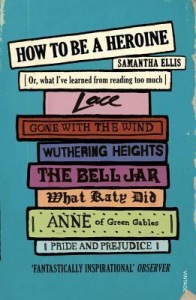
Samantha Ellis is a playwright and journalist who decided to write about the woman in fiction that have influenced her life. The subtitle to How to be a Heroine is “…What I’ve Learned from Reading too Much” and this really encapsulates what Ellis is doing within the book. This is less of a bookish memoir or literary criticism and more of a revisit to some of her favourite books throughout her life and talking about it through the lens of feminism. This book includes references to The Little Mermaid, Anne of Green Gables, Pride and Prejudice, The Bell Jar and Wuthering Heights.

While this is a very important topic to discuss, I felt a bit of a disconnect to the book in general. There was times where I felt that Samantha Ellis was being dismissive and cynical towards literary criticism. Because I am fascinated and passionate about learning literary theory, I felt that her feelings towards the topic really took me away from truly enjoying the book. I did however enjoy the way Ellis analysed the good and bad qualities about each story and told the story about her relationship with the books mentioned. I think if it was not for that one thing that bugged me about How to be a Heroine I might have had a completely different experience while reading this book.


Mini Review – Books About BooksTitle: Where I'm Reading From: The Changing World of Books (Goodreads)
Author: Tim Parks
Published: Harvill Secker, 2014
Pages: 244
Genres: Non-Fiction
My Copy: Library Book

Buy: AmazonBook DepositoryKindle (or visit your local Indie bookstore)

Tim Parks is a translator, critic and even a professor of literature, so when I discovered his book Where I’m Reading From, I was excited to see what he had to say on the topic. I went into this book thinking it was a bookish memoir but found out this was a collection of essays he had written for The New York Review of Books. Some of the topics discussed in this book include, Why we read, Should you finish every book you start?, How is the Nobel Prize like the World Cup?, Why do you hate the book your friend likes? and so many more topics. I was very interested in what he had to say about translations, and the concept of how we are reading a second-hand story.

There is so much within Where I’m Reading From that I did not agree with, but I still found it interesting to read someone else’s perspective on the topics. It really got more thinking about the state of literature and the bureaucracy behind the industry and awards in far greater detail. In a lot of ways this book reminded me of What Is Literature? by Jean-Paul Sartre, although Tim Parks’ book was a lot more accessible and did not make me feel stupid. I also did a video review for this book on my YouTube channel.


Mini Review – Books About BooksTitle: Postmodernism: A Very Short Introduction (Goodreads)
Author: Christopher Butler
Series: A Very Short Introduction #74
Published: Oxford University Press, 2003
Pages: 144
Genres: Non-Fiction
My Copy: Audiobook

Buy: AmazonBook DepositoryKindle (or visit your local Indie bookstore)

I like to think I am a fan of post-modern literature, but ask me to explain it, I will have a hard time. Post-modernism is often referred to when talking about art, films, architecture, music and literature but what does it actually mean? I picked up Postmodernism: A Very Short Introduction in the hopes of understand it a little more but I still do not think I can explain it. For me, I view post-modernism, as a reaction to modernism which seemed to reject past thinking in favour of innovations like stream-of-consciousness. Post-modernism still found value in the past techniques and theories and found interesting ways to use them in new and exciting ways. Post-modernism wanted to invoke thought and criticism; within its literature you might find something bizarre or weird that you just need to talk about.

I know my view on the topic is very broad and it is far more complex but that is what I love about post-modern literature. I want books that force me to think critically about what I am reading and post-modernism forces you to do just that. In Postmodernism: A Very Short Introduction, Christopher Butler tries to equip us with the basic ideas behind post-modernism to allow us to recognise and understand the theories more easily. This is still a very complex movement but I am starting to understand why I love it. This is a good starting point, if you are actually interested in the critical thinking side of this movement.


Mini Review – Books About BooksTitle: My Reading Life (Goodreads)
Author: Bob Carr
Published: Penguin, 2008
Pages: 432
Genres: Non-Fiction
My Copy: Library Book

Buy: AmazonBook Depository (or visit your local Indie bookstore)

Bob Carr is a former Australian politician and member of the Labour Party; during his career he was a Senator, Premier of New South Wales and the Minister for Foreign Affairs. My Reading Life is a literary memoir about the books he has read and have influenced him; this was written during a period where he was not in politics. Carr divides the book into topics, focusing mainly on the political, which is obviously a reflection of his interests.

One of the things I did not like about this book was the way Bob Carr kept his political face on throughout the entire thing. I would have liked him to drop his public persona and just have a more real conversation about books. I understand that he was still political and he became the Minister of Foreign Affairs after publishing this but I would have preferred a more honest look at literature. I do hope that no Russian’s read this book after he become the Minister of Foreign Affairs, because to me it felt like Carr liked Russian lit but hated everything else about this country. There was some interesting insights made within the book and overall a decent memoir, just a little too guarded.


The Russian Debutante’s Handbook by Gary Shteyngart

Posted September 12, 2015 by Michael @ Knowledge Lost in Contemporary, Russian Lit Project / 0 Comments

The Russian Debutante’s Handbook by Gary ShteyngartTitle: The Russian Debutante's Handbook (Goodreads)
Author: Gary Shteyngart
Published: Riverhead Trade, 2002
Pages: 476
Genres: Contemporary
My Copy: Paperback

Buy: AmazonBook DepositoryKindle (or visit your local Indie bookstore)

Vladimir Girshkin is not your typical hero, but the unhappy and sickly, twenty-five year old bureaucrat is just that in The Russian Debutante’s Handbook. His mother gave him the nickname “Little Failure”, he spends his days as a clerk for the Emma Lazarus Immigrant Absorption Society. An encounter with an old Russian war hero leads Vladimir on an adventure away from his job on the Lower East Side of New York to Prague. Surrounded by a Prava expat community Vladimir launches a scheme so ridiculous that it is actually brilliant.

Czechoslovakia was a satellite state of the Soviet Union, ever since the coup d’état of February 1948 when the Communist Party of Czechoslovakia seized power of the country with the help of the USSR. The Soviets call this Victorious February but most people are more familiar with the Velvet Revolution of 1989. This non-violent protest against the one-party government of the Communist Party of Czechoslovakia saw the end of a 41 year rule by the Communist party. Then finally the dissolution of Czechoslovakia into Czech Republic and Slovakia as of 1 January 1993. In the 1990s Prague saw an invasion of expats and the city was often referred to as the “Paris of the 1990s” or “the Eastern European Paris”.

As many people are aware, I am a bit of a fan of Gary Shteyngart, he has a way about writing humorous and satirical novels, and I am all too quick to recommend Super Sad True Love Story to anyone that is willing to listen, especially since it is very relevant to today’s society. After reading his memoir Little Failure I was surprised to find just how autobiographical his novels were, I had an idea of some of it but not to this extent. Since reading Little Failure, I was determine to read all of Shteyngart’s novels starting with his debut The Russian Debutante’s Handbook.

This is a highly imaginative novel blending satire with some bizarre humour. I really enjoyed the use of language within this debut but found the rest lacking, although this is a testimony of the growth of Gary Shteyngart as a writer. I have to say that The Russian Debutante’s Handbook is a novel for people that enjoy and know what to expect from Shteyngart and I would recommend starting with Super Sad True Love Story (obviously) or maybe his memoir Little Failure. Shteyngart is a brilliant writer and while I did enjoy The Russian Debutante’s Handbook, now I need to try his next novel, Absurdistan.


Story of the Eye by Georges Bataille

Posted September 6, 2015 by Michael @ Knowledge Lost in Erotica / 4 Comments

Story of the Eye by Georges BatailleTitle: Story of the Eye (Goodreads)
Author: Georges Bataille
Translator: Dovid Bergelson, Joachim Neugroschal
Published: Penguin, 1928
Pages: 127
Genres: Erotica
My Copy: eBook

Buy: AmazonBook DepositoryKindle (or visit your local Indie bookstore)

Georges Bataille’s 1928 novella Story of the Eye has often been read for the graphic details of an increasingly inexplicable adventures of a pair of teenagers and their sexual perversions. Narrated by an unnamed male in his late teens, the book tells the story of his passionate affair with Simone, his primary partner. Throughout the book their relationship involves other people including a mentally ill sixteen year-old girl and a voyeuristic English émigré aristocrat. To say this book is risqué might actually be an understatement, but is the book really about fornication?

With a little help from French literary theorist Roland Barthes and his accompanying essay “The Metaphor of the Eye”, I quickly discovered that Story of the Eye is far more complex than I originally thought. However if you do read Georges Bataille’s introduction before the book like I did you will discover a few titbits that help decipher the surrealist nature of the novella. In this introduction Bataille talks about his love/hate relationship with his father, a man who went blind on account of neurosyphilis. He shares a memory he remembers clearly in his head of his father urinating and the vacant look in his milky eyes.

The reason this story is important to Story of the Eye is because the novella often references urination and eyes in the midst of the sexual acts. As Barthes explains in his essay, “Although Story of the Eye features a number of named characters with an account of their sex play, Bataille was by no means writing the story of Simone, Marcelle, or the narrator”. The act of sex is often accompanied with some form of violence. The eyes, milk, urine can all be seen as a reference to his memory of his father and any reference to testicles and eggs could be interpreted as metaphors to the creation of life.

While Roland Bathes goes into a far deeper analysis of the metaphors found in Story of the Eye, a slight understanding of the content changes this books topic from sexual perversions to an angry rant directed towards Bataille’s father. There are other reference found in the novella that connect to his life; for example the priest. Georges Bataille went into the seminary in the hopes of becoming a priest, however he had to drop out to find a job to support his mother, killing his dream. A topic I believe is discussed in more detail in his non-fiction book Eroticism.

I found myself being absorbed in Story of the Eye (which was translated by Joachim Neugroschel, Dovid Bergelson); although difficult to read, the symbolism really intrigued me. So much so that I had to order my own copy of the book in the hopes to re-read it soon. I read this as an ebook and I now own a physical copy which features the essays “The Pornographic Imagination” Susan Sontag and of course “The Metaphor of the Eye”. I am fascinated by the surreal erotic style of Bataille; I think he is an author I need to explore in greater details.


Boyhood Island by Karl Ove Knausgård

Posted July 21, 2015 by Michael @ Knowledge Lost in Contemporary / 0 Comments

Boyhood Island by Karl Ove KnausgårdTitle: Boyhood Island (Goodreads)
Author: Karl Ove Knausgård
Translator: Don Bartlett
Series: Min Kamp #3
Published: Harvill Secker, 2009
Pages: 496
Genres: Contemporary
My Copy: Library Book

Buy: AmazonBook Depository (or visit your local Indie bookstore)

Boyhood Island is the third book in the Karl Ove Knausgård’s six volume autobiographical novel, My Struggle (Min Kamp). While Knausgård talked in great length about his father in A Death in the Family (My Struggle #1) this is a more in depth look at his relationship with his parents. With the focus being on his childhood, Boyhood Island allows Karl Ove to reflect on his adolescence in a “coming of age” style novel.

I will admit that I have been enjoying the Min Kamp, but there is something about A Death in the Family that really worked for me. The way he talked about his father with lines like “Dad had got what was coming to him, it was good that he was dead,” in the midst of what felt a lot like a midlife crisis really worked for me. A Man in Love was a more tender novel, allowing Karl Ove to explore his relationship with his wife. I think the swing from a dark and bitter first novel to the tenderness of the second really allowed me to discover the range in Knausgård’s writing and I was very captivated by this.

When it came to Boyhood Island, I was disappointed that we were going back to his relationship with his father. I felt like A Death in the Family dealt with that issue; although in not great detail but enough to have the highlights. This book felt like we were going over the same material again but in far greater detail. The coming of age style worked when talking about Karl Ove’s life but I never felt like there was anything new to cover when it came to talking about his father.

There are some interesting insights in Boyhood Island that are well worth exploring, I just did not think it lived up to the other books in the series. I am keen to check out Dancing in the Dark, which covers Knausgård’s college years, I have a feeling there will be a return to form for this author. I am half way through Min Kamp so I feel like I might as well complete it. Karl Ove Knausgård is a very impressive writer and the range on display between each novel is what draws me to his novels. Although I have never read anything other than these autobiographical novels, I am interested in seeing how he writes in his other books.


There But For The by Ali Smith

Posted July 16, 2015 by Michael @ Knowledge Lost in Literary Fiction / 0 Comments

There But For The by Ali SmithTitle: There But For The (Goodreads)
Author: Ali Smith
Published: Penguin, 357
Pages: 2011
Genres: Literary Fiction
My Copy: Library Book

Buy: AmazonBook DepositoryKindle (or visit your local Indie bookstore)

A dinner party in a posh home in Greenwich took a sudden turn when Miles, one of the guests, leaves the table mid meal and locks himself in an upstairs room. He refuses leave and the diverse group of neighbours tell their story of the events trying to make sense of Miles motivations. There But For The is told in four points of view: Anna, who is in her forties; Mark, a man in his sixties; May, a woman in her eighties and ten year old Brooke.

Genevieve Lee sets out to host an elaborate dinner in her elegant Greenwich home; her husband Eric has planned to serve scallops and chorizo. However these people are a little different to the people that normally run in the couple’s social circles. The story revolves around Miles Garth who is now an unwanted guest of the Lee’s, after he locked himself away in an upstairs bedroom. However the book really looks at the four narrators and their connection between everyone else.

There tells a story of Anna, a social worker, who knew Miles thirty years ago. Genevieve found her email address in Miles phone and invited her in the hope of persuading him to leave. But follows Mark who is a photo-researcher, who invited Miles to the dinner party. Mark is mourning his old love and, at times, his dead mother speaks to him in rhymes. For is set entirely in the mind of eighty year old May. She is suffering from dementia but also has regular contact with Miles. The revolves around ten year old Brooke, who is the daughter of two of the party guests and the only one that has made contact with Miles since he locked himself in the room.

Where this book shines is in the writing; it is full of what has been now considered Ali Smith’s trademark wit and puns. It is an exploration into humanity, centred on a whimsical yet devastating dinner party. The stand out for me is the way that Smith masterfully used identity shifts and language gaps to explore language in what is essentially a locked-room mystery. This writing style may cause issues for some people but I was just in awe of just how clever If For But The really was.

As this is the first Ali Smith novel that I have read, I am unsure what to say about her as a writer. If all books are anything like If For But The then I would have to call her a master at puns, wordplays, metaphors and pretty much linguistics in general. There is plenty of buzz around her latest book How to Be Both, so I will save my opinion until I have read at least that novel. I am very confident I will be a new fan of Ali Smith but as I say, I have to experience more of her writing.


Double Indemnity by James M. Cain

Posted June 29, 2015 by Michael @ Knowledge Lost in Book of the Month, Pulp / 0 Comments

Double Indemnity by James M. CainTitle: Double Indemnity (Goodreads)
Author: James M. Cain
Published: Vintage, 1936
Pages: 114
Genres: Pulp
My Copy: Personal Copy

Buy: AmazonBook DepositoryKindle (or visit your local Indie bookstore)

When small time insurance man Walter Huff meets Phyllis Nirdlinger, her beauty quickly seduced him. The wife of a wealthy oil executive convinces him to help get rid of her husband, but not before a substantial policy was taken out on him. Accident insurance often causes suspicion but when Phyllis’ husband dies from what looks like a train accident, double indemnity kicks in and Walter’s bosses suspect foul play.

James M. Cain is the master at noir with books like The Postman Always Rings Twice, Mildred Pierce and recently The Cocktail Waitress was released posthumously.  Double Indemnity is one of his most notable pieces of work and was adapted into the 1944 classic film noir movie of the same name. The movies screenplay was written by fellow master of pulp Raymond Chandler and has been dubbed culturally, historically, and aesthetically significant by the US Library of Congress.

Double Indemnity is a clause often found in accident insurance policies where the issuer agrees to pay double (or more) if the accident happens in certain conditions. It is often used to make the policy more appealing but applies to low risk incidents. Death by train accident is one of these examples and when Phyllis’ husband died in these conditions the insurance company was naturally suspicious.

This classic pulp novel follows Walter Huff who plots the perfect murder all for the beautiful Phyllis Nirdlinger. What he didn’t count on was that he was seduced into helping a femme fatale and now he was under her thumb. In true James M. Cain style, Double Indemnity holds nothing back, both in style and plot. Everything you expect in a 1930s noir novel can be found in this thrilling novella.

This is a re-read for me of Double Indemnity and I must admit I was so happy to return to the style of James M. Cain. Everything you expect from the pulp style and dialogue can be found within this classic story. I know I need to dive into some more of Cain’s novels, with some re-reads and completing his bibliography. I have no words to describe the feeling of returning to a much-loved author and I know I need to re-watch the movie. If you have never read Cain or anything from the classic pulp genre, then you can never go wrong with a book like Double Indemnity.


H is for Hawk by Helen Macdonald

Posted June 28, 2015 by Michael @ Knowledge Lost in Non-Fiction / 0 Comments

H is for Hawk by Helen MacdonaldTitle: H is for Hawk (Goodreads)
Author: Helen Macdonald
Published: Vintage, 2014
Pages: 300
Genres: Non-Fiction
My Copy: Paperback

Buy: AmazonBook DepositoryKindle (or visit your local Indie bookstore)

Helen Macdonald has always had a fascination with birds, since a young age she was determined to become a falconer. She would read books on the topic; one book in particular had stuck with her, The Goshawk by T. H. White. When Helen lost her father, grief struck her in a big way, and soon her obsession in training her own goshawk was her own way out. H is for Hawk is a memoir on both dealing with grief and obsession.

I heard so much about this book and when it was assigned for book club, I was excited. Although in the back of my mind, my thoughts on falconry were sceptical. I find falconry to be a barbaric and cruel practice that is no longer required within our culture. To starve and cage a raptor for your own amusement seems unnecessary. With these thoughts going into the book, I had a hard time appreciating the memoir.

I know Helen Macdonald repeatedly stated that she was not starving the goshawk, I still thought of it as a cruel practice. I learned a lot about falconry, some stuff was interesting but there was so much information to process. The book never changed my feelings towards falconry, only cemented them and that become my fundamental problem with H is for Hawk. I enjoyed the parts about The Goshawk and I love reading memoirs about reading books but there was not enough there to hold my interest.

I thought I would try annotating this book, it is a habit that I want to start and thought it would be fun. However I did have to stop with the annotation, as I started to feel like Helen Macdonald was over playing her grief just to make the story more interesting. I did not want to be the heartless person that criticises the author’s emotions, especially when it comes to grief. So I quickly abandoned my annotations and I continued to try to get into the habit.

While H is for Hawk has some wonderful writing, I had a very difficult time enjoying this book. I wanted Helen Macdonald to return to talking about The Goshawk through out the entire memoir. I am interested in seeing what Macdonald will do next, she certainly can right. I hope her next book, whatever that may be, will be something I can get behind.


Wolf Totem by Jiang Rong

Posted May 30, 2015 by Michael @ Knowledge Lost in Book of the Month, Historical Fiction / 0 Comments

Wolf Totem by Jiang RongTitle: Wolf Totem (Goodreads)
Author: Jiang Rong
Translator: Howard Goldblatt
Published: Viking, 2004
Pages: 527
Genres: Historical Fiction
My Copy: Library Book

Buy: AmazonBook Depository (or visit your local Indie bookstore)

Wolf Totem is the story of a Chen Zhen, a young Beijing student who is sent to the countryside of Inner Mongolia in 1967. He lived with the nomadic Mongols, who are a proud, brave, and ancient race of people, exploring the harmony, beauty and also cruelness of nature. As well as learning the philosophy the Mongols have towards nature and their attitudes towards the wolf; who keep the ecological balance.

This is a semi-autobiographical novel that follows an experience that the author, Lü Jiamin (writing under the pseudonym Jiang Rong) had during the height of China’s culture revolution. This revolution was a social-political movement that took place within the People’s Republic of China between 1966 and 1976. The communist chairman Mao Zedong’s goals were to preserve the true communist ideals within China. This meant the purging of capitalism and even traditional culture.

In the height of this purge, the protagonist is exploring the folk traditions, rituals, and life on the Steppe, looking into the culture and traditions of the ethnic Mongolian nomads and the Han Chinese farmers. These traditions were at risk of being purged under Chairman Mao’s rule, allowing the author to talk about the importance of keeping ancient traditions alive.

Also within Wolf Totem there is a whole obsession Chen Zhen has with wolves. They are seen to keep nature in balance. He fears and respects the wolves but he also questions their role in nature. A connection could be made between the wolves and the Communist party but that is up to the reader to decide.

I found this book to drag on a bit too much; there is a lot of information about wolves and agriculture that seemed to just go on and on. However, Wolf Totem explored some unfamiliar cultures to me and gave me great insight into one man’s opinions about the culture revolution. I think I would have enjoyed the book a lot more if it did not drag on so much; could have purged at least a hundred pages. Having said that, I am glad I read it and I think it is worth exploring different points of view.