Publisher: Random House

My Life as a Fake by Peter Carey

Posted February 16, 2014 by Michael @ Knowledge Lost in Literary Fiction / 0 Comments

My Life as a Fake by Peter CareyTitle: My Life as a Fake (Goodreads)
Author: Peter Carey
Published: Random House, 2003
Pages: 320
Genres: Literary Fiction
My Copy: Paperback

Buy: AmazonBook DepositoryKindle (or visit your local Indie bookstore)

In 1943 two conservative classicists set out to expose the absurdity of modernist poetry. Both James McAuley and Harold Stewart were classical trained poets, who didn’t think much about modernism; it didn’t rhyme, didn’t make sense and it just didn’t look right, it was fake poetry. If an everyman can abandon technique and rhythm and create poetry, what was the point of high art? They created this everyman, Ern Malley and submitted poetry under this name to the literary magazine Angry Penguins. The Ern Malley hoax has become one of the biggest literary scandals in Australian history. While the hoax crippled modernist poetry within Australia, ultimately this parody backfired on McAuley and Stewart. The poetry, which was written in a day and full of word plays and puns became a sensation in the 1970’s. Their attempt to parody modern poetry and create something fake turned into something real, beyond their control and is now celebrated as fine examples of surrealist poetry.

Peter Carey’s My Life is a Fake explores the idea of fakery while paying homage to the Ern Malley hoax. Knowledge of this hoax is the backbone of this post-modernist novel, so much so that he covers his thoughts on it in the back of the book. Thinking about this novel I get the idea that this is a book that demands the reader to think about the purpose of reading. While this is considered contemporary fiction, it really demands a lot from the read and it wants to address a number of literary issues. Editor for Monthly Review Sarah Wode-Douglass, while traveling to Kuala Lumpur, encounters the perpetrator of the hoax after many years. The novel goes on to explore the literate mystery of forgeries but I won’t go into too much detail, it is quite a ride.

“I still believe in Ern Malley. (…) For me Ern Malley embodies the true sorrow and pathos of our time. One had felt that somewhere in the streets of every city was an Ern Malley (…) a living person, alone, outside literary cliques, outside print, dying, outside humanity but of it. (…) As I imagined him Ern Malley had something of the soft staring brilliance of Franz Kafka; something of Rilke’s anguished solitude; something of Wilfred Owen’s angry fatalism. And I believe he really walked down Princess Street somewhere in Melbourne. (…) I can still close my eyes and conjure up such a person in our streets. A young person. A person without the protection of the world that comes from living in it. A man outside.” Max Harris, editor of Angry Penguins.

While this book is told in a first person narrative, from the perspective of Sarah, as a reader I wrestled with the perspective. The novel explored the life of Sarah, her traveling partner John Slater who she describes as an unapologetically narcissist. Also we learn about Christopher Chubb and his monster, the non-existent Bob McCorkle. My mind wrested with questions like, whose life was I reading about? Whose words am I reading? Whose mythology do I accept? Personally I think these are the questions Carey wants us to ask, also I have to wonder what type of fakery are we talking about in the title?

Now I called the fictional poet Bob McCorkle a monster because this novel is influenced by a lot of literature but the most obvious is Mary Shelley’s Frankenstein. Like McAuley and Stewart’s hoax, Bob McCorkle was a monster in the eyes of its creator and takes on a life of its own. There are also references to Paradise Lost (which can be connected to Frankenstein) and T.S. Eliot’s The Waste Land. An understanding of Greek mythology is helpful as well, especially Orpheus. This is a tricky book to read, and it took me a while to get the hang of it. Once I got into the rhythm of the novel, I think understanding and progress was a lot easier, though I do think a better understanding of literature would be helpful.

My Life as a Fake explores the power of creation, sometimes it just takes a life on its own with no way of stopping it. We must wrestle with the question of whether the man claiming to be Bob McCorkle is a fanatic; someone with an identity delusion, a hoaxer’s hoaxer, an accident, or an illusion called into being by its creator. As My Life as a Fake is an Australian novel, I can’t help but wonder if this is exploring the idea that Australia doesn’t produce Art, rather parodies and fakeries. The misconception that Australian artist must trade in masquerades to get noticed, a slightly old point of view but one that might have been still relevant in the time of the hoax.

I had to read this book for a university course so I also had to think about post-colonialism (a common theme in the subject). I’m not sure how this works as a post-colonial novel but I have to ask, as a colonized nation is this book viewing Australia as Frankenstein’s monster. Whose country are we in? Why does it matter? Are we the bastard spawn of a powerful creator (England)? Are we just fakes in the eyes of Europeans? Did we start off as fakes that took on a life of its own? Not really important questions for the book but interesting enough to share in this review.

Given that Frankenstein heavily influences My Life as a Fake, does this make this a modern gothic novel? They do invoke similar themes, interesting that this novel is meant to be popular fiction and yet it still explores high art in a complex, post modern way. Makes me wonder just how successful this novel was for Peter Carey. For me, while it was a difficult read, I found pleasure in studying this book, makes me want to read all of Carey’s books, maybe I’ll try The True History of the Ned Kelly Gang next.


Loaded by Christos Tsiolkas

Posted January 25, 2014 by Michael @ Knowledge Lost in Contemporary / 42 Comments

Loaded by Christos TsiolkasTitle: Loaded (Goodreads)
Author: Christos Tsiolkas
Published: Vintage, 1995
Pages: 151
Genres: Contemporary
My Copy: Paperback

Buy: AmazonBook Depository (or visit your local Indie bookstore)

Ari feels very much alone in the world, a Greek immigrant, unemployed and struggling with his sexuality. That is to say he has a same sex attraction but his friends and family would never approve of that. In Christos Tsiolkas’ normally overlooked Loaded we follow Ari through his struggles as an outsider in this autobiographical novel.

Christos Tsiolkas is a critically acclaimed author with books like Barracuda and my personal favourite The Slap. It is a shame that his debut novel Loaded just doesn’t get the attention it deserves. Was this published at the wrong time? I remember the nineties as a time where homosexuality was thought of as disgusting; granted I was still in high school in a small backwards country town but I couldn’t imagine what it would be like for someone that actually was struggling with their sexuality.

What little I know about Tsiolkas, I’ve come to the conclusion that Loaded was a reflection of his own struggles living in Melbourne with a traditional Greek family that expects so much from you. They went through all the effort to move to Australia in the hopes for a better life; the least you can do is make the most of it. Do well in school, get a good job, marry and have kids. What if this isn’t part of your plan? How would your parents react to this news?

I had to read this book for university, right after studying Joseph Conrad’s Heart of Darkness so I’ve naturally made some connections between the two. Marlowe and Ari are very similar in the sense they both are outsiders, though one deals with this during colonial times and the other is a post-colonial take. Without going too much into the parody of Heart of Darkness, because my mind has really made some interesting connections (some are probably a stretch). The different ways the two protagonists (Heart of Darkness and Loaded) are portrayed as loners in a world that doesn’t feel like home were done in interesting ways.

The whole sense of belonging is a huge part in Loaded; even the way Christos Tsiolkas talks about Melbourne is done as a parody. In Tsiolkas’s Melbourne people are divided into different cliques, much like a diverse multi-cultural city, but there is also are separation into the north, south, east and west. This is interesting to see the separation of power, wealth, religion and culture; sure this normally happens in a normal city, each suburb seems to be stereotyped as a good or bad neighbourhood. In Loaded the division is more extreme, highlighting all these groups of people and showing the reader just how much Ari doesn’t fit in anywhere he goes.

Read More


The Paris Wife by Paula McLain

Posted January 23, 2014 by Michael @ Knowledge Lost in Historical Fiction / 0 Comments

The Paris Wife by Paula McLainTitle: The Paris Wife (Goodreads)
Author: Paula McLain
Published: Virago, 2011
Pages: 392
Genres: Historical Fiction
My Copy: Paperback

Buy: AmazonBook DepositoryKindle (or visit your local Indie bookstore)

Forget everything you know about Ernest Hemingway because Paula McLain has set out to change that in The Paris Wife. This stunning novel follows a fictionalised account of Ernest Hemingway and his first wife Hadley Richardson. McLain’s version of Hemingway starts off as a tender man, with a crush on an older woman; he is persistent and full of love; nothing like what I know of the man.

The Paris Wife begins in the Chicago in 1920; it is here we meet Hadley and Ernest. Slowly we watch the two fell in love and get married. Soon after they have relocated to Paris where they meet other expatriate authors, such as James Joyce, Ezra Pound and F. Scott Fitzgerald. The love shared between Hadley and Ernest is nothing short of beautiful, while it lasted.

If you know much about Ernest Hemingway, you know this whirlwind romance wasn’t going to last, I’m not spoiling anything by mentioning this. In fact it is mentioned on the back of the book. What I found most interesting about The Paris Wife is the way it is written in a first person perspective. My calculations from the clues in the book, is that Hadley was narrating this account at least thirty-four years after her divorce from Hemingway.

This presents a unique perspective of Ernest Hemingway, the pain and suffering would have been mostly gone and we get a distorted opinion of this famous author. Paula McLain’s masterfully presented Hemingway in such a way that I began to re-evaluate my personal opinion of the man. He was depicted as loving and caring, a struggling author with big dreams but also suffering from the torments of war. This eventually all came crashing down and my opinions where back to how I originally felt about this author; it takes some talent to be able to pull that kind of writing off.

This is the kind of novel you take to Paris. The atmosphere of 1920’s Paris was stunning, I could picture it and I wanted to go back to France and enjoy this city all over again. Unfortunately I don’t live in the world of Midnight in Paris, so I will have to stick with the modern city. Mentions of Shakespeare and Company were particularly special for me as I have very fond memoirs of that wonderful bookstore.

Fictionalised accounts are tricky and should always be taken with a giant grain of salt but I was happy to see Ms McLain ended this book with a note about her research including sources for her research. While this doesn’t mean I’m going to take the entire story as true, it does provide me with some reassurances that the author intended to keep as close to the facts as possible. This meant that at times the novel did feel more like a biography but the story was compelling enough to keep the book enjoyable.

One thing that bothered me after reading some reviews about this book is the people who hated this book because of the ‘unlikeable character’ when referring to Hemingway. I’ve always thought of the author as an unlikeable person (the man was a dick). What I was impressed with is the fact that Paula McLain managed to alter my opinion and try to look at things from another perspective. He was self-destructive and often came across as a man with no remorse but seeing his downward spiral on the page is what made this journey interesting.

I read this book for Jazz Age January; it was a good excuse to pick up The Paris Wife. I did in fact enjoy the novel but not in the sense that I would recommend it, I just think it was an interesting journey and look at Ernest Hemingway. There were flaws in the novel but you have to respect the way McLean worked the reader. I knew the Fitzgeralds and Hemingway had a falling out but now I suspect it was a case of them siding with Hadley during the break up. I will have to research some more to know for sure.


Little Failure by Gary Shteyngart

Posted January 20, 2014 by Michael @ Knowledge Lost in Non-Fiction / 7 Comments

Little Failure by Gary ShteyngartTitle: Little Failure (Goodreads)
Author: Gary Shteyngart
Published: Random House, 2014
Pages: 400
Genres: Non-Fiction
My Copy: ARC from Edelweiss

Buy: AmazonBook DepositoryKindle (or visit your local Indie bookstore)

Gary Shteyngart is best known for his prolific blurbing; they even did a documentary about it. Few people may know that when he isn’t blurbing books he hasn’t read, he has written a book or three. He has enjoyed critical acclaim from his three books, including winning the Stephen Crane Award for First Fiction, the National Jewish Book Award for Fiction and being named one of The New Yorker magazine’s “20 under 40” luminary fiction writers. He now tells the story of Gary Shteyngart, born to Jewish parents in Leningrad, USSR (that’s St. Petersburg, Russia for those too old or too young to know Leningrad) and migrated to America at seven.

As those that follow me on twitter will know, I’ve been a little obsessed with Gary Shteyngart as of late. This is mainly because I was excited to read his memoir Little Failure and also because I like his style. Granted I’ve only read one novel of his, Super Sad True Love Story but it remains in my top ten books of all time. Reading through Little Failure just reminded me what I liked about Gary Shteyngart. I rewatched all his book trailers (they are well worth checking out), and a whole heap of interviews. I even ordered the two books of his I was missing; The Russian Debutante’s Handbook and Absurdistan, which I plan to read this year.  I might even re-read Super Sad True Love Story again as I have more to say about the book and the world.

Little Failure is a memoir that focuses mainly on Gary Shteyngart’s life as a Russian born immigrant living in America. This was during the time of the Cold War so we see the struggles he had to go through as a kid, even to the extent where pretending to be a German was a better option. Leningrad to Queens would have been a cultural shock and Gary Shteyngart lays himself bare when it comes to his struggles with his family and school. There are other parts, I felt were only brushed over; his relationships, wanting to be a writer, his marriage. I would have liked to know more about these things but maybe there is another memoir for him.

I was surprised to learn how much of Super Sad True Love Story was autobiographical. There was a lot of Gary in his character Lenny and knowing that his wife is Korean I wonder how similar to Eunice she is. I will be paying careful attention to his other novels; now that I know a lot more about his life, the context is very revealing. It makes me want to read biographies of some of my favourite authors and then re-read my favourite books to see what is similar. I know, I’ve come late to the whole ‘non-fiction’ party (I’ve blogged about my struggle with non-fiction) but I’m starting to get it.

If you’ve not read this author before, you need to remember he is satirist with a strong focus on culture, especially as an outsider. His Russian and Jewish culture plays a big part in his writing style; I’m a huge fan of Russian literature as well as satire, so it’s no wonder I enjoy his works. Shteyngart’s father always told Gary not to be a stereotypical Jewish writer, meaning not to be self-loathing. I never thought self-loathing was a Jewish trait, I always thought that was part of the formula for all good books. This is a trait of humanity and I personally love books with an internal struggle, it makes it feel so real. Not sure about this tangent but I think it speaks to the style and what to expect from Shteyngart, his novels and this memoir.

I really enjoyed learning about this author and I can’t wait to read his other books. So keep a look out for a review of The Russian Debutante’s Handbook and Absurdistan in the coming year. You might even get another review of Super Sad True Love Story. I hope Shteyngart writes another memoir later about his life as a husband and a writer, I would be interested to know about that part of his life. This was an entertaining and funny memoir about Jewish/Russian/American life as a child; well worth reading.


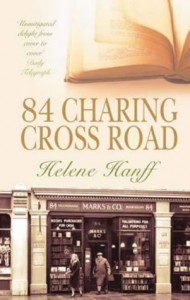
84 Charing Cross Road by Helene Hanff

Posted January 18, 2014 by Michael @ Knowledge Lost in Non-Fiction / 0 Comments

84 Charing Cross Road by Helene HanffTitle: 84 Charing Cross Road (Goodreads)
Author: Helene Hanff
Published: Virago, 1970
Pages: 230
Genres: Non-Fiction
My Copy: Library Book

Buy: AmazonBook Depository (or visit your local Indie bookstore)

84 Charing Cross Road documents twenty-year of correspondences between Helene Hanff and Frank Doel. Helene was an American writer while Frank the chief buyer of Marks & Co, an antiquarian bookseller located at the eponymous address in London, England. Starting out as a request for obscure classics, the book follows the blossoming relationship with Helene and the people of Marks & Co. Followed by The Duchess of Bloomsbury Street, a collection of diary entries of Helene’s trip to England and the tour of bookshops.

Helene noticed an ad in the Saturday Review of Literature and first contacted the shop in 1949. This started a beautiful love story found in this book, not between Helene and Frank but rather a love of books. This is the type of book you read if you are a book lover; it makes me wish I could correspond with a bookstore (or a book lover) about books. Can you imagine this happening with Amazon or Book Depository? Nowadays we have twitter (which I’m always on talking about my love of books) but 140 characters sometimes are not enough to say what you want to say.

I went into this book a little unsure, a collection of letters between a book lover and a bookseller, how great can this book really be? What I found was that the silver tongue and wit of Helene Hanff really made this book for me. You know that feeling in writing where you not sure if the person is being sarcastic or not, I started off wondering this but so found she had a wicked sense of humour and I’m so glad the people of Marks & Co never took offense (or they didn’t appear to). This might have been their (Frank Doel and the others that wrote to Helene) professional nature that slowly changed into a friendship, once they started to get to know each other and understood her sense of humour.

One of the major problems I had with this book is not really a problem but a personal preference, which has to do with grammar and formatting. I understand they tried to keep the writing the same as the letters but I wouldn’t mind if they fixed it a little to add punctuation and correct it. Another thing that throws me was the missing letters, I know things get lost but when you are absorbed in a conversation about a book (like Pride and Prejudice) it is disappointing to not know what happened.

The edition of 84 Charing Cross Road I borrowed from the library also came with The Duchess of Bloomsbury Street. This is the travel diary of Helene Hanff’s time visiting London. Looking at details of this book the term ‘zesty memoir’ is mentioned a few times, but I felt it to be a disappointment in comparison. It was entertaining but it didn’t have the banter or wit I expected, it just felt like a step by step play of everything Helene did while visiting London. While these two books work as companion pieces The Duchess of Bloomsbury Street was too one sided for my taste. Think of it like a sequel, once you finish 84 Charing Cross Road you’ll probably want to know what happened on her trip to London.

84 Charing Cross Road has been made into a movie and a stage play; I’ve not seen them but I’m interested to see how this book translates into another medium. I love how the book is promoted with the line “so begins a love affair”; this is a love affair with books. I managed to write this entire review without mentioning this is an epistolary book that I feel the need to mention my achievement. Highly recommend that you get your hands on both novels and reading them, especially if you are a lover of books.


Careless People by Sarah Churchwell

Posted December 19, 2013 by Michael @ Knowledge Lost in Non-Fiction / 3 Comments

Careless People by Sarah ChurchwellTitle: Careless People (Goodreads)
Author: Sarah Churchwell
Published: Virago, 2013
Pages: 358
Genres: Non-Fiction
My Copy: Paperback

Buy: AmazonBook DepositoryKindle (or visit your local Indie bookstore)

Since the publication of The Great Gatsby in 1925, it has been talked and talked about. Some people were forced to read it in high school, some hate it and others love it. No matter what you think about the book you can’t deny its significance. Careless People looks at The Great Gatsby, F. Scott Fitzgerald and what was happening during the Jazz era. More specifically the months when this classic too place.

I loved The Great Gatsby, the first time I read it I got little out of it (see review) but the second time around, I feel like I really understood it (see that review as well). Though I’ve come to realise this novel is full of layers and the more you read and research the more you will get out of this novel. It has been widely though that The Great Gatsby was autobiographical in nature so understanding F. Scott Fitzgerald is important when reading this classic critically.

Sarah Churchwell has made life a little easier for people that love and want to learn more about this novel. Careless People looks at the text and then different events that were happening at the time of writing this novel. She also talks about the Fitzgeralds (a very interesting couple) and tries to give us some context about the motivations and thoughts behind this Magnum opus.

So you get historical context as well as a unique look into the lives of the Fitzgeralds and what we call the Jazz Age. I really enjoyed this book, as a lover of The Great Gatsby (not the terrible movie) I found it fascinating to learn about just what has happening at that time, especially in New York and F. Scott Fitzgerald. One of the most interesting thinks I learnt from the book was about the lexicon, and new words coined at the time that are used today.

Something I often worry about when reading a non-fiction book like that is referencing. It is not common practice but I seem to respect a book more if I can see where information was found. Careless People did a great job with this; over 50 pages of notes and a bibliography so if you are interested (like me) you can look further and do some independent researching. Part biography, literary criticism, history and true crime, Careless People has a lot of information in it but it is only a scratching the surface on all accounts.

I wish I had this much to say about a book, especially the ones I love; I just want to dive in and learn all I can about it. I often struggle to write a review post, but one day I hope I can pull something off like this; keep an eye out for my 400 page reviews. It is clear that Churchwell is passionate about The Great Gatsby. This would be a great companion next time you read the classic, I can imagine how helpful it would be. I loved Careless People; I want to read more books like this, particularly about novels I love.


The Narrow Road to the Deep North by Richard Flanagan

Posted December 14, 2013 by Michael @ Knowledge Lost in Historical Fiction / 0 Comments

The Narrow Road to the Deep North by Richard FlanaganTitle: The Narrow Road to the Deep North (Goodreads)
Author: Richard Flanagan
Published: Vintage, 2013
Pages: 467
Genres: Historical Fiction
My Copy: Paperback

Buy: Book Depository (or visit your local Indie bookstore)

The Narrow Road to the Deep North follows the story of Dorrigo Evans, an Australian doctor haunted by his past; life in Tasmania, a love affair with his uncle’s wife, World War 2 and so on. At the heart of the story is his horrific time in a Japanese slave labour camp as a prisoner of war working on the Burma death railway. Taking its title from 17th-century haiku poet Basho’s travel journal, The Narrow Road to the Deep North is about the impossibility of love.

I started reading this book at the beginning of my recent reading slump, I felt so much pressure to try and get it read before my local book club. As a result, I wasn’t able to finish it in time and I ended up putting this aside half read. I obviously went back to the book and finished it, but I think it did play a big role in my enjoyment of the novel.

This is my first Richard Flanagan novel; I have heard a lot about him, but never had a chance to try him out before. The Narrow Road to the Deep North is about the harshness of war, not just the struggle of trying to survive the battlefield, or being a prisoner of war. This goes further and looks at trying to survive post war. I’ve read some great novels similar to this; Catch 22, Slaughterhouse-Five, The Yellow Bird, Billy Lynn’s Long Halftime Walk and The Machine come to mind. So I felt that I ended up using these novels as the measuring stick and The Narrow Road to the Deep North just didn’t feel like it covered the topic properly.

I felt like this book also tried to be an epic novel, following the exquisite pain of Dorrigo Evans’s life. Then I got halfway through the novel and wasn’t sure how it could cover the entire life in so little pages. I normally associate epics with great big books and if this book covered more of Dorrigo’s life then it could have fit this genre.

Flanagan focuses on not just the cruelty of war and it’s after effects but the impossibility of love, especially when so damaged. I think this was the major theme Flanagan wanted to explore, more than war and the Burma death railway. The relationship between his uncle’s wife Amy and then his girlfriend Ella play a big role in exploring Dorrigo’s life and the pain he suffers. Forbidden love and the relationship everyone expects from him; this is what I think the author wanted to explore.

I really enjoyed the style of Richard Flanagan’s The Narrow Road to the Deep North, so much so that I think it could have been a future Australian classic. The main problem was some parts go on for pages in great detail and then others were just glossed over. There was no consistency and in a great epic novel, you expect the same amount of detail in everything happening. Sure some parts deserve more time but I think there were something interesting points that needed to be focused on a lot more. This is a good novel that could have been great; I think that is what frustrated me the most about The Narrow Road to the Deep North.


The Martian by Andy Weir

Posted December 9, 2013 by Michael @ Knowledge Lost in Speculative Fiction / 4 Comments

The Martian by Andy WeirTitle: The Martian (Goodreads)
Author: Andy Weir
Published: Crown, February 11th 2014
Pages: 384
Genres: Speculative Fiction
My Copy: ARC from Edelweiss

Buy: AmazonBook DepositoryKindle (or visit your local Indie bookstore)

In a freak dust storm NASA aborted a mission on Mars. leaving behind one astronaut; the crew evacuated thinking him dead. Now Mark Watney is stuck, with the damage done to the equipment he might not have time to starve to death. He was the first person to walk on Mars and he is going to be the first to die there too.

The age of the self-published novel is upon us and every now and then we hear people talking about a book getting a publishing deal and going on to be hugely successful. Fifty Shades of Grey being the first of these, then came Wool and I believe The Martian will be the next sensation book. I can’t help but think of this book as Moon (the movie) set on Mars. You have this man verses nature, fight to survive type thriller but help is about 225 million kilometres away (that’s the average; it does depend on the time of year).

You have a few parts to this novel; firstly you have a log book telling the majority of Mark Watney’s story. Then you read about NASA’s rush attempts to find a way to save him and finally you get a first-hand account of Watney when the epistolary style won’t work. The tension that builds in this book is key to why this novel works so well; this is edge of your seat thriller writing at its best.

What I loved the most about this novel was the humour, while this was a tense book, the little one liners thrown in really worked for me. I just liked how Mark Watney’s mind worked; it was a case of too much time on his hands. At one point in the novel he uses maritime law to work out how he can become a space pirate. Then the novel gets scientific, I’m not good at science but I did wonder how accurate this part of the book was. I’m not going to try mixing Oxygen and two parts Hydrogen to make water, it just sounds too dangerous.

For me, I loved every minute of reading The Martian, which is a little surprising; I can’t remember when the last time I truly enjoyed a Science Fiction novel. There are some that I got a lot out of but nothing this enjoyable. This book isn’t going to be released till February next year and unfortunately the self-published ebook is no longer available. Having said that, pre-order this one; I think there will be a lot of hype behind this, but don’t let that stop you from ordering first.


Solo by William Boyd

Posted November 6, 2013 by Michael @ Knowledge Lost in Thriller / 2 Comments

Solo by William BoydTitle: Solo (Goodreads)
Author: William Boyd
Series: James Bond
Published: Jonathan Cape, 2013
Pages: 322
Genres: Thriller
My Copy: Paperback

Buy: AmazonBook DepositoryKindle (or visit your local Indie bookstore)

The year is 1969 and special agent James Bond has just celebrated his forty-fifth birthday when he is directed by M to undertake an unusual assignment. The western African nation of Zanzarim is in the middle of a civil war and his mission is to eliminate the rebel threat. When Bond gets to West Africa he soon finds out this isn’t as straightforward as it appeared. Soon he finds himself going solo to seek revenge.

I love the James Bond movies but haven’t had much experience with the 007 books; I have only read Carte Blanche and Casino Royale. So if I’m comparing this book to those two, then Solo is amazing. But if I compare it to everything I know about Bond then there is something missing. William Boyd has modelled his Bond after You Only Live Twice so I can’t help but picture Sean Connery.

Solo’s 007 seems to be a heavy smoker but his drinking and womanising is lacking. I know that might seem weird but Bond and misogyny go hand in hand. It is like having a Bond without any wacky gadgets…oh wait, that is a bit of problem here too. One of the things that got me out Boyd’s Bond was that whenever he beds a woman he is making love to her. This just bothered me, I can’t imagine Bond being in love with all those women so the term ‘making love’ doesn’t seem right, also couldn’t we mix it up a little and use a few different teams; ‘slept with’, ‘took to bed’ and so on?

Apart from my issues with this novel, Boyd has a decent knowledge of James Bond and it was nice to see references in the book to a younger 007. For example when he tried to get a Walther PPK in a gun store, they didn’t have any so he went with a Beretta and made references to this being his weapon of choice when he was younger. Little things like that really pulled the book together.

Aside from his knowledge on Bond, William Boyd also has a decent knowledge of that classic spy thriller formula. Nothing too complicated but the light reading of a Bond or Thriller novel. Blending the nuances of the Bond and spy thriller genre, Boyd really seemed to make this his own. While die-hard fans may be annoyed and some people will be bothered with the changes, this was a lot of fun to read.


If on a Winter’s Night a Traveler by Italo Calvino

Posted October 27, 2013 by Michael @ Knowledge Lost in Classic / 4 Comments

If on a Winter’s Night a Traveler by Italo CalvinoTitle: If on a Winter's Night a Traveler (Goodreads)
Author: Italo Calvino
Translator: William Weaver
Published: Everyman's Library, 1979
Pages: 254
Genres: Classic
My Copy: Library Book

Buy: AmazonBook DepositoryKindle (or visit your local Indie bookstore)

If on a Winter’s Night a Traveler is an experimental classic that follows two protagonists, the Reader and the Other Reader. The Reader buys a fashionable new book that opens with those famous lines “You are about to begin reading Italo Calvino’s new novel, If on a Winter’s Night a Traveler. Relax. Concentrate. Dispel every other thought.” Thirty pages or so into the book he realises his copy is corrupt and consists of the same thing over and over again. Returning to the book store he discovers that what he thought was Calvino was a book by a Polish writer Bazakbal. Given the choice between the two he goes for the Polish book, as does the Other Reader, but his book turns out to be yet another novel by a different writer, as does the next, and the next.

Trying to write a synopsis for this book is tricky, there is no way I can do the novel justice in a paragraph.  This Italian surrealist novel (1979) was translated in 1981 to critical acclaim. The novel is best known for its structure. The odd number chapters are written in second person, but you have to ask yourself is it possible to have a novel in second person. As you read along eventually the narrator “you” does something that will take the reader out of the equation and turning them into a character called You. For instance, in this novel You is male, this will rule out about 50% of the readers in one hit.  This doesn’t take away from the enjoyment of this novel but is something I was deeply aware of throughout this book. There were times where I felt like the novel was in first and third person as well, so you end up with characters called You, I and He/She.

This whole book is subjective, I’m sure some people get different things out of If on a Winter’s Night a Traveler than I did but that is just what makes for a great novel. I want to talk a little about post-structuralism as I believe this novel is a great example of this literary theory. Firstly you need to understand structuralism, which is a theory that states that in order to understand a piece of literature you need to understand its relationship with the bigger picture, the overarching system or structure. You need to look into its influences, the genre, narrative and any other elements that might be relevant. The problem with this is you going further and further back eventually you might lose sight of the original text. Basically this is a set of specific rules that govern literature. Post-structuralism is basically taking those rules (they often study and analyse the rules) then setting out to critique the premises. It isn’t really throwing out the rules, more demonstrating how the rules don’t always apply.

Italo Calvino doesn’t stop at narrative modes and post-structuralism, the novel explores many more literary themes; the most obvious is the use of metafiction; a book within a book. You won’t find Outside the Town of Malbork by Tazio Bazakbal on Goodreads, I’ve checked. Then you have intertextuality, pastiche, post-modernism and so on. If you are interested in exploring literary theories this novel might be a good way to experience a whole range of different concepts in one hit. I don’t know much about literary theory so I hope my understanding on these concepts have come across as accurate and I haven’t missed it completely. I would love to attend a series of lectures where this book is deconstructed and looked at in real detail; I think that would be incredibly interesting.

Don’t worry, this isn’t a dense or hard-to-read book and I’m aware that talking about literary theory might turn people off this novel but please reconsider. This book is not only devilishly clever but it is beautifully executed. I took my time with this novel because I wanted to re-read sections, write done quotes and just talk about the book to anyone that would listen. If I didn’t borrow this from the library I would have highlighted the entire books (seriously, every line is just that great). I have brought my own copy now (yes, I broke my book buying ban) and I hope to be able to re-read this again. I’m not sure if reading this with others will help but the whole experience of reading this novel is worth sharing.

I’ve heard Italo Calvino is heavily influenced by Vladimir Nabokov which makes a lot of sense to me, the writing style does feel similar, even the humour and wit. A literary labyrinth that is so masterfully executed that the novel needs to be read again and again. I won’t go into any more details as there are a few things you just need to experience. I’m jealous of anyone that gets to read this novel for the first time as that is an experience I will never have again.

 I have to wonder why the Vintage classics cover of the word “Traveller” written correctly but throughout the book it is written in the American (wrong) spelling. I have to wonder if there is anything in that. I wonder if there is a reading companion to If on a Winter’s Night a Traveler that you can read alongside this book (similar to Infinite Jest) to discover the brilliance of this novel. I really enjoy Post-Modern literature but there is so much that I’m probably missing.

All book lovers should experience If on a Winter’s Night a Traveler, there is nothing like that feeling of pure joy when you read a beautifully clever novel. You never want it to end, that ecstasy is like a drug and you immediately want to read it again only to find that feeling is just not the same. This is a masterpiece, I know I didn’t talk much about the plot but this was so I don’t give anything away. Go read it.