Publisher: Vintage

Kafka on the Shore by Haruki Murakami

Posted April 29, 2015 by Michael @ Knowledge Lost in Book of the Month, Magical Realism / 0 Comments

Kafka on the Shore by Haruki MurakamiTitle: Kafka on the Shore (Goodreads)
Author: Haruki Murakami
Translator: Philip Gabriel
Published: Vintage, 2002
Pages: 480
Genres: Magical Realism
My Copy: Library Book

Buy: AmazonBook DepositoryKindle (or visit your local Indie bookstore)

Kafka on the Shore tells the story of a fifteen year old book named Kafka who runs away from home to find his mother and sister. Although the alternate chapters tell the story of Nakata; a strange old man who has the ability to talk to cats. Like many of Haruki Murakami’s books, Kafka on the Shore blends pop culture with magical realism in order to explore the psyche of the characters involved.

It is often hard to try and give an overview of a Murakami book because they tend to come out weird and I do not want to give the impression that his novels are not worth attempting. For Kafka on the Shore, the magical realism allows the reader to explore the psychological mind of fifteen year old Kafka Tamune. Not only is Kakfa a young man discovering his sexuality, Sigmund Freud would probably suggest that he also has an Oedipus complex and has developed an unhealthy obsession with his mother and sister.

According to Freud, an Oedipus complex stems from the unconscious mind and normally caused by the repression of a mother (or father) figure. Freudian psychoanalysis theory suggests that this is a key psychological experience needed for normal sexual development. However if it is unsuccessful at resolving it may lead to neurosis, paedophilia, or homosexuality. Without going into the problematic thinking of Sigmund Freud, this does make for an interesting analysis of Kafka’s journey throughout the book, especially with his interactions between Sakura and Miss Saeki.

If we continue looking at this novel through the lens of psychoanalysis theory, we might even get some interesting insights into Nakata. I always thought the loss of mental faculties was due to the psychological trauma, he experienced as a young boy. He was one of sixteen schoolchildren picking mushrooms in a field trip towards the end of World War II, when they were all rendered unconscious from a mysterious light in the sky. However it has also been suggested that maybe Kafka and Nakata are two different parts of the same person.

Every time I read a Haruki Murakami, I am reminded of his brilliance (with the exception of 1Q84), and I want to explore more of his works. I am also reminded that I need to learn a whole lot more about psychoanalytical theories, and how much it would help with books like Kafka on the Shore. For me this was a bildungsroman book about sexual development and memories. However, I found myself more interested in the chapters centred on Kafka over those about Nakata but maybe that was because I understood them a little better.

Yet again Haruki Murakami has impressed me with Kafka on the Shore and I am eager to pick up more of his books. I know magical realism can be scary for some people but I love the way Murakami uses it to explore the mind. My only real criticism of this book is that it was a little bloated and could have been trimmed down a little and still achieve the same. This might be due to an aversion to big books that I really need to overcome and not a true reflection on Murakami. I highly recommend giving this author a go if you have never tried him but Kafka on the Shore is not a good starting point; may I suggest trying Norwegian Wood first.
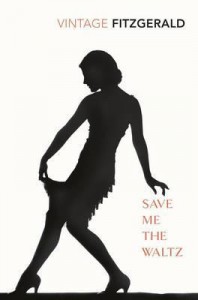

Save Me the Waltz by Zelda Fitzgerald

Posted March 14, 2015 by Michael @ Knowledge Lost in Classic / 2 Comments

Save Me the Waltz by Zelda FitzgeraldTitle: Save Me the Waltz (Goodreads)
Author: Zelda Fitzgerald
Narrator: Jennifer Van Dyck
Published: Vintage, 1932
Pages: 225
Genres: Classic
My Copy: Audiobook

Buy: AmazonBook DepositoryKindle (or visit your local Indie bookstore)

Save Me the Waltz is the story of Alabama Beggs, a young Southern girl who meets and falls in love with David Knight during World War I. The two inevitably get married and David goes on to become a successful painter, before moving their family to the French Riviera. However Alabama is determined to find her own success and takes up ballet. When she lands her first solo debut in the opera Faust the cracks in their marriage become evident.

After an episode of hysteria in 1932, Zelda Fitzgerald was admitted to the Johns Hopkins Hospital in Baltimore for treatment. Dr Adolf Meyer, an expert on schizophrenia was her doctor and as part of her recovery routine he got her to write at least two hours a day. Save Me the Waltz was written over the course of six weeks and was the first and only novel to be published by Zelda Fitzgerald. Her husband was outraged that she took so much of their personal life and added it into this novel. Despite the fact that the majority of F. Scott Fitzgerald’s novels are also autobiographical and he used the same material for his novel Tender is the Night.

I wanted to read Save Me the Waltz after reading Tender is the Night to compare the similarities. The problem I soon discovered is that Save Me the Waltz has possibly been whitewashed by F. Scott Fitzgerald. Apparently he helped Zelda revise her book and the amount that has been changed is unknown because her original manuscript has been lost. However Scott went from being irate to writing to Maxwell Perkins at Scribner (their publisher) “Here is Zelda’s novel. It is a good novel now, perhaps a very good novel—I am too close to tell.” I am inclined to believe that he has made sure he comes across better than originally written but without the original that is purely speculation.

The major theme within Save Me the Waltz is around the intense desire for Alabama/Zelda to succeed for themselves. It was not enough for either person to be the wife behind a successful man, and it explores the problems faced in doing this in a male dominated society. When Alabama gets her dream job in Naples with the San Carlo Opera Ballet Company, David does not want to move. Considering that he is a painter and could really work from anywhere, it says a lot about their marriage. This does not hinder Alabama from perusing her dreams and she goes to Naples anyway, leaving her husband to look after their child alone. Now this move may make people uneasy but it really plays with the power dynamic of marriage. Zelda Fitzgerald wants to challenge the conceptions people had of the role of a wife in a marriage and ask why it was alright for a man to go away for work but not the woman.

This can be a very difficult novel to read, knowing the historical context and history behind the story. Comparing this book with Tender is the Night does not leave F. Scott Fitzgerald in pleasant light but then again his novel did not do that either. One of the most powerful lines in this novel can be found right near the end and it beautifully wraps up the whole book into a few lines. “Emptying the ashtrays was very expressive of myself. I just lump everything in a great heap which I have labelled ‘the past,’ and having thus emptied this deep reservoir that was once myself, I am ready to continue.”

While I cannot say that Save Me the Waltz is a strong novel, it was a fascinating exploration into the lives of the Fitzgeralds. I am glad to have read and compared this book to Tender is the Night but I think it has only fuelled my interest into this couple. I still need to read a biography or two on the Fitzgeralds but I am beginning to get a better idea of their lives. I think if you are going to read Tender is the Night, you need to read Save Me the Waltz so you can have perspective on the autobiographical elements; even if they were tainted by F. Scott Fitzgerald’s edits.


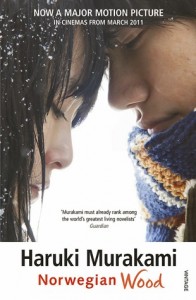
Norwegian Wood by Haruki Murakami

Posted March 8, 2015 by Michael @ Knowledge Lost in Contemporary / 10 Comments

Norwegian Wood by Haruki MurakamiTitle: Norwegian Wood (Goodreads)
Author: Haruki Murakami
Translator: Jay Rubin
Published: Vintage, 1987
Pages: 389
Genres: Contemporary
My Copy: Library Book

Buy: AmazonBook Depository (or visit your local Indie bookstore)

Having just arrived in Hamburg, Germany, 37 year old Toru Watanabe hears an orchestral cover of The Beatles’ song “Norwegian Wood” which reminds him of his college years. In high school his best friend, Kizuki completed suicide and Watanabe moved to Tokyo for college in the hopes to escape the pain. One day he was reunited with Kizuki’s girlfriend Naoko and they sought solitude in each other’s company. However this relationship wasn’t the right solution for Naoko and she left for a secluded mountain sanatorium near Kyoto.

Norwegian Wood is often referred to as the best starting point when diving into the works of Haruki Murakami, mainly because this is one of the few books that don’t have a magical realism thread to it. This is a good place to start but what I find fascinating is the way Murakami uses magical realism to explore ideas of the mind. Colorless Tsukuru Tazaki and His Years of Pilgrimage and Norwegian Wood don’t have that same fantastical style but they still follow similar themes. Colorless Tsukuru Tazaki looks at the psychological impacts of losing friendships, while this novel looks at ideas of memory. From what I have read so far, Murakami’s other books do similar things but the use of magical realism allows him to dive into the mind and explore it as a fantastical world.

I have heard Norwegian Wood described as a coming of age story so many times, but I find it difficult to classify this book as such; for the simple fact that Toru Watanabe is 37 years on at the start of the novel, even though the majority of the novel is set during his college years. I think this is more a reflection on life and love, a novel that explores ideas of memory and nostalgia through themes like loss, depression and sexuality. This leads me to wonder just how reliable Watanabe really is and if there is a ‘rose coloured glasses’ perception happening in the novel. However the way this novel comes together and deals with memory (especially at the end) works so well and I can understand why Norwegian Wood is a Haruki Murakami favourite for many people.

One thing that really stuck with me with Norwegian Wood is the way Murakami developed characters. I found most characters to be complex and well rounded, they all had a unique personality and it was such a joy to read something with such great character development. A favourite of mine was Midori, who reminds me a lot of my wife; a confident and sure character who is at times insecure but has a great interest in talking about sex with others. She was the highlight of the whole novel and I always looked forward to her turning up within the story.

Before I knew who Haruki Murakami was, I saw the 2010 Japanese movie adaptation and thankfully I forgot most of the story. While images and plot points did come back to me as I read the novel, I was glad I didn’t have that outside influence but now I do need to re-watch the movie. Norwegian Wood is a great starting place if you have never read Haruki Murakami before. Apparently Murakami isn’t too happy that this is the novel that people will read or recognise him by, but it really is one of his stand out books. I have so many more Murakami books to read and I am really looking forward to diving into them all.


Tender Is the Night by F. Scott Fitzgerald

Posted January 30, 2015 by Michael @ Knowledge Lost in Book of the Month, Classic / 2 Comments

Tender Is the Night by F. Scott FitzgeraldTitle: Tender Is the Night (Goodreads)
Author: F. Scott Fitzgerald
Published: Vintage, 1933
Pages: 344
Genres: Classic
My Copy: Paperback

Buy: AmazonBook DepositoryKindle (or visit your local Indie bookstore)

Rosemary is a young movie scarlet on vacation in the French Rivera, with her mother. It is there that she meets the handsome psychologist Dick Diver and falls madly in love with him. The only problem is Dick is married and his wife, Nicole, a sophisticated socialite is just as lovable. While this magnetic couple draw in admirers and bask in the social spotlight, things are not as perfect as they seem. Tender is the Night is an exploration into a degenerating marriage and the differences between what people project publicly verses what is really happening under the surface.

In 1932 Zelda Fitzgerald was hospitalised for schizophrenia, although there have been huge debates since as to whether she should have been diagnosed with bi-polar disorder (if it was classified back then) instead. While Zelda was being treated at the Phipps Clinic at Johns Hopkins Hospital in Baltimore, she had a burst of creativity. Over six weeks she wrote her only novel Save Me the Waltz which was published the same year. The novel was semi-autobiographical and when F. Scott Fitzgerald read it he was furious that she shared so much of their personal life within the book. Even though Scott shares a lot of their lives in his own novels, the anger may have to do with the fact he planned to use the material for his next novel Tender is the Night. It is hard to tell how much of Scott’s novel is based on real life and how much is just written in anger towards his wife, I will have to read Save Me the Waltz to make up my own mind.

While Nicole Diver is heavily based on Zelda Fitzgerald, it is up to the reader to make up their mind about Dick and if F. Scott Fitzgerald based this character on himself. I personally think there is a lot of Scott in this character and he wants to portray himself as the handsome, intelligent husband that is devoted to his wife, looking after her through her mental illness. However this is where it gets a bit passive aggressive; Tender is the Night chronicles the downward spiral of Dick Diver’s life. As the novel progresses you begin to see just how this lifestyle and his marriage effects Dick to the point where he is nothing but a shell of his former self.

There are some interesting themes worth exploring within this novel; for me I was mostly interested in the ideas of appearance and reading about F. Scott Fitzgerald’s thoughts about being married. There is such beauty within the writing, but then there is so much sadness to be found as well. I found this to be a heart-breaking novel and the fact that this is based so much on his own marriage just makes things worse. I’m planning to read Save Me the Waltz very soon, just so I can compare the two novels.


What We See When We Read by Peter Mendelsund

Posted November 8, 2014 by Michael @ Knowledge Lost in Non-Fiction / 3 Comments

What We See When We Read by Peter MendelsundTitle: What We See When We Read (Goodreads)
Author: Peter Mendelsund
Published: Vintage, 2014
Pages: 419
Genres: Non-Fiction
My Copy: Paperback

Buy: AmazonBook DepositoryKindle (or visit your local Indie bookstore)

When reading Moby Dick, does Ishmael look like Richard Basehart? How about Anna Karenina? Please don’t tell me she looked like Keira Knightley. What We See When We Read takes a look at the activity of reading with such depth and insight. Looking at not only the way our brain fills in the images but also what the author is trying to say. Take for example Karenin in Anna Karenina; his ears are described a few times within the novel but they get bigger. The size of his ears is an artistic simulacrum that changes as Anna Karenina’s feelings toward him change.

Peter Mendelsund is Knopf’s Associate Art Director and has been responsible for some of their most iconic book covers. Just looking at his book cover designs I get the sense that he loves reading and the artistic side of literature. His book covers really capture a feeling; they stand out and often work well with the written word inside. He is major is in Philosophy and Literature and the two work well together in looking at the idea of reading and how our minds interpret the written word.

This is very much like Understanding Comics by Scott McCloud, it explores the idea of reading in different ways and explores different concepts. We all read slightly different and Mendelsund is able to go into different methods. A stand out for me is the way Vladimir Nabokov read Kafka’s Metamorphosis; there is an image of his copy of the book and it looks like he edits and rewrites the book to make it his own. It is an interesting way to get involve with the written word.

What We See When We Read is a combination of written words and images, which allows Mendelsund to illustrate his point and give the reader a better understanding of the feelings. A big bonus is the fact that he references other books, which gives me a huge TBR pile of books that explore this idea further in different ways. I love books about books so I am pleased to have a reading list.

I have to say What We See When We Read is a must for all book lovers. This book will be a joy to read and will look good on the shelf. I own the new Vintage edition, which is a paperback but it also has French flaps so it looks nice. I like how he went for a simple cover design; it stands out and works well with this book. I know this book is rising in popularity and I hope more people get a chance to read this one as soon as possible.


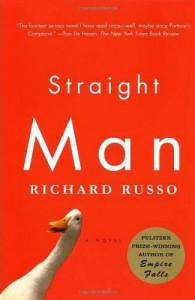
Straight Man by Richard Russo

Posted September 26, 2014 by Michael @ Knowledge Lost in Contemporary, Humour / 0 Comments

Straight Man by Richard RussoTitle: Straight Man (Goodreads)
Author: Richard Russo
Narrator: Sam Freed
Published: Vintage, 1997
Pages: 416
Genres: Contemporary, Humour
My Copy: Audiobook

Buy: AmazonBook DepositoryKindle (or visit your local Indie bookstore)

I must admit, I do enjoy a good campus novel and when I heard about Straight Man by Richard Russo I knew I had to read it as soon as I could. The story spouted from a real life situation Richard Russo had teaching at a small State University. Having made friends with the Dean of the university he found himself in a conversation about the budget. Year after year, the same thing happened and while walking past a duck pond the Dean jokingly complained that he would have to threaten to kill a duck a day until he got his budget. This ended up being the basis of not only the main character from Straight Man but the birth of the novel.

The novel tells the story of an English professor, William Henry Devereaux, Jr. at a fictional Pennsylvania University. He has been appointed as the interim chairman of the English department and once again the administration of the university has not provided a budget yet. William is also enjoying a midlife crisis and the complacency of being a tenure professor which gives us a sharp, witty and satirical look at college life.

You know what they say; ‘Everyone has a book in them’, and an English professor is more likely to know the pains of writing. For William, he has already enjoyed a brief brush with success when he released his fast forgotten novel. Despite his abilities, he will always remain in the shadows of his father; a far more popular and successful writer and professor. This creates a volatile mix of emotions and frustration for this character and the results play out wonderfully with Straight Man.

I was pleasantly surprised just how satirical this novel turned out, often humour was delivered in a number of different ways. From the outlandish situation, to dry deadpan deliveries and self-deprecation; these combinations worked well with the character and the novel itself. However behind the humour is the brutal truth of the bureaucratically nightmare an academic department faces year after year.

Ultimately what impressed me the most with this novel was the way Richard Russo managed to balance everything perfectly. He had a good sense of comedic timing and knows when to hold back or push forward. Yet he also knew how to sneak in some heavy themes without destroying the light hearted manner of the delivery. Above all, he has able to write great prose that showed beauty and tenderness as well as bitterness and comedy. It must have been difficult to balance everything but the execution made it look easy.


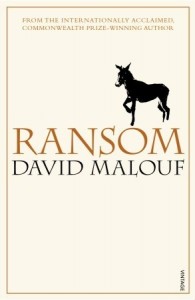
Ransom by David Malouf

Posted May 8, 2014 by Michael @ Knowledge Lost in Historical Fiction / 0 Comments

Ransom by David MaloufTitle: Ransom (Goodreads)
Author: David Malouf
Published: Vintage, 2009
Pages: 240
Genres: Historical Fiction
My Copy: Paperback

Buy: AmazonBook Depository (or visit your local Indie bookstore)

While Ransom is a retelling of Homer’s Iliad, this doesn’t mean this is just a bite-sized simplification of the epic poem. I will admit that I’ve not read Iliad or The Odyssey by Homer; for some reason I’m scared to do so, even though I’ve managed epic poems that some may consider hard to read (The Divine Comedy and Paradise Lost). I’ve heard it said that you don’t really need to read Iliad to enjoy Ransom but I would have to disagree, I think David Malouf’s novel is inviting the reader to look at the poem in the way he interprets it. There are gaps that Malouf expects the reader to know and understand and without any prior knowledge to The Iliad and the war on Troy they can feel lost and confused.

Ransom starts at the point where Priam’s son Hector is slayed by Achilles and mainly focuses on the two characters. I’m not sure about Iliad and I’m not going to speculate on what Homer was trying to say in the poem but I will look at what Malouf is saying. Ransom is a novel on human grief, love and even revenue in an intimate and rather tender approach to the subject matter. The emphasis is on the human emotions behind the story that plays out during the Trojan War. Although the novel explores the emotions of both Achilles and Priam, not really caring about any of the other characters so we only really get to experience the ideas of grief and revenge.

The main point on reading this novel was to explore the idea of intertextuality or the relationship between two interconnecting pieces of text. While I can’t say I’ve had much experience with intertextuality, the only novel that springs to mind is The Amazing Adventures of Kavalier and Clay; I suspect there is a little interconnectivity in all novels. Intertextuality covers everything from modernisations, parodies, reimaginings and anything that borrows from a different text.

This often makes me wonder, at what point do we stop studying intertextuality and more a look at plagiarism? The concept of intertextuality and plagiarism feels like a very thin line. Ransom for example is a retelling of Iliad where David Malouf wants the reader to explore this classic poem the way he sees it. This is his interpretation of what he feels Homer was trying to say. Doesn’t mean it is the only interpretation, Malouf is just taking his ideas and exploring it further.

One day I will get around to reading Iliad and The Odyssey; I’m saving them for when I have some time to read critically and take the time to full understand the two epic poems. Once I’ve done that, I think I might revisit Ransom, see if I get something out of it. I did enjoy Malouf’s style and it was an interesting novel to read but I really need to read the original first.


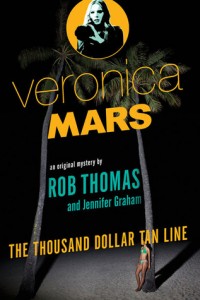
The Thousand-Dollar Tan Line by Rob Thomas & Jennifer Graham

Posted May 2, 2014 by Michael @ Knowledge Lost in Crime / 2 Comments

The Thousand-Dollar Tan Line by Rob Thomas & Jennifer GrahamTitle: The Thousand-Dollar Tan Line (Goodreads)
Series: Veronica Mars #1
, 2014
Pages: 324
Buy: AmazonBook DepositoryKindle (or visit your local Indie bookstore)

Veronica Mars is quite possibly one of the most interesting characters on TV. She’s intelligent, witty and snarky; think Philip Marlowe meets Nancy Drew. First of all, if you haven’t seen the TV show, I highly recommend you do so first. Watch the show then the movie and then you’ll be ready to read this novel. This new series takes place after the events of the movie, which means not only do I have to avoid spoiling the novel, but I must also try and avoid any major spoilers of the movie. I’m sure there will be spoilers from the TV show (mild spoilers from the movie as well) but that really can’t be helped.

Veronica Mars is back in the land of sun, sand, rich entitled kids, crime and corruption otherwise known as Neptune, California. A town that has no middle class, you are either rich or you are considered low class, and the Sheriff, he comes down hard but only on those below the poverty line. When a girl goes missing at spring break, a media frenzy follows but the Sheriff’s department are not being helpful. Veronica is hired to find the girl but this leads her into a dangerous underground of drug and organised crime.

All your characters are back, with one surprise. I’m pleased to report that everyone and everything in Neptune felt authentic and I’m so happy to see that Mac had a bigger role as Veronica’s sidekick. There is one major flaw in this movie, it changed perspectives; the TV show and movie are all told in a first person narrative but the book is in third person. Which is strange, Veronica Mars’ first person narration is iconic to the brand and also a vital part of the neo-noir style. While that noir style is still evident in the novel it just didn’t feel the same.

Another major flaw in the novel is the missing ‘bigger’ mystery. It was what made the TV show so great; ‘who killed Lilly Kane’ is what got me addicted to the show and each season had a new mystery to solve. I would have liked to see this return in the new book series but much to my disappointment it didn’t. These books are marketed to fans of the Veronica Mars brand and taking away pieces that make the show/movie great really does not do this novel or the others any justice.

I am a marshmallow (if you don’t know what that is then maybe this book isn’t for you) so I obviously loved this novel and enjoyed being back in Neptune. I will be reading any Veronica Mars novel that gets released and backing any kickstarters for any more possible movies. It was fun to stay in Veronica Mars’ world but I would like to know what happened in the ten years between the TV show ending and the movie. I’m hoping this series will tell me more about Veronica’s university and FBI years.


Loaded by Christos Tsiolkas

Posted January 25, 2014 by Michael @ Knowledge Lost in Contemporary / 42 Comments

Loaded by Christos TsiolkasTitle: Loaded (Goodreads)
Author: Christos Tsiolkas
Published: Vintage, 1995
Pages: 151
Genres: Contemporary
My Copy: Paperback

Buy: AmazonBook Depository (or visit your local Indie bookstore)

Ari feels very much alone in the world, a Greek immigrant, unemployed and struggling with his sexuality. That is to say he has a same sex attraction but his friends and family would never approve of that. In Christos Tsiolkas’ normally overlooked Loaded we follow Ari through his struggles as an outsider in this autobiographical novel.

Christos Tsiolkas is a critically acclaimed author with books like Barracuda and my personal favourite The Slap. It is a shame that his debut novel Loaded just doesn’t get the attention it deserves. Was this published at the wrong time? I remember the nineties as a time where homosexuality was thought of as disgusting; granted I was still in high school in a small backwards country town but I couldn’t imagine what it would be like for someone that actually was struggling with their sexuality.

What little I know about Tsiolkas, I’ve come to the conclusion that Loaded was a reflection of his own struggles living in Melbourne with a traditional Greek family that expects so much from you. They went through all the effort to move to Australia in the hopes for a better life; the least you can do is make the most of it. Do well in school, get a good job, marry and have kids. What if this isn’t part of your plan? How would your parents react to this news?

I had to read this book for university, right after studying Joseph Conrad’s Heart of Darkness so I’ve naturally made some connections between the two. Marlowe and Ari are very similar in the sense they both are outsiders, though one deals with this during colonial times and the other is a post-colonial take. Without going too much into the parody of Heart of Darkness, because my mind has really made some interesting connections (some are probably a stretch). The different ways the two protagonists (Heart of Darkness and Loaded) are portrayed as loners in a world that doesn’t feel like home were done in interesting ways.

The whole sense of belonging is a huge part in Loaded; even the way Christos Tsiolkas talks about Melbourne is done as a parody. In Tsiolkas’s Melbourne people are divided into different cliques, much like a diverse multi-cultural city, but there is also are separation into the north, south, east and west. This is interesting to see the separation of power, wealth, religion and culture; sure this normally happens in a normal city, each suburb seems to be stereotyped as a good or bad neighbourhood. In Loaded the division is more extreme, highlighting all these groups of people and showing the reader just how much Ari doesn’t fit in anywhere he goes.

Read More


The Narrow Road to the Deep North by Richard Flanagan

Posted December 14, 2013 by Michael @ Knowledge Lost in Historical Fiction / 0 Comments

The Narrow Road to the Deep North by Richard FlanaganTitle: The Narrow Road to the Deep North (Goodreads)
Author: Richard Flanagan
Published: Vintage, 2013
Pages: 467
Genres: Historical Fiction
My Copy: Paperback

Buy: Book Depository (or visit your local Indie bookstore)

The Narrow Road to the Deep North follows the story of Dorrigo Evans, an Australian doctor haunted by his past; life in Tasmania, a love affair with his uncle’s wife, World War 2 and so on. At the heart of the story is his horrific time in a Japanese slave labour camp as a prisoner of war working on the Burma death railway. Taking its title from 17th-century haiku poet Basho’s travel journal, The Narrow Road to the Deep North is about the impossibility of love.

I started reading this book at the beginning of my recent reading slump, I felt so much pressure to try and get it read before my local book club. As a result, I wasn’t able to finish it in time and I ended up putting this aside half read. I obviously went back to the book and finished it, but I think it did play a big role in my enjoyment of the novel.

This is my first Richard Flanagan novel; I have heard a lot about him, but never had a chance to try him out before. The Narrow Road to the Deep North is about the harshness of war, not just the struggle of trying to survive the battlefield, or being a prisoner of war. This goes further and looks at trying to survive post war. I’ve read some great novels similar to this; Catch 22, Slaughterhouse-Five, The Yellow Bird, Billy Lynn’s Long Halftime Walk and The Machine come to mind. So I felt that I ended up using these novels as the measuring stick and The Narrow Road to the Deep North just didn’t feel like it covered the topic properly.

I felt like this book also tried to be an epic novel, following the exquisite pain of Dorrigo Evans’s life. Then I got halfway through the novel and wasn’t sure how it could cover the entire life in so little pages. I normally associate epics with great big books and if this book covered more of Dorrigo’s life then it could have fit this genre.

Flanagan focuses on not just the cruelty of war and it’s after effects but the impossibility of love, especially when so damaged. I think this was the major theme Flanagan wanted to explore, more than war and the Burma death railway. The relationship between his uncle’s wife Amy and then his girlfriend Ella play a big role in exploring Dorrigo’s life and the pain he suffers. Forbidden love and the relationship everyone expects from him; this is what I think the author wanted to explore.

I really enjoyed the style of Richard Flanagan’s The Narrow Road to the Deep North, so much so that I think it could have been a future Australian classic. The main problem was some parts go on for pages in great detail and then others were just glossed over. There was no consistency and in a great epic novel, you expect the same amount of detail in everything happening. Sure some parts deserve more time but I think there were something interesting points that needed to be focused on a lot more. This is a good novel that could have been great; I think that is what frustrated me the most about The Narrow Road to the Deep North.