Reading Challenge: 50 Essential Cult Novels

Valley of the Dolls by Jacqueline Susann

Posted December 6, 2015 by Michael @ Knowledge Lost in Classic / 0 Comments

Valley of the Dolls by Jacqueline SusannTitle: Valley of the Dolls (Goodreads)
Author: Jacqueline Susann
Published: Time Warner Books, 1966
Pages: 467
Genres: Classic
My Copy: Paperback

Buy: AmazonBook DepositoryKindle (or visit your local Indie bookstore)

Pills! Pills will fix everything. Known as dolls, these red, yellow or green pills all serve a purpose. Although the more frequently you take them the more tolerance you build up, requiring more pills in a vicious cycle. Valley of the Dolls is a 1966 cult classic written by Jacqueline Susann, exploring the world of pop culture and Hollywood. This is a roman à clef that explores the life of three friends; Anne, Jennifer and Neely and their aspirations in life.

Jacqueline Susann is very blunt in the Valley of the Dolls and it is painfully obvious what she wants to say. This did not stop me from absolutely enjoying this novel and I found myself slowing down to stay in the world of these three woman. Susann wants to explore ideas of fame, money and even love; showing that just because you have what seems like the perfect life, does not mean it is perfect, particularly when it comes to fame. Each character seems to succeed in their perspective careers and once at the top, there is nowhere left to go but down.

Each of the three characters are different and the shifting perspectives help explore their lives. I really liked Jennifer, she was sassy and head strong. She was considered a great beauty, with big breasts and it was interesting to follow her life. She frequently becomes nothing but a pair of breasts and people often cared about nothing else about her. Anne was the more grounded character and gave a nice balance between Jennifer and Neely. I did not like Neely as a character; a big shot actress and often a difficult diva. I liked how different each character was but I did find myself wanting the sections about Neely to hurry up and end so I could move on to one of the others.

The novel deals with plenty of social issues, and we have to remember that the 1960s was a time of great political and social change. This allowed Jacqueline Susann a chance to express her opinions on sex, sexism, addiction, abortion and mental illness. At times it can be very descriptive and hard to read, especially when it comes to the sexism and slurs. I think this is an important element of the book and really allowed you to feel the negativity that these women had to struggle through.

Valley of the Dolls was such an enjoyable novel, not without its flaws but I found myself sucked into this world. I am glad to follow these three woman, through their ups and downs in life. I find myself become more of a fan of the roman à clef; which is a book about real life disguised as a piece of fiction. I know this novel gets a lot of criticism, mainly about Jacqueline Susann’s bluntness towards the social issues but I found this wonderful and so happy to finally read it.


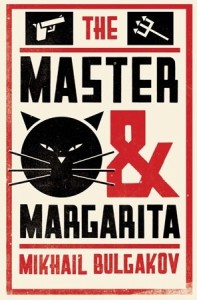
The Master and Margarita by Mikhail Bulgakov

Posted March 10, 2015 by Michael @ Knowledge Lost in Classic, Magical Realism / 2 Comments

The Master and Margarita by Mikhail BulgakovTitle: The Master and Margarita (Goodreads)
, 1967
Pages: 403
Buy: AmazonBook Depository (or visit your local Indie bookstore)

When I first read The Master and Margarita by Mikhail Bulgakov back in 2012 I had no idea how to review it. Now that I have re-read the book, I am still at a loss. The Master and Margarita is often considered as one of the best novels of the 20th century by critics and cited as the top example of Soviet satire. Like most of Mikhail Bulgakov’s bibliography, this author never saw the effect that this novel had on the world; it was written between 1928 and 1940 but was first published in 1967, long after his death.

One of the things I love about Russian literature is the social commentary and satirical nature found in a lot of their books. During the Soviet era there was a lot written about the political state of the country but these were often heavily censored before publication. There was a distribution practise happening at the time call called samizdat, which is when individuals reproduced censored publications and passed them out to readers. The term samizdat comes from the Russian words, sam which roughly means “self” and izdat “publishing house”, so possibly the first use of self-publishing. If it wasn’t for this underground practice we may never have the uncensored editions of Russian classics like Doctor Zhivago by Boris Pasternak, the majority of Aleksandr Solzhenitsyn books and of course The Master and Margarita.

The novel starts out with Berlioz and Bezdomny talking at the Patriarch ponds when a mysterious professor appears and strikes up a conversation. This professor is actually Satan and he was talking to them about the existence of God, the idea being if God doesn’t exist, can Satan?. Russia at the time was an atheist state, in fact communism and religion often do not go hand in hand. During the Stalinist era the Soviet government tried to suppress all forms of religious expression. Bulgakov’s commentary on religion and the government is an interesting one and while there are other interpretations of the novel this was what I took away from the novel this time round.

The ideas of censorship of religion continues with the Master’s book about Pontius Pilate, which was rejected and he was accused of pilatism. Though pilatism is found throughout the book The Master and Margarita as well, Pilate is not only in the Master’s novel but appears in Satan’s stories as well as dreams. The Master has poured his heart and soul into it his novel and having rejected sent him into a tailspin. This satirisation of censorship and religion plays though out the entire novel.

The idea of pilatism is an interesting one since in Christianity Pontius Pilate is the seen as the one that sentenced Jesus (referred to by his Hebrew name Yeshua Ha-Nozri in this novel) to die on the cross. Pilate becomes a symbol of humanity’s evil within religion and The Master and Margarita but you can argue that it is possible that he was a victim of society. Pilate’s ruling on Yeshua Ha-Nozri was due to pressure from the people and the high priests, he literally (and symbolically) washed his hands of the situation. I got the impression that Mikhail Bulgakov was comparing this idea of pilatism with the soviet government at the time. Human nature is apparently evil but it is also very influential of society, and what does that say about the atheist state?

There is so much going on within this novel and I would love to talk about the influences of Goethe’s tragic play Faust on the book. However I think I would need to re-read Faust to be able to compare it with The Master and Margarita. I would have also liked to explore the constant changes on narration, from an omniscient observer to the characters within the book but not sure what else to say about that. I re-read this book as part of a buddy read, my first buddy read in fact and I had a lot of fun doing this but I think I wasn’t a good reading partner. This time I read the Hugh Aplin translation of The Master and Margarita and I think I enjoyed it more than the Pevear/Volokhonsky translation I read last time. This may have been because I got more out of the book or maybe there is something about Richard Pevear and Larissa Volokhonsky translations I didn’t like, I tend to avoid their translations.

I hope I have made a coherent review, I focused mainly on censorship and religion because this book is weird and all over the place so I needed to stick to one topic to make sense of what I have read. I do plan to re-read The Master and Margarita sometime in my life, I might even try a different translation again (any suggestions?). I got so much out of this book this time around and has really made me appreciate the value of re-reading. I ended my last review of this book telling people to ‘just read it’ and I think that sentiment still stands.


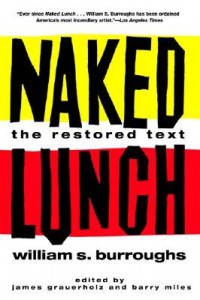
Naked Lunch by William S. Burroughs

Posted June 14, 2013 by Michael @ Knowledge Lost in Classic / 5 Comments

Naked Lunch by William S. BurroughsTitle: Naked Lunch (Goodreads)
Author: William S. Burroughs
Published: Grove Press, 1959
Pages: 289
Genres: Classic
My Copy: Personal Copy

Buy: AmazonBook Depository (or visit your local Indie bookstore)

In a complex and disturbing string of events, William Lee finds himself fleeing from the police. While on the run, this drug addict finds himself journeying across the United States and into Mexico. His travels lead him into the underground world of both drug and homosexual culture. The coun
ter story revolves around the use of mind control by the government and psychiatrists to manipulate and direct the public.

Considered one of the most important novels of the twentieth century, William S. Burroughs’ Naked Lunch is a bizarre cut up narrative protesting the death penalty. You got that the book was trying to do that from the synopsis right? Naked Lunch is a non-linear narrative that does make it really difficult to summarise the plot. Burroughs is famously known for his cut-up narrative; which is a literary technique that can be traced back to the Dadaists in the 1920s. For more information about Burroughs and cut-up check out my post called William S. Burroughs & Surrealist Writing Methods.

The book looks into two key groups; the drug and homosexual subcultures. The two unite early in the novel by the narrator but are never mutually exclusive. At the start of the book William Lee believes he will be punished more harshly for his involvement in homosexual activities than using and selling illegal drugs, which is really sad to think that people are being still victimised over their sexuality and drugs have just become socially acceptable.

Then the subplot largely focuses on the way in which psychotherapy combines with the government to institute mind control. Dr Benway experiments on ways to manipulate the minds of his patients in order to further his research. With no ethical consideration, he often changes his patient’s sexual identity and then tries to cure them. He also creates a mental controlling device for the towns as a way to use the population for his sadistic experiments and put them through psychological torture. Many of these experimental towns are based on the utopian idea and Burroughs like to explore the problems with the idea in a rather sinister way.

So how is this novel a protest to the death penalty? Well that would be in the same way Jonathan Swift’s Modest Proposal ideals with economics. William S. Burroughs uses Juvenalian satire to highlight the barbaric, disgusting and anachronism of capital punishment. While the sex in Naked Lunch can be considered as mutual satisfaction sometimes, it is also used as a metaphor (especially in the more violent sexual acts) for defeating an enemy, self serving idol worshipping and capital punishment. The results of these metaphors are often confusing, shocking, taboo and sickening. Sex is a powerful tool with this novel and while it does look at sex and relationships in a positive way (rarely), the majority is used to symbolise the dark and cynical themes within the book.

William Lee is obviously William S. Burroughs alter ego and the book can be read as a semi-autobiographical novel through a serious drug addiction but like Infinite Jest there is so much more going on. This book did remind me a lot of Infinite Jest; not just with how it dealt with drug addiction but the way it used very dark themes to look at other social issues. William S. Burroughs had a similar experience to the narrator, taking trips around the world in order to avoid being arrested. Even the addition and sexual experimentation is similar to the authors own experiences, as part of his attempts to separate himself from mainstream culture. William S. Burroughs is a fascinating man and I’m interested to learn/blog more about him.

I’m not sure what the difference between the original and restored text but I did read the restored edition. While this was a really weird and somewhat difficult book to get though there is so many interesting themes to explore that I feel very satisfied by completing this novel. It is disturbing and some of it will make you feel sick to your stomach and I can understand why people hate this book. This is a really intense novel that will drain you emotionally and mentally. The book is full of violent and graphic sex, so it will never be for everyone but I can see why it is an important novel, not just because of the obscenity trial but also for all the themes.

I’ve not read many Beat novels in my life, I think On the Road was the only other one but I do like the gritty and surreal approach both books take. I’m not sure if this is a major theme for all beat novels but if so, I will have to read more. I doubt I’ll ever return to Naked Lunch simply because of how disturbing some of the scenes are but I know I can be completely satisfied with having read this one and judging by this review, I can also take comfort in the fact I was able to pick it apart and understand some of the themes.


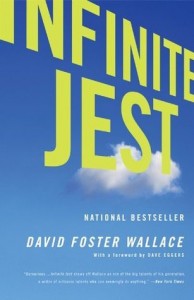
Infinite Jest by David Foster Wallace

Posted April 12, 2013 by Michael @ Knowledge Lost in Literary Fiction / 0 Comments

Infinite Jest by David Foster WallaceTitle: Infinite Jest (Goodreads)
Author: David Foster Wallace
Published: Back Bay Books, 1996
Pages: 1079
Genres: Literary Fiction
My Copy: Personal Copy

Buy: AmazonBook Depository (or visit your local Indie bookstore)

In the not so distant future, the residents of a Boston halfway house for recovering addicts and the students of the Enfield Tennis Academy both search for the master copy of a bizarre movie that is so entertaining the viewers die in a state of catatonic bliss. That movie is called Infinite Jest and it is said that anyone who watches it will lose all desire to do anything but watch it. This semi-parodic novel questions what entertainment is and why it dominates our lives.

I’m not going to lie, this book is both lengthy and difficult to read but in the end it is worth the effort. You will need three bookmarks for this book, one for where you are up to, another for the endnotes and the third for the timeline that sits around page 80. You do need to read the endnotes, this book relies heavily on them; they include definitions, side thoughts, in depth details and even a filmology. You will also need to know the timeline because David Foster Wallace likes to jump around a bit, so it helps to keep up. This is where it gets tricky; in the book’s future each year has a corporate sponsorship, so you have Year of the Whopper, Year of the Tucks Medicated Pad, Year of the Trial-Size Dove Bar and so on. It helps to know in what order the years are in so you can piece it all together. While all this might help you keep track of what’s going on there is still the fact that this book is piled with subplot after subplot and you will have to keep track of more characters than A Game of Thrones novel. You will need to keep notes and it might even be a good idea to get a study guide because this book will take you on a very interesting ride.

As I said before, this book is not easy; I took my time with it and slowly chipped away at this book for two months but I still think I’ve missed a lot. While there are some tangents that happen in the endnotes, this book jumps around so much that sometimes you get lost and have to go back. There shouldn’t be any shame in doing this as Wallace’s writing voice is a postmodern mixture of high- and low-brow linguistic traits which is very difficult to become familiar with. He also uses juxtaposes, colloquialisms and polysyllabic and highly esoteric words so you will need to spend some time researching.

Now that I’ve talked about the difficulties of reading the book, I should probably talk about my thoughts on it. Infinite Jest starts off rather dense, you really need to push through the first few hundred pages before things start to make any real sense. So why is this book considered a masterpiece, magnum opus or anything else it has been referred to? It’s not to read; rather it is a book that will challenge us, to rattle us out of complacency. For me I think David Foster Wallace has the ability to take something like substance addiction, recovery programs, depression, abuse, death, relationships, popular entertainment and even tennis and look at it in a very careful way. The way Wallace explores each topic may make you feel uncomfortable and it is confronting but you do gain a deeper understanding.  Yet the book doesn’t remain dry and depressing; Wallace has a very unique way of using humour to basically satirise the issues without making fun of them.

This book is a parody and comment on American culture, yet this is also a semi-autobiographical novel of the issues facing the author. Creating this funny but bitter sweet novel that I found difficult not to associate with the life of David Foster Wallace; his depression that lead to his suicide.  There is a lot going on in this novel and to go through all the major themes within this novel would probably turn this review into something too long to read so if you want to talk about themes I’ll leave that for the comments. So just a brief overview; the main character Hal Incandenza is an intelligent tennis prodigy dealing with the intense pressure put on him to succeed in a junior Tennis Academy, dealing with a drug addiction and the ongoing strain (both physical and emotional) to reach his full potential. While that is an understated summary, all the subplots makes it hard to cover, this is just the basis of the book.

Addiction and depression would be the two major themes in the most brutally confronting depiction of the struggles I’ve ever read. No other book has given me the insight like this one. I feel like the depiction of depression is often wrong in books and movies; depression is a complex thing, it’s not a state, it’s an overall feeling that can’t be shaked. One of the characters in the book; Kate tried to commit suicide because “[she] just didn’t want to feel this way anymore” and “[she’d] rather feel nothing than this”. This tragically honest view on depression really opened my eyes on the state of mind and the struggles that people dealing with depression go through, and for this only, Infinite Jest was worth reading.

The futuristic America created in Infinite Jest feels very much like western society now, just with the increased corporate involvement but that is the way the world is heading. I am reminded of dystopian classics with his satire of society and the social/cultural commentary. It really covers a lot of interesting topics and, while it is difficult, well worth reading.

This is one of those books I plan to re-read once I have a degree in Literature behind me; while I got a lot out of this novel, I am hit with the feeling that I’ve only scratched the surface. This is rather impressive novel overall, never have I seen a novel with over 60% of Goodreads users rating the book five stars and for good reason, the book covers a lot of topics and does it really well. Blending serious topics with an awkward sense of humour is balanced perfectly, and I highly recommend reading Infinite Jest; even if it is only to increase your pretentious levels.


The Unbearable Lightness of Being by Milan Kundera

Posted February 4, 2013 by Michael @ Knowledge Lost in Literary Fiction / 0 Comments

The Unbearable Lightness of Being by Milan KunderaTitle: The Unbearable Lightness of Being (Goodreads)
Author: Milan Kundera
Translator: Michael Henry Heim
Published: Faber & Faber, 1984
Pages: 314
Genres: Literary Fiction
My Copy: Personal Copy

Buy: AmazonBook Depository (or visit your local Indie bookstore)

The Unbearable Lightness of Being is an existential novel about two men, two women, a dog and their lives. The book takes place in Prague in the 1960s and 1970s and explores the artistic/intellectual life of Czechoslovakian society during this Communist period. Tomáš is a womanising surgeon and intellectual, his wife Tereza is a photographer struggling with all her husband’s infidelities. Sabina a free spirited artist and Tomáš’s mistress and Franz is a professor and also a lover or Sabina. Then there is Karenin, the dog with an extreme disliking to change.

I know the synopsis doesn’t really do much to make this novel interesting but that’s just the basics of it. Really, this is a novel challenging Nietzsche’s concept of eternal recurrence. A concept which hypothesizes that the universe has been recurring, and will continue to recur. This book explores the idea that people only have one life to live and what occurs will only occur once and never again. The book also explores love and sex and whether the two are connected; for Tomáš they are not but for Tereza they are.

There is a lot more philosophical aspects to understand but as I don’t have much knowledge in those areas lets focus on the novel. This was surprisingly easy to read and lyrical and almost dreamlike feel to it but then there is a lot of emotional devastation as well. Not just with Tomáš’s actions but with the communist control over everyone.

From the very start you while see the gorgeous poetic prose within Milan Kundera’s writing and the unique plot concept will initially drive this book for the reader. Then you will continue reading it for the devastating beauty of love, sex, jealously, politics and existence. Once you finish, you might reflect on the philosophical and existential nature of this book. In the end it’s just one of those books that sounds a little weird and unappealing but is really worth reading.


On The Road by Jack Kerouac

Posted December 30, 2012 by Michael @ Knowledge Lost in Book of the Month, Classic / 0 Comments

On The Road by Jack KerouacTitle: On The Road (Goodreads)
Author: Jack Kerouac
Published: Penguin, 1957
Pages: 307
Genres: Classic
My Copy: Personal Copy

Buy: AmazonBook Depository (or visit your local Indie bookstore)

On the Road is a semi autobiographical novel about Jack Kerouac’s travels through America. Set in 1947 the novel documents the travels of Sal Paradise with his friend Dean on a quest of self-knowledge and life experiences. This novel is often considered as the definitive ideal of the Beat generation and living life postwar. The Beat movement is a cultural movement which rejected a normal life for a bohemian lifestyle; this movement inspired jazz, poetry and literature.  The non-conformity and spontaneous creativity as well as experimentation with drugs, alternative sexualities and interest in Eastern religions lead to the hippy movement in the 1960’s even though there are many differences.

On the Road is a novel of friendship, not just between Sal and Dean but the people that come and go from your life. Hitchhiking through America gives an opportunity to see this quickly; Sal meets new people all the time and just like that they are gone from his life; their impact on Sal may very but it really is a good way to show the effects people have without having to scratch a story over a few years. Then there is the friendship between Sal and Dean, it’s clear to me that Sal is idolising his friend and his need to be just like him is really not helping him to grow. Sal does grow through the book but it never feels like Dean has, this really changes the dynamic of their friendship as the book goes on.

This is also a book on the ideals of the beatniks; they are young and wanting to experience life, learn from their experiences. But underneath it all Sal feels unhappy. Either alone, in a relationship or just having casual hook-ups, Sal is never content. The only time I ever feel like Sal is enjoying himself is when he is having intellectual conversations, but he never really works out how to channel that passion to make his life mean something, I did think he would find contentment in writing but he never really does. The characters feel they should learn from life instead of books and this leads more to sex, substance abuse and even madness seem to be the end results of their experiences rather than knowledge.

While some might think this is a rather boring novel, I tend to think there is so much in the book worth exploring. I like the style and feel of this book, it reminds me of dirty realism and the quest for knowledge and satisfaction in life really hit home for me. My past experiences are nothing like those of Sal or Kerouac’s but there is something so real and raw about this book that I enjoyed. Overall it was interesting to read the book as a manifesto to the beat generation.


House of Leaves by Mark Z. Danielewski

Posted November 29, 2012 by Michael @ Knowledge Lost in Book of the Month, Horror / 0 Comments

House of Leaves by Mark Z. DanielewskiTitle: House of Leaves (Goodreads)
Author: Mark Z. Danielewski
Published: Random House, 2000
Pages: 706
Genres: Horror
My Copy: Personal Copy

Buy: AmazonBook Depository (or visit your local Indie bookstore)

Johnny Truant searches an apartment for his friend and finds an academic study of a documentary film called The Navidson Record. This film investigates the phenomenon of the Navidson’s house where the house is larger inside than the outside. Initially it’s less than an inch difference but it keeps growing. The only problem with all of this is there is no evidence of this documentary ever existing. The book House of Leaves is that academic study (with all the footnotes) mixed with Johnny’s interjections, transcripts from the documentary and anything else.

This debut novel of Mark Z. Danielewski tries to mix a horror novel with some romance and satire but it mainly focuses on just how unreliable a narrator can be. I’ll be honest with you; I struggled to work out if I should review this as a piece of literature or as art, so I’ve done both and you can find my art review. Danielewski has really come up with a unique idea here, it’s almost the literary equivalent of The Blair Witch Project; there is a lot happening on the pages but the reader never gets a full grasp on what is actually happening.

The first 150 pages of this book were quite enjoyable, there were some funny moments and it gave you a real feel for what was going on. But then everything turns completely weird and I found myself raging and sometimes going insane. This is by no means an easy book to read, more of an exploration in the postmodern idea of Post-structuralism. I don’t pretend to understand postmodern literature but it was interest to see what Mark Z. Danielewski does in this book

You’ll either love or hate this genre blending novel; for me, I hated the story. I think my wife got more enjoyment out of watching me rage than I did with reading it. House of Leaves is known as Ergodic literature, which requires the reader to navigate the text in a non-traditional way; this is the first time I’ve seen a book like this. Everyone will have a different interpretation of this novel, so I would love to hear what others thought. Also make sure you check my post about this book as an art form.


The Master and Margarita by Mikhail Bulgakov

Posted August 30, 2012 by Michael @ Knowledge Lost in Book of the Month, Classic, Magical Realism / 0 Comments

The Master and Margarita by Mikhail BulgakovTitle: The Master and Margarita (Goodreads)
Author: Mikhail Bulgakov
Translator: Larissa Volokhonsky, Richard Pevear
Published: Vintage, 1967
Pages: 384
Genres: Classic, Magical Realism
My Copy: Personal Copy

Buy: AmazonBook Depository (or visit your local Indie bookstore)

I’m going to be honest; I have no idea how to review a book like The Master and Margarita. I was looking forward to reading another Russian classic but I don’t think anyone can be fully prepared for a book like this. The whole book is based around a visit by the Devil to two passionately atheistic Russians. While this is an overly simplified synopsis it really is basis of the entire book; if I really want to write a fully detailed overview of this book it would include a black cat, an assassin, a naked witch, Jesus and Pontius Pilate in one very bizarre novel. I read this book about a week ago but I’m still trying to wrap my head around it, there is a lot going on within the book to really be able to give this a review that would give it justice.

To simplify this book I’m going to break down the book into three different elements; the Professor’s talk with the Berlioz and Bezdomny, the section involving the Master and his lover Margarita and lastly the novel about Pontius Pilate. At first glance all these sections may seems like they don’t link together, but when the Professor or the devil challenges the two’s concepts of atheism the conversation leads to the book about Pilate which happens to be a novel written by the Master and the book comes together in a weird, philosophical novel with shades of slapstick comedy.

I tend to write short reviews because I don’t want to spoil novels and want to write easy, accessible reviews; so if I write anything more about the plot I would have to write  a lot, too much for a short review so I’m going to stop talking about the book and start talking about my opinions of it. While reading this novel I was completely absorbed in the writing, but this meant I continued reading without stopping to really think about the book. In the end my head was swimming with so many thoughts of this book I wasn’t sure how I felt. Now that I’ve sorted my thoughts all I really can say it’s one of those books you just have to read to fully understand the effect of it.

While it took me a while to fully sort my thoughts of this book, I really did enjoy it. It’s one of those books like Slaughterhouse-Five where you can’t really rate or review it until you have had a good long think about all the concepts this book is trying to get across. I highly recommend experiencing this novel; it is like nothing I’ve ever read before. The wacky nature of this book will keep you reading but the philosophical ideas will help you enjoy this novel. I don’t think any review will ever do justice to this classic; especially not mine so my only advice and the only thing you really need to know about this book is ‘Just read it.’


The Perks of Being a Wallflower by Stephen Chbosky

Posted August 18, 2012 by Michael @ Knowledge Lost in Young Adult / 0 Comments

The Perks of Being a Wallflower by Stephen ChboskyTitle: The Perks of Being a Wallflower (Goodreads)
Author: Stephen Chbosky
Published: MTV Books, 1999
Pages: 224
Genres: Young Adult
My Copy: Paperback

Buy: AmazonBook Depository (or visit your local Indie bookstore)

I’ve wanted to read The Perks of Being a Wallflower for the simple reason that the synopsis reminded me of John Green’s Looking for Alaska, and let’s face it, John Green writes some great books. Stephen Chbosky’s debut novel is a real knock out; I’m not sure if he will write another one but judging by this book, I hope he does. Charlie is a wallflower, who is writing letters to an unknown friend as a therapeutical way to express his feelings about his life. His only friend is his High School English teacher who keeps giving Charlie great books to read. Charlie’s life changes when he becomes friends with some seniors; Patrick and Sam.

This book is third on the American Library Association’s list of the top ten most frequently challenged books as of 2009 for a few different reasons which I will look into one at a time.

Drugs: Alcohol and Drug experimentation is an issue teenagers have to deal with. While I don’t agree with the use of drugs, banning a book because of drug use is just avoiding the issue at hand.
Homosexuality: This should never be an issue, why do we want to hide the fact that some people have a same sex attraction? I kind of feel like avoiding this issue is a primary cause for the hurt and mistreatment of homosexuals. We should be accepting of everyone.
Sex: If a young adult book isn’t dealing with the issue of sex then you are just saying that teenagers shouldn’t have hormones.
Suicide: This book is not promoting suicide, it is exploring the hurt and the effect of a suicide has on the people closest to the victim.

It is true that I’m opposed to censor and banning books, if we don’t talk about the issues and just avoid them, who will teenagers turn to if they have an issue? We need to allow people to express their feelings and create a world where it is acceptable to have a dialogue about the issues they are facing. Banning a book like this would never have a positive effect except for maybe make teenagers want to read it more.

Now that I’ve had a vent about challenging a book like this, I want to talk about what I love about this book. The Perks of Being a Wallflower is a series of letters and I felt like I was having a sneak peek into the life of a struggling teenager that reminds me a lot of myself when I was in High School. The novel covers so many interesting aspects involved with being a teenager from depression, loneliness, sexuality, friendships, relationships and even music and literature.

Charlie is such a great character and I loved peeking into his life. Sam is adorable but I never fell in love with her like I did with Alaska but she still really helped the story. But my favourite character was the English teacher. I like that he encouraged Charlie to read books like The Great Gatsby, To Kill a Mockingbird, The Stranger and even Naked Lunch!

When I think of YA novels, these are the types of novels I really enjoy. John Green is a master at this realistic contemporary young adult novels; The Perks of Being a Wallflower is definitely another highly recommended one. I’m yet to read a David Levithan novel, but I’m looking forward to experiencing more books that are similar to this style.

While the writing did feel very basic, The Perks of Being a Wallflower is driven by the quirky life of Charlie and his letters. I never wanted to stop reading, I felt myself always wanting to know what will happen next. I really enjoyed this book and I’m excited about the coming film adaptation. Author Stephen Chbosky wrote the screenplay and is directing the adaptation so I think that it will be faithful to the novel, I just hope doesn’t lose the charm found in the book.