Source: Library Book

The Devil’s Detective by Simon Kurt Unsworth

Posted December 5, 2015 by Michael @ Knowledge Lost in Crime, Horror / 0 Comments

The Devil’s Detective by Simon Kurt UnsworthTitle: The Devil's Detective (Goodreads)
Author: Simon Kurt Unsworth
Published: Del Rey, 2015
Pages: 368
Genres: Horror
My Copy: Library Book

Buy: AmazonBook DepositoryKindle (or visit your local Indie bookstore)

Thomas Fool is one of the Devil’s Detectives, known as Information Men, his job is to keep order in Hell. When a badly bruised and unidentifiable body is discovered, Fool is given the case. The problem is, this is Hell and everyone is guilty of something. How can he investigate a murder where everything around him screams death? Who will come forward as a witness when everyone has something to hide?

I have been thinking a lot about writing better reviews and I feel like Simon Kurt Unsworth has made that job a whole lot easier with The Devil’s Detective. Before reading this book I had most of the themes worked out in my head. So let us start with the basic; a mystery novel is typically a quest narrative. We have the detective that is the hero of the story, setting out to solve a mystery. We know what the mystery is from the back of the novel but then again there always is something more going on.

If you think of the detective as the hero, it is easy to think a white knight on a journey to bring justice to the world. Although can this really be a morality tale? This is set in hell and if we go by the depiction of hell found in the Bible or Dante’s Inferno, it is one of hopelessness and despair. Assuming Unsworth is going to try to keep to the traditional narrative structures and also keep the Christian theology we can illuminate some core character traits.

There will be no true justice, Thomas Fool will not be a savour figure; he might solve the crime but they are still in Hell. Justice in Hell, seems unlikely. Now the idea of the detective being called an Information Man, leads me to think he will have knowledge of what goes on in Hell, but can he change anything? Considering the location this is unlikely, I do believe he will never effect the social balance, there will be no change and no real justice. If you do not believe me, consider his name, Fool.

I went into The Devil’s Detective with these preconceived thoughts, and turns out I was correct in thinking this way. I did not expect anything special, this novel was a light read; blending horror with a typical mystery plot. I wish I could say I enjoyed the book but I did not, there were no surprises and nothing stood out. I do think the theology was a little off and Unsworth’s depiction of Hell really needed work. If you want to read something set in Hell, I recommend Inferno; it has some of the best descriptions of what Hell might be like. Obviously we cannot be sure but it really does capture the despair and pain they we often associate with Hell.


The Three-Body Problem by Liu Cixin

Posted December 3, 2015 by Michael @ Knowledge Lost in Science Fiction / 0 Comments

The Three-Body Problem by Liu CixinTitle: The Three-Body Problem (Goodreads)
Author: Liu Cixin
Translator: Ken Liu
Series: Remembrance of Earth’s Past #1
Published: Tor, 2014
Pages: 400
Genres: Science Fiction
My Copy: Library Book

Buy: AmazonBook Depository (or visit your local Indie bookstore)

In the People’s Republic of China 1967, it was a time where the Cultural Revolution was purging the country of all capitalist ideals. A group of scientists, part of a secret military project, send signals into space to establish contact with aliens. An alien race on the brink of destruction known as the Trisolarans capture the signal and now plan to invade earth. A deeply philosophical game The Three-Body Problem occupies the mind of many scientist which features a world with three suns, causing chaos and unpredictability; trying to understand the order is what motives these people. The Three-Body Problem is a first contact novel often referred to as a cross between Dune and Independence Day.

The Cultural Revolution makes for an interesting backdrop for this novel and I feel an understanding is essential to the story. The Cultural Revolution was a social-political movement that was set in motion by Chairman Mao to transform The People’s Republic of China into the true Communist ideal. This was a cultural purging to remove all remnants of capitalism and to some extent even getting rid of some of China’s traditional elements. The movement ran from 1966 to 1976, although Chairman Mao did declare it over in 1969, but the Red Guard were still very active in their mission all the way till the death of their military leader Lin Biao.

This was also during the height of the space race, Sputnik was the first artificial satellite to be launched into space in 1957, giving the Soviet Union an early lead. The China National Space Administration (CNSA) is believed to have begun in the late 1950s, although their research into rockets were more focused on a ballistic missile program to help defend the country against the Americans and Soviets during the cold war. However China was still interested in space exploration and their first spacecraft to hold human occupancy, Shuguang-1, was designed in 1968.

Now, a three-body problem in physics, is a scientific process where you take initial data sets (position, masses, velocities, etc.) and determine the motion of the three bodies with the help of the laws of classical mechanics, such as Newton’s laws of motion. Historically the three specific bodies being studied were the Moon, the Earth and the Sun. This ties the title of the novel back to the space race and also predicting the world found in the game The Three-Body Problem. However this is only the beginning of trying to understand the workings of this novel and I have not even touched on the philosophical or social criticism aspects of The Three-Body Problem.

The Three-Body Problem by Liu Cixin1 won the Hugo award recently for ‘Best Novel’ and I found it to be an intriguing plot idea. I knew I had to read this, and I went in expecting something similar to Russian science fiction, where there was a lot of social commentary of what was happening within Communist China. This novel did not disappoint, I would compare this to the Russian first contact novel Roadside Picnic in the way it explored social and scientific ideals but then the philosophical elements remind me of the old sci-fi novels from the 1960s.

Special mention needs to be made to Ken Liu who did an excellent job of translating this book into English. I found myself looking forward to reading all his translation notes which explains historical and cultural references that Westerners like myself may not have known about. I also appreciate that he did not try to convert the narrative to a more accessible format but allowed outsiders a taste in the narrative structure found in Chinese books. I was really impressed with the first book in the Remembrance of Earth’s Past trilogy and I would like to think I would read the rest of the series, but I know what I am like when it comes to finishing a series.


Choke by Chuck Palahniuk

Posted December 2, 2015 by Michael @ Knowledge Lost in Contemporary / 0 Comments

Choke by Chuck PalahniukTitle: Choke (Goodreads)
Author: Chuck Palahniuk
Published: Anchor, 2001
Pages: 293
Genres: Contemporary
My Copy: Library Book

Buy: AmazonBook DepositoryKindle (or visit your local Indie bookstore)

Choke is the story of Victor Mancini and his friend Danny, over the course of a few months of their lives. However, there are frequent flashbacks to their childhood. As a med-student dropout, Victor devised an ingenious scam to help make money. He likes to pretend to choke, while dining in fancy restaurants. When he is not pulling off this scam, Victor likes to attend Sexaholics Anonymous meetings, looking for action.

I have read one Chuck Palahniuk novel before, Fight Club and I did not think much of it. I originally thought maybe it was the fact that I have already seen the movie and knew what to expect. I picked up Choke because it was on the 1001 Books You Must Read Before You Die list and thought it was a good excuse to try another of Palahniuk’s books. I know for certain that Chuck Palahniuk is not an author for me.

I found that Choke and Fight Club just had too many of the same elements in common. I expected psychological elements, I expected twists and I knew that Palahniuk would try to write something for shock value. Everything was expected and this made the novel feel boring and generic. There was nothing I really enjoyed about Choke at all, and I was looking forward to it ending.

I know there are a lot of Chuck Palahniuk fans out there, and I can see why he would appeal. For me it was the same book as Fight Club, and reading Choke offered nothing new to my reading experience. I am sure people might offer suggestions of other Chuck Palahniuk novels to try that are better, but in all honesty, I think I am done. I have so much to read, I do not have time to give this author another chance. Having said that, who knows what the future will bring, I might find myself reading my Palahniuk, but I will not be in any hurry to pick one up.


Satin Island by Tom McCarthy

Posted November 26, 2015 by Michael @ Knowledge Lost in Literary Fiction / 0 Comments

Satin Island by Tom McCarthyTitle: Satin Island (Goodreads)
Author: Tom McCarthy
Published: Jonathan Cape, 2015
Pages: 173
Genres: Literary Fiction
My Copy: Library Book

Buy: AmazonBook Depository (or visit your local Indie bookstore)

Tom McCarthy has a unique approach to fiction; Satin Island is an avant-garde novel that explores the philosophical implications of corporate anthropology. A career path that I never thought existed but makes a lot of sense if corporations were using anthropologist for an extra edge. Rather than researching people for science, a corporate anthropologist would try to predict best possible scenarios to leak bad news, or which marketing strategies would have the biggest impact on the public.

Satin Island was longlisted for the Man Booker Prize, and it sounded very different to the other novels. I knew I had to check it out and see what it was all about; the back of the book gave nothing away. This is a post-modern novel and I am actually surprised to see it also making the shortlist for this year’s Man Booker. Normally the novels that are vastly different and experimental never make it past the longlist. Making the shortlist might mean that more people will pick up Satin Island and that can only be a good thing.

The protagonist for this novel is U. and it is pretty obvious that Tom McCarthy expects you to see yourself from this point of view. The book has no real plot or character development, leaving the reader to focus on the moral and social implications of corporate manipulation. The concept of a corporate anthropologist can be both fascinating and terrifying and McCarthy wants people to be aware of this fact.

For a book that is 173 pages long, this is in no way a short novel. The depth and complexity found in Satin Island would keep you thinking about the book for a while. I really appreciated what Tom McCarthy did in this book, it really opened my eyes to so many issues. Now that I am aware of the concept of corporate anthropology, I cannot help but see the way it could be used in marketing. Satin Island is experimental and if you are willing to try an avant-garde novel, it is well worth your time and effort.


Dexter is Dead by Jeff Lindsay

Posted November 25, 2015 by Michael @ Knowledge Lost in Crime / 0 Comments

Dexter is Dead by Jeff LindsayTitle: Dexter Is Dead (Goodreads)
Author: Jeff Lindsay
Series: Dexter #8
Published: Orion, 2015
Pages: 286
My Copy: Library Book

Buy: AmazonBook Depository (or visit your local Indie bookstore)

When I first started reading back in 2009, one of the series I became obsessed with was the Dexter Morgan series. I loved the concept of an anti-hero as the protagonist and Jeff Lindsay had come up with a good concept of a forensic analyst/sociopath. I liked exploring the mind of a killer but not just any sociopath; Dexter had a code, he could not control his urge to kill but he made it his mission to only hunt the people that deserved to die. We can talk about the moral complexities at great length but now I want to review Dexter is Dead.

This is the eighth and final book in the Dexter Morgan series; the books were a bit hit or miss but Dexter was a great character. Most people know of Dexter Morgan from the hit TV show Dexter, the character is the same but after the first book and season the two mediums took different directions. There are plenty of times where it felt like both the show and the books stole good ideas from each other but for the most part the storylines were different.

I cannot go into the plot of this one because it would contain too many spoilers; especially for book seven (Dexter’s Final Cut) as this takes place directly after those events. I liked that this novel took up after the last novel, bringing together a much larger plot; I want more crime novels to have an overarching plot line. I do not read many series, and I think the Dexter series is the only one I have spent so much time in, but I really enjoyed returning to such a great character.

Jeff Lindsay’s writing is not that strong and I felt there were many times where this book and series just got clunky or too clichéd. However because the protagonist was so well developed, this helped carry the bad writing. I am pleased to say Dexter is Dead is one of the stronger novels in the series and helped end everything on a high note. Also the ending of the book series is so much better than the ending of the TV show. I am going to miss the Dexter books and might have to find another crime series to replace the void it has left. Suggestions welcome.


The Windup Girl by Paolo Bacigalupi

Posted October 29, 2015 by Michael @ Knowledge Lost in Science Fiction / 0 Comments

The Windup Girl by Paolo BacigalupiTitle: The Windup Girl (Goodreads)
Author: Paolo Bacigalupi
Published: Orbit, 2009
Pages: 508
Genres: Science Fiction
My Copy: Library Book

Buy: AmazonBook DepositoryKindle (or visit your local Indie bookstore)

The Windup Girl is a debut novel for Paolo Bacigalupi, an author that seems to take present day issues and explore them in a science fiction setting. The Windup Girl is set in 23rd-century Thailand, and explores ideas around genetically modified ‘genehacked’ foods. Anderson Lake works for AgriGen’s Calorie, one of the three mega-corporations that control the biotechnology field, and controlling food production. Emiko is a Windup Girl, a beautiful creature, not human but rather a genetically engineered being.

The Windup Girl is a very difficult novel to summarise, but I do not really care about the plot; I picked this up for the themes. I knew this was going to be a biopunk novel that explores ideas of genetically modified food and bioterrorism but I was surprised with everything this book covers. With a food shortage, ‘calories become currency’, giving corporations with bio-engineering backgrounds the tools for larger profits and control. However, what happens when corporations have too much control?

I am sure people will dislike this book for being overly complex or dense, but I really think you need to ignore the plot at times and focus on the actual message. Paolo Bacigalupi has a lot of interesting ideas, genetically modified product is a slippery slope but food shortages will also become a problem. How do we find a balance? This bleak world really captures corporations in an interesting light, exploring the shocking tactics used for better profits, and the lack of compassion they have towards the people (or windups).

This debut novel, really catapulted Paolo Bacigalupi career; winning the Nebula Award for Best Novel, Locus Award for Best First Novel and sharing the Hugo Award for Best Novel with China Miéville’s brilliant novel The City & the City. Recently Bacigalupi released his sixth novel, The Water Knife that explores water shortages; a book I need to read as well. I like when science fiction novels explore interesting issues, this is why I prefer Soviet sci-fi or novels from the 1960s, but I think Bacigalupi is an author I will need to pay more attention to in the future.


October 2015 Mini Reviews

Posted October 27, 2015 by Michael @ Knowledge Lost in Contemporary, Crime, Literary Fiction, Thriller / 2 Comments

October 2015 Mini ReviewsTitle: World Gone By (Goodreads)
Author: Dennis Lehane
Series: Coughlin #3
Published: William Morrow, 2015
Pages: 416
Genres: Crime
My Copy: Library Book

Buy: AmazonBook Depository (or visit your local Indie bookstore)

Ten years after the events from Living by Night by Dennis Lehane, World Gone By, tells the story of Joe Coughlin in a changing world. Prohibition is now dead, the world is at war again and Joe’s enemies have destroyed his empire and killed his wife. The novel is set in both in Cuba and Ybor City, Florida and World Gone By explores the implications of Joe Coughlin’s past. A novel of crime, revenge and the moral complexity of a criminal past while being a good example for his son.

I am somewhat discontent with the state of popular crime fiction and find myself longing to be surprised. Normally I am a fan of crime novels and like to explore the psychological or gritty nature of the plot. World Gone By seems to offer something different, I did not connect with Living By Night, but the synopsis of its sequel was enough to raise my interest. Sadly, this was unable to deliver, and I felt disconnected to the plot due to the fact that it was overly cliché. I wanted to enjoy this book; the time era and the premise are two elements I love in fiction and I had heard such good things. I need to stop listening to hype, or maybe I should give up on crime fiction all together.


October 2015 Mini ReviewsTitle: Mislaid (Goodreads)
Author: Nell Zink
Published: Fourth Estate, 2015
Pages: 288
Genres: Contemporary
My Copy: Library Book

Buy: AmazonBook DepositoryKindle (or visit your local Indie bookstore)

Set in 1966, at the campus of Stillwater College, Mislaid tells the story of Peggy. A freshman with literary aspirations, Peggy finds herself falling for Lee, a poet and one of her professors. Peggy falls pregnant and the two end up married. The only problem is, Peggy identifies herself as a lesbian and Lee as gay. This turns into some wry joke; they are an odd couple that has been mislaid.

Nell Zink takes it upon herself to explore the complex issue of sexuality with a mismatched pair stuck in a marriage that neither are interested in. The problem with Mislaid, is that this is such a complex issue and Zink was unable to handle the novel in a way it deserves. From the first chapter when the term ‘Mecca for lesbians’ was used, I felt uneasy about the way the GSM (Gender and/or Sexual Minorities) community was being treated. Then the wit found in Mislaid did not work for the majority of the novel. I was less than impressed with this book; it could have been a great story but nothing seemed to come together the way I expected.


October 2015 Mini ReviewsTitle: Bad Nature, or With Elvis in Mexico (Goodreads)
Author: Javier Marías
Translator: Esther Allen
Published: New Directions, 1996
Pages: 57
Genres: Literary Fiction
My Copy: Paperback

Buy: AmazonBook DepositoryKindle (or visit your local Indie bookstore)

I do not know how I found this little gem, I would like to know who recommended it so I could personally thank them. Bad Nature, or With Elvis in Mexico is a short novella that tells the story of Ruibérriz de Torres who is brought in to translate for Elvis Presley who is in Mexico to film Fun in Acapulco. While in town, Elvis and his entourage, find themselves in a seedy bar where they get into a little trouble with a local kingpin.

Javier Marías has managed to create a punchy story that explores a complex life of a translator, on one hand he has a big famous singer/actor that the world idolises and adores but his entourage has got him into trouble with a crime lord that is feared in Acapulco. Ruibérriz de Torres is stuck in the middle unsure if he should be translating the words that could get everyone into a fight. Should he censor the words for either Elvis or the kingpin just to keep the peace? This novella explores the idea of translations and the second hand nature of words, in a very meta way since this novella was translated from the Spanish into English by Esther Allen. This is only fifty pages long, but manages to explore a complex issue in a very interesting way; I have not been able to stop thinking about the ideas found in Bad Nature, or With Elvis in Mexico.


October 2015 Mini ReviewsTitle: Leaving Berlin (Goodreads)
Author: Joseph Kanon
Published: Simon & Schuster, 2015
Pages: 384
Genres: Thriller
My Copy: ARC from Publisher

Buy: AmazonBook DepositoryKindle (or visit your local Indie bookstore)

Almost four years after World War II, Berlin is a mess, divided in two. The east is occupied but the political ideas from the Soviet Union and the Allies are trying to control the west. This power struggle will later divide Germany into two with the erecting of the Berlin wall in 1961. Alex Meier is a young Jewish writer who managed to flee Nazi Germany to find a home in America. Only he found himself in the crosshairs of Joseph McCarthy during his “Red Scare” witch hunts. Alex and his family are now facing deportation; that was until he was given an alternative by the CIA but is this a solution at all?

The setting for Leaving Berlin is fascinating, the rebuilding and restoration of Germany is interesting enough as it is, but then you have the political struggle and influences of America and the Soviet Union as well. The American propaganda towards communism plays a big part in this espionage novel, and reading a book about a country being torn apart by the Cold War was really interesting. I am very interested in the history behind the Cold War, especially when it comes to the way the media was used to manipulate and of course I am interesting in the Soviet Union. As far as this novel goes, it was entertaining and I enjoyed reading it, however the setting and political history interested me more than the plot. I would have enjoyed a non-fiction novel of post-war Berlin more than Leaving Berlin, but that does not mean I regretted reading it.


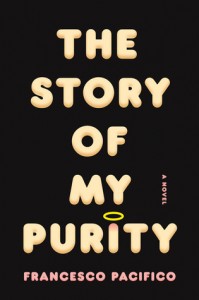
The Story of My Purity by Francesco Pacifico

Posted October 10, 2015 by Michael @ Knowledge Lost in Contemporary / 0 Comments

The Story of My Purity by Francesco PacificoTitle: The Story of My Purity (Goodreads)
Author: Francesco Pacifico
Translator: Stephen Twilley
Published: Hamish Hamilton, 2010
Pages: 293
Genres: Contemporary
My Copy: Library Book

Buy: AmazonBook DepositoryKindle (or visit your local Indie bookstore)

Thirty year old Piero Rosini wants to live a life of purity, wholly dedicated to God with a dream of become a modern day saint. Living in a sexless marriage, Piero spends his days working in a conservative Catholic publishing house. Although this publishing house was not conservative enough; they plan to publish a book that makes the claim that Pope John Paul II was secretly Jewish. He plans to leave and start an ultraconservative publishing house, where he can have more control over the content being released. The Story of My Purity is a novel that explores religion in relationship to faith, freedom and purity.

Living life with the idea of becoming a modern day saint, trying to do everything right and be perfect really sets up the satirical nature of this novel. Saint Augustine of Hippo’s autobiographical book Confessions comes to mind when I think about the difference between Saints and people who try to live a sinless life. I found that this novel really dealt with the idea of spirituality and religion in an interesting way. There is an exploration with the idea of freedom and faith when it comes to organised religion (in this case the Catholic Church).

A little understanding of theology really helps understand The Story of My Purity and the humour behind it. Firstly, when it comes to the seven deadly sins; it is alright to feel envy, greed and so on. The Church’s teaching on the seven deadly sins, is that these are gateways that can lead to trouble, so we should be aware of these feelings and learn to understand them. Although, there have been a lot of misconceptions around the deadly sins, that have led to the concept of Catholic guilt.

For Piero Rosini, he never learned to manage his lust, he went to a priest for help and was told not to think about women. Piero really took this advice on board to the point that he was unable to get an erection to consummate his one marriage. His sexless marriage was a result of him constantly trying to not think about sex, or feel a sexual attraction to his own wife. Although it proves impossible to not have sexual thoughts, and Piero’s life of purity began to unravel with the help of an attraction to his sister-in-law and spam emails.

The satirical nature of this novel comes from the fact people do not understand what the Church says about sex. Pope John Paul II did 129 lectures on the Theology of the Body, going through the Churches views on sex and sexuality. These lectures are about understanding your body, your desires and attraction. The theology should never feel restrictive by religion, rather we should be free and it should correct people’s misassumptions on the Churches teaching. Although the author may not have written this as a satire and this was actually his thoughts on Catholicism.

Unfortunately The Story of My Purity was not a great book, I loved viewing the book as a satire and exploring the theology behind it. However it did take a direction that I did not enjoy and ended up falling on its face. I am fascinated by theology and I feel like this could have been a great novel. The predictability of the book was just too much of a stumbling block for me. I am curious on Francesco Pacifico thoughts on Catholicism; I viewed the book as satire and would hate to think of it as anything else. I have also done a video review on this novel, if you are curious; although I think I talk about all the same ideas.


By Night In Chile by Roberto Bolaño

Posted October 7, 2015 by Michael @ Knowledge Lost in Literary Fiction / 6 Comments

By Night In Chile by Roberto BolañoTitle: By Night In Chile (Goodreads)
Author: Roberto Bolaño
Translator: Chris Andrews
Published: Vintage, 2000
Pages: 130
Genres: Literary Fiction
My Copy: Library Book

Buy: AmazonBook Depository (or visit your local Indie bookstore)

In a feverish daze, Jesuit priest Father Urrutia, spends his last night on earth reflecting on his life. By Night in Chile, is a bedside confession, reflecting on not just his involvement with the Opus Dei and Augusto Pinochet. This novella by Chilean author Roberto Bolaño, was written as a single paragraph, in which Father Urrutia recaps his entire life in one long monologue.

Roberto Bolaño is one of those authors that I have wanted to read for a very long time. In particular I was interested in reading his two tomes 2666 and The Savage Detectives. The novella opens with the line “I am dying now, but I still have many things to say” and then goes into a rant about the protagonist’s life. A Jesuit priest, poet and literary critic; Father Urrutia is unapologetic about his life; from his involvement with Opus Dei, teaching Augusto Pinochet and even his sexuality.

While this can be viewed as an unremorseful reflection on his life, his memories go from bad to worse as the novella progresses. I spent most of the time reflecting on whether Urrutia’s fever was making him a reliable or unreliable narrator. As Roberto Bolaño is a post-modernist, I think the idea of By Night in Chile is to question the reliability of memories. On one hand if the fever is making the narrator more honest than he should, this novella gives you one idea of the importance of reflection on life. However if the fever was causing hallucinations and making the narrator unreliable, the themes change but still asks some similar questions.

I read this novella in one sitting; I found it a quick reading experience. Reflecting on the book is what was the most time consuming. Roberto Bolaño is an excellent writer and By Night in Chile was worth checking out. Chris Andrews translated the novella from Spanish, who also has a book of literary criticism called Roberto Bolaño’s Fiction. At 130 pages, By Night in Chile allowed me to experience Roberto Bolaño’s style before committing to 2666 or The Savage Detectives, which I think I will push up my own TBR.


In the Miso Soup by Ryū Murakami

Posted October 4, 2015 by Michael @ Knowledge Lost in Horror / 2 Comments

In the Miso Soup by Ryū MurakamiTitle: In the Miso Soup (Goodreads)
Author: Ryū Murakami
Translator: Ralph McCarthy
Published: Kodansha International, 1997
Pages: 180
Genres: Horror
My Copy: Library Book

Buy: AmazonBook Depository (or visit your local Indie bookstore)

Kenji is a tour guide of the night, normally taking Americans to the sex clubs within Tokyo. Frank, an overweight business man that appears to have only one thing on his mind wishes to take advantage of Kenji’s knowledge of the sex industry, hires him to guide him for three days. However Frank’s strange behaviour begins to make Kenji suspicious and he quickly suspects that his client is in fact the serial killer currently terrorising Tokyo. In the Miso Soup is a fast paced, philosophical piece of translated fiction by the Murakami that does not often get talked about, Ryū Murakami.

Translated by Ralph McCarthy, this Japanese novel is a short punchy novel that really explores culture clash in a really interesting way. The attitudes towards sex between the Japanese and Americans are what really stands out to me while reading In the Miso Soup. The whole novel plays around with the cultural differences in an interesting way, exploring attitudes, personalities and even philosophical views. I enjoyed Ryū Murakami’s approach to these themes within In the Miso Soup, I think it was a unique take on East meets West, and I do not think I have seen the approach before.

One thing I like about Japanese fiction is the writing style, it is almost like a slow burn but novels like this still manage to build tension. I have read a few Japanese novels that explore really dark themes in this way; Revenge by Yōko Ogawa comes to mind. Be aware when reading In the Miso Soup, Ryū Murakami does not hold back and it can get descriptive in its depictions of sex and violence.

I really enjoyed reading Ryū Murakami’s In the Miso Soup and am eager to read more of his novels; in particular Coin Locker Babies and Audition. I am fascinated by the philosophical and psychological look into the darker side of humanity that seems to be a common theme within Japanese literature. Other novelists I am interested in checking out include Natsuo Kirino, Banana Yoshimoto and Kenzaburō Ōe. This does not include the authors I have already read, like Haruki Murakami, Yōko Ogawa and now Ryū Murakami. In the Miso Soup is a short novel but it packs a huge punch, not for the faint hearted but well worth reading. I have also done a video review of this book, if you are interested in checking that out.