Tag: 1001 Books You Must Read Before You Die

Middlesex by Jeffrey Eugenides

Posted March 30, 2014 by Michael @ Knowledge Lost in Book of the Month, Literary Fiction / 6 Comments

Middlesex by Jeffrey EugenidesTitle: Middlesex (Goodreads)
Author: Jeffrey Eugenides
Published: Bloomsbury, 2002
Pages: 529
Genres: Literary Fiction
Buy: AmazonBook DepositoryKindle (or visit your local Indie bookstore)

When Jeffrey Eugenides set out to write Middlesex he wanted to “[tell] epic events in the third person and psychosexual events in the first person”. He had decided that the voice “had to render the experience of a teenage girl and an adult man, or an adult male-identified hermaphrodite”. This was no easy task; he had to seek expert advice about intersexuality, sexology, and the formation of gender identity. His motivation came from reading the 1980 memoir Herculine Barbin and being unsatisfied by the lack of detail about intersex anatomy and his emotions.

”I was born twice: first, as a baby girl, on a remarkably smogless Detroit day in January of 1960; and then again, as a teenage boy, in an emergency room near Petoskey, Michigan, in August of 1974.”

If you’ve read Jeffrey Eugenides before you will know he doesn’t just stop at one issue, Middlesex is also loosely based on his life and is used to explore his Greek Heritage. While the book’s main protagonist is Cal Stephanides, Middlesex is a family saga that explores the impact of a mutated gene over three generations. Starting with Cal’s grandparents, the novel looks at their escape from the ongoing Greco-Turkish War and emigrating from Smyrna in Asia Minor to the United States. This section has similar themes to most immigration stories, looking at Greek and US culture in the 1920’s as well as their efforts to assimilate into American society. However this is overshadowed by the fact that Cal’s grandparents are also brother and sister.

Middlesex continues to follow the Stephanides family through the story of Cal’s parents and eventually his life. While the reader gets glimpses of Cal’s life throughout the novel, the last part is where we really explore how the 5-alpha-reductase deficiency (a recessive condition that caused him to be born with female characteristics) impacted his life. While I got the impression that this was the main focus of the novel and to some extent it is, I was expecting to explore the struggle and emotions behind his condition to a greater extent.

Jeffrey Eugenides has a lot going on his novels and you really need to be a literary critic to enjoy Middlesex to the full extent. I love Eugenides because he is too smart for his own good, on a basic level you can enjoy his novels but there is so much going on underneath that rereading is almost essential. Middlesex is a family saga but there are elements of romance, history, coming of age and, because of his Greek heritage, tragicomedy. You could spend hours exploring the hysterical realism and metafictional aspects from this book. For example; does Cal’s condition have any bearing on where he is narrating this novel from? Berlin, a city that also was divided into two (East and West). Also, why does the narrative style switch between first and third person? Some parts of the story are told in first person but Cal would never have been able to recount what happened in that kind of detail. Is this to evoke confusion within the reader, forcing them to just feel a fraction of what Cal must be feeling?

This is an incredibly complex novel and I feel like I’ve only scratched the surface of what Jeffrey Eugenides has done. This is in fact the third of his novels I’ve read and sadly that is all of them for now. While I did enjoy Middlesex I found more joy from The Virgin Suicides (which deals with suicide) and The Marriage Plot (dealing with mental illness). I really appreciate the themes Eugenides explores and the complexities of his novels, but personal opinion is going against the norm here. Middlesex is probably his most recognised novel; it even won the Pulitzer Prize for Fiction.

Don’t let the complexity of Middlesex put you off reading this fantastic novel; sure, there is a lot there but it still worth picking up. You can spend as much time as you want exploring its depths but in the end you’ll come away with something. It is a compelling read that will stay with you well after finishing it. This is the perfect type of novel to pick up for a book club.


War and Peace by Leo Tolstoy

Posted March 20, 2014 by Michael @ Knowledge Lost in Classic / 2 Comments

War and Peace by Leo TolstoyTitle: War and Peace (Goodreads)
Author: Leo Tolstoy
Translator: Aylmer Maude, Louise Maude
Published: Oxford World's Classics, 1869
Pages: 1392
Genres: Classic
My Copy: Personal Copy

Buy: AmazonBook DepositoryKindle (or visit your local Indie bookstore)

When people thing of big books often War and Peace by Leo Tolstoy is mentioned. This Russian classic depicts the French invasion of Russia in 1812. True to Tolstoy form, War and Peace also looks at classes and the impact of the Napoleonic invasion on the Tsarist society. While this book can be considered an epic historical war novel, for me this was a work of philosophical ideas. This is one of the hardest books to review, not because I have nothing to say but rather there is so much to cover and I have no idea where to start.

Just to put things into perspective, I started this book in October and have been slowly chipping away at it for four months. It is a hard battle and you really need to take your time with a book like this because Tolstoy has a lot to say. This is the kind of book that feels like you‘ve climbed a mountain when you finally finish and you can just feel your pretentious levels rising. For those interested, I read the Oxford World’s Classics edition which has the translations by Aylmer and Louise Maude. Many people debate on which translation is the best but I thought going with an Oxford World’s Classics would be a safe bet; I love this publisher and know I’m always getting a decent copy of the book.

Right off the bat you are flung into this world and you meet so many people. Tolstoy has an amazing ability to give the reader a sense of a person with a few lines, so even the minor characters in this book get some sort of personality. There are hundreds (over 500) characters within War and Peace and I often found it difficult to keep up with them all but thanks to Leo Tolstoy’s writing ability I could relax a little because even if I forgot about a character, when they reappear further in the book I still had a sense of who they are. This is possible due to the way this book was originally written and I will talk more on that later.

Most of the major characters within War and Peace are members of the aristocracy and it is interesting to see them all fighting for a higher position in society, government or the military. People like Boris rise in society while others like the Rostov fall, Dolokhov gets demoted while Pierre plots an assassination. Not only do we have the Napoleonic war happening within these pages, a battle for social standing rages through this novel. It is all about power but paradoxically the people with the most power within this book are the ones that seem to give up control.

If you don’t have the knowledge of Russian or Napoleonic history, this novel accommodates the reader. I found myself at times looking up information about the history just to satisfy my curiosity but as the book progressed, my research subsided. It is in Leo Tolstoy’s style to give you as much information as possible, this does make the book longer but for me I think it was a huge bonus. But you must realise this is a work of fiction and most of the people are fictional. Tolstoy was telling a story of the invasion and the harsh nature of war. You can even look at the second epilogue and read more of the authors thoughts on the subject and the philosophical ideas held within this book.

War and Peace was originally serialised in the literary magazine The Russian Messenger between 1865 and 1867. This magazine plays host to many of Leo Tolstoy and Fyodor Dostoyevsky’s novels. This means that originally people read War and Peace over the course of three years. This means at times the novel may feel repetitive and covering plot points done before but this is just a result of the original format. It comes in handy with characters as they are reintroduced and because I took my time reading this classic, it became a vital part.

There is so much going on within War and Peace and it took me a long time trying to work out what I wanted to say and what to leave out. This is the kind of book that needs to be revisited in the future, Tolstoy has a lot to say and I’m interested in exploring the themes. I loved this book; it is a roller-coaster of emotions and philosophical ideas. I’ve only scratched the surface of what is happening in this novel and then wrote a small amount of what I discovered. I can’t imagine ever being able to fully understand the brilliance of Tolstoy and War and Peace. For me, Fyodor Dostoevsky is a better writer but Leo Tolstoy has a unique ability to capture the lives of everyone involved in one war.


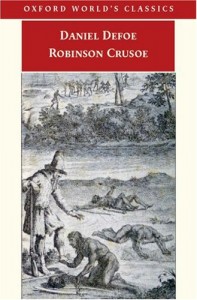
Robinson Crusoe by Daniel Defoe

Posted February 10, 2014 by Michael @ Knowledge Lost in Classic / 0 Comments

Robinson Crusoe by Daniel DefoeTitle: Robinson Crusoe (Goodreads)
Author: Daniel Defoe
Published: Oxford World's Classics, 1719
Pages: 321
Genres: Classic
My Copy: Personal Copy

Buy: AmazonBook DepositoryKindle (or visit your local Indie bookstore)

When Robinson Crusoe gets shipwrecked on an island, everything changes for him. Now stuck on the island of despair, Crusoe has to learn how to survive. Daniel Defoe’s classic survival novel has been the inspiration for many stories to come. Most people know the story so I won’t go into too much detail summarising the book.

Some may disagree but I found that Defoe set out to shatter the misconceptions that Europeans had towards colonialism. When Robinson Crusoe lands on the island he adopts colonialism, as it is familiar to him and the political nature he recognises. You see the progression of this social structure from when Crusoe first found himself on the island. He built his shelter, farmed the lands and hunted. Then when other people were introduced, the social order fell into place, putting himself as lord and master. Others like Friday and his father were slaves, but the Spaniard and the Englishmen were treated completely differently.

Another theme I noticed while reading Robinson Crusoe was the idea of isolation; this was portrayed in a literal sense. Stuck on the island, Crusoe had so much time on his hand he spends it contemplating society, religion, politics and the world. What was interesting to note is the fact that there was no real mention of women in the book; there were some but none played a significant role. This detail is something I spent a lot of time contemplating, it felt like with all his reflections, women never were an important part of the world. I’m not sure what Defoe meant by this but I’m sure it is something worth investigating.

I found Robinson Crusoe fascinating; I was studying it for university so I had to look at what Daniel Defoe was trying to say about colonialism. However there is something that really annoyed me about the book and that is the way the writing style kept changing. It felt like Defoe wasn’t sure how he was writing the novel, switching between diary entries and first person narrative. It didn’t feel intentional just changing whenever it suited him and that, in turn, just felt sloppy.

Robinson Crusoe isn’t a great book; I’m glad I read it but it just isn’t something I can praise. It wasn’t a problem with the themes or the style; it just focused too much on survival and missed opportunities to explore other topics. Sure, this is a classic and you have to give a book credit for staying around so long, but Robinson Crusoe just wasn’t for me.


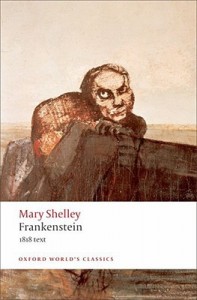
Frankenstein (1818 Edition) by Mary Shelley

Posted December 27, 2013 by Michael @ Knowledge Lost in Classic, Gothic, Science Fiction / 5 Comments

Frankenstein (1818 Edition) by Mary ShelleyTitle: Frankenstein (1818 Edition) (Goodreads)
Author: Mary Shelley
Published: Oxford World's Classics, 1818
Pages: 261
Genres: Classic, Gothic, Science Fiction
My Copy: Audiobook

Buy: AmazonBook DepositoryKindle (or visit your local Indie bookstore)

Victor Frankenstein is a student of science, obsessed with discovering the cause of life. One night he bestowed animation upon a lifeless matter and created a monster. He recoils from his hideous creation and the monster is cast out and left tormented by isolation and loneliness. Evil is unleashed and a campaign for vengeance against Frankenstein has begun.

Most people are aware of my passion for Frankenstein, I may not read it every year but I do come close. Picking up this book is like coming home, the joy that sweeps over me as I emerse myself into the text is indescribable. Have you ever had that feeling where a book can bring you so much joy, I even have to buy different versions of this novel just to have on my self. I have some rather handsome editions; a leather-bound copy, an annotated edition and a nice illustrated hardcover released by Dark Horse Comics.

So imagine my shock to discover that the audiobook I was listening to was a little different to the novel I was accustomed to. With a little research I discovered Dan Stevens (the narrator, yes the one from Downton Abbey) was reading from the 1818 edition. Not the heavily revised 1931 version, which is most commonly printed. I didn’t even know there were two different versions; this was an exciting day for me. Not only can I continually read Frankenstein and gain immense pleasure from it, but I can also switch between two different versions of the story.

I was familiarising myself with the text of Frankenstein for a university course, so I had decided to look at the book a little differently. For an older review, one I still think is pretty good click here. I knew a little more about Mary Shelley this time, so I was looking at Frankenstein with some context. Before Shelley wrote Frankenstein she had given birth to a daughter, two months premature. This daughter only lived a few weeks, a year later she gave birth to William Shelley. After the birth of her son she suffered from postpartum depression.

The birth of William happened a few months before the story of Frankenstein was conceived, so it wasn’t too surprising to see William’s name in the novel. William was Victor Frankenstein’s youngest brother, who was strangled to death by the monster. So I have two lines of thought here, one being that Mary Shelley’s depression manifested an urge to strangle William, the second is a little more complex.

I want to skip over the whole parody of creationism within Frankenstein, which would have to be an entirely different blog post (maybe when I read it next time). Life was created (without the need of a female) and then rejected. He has no loving mother; he is born fully grown but still has the intelligence of an infant, he was rejected before he could learn about the world. Again I’m left with two thoughts, is this about growing up without a mother or was this rejection of her child? I’m not really good at forming arguments (something I need to learn) but I wanted to leave you with those thoughts, and one other. In a journal entry in 1915 Mary Shelley wrote about the death of her first child, and being tormented by the idea of it coming back to life.

You know that “never meet your idols” phrase? I never really understood it; sure Mary Shelley wasn’t a ‘nice’ person but who is? She was tormented and complex and from that sprung forth a novel with so many layers that you could write a book on it. This was what made her my literary idol, not being a good person. I know I will keep reading this novel and try to write a review on each different perspective I find. Who knows it could make up and interesting collection of posts. Look for my next Frankenstein post (possible next year), not sure what it would be about; Creationism, Paradise Lost, Feminism, Slavery, Revolution, or something else. If you haven’t experienced the joys of a book so complex and layered, don’t you think it’s time you did so?


The Bell Jar by Sylvia Plath

Posted October 30, 2013 by Michael @ Knowledge Lost in Book of the Month, Classic / 7 Comments

The Bell Jar by Sylvia PlathTitle: The Bell Jar (Goodreads)
Author: Sylvia Plath
Published: Harper Collins, 1963
Pages: 213
Genres: Classic
My Copy: Audiobook

Buy: AmazonKindle (or visit your local Indie bookstore)

Esther Greenwood is a young woman from Boston who gains an internship at a prominent women’s magazine in New York City. We follow her personal life and her decline into depression, attempting suicide to being committed into an asylum. We see the bad treatment as well as the good, all the way up to her attempt to re-enter the world.

This is the seminal semi-autobiographical novel of Sylvia Plath and I’m so glad that I’ve finally read The Bell Jar. I want to say she is the female version of Charles Bukowski (even though I’ve only read Factotum); there are differences but I feel like the voice and style feel very similar. Originally published under the pseudonym Victoria Lucas to protect identities of characters she took liberties with, but more  the fact it parallels Plath’s own experiences.

A bell jar is an inverted glass jar that is normally air tight used to display objects for observation, normally for scientific curiosity. For Esther the bell jar is a symbol of madness, when gripped with depression she feels like she is stuck in a jar with no real perspective to the outside world. It prevents her from  making any real connections with people and sometimes she feels like she is on display (especially when she was hospitalised and received all those visitors).

What was interesting for me is that to me it never really felt like Esther Greenwood suffered from depression to begin with. I’m not saying she wasn’t really suffering but for me I think the idea was forced on her by everyone else, just because her thoughts were a little macabre and she was a little different. Almost like she was forced into her descent, because she was a little different to the norm.

Esther has an obsession with death; we get that from the very start with her fascination of newspaper headlines about executions, suicide and death. There is also the blood motif  throughout the book; blood normally represents life but the constant bleeding would point towards death. When she starts to think about killing herself she talks about it at great lengths and even practices slashing her own wrists.

I think this is a novel about the regression into madness, the life experiences that normally have a positive on a person’s live, but for Esther these were partly responsible of her descent. Romance, success in education, finding work and marriage proposals tend to upset or disorient her and in the end instead of finding reasons to live she finds how different she is to others and this cements her choice to die.

Then the book looks into the world of treating mental illness, the good and the bad. This is where the book moves into the territory similar to One Flew over the Cuckoo’s Nest, in particular a look at 1950 psychiatric treatments. In this part there seems to be three treatment types used within the book; talking, injections of insulin and then the dreaded electroshock therapy. The treatment is meant to clear the mind entirely and after her first electroshock treatment Esther was unable to think about knives. The treatment was doing more damage than good, especially to her intellect.

I went into this book thinking there might have been some psychological elements but  that this was mainly a novel about feminism. It is to some extent but what I got was so much more; I was really impressed with this novel and really enjoyed the journey it took me. I feel like kicking myself for not reading this sooner. A novel about a protagonist slipping into depression is normally right up my alley but I’m a little perplexed about the ending. Overall this is a masterpiece and well worth reading.


If on a Winter’s Night a Traveler by Italo Calvino

Posted October 27, 2013 by Michael @ Knowledge Lost in Classic / 4 Comments

If on a Winter’s Night a Traveler by Italo CalvinoTitle: If on a Winter's Night a Traveler (Goodreads)
Author: Italo Calvino
Translator: William Weaver
Published: Everyman's Library, 1979
Pages: 254
Genres: Classic
My Copy: Library Book

Buy: AmazonBook DepositoryKindle (or visit your local Indie bookstore)

If on a Winter’s Night a Traveler is an experimental classic that follows two protagonists, the Reader and the Other Reader. The Reader buys a fashionable new book that opens with those famous lines “You are about to begin reading Italo Calvino’s new novel, If on a Winter’s Night a Traveler. Relax. Concentrate. Dispel every other thought.” Thirty pages or so into the book he realises his copy is corrupt and consists of the same thing over and over again. Returning to the book store he discovers that what he thought was Calvino was a book by a Polish writer Bazakbal. Given the choice between the two he goes for the Polish book, as does the Other Reader, but his book turns out to be yet another novel by a different writer, as does the next, and the next.

Trying to write a synopsis for this book is tricky, there is no way I can do the novel justice in a paragraph.  This Italian surrealist novel (1979) was translated in 1981 to critical acclaim. The novel is best known for its structure. The odd number chapters are written in second person, but you have to ask yourself is it possible to have a novel in second person. As you read along eventually the narrator “you” does something that will take the reader out of the equation and turning them into a character called You. For instance, in this novel You is male, this will rule out about 50% of the readers in one hit.  This doesn’t take away from the enjoyment of this novel but is something I was deeply aware of throughout this book. There were times where I felt like the novel was in first and third person as well, so you end up with characters called You, I and He/She.

This whole book is subjective, I’m sure some people get different things out of If on a Winter’s Night a Traveler than I did but that is just what makes for a great novel. I want to talk a little about post-structuralism as I believe this novel is a great example of this literary theory. Firstly you need to understand structuralism, which is a theory that states that in order to understand a piece of literature you need to understand its relationship with the bigger picture, the overarching system or structure. You need to look into its influences, the genre, narrative and any other elements that might be relevant. The problem with this is you going further and further back eventually you might lose sight of the original text. Basically this is a set of specific rules that govern literature. Post-structuralism is basically taking those rules (they often study and analyse the rules) then setting out to critique the premises. It isn’t really throwing out the rules, more demonstrating how the rules don’t always apply.

Italo Calvino doesn’t stop at narrative modes and post-structuralism, the novel explores many more literary themes; the most obvious is the use of metafiction; a book within a book. You won’t find Outside the Town of Malbork by Tazio Bazakbal on Goodreads, I’ve checked. Then you have intertextuality, pastiche, post-modernism and so on. If you are interested in exploring literary theories this novel might be a good way to experience a whole range of different concepts in one hit. I don’t know much about literary theory so I hope my understanding on these concepts have come across as accurate and I haven’t missed it completely. I would love to attend a series of lectures where this book is deconstructed and looked at in real detail; I think that would be incredibly interesting.

Don’t worry, this isn’t a dense or hard-to-read book and I’m aware that talking about literary theory might turn people off this novel but please reconsider. This book is not only devilishly clever but it is beautifully executed. I took my time with this novel because I wanted to re-read sections, write done quotes and just talk about the book to anyone that would listen. If I didn’t borrow this from the library I would have highlighted the entire books (seriously, every line is just that great). I have brought my own copy now (yes, I broke my book buying ban) and I hope to be able to re-read this again. I’m not sure if reading this with others will help but the whole experience of reading this novel is worth sharing.

I’ve heard Italo Calvino is heavily influenced by Vladimir Nabokov which makes a lot of sense to me, the writing style does feel similar, even the humour and wit. A literary labyrinth that is so masterfully executed that the novel needs to be read again and again. I won’t go into any more details as there are a few things you just need to experience. I’m jealous of anyone that gets to read this novel for the first time as that is an experience I will never have again.

 I have to wonder why the Vintage classics cover of the word “Traveller” written correctly but throughout the book it is written in the American (wrong) spelling. I have to wonder if there is anything in that. I wonder if there is a reading companion to If on a Winter’s Night a Traveler that you can read alongside this book (similar to Infinite Jest) to discover the brilliance of this novel. I really enjoy Post-Modern literature but there is so much that I’m probably missing.

All book lovers should experience If on a Winter’s Night a Traveler, there is nothing like that feeling of pure joy when you read a beautifully clever novel. You never want it to end, that ecstasy is like a drug and you immediately want to read it again only to find that feeling is just not the same. This is a masterpiece, I know I didn’t talk much about the plot but this was so I don’t give anything away. Go read it.


The Mysteries of Udolpho by Ann Radcliffe

Posted October 4, 2013 by Michael @ Knowledge Lost in Classic, Gothic / 0 Comments

The Mysteries of Udolpho by Ann RadcliffeTitle: The Mysteries of Udolpho (Goodreads)
Author: Ann Radcliffe
Published: Oxford World's Classics, 1794
Pages: 693
Genres: Classic, Gothic
My Copy: Library Book

Buy: AmazonBook DepositoryKindle (or visit your local Indie bookstore)

Emily St. Aubuert was imprisoned by her evil guardian, Signor Montoni. We follow her misadventures from his dark fortress in the Apennines as she suffers physical and psychological terror. The Mysteries of Udolpho is told in a dream-like hallucination that gives the reader a sense of Emily’s psychological state.

Writing a synopsis for this novel was one of the hardest things about this review. There are so many fragments in this book which makes it difficult to summarise what this book is about. Written in four volumes, Ann Radcliffe’s gothic romance manuscript has reported to have been brought for £500 in 1794, I’m not sure if that takes into account the inflation, if not that seems huge I can’t imagine an author receiving that much for a book nowadays.

This classic novel is a quintessential gothic romance but there are fragments of so many other genres with the supernatural, psychological mysteries that fill the pages. I really wanted to enjoy this book but I found it incredible wordy and at the time I was not in the right frame of mind for it, but I will do my best to be fair. The major downfall for me was the extensive descriptions of the landscapes; in particular Pyrenees and Apennines which while stunning just caused the book to drag on.

Emily is orphaned after the death of her father and taken in by her aunty Madame Cheron who married an Italian brigand Count Montoni. As romance between Emily and Valancourt, Montoni became increasingly frustrated and Cheron disapproved, believing him too poor, until she realised his aunt is Madame Clairval. When Count Montoni and Madame Cheron married he refused to allow Emily to married as he figured he could sell her. The major theme I got from this novel was the idea of indifference and the cruelty that can go along with it. Count Montoni is the definition of the gothic villain archetype; evil, sinister, greedy, and motivated by money. Even his marriage to Madame Cheron is for mercenary reasons and tried to force her to sing over her estates.

The novel is not all dark and gothic, I did mention that this was a gothic romance.  Emily’s devotion to Valancourt is unshakeable and his heart seems to belong to her as well. He does make some mistakes and his behaviour eventually causes Emily to renounce him but even after that her thoughts were always towards him. The devotion or loyalty is always fighting against the gothic themes of this novel as you expect from a novel like this. Even the romance between Annette and Ludovico’s is not always happy, especially when he locks her up for her safety. Gothic romance is an unusual genre and you always get a sense that the entire book is fighting to counteract the romance, but then this is the type of book I enjoy.

This is a hard novel to review, there are so many plot lines and if I go off and talk about each of them this post will just go on and on. I know trying to condense the review down to a blog post doesn’t really do the book justice but I tried to focus on the main plot line. While the book felt wordy and dragged on,  this was an interesting book, one I feel needs to be revisited sometime in the future. It would be interesting what I can pull out of the book once I have improved my critical reading skills. Have you read this classic? If so I would love to know your thoughts on it.


The Castle of Otranto by Horace Walpole

Posted September 19, 2013 by Michael @ Knowledge Lost in Classic, Gothic / 0 Comments

The Castle of Otranto by Horace WalpoleTitle: The Castle of Otranto (Goodreads)
Author: Horace Walpole
Published: Penguin, 1764
Genres: Classic, Gothic
My Copy: Audiobook

Buy: AmazonBook DepositoryKindle (or visit your local Indie bookstore)

Conrad, the heir to the house of Otranto, died under mysterious circumstances on the day of his wedding. His father, Manfred, lord of the castle, who feared the end of his dynasty, was determined to marry his son’s betrothed. However as Manfred tries to marry Princess Isabella, she escapes to a church and a number of supernatural events stand in his way. These terrifying omens soon threaten this unlawful union, as the curse placed on Manfred’s ancestor, who usurped the lawful Prince of Otranto, begins to unfold.

The Castle of Otranto established the Gothic as a literary genre and inspired Ann Radcliffe, Bram Stoker, Daphne Du Maurier and Stephen King. The Castle of Otranto has a unique blend of psychological realism, supernatural terror, guilty secrets and unlawful desires but I read this book as a critic on marriage. In 1773 The Marriage Act was passed, an act that is also known as “An Act for the Better Prevention of Clandestine Marriage”. The act was successful in preventing marriages not performed by an Anglican clergyman but also this act didn’t apply to royalty.

This act was passed eleven years before The Castle of Otranto was published and considering the fact that Horace Walpole was the Member of Parliament for Callington (1741–1754), Castle Rising (1754–1757) and King’s Lynn (1757–1768), I get the sense that he would have had strong opinions on the topic. From some quick research on Horace Walpole, I know that he had a strong interest in social and political issues. We can’t overlook his sexuality either, Walpole never married or had relationships with women; some claim he was asexual but I tend to side with the people that claimed he was a homosexual. Some of his closest friends including Anne Seymour Damer and Mary Berry are apparently lesbians as well. This information and the reading of this novel led me to interpret the fact that Walpole was against The Marriage Act.

Let’s look at the novel, Manfred was planning on ending his marriage with Hippolita and marry the much younger Isabella. The introduction of the Marriage Act (despite this book being set sometime between 1000 and 1200) meant that the marriage would have been easier to achieve and Isabella’s fear of Manfred more realistic. Putting aside Isabella’s reluctance to the marriage, there were also the supernatural events (the Church) standing in his way, in which I interpreted as the church still being against clandestine marriage despite it being possible for Manfred. I read the entire book as a metaphor of society and the church standing in the way of a desired marriage. This brings me to an interesting thought; Lord Manfred is considered the antagonist on the novel, portrayed as being deranged but I viewed this as the social view of homosexuality at the time.

There is so much more I can talk about here, like the archetype of Gothic characters (involving heroes and anti-heroes) and the setting (the Castle). While I have talked about Manfred, I want to quickly talk about Isebella and the castle. When Isebella tried to escape she turned into the outsider, a person thrown out of her community; this could also be used as a metaphor for Walpole’s feelings and sexuality. When she escaped she used the underground passages of the castle, which invokes all the characteristics of the Gothic genre; the darkness, obscurity, vastness, and the terror that may arising. Yet the castle and its mysterious characteristic could be a motif for Horace Walpole’s loneliness in the universe.

I won’t go into any more symbols, themes or motifs or this would turn into a really long review. My main interpretation of this novel is clear and I hope I have given you enough to back up my claims. While this isn’t my favourite example of Gothic literature, it was a great read and while short, there is a lot to digest. For all Gothic fans, I recommend checking out The Castle of Otranto; this is an excellent example of the gothic form.


The Third Man by Graham Greene

Posted August 29, 2013 by Michael @ Knowledge Lost in Classic, Thriller / 0 Comments

The Third Man by Graham GreeneTitle: The Third Man (Goodreads)
Author: Graham Greene
Narrator: Martin Jarvis
Published: Penguin, 1943
Pages: 180
Genres: Classic, Thriller
My Copy: Library Book

Buy: AmazonBook Depository (or visit your local Indie bookstore)

American western writer Rollo Martins arrives in Post-World War II Vienna at the request of his childhood friend, Harry Lime. Lime has a job for him but when Martins arrives, he soon finds out that his friend has died. Convinced that Harry Lime’s death was no accident, Martins starts his own investigation, which leads him on a hunt to find the other witness, The Third Man.

If you are a loyal listener of The Readers or follow Simon Savidge’s blog or twitter you may know he recently lost his grandmother. To pay tribute to the memory of Dorothy Savidge he has asked people to read something by Graham Greene, as he was her favourite author. Greene for Gran (or on twitter #GreeneForGran) was born and I took this as an opportunity to try my first Graham Greene book, as well as join in this beautiful memorial to a fellow book lover.

Now The Third Man is an interesting book; it is actually written in preparation to writing the screenplay to what will become a film noir classic. Graham Greene wrote this novella and then converted it into the screenplay. I’m not sure how or why the original novella ended up being published but I suspect that the huge success of the movie may have had something to do with it. So when reading The Third Man you are basically reading the novelisation of the movie; everything is exactly the same.

This is not necessarily a bad thing, the movie was fantastic but then again I’m a fan of Orson Welles (Citizen Kane is the greatest movie of all time) so I might be biased. Who am I kidding, it’s not bias; The Third Man is a classic film noir movie and if you haven’t seen it then you are missing out. It’s hard to review a novella that is exactly the same as the movie, there may not be any point to reading the book if you can watch the movie but I wanted to see how Graham Greene wrote and I think I’m a fan.

What I found fascinating about the novella was the fact that the entire story is told from the perspective of Major Calloway and not the Rollo Martins. Just a quick side note here Rollo Martins name was changed to Holly Martins in the movie just in case you thought I made a mistake there. So I look back at the movie and try to imagine The Third Man from the perspective of Calloway and it just doesn’t seem right, but it works really well for the book. Just another example of what a novel can do that film can’t and gives the novella something unique that you wouldn’t get from the movie.

This only took me about an hour to read (I read slow) and while it is pretty much the exact same thing as the movie, I’m glad I read it. It gave me a sense of Graham Greene’s style and I know what to expect when I try another book (any suggestions). I loved the movie and I think the book is a great companion for fans of The Third Man. Now I want to rewatch the movie, sounds like a good idea right?


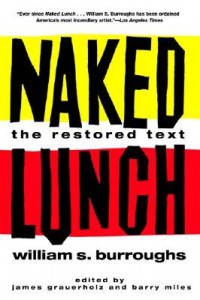
Naked Lunch by William S. Burroughs

Posted June 14, 2013 by Michael @ Knowledge Lost in Classic / 5 Comments

Naked Lunch by William S. BurroughsTitle: Naked Lunch (Goodreads)
Author: William S. Burroughs
Published: Grove Press, 1959
Pages: 289
Genres: Classic
My Copy: Personal Copy

Buy: AmazonBook Depository (or visit your local Indie bookstore)

In a complex and disturbing string of events, William Lee finds himself fleeing from the police. While on the run, this drug addict finds himself journeying across the United States and into Mexico. His travels lead him into the underground world of both drug and homosexual culture. The coun
ter story revolves around the use of mind control by the government and psychiatrists to manipulate and direct the public.

Considered one of the most important novels of the twentieth century, William S. Burroughs’ Naked Lunch is a bizarre cut up narrative protesting the death penalty. You got that the book was trying to do that from the synopsis right? Naked Lunch is a non-linear narrative that does make it really difficult to summarise the plot. Burroughs is famously known for his cut-up narrative; which is a literary technique that can be traced back to the Dadaists in the 1920s. For more information about Burroughs and cut-up check out my post called William S. Burroughs & Surrealist Writing Methods.

The book looks into two key groups; the drug and homosexual subcultures. The two unite early in the novel by the narrator but are never mutually exclusive. At the start of the book William Lee believes he will be punished more harshly for his involvement in homosexual activities than using and selling illegal drugs, which is really sad to think that people are being still victimised over their sexuality and drugs have just become socially acceptable.

Then the subplot largely focuses on the way in which psychotherapy combines with the government to institute mind control. Dr Benway experiments on ways to manipulate the minds of his patients in order to further his research. With no ethical consideration, he often changes his patient’s sexual identity and then tries to cure them. He also creates a mental controlling device for the towns as a way to use the population for his sadistic experiments and put them through psychological torture. Many of these experimental towns are based on the utopian idea and Burroughs like to explore the problems with the idea in a rather sinister way.

So how is this novel a protest to the death penalty? Well that would be in the same way Jonathan Swift’s Modest Proposal ideals with economics. William S. Burroughs uses Juvenalian satire to highlight the barbaric, disgusting and anachronism of capital punishment. While the sex in Naked Lunch can be considered as mutual satisfaction sometimes, it is also used as a metaphor (especially in the more violent sexual acts) for defeating an enemy, self serving idol worshipping and capital punishment. The results of these metaphors are often confusing, shocking, taboo and sickening. Sex is a powerful tool with this novel and while it does look at sex and relationships in a positive way (rarely), the majority is used to symbolise the dark and cynical themes within the book.

William Lee is obviously William S. Burroughs alter ego and the book can be read as a semi-autobiographical novel through a serious drug addiction but like Infinite Jest there is so much more going on. This book did remind me a lot of Infinite Jest; not just with how it dealt with drug addiction but the way it used very dark themes to look at other social issues. William S. Burroughs had a similar experience to the narrator, taking trips around the world in order to avoid being arrested. Even the addition and sexual experimentation is similar to the authors own experiences, as part of his attempts to separate himself from mainstream culture. William S. Burroughs is a fascinating man and I’m interested to learn/blog more about him.

I’m not sure what the difference between the original and restored text but I did read the restored edition. While this was a really weird and somewhat difficult book to get though there is so many interesting themes to explore that I feel very satisfied by completing this novel. It is disturbing and some of it will make you feel sick to your stomach and I can understand why people hate this book. This is a really intense novel that will drain you emotionally and mentally. The book is full of violent and graphic sex, so it will never be for everyone but I can see why it is an important novel, not just because of the obscenity trial but also for all the themes.

I’ve not read many Beat novels in my life, I think On the Road was the only other one but I do like the gritty and surreal approach both books take. I’m not sure if this is a major theme for all beat novels but if so, I will have to read more. I doubt I’ll ever return to Naked Lunch simply because of how disturbing some of the scenes are but I know I can be completely satisfied with having read this one and judging by this review, I can also take comfort in the fact I was able to pick it apart and understand some of the themes.