Tag: A Constellation of Vital Phenomena

The Tsar of Love and Techno by Anthony Marra

Posted May 25, 2016 by Michael @ Knowledge Lost in Short Stories / 4 Comments

The Tsar of Love and Techno by Anthony MarraTitle: The Tsar of Love and Techno (Goodreads)
Author: Anthony Marra
Published: Hogarth, 2015
Pages: 320
Genres: Short Stories
My Copy: Paperback

Buy: AmazonBook DepositoryKindle (or visit your local Indie bookstore)

When I first read A Constellation of Vital Phenomena, I knew I had found a new favourite author in Anthony Marra. I was constantly recommending the novel to everyone and always took notice when someone suggested a book was the next Constellation. They were right with both All that is Solid Melts into Air and Girl at War. When I heard that Marra had another book coming out I was so excited. Then when it was released, there was no Australian publication and it would cost about $50 to get a copy delivered to me. I thought about just getting the audiobook but I really wanted a physical copy. Thankfully the Perth Writers Festival announced Anthony Marra as a guest and we quickly got an Australian edition of The Tsar of Love and Techno.

Unlike A Constellation of Vital Phenomena, The Tsar of Love and Techno is a collection of interconnecting stories. While it could be considered a collection of short stories, there is a common thread that allows this book to be read more like a novel. Beginning in 1930s Leningrad where a failed portrait artist finds himself with the task of airbrushing people out of existence. The people being removed from the pictures are the people the state have sent off to the Gulag for their counter-revolutionary behaviours. He finds himself removing his brother from pictures but instead of whipping him out of the memories completely he ends up putting his face in the crowds of other pictures.

There is something wonderfully captivating about the writing of Anthony Marra, and I think it goes further than just my love of Russian literature. I cannot help but be absorbed in his stories, eager to know what happens next. I love the way he explores Russian history and looks at ideas of war, censorship, family, love and the soviet government. A Constellation of Vital Phenomena does a good job of exploring the lives of ordinary people during war and The Tsar of Love and Techno is all about the people living in Russia during different periods of time.

While I think A Constellation of Vital Phenomena will always have a special place in my heart and everyone should read that book, The Tsar of Love and Techno is still worth the attention. I know some people have issues reading short story collections but I think this works as a novel. I am eagerly waiting the next Anthony Marra novel but I know I will have to wait a while. I just hope I do not have to suffer the same fate with The Tsar of Love and Techno, and Australia will release at the same time as the rest of the world.


Girl at War by Sara Nović

Posted September 15, 2015 by Michael @ Knowledge Lost in Historical Fiction, Literary Fiction / 0 Comments

Girl at War by Sara NovićTitle: Girl At War (Goodreads)
Author: Sara Nović
Published: Little Brown and Company, 2015
Pages: 336
Genres: Historical Fiction, Literary Fiction
My Copy: Paperback

Buy: AmazonBook Depository (or visit your local Indie bookstore)

Ana Jurić is a carefree young girl, running and playing through the streets of Croatia’s capital city Zagreb. This was the summer of 1991, and this is the summer that will change everything, not just for Ana, but also for all of Croatia. The country has declared its independence from Yugoslavia, which has sparked civil unrest and quickly became the Croatian War of Independence. Girl at War tells the story of Ana as a ten-year-old in 1991 and then ten years later while living in New York City.

The Croatian War of Independence lasted from 1991 to 1995, between the Croat forces local to the government and the Serb-controlled Yugoslav People’s Army (JNA). This war started when the Croatian government declared independence from the Socialist Federal Republic of Yugoslavia (SFRY). The majority of Croatians wanted to become a sovereign state, but Serbs remained loyal to Serbia’s wish to remain apart of Yugoslavia. This cost Croatia between 6,000 – 8,000 soldiers and almost as many citizens were killed (or missing) during the conflict as well. However they estimate about 220,000 people were displaced during this period.

Girl at War is a coming of age story of a girl living through the crumbling soviet state and trying to move on. She founds herself in New York City when 9/11 happens, which forces her to confront her past and deal with the part of her life she has tried to bury. Sara Nović’s debut novel is a perfect novel, reminding me of books like A Constellation of Vital Phenomena by Anthony Marra and All That is Solid Melts into Air by Darragh McKeon. This is an unflinching look at a crumbling Yugoslavia and a country unsure of their future.

This is a heart-breaking debut, that was flawlessly executed, many people might be familiar with my love for novels set in a crumbling soviet state and this was my chance to explore the history of Yugoslavia. I hope there will be many more novels like this released in the future, and I am eagerly anticipating the next Girl at War as well as a new novel by Sara Nović. There is not much about Nović to be found online, but I suspect some autobiographical elements within this novel because the emotions just felt too real. Do you know any other books similar to this that I might enjoy?


All that is Solid Melts into Air by Darragh McKeon

Posted October 28, 2014 by Michael @ Knowledge Lost in Historical Fiction, Literary Fiction / 7 Comments

All that is Solid Melts into Air by Darragh McKeonTitle: All that is Solid Melts into Air (Goodreads)
Author: Darragh McKeon
Published: Viking, 2014
Pages: 391
Genres: Historical Fiction, Literary Fiction
My Copy: Paperback

Buy: AmazonBook Depository (or visit your local Indie bookstore)

All that is Solid Melts into Air tells the story of the Soviet Union in 1986. A nine year-old piano prodigy continuously falling victim to bullies, a surgeon throwing himself into his work to avoid the emotion pain of a failed marriage, a former dissident struggling to free herself from political constraints. Everyday Russians trying to make life work in this repressed state; that was until a disaster in Ukraine changes things.

Most people who know me know that I am a fan of Russian literature and books set in Russia. The Cold War years are of particular interest to me, the social and political unrest makes for a haunting backdrop for great story telling. When I head that All that is Solid Melts into Air was this year’s answer to A Constellation of Vital Phenomena, it was all I needed to buy this book. While reading the book I found out the novel centred around the Chernobyl nuclear accident which just gave that extra element to turn this into a new favourite.

I have never read a novel about the Chernobyl disaster before and I am struggling to think of other books that focus on this historical event. So I was pleased to have a new insight on a situation I hope to never experience. This was a beautiful and haunting tale of Russians living life and the connections they make along the way. However little gems like the controversial idea of implementing safety measure pre-disaster and the Soviet Union’s efforts to cover the accident up really helped make this novel great.

The title is taken from a line in The Communist Manifesto, which is quoted before the novel kicks off. This is an interesting quote to add, not just to give a reference to the title but the implications of what to expect within the novel. As Karl Marx and Friedrich Engels theorise in their political manifesto, “The history of all hitherto existing society is the history of class struggles”.

“All that is solid melts into air, all that is holy is profaned, and man is at last compelled to face with sober senses, his real conditions of life, and his relations with his kind.” – Karl Marx (The Communist Manifesto)

While this is a strong character driven novel, it is not the personal but political transgressions that stood out for me. All that is Solid Melts into Air is set in a time where the Iron Curtain is beginning to collapse; things are drastically changing and then the disaster involving the Chernobyl Power Plant throws the people into civil unrest. While the book focuses on a few characters the overall theme is one of class struggles. The Russian people struggling against the Soviet government; the fear and repression rules stronger than the radioactive atmosphere. An interesting concept considering the communist society that Marx wrote about was nothing like the political government at the time.

I am a little sad to see this gem has remained under the radar; All that is Solid Melts into Air deserves so much more attention. Despite that horrific setting, this is a novel of great beauty with visceral portrayals of both people and places. The struggle the people go through is handled with tender care and empathy. It is hard to believe that Darragh McKeon is a debut author; much like Anthony Marra, I am eagerly awaiting his next novel. All that is Solid Melts into Air is a new favourite and you can expect it to be near the top of my ‘best of 2014’ list.


ArmchairBEA 2014: Introduction and Literature

Posted May 26, 2014 by Michael @ Knowledge Lost in ArmchairBEA / 30 Comments

abea

This is my third year participating in the Armchair BEA event. While I am not an American I do like the opportunity to join with book bloggers around the world and talk about our favourite subject, books. I am sure most people know already but just in case; BEA is the Book Expo of America, held in New York, where people in the book industry of America get to be enticed with new books from publishers. There is an event now known as BookCon where book lovers can experience the same enticement, however they won’t get any diversity. Putting aside the problems with BookCon, I’m pleased to join all the fun with Armchair BEA. This is a virtual conference for the book bloggers that can’t make it to BEA. Over the next few days I will be joining in with this event and their daily blog post topic suggestions.

For the past two years I’ve been enjoying this event, it is a great way to meet new bloggers and show off your own book blog. As this is the first day of Armchair BEA I probably should move on to the topics for the day. Today we are introducing ourselves and talking about my favourite topic…literature. As a way of introduction Armchair BEA has provided ten questions and asks everyone to pick their favourite five and answer them.

Please tell us a little bit about yourself: Who are you? How long have you been blogging? Why did you get into blogging? Where in the world are you blogging from?

My name is Michael, I hail from North Queensland in Australia and I only became a reader in 2009. I started blogging not long after that over at Knowledge Lost as a way to sort my thoughts and explain what I had learnt along the way. I know I need to spend more time on that blog and I’m hoping to get back into it now that I’m forcing myself to write every day. I started Literary Exploration as a way to document my book journey and soon discovered I’m very passionate about books and book blogging. There is one thing I hate about book blogging but for the most part I really enjoy the whole experience.

Describe your blog in just one sentence. Then, list your social details — Twitter, Facebook, Instagram, etc. — so we can connect more online.

Literary Exploration is documentation of my bookish journey as I explore literature in all its forms.

You can normally find me on twitter: @knowledgelost or my blog @litexploration as well as Facebook, Instagram, sometimes Tumblr and Pinterest. I’m also very active on Goodreads (also check out the Literary Exploration Book Club), Literally and Booklikes.

What was your favourite book read last year? What’s your favourite book so far this year?

Highlights of 2013 include;

For more books check out my best of 2013 post

Highlights of 2014 (so far) include;

What is your favourite blogging resource?

One of the best investments I’ve made for my blog is the Ultimate Book Blogging Plugin. This one plugin has saved me a lot of time and makes my life so much easier. I can collect a lot of relevant information thanks to this plugin and it automatically updates my review index. It has a lot of cool features and I highly recommend it to all book bloggers. Of course you’ll all have to move to a self-hosted WordPress platform but that is a good idea anyway.

Spread the love by naming your favourite book blogs:

I’m always happy to recommend some great book blogs; here are some that I’m always happy to see updates from;

Time now to look at that all important topic of Literature: I’m a bit of a pretentious reader, so I’m always interested in reading books that are considered high literature. I’ve even set myself a life goal of reading the entire 1001 Books You Must Read Before You Die List, I might even try to review them all too. I find myself drawn to literary more as I become a better reader; there is something about the prose and structure that stands out. As a literary explorer I try not to entrench myself in just one genre, but luckily there is plenty of great literary genre novels out there. I don’t have to sacrifice quality in order to read genre fiction.

However there are so many classics out there that I still have to read and I feel bad for not having read books like Middlemarch, The Brothers Karamazov, The Woman in White, The House of Mirth and so on. I want to catch up on all these great novels and I think classics are an essential part of the reading journey. I recommend every reader try to read more classics and to help you along, I suggest joining something like The Classics Club is a great way to challenge yourself to more classics. I want to take to the conversation to the comments but I’d like to ask some questions of the readers to help the conversation along;

  • What is your favourite literary novel (in any genre)?
  • Which classic would you like to read but are dreading?
  • What genre do you spend most of you time reading?
  • What genres tend to scare you?
  • Finally, are there classics that just seem too hard and why?

ArmchairBEA is a virtual convention for book blogger who can’t attend Book Expo America and the Book Blogger Convention. Button by Sarah of Puss Reboots


And the Mountains Echoed by Khaled Hosseini

Posted February 27, 2014 by Michael @ Knowledge Lost in Book of the Month, Historical Fiction / 0 Comments

And the Mountains Echoed by Khaled HosseiniTitle: And the Mountains Echoed (Goodreads)
Author: Khaled Hosseini
Published: Bloomsbury, 2013
Pages: 404
Genres: Historical Fiction
My Copy: ARC from Publisher

Buy: AmazonBook Depository (or visit your local Indie bookstore)

Abdullah and Pari are close, very close; Pari idolises her older brother and there is nothing he wouldn’t do to keep he safe. But at the age of three Pari is sold to a glamorous young woman who couldn’t have children in Kabul. Without any form of goodbyes Abdullah never forgets his younger sister, but she has forgotten all about her previous life.

Khaled Hosseini sets out to explore the different ways in which families nurture; he begins this novel with a fable about a mythical creature known as the div who comes to the village and takes young children to his fort in the mountains. One day a farmer was so heartbroken of the loss of a child that he climbs the mountain to kill the div. After a brief battle with the creature the div shows him the most beautiful place the farmers ever seen and the children all happy. The div tells the farmer that he has come to test him and he has to choose what is best for his child.

I might lose some fans but I have to say it; people talk about Khaled Hosseini’s literary genius, with so much hype surrounding And the Mountains Echoed but I don’t see it. I will admit that I have not read The Kite Runner or A Thousand Splendid Suns so I’m only judging his literary merits by this alone and I might be wrong. Here is my thoughts based on only this book; he is a great storyteller but he is no writer of literary fiction, in fact I think he still has some work to do, before I would consider him a good writer and I don’t think I would even class this as literary fiction.

Don’t get me wrong, I did enjoy reading this novel but I was expecting literary fiction and I was disappointed I didn’t get it. I was also reading the most wonderful novel at the same time, which actually covers similar themes and plot points. So I continually compared this novel with the other and when you are facing off against A Constellation of Vital Phenomena by Anthony Marra, it really had no hope in winning. The story was nice and I found myself racing though the book but all the time I wanted to go back to A Constellation of Vital Phenomena.

Well well go and play till the light fades away
And then go home to bed
The little ones leaped and shouted and laugh’d
And all the hills ecchoed.

The title of the book comes from a William Blake poem called Nurse’s Song (I have no idea why Blake spells echoed with a double c but if you have any insights on that I would love to know) which feels fitting to the book. I think of Abdullah as the nurse who wants to protect but Pari is off having a good time (a far better life) and I’m not good at interpreting poetry but I think that’s where the analogy ends. There is the moral and ethical dilemma here about Pari, is she better off with the rich family or with her brother and family struggling.

As far as I can see this was a great story and I would read Khaled Hosseini again; I am curious to compare this to his other two books. I just think this is just great storytelling with a moral but there is nothing to make this stand out and think this is literature. In fact none of the characters or plot was so memorable, so when it came to talking about this book in book club I struggled to remember the plot and characters and I only finished it the day before.

At times I felt this book was a little staged and forced and I finished the book not learning anything about Afghanistan and the life of the people living there, so I felt disappointed. I know of offended people on the Khaled Hosseini bandwagon but sadly I just didn’t get into it. I liked the book but there is no lasting impression left on me and since I was reading a book that will easily be in my top five  books of 2013 at the same time, I think that really gave me a negative opinion towards And the Mountains Echoed. This is the type of book you take to the beach or on holidays for a mindless but enjoyable story, there is nothing really else there.


My Top Five Reads of 2013

Posted December 30, 2013 by Michael @ Knowledge Lost in Top 5 / 4 Comments

As 2013 comes to an end, it is time to do that “Best of” post. I know it’s one of those posts you are either sick of or love seeing but I have to share my favourites. It’s been a great year; over 160 books read, some amazing books and some painful ones (see Twilight and New Moon). Like last year I’m going to split my list into “Best of 2013 (released this year)” and all other novels, but as I want to focus more on Non-Fiction too I’m adding “Best Non-Fiction of 2013” to the mix.

Top Five Reads Released in 2013
5. The Unknowns by Gabriel Roth
4. Tenth of December by George Saunders
3. The Explorer by James Smythe
2. A Constellation of Vital Phenomena by Anthony Marra
1. The Machine by James Smythe

Top Five Reads in 2013
5. The People of Forever Are Not Afraid by Shani Boianjiu
4. The Virgin Suicides by Jeffrey Eugenides
3. Pride and Prejudice by Jane Austen
2. The Bell Jar by Sylvia Plath
1. If on a Winter’s Night a Traveler by Italo Calvino

Top 5 Non-Fiction Reads in 2013
5. The Monsters: Mary Shelley and the Curse of Frankenstein by Dorothy & Thomas Hoobler
4. Paddle Your Own Canoe: One Man’s Fundamentals for Delicious Living by Nick Offerman
3. Careless People: Murder, Mayhem and the Invention of The Great Gatsby by Sarah Churchwell
2. Perv: The Sexual Deviant in All of Us by Jesse Bering
1. 84 Charing Cross Road by Helene Hanff

Now it’s your turn to let me know of your favourite books, the new releases and the older books. It doesn’t matter; just what you discovered and loved.


My Thoughts on the Man Booker Changes

Posted September 30, 2013 by Michael @ Knowledge Lost in Literature / 0 Comments

man booker 2013People are talking about the changes to the Man Booker Prize and I thought I would weigh in as well. I’ve already talked about My Thoughts on the Man Booker and the love hate relationship I have with this award but I want to express my thoughts to this outrage. I follow the Man Booker and sometimes I’m impressed but I do not like the changes to the Man Booker Prize next year, and it’s not because of the inclusion of Americans.

The major change to the Man Booker is that this award will include all English written novels and I know people are upset with this. The only major English speaking country that wasn’t included in the Man Booker Prize before was America and people are upset that someone like Jonathan Franzen could win the award but I have to ask, what about the other American authors? I look at this year in American literature and I think books like The Son by Philipp Meyer, A Constellation of Vital Phenomena by Anthony Marra and All That Is by James Salter could have be nominated and I’d be happy to see them make the long list.

The major problem I have is with the change in the submission guidelines. Originally each publisher and imprint could nominate two books to be put forward for the prize but now to make room for other countries they have dropped it down to one submission each, it gets a little more concerning with the wildcard nominations. All publishers and imprints that get a book included in the longlist over the past five years get extra submissions.

  • 1 submission – publishers with no listing
  • 2 submissions – publishers with 1 or 2 longlisting(s)
  • 3 submissions – publishers with 3 or 4 longlistings
  • 4 submissions – publishers with 5 or more longlistings

The concern I have with this is the fact that some publishers will have a chance to grow and the little indie publishers might struggle. The Man Booker Prize is a huge money maker. The Nielsen Bookscan have released a list of the sale jumps for the Man Booker winners for the past 10 years, books like Wolf Hall and Bring Up The Bodies by Hilary Mantel and The Sense Of An Ending by Julian Barnes see a jump in sales of over 450% but the other books had a boost of about 700-2000%. This means that the Man Booker sales boosts can potential help a publisher with four books in a longlist while some of the little publishers could struggle to make one on the list.

Apart from worrying about the small publishers, I think the submission guidelines could mean some publishers can put forward more obscure book choices and some will only have one chance to make it onto the list and the worry is that they will submit the most popular book rather than an unknown book that deserves the attention. I know Folio is starting a new literary prize because the Man Booker Prize has become too readable (whatever that means) so they might be the one to watch in future years. What do you think of the changes? What are your concerns?


A Constellation of Vital Phenomena by Anthony Marra

Posted August 2, 2013 by Michael @ Knowledge Lost in Historical Fiction, Literary Fiction / 5 Comments

A Constellation of Vital Phenomena by Anthony MarraTitle: A Constellation of Vital Phenomena (Goodreads)
Author: Anthony Marra
Published: Hogarth, 2013
Pages: 416
Genres: Historical Fiction, Literary Fiction
My Copy: ARC from Publisher

Buy: AmazonBook DepositoryKindle (or visit your local Indie bookstore)

In a small village in Chechnya, an eight year old Havaa watches as her father is abducted by Russian soldiers. Their neighbour, Akhmed was also watch and takes Havaa as he knows he will be the only person that might be able to help her. They seek shelter at a bombed-out hospital, where they meet Sonja, a tough and strong minded doctor who has no desire to risk it. All three people’s worlds are turned upside down in such a short period of time. Slowly intricate patterns are revealed that bind these three companions together and ultimately seals their fate.

A Constellation of Vital Phenomena takes place mainly in 1994; not too long after the dissolution of the Soviet Union (1991) and the Chechen-Ingush ASSR split (1992). Now The Chechen Republic was fighting for their independence. In the First Chechen War the Russian Federation tried to seize control only to be fought off by the locals. It wasn’t till 1996 did Boris Yeltsin’s government declare a ceasefire and eventually a peace treaty was signed. During this war it was estimated that 5,500 Russian soldiers died, between 3,500 and 7,500 Chechen militants, but the real loss was on the civilians, with between 30,000 and 100,000 deaths, around 200,000 injured and 500,000 displaced by the conflict. I wish I could tell you that we are the end of conflict with Chechnya but in 1999 the Second Chechen War was launched and the Russian Federation eventually seized control in 2009.

Now that we have an idea of what was happening in the country at the time, we get an idea of the danger that faces the three main characters. This isn’t necessarily a book about war, or the politics behind it (which basically comes down to oil) but rather the connections that link Havaa, Akhmed and Sonja together. The hardships each of them face only serves to build this beautiful story and flush out the character development. A glimpse of three different people struggling to survive this war torn land and debut author Anthony Marra managed to make this novel both compelling and emotional.

All three characters are so different you get so many perspectives within A Constellation of Vital Phenomena that will leave you pondering the novel well after you put it down. For me, I thought of Akhmed as a traditional Chechen Muslim, caught up with the past and tradition. While Sonja is the strong minded woman trying to smash through the glass ceiling, then you have Havaa an intelligent young girl that knows nothing else apart from war. You also have other characters that look at other ways the war effects the people, from abduction, smuggling, sex trafficking, amputation, punishment, torture and the list goes one. For a novel so focused on the character development and relationship of three characters, it’s impressive how it manages to deal with so many other issues.

I’ve always had a keen interest on Russian literature, plus my fascination with the motherland; so I knew I had to read this book. The collapse of The Union of Soviet Socialist Republic is an interesting topic and the instability that ensued afterwards makes for a great backdrop. I will admit I didn’t know much about Chechen history so I had to bone up a little, unable to break a bad habit I was on the Wikipedia page for Chechnya just to get more information. I feel stupid for this but I didn’t realise the majority of Chechnya were Muslims; for some reason I thought they would have been Russian Orthodox. With the help of understanding the geographical location (which helped make more sense of their Islamic influences) as well as history, I really connected with this novel.

It wasn’t just understanding Chechnya or the character development I loved about A Constellation of Vital Phenomena, it was also exquisitely written. I was sucked in by the imagery and the beauty of the prose; I was surprised this was Anthony Marra’s first novel. I would have thought he had been doing this so well , the writing was wonderful and the whole novel was masterfully executed. I hope he writes a new novel soon because I know I’m eagerly waiting to see what he does next.

A Constellation of Vital Phenomena is sure to be one of those books that make my ‘Best of 2013’ list, I was very impressed with everything about it. For an American writer, his grasp on Chechnya seems authentic. I don’t know much about his life so I can’t judge, he might have spent some time in the country or has friends or family from there; I do know he wrote a prize winning short story called Chechnya, but that looks like the basis of this novel (based around Sonja, the hospital and her sister). Go out and pick up a copy of this novel, it is well worth reading.


Monthly Review – July 2013

Posted July 31, 2013 by Michael @ Knowledge Lost in Monthly Reading / 0 Comments

This month we looked at the satirical novel and read Kurt Vonnegut’s modern classic Cat’s Cradle. This was a lot of fun for me; even though I’ve read the novel, I’m becoming a big fan of Juvenalian satire. While it might have been a little difficult for others, it is always great to go out of our comfort zones and read something great. Next month we are dipping into some non-fiction when we read Death in the Afternoon by Ernest Hemingway, considered one of the best books ever written about bullfighting.
My wife has been away for almost three weeks and in that time I thought I might have gotten a lot of reading done, but sadly this was not the case. I’ve done pretty well for myself but nothing amazing, it seems like a regular month for me; reading wise. The biggest highlight for the month would have to be A Constellation of Vital Phenomena by Anthony Marra but I did hit rock bottom as well and read Twilight by Stephenie Meyer. I would love to know what your highlights or lowlights of the month were and even what you read this month.

My Monthly Reading


First Steps: Russian Literature

Posted July 27, 2013 by Michael @ Knowledge Lost in First Steps / 0 Comments

literary stepsFirst Steps is a new segment that was inspired by the Literary Exploration Reading Challenge. Each week or two we look at what books from different themes, genres or maybe authors and suggest some that are worth trying. Not necessarily all easy to read books but the ones that are worth the time and effort. My goal is to have First Steps guide you to some great books in places you don’t normally venture to.

I’ve been reading this amazing book called A Constellation of Vital Phenomena which is set in Chechnya and it got me thinking about Russian literature. I love reading books set in Russia and written by Russians, I don’t know why there is something about the books that draws me to them. They are often epic, slightly odd and the prose and character development are well worth reading, don’t get me started on symbolism and motifs. But it’s sad to think a lot of people are scared of reading Russian literature and while there are so many I haven’t read yet, including War and Peace, The Brothers Karamazov, Doctor Zhivago and anything by Anton Chekhov I thought I’d share five Russian novels I would recommend. I have left out Lolita by Vladimir Nabokov and Super Sad True Love Story by Gary Shteyngart simply because they are Russian Americans and it’s hard to work out which country can truly claim them.

Day of the Oprichnik by Vladimir Sorokin

This weird and wonderful postmodern novel is quite frankly so bizarre you just have to check it out. I wanted to add something contemporary to this list and thought this was the perfect choice. Set in a futuristic Russia where the Russian Empire has been restored back to the draconian codes of Ivan the Terrible.


We by Yevgeny Zamyatin

If you are fans of the dystopian genre and you haven’t read We, you really need to get onto it. This book is often considered as the first truly dystopian novel and has inspired authors such as Aldous Huxley, George Orwell and Kurt Vonnegut. Zamyantin bases this future on his personal experiences during the two Russian revolutions (1905 and 1917) and the First World War.


The Master and Margarita by Mikhail Bulgakov

Yet another weird and wonderful Russian novel, this time in the genre of Magical Realism. The whole book is based around a visit by the Devil to two passionately atheistic Russians. While this is an overly simplified synopsis it really is the basis of the entire book; if I really want to write a fully detailed overview of this book it would include a black cat, an assassin, a naked witch, Jesus and Pontius Pilate in one bizarre novel.


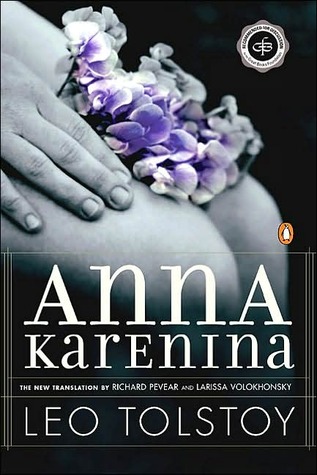
Anna Karenina by Leo Tolstoy

Don’t let the size of this book scare you, this isn’t necessarily a hard book, just long and like most Russian classics it is worth the effort. The story of love, infidelity as well as a battle of classes and the fading out of an old society to make room for modern one. If you are a patient reader and love a story with well written characters that is beautifully written then this book is worth reading, it simply is a masterpiece.


Crime and Punishment by Fyodor Dostoyevsky

I love this book so much. Before there were psychological thrillers and books like the Dexter series, there was Crime and Punishment. Raskolnikov is a conflicted character; he is showing a lot of interest in the classes and thinks he is of a higher class than others believe. But when he commits murders, guilt, remorse or regret plague him. This is a novel that focuses on the inner turmoil as well as the impact on his intellect and emotions. Beyond perfect and the type of book that you just want to read over and over again.

I know a lot of people avoid the Russian books but I’m drawn to them, I would love to know what people think and if they do avoid them, why. If you have read some great Russian novels, let me know as well because there are so many out there, I would love to know which ones are well worth reading.