Tag: australian

Eyrie by Tim Winton

Posted December 16, 2013 by Michael @ Knowledge Lost in Contemporary / 0 Comments

Eyrie by Tim WintonTitle: Eyrie (Goodreads)
Author: Tim Winton
Published: Penguin, 2013
Pages: 424
Genres: Contemporary
My Copy: Hardcover

Buy: AmazonBook DepositoryKindle (or visit your local Indie bookstore)

Tom Keely lives a life in solitude, away from the world. Somehow he has lost his bearings in his middle age and is held up in his high-rise apartment, where he can look down on the world. One day he runs into a neighbour and her introverted son. The woman recognises him from back in the day. This encounter shakes him up in a way he really doesn’t understand and he soon finds himself letting them into his life.

I’ve only read Breath by Tim Winton in the past, which I didn’t think too highly of, so I wasn’t sure what to expect with Eyrie. I know well enough to never judge an author by one book and Winton is acclaimed enough to make me think there is really something in his writing. While I wouldn’t say this book is amazing, I think I can see why people like Tim Winton as an author.

The plot is incredibly simple; there is nothing special about it and it has all been done before. This does however in fact open Tim Winton up to what he seems to do really well and that is exploring characters. He has this ability of taking these characters that seem to make sense on the surface but underneath they are complex. Humans are complex characters, not inheritable good or bad and I think Winton knows how to write this.

In the end I think the fact that the plot was very basic was my biggest problem with this novel, which is strange I’ve read and enjoyed some great novels that have virtually no plot but Eyrie didn’t work as I hoped. I think the fact that everything felt a little predictable (plot wise) made me feel detached. Apart from the plot, everything seemed to work. I know I shouldn’t get so hung up about the plot, maybe if it wasn’t so obvious I might have gotten more enjoyment from Eyrie.

Tim Winton is a decent writer, I’m sure I will find a book of his that I can connect with. I will keep looking; still have Cloudstreet, Dirt Music and others to try. The urban location of Eyrie meant that this book felt less like an Australian novel, luckily the slang saved it there. Anyone know which one will work best for me? I’m making an effort to read more Australian novels and am also looking for recommendations as well.


The Narrow Road to the Deep North by Richard Flanagan

Posted December 14, 2013 by Michael @ Knowledge Lost in Historical Fiction / 0 Comments

The Narrow Road to the Deep North by Richard FlanaganTitle: The Narrow Road to the Deep North (Goodreads)
Author: Richard Flanagan
Published: Vintage, 2013
Pages: 467
Genres: Historical Fiction
My Copy: Paperback

Buy: Book Depository (or visit your local Indie bookstore)

The Narrow Road to the Deep North follows the story of Dorrigo Evans, an Australian doctor haunted by his past; life in Tasmania, a love affair with his uncle’s wife, World War 2 and so on. At the heart of the story is his horrific time in a Japanese slave labour camp as a prisoner of war working on the Burma death railway. Taking its title from 17th-century haiku poet Basho’s travel journal, The Narrow Road to the Deep North is about the impossibility of love.

I started reading this book at the beginning of my recent reading slump, I felt so much pressure to try and get it read before my local book club. As a result, I wasn’t able to finish it in time and I ended up putting this aside half read. I obviously went back to the book and finished it, but I think it did play a big role in my enjoyment of the novel.

This is my first Richard Flanagan novel; I have heard a lot about him, but never had a chance to try him out before. The Narrow Road to the Deep North is about the harshness of war, not just the struggle of trying to survive the battlefield, or being a prisoner of war. This goes further and looks at trying to survive post war. I’ve read some great novels similar to this; Catch 22, Slaughterhouse-Five, The Yellow Bird, Billy Lynn’s Long Halftime Walk and The Machine come to mind. So I felt that I ended up using these novels as the measuring stick and The Narrow Road to the Deep North just didn’t feel like it covered the topic properly.

I felt like this book also tried to be an epic novel, following the exquisite pain of Dorrigo Evans’s life. Then I got halfway through the novel and wasn’t sure how it could cover the entire life in so little pages. I normally associate epics with great big books and if this book covered more of Dorrigo’s life then it could have fit this genre.

Flanagan focuses on not just the cruelty of war and it’s after effects but the impossibility of love, especially when so damaged. I think this was the major theme Flanagan wanted to explore, more than war and the Burma death railway. The relationship between his uncle’s wife Amy and then his girlfriend Ella play a big role in exploring Dorrigo’s life and the pain he suffers. Forbidden love and the relationship everyone expects from him; this is what I think the author wanted to explore.

I really enjoyed the style of Richard Flanagan’s The Narrow Road to the Deep North, so much so that I think it could have been a future Australian classic. The main problem was some parts go on for pages in great detail and then others were just glossed over. There was no consistency and in a great epic novel, you expect the same amount of detail in everything happening. Sure some parts deserve more time but I think there were something interesting points that needed to be focused on a lot more. This is a good novel that could have been great; I think that is what frustrated me the most about The Narrow Road to the Deep North.


Barracuda by Christos Tsiolkas

Posted November 3, 2013 by Michael @ Knowledge Lost in Literary Fiction / 10 Comments

Barracuda by Christos TsiolkasTitle: Barracuda (Goodreads)
Author: Christos Tsiolkas
Published: Allen & Unwin, 2013
Pages: 528
Genres: Literary Fiction
My Copy: ARC from Publisher

Buy: Book Depository (or visit your local Indie bookstore)

Danny Kelly’s dream is to win Olympic gold, and he even transferred to a prestigious private school to help realise this goal. But at this school he was an outsider and was shunned by the rich boys that attend. His coach believes in him, but the rest of the swim team doesn’t and this could start affecting his confidence. Danny’s win at all costs ferocity drives him and his psychotic approach earns him respect as well as the nickname Barracuda.

Christos Tsiolkas is best known for his highly controversial, but brilliant novel The Slap. Going into this book I worried that this wasn’t going to live up to my expectations of the author but I was surprised. My prediction for a clichéd ‘overcome all odds to achieve greatness’ type novel may be right but it is also very wrong. That is the basic plot but I forgot to take into account of Tsiolkas’s ability to incredibly layer stories.

Barracuda started off tame, full of angst but tame compared to The Slap but soon I was in unfamiliar territory. Unflinching, controversial and not afraid to tread into the dark side; the kind of book that is uncomfortable to read but enjoyable to finish.  The thing I love about Christos Tsiolkas, apart from the dark and brutal approach, is the profound and thought provoking story telling. He is the master of his craft.

This novel like The Slap is a great look at modern Australian life, but this one isn’t looking at parenting but instead the teenage years. Barracuda’s main focus is not about winning or chasing your dreams but for me it is all about alienation. When I was a teenager I was uprooted from all my friends in Sydney and moved to a small country town in north Queensland, where I had no friends and this novel made me relive that feeling of alienation (which I’ve never forgiven my parents for).

Tsiolkas doesn’t stop there, he likes to add layers upon layers and you spend a lot of time after reading this book just thinking about it. This for me is a sign of a great novel and I love how he dealt with alienation so effectively and then managed to look at struggles with sexual identity as well. I feel like Christos Tsiolkas is not afraid to put more and more problems for one character to deal with and it feels so real, the angst of an Australian teenager growing up in the 90’s was done to perfection.

I will admit while I loved this book, it was uncomfortable and sometimes poking at old wounds but the novel was almost a masterpiece. I did feel like it was a little long and dragged on a little at times but overall I was very pleased. Christos Tsiolkas is fast becoming my favourite Australian author and I really want to  read some of his other books; maybe not The Jesus Man but Loaded sounds really good.


Questions of Travel by Michelle de Kretser

Posted August 22, 2013 by Michael @ Knowledge Lost in Literary Fiction / 0 Comments

Questions of Travel by Michelle de KretserTitle: Questions of Travel (Goodreads)
Author: Michelle de Kretser
Published: Allen & Unwin, 2012
Pages: 528
Genres: Literary Fiction
My Copy: Personal Copy

Buy: AmazonBook Depository (or visit your local Indie bookstore)

Laura Fraser is an artistic Australian, who lost her mother at a very early age and her father was cold and distinct towards her, as was her brother. On the other side of the world Ravi Mendes’ life was almost the complete opposite to Laura, but still struggles in life at times; currently he is determined to break into the computer science industry. Alternating from one character to the other, Michelle de Kretser’s Questions of Travel explores why we are all influenced by travel.

Questions of Travel won the Miles Franklin award this year but if it wasn’t for my book club I would never have read it and I think that might have been a mistake. This novel is almost a post-modernist novel in the experimental way the author approached it. I read this book as if the two characters are sitting me down and going through their photo album and telling the story related to each picture. Slowly we get the full story but there are a lot of pieces we have to fill in for ourselves. The reason I thought this was just the way it was written and you have these really short chapters but every now and then you get a long one. Also the dates on each chapter become more specific as we got closer to the present day, almost like the character remembers the year rather than the decade now.

While reading this novel I got the impression that Michelle de Kretser was trying to explore the whole philosophy behind travel; why we do it? What we love about it? That feeling you get being in a strange country. This was a really interesting approach she took and really worked well with the experimental writing style. The author used to write for the Lonely Planet and throughout this novel you can see her small digs at these books and the bureaucracy behind them. Little things like this really helped lighten the mood for the novel.

Questions of Travel has some beautiful language throughout the book and you find yourself really taking the time to enjoy the book (even though I didn’t have much of that before my next book club meeting). This novel demanded more time than I gave it and I might have missed so much but due to time restrictions I had to power through it. There were times I found some great quotes and I wanted to write them down but I was in too much of a hurry (also I never seem to do that but am trying to make more of an effort).

The novel is both thought provoking and emotional; you’ll experience the highs and lows of the two main characters and even if you have found a favourite, both characters offer interesting insights to life and travel. Also on a positive note, this novel also offers one of the best opening chapters I’ve read in recent times, it comes out of nowhere and smacks you in the face. I spent days trying to decide if I liked this book and what I liked about it and that right there is why I enjoyed it; like Slaughterhouse-Five the time spent afterwards thinking about it is what I will remember more than the book itself. I’m not sure if I would recommend this novel to many people, you’d have to be willing to read experimental or post-modernist novels to really enjoy what Michelle de Kretser is doing.


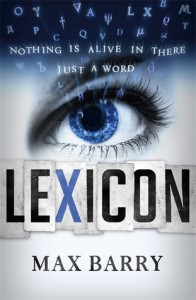
Lexicon by Max Barry

Posted August 12, 2013 by Michael @ Knowledge Lost in Thriller / 0 Comments

Lexicon by Max BarryTitle: Lexicon (Goodreads)
Author: Max Barry
Narrator: Heather Corrigan, Zach Appelman
Published: Hachette, 2013
Pages: 384
My Copy: Personal Copy

Buy: AmazonBook DepositoryKindle (or visit your local Indie bookstore)

They are an ancient secret society known only as the Poets; words are their weapons and the art of manipulation is their game. When one young woman breaks the rules for love, things start to unravel. Street-wise runaway Emily Ruff finds herself as a new recruit, training in a facility disguised as an exclusive school outside of Arlington, Virginia. She learns to use language to manipulate minds. While an innocent man is ambushed in an airport bathroom; they claim he is the key to winning a secret war that rages on. Lexicon is a fast paced thriller that explores the power of language and coercion.

I’ve been meaning to read a Max Barry novel for a while now; they all seem to be corporate or in the case of Jennifer Government marketing satires but never got around to trying them. Then Lexicon was released and it seems to tick a few of my boxes to make me sit up and take notice of it. While this has been getting a bit of buzz in America (well done fellow Australian, Max Barry) I just knew I had to read this one. I wasn’t trying to jump on the bandwagon it just seemed like my type of book and I had an opportunity to read it, so I took it.

While this is obviously a fast paced thriller (as I think most of Barry’s books) I can see where the idea a satire comes into play with his works. In Lexicon we look at modern ideas on privacy, identity and information and using an old idea that language is power we can see how Max Barry is toying with the idea that all those things we hold sacred can be manipulated and lost.  This is where the corporate satire comes into play; even in Lexicon, privacy, identity and data-collection are all important and need to be protected and Barry plays with the readers fears to suck them into his thrilling world.

Not only is this a thrilling and addictive read, I really enjoy the way the two different stories are weaved together. You get the story of Emily as she discovers this secret society and learns to coerce through the power of language and then you get the other plot thread and discover what happened in Broken Hill. I love the way this was done and it’s nothing new but it worked really well for a book like this one.

The problem with reviewing a book like Lexicon is there are so many things I want to say about the book but I think anything I do say will possibly be a spoiler. Max Barry really knows how to mix satire into a thriller and produce an altogether addictive read. I hate to do this normally but in an effort to give people an idea what this novel is like; Rebecca Schinsky (from Bookriot) says this about the Lexicon;

“Imagine X-Men plus The Magicians with a side of Nick Harkaway”

Which is a good way to describe the book; the X-Men idea really works as a way to describe the training facility disguised as an exclusive school that Emily is training at. I’ve not read The Magicians but it’s been on my TBR for a while but I tend to avoid fantasy that but I love the Nick Harkaway shout out. Angelmaker was my favourite book of 2012, it is also an addictive thriller with some literary merit and I think this is definitely the case with Lexicon. I know this seems like a glowing review, I did really enjoy it and highly recommend it but it does have flaws but honestly I didn’t care, I was immersed and wanted to know what happens next.


Fetish by Tara Moss

Posted July 18, 2013 by Michael @ Knowledge Lost in Crime, Thriller / 0 Comments

Fetish by Tara MossTitle: Fetish (Goodreads)
Author: Tara Moss
Series: Makedde Vanderwall #1
Published: Harper Collins, 1999
Pages: 325
Genres: Crime, Thriller
My Copy: Library Book

Buy: AmazonBook Depository (or visit your local Indie bookstore)

Makedde Vanderwall is a Canadian model on assignment in Australia. The advantage with some work down under is the fact that she will get to see her good friend Cassandra again. But when Cassandra is found dead by Mak she finds herself in a cat and mouse game to catch the killer before he gets her. Who can she trust and where can she turn when she’s a stranger in a land without any friends?

Makadde is a beautiful, tall and curvy international model who is studying psychology; she’s basically Tara Moss. Model turned author Tara Moss gets to live out all the thrilling adventures she wants through Makedde, not that I can say this is semi-autobiographical but I’m sure Moss wishes it was to some extent. These similarities really give this novel an authentic voice, about modelling as well as the creepy stalker (in which I suspect Moss has had) that ends up being the serial killer known as the Stiletto killer.

Not that I have anything against this book, in fact it is off to a good start for a thriller series, I just never really get into this bestseller formula. All those bestselling crime thriller writers enjoy great success with their books but I tend to think they all feel the too similar. I’m glad Tara Moss broke into the market with such success. It opened up to more in this series and then eventually trying something a little different with her Pandora English series.

Makadde is a tough intelligent woman in the wrong place at the wrong time but I would have liked to see her be more of a bad ass and really kick butt. There are times where this side of her comes out but for the rest of the time everything feels very convenient. Moss has a lot of great ideas for Mak and I did think maybe too many of them were pushed into this novel. It’s a case of first novel, too many ideas. I’m not sure what to expect from the rest of the series but I suspect now she has dealt with a similar situation she can now kick ass and take names. I hope to see her become more of a Phillip Marlowe type character, but with a model turned PI it may be wishful thinking and too much to expect.

There are six books in the series but I have to wait till book four for Mak to become  forensic psychologist and PI, so I’m not sure if I want to wait that long. Fetish was an entertaining read and maybe the series is just off to a slow start. Part of me wants to continue and watch Moss grow as a crime writer but part of me thinks there are too many books in the world to read already. I feel conflicted and I’m not sure what to do, I think I will keep Split close by for when I need something light and entertaining. When I say Fetish was just a light read, this doesn’t mean it’s predictable; I found myself surprised with some of the twists this book takes and I never did work out who the killer was till Moss was ready to reveal it.

There are good and bad parts of this book, I was not fully satisfied with the novel but as this is the first novel, I’m willing to forgive far more. I will let you know how I go if I ever pick up Split but for now I would like people to tell me what they thought of Fetish, Makedde Vanderwall and the rest of the series. I need to know if I should continue and what people think of the novels. Tara Moss’s influences include Thomas Harris and Patricia Cornwell  and I can see these influences coming through. I would like to see more of Thomas Harris in her books; I like the dark and psychological elements of the Hannibal series.


Breath by Tim Winton

Posted June 12, 2013 by Michael @ Knowledge Lost in Contemporary / 0 Comments

Breath by Tim WintonTitle: Breath (Goodreads)
Author: Tim Winton
Published: Picador, 2008
Pages: 224
Genres: Contemporary
My Copy: Library Book

Buy: AmazonBook DepositoryKindle (or visit your local Indie bookstore)

In a small logging town near the fictional town of Angelus, on the wild coasts of Western Australia, two teenage boys find themselves taking up surfing with a former professional. Bruce “Pikelet” Pike and Ivan “Loonie” Loon find themselves being challenged into risky surfs in reef and shark-infested waters by Bill “Sando” Sanderson. Breath is the coming of age story that pushes these boys beyond their limits in a regimen of risk and reward.

Narrated by Bruce, now a divorced middle aged paramedic, the novel starts off with him on the scene to save teenagers life. This leads Pikelet to recount his teenager years in the 1970’s with his boyhood friend Loonie and their reckless lifestyle. The two teens pushed the limits of their courage, endurance and even sanity all for the approval from Sando. As they venture beyond the known in the relationships, in physical challenges, and in sexual behaviour.

While this is a typical Australian coming of age story, the influences of Bill Sando and his wife Eva who are both American really play a big role in the novel as well. The Australian and American culture clashing is either an excuse for the peculiar behaviour or just a look at the Americanisation of our country. While this is a novel about surfing, this also looks at how dangerous picking the wrong role model can be while venturing into exploring teenage life and the sexual awakening of a fifteen year old boy.

Now while I won’t go into the sexual relationship of Bill and Eva too much I’m a little surprised at how many books I’ve read recently that seem to look at the dangers of sexual relationships between an adult and a minor. In my ignorance I thought Lolita was the only one but recently What was She Thinking? [Notes on a Scandal], Tampa and, in Australian literature, Me and Mr Booker and The Yearning all look at this same issue. Now I never intended to read so many books on this disturbing topic but it is funny how you sometimes pick up novel and find similar themes throughout your book choices.

I have no interest in sports; unless you count WWE as a sport, I have been known to watch basketball and American football but as a general rule I would rather be doing something else. So when I read a book about surfing I don’t really care about surfing and how dangerous it is, I just think to myself, why not stay home and read instead. So half this book really felt like it dragged out, I get that they were buying for the approval of Sando by trying to pull off the risky waves but I just wasn’t interested.

I did however like what Tim Winton did with using Sando as a role model/idol for the boys and then proceeded to show just how dangerous that can be. The risks they take without thinking, all for the nod from Sando, was insane and it affected their friendship and sanity. You have the whole sexual desire idolisation happening with Bruce towards Eva as well but as I said before, I didn’t want to go into that. This book primarily looks at the recklessness of the risks we take and how we need to find a balance between being extraordinary and ordinary. Push the limits too many times and sooner or later your luck will run out.

This is my first Tim Winton book and while there were parts I was impressed with I wouldn’t go out of my way to recommend this book. This is probably one of his lesser known works and maybe I should try something like Cloudstreet before making my mind up about this author. I do enjoy the lyrical prose for this book and the way he packed a lot of emotions into a book about extreme sports. I’ll be interested to see what he does in some of his other novels as he is known as one of the greatest Australian writers alive today.

For me, I didn’t connect with this book; I see and like what he did with this novel but I just don’t care enough about sports to care what risks the characters take. It felt a little too American for what should be a primarily Australian coming of age story but that is probably the point. I’m sure this is a book that people mainly love or hate but I just didn’t care enough to invest any emotion into this book. So for me it just felt like an average read with nothing worth getting excited about, but on the other end of the scale I can’t really criticise it either.


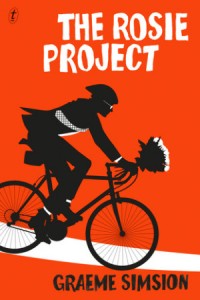
The Rosie Project by Graeme Simsion

Posted June 11, 2013 by Michael @ Knowledge Lost in Romance / 0 Comments

The Rosie Project by Graeme SimsionTitle: The Rosie Project (Goodreads)
Author: Graeme Simsion
Published: Text, 2013
Pages: 329
Genres: Romance
My Copy: Library Book

Buy: AmazonBook Depository (or visit your local Indie bookstore)

Don Tillman is a highly successful Professor of Genetics, but he is also a very socially awkward single man that believes the solution to all his problems is a wife.  He embarks upon a search to find this wife; The Wife Project is a carefully designed questionnaire to find the perfect match for him. In comes Rosie, not a match, but Don finds himself helping her on search for her biological father.

Chick lit always seems to have a quirky woman looking for love, because apparently the message is that strong independent women are incomplete until they have a partner. That is probably a rant for another day but I have to wonder why Nick Hornsby and Graeme Simsion’s The Rosie Project does not fit into this genre? All the same characteristics are there, the only thing different is the role reversal. My wife jokingly calls the genre dick lit but I don’t know why there is a gender bias in a genre. I thought Seating Arrangements would be considered chick lit but because it had a male protagonist people dismiss it as something different. Not really important but I thought it odd that just because the main character is the wrong gender it doesn’t fall under the same category, which is one of the many problems with trying to categorise books into genres.

Now let’s get back to The Rosie Project; this was an entertaining and quick read that just has too many problems with it. This over hyped book’s major flaw is the portrayal of Asperger’s; much like Addition, a mental health issue (or in this case a pervasive developmental disorder) is the quirky personality. Because underplaying a mental health issue is the answer to making a character quirky; why can’t people just be quirky without having to point fingers? Misrepresenting mental health seems to be the go to move for writers of books, TV and movies and it really isn’t helping people understand these issues. Also while I’m on the topic, why does socially awkward, introverted or quirky have to be considered as problems, why can’t we just be happy for people to be different without having to stick a label on it?

The other major issue I had with The Rosie Project was its predictability; you knew exactly what was going to happen from chapter to chapter and how the book would end. There were no surprises, nothing interesting, just a generic plot. So we have an unpredictable, generic and stereotypical plot; does that leave you with any good points? Not really, just that it was entertaining and there was some decent comedy but in the end I was glad to be done with the book. Remember that old Jack Nicholson movie As Good As It Gets? I have to wonder if this is just a modernisation of that movie, there were so many similarities. I also found a lot of similarities to Addition so I’m not sure if there is anything original left in this book.

For those that don’t mind something so formulaic and predictable, this book is entertaining and you don’t really need to pay attention. I ended up skim reading most of this book and I still felt like I didn’t miss anything, because I guessed what would happen before I read it. I know this book has gotten a lot of buzz lately and I’m still that bitter and cynical old man but I really don’t get it; I don’t see what was so appealing.

Good on Graeme Simsion for taking the world by storm with this novel, the buzz in Australia has started to die down but now the hype is starting around the world. I see it was one of the books been heavily advertised at BEA from Australia (the other being Burial Rites). For that I’m glad it’s doing well, it is nice to see Australian books getting talked about all around the world. Much like The Book Thief, I don’t see why there is so much buzz but I’m still happy when an Australian author reaches the international stage. I’m sure there will be a romantic comedy coming from Hollywood soon, so maybe that is a good reason to read The Rosie Project.


The Hunter by Julia Leigh

Posted May 28, 2013 by Michael @ Knowledge Lost in Contemporary / 0 Comments

The Hunter by Julia LeighTitle: The Hunter (Goodreads)
Author: Julia Leigh
Published: Penguin, 1999
Pages: 188
Genres: Contemporary
My Copy: Personal Copy

Buy: AmazonBook Depository (or visit your local Indie bookstore)

Under an assumed identity of Martin David, Naturalist, M arrives to hunt down the last Tasmanian tiger rumoured to exist within Tasmania. On the edge of the wilderness, he will soon slip into an untouched world of silence and stillness. Hunting the last thylacine, an animal extinct since the 1930’s, but a sighting has been reported.

Julia Leigh, born in 1970 in Sydney, Australia, has received critical acclaim even though she has had a very small writing career so far. The Hunter in 1999; a novella in 2008, Disquiet; and then she wrote and directed the 2011 movie Sleeping Beauty (not to be confused with the fairy tale). I tend to think that most of her acclaim came from people expecting great things from her after she was selected to be the protégé of Pulitzer and Nobel Prize winning author Toni Morrison in 2002 as part of the Rolex Mentor and Protégé Arts international philanthropic programme.

The Hunter is an interesting novel because it follows a post colonial narrative which is unheard of for an Australian novel. When it comes to Australian adventure novels, most of the time characters just get lost in the wilderness not go hunting dangerous animals.  This leads to an interesting portrayal of the thylacine, which I will look at later. The Hunter may be a stripped back quest narrative but it feels very American and masculine for an Australian female author. American in a sense that the hunt narrative could be compared to Moby Dick, Old Man and the Sea and even The Bear, comparisons which she has acknowledged. Masculine in the way she gives approaches this novel with detachment, contempt and control over the death hunt subject matter. You could compare the paired back minimalist prose to something found in hard-boiled fiction, but not quite.

M is the archetype of a hunter, a figure that inhabits the story rather than one the lives in its world. There are not too many details of this character, but he seems to have similar characteristics as the hero in a spaghetti western. Ruthless, cold, calculating and inhuman but never unethical; though the lack of character development is an important part of this book. It forces the reader to keep him at arm’s length so we can study him. It’s almost like Julia Leigh has been taking active steps so that we never warm to him.

He is never a role model or anti-hero; he is just a faceless man in pursuit of the last remaining thylacine. What does the thylacine represent in this book? Imagination, hope for the future, guilt of the past, living in harmony with nature or a biotech ghost in a Tasmanian gothic novel? It’s up to the reader to decide, but while we are on the subject of the thylacine, does this animal both represents the Australian wildlife, an animal going extinct to raise global awareness as a form of Ecocriticism or is it supposed to be an animal that could harm or kill the hunter? These are the questions that I believe Julia Leigh wants us to ask as readers.

Julia Leigh setups a situation where the reader has to reason with their imagination and emotions in order to get the reader to think about what the author might be saying. I really like how you can read The Hunter as an adventure, a Tasmanian gothic or as ecocriticism. No matter which way you read this you are not wrong. I thought of this more as a western; just with the way the protagonist was portrayed and the people drinking in the bar reminded me of those rednecks drinking in a saloon in those spaghetti western films. I’m interested to see how people read this book and just see what they got out of it.


The Yearning by Kate Belle

Posted May 23, 2013 by Michael @ Knowledge Lost in Contemporary / 0 Comments

The Yearning by Kate BelleTitle: The Yearning (Goodreads)
Author: Kate Belle
Published: Simon & Schuster, 2013
Pages: 323
Genres: Contemporary
My Copy: ARC from Publisher

Buy: Book Depository (or visit your local Indie bookstore)

In 1978, in a small country town, a fifteen year old girl’s world is changed with the newly arrived substitute teacher. Solomon Andrews is inspiring, charismatic, charming and beautiful and she wanted him more than anything else in the world. While he was aware of this shy girl interests he thought it was a harmless high school girl crush; that was until the erotic love letters started coming. He knew he should resist but her sensual words stirred him. First love feels like a great love, a forbidden love.

Kate Belle’s The Yearning is not erotic fiction and it’s not really a romance; this is a book that is hard to put into a genre. Well, in a sense you could categorise this book as romance but it’s a dark romance, a one sided romance; I don’t think there is a genre called ‘disturbing obsessions’ or ‘infatuations’ so how can you put this into a genre? I know, I know, genres are annoying and we should get rid of them all, and just have fiction and non-fiction but as a quick way to identify books, I do like to label a book.

I went into this book thinking it sounded a little like Me and Mr. Booker by Cory Taylor but thought maybe there might be similarities to Lolita by Vladimir Nabokov, The Reader by Bernhard Schlink (also books I’ve not read yet; An Education by Lynn Barber, What Was She Thinking? by Zoë Heller and Tampa by Alissa Nutting) but this book managed to surprise me in the direction Kate Belle took with The Yearning.

A rather daring novel, which I felt there was a sense of predictability within the plot; it was exquisite in parts but also awkwardly erotic and sexy in the approach. Fifteen year old Eve’s desires for her new next door neighbour Solomon Andrews starts off as a simple crush but as her obsession with the sexy teacher grows, so does the yearning till it reaches a dangerous level. To me I like to think this is a look at the intensity of a high school crush and the ignorance towards understanding what true love is; in high school you think every crush really is your soul mate.

Then you get the point of view from Solomon Andrews, who is not as despicable as Humbert Humbert; while he comes across as a hebephile, I get the feeling maybe he is just a pansexual and will take whatever he can get. Without going into much thought into the psyche of Solomon I will say he is weak and should know better, he lets his desire to get laid and the feeling of being desired get the better of him. Highlighting the dangers of giving into your desires and also the problems with falling for someone that is bound to break your heart and have a negative impact on your life.

This novel then takes a surprising turn, something similar to The Reader; it shoots forward twenty years. Now Eve’s is about to marry Max even though that yearning for Solomon has remained and her heart still belongs to him. This marriage is very problematic and she never tries; the relationship as husband and wife is a disaster, the sex is not satisfying, she pressures him into children and the list goes on and on. The downfall of the marriage and the link with her yearning for Solomon is clear to Eve from the start and soon became evident to Max as well.

Now I like uncomfortable novels and I really liked how Kate Belle approached The Yearning with the dark romance and desires. I also liked how she created Solomon as a character you end up having a love/hate relationship with, leaving the reader unsure how they should feel about him; obviously you are meant to hate him but you can’t help feeling other emotions towards him. This only get the book so far for me anyway; I got to about the middle of this book, when Max showed up before it went downhill. The first half was new, somewhat exciting and sexy in all its awkwardness but the second half was a real let down. Sure I like how her yearning for Solomon affected her future relationships but I got a sense that this has all be done before. It just felt so predictable and I was no longer surprised. Many people might be alright with this but for me it felt like the book started off strong and then hit a wall.

I really liked elements of The Yearning and ended up hating others, so this leaves me a little confused with my overall opinion of the book as a whole. Much like the genre, I’m not sure just how to rate it, so I’m going to be neutral and give it two and half stars. This book has gotten a lot of positive reviews, so I think this just shows how bitter and cynical I am to give this book a middle of the road rating. If this book sounds like it will interest you, check it out; don’t let me put you off.