Tag: Books about Books

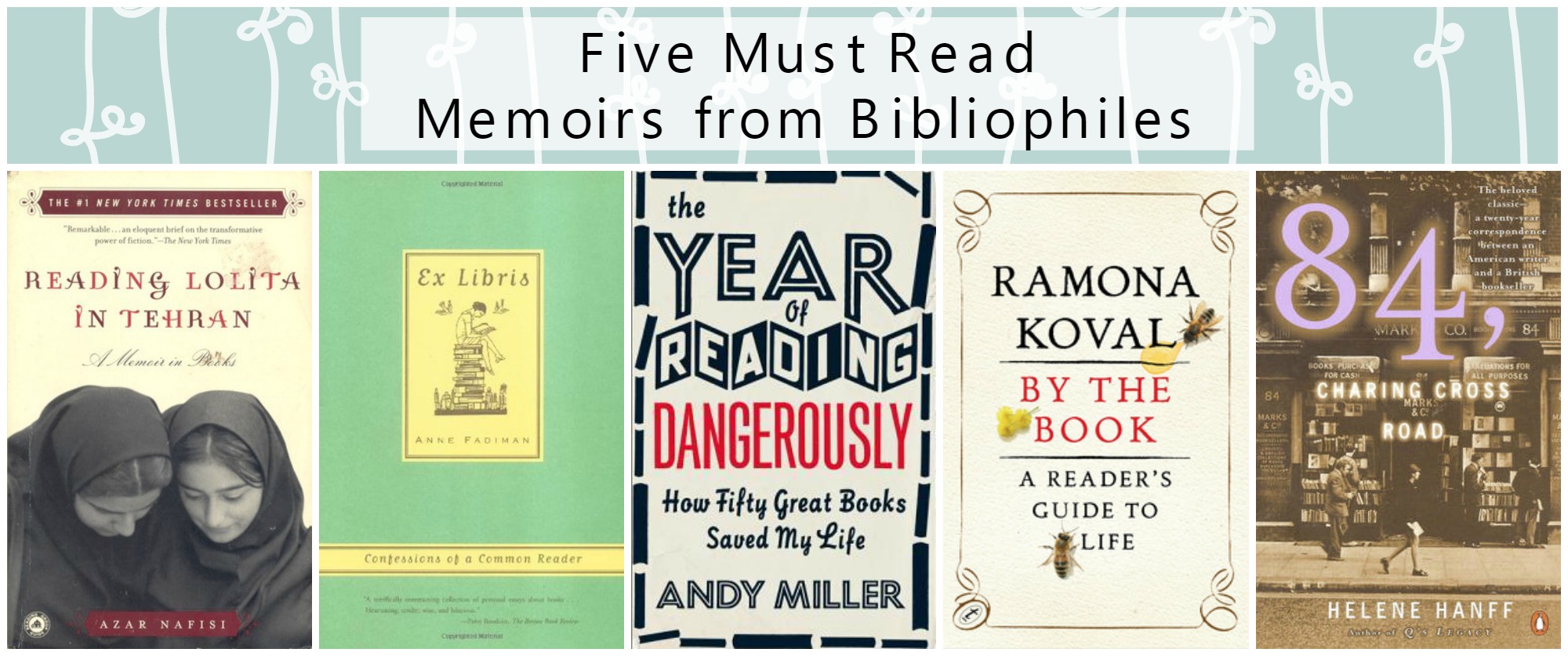
Five Must Read Memoirs from Bibliophiles

Posted October 23, 2014 by Michael @ Knowledge Lost in Top 5 / 26 Comments

As a book lover, I found that I get a lot of pleasure out of reading books about books. There is something about a book that revolves around other books that really works for me. Judging by the popularity of books like The Shadow of the Wind by Carlos Ruiz Zafón and more recently The Collected Works of AJ Fikry by Gabrielle Zevin I know I am not alone. I made a conscious effort to read more non-fiction this year and I quickly discovered a whole new genre that I enjoy; the bibliophile’s memoir. What could be better (also meta) than reading about someone reading, but be warned, it could also be damaging to your TBR list. So I thought I might offer five memoirs that people should read about reading and the reading life.

Memoirs from Bibliophiles

Read More


The Year of Reading Dangerously by Andy Miller

Posted September 28, 2014 by Michael @ Knowledge Lost in Non-Fiction / 0 Comments

The Year of Reading Dangerously by Andy MillerTitle: The Year of Reading Dangerously (Goodreads)
Author: Andy Miller
Published: Harper Collins, 2012
Pages: 252
Genres: Non-Fiction
My Copy: Hardcover

Buy: AmazonBook DepositoryKindle (or visit your local Indie bookstore)

It is no secret that I am a fan of books about books; I especially enjoy a bookish memoir. The idea of reading and learning about someone’s bookish life is fascinating to me. Let’s be honest, I blog about books because I think I have an interesting bookish journey to talk about and I want to capture that for posterity sake. I would love to learn how to write a bookish memoir, so I read anything I can get my hands on. I have even written a post asking for recommendations for books about books and I am always on the look out for more.

I am not sure how I discovered Andy Miller’s memoir The Year of Reading Dangerously: How Fifty Great Books Saved My Life but I do remember being really excited about it. I ordered the book and it sat on my shelf for a little too long. With a holiday to America planned, I packed the book in my suitcase and was determined to read it. Turned out Simon Savidge from Savidge Reads started talking about this book about the same time and now I look like I was just following him in an effort to be as cool as he is.

Andy Miller worked as an editor at the time of writing this book (I assume he still does) and found himself only reading for work. On impulse he picked up a copy of The Master and Margarita by Mikhail Bulgakov and something just clicked for him. He set out to read ten books, which he called The List of Betterment, which consisted of books he has once lied about reading or felt he should read. This list obviously expanded over the course of the year but it was his starting point into rediscovering a passion for reading.

My discovery for reading was not unlike Andy Miller’s except mine involved Frankenstein by Mary Shelley, the 1001 Books Before You Must Read Before You Die list and it wasn’t a lost passion. I loved this book, I was so happy to read about all the awesome books Miller was reading in the course of the year. While this memoir is not healthy for my TBR and judging by Andy Miller’s glowing praises for Absolute Beginners by Colin MacInnes, I really need to get onto this novel first.

My only problem with this memoir is that Miller didn’t spend enough time talking about my favourite novels, like Frankenstein by Mary Shelley and Crime and Punishment by Fyodor Dostoevsky. Iwas happy to see that The List of Betterment not only includes canon but also involves books like The Essential Silver Surfer Vol. 1 by Stan Lee. It is just good to see a memoir that doesn’t just involve highbrow literature. He even considered calling this book How Fifty Great Books (and Two Not-So-Great Ones) Saved My Life referring to Dan Brown.

There is so much to talk about within this memoir, especially when talking about the fifty books mentioned in the book. I’m hoping that I can find some more great bookish memoirs to follow this one. The Year of Reading Dangerously is essentially a book about connecting with great books and the positive effects reading has on a reader. I highly recommend the book and I hope the Andy Miller will write a follow up about his continuing bookish journey.


Mini Reviews: Books about Books

Posted February 6, 2014 by Michael @ Knowledge Lost in Non-Fiction / 0 Comments

I don’t often write mini reviews but I do think they might be handy at times. I like to write a few hundred words on each book for documentation purposes, this is my reading journal after all. Having said that there are two books that I wanted to talk about, I can’t say I’ve ‘read’ them as these are the types of books you keep on your shelf and skim through. Both are a similar theme, my favourite non-fiction theme in fact (books about books) so I thought I would combine them into the one post.

The Novel Cure: An A-Z of Literary Remedies by Ella Berthoud, Susan Elderkin

“Sick? Tired? Lost your job? Take one dose of literature and repeat until better.”

I would like to be known as a Bibliotherapist; it is on my twitter profile so it must be true. I received this book for Christmas from the most amazing person (my wife) and now I finally have the textbook to officially hand out some bibliotherapy. You have a shopping addiction, please go away and read American Psycho by Bret Easton Ellis (that’s what it recommends); I can tell you after that book you’ll not want to be so concerned about what clothing labels are trendy enough to buy and reference in conversation. This is the medical handbook that I can truly get behind and I had a lot of fun looking through it and finding out just how to deal with my parents during Christmas. I loved this book, it was so much fun to flick through. My only problem was the fact that Frankenstein was never prescribed to cure an illness, why can’t it help a god complex, isolation or something like that?

Book Lust: Recommended Reading for Every Mood, Moment, and Reason by Nancy Pearl

“What to read next is every book lover’s greatest dilemma.”

Any real book lover knows that picking the next book is hard, but this is not the book that solves this issue. Book Lust is a collection of different reading lists for different topics, moods and so on. Say you want to know what Russian books to read or want a list of coming of age books. That is all well and good, hats off to Nancy Pearl for able to make a collection of book lists into a book series. The problem I found is book lovers are aware of most of the books mentioned in these lists; they have millions of books they want to read and this book doesn’t really help them at all. Personally I don’t think anyone apart from book lovers will read a book like this so really it feels pointless. There are lists in the book so obscure they start to feel like filler. My major beef with this book was there were no original thoughts, all books seemed like obvious choices and the presentation of each list needed work.  Each topic isn’t a book list and they are not essays of literary criticism either, for me, this just felt sloppy.  I will give credit to Nancy Pearl for being able to turn her love of book lists into a collection of books.


Books by Charlie Hill

Posted February 3, 2014 by Michael @ Knowledge Lost in Humour / 6 Comments

Books by Charlie HillTitle: Books (Goodreads)
Author: Charlie Hill
Published: Tinder Press, 2013
Pages: 242
Genres: Humour
My Copy: Library Book

Buy: AmazonBook Depository (or visit your local Indie bookstore)

When two tourists drop dead, it peaks neurologist Lauren Furrow’s interest and seeks out indie bookseller Richard Anger to help her uncover this mystery. What they find is something unexpected. Have you ever read a book so mediocre that your brain stops working? Best-selling author Gary Sayles’s books are doing just that. Charlie Hill’s Books will take a satirical look at the state of our book industry today.

This novel starts out with Richard Anger, an angry book seller with the best bookshop ever mentioned in a novel. “A bookshop full of long-forgotten noir fiction, modernist classics, chapbooks, transgressive experimentation, translated erotica, minimalism, short stories, satires, samizdat, surrealist poetry and smut.” This is the kind of book shop I would love to spend my time in, it’s the type of store I would love to own; it just sounds amazing. Is it bad that I identified and really enjoyed the character of Richard Anger? I just thought his whole attitude and personality really tied the book together, offsetting the humour with some bitterness.

As this is a satire, I paid closed attention at what Hill was parodying. A particular favourite of mine was the literary critic, who was a blogger. As a book blogger I’ve heard it so many times, people calling blog reviews into question and while running a blog gives you more freedom to explore your own style and voice but that doesn’t mean what we say is less relevant. This tiny dig at literary criticism amused me greatly but then again I enjoyed the many little pokes being made at the book industry.

As an overview of this novel, Books is satire on the sheer amount of books that are extremely similar being published. You know the styles, I won’t point out books but there are heaps of examples of books that feel very much like a carbon copy of a similar book that was popular. There are genres out there that have the same thing being published over and over again because they sell. Books takes a look at this practise and just made fun of it.

People are devouring these books that are so similar that they all die from SNAPS (Spontaneous Neural Atrophy Syndrome).  Books reads similar to a thriller but there are so many laugh out loud moments. I love how on the surface this novel seems like a genre-based novel but if you explore it a little deeper you see so much. You can spend a lot of time trying to dissect Books and seeing everything Charlie Hill is doing here.

If you are a fan of books and want a good laugh at the expense of the book industry, then Books is for you. I had so much fun reading this book and equally as much fun thinking about what is written. I picked up this book because I love books about books and satire and I was not disappointed. This could be on my best of 2014 list but it is way too early to tell. Highly recommend Books, it is fun to read and you’ll enjoy the fun it made at the book industry.

Practical Classics by Kevin Smokler

Posted November 28, 2013 by Michael @ Knowledge Lost in Non-Fiction / 2 Comments

Practical Classics by Kevin SmoklerTitle: Practical Classics (Goodreads)
Author: Kevin Smokler
Published: Prometheus Books, 2013
Pages: 320
Genres: Non-Fiction
My Copy: Paperback

Buy: AmazonBook DepositoryKindle (or visit your local Indie bookstore)

Classics have a lot to say about life, the problem is the ones that are forced upon us during high school are normally hated or forgotten about. Teachers pick books that are designed to teach important lessons as well as develop critically reading skills. Kevin Smokler has decided to reread those classics and try to tell the reader why we should reread them.

Practical Classics: 50 Reasons to Reread 50 Books You Haven’t Touched Since High School is a collection of essays that often remind the reader what these classics have to offer but told in a very accessible and humours ways. I’m not sure where I first heard about this book, I want to say Books on the Nightstand but I can’t be too sure. I’ve always had an interest in classics and what is assigned in English classes around the place.

The only book I remember studying in High School was Romeo and Juliet and I have to admit I never read it, we ended up watching the movie instead; the Baz Luhrmann version was just released. So I never had a chance to learn about the classics and reading critically. These are new skills I’m still developing. When I suddenly gained an interest in reading and education and have often spent time thinking about what books I would want to teach (see this old post where I pick some books to teach).

Out of the 50 books in this novel; I think I only read a small portion of them so Smokler has really destroyed my TBR list with so many more novels. Not that it really is his fault; I will probably read most of them anyway. I’m interested in knowing why some of these books were chosen, I couldn’t work that out at times and really want to learn more about how they pick the books. Kevin Smokler stated that he reread the books he was assigned in high school and then consulted friends, teachers, etc. to get a nice round 50.

This doesn’t help answer the question I had but it was probably the most practical way to pick books. I’m just fascinated in the idea of studying literature and the process behind deciding what to teach. I’m taking the time to work through an English Lit course and I hope it doesn’t squash my passion for the topic to continue further in. I would love to know if there were books that could help satisfy my curiosity; I will continue to search for them.

I wasn’t much of a non-fiction reader for a long time (in fact I’ve only been a reader since 2009), but books about books are my newfound interest. Kevin Stoker’s book really was a fascinating read and I want people to recommend me some more non-fiction books that will help. Stoker mentioned two in his book that I am to pick up and I hope some of the readers of this will give me some more. If you are interested in learning why classics are important, or you are just interested in books about books, this is a nice addition.


The Know-It-All by A.J. Jacobs

Posted November 27, 2013 by Michael @ Knowledge Lost in Non-Fiction / 2 Comments

The Know-It-All by A.J. JacobsTitle: The Know-It-All (Goodreads)
Author: A. J. Jacobs
Narrator: Geoffrey Cantor
Published: Simon & Schuster, 2004
Pages: 389
Genres: Non-Fiction
My Copy: Audiobook

Buy: AmazonBook Depository (or visit your local Indie bookstore)

A.J. Jacobs has noticed an ever widening gap left from graduating from an Ivy League education. His solution, to read the entire Encyclopaedia Britannica, from A to Z. Follow A.J. as he works his way through all 32 volumes, that’s 33 thousand pages and 44 million words. His wife thinks it’s a waste of time, his friends believe he has lost his mind, but follow this unconventional task in this memoir.

I have read an A.J. Jacobs memoir before; I read “Year of Living Biblically: One Man’s Humble Quest to Follow the Bible as Literally as Possible” and found it really entertaining. This task sounded really interesting, I’m interested in the things people do to increase their pretentious levels. I’m not sure I will ever take up a task like reading the Encyclopaedia, especially with easy to access to Wikipedia.

Knowledge has interested me, and the way to obtain more knowledge is fascinating. The full title of this book is The Know-It-All: One Man’s Humble Quest to Become the Smartest Person in the World; A.J. Jacobs documents the journey in this hilarious memoir. Not only do you get little snippets of facts that he found interesting but you get a look at his life. I really enjoyed the social impact reading the Encyclopaedia had; you watch his pretentious levels rise but you also watch his social skills fall. Obviously people don’t like being corrected, or want to hear weird related facts but I can’t help thinking that I would do the same thing as well.

A.J. Jacobs is quite a character and reading about the ways he tries to put his newfound knowledge into practise was really interesting. From going to a chess club, a crossword tournament and Who Wants To Be a Millionaire, Jacobs tries all sorts of ways to practise often with hilarious effects. Why take the test to join Mensa if you are already in Mensa; why not? Although A.J. Jacobs was entertaining, I really found his dad so much more interesting; he was fascinating.

I love books about books and humorous memoirs about learning, so this was right up my alley. A.J. Jacobs got the balance between trivia and real life. Following Jacobs and his wife as they try to get pregnant and I felt relief when they finally conceived. I’m curious if there are more entertaining memoirs like this worth reading, maybe a year reading classics or just novels, something similar. I think I need to read more books like this.


The Thirteenth Tale by Diane Setterfield

Posted April 28, 2013 by Michael @ Knowledge Lost in Crime / 0 Comments

The Thirteenth Tale by Diane SetterfieldTitle: The Thirteenth Tale (Goodreads)
Author: Diane Setterfield
Published: Atria Books, 2006
Pages: 406
Genres: Crime, Gothic
My Copy: Personal Copy

Buy: AmazonBook DepositoryKindle (or visit your local Indie bookstore)

Amateur biographer Margaret Lea finds a mysterious handwritten letter waiting for her one night. The letter is a request from what could be considered Britain’s most prolific novelist Vida Winter. Winter’s wishes to recount her life’s story but has been notorious for her abilities to evade journalists’ questions in the past, making up a different story for every journalist. This project will force both women to confront the mysterious paths that have been haunting them and if we are lucky we might find out the mystery of The Thirteenth Tale.

The Thirteenth Tale is a tapestry of two threads weaved together, Margaret’s story both past and present as well as Winter’s past. A gothic mystery that deals with death, identity, isolation and for me it felt like it was a novel about how evil twins are. I’m not sure if it was the current mood I was in when reading this book but I felt like this book was trying too hard to be something it couldn’t live up to. Two alternating narratives can be a difficult literary technique to get right but I never really felt it worked. Sure, many people loved this book but I wonder if they were too caught up in the narrative to notice the problems.

It is true, the writing in the novel is spectacular and I did find myself being swept away in this gothic narrative but then when I reflect back, I notice all the flaws. The novel sets out to piece together the puzzle of both Margret and Ms Winter but some of the pieces were lost and we are left with all these holes. I’m not satisfied with the amount of questions that were left unanswered, I was just left feeling disappointed and have no desire to try and reread this in the hopes to find what I might have missed.

For a gothic novel, I felt like it moved into the realm of clichés; from the mysterious manor to the mysteries of their pasts, everything felt rather predictable in that aspect. I felt like this book was borrowing rather heavily on some gothic classics, there were elements of Rebecca here and even the Brontës. Now I haven’t read Jane Eyre but with the amount of references made to this book in The Thirteenth Tale, I suspect that this was a major source for Diane Setterfield gothic attempts. I never felt like there was anything new or interesting with the plot of this book.

I wish I knew what make people give this book such a high rating, sure the writing was beautiful but I felt like Diane Setterfield tried to do too much in her first novel and it didn’t quite work. Maybe if you are new to the Gothic genre this might be a decent contemporary novel to give you a taste of what to expect but I feel like this book left me high and dry. I would recommend Sarah Waters over Diane Setterfield but ultimately I would rather some of the gothic classics.


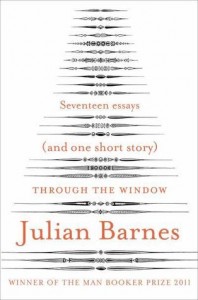
Through the Window by Julian Barnes

Posted March 9, 2013 by Michael @ Knowledge Lost in Non-Fiction / 0 Comments

Through the Window by Julian BarnesTitle: Through the Window (Goodreads)
Author: Julian Barnes
Published: Vintage, 2012
Pages: 272
Genres: Non-Fiction
My Copy: Personal Copy

Buy: AmazonBook Depository (or visit your local Indie bookstore)

Julian Barnes won the Man Booker Prize in 2011 for his book The Sense of an Ending which has sparked a huge increase in this man’s popularity. To follow up (cash in) on the buzz the release of Through the Window followed soon after, which holds Seventeen Essays (and a Short Story) on the books and authors that have meant the most to him over his career.

I remember reading Julian Barnes’ essay A Life with Books, which really was just a look at his reading history and I absolutely loved it. So I was eager to read this collection to learn more about this wonderful author. What I found was this collection was very dry and this made it difficult to read. Barnes is a very intelligent man and he flexed his intellectual muscles to the point where it back very difficult to read for a pseudo intellectual like me.

While I found it interesting to read this author’s thoughts on Penelope Fitzgerald, Hemingway, Kipling, Madame Bovary, Ford Madox Ford and George Orwell I tend to think Barnes wasn’t connecting to the reader like he did with his novels or the essay A Life with Books. It felt more like reading an academic essay more than just someone’s passion for these authors and books.

This is a difficult collection to get through, but people interested in learning more about Julian Barnes or these topics might find something in this book for them. I read this book as soon as I finished Ramona Koval’s By the Book, A Reader’s Guide to Life so it was difficult to go from a book with so much passion for reading to something so dry.


One for the Books by Joe Queenan

Posted February 13, 2013 by Michael @ Knowledge Lost in Non-Fiction / 0 Comments

One for the Books by Joe QueenanTitle: One for the Books (Goodreads)
Author: Joe Queenan
Published: Viking, 2012
Pages: 256
Genres: Non-Fiction
My Copy: ARC from Netgalley

Buy: AmazonBook DepositoryKindle (or visit your local Indie bookstore)

Joe Queenan is a humourist, critic and author from Philadelphia who become an avid reader as a means of escape from a young age. One for the Books is a memoir where Queenan tries to come to terms with his eccentric reading style.  Joe Queenan is not your typical reader, and One for the Books is not your typical book about books.

 Joe Queenan is a very odd and particular reader, he knows what he likes and this book is not really humorous but more self-deprecating. I thought I was a bitter and jaded person but Queenan puts me to shame, throughout the book it feels like he will never be satisfied and will always be a cranky reader. Even some of his opinions towards books and book collecting seem outlandish and weird for a reader like me but it works for him and you can’t really argue with that.

I was looking forward to reading about someone who is a grump with a passion for book and while this was explored in this book, I think he took it too far sometimes. I know it is his personal opinions but the way he talked about hating people giving him books or even recommending books to him was just a little too far; he is old and set in his ways but I tend to think a little kindness towards others, especially when giving you a gift isn’t too much to ask for.

Joe Queenan is like that weird relative that everyone has; not sure what he is thinking, always set in his ways and you don’t want to get him drunk. This book is really interesting and I enjoyed his approach to this book. While his opinions differ from my own in some aspects, he really does love reading and this doesn’t always come through in the book but you know it is there.

One for the Books is really different to any other book related memoir I’ve read and that is what makes it so interesting. If you don’t want to read about a grumpy old man’s opinions towards reading then you don’t want to read this book. If you want something different then give it ago. I’m happy to have read this book; it makes me feel almost normal when it comes to my opinions on reading and books.


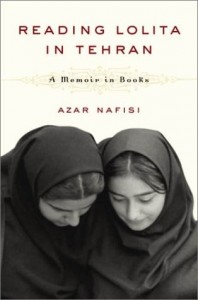
Reading Lolita in Tehran by Azar Nafisi

Posted February 10, 2013 by Michael @ Knowledge Lost in Non-Fiction / 0 Comments

Reading Lolita in Tehran by Azar NafisiTitle: Reading Lolita in Tehran (Goodreads)
Author: Azar Nafisi
Published: Hodder, 2003
Pages: 347
Genres: Non-Fiction
My Copy: Library Book

Buy: AmazonBook Depository (or visit your local Indie bookstore)

Reading Lolita in Tehran is a memoir of books read by Literature professor Azar Nafisi’s literature class during the revolution (1978-1981) up until her departure in 1997. Divided into four sections “Lolita”, “Gatsby”, “James”, and “Austen”, this memoir explores the lives of the students in a private literature class and the books that brought them all together. This is an inspired blend of memoir and literary criticism, and a moving look at the power of art and its ability to change and improve people’s lives.

I really enjoyed this book; the blend of literary criticism and memoir was really what hooked me. I especially loved the first part that focused on Lolita and the themes of oppression, authority figures trying to assert their dominance through events and a runaway convict. It was just an interesting insight from these Iranian students. It really made me want to read Lolita again and try to see what more I can get out of the book; luckily for me I might get that chance soon with the Literary Exploration book club.

I didn’t feel as strong of a connection with the other parts of this book, but I think I was just blown away by the insights into Lolita that the others didn’t have the same impact. The Great Gatsby looked at dreams and adultery all from the Iranian prospective. While Gatsby is about the American dream it was interesting to see it from a totalitarian mindset. James looks at some works of Henry James during the time of the Iran-Iraq war and the government who wants to control the liberal-minded. Lastly Austin looks at Jane Austin novels as well as the idea of abusive husbands, blindness and empathy.

This book comes together really well; you get to know these Iranian students and as well as explore some interesting ideas about the books from a perspective completely different to your own. While I would have preferred more literary criticism, I really got a lot of joy from reading this. There is a strong feminist theme throughout this book (since most of the students were women) that I suspect was the main draw card for many of the female readers of this book, and rightly so, this was an interesting look at these women. But for me, it was all about the books