Tag: Fyodor Dostoevsky

Crime and Punishment by Fyodor Dostoevsky (trans. by Oliver Ready)

Posted November 10, 2020 by Michael @ Knowledge Lost in Classic / 5 Comments

Crime and Punishment by Fyodor Dostoevsky (trans. by Oliver Ready)Title: Crime and Punishment (Goodreads)
Author: Fyodor Dostoyevsky
Translator: Oliver Ready
Published: Penguin Classics, 1866
Pages: 702
Genres: Classic
My Copy: Paperback

Buy: AmazonBook DepositoryKindleWordery (or visit your local Indie bookstore)

What I love about rereading a translated classic is that most of the time there are so many translations to try out. The translator makes a big difference and it is amazing how different it can make in interpreting the text. I love Russian literature and have openly discussed my issues with most of the commonly used translators, being their translation method, the anglicising of names or their censorship of the text. I will leave you to work out my meaning here, I just reread Crime and Punishment, but being an outsider to a BookTube readathon. My issue was the fact they picked a translation that I was not interested in reading, so I buddy-read the Oliver Ready translation with Derek from Read the World! I thought it was a way of being ‘sort of’ apart of the community reading event but still have a more one-on-one conversation with a better translation.

It has been eight years since I last read Crime and Punishment, and looking back at my previous review, it does not look like I said anything interesting about this great novel. I mention the class struggle and internal conflict of Raskolnikov, but I did not really go into any detail. The internal conflict is obvious, you can see a psychological break down of Raskolnikov after the murder, but I struggle to comprehend everything Dostoevsky is trying to say here. From the reread, it feels like there is a philosophical question being thrown at the reader, but Dostoevsky never seems to offer any insights. I wonder if Dostoevsky had any true answers here, because on this reread, I feel like the struggle with understanding the psychological and philosophical ramifications of the crime is the purpose of the novel and no true answers are given, or if they are I might find out on a later reread.

Class struggle was an interesting topic to explore with Crime and Punishment. Raskolnikov is struggling with the idea of class internally. He has it in his mind that he is a wealthy intellectual, but in reality, he is just a struggling young man living off the money his mother gives him. Upon rereading, I was fascinated to just how disillusioned he is about his own class status. He is just a young man, that really has no idea of his own value or how to budget his money. I found it interesting to look back at my reading of this novel, I was closer to the same age as Raskolnikov and probably had similar naivety. However, I will not go into great detail about this, as you will be able to find my discussion of the book with Derek here.

I was very impressed with Oliver Ready’s translation of Crime and Punishment; I think his translating method really appealed to me. There was some modernisation of the writing but done in a way that still felt dated. Like he used phrases that felt old but still more contemporary, and I think he managed to nail that balance of making the book accessible, while still feeling like an older piece of literature. I really hope Ready continues to translate some of the Russian classics, not just Dostoevsky.

I am probably going to regret not putting extra time into this review, I have a lot to say but I know that I want to save that for the podcast. This time reading it, I think I cared more about the secondary characters rather than Raskolnikov, particularly his sister Dunya, but I also liked Sofya. She was a fascination for me, and I wish Dostoevsky spent more time with her. I will have to read this novel again and again, not sure which translation I will go with next, possible the Michael R. Katz translation. This is the type of book that needs to be reread every few years, just to see what you get out of it later.


Organising Your Personal Library

Posted February 14, 2017 by Michael @ Knowledge Lost in Literature / 4 Comments

Recently I have been thinking about building the perfect library; this was due to a collection of essays I was reading called The Library at Night by Alberto Manguel. In this book, Manguel explores the process of building his personal library from an old barn but he also looks at the history of libraries around the world. Each essay is titled ‘The Library as…’ space, power, shadow, and so on. These essays explore different topics, giving you a wealth of information. Take for example ‘The Library as Shadow’, which explores a darker side of library history, from book burning to censorship.
What I am particularly interested in was from the essay ‘The Library as Order’, which focuses on how we would arrange our personal library. It does not matter where or how you house your personal library; every person has their own opinions on that topic. I wanted to explore the concept of how we arrange the books. There are so many ways to arrange books, currently my books are everywhere and there is a certain appeal to this. I have bookshelves around the house and any new books end up wherever it fits. If I need to find a particular book, I can spend hours searching for it. This is not always ideal but there is something about this literary treasure hunt that I enjoy. I often discover books on my shelves that I have forgotten about or I want to dip back into. Looking at a shelf that offers no rhyme or reason can be mesmerising, and who does not enjoy just staring at a bookshelf? While this method works for me now, it is not practical if I have a library, I need to arrange my books differently. In The Library at Night, Alberto Manguel suggests some different ways to organise books;

  • alphabetically
  • by continent or country
  • by colour
  • by date of purchase
  • by date of publication
  • by format
  • by genre
  • by literary period
  • by language
  • according to our reading priorities
  • according to their binding
  • by series

Amidst all of these choices, I have to admit ‘according to our reading priorities’ does sound appealing but I feel like this would continually change. The obvious choice would be to organise alphabetically (by authors last name of course) but there are some draw backs with this. Not only will fiction and non-fiction sit side by side but the idea of Charles Dickens sitting next to Philip K Dick or Jane Austen beside Paul Auster seems odd. Although for those authors that dabble in both fiction and non-fiction, like Aleksandr Solzhenitsyn this system may be preferable.

Sorting by genre seems like a popular choice, and for all intents and purposes the most logical. As someone that reads on a whim, the ability to just head to somewhere like the detective fiction section and pick a gritty hard-boiled novel sounds wonderful. My only problem is the fact that it is often difficult to fit novels neatly into a single genre. Also, with an author like Jonathan Lethem you would have to separate his works, especially with his early books. I like the idea of sorting by genre but I found too many flaws in this system.

Picking an organisation strategy appeared to be much harder than it looked. Organising by colour is aesthetically pleasing but I never considered this as an option; it is just too random. I am playing around with a book-sorting app on my phone, which allowed me to create different shelves for organising. This allowed me to scan my books into the program and play with different ways to organise.

I eventually decided that there was no perfect way to organise a library, you can go into your public library and see evidence of this everywhere. I had to come up with a solution that worked for me. I do not have a library yet, but when I do, I am now sure I know how it will be organised. I have settled on sorting by continents for my fiction, this is because I have a keen interest in books in translation. I have discovered that splitting my fiction into continents will give me the opportunity to see where my strengths and weaknesses lie. If I organise my fiction by continent, I will notice which continents I need to focus on, like South America and Africa. I love reading around the world, I find it both an educational and rewarding experience.

If your reading journey and your library is a personal reflection, then the books that do not appear on your shelves say just as much about you as the books you do have on your shelf. When I became a reader, I quickly started building my book collection to a point where I have shelves and shelves of books everywhere. The problem I face now is the fact that I have only read about half of them. Publishers sent me books because of my blog but I also purchased books that sounded interesting. Now I have evolved as a reader and discovered where my literary tastes lie, there are books that remain on my shelf that are not a reflection of me as a reader. These books do not tell you anything about me because I have no desire to read them. While I know I should cull all books I have no interest in, it is hard to let go of a book that you have never read. What if it is fantastic and I just do not know that yet? There is the problem, but I do feel like I am getting to a point where I can be confident about a book I would not like. So maybe a purge is coming.

Now the problem with sorting the fiction by continents is that there are some countries I have a greater interest in – the literature of France and Russia for example. Do I split them into their own section? I am interested in all post-Soviet literature, so that brings up another question. How do I shelve these books? Russia seems too exclusive; calling them post-Soviet countries just does not sit right with me; Baltic and Slavic countries do not cover all the countries. This is one problem I need to solve, but for now I think this is the best choice for me.

Another issue I found with sorting by continent is that the United Kingdom and the Republic of Ireland fall under Europe but they do not feel the same. There is so much literature from the United Kingdom anyway, I feel like it would require its own shelves. I wonder about North America but honestly, does it matter if Canada and the United States sit together? For me it does not, although this may displease my Canadian friends. There are so many things to consider and this is only a small fraction of the problems I face with sorting my books.

When it comes to non-fiction, it was not difficult; this was always going to be sorted by subject. Philosophy, history, Russian history, books about books, art, and so on. However, that posed some interesting questions as well. Do you include philosophical novels like The Stranger by Albert Camus or Either/Or by Søren Kierkegaard in the philosophical section? My feeling is yes but where do you draw the line? There are novels that are philosophical in nature that I would not include under philosophy, like The Brothers Karamazov by Fyodor Dostoevsky.

I will continue to ponder just how I would organise my dream library, but I wanted to give you plenty to consider. Instead of reviewing The Library at Night by Alberto Manguel, which everyone should read, I preferred to explore what I got out of this essay collection. I have not even touched on any of the other topics in this book; I will leave that for you to discover. Also, I have not even talked about other aspects of setting up a library, like using the Dewey decimal system, or a card catalogue system. Thinking about setting up a dream library is an exciting activity for every bibliophile and we all have different ideas. I loved reading about someone’s journey and it gave me plenty to contemplate. For now, I will continue cataloguing my books using the app BookBuddy and working out how to organise everything. This experiment should also help me discover the gaps in my own library so I can pick better books to purchase.


Understanding my Fascination on Russian Literature

Posted January 31, 2017 by Michael @ Knowledge Lost in Literature / 0 Comments

I am not entirely sure where my interest in Russian literature came from. I think it started with a fascination with the Cold War, which lead to a desire to understand the complex nature of the Soviet Union, both its politics and the people. The first Russian novel I read was Anna Karenina by Leo Tolstoy, however my obsession with Russian literature came soon after. When I first became a reader I was using the 1001 Books You Must Read before You Die list as a guide to work out what to read. While I would love to complete the full list, it has served its purpose, which was to expose me to good literature in all genres, allowing me to find where my literary tastes lie.

My Russian literature obsession grew from my interest in satire, beginning with Super Sad True Love Story by Gary Shteyngart, which is a dystopian tale of globalisation. However under all that, it is an autobiographical novel of a Russian immigrant. I loved discovering the story underneath the plot, and I quickly discovered that Russian literature was a treasure trove for that. Russia has a very complex history; this is often reflected in its literature and makes it a big part of Russian culture.

Just a brief history on Russian literature, which has its roots in Chivalric romance, epics and chronicles on the Russian life. It is here at its roots where we establish the importance of irony and satire in the literature. It was Peter the Great’s efforts to modernise Russia that gave way to Russian literature in the 18th century. While I have not read any of these authors from this time, authors like Antiokh Kantemir and Vasily Trediakovsky were notable contributors to its literature. The 19th century is the golden age for Russian literature with Nikolai Gogol, Fyodor Dostoevsky, Anton Chekov, Ivan Turgenev and Leo Tolstoy creating some of Russia’s greatest pieces of literature. It was also where the literary movement Russian Romanticism was established, which explores metaphysical discontent with society and self, from notable authors like Alexander Pushkin and Mikhail Lermontov. The silver age in the beginning of the 20th century was focused around poetry and the avant-garde. Poets often associated with the silver age include Marina Tsvetaeva and Boris Pasternak.

This was then followed by the Soviet era, which was the rise of Socialist realism, Russian formalism and futurism. While the Soviet era was an extremely complex period for literature, and covers so many different literary styles, it is easier to put all of the work from the Soviet Era together. If you want to break out the soviet era, you could do that by Samizdat, Tamizdat and Gosizdat. Samizdat ‘self-published’ is the distribution of literature illegally published (often by carbon copies of typescripts) and distributed among other Russians. This is similar to a method used in the Tsarist era, and allowed uncensored literature by authors like Mikhail Bulgakov and Aleksandr Solzhenitsyn to reach an audience. Tamizdat ‘over there’ is when a soviet writer has their works published in the West because they could not publish in Russia. Most Soviet authors had to rely on this method to have their works published, most notable example of Tamizdat is Boris Pasternak’s Doctor Zhivago. Gosizdat ‘State publisher’ was the term used for officially sanctioned publications. In all honesty, I cannot think of a single modern classic from the Soviet Era that was published originally by the state. Although the Russian literature magazines where many works were first published would have been state run.

The post-Soviet era covers all literature published after the collapse of the USSR. Although the censorship of the soviet era was officially lifted, writers still approached sensitive subjects in a similar fashion. In part by the political/economic chaos of the post-Soviet era and partly to follow the traditions of great Russian literature. Although authors like Boris Akunin enjoy huge success in popular fiction, writing a historical detective series. This does not include the authors that fled Russia or the Soviet Union and became authors after gaining citizenship elsewhere, such as Ayn Rand, Isaac Asimov, and Vladimir Nabokov.

While there is a rich history of Russian literature, often there are common themes that appear throughout the ages. Most notably is the struggle for stability; Russian history has been a whirlwind of war and tyranny. This struggle often translates as redemption through suffering. This could be a struggle with religion, philosophy, society or even one’s self. That struggle can be seen in novels ranging from the likes of The Brothers Karamazov to Vladimir Sorokin’s 2006 science fiction novel Day of the Oprichnik. Although my wife might agree with Russian literary critic Viktor Shklovsky, who said “Russian literature is devoted to the description of unsuccessful love affairs.”

Authors within Russia often fall into the social class (I don’t think I need to explain the role class plays in Russia) known as the intelligentsia. This class of intellects are tasked to guide or critique society’s culture and politics. This is why Russian literature plays such a huge role in Russian culture, and also explains why literature was so controlled in the Soviet era. Union of Soviet Writers was formed by Stalin to control the field of literature in the USSR. Membership was not mandatory but if an author was not a member, they would have very limited opportunities for publication. Despite their best efforts, thankfully we still have a rich selection of Soviet literature critiquing the culture and politics of the time.

In both Tsarist Russia and the Soviet Union, authors had to be careful of what they said, many were exiled to a labour camp for what they wrote. So literary devices were often deployed to say what needed to be said in a more creative way. Literary devices often found in Russian literature include metaphors, allegories, irony, satire and even propaganda to express the author’s views. Which is why many Russian classics are very philosophical or political in nature. It is the dangerous writing that seems to have stood the test of time.

There is so much to offer in Russian literature, I know I have so much I need to learn and read but I am excited about the prospects. I find it sad when I see “Russian novel” used as shorthand for lengthy or turgid; I never understood that. While War and Peace is often considered a challenging book due to its length, there is a reason why it is considered a masterpiece. I would love to gain some recommendations on Russian literature I should check out. My personal favourites include Crime and Punishment by Fyodor Dostoevsky, The Master and Margarita by Mikhail Bulgakov and for something really weird, Day of the Oprichnik by Vladimir Sorokin.


Existence Precedes Essence: Understanding Existentialism

Posted December 5, 2016 by Michael @ Knowledge Lost in Philosophy / 4 Comments

When thinking about the term existentialism, a quote by Jean-Paul Sartre may come to mind; “existence precedes essence”. 1 This was a relatively new way of thinking within philosophy. The idea criticises the concept that everyone has an essence and our lives tend towards the actualisation of our essence, which dates back to Aristotle. Over the years, this idea of essence evolved into predestines, as philosophers leaned more towards religious ideas. For Sartre, this was an absurd way of thinking and this might have been connected to his atheist beliefs. However, this is not a universal idea in existentialism, many disagreed with Sartre, but it did start a new philosophical movement.

existentialists
Søren Kierkegaard, Friedrich Nietzsche and Jean-Paul Sartre

While Søren Kierkegaard, Friedrich Nietzsche and Fyodor Dostoevsky are all considered existentialists, the term was actually coined by Jean-Paul Sartre. It is widely believed that Kierkegaard may have been the first existentialist philosopher but he used the word ‘individualism’ to refer to his philosophical ideas. When looking as his writing, it is easy to see why it is closely associated to existentialism. In his book The Sickness unto Death, Kierkegaard wrote “The greatest hazard of all, losing one’s self, can occur very quietly in the world, as if it were nothing at all. No other loss can occur so quietly; any other loss – an arm, a leg, five dollars, a wife, etc. – is sure to be noticed.” 2

This leads us to ask, ‘What exactly is existentialism?’ which is not an easy question to answer. If you consider historical events that were happening at the start of existentialism (early twentieth century), you notice the world was a confused and complex place. When Sartre started his works, the world had already experienced one World War and was about to head into a second one. The political landscape was very unstable; Marxism, Communism and Fascism were all growing movements. Western ways of thinking were not providing the answers people craved about the meaning of life or at least a way to address the human condition.

Existentialism became a new philosophical way of thinking; a new way of facing a confused world that they could not accept. It was not a doctrine or a philosophical system rather existentialism was a movement. It was an inwards approach to thinking, when Jean-Paul Sartre said “existence precedes essence”, he was stating we exist first, and it is up to us to find what defines us then live our lives accordingly.  Which linked back to Søren Kierkegaard who said, “The most common form of despair is not being who you are.” 3 This was the foundation of existentialism; it did not matter if other philosophers believed existence came before essence, what mattered was living life authentically. To do so, there were three main sides to this form of thinking to consider: individualism, freedom and passion.

Individualism is the ethical idea that we are all responsible for our own actions. Rather than living by the morals set out by our society, religion and our elders, we must seek our own individual self-relevance and liberties. It was Friedrich Nietzsche who once said “The individual has always had to struggle to keep from being overwhelmed by the tribe. If you try it, you will be lonely often, and sometimes frightened. But no price is too high to pay for the privilege of owning yourself.” 4 Moral individualism should not be confused with selfishness or a desire for anarchy; rather it simply suggests that humanity must be defined by the individual. No two people are alike; thus, having set rules and ideas for everyone imposes restrictions on living authentically.

Freedom was a response to the current social/political situations; without freedom there was no possible way to allow people to be individuals and is considered the primary virtue to authenticity. This is more than the freedom to do whatever one desires. Existentialist often use the term facticity as a term to mean the limitation and a condition to freedom. For example, our birthplace, past choices and so on, may either limit or aid our quest to live our life authentically. If we are born blind, that may take away our freedom to read this text but does not mean we can never read.

Passion is self-evident, the need to find a purpose to life. A primary concern to “existence precedes essence” was simple to find a reason to live – your passion. For me, my passion would include literature, philosophy and writing articles like this. I am motivated in working towards a way to make my passions my career. That is not to say that there are no other reasons to live; such as loved ones or the simple pleasures in life.

meaning-of-lifeOnce you establish these four philosophies as the backbone of existentialism, you may have started on the journey down the rabbit hole into the existentialist way of thinking. Having definitive answers to life maybe be attractive but we realise life is not that simple. When adopting existentialism as your personal philosophy, be warned that many of the great existentialists did abandon their own philosophies. To quote Søren Kierkegaard once more; “Life can only be understood backwards; but it must be lived forwards.” 5 Existentialism has its appeals; it is often adopted by young adults as permission to be an individual and focus on themselves. However as the quote above stated, it is only in reflection that we understand our lives and where we went wrong and life is not that easy, you cannot simply rely on other people’s ways of thinking.
Essentially, existentialism suggests that we should all live our lives authentically and free. Our goal in life is to find our essence – our reason to live. Albert Camus has been quoted as saying “should I kill myself, or have a cup of coffee?” 6 which suggests that something as simple as a cup of coffee is enough to continue living. There are two major branches of existentialism that I have not mentioned, nihilism (the belief that life is meaningless) and absurdism (life has no purpose and the universe is chaotic) but I will not be going into details about the differences at the moment.

My goal of this was to give you a better understanding into existentialism but as you might have discovered, it can be complex. I hope you now have a basic understanding, allowing you to go down the rabbit hole of thinking about philosophy and what you believe. For more information about existentialism and the people behind this philosophical movement, I would recommend the book At the Existentialist Café by Sarah Bakewell. 7 This covers the history of existentialism as well as a little about people involved, like Jean-Paul Sartre, Simone de Beauvoir, Albert Camus, Martin Heidegger, Edmund Husserl, Karl Jaspers, Maurice Merleau-Ponty and so many others. I felt very inspired after reading At the Existentialist Café, that I have gone down a rabbit hole exploring philosophy and hope to write more about it in the near future.


The Brothers Karamazov by Fyodor Dostoevsky

Posted May 23, 2016 by Michael @ Knowledge Lost in Classic / 4 Comments

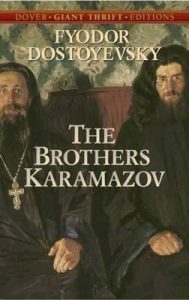
The Brothers Karamazov by Fyodor DostoevskyTitle: The Brothers Karamazov (Goodreads)
Author: Fyodor Dostoevsky
Translator: Constance Garnett
Published: Dover Thrift, 1880
Pages: 736
Genres: Classic
My Copy: Paperback

Buy: AmazonBook DepositoryKindle (or visit your local Indie bookstore)

Written in the final years of Fyodor Dostoevsky’s life (he died four months after it was published), The Brothers Karamazov is probably his most philosophical novel. It tells the story of four very different brothers who all got involved in the murder of their own father. While similarities can be made between this novel and Crime and Punishment as they share similar themes, they are still vastly different. Rather this book deals more with life, death and the meaning of life.

“The mystery of human existence lies not in just staying alive, but in finding something to live for.”

At the start of the novel we meet Fyodor Pavlovich Karamazov, who fathers three sons during his two marriages and is rumoured for have fathered a fourth illegitimate son. He often makes the list when people talk about ‘the most disgusting characters’ in literature, or similar topics. This forms the basis of the plot and the brothers grow up with very different lives, separated from their father and each other. As a result these four brothers are very different; Dmitri is a sensualist, Ivan a rationalist (an atheist), Alexei is a novice in the Russian Orthodox Church and Pavel, well let’s just say, silent and sly.

The very different personalities of these brothers is what allows Fyodor Dostoevsky to explore all his philosophical ideas. One of the major themes in this novel is that of religion and while questioning faith is a common theme in modem literature at the time, in Russia it was considered big deal. In 987 Vladimir the Great sent out envoys to study the various religions of neighbouring nations in order to pick the right religion for Russia. Seems a little unorthodox (no pun intended) but eventually the nation adopted Orthodoxy. What became Russian Orthodoxy was embraced by all of Russia and had its own vision of creating a country of love and humility.

This is important because The Brothers Karamazov is not about questioning the existence of God but rather the role of the church when it comes to morality. It should be noted this was at a time where the Russian Socialism movement was gaining some traction and their goal was to create heaven on earth. With characters of vastly different ideals, Dostoevsky was able to explore the ideas he had floating in his head from different angles. Was Christianity simply a mask for the authority? In one of the most famous chapters Ivan talks about “The Great Inquisitor” which is a powerful argument of scepticism and against religious faith.

Other major themes found in the novel are that of fate and free will. This is closely connected with the ideas around religion. For Alexei, he has the freedom to commit to the order of the church, something that seems like a paradox to someone like Dmitri. Fyodor Dostoevsky explores the psychological makeup of control by society and authority. This plays into the Socialist debate at the time; do we have free will, when we are being controlled by the church or the Tsar. Or maybe we have the freewill but blindly follow the laws put in place by the church and the authority without question.

For Ivan, he lives by the philosophy that “everything is permitted”, which leads to another major theme, that of justice and morality. The murder of Fyodor Karamazov is at the centre of this theme, as well as the trail the follows. The Brothers Karamazov essentially wants the reader to question life, question their beliefs, and the roles of earthly or divine justice. The justice system found in the novel appears to be weird and problematic. The innocent are found guilty, the jury are manipulated by lawyers and the book even questions harsh punishments; like exile to Siberia. It is here we wonder about the different between morality and the laws imposed upon us.

There is so much more you can get out of The Brothers Karamazov (for example family) but for me, this reading through was about questioning life in the lead up to death. I really liked how Fyodor Dostoevsky used the different brothers to explore the different angles and question his own beliefs. Dostoevsky often wrote about society, religion, politics and ethics, however in his final years while writing The Brothers Karamazov, we get the sense that he was thinking more about his own life and his legacy. In fact his tombstone is inscribed with the verse from John 12:24; “Verily, verily, I say unto you, Except a corn of wheat fall into the ground and die, it abideth alone: but if it dies, it bringeth forth much fruit.” Most people know that I’m a fan of Fyodor Dostoevsky and I am so glad to have read The Brothers Karamazov however next time I plan to read it in the David McDuff translation, rather than this one translated by Constance Garnett.


Smoke by Ivan Turgenev

Posted August 27, 2015 by Michael @ Knowledge Lost in Classic, Russian Lit Project / 2 Comments

Smoke by Ivan TurgenevTitle: Smoke (Goodreads)
Author: Ivan Turgenev
Translator: Michael Pursglove
Published: Alma Books, 1867
Pages: 256
Genres: Classic
My Copy: Library Book

Buy: AmazonBook DepositoryKindle (or visit your local Indie bookstore)

Set in Baden-Baden, a small spa town in the foothills of the black forest, in the south west of Germany, near the border of France and Switzerland. Grigory Mikhailovich Litvinov has arrived in the town after spending years in the west; here he plans to meet up with his fiancée Tatyana. While there, he bumps into Irina an old flame, who is now married to a prominent aristocrat General Valerian Vladimirovitch Ratmirov. This chance meeting derails all Girgory’s plans for the future and sends his life into turmoil. Smoke is a melancholy novel of an impossible romance and an apogee of Ivan Turgenev’s later novels.

I know what my wife would say, this is a typical Russian novel about a man that has a fiancée that has waited for him all these years while he was out west but then an old flame turns up and he doubts his relationship. This is a common trope in classic Russian literature but this is also autobiographical for Ivan Turgenev. At the time of writing this novel, Turgenev was living in Baden-Baden to be near his lover Opera singer Madame Viardot. Creepily, he moved next door the singer and her husband. His relationship with Madame Viardot turned into a lifelong affair that resulted in Turgenev never marrying, although not sure what her husband thought of it all.

Smoke is a satirical novel aimed to highlight the problems Ivan Turgenev found with mother Russia. The conservatives are unwilling to change and adapt to the help modernise Russia, while he believed that the revolutionaries were glorifying a Slav mysticism, which we all know as the Union of Soviet Socialist Republics. With one novel, Turgenev managed to alienate the majority of Russia in one hit; the book even sparked a heated feud with fellow writer Fyodor Dostoevsky.

While this satirical exposé into his fellow countrymen was met with a lot of criticism within Russia, Smoke was still published in the March 1867 issue of The Russian Messenger. The Russian Messenger is one of the best Russian literary magazines during the 19th century publishing the majority of the great pieces from this country. Smoke may not be the best Ivan Turgenev novel to start with but it was an interesting book to read none the less. The amount of debate it sparked was fascinating to explore and I believe Smoke holds a well-deserved spot in the Russian canon.


Why I Read by Wendy Lesser

Posted December 10, 2014 by Michael @ Knowledge Lost in Non-Fiction / 2 Comments

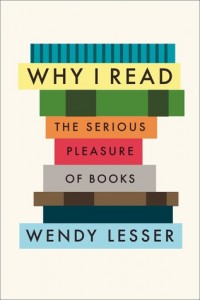
Why I Read by Wendy LesserTitle: Why I Read: The Serious Pleasure of Books (Goodreads)
Author: Wendy Lesser
Published: Farrar, Straus and Giroux, 2014
Pages: 240
Genres: Non-Fiction
My Copy: Library Book

Buy: AmazonBook DepositoryKindle (or visit your local Indie bookstore)

Wendy Lesser is the founding editor for the American literary magazine The Threepenny Review; she is lucky enough to spend her days with books. She is a bibliophile with a lifetime of reading experience to offer as well as an eclectic taste. Why I Read is a collection of essays that explores Lesser’s thoughts and ideas on literature in through the lens of different topics like character and plot.

This sounds like the type of book I should love and it ticked all the right boxes for what I look for in a book about books; eclectic taste, part memoir and offering some literary criticism. However I felt a huge disconnection with this book and I spend a lot of time just trying to pin-point what wasn’t working. Clearly Wendy Lesser is passionate about books and is well read, though I felt like that passion didn’t translation into her writing. This felt more like academic writing, so all emotion felt removed from Why I Read, but this is the type of book that needs that emotion and passion.

I enjoyed the fact that Wendy Lesser jumped from Henry James or Fyodor Dostoevsky, to Jim Thompson, Ross MacDonald, Patricia Highsmith and other crime novelists. It was fascinating to see crime novels used as examples in literary criticism, I was happy to see examples of science fiction, and fantasy also included rather than sticking to just literary fiction or classics. It is a real shame that the writing was so flat; the concepts and ideas were great and with some polishing this could have made for a wonderful book.

I am disappointed that this book never grabbed me and the writing held the book back. There are plenty of interesting ideas and literary criticism worth exploring but the dull nature really made that difficult. I sounds like Wendy Lesser is passionate about books and would have a lot ideas worth listening to if only that passion was visible in the writing.


The Year of Reading Dangerously by Andy Miller

Posted September 28, 2014 by Michael @ Knowledge Lost in Non-Fiction / 0 Comments

The Year of Reading Dangerously by Andy MillerTitle: The Year of Reading Dangerously (Goodreads)
Author: Andy Miller
Published: Harper Collins, 2012
Pages: 252
Genres: Non-Fiction
My Copy: Hardcover

Buy: AmazonBook DepositoryKindle (or visit your local Indie bookstore)

It is no secret that I am a fan of books about books; I especially enjoy a bookish memoir. The idea of reading and learning about someone’s bookish life is fascinating to me. Let’s be honest, I blog about books because I think I have an interesting bookish journey to talk about and I want to capture that for posterity sake. I would love to learn how to write a bookish memoir, so I read anything I can get my hands on. I have even written a post asking for recommendations for books about books and I am always on the look out for more.

I am not sure how I discovered Andy Miller’s memoir The Year of Reading Dangerously: How Fifty Great Books Saved My Life but I do remember being really excited about it. I ordered the book and it sat on my shelf for a little too long. With a holiday to America planned, I packed the book in my suitcase and was determined to read it. Turned out Simon Savidge from Savidge Reads started talking about this book about the same time and now I look like I was just following him in an effort to be as cool as he is.

Andy Miller worked as an editor at the time of writing this book (I assume he still does) and found himself only reading for work. On impulse he picked up a copy of The Master and Margarita by Mikhail Bulgakov and something just clicked for him. He set out to read ten books, which he called The List of Betterment, which consisted of books he has once lied about reading or felt he should read. This list obviously expanded over the course of the year but it was his starting point into rediscovering a passion for reading.

My discovery for reading was not unlike Andy Miller’s except mine involved Frankenstein by Mary Shelley, the 1001 Books Before You Must Read Before You Die list and it wasn’t a lost passion. I loved this book, I was so happy to read about all the awesome books Miller was reading in the course of the year. While this memoir is not healthy for my TBR and judging by Andy Miller’s glowing praises for Absolute Beginners by Colin MacInnes, I really need to get onto this novel first.

My only problem with this memoir is that Miller didn’t spend enough time talking about my favourite novels, like Frankenstein by Mary Shelley and Crime and Punishment by Fyodor Dostoevsky. Iwas happy to see that The List of Betterment not only includes canon but also involves books like The Essential Silver Surfer Vol. 1 by Stan Lee. It is just good to see a memoir that doesn’t just involve highbrow literature. He even considered calling this book How Fifty Great Books (and Two Not-So-Great Ones) Saved My Life referring to Dan Brown.

There is so much to talk about within this memoir, especially when talking about the fifty books mentioned in the book. I’m hoping that I can find some more great bookish memoirs to follow this one. The Year of Reading Dangerously is essentially a book about connecting with great books and the positive effects reading has on a reader. I highly recommend the book and I hope the Andy Miller will write a follow up about his continuing bookish journey.


War and Peace by Leo Tolstoy

Posted March 20, 2014 by Michael @ Knowledge Lost in Classic / 2 Comments

War and Peace by Leo TolstoyTitle: War and Peace (Goodreads)
Author: Leo Tolstoy
Translator: Aylmer Maude, Louise Maude
Published: Oxford World's Classics, 1869
Pages: 1392
Genres: Classic
My Copy: Personal Copy

Buy: AmazonBook DepositoryKindle (or visit your local Indie bookstore)

When people thing of big books often War and Peace by Leo Tolstoy is mentioned. This Russian classic depicts the French invasion of Russia in 1812. True to Tolstoy form, War and Peace also looks at classes and the impact of the Napoleonic invasion on the Tsarist society. While this book can be considered an epic historical war novel, for me this was a work of philosophical ideas. This is one of the hardest books to review, not because I have nothing to say but rather there is so much to cover and I have no idea where to start.

Just to put things into perspective, I started this book in October and have been slowly chipping away at it for four months. It is a hard battle and you really need to take your time with a book like this because Tolstoy has a lot to say. This is the kind of book that feels like you‘ve climbed a mountain when you finally finish and you can just feel your pretentious levels rising. For those interested, I read the Oxford World’s Classics edition which has the translations by Aylmer and Louise Maude. Many people debate on which translation is the best but I thought going with an Oxford World’s Classics would be a safe bet; I love this publisher and know I’m always getting a decent copy of the book.

Right off the bat you are flung into this world and you meet so many people. Tolstoy has an amazing ability to give the reader a sense of a person with a few lines, so even the minor characters in this book get some sort of personality. There are hundreds (over 500) characters within War and Peace and I often found it difficult to keep up with them all but thanks to Leo Tolstoy’s writing ability I could relax a little because even if I forgot about a character, when they reappear further in the book I still had a sense of who they are. This is possible due to the way this book was originally written and I will talk more on that later.

Most of the major characters within War and Peace are members of the aristocracy and it is interesting to see them all fighting for a higher position in society, government or the military. People like Boris rise in society while others like the Rostov fall, Dolokhov gets demoted while Pierre plots an assassination. Not only do we have the Napoleonic war happening within these pages, a battle for social standing rages through this novel. It is all about power but paradoxically the people with the most power within this book are the ones that seem to give up control.

If you don’t have the knowledge of Russian or Napoleonic history, this novel accommodates the reader. I found myself at times looking up information about the history just to satisfy my curiosity but as the book progressed, my research subsided. It is in Leo Tolstoy’s style to give you as much information as possible, this does make the book longer but for me I think it was a huge bonus. But you must realise this is a work of fiction and most of the people are fictional. Tolstoy was telling a story of the invasion and the harsh nature of war. You can even look at the second epilogue and read more of the authors thoughts on the subject and the philosophical ideas held within this book.

War and Peace was originally serialised in the literary magazine The Russian Messenger between 1865 and 1867. This magazine plays host to many of Leo Tolstoy and Fyodor Dostoyevsky’s novels. This means that originally people read War and Peace over the course of three years. This means at times the novel may feel repetitive and covering plot points done before but this is just a result of the original format. It comes in handy with characters as they are reintroduced and because I took my time reading this classic, it became a vital part.

There is so much going on within War and Peace and it took me a long time trying to work out what I wanted to say and what to leave out. This is the kind of book that needs to be revisited in the future, Tolstoy has a lot to say and I’m interested in exploring the themes. I loved this book; it is a roller-coaster of emotions and philosophical ideas. I’ve only scratched the surface of what is happening in this novel and then wrote a small amount of what I discovered. I can’t imagine ever being able to fully understand the brilliance of Tolstoy and War and Peace. For me, Fyodor Dostoevsky is a better writer but Leo Tolstoy has a unique ability to capture the lives of everyone involved in one war.


First Steps: Russian Literature

Posted July 27, 2013 by Michael @ Knowledge Lost in First Steps / 0 Comments

literary stepsFirst Steps is a new segment that was inspired by the Literary Exploration Reading Challenge. Each week or two we look at what books from different themes, genres or maybe authors and suggest some that are worth trying. Not necessarily all easy to read books but the ones that are worth the time and effort. My goal is to have First Steps guide you to some great books in places you don’t normally venture to.

I’ve been reading this amazing book called A Constellation of Vital Phenomena which is set in Chechnya and it got me thinking about Russian literature. I love reading books set in Russia and written by Russians, I don’t know why there is something about the books that draws me to them. They are often epic, slightly odd and the prose and character development are well worth reading, don’t get me started on symbolism and motifs. But it’s sad to think a lot of people are scared of reading Russian literature and while there are so many I haven’t read yet, including War and Peace, The Brothers Karamazov, Doctor Zhivago and anything by Anton Chekhov I thought I’d share five Russian novels I would recommend. I have left out Lolita by Vladimir Nabokov and Super Sad True Love Story by Gary Shteyngart simply because they are Russian Americans and it’s hard to work out which country can truly claim them.

Day of the Oprichnik by Vladimir Sorokin

This weird and wonderful postmodern novel is quite frankly so bizarre you just have to check it out. I wanted to add something contemporary to this list and thought this was the perfect choice. Set in a futuristic Russia where the Russian Empire has been restored back to the draconian codes of Ivan the Terrible.


We by Yevgeny Zamyatin

If you are fans of the dystopian genre and you haven’t read We, you really need to get onto it. This book is often considered as the first truly dystopian novel and has inspired authors such as Aldous Huxley, George Orwell and Kurt Vonnegut. Zamyantin bases this future on his personal experiences during the two Russian revolutions (1905 and 1917) and the First World War.


The Master and Margarita by Mikhail Bulgakov

Yet another weird and wonderful Russian novel, this time in the genre of Magical Realism. The whole book is based around a visit by the Devil to two passionately atheistic Russians. While this is an overly simplified synopsis it really is the basis of the entire book; if I really want to write a fully detailed overview of this book it would include a black cat, an assassin, a naked witch, Jesus and Pontius Pilate in one bizarre novel.


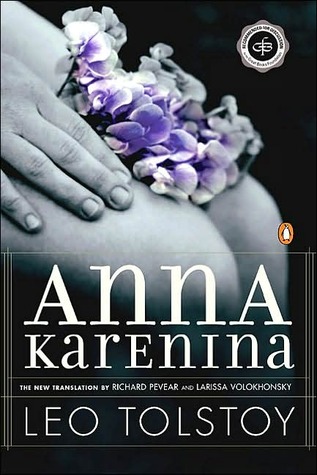
Anna Karenina by Leo Tolstoy

Don’t let the size of this book scare you, this isn’t necessarily a hard book, just long and like most Russian classics it is worth the effort. The story of love, infidelity as well as a battle of classes and the fading out of an old society to make room for modern one. If you are a patient reader and love a story with well written characters that is beautifully written then this book is worth reading, it simply is a masterpiece.


Crime and Punishment by Fyodor Dostoyevsky

I love this book so much. Before there were psychological thrillers and books like the Dexter series, there was Crime and Punishment. Raskolnikov is a conflicted character; he is showing a lot of interest in the classes and thinks he is of a higher class than others believe. But when he commits murders, guilt, remorse or regret plague him. This is a novel that focuses on the inner turmoil as well as the impact on his intellect and emotions. Beyond perfect and the type of book that you just want to read over and over again.

I know a lot of people avoid the Russian books but I’m drawn to them, I would love to know what people think and if they do avoid them, why. If you have read some great Russian novels, let me know as well because there are so many out there, I would love to know which ones are well worth reading.