Tag: Literary Criticism

My Salinger Year by Joanna Rakoff

Posted May 17, 2014 by Michael @ Knowledge Lost in Non-Fiction / 4 Comments

My Salinger Year by Joanna RakoffTitle: My Salinger Year (Goodreads)
Author: Joanna Rakoff
Published: Bloomsbury Circus, 2014
Pages: 272
Genres: Non-Fiction
My Copy: ARC from Publisher

Buy: AmazonBook DepositoryKindle (or visit your local Indie bookstore)

When Joanna Rakoff takes her first bookish job for a New York literary agency in 1996 it was like stepping back in time. As an office girl, her job was to type up correspondences, answer the phones and whatever else needed to be done. However there was one strict rule, ‘never give out Jerry’s address or phone number’. Given the time she automatically thought Jerry Seinfeld but soon learned that the Jerry they were referring to was J.D. Salinger.

This memoir is a unique look at not only at how old-fashion the publishing world can be but at J.D. Salinger himself. Joanna Rakoff takes an almost outside view at Salinger as she spends time responding to all of the iconic author’s correspondences. Salinger is an author that has cut himself off from the world and Joanna had to inform all correspondences that their requests cannot be fulfilled; J.D. doesn’t give interviews and doesn’t want to read any of the mail.

My Salinger Year reminded me of Mad Men; while this was a memoir, the whole literary agency was like stepping into the past. The publishing world was running like they are still in the 1960’s, which gave this memoir both a quirky feel to it and exposes the reality of just how old-fashioned this industry can be. Then you have Joanna’s life outside her job, which reminds me very much of the New York literary scene that I love to read about, full of intellectuals, pseudo intellectuals and bohemian socialists. This scene is a lot of fun to read about; these are my kind of people and one of the reasons I read books about this literary scene.

Not only is there the memoir but also there is an element of literary criticism as a selection of books are analysed and discussed within the pages of this book. This changes things up slightly and I found it interesting to explore the works of Salinger in this kind of detail. I never really enjoyed The Catcher in the Rye when I read it but I struggle to find a reason for that. Holden was an unlikeable character that is always complaining about everything but this is not a reason to dislike the book. I’m always standing up for books with unlikeable characters, I feel like I may have misjudged the novel. Now that I have some more experience in critical reading I may need to pick up The Catcher in the Rye one more time.

Even if I don’t reread The Catcher in the Rye, I’m interested in the life of J.D. Salinger and will pick up a biography of this iconic author. I know there was a biopic/documentary about Salinger as well; I might have to check it out. He has really peaked my interest; the reclusiveness and introversion makes for a fascinating person. My Salinger Year is an interesting journey into the publishing world, the New York City literary scene and J.D. Salinger; I enjoyed reading this memoir and recommend anyone interested in these topics to check it out.


My Bookish Manifesto

Posted May 10, 2014 by Michael @ Knowledge Lost in Literature / 20 Comments

I love my blog, I’ve been very proud of it and I can’t think of anything better. I like to spend my time playing with it, slowly improving it and writing posts for it. I don’t make money off my blog but it is a real passion of mine and something I plan to continue for a very long time. Recently I read a fantastic article on advice to young critics, while this is focused on the TV and movie industry I think it is still relevant to what I want to achieve.
Feeling all inspired by this article, I started thinking about what I want to achieve in life. I want to be considered a critic and I would love to get paid to do what I love but if that never happens I will still enjoy doing it. I’m not satisfied to with my current skill level and I want to continuously be improving. I took the advice given in the article on board and decided to adapt it to reflect my intentions. Being as pretentious as I am, I’m calling this my book critic manifesto.

  • Read a lot of different books – make sure to explore a wide range of genres, going outside more comfort zones and reading from more nationalities, different translations and genres.
  • Read from the back list – avoid only reading from the novels that have only just come out. Read books from all periods of time. Go back further than the 18th century and try to understand how books from the past have paved a way for the present.
  • Learn about the book industry – the politics and what goes on behind the scenes, it is important to have a finger on the pulse of the bookish world and understand trends and strategies deployed by the publishers.
  • Write every day – Commit to writing at least one post a day, it doesn’t matter if they get published or not, develop a habit. Writing takes practice and the more you practise the better you will be come. This is an essential step for self-improvement.
  • Find time to read every day – I can’t improve as a book critic if I’m not spending time reading, make the time. Listen to audiobooks while working, driving or exercising. Carry a book (or ebook) at all times and use any free time to read a little more.
  • Write it down – any good ideas or notes I have need to be written down before I forget. I’ve started carrying a notepad with me and finding other methods to jot down notes and thoughts as they come to me.
  • Rewrite – Edit, edit and edit some more. First drafts are never going to be my best writing but I often don’t like to rewrite. I must disciple myself to put my best work forward and thing will mean rewriting.
  • Proof read – I’m lucky enough to have a great editor (my wife) who is supportive of my blogging. She generously takes the time to read over every post I write before it hits the blog. I have to train her to be tougher on me and tell me if I need to re-write something but with her help I will improve. However I need to make her life easier not harder, I need to make sure I’m not relying on her and I’m checking my work thoroughly before she sees it.
  • Read up on history and psychology – It is fascinating to see how helpful knowledge of history and psychology can help with critical thinking. I am to critique books, so I need to understand more about the historical context and the psychology behind it.
  • Study literary theory – I need to understand literary criticism better; I know I will never understand all the theories but a basic knowledge will be useful. I suspect that my primary focus will be Marxist and Psychoanalytical theory but I would also like to be able to read a book from a Feminist, Post-Colonial, etc. view point as well.
  • Learn about language – Read more books about language and grammar, they can be fun and I can learn a lot from them.
  • Interact with the bookish community – it is important to continually seek out people with different viewpoints, I don’t want to become an echo chamber. Interacting with people that read and review books differently to me will help me develop my style and avoid becoming stale. We don’t want to live in a world where everyone says the same thing and if I can spend time reading different opinions I hope to avoid being similar to the crowd.
  • Learn about creative writing – I sometimes wish I could write a story but I feel I’m better suited as a critic and a reader than an author. I do need to learn the tools of the trade so I can understand why an author does what they do and develop an appreciation for the craft.
  • Develop my voice – I feel like my style is very conversational and personal; this is how I relate to the novels and this is how I feel. With practice I can perfect my style but I must always remember what I’m trying to achieve and how I want to come across in my writing.
  • Avoid only writing reviews – I don’t want to fall in the habit of only writing book reviews, if I’m writing every day I’m never going to keep up. I will write non-review posts, about my bookish thoughts or what ever is going on in the bookish world. Memes are great but I don’t want to rely heavily on them.
  • Meet deadlines – If I’m going to request an ARC then I must make sure that I read and review the book before the deadline or release date. Non-solicited ARCs don’t need to be read before a deadline or at all. I have written a review policy that clearly states that not all ARCs will be read but I need to make sure if I’ve committed to one that I read it.
  • Don’t be afraid to be different – I’ve found that I often hate books that others may enjoy, I do enjoy writing a negative review and I must remember that there is nothing wrong with that. However I must also remember that the job of an author is hard and I must always use tack and constructive criticism. I can’t be afraid to try something different and have a voice that differs from the rest, stand firm in what I think and be uncompromising in my writing.
  • Be the best you can be – I need to learn that sometimes a piece of writing isn’t working and I should dump it and start again. I shouldn’t be afraid to start over, I want my editor to be hard on me and I should be hard on myself too. I can learn a lot from others and I must be willing to take criticism. It is a helpful to my growth as a critic and also essential. If I’m not happy with a piece how can I expect others to enjoy it. Try and try again until you get it right.
  • Just write – I know that there will be times where I will feel like I’m not writing well or am suffering from a writer’s block. I need to remember that I don’t have to publish everything I write to my blog. I can write a bad piece and then dump it and try again, I might get some decent lines out of my bad writing that can help form a better piece.
  • Have fun – This is a passion not a chore.

This is still a work in progress and I plan to add more to this manifesto when I think of it. I feel like I have a goal in sight and I want to work towards it. This is not about getting a job or anything like that; this is about developing my skills to be the best book blogger/critic I can be. I’m passionate about books and I love talking about them, I will improve and this is how I plan to do just that. If you have any good advice that I can add to this, let me know in the comments below.


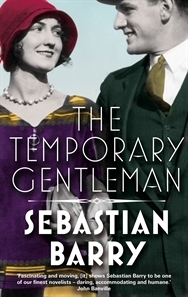
The Temporary Gentleman by Sebastian Barry

Posted May 4, 2014 by Michael @ Knowledge Lost in Historical Fiction / 2 Comments

The Temporary Gentleman by Sebastian BarryTitle: The Temporary Gentleman (Goodreads)
Author: Sebastian Barry
Published: Faber & Faber, 2014
Pages: 270
Genres: Historical Fiction
My Copy: Paperback

Buy: AmazonBook DepositoryKindle (or visit your local Indie bookstore)

Sebastian Barry is often credited for the way he captures the quintessential Irish life, especially with the McNulty family. The Temporary Gentleman tells the story of Jack McNulty, an Irish engineer that gets commissioned into the British Army in the Second World War. I will admit that this is my first Sebastian Barry novel but I had a fair idea on what I was getting myself into. The title alone gave me an idea of the type of man this is following, only temporarily a refined gentleman. It was also the idea that Jack wanted to be a gentleman but thought his social-economical background prohibited that.

The Temporary Gentleman serves are a retrospective of Jack’s life as he reflects on the choices he made along the way. But unlike similar stories like this, Jack wasn’t a nice person; in fact he was a real bastard. A drunk and a degenerate gambler, he not only ruined he own life but that of his wife, Mai. He joined the army to escape, not a honourable thing to do but I get a sense that Jack may of felt like this was the only time he was a gentleman.  Leaving Africa would mean he would have to return to his past, but is this what makes he such a bastard?

I will admit that I went into The Temporary Gentleman with the idea that this was a post-colonial novel; I expected it to explore the effects of empiricism of Kenya as they were working toward their independence. I only guess that from the synopsis and I guess you can say there was some glimpses of this, the way the Kenyans treated Jack as an ex Major. In hindsight, if I was to look at this novel as post-colonial, I should have been focusing on the imperial effects England had over Ireland. Considering this took place after the Irish War of Independence (1919-1921) and the Irish Civil War (1922-1923).

However I decided to look at this novel through the lens of psychoanalytical theory. I’m no expert at literary theories but I do try and this was a very in-depth and psychological look at Jack McNulty and the way he sees himself. A look at his mistakes and narcissism and how damaging his choose are for him and the people close to him. The Temporary Gentleman almost serves as a psychological profile and if I knew more about psychology I would try to analyse it.

I have to except that my literary criticism skills are still very lacking, I might have been able to handle this novel through the lens of post-colonialism but it was too focused on Jake McNulty to get much out of it. Psychoanalytical theory is something I’m very interested in and possibly my next focus in the world of literary criticism. All I can really say is that Barry makes it impossible to sympathise with Jack at all.

Sebastian Barry appears to know his craft; his approach to the novel was expertly executed. The prose in The Temporary Gentleman makes the whole experience bearable; you can help but enjoy the writing while grinding your teeth at Jack McNulty. I don’t feel like I can truly recommend this novel, there are plenty of unlikeable characters that are more thrilling to read about but I will be returning Sebastian Barry in the future.


Is Formalism still Relevant?

Posted April 12, 2014 by Michael @ Knowledge Lost in Literature / 2 Comments

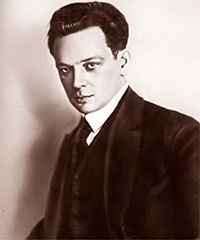
Yuri Tynianov

In a time of revolution a new form of literary theory also emerged. Russian Formalism was an influential school of literary criticism that involved a number of influential scholars including Viktor Shklovsky, Yuri Tynianov, Vladimir Propp, Boris Eichenbaum, Roman Jakobson, Boris Tomashevsky and Grigory Gukovsky. The movement may have been short lived from the 1910’s to the 1930’s but it played a big part in influencing modern criticism, including structuralism and post-structuralism.

The idea of Formalism is to study the mode, genre, discourse and forms of literature. Ignoring the social or cultural influences, Formalism choices to analyse the structure rather than analyse the meaning behind it. The approach takes a more scientific look at literature over the others at the time, but still influenced by other schools of thought like Ferdinand de Saussure’s linguistic theories and Symbolism.

While I don’t know much about literary theory, the concept of Formalism has been on my mind lately, and even been the subject of an interesting debate on Twitter. While this an out-dated school of thought, I do believe it is a useful form of literary criticism. While I wouldn’t recommend focusing on Formalism, it can serve as a basis into diving into the world of literary criticism. I have to wonder, is it just my university or does Formalism get taught as an early concept in other English lit courses?

By developing a basic understanding of mode, genre, discourse and forms, it allows us to ask questions we may not normally ask. Why is the text written in one perspective over another? What does the form say about its content? How does paradox, irony, ambiguity, or tension work in the text?  The idea is to help to develop critical thought, giving students a basis to work with.

Formalism is not a term used in the current subject I’m taking; it’s called Approaches to English Literature but the concept is the same. However recent trends in academic literary criticism suggest that maybe Formalism making a comeback. While I would never focus on Formalism, I think it is a useful skill to learn; I believe there is a use for this school of literary criticism. It may only be to develop skills needed for future studies. What are your thoughts on Formalism? Do you believe its useful or making a comeback? If you’ve studied it, do you believe it helped develop critical thinking?


The Portrait of Mr. W.H. by Oscar Wilde

Posted February 27, 2014 by Michael @ Knowledge Lost in Short Stories / 0 Comments

The Portrait of Mr. W.H. by Oscar WildeTitle: The Portrait of Mr. W.H. (Goodreads)
Author: Oscar Wilde
Published: Hesperus Press, 1889
Genres: Short Stories
My Copy: Personal Copy

Buy: AmazonBook DepositoryKindle (or visit your local Indie bookstore)

The fact that William Shakespeare’s Sonnets are dedicated to one Mr W.H. has been the source of much speculation. Eighteenth century critic Thomas Tyrwhitt suggests that the sonnets are written for a person known as William Hughes. He bases this theory on his interpretation of the Sonnets, lines like “A man in hue, all Hues in his controlling” (the 20th sonnet) where the word ‘Hue’ is capitalised and italicised and the multiple puns on the name ‘Will’ found in the sonnets.

The Portrait of Mr. W.H. is a short story by Oscar Wilde; it only took me about twenty minutes so I don’t think I’ll say much about it but it was a story I wanted to review. Yes, it was required reading for university but it was an interesting enough piece that getting my thoughts down seemed like a good idea. I remember reading The Picture of Dorian Gray a long time ago and not getting on with it; maybe I wasn’t for me or maybe I just hadn’t had the literary knowledge to get something out of it. In any case, I’m curious enough that maybe Dorian Gray will be a reread in the future.

I want to compare The Portrait of Mr. W.H. with My Life as a Fake because they both seem to talk about a similar topic. While My Life as a Fake covered a literary hoax, The Portrait of Mr. W.H. looks at a piece of literary criticism that has been around for a long time and is often talked about. I don’t agree with this theory and it is important to know that Oscar Wilde didn’t either, although by the end he almost did. What I really liked about this story is the fact that Wilde took a differing view of the Sonnets and tried to explore it. This is an excellent example of literary criticism because it got me looking at the Sonnets in another way, even if I didn’t agree with it.

The fact that Oscar Wilde managed to write this literary criticism in a form of a story was equally impressive. The whole story has this real gothic feel about it and the character of Willie Hughes showed vampiric characteristics in the way he destroyed lives, in particular Cyril’s. Yet another similarity to My Life as a Fake is the whole idea that literature or the author can be portrayed as a monster.

I read this story as social criticism, looking at the homo-eroticism of Shakespeare’s Sonnets and question if a particular piece of text has any effect on the value of the art form. I don’t know many people complaining about the homoerotic nature of Shakespeare but I’ve heard complaints about it when referring to Oscar Wilde. Wilde was a big believer in celebrating art as being art and not letting the opinion of the artist affect it. This means The Portrait of Mr. W.H. is a satirical look at the art, where you have to take a more literal approach and explore the life of William Shakespeare as an artist and its connection to the Sonnets.

Oscar Wilde tantalises the reader with his literary and social criticism, mix in the satirical nature of this story and the wit of the author and you have a compelling read. One thing I’ve been thinking about is the connection between this story and The Picture of Dorian Gray which I would like to leave you with. They both share very similar titles but in Dorian Gray you have a portrait that ages and the reader see the truth, of Gray and all his sins. While in The Portrait of Mr. W.H. the picture of Willie Hughes is a lie and I have to wonder the meaning behind this imagery when comparing the two.


Careless People by Sarah Churchwell

Posted December 19, 2013 by Michael @ Knowledge Lost in Non-Fiction / 3 Comments

Careless People by Sarah ChurchwellTitle: Careless People (Goodreads)
Author: Sarah Churchwell
Published: Virago, 2013
Pages: 358
Genres: Non-Fiction
My Copy: Paperback

Buy: AmazonBook DepositoryKindle (or visit your local Indie bookstore)

Since the publication of The Great Gatsby in 1925, it has been talked and talked about. Some people were forced to read it in high school, some hate it and others love it. No matter what you think about the book you can’t deny its significance. Careless People looks at The Great Gatsby, F. Scott Fitzgerald and what was happening during the Jazz era. More specifically the months when this classic too place.

I loved The Great Gatsby, the first time I read it I got little out of it (see review) but the second time around, I feel like I really understood it (see that review as well). Though I’ve come to realise this novel is full of layers and the more you read and research the more you will get out of this novel. It has been widely though that The Great Gatsby was autobiographical in nature so understanding F. Scott Fitzgerald is important when reading this classic critically.

Sarah Churchwell has made life a little easier for people that love and want to learn more about this novel. Careless People looks at the text and then different events that were happening at the time of writing this novel. She also talks about the Fitzgeralds (a very interesting couple) and tries to give us some context about the motivations and thoughts behind this Magnum opus.

So you get historical context as well as a unique look into the lives of the Fitzgeralds and what we call the Jazz Age. I really enjoyed this book, as a lover of The Great Gatsby (not the terrible movie) I found it fascinating to learn about just what has happening at that time, especially in New York and F. Scott Fitzgerald. One of the most interesting thinks I learnt from the book was about the lexicon, and new words coined at the time that are used today.

Something I often worry about when reading a non-fiction book like that is referencing. It is not common practice but I seem to respect a book more if I can see where information was found. Careless People did a great job with this; over 50 pages of notes and a bibliography so if you are interested (like me) you can look further and do some independent researching. Part biography, literary criticism, history and true crime, Careless People has a lot of information in it but it is only a scratching the surface on all accounts.

I wish I had this much to say about a book, especially the ones I love; I just want to dive in and learn all I can about it. I often struggle to write a review post, but one day I hope I can pull something off like this; keep an eye out for my 400 page reviews. It is clear that Churchwell is passionate about The Great Gatsby. This would be a great companion next time you read the classic, I can imagine how helpful it would be. I loved Careless People; I want to read more books like this, particularly about novels I love.


Practical Classics by Kevin Smokler

Posted November 28, 2013 by Michael @ Knowledge Lost in Non-Fiction / 2 Comments

Practical Classics by Kevin SmoklerTitle: Practical Classics (Goodreads)
Author: Kevin Smokler
Published: Prometheus Books, 2013
Pages: 320
Genres: Non-Fiction
My Copy: Paperback

Buy: AmazonBook DepositoryKindle (or visit your local Indie bookstore)

Classics have a lot to say about life, the problem is the ones that are forced upon us during high school are normally hated or forgotten about. Teachers pick books that are designed to teach important lessons as well as develop critically reading skills. Kevin Smokler has decided to reread those classics and try to tell the reader why we should reread them.

Practical Classics: 50 Reasons to Reread 50 Books You Haven’t Touched Since High School is a collection of essays that often remind the reader what these classics have to offer but told in a very accessible and humours ways. I’m not sure where I first heard about this book, I want to say Books on the Nightstand but I can’t be too sure. I’ve always had an interest in classics and what is assigned in English classes around the place.

The only book I remember studying in High School was Romeo and Juliet and I have to admit I never read it, we ended up watching the movie instead; the Baz Luhrmann version was just released. So I never had a chance to learn about the classics and reading critically. These are new skills I’m still developing. When I suddenly gained an interest in reading and education and have often spent time thinking about what books I would want to teach (see this old post where I pick some books to teach).

Out of the 50 books in this novel; I think I only read a small portion of them so Smokler has really destroyed my TBR list with so many more novels. Not that it really is his fault; I will probably read most of them anyway. I’m interested in knowing why some of these books were chosen, I couldn’t work that out at times and really want to learn more about how they pick the books. Kevin Smokler stated that he reread the books he was assigned in high school and then consulted friends, teachers, etc. to get a nice round 50.

This doesn’t help answer the question I had but it was probably the most practical way to pick books. I’m just fascinated in the idea of studying literature and the process behind deciding what to teach. I’m taking the time to work through an English Lit course and I hope it doesn’t squash my passion for the topic to continue further in. I would love to know if there were books that could help satisfy my curiosity; I will continue to search for them.

I wasn’t much of a non-fiction reader for a long time (in fact I’ve only been a reader since 2009), but books about books are my newfound interest. Kevin Stoker’s book really was a fascinating read and I want people to recommend me some more non-fiction books that will help. Stoker mentioned two in his book that I am to pick up and I hope some of the readers of this will give me some more. If you are interested in learning why classics are important, or you are just interested in books about books, this is a nice addition.


Become a Better Reader

Posted September 13, 2013 by Michael @ Knowledge Lost in Literature / 15 Comments

I have been thinking about myself as a reader lately and I thought I might talk about it in a post. I really want to be a better reader but there seems to be so much I need to learn or get into a habit of doing. So below is a list of those things and I would love it if people can give me some hints or tips to help improve myself as a reader.

Note taking
I really struggle with this; I want to learn to write down thoughts and interesting quotes but never seem to work out a good way to do this. I don’t often have a notepad with me so I don’t know how to get into a habit or what will help. I thought about using Tumblr or Goodreads progress updates to do that but I’m not sure if they will help. I just have to somehow train myself into doing this.

Reading Critically
I want to be able to pick out symbolism, motifs and themes throughout the book. If you have been a reader of my blog for a while you probably can see that my reviewing seems to have improved and has more of a focus on critical understanding but I still think I’m a long way off to where I want to be. This might mean I need to read slower and reread books.

Understanding Literary Theory
I think part of reading critically would be to learn literary theory and that can be tricky. I started a BA in English Lit to learn this stuff but feel like I haven’t got into literary theory yet which is probably not true, I’m just impatient. I would love if there were a podcast or something that will slowly go through basic literary concepts and explain them in a practical, easy to understand manner. If I was smarter I would write my own but I still need to learn and probably need help to bounce my autodidactic learning off to make sure I’m on the right track.

Better Reviews
I struggle with synopsis’s and often fill tempted to use a book blurb or Goodreads synopsis instead. This is just one element of a book review that I want to improve, I know I’m getting better but I would love to write ten pages analysing a book without any effort. I know people won’t want to read a review that long but if I learn to write something like that, then I can work out a way to incorporate that into my blog.

There is a lot to learn here and I think I will eventually get to a place where all these points will be incorporated into my regular reading life. When that day comes I am sure I will have a new goal, I’m just inpatient and I want to have a better understanding in literature than I do now. I feel this will come with practise and continually pushing myself to be better and I hope that my blog is a reflection in this progress.