Tag: Literature

My Bookish Manifesto

Posted May 10, 2014 by Michael @ Knowledge Lost in Literature / 20 Comments

I love my blog, I’ve been very proud of it and I can’t think of anything better. I like to spend my time playing with it, slowly improving it and writing posts for it. I don’t make money off my blog but it is a real passion of mine and something I plan to continue for a very long time. Recently I read a fantastic article on advice to young critics, while this is focused on the TV and movie industry I think it is still relevant to what I want to achieve.

Feeling all inspired by this article, I started thinking about what I want to achieve in life. I want to be considered a critic and I would love to get paid to do what I love but if that never happens I will still enjoy doing it. I’m not satisfied to with my current skill level and I want to continuously be improving. I took the advice given in the article on board and decided to adapt it to reflect my intentions. Being as pretentious as I am, I’m calling this my book critic manifesto.

  • Read a lot of different books – make sure to explore a wide range of genres, going outside more comfort zones and reading from more nationalities, different translations and genres.
  • Read from the back list – avoid only reading from the novels that have only just come out. Read books from all periods of time. Go back further than the 18th century and try to understand how books from the past have paved a way for the present.
  • Learn about the book industry – the politics and what goes on behind the scenes, it is important to have a finger on the pulse of the bookish world and understand trends and strategies deployed by the publishers.
  • Write every day – Commit to writing at least one post a day, it doesn’t matter if they get published or not, develop a habit. Writing takes practice and the more you practise the better you will be come. This is an essential step for self-improvement.
  • Find time to read every day – I can’t improve as a book critic if I’m not spending time reading, make the time. Listen to audiobooks while working, driving or exercising. Carry a book (or ebook) at all times and use any free time to read a little more.
  • Write it down – any good ideas or notes I have need to be written down before I forget. I’ve started carrying a notepad with me and finding other methods to jot down notes and thoughts as they come to me.
  • Rewrite – Edit, edit and edit some more. First drafts are never going to be my best writing but I often don’t like to rewrite. I must disciple myself to put my best work forward and thing will mean rewriting.
  • Proof read – I’m lucky enough to have a great editor (my wife) who is supportive of my blogging. She generously takes the time to read over every post I write before it hits the blog. I have to train her to be tougher on me and tell me if I need to re-write something but with her help I will improve. However I need to make her life easier not harder, I need to make sure I’m not relying on her and I’m checking my work thoroughly before she sees it.
  • Read up on history and psychology – It is fascinating to see how helpful knowledge of history and psychology can help with critical thinking. I am to critique books, so I need to understand more about the historical context and the psychology behind it.
  • Study literary theory – I need to understand literary criticism better; I know I will never understand all the theories but a basic knowledge will be useful. I suspect that my primary focus will be Marxist and Psychoanalytical theory but I would also like to be able to read a book from a Feminist, Post-Colonial, etc. view point as well.
  • Learn about language – Read more books about language and grammar, they can be fun and I can learn a lot from them.
  • Interact with the bookish community – it is important to continually seek out people with different viewpoints, I don’t want to become an echo chamber. Interacting with people that read and review books differently to me will help me develop my style and avoid becoming stale. We don’t want to live in a world where everyone says the same thing and if I can spend time reading different opinions I hope to avoid being similar to the crowd.
  • Learn about creative writing – I sometimes wish I could write a story but I feel I’m better suited as a critic and a reader than an author. I do need to learn the tools of the trade so I can understand why an author does what they do and develop an appreciation for the craft.
  • Develop my voice – I feel like my style is very conversational and personal; this is how I relate to the novels and this is how I feel. With practice I can perfect my style but I must always remember what I’m trying to achieve and how I want to come across in my writing.
  • Avoid only writing reviews – I don’t want to fall in the habit of only writing book reviews, if I’m writing every day I’m never going to keep up. I will write non-review posts, about my bookish thoughts or what ever is going on in the bookish world. Memes are great but I don’t want to rely heavily on them.
  • Meet deadlines – If I’m going to request an ARC then I must make sure that I read and review the book before the deadline or release date. Non-solicited ARCs don’t need to be read before a deadline or at all. I have written a review policy that clearly states that not all ARCs will be read but I need to make sure if I’ve committed to one that I read it.
  • Don’t be afraid to be different – I’ve found that I often hate books that others may enjoy, I do enjoy writing a negative review and I must remember that there is nothing wrong with that. However I must also remember that the job of an author is hard and I must always use tack and constructive criticism. I can’t be afraid to try something different and have a voice that differs from the rest, stand firm in what I think and be uncompromising in my writing.
  • Be the best you can be – I need to learn that sometimes a piece of writing isn’t working and I should dump it and start again. I shouldn’t be afraid to start over, I want my editor to be hard on me and I should be hard on myself too. I can learn a lot from others and I must be willing to take criticism. It is a helpful to my growth as a critic and also essential. If I’m not happy with a piece how can I expect others to enjoy it. Try and try again until you get it right.
  • Just write – I know that there will be times where I will feel like I’m not writing well or am suffering from a writer’s block. I need to remember that I don’t have to publish everything I write to my blog. I can write a bad piece and then dump it and try again, I might get some decent lines out of my bad writing that can help form a better piece.
  • Have fun – This is a passion not a chore.

This is still a work in progress and I plan to add more to this manifesto when I think of it. I feel like I have a goal in sight and I want to work towards it. This is not about getting a job or anything like that; this is about developing my skills to be the best book blogger/critic I can be. I’m passionate about books and I love talking about them, I will improve and this is how I plan to do just that. If you have any good advice that I can add to this, let me know in the comments below.


How do you pick an imprint for classics?

Posted May 3, 2014 by Michael @ Knowledge Lost in Literature / 8 Comments

Every publisher seems to have their own classics section. Penguin Random House now control most of the market (Penguin Classics, Modern Classics, Signet Classics, Vintage Classics, etc). So how do you choose which collection to buy from? Do you even pay attention to the publisher? When I first started hording collecting books, I didn’t pay too much attention and went for the prettier cover but I’m beginning to wonder if this is a decent solution.

1-05-2014 11-38-14 AM

Sure, I would love to own every book released in the Pulp! the Classics; they are fun and I do own a few of them already but buying a classic because of their covers isn’t really effective. Not all editions are the same, in particular translated classics. When picking up a Russian classic do you know which translator to pick? Do you spend time researching the best translator or do you have a publisher you can trust?

I’ve often contemplated this question and since studying at university I’ve noticed that they often recommend two publishers more than any other; Norton Classics and Oxford World Classics. While they don’t have the best covers, I’ve had the greatest success with Oxford World Classics, to the point that I don’t want to buy any other editions. If asking the internet which translation of a novel I should read, for War and Peace it is Louise and Aylmer Maude and for Crime and Punishment, Jessie Coulson is often the answer. They are the translators used in the Oxford World Classics.

I’m not sure what it is, I just trust Oxford World Classics more than any other and they often offer some great questions to ask yourself in the back of the novel. My new found love for Oxford World Classics and the reason for this post is not to give a sales pitch or anything like that; I’m just curious if others think about this topic in as much detail as I do. If so, which publisher do you trust over all others?


What I Hate about Book Blogging

Posted April 26, 2014 by Michael @ Knowledge Lost in Literature / 12 Comments

As much as I love book blogging and have no desire to slow down anytime soon, there is one thing that annoys me. It is not exactly a huge problem and I think this falls under the category ‘First World Problems’ but it has been coming an increasing annoyance for me. I’m not talking about the lack of commenting (I know I’m guilty of this) or the struggle to be part of the crowd of first readers, who boost about all the wonderful ARC’s they read. I’m even not complaining about the lack of male book bloggers or the excess of blogs talking about the exact same thing, this is something completely different.
I started book blogging in April 2012 as a way to track my reading journal. I have an autodidactic blog where I previously discussed literature, but I found myself losing focus on what that blog was all about. I transferred most of my literary posts onto this blog and started blogging passionately about the books I’ve read, loved and hated. I love the way this blog documents my reading journey but the problem is the fact that it only covers my journey from 2012 onwards.

I started reading in 2009 when the reading bug hit me hard; in that time I read some fantastic books but they don’t show up on my blog. I’m at a point in blogging were I want to make reference to books I read before I started blogging but I have no post to link it to. This isn’t a huge problem but it is something that has become increasingly annoying.

I’m now at a stage in my book blogging where I want to go back and re-read a lot of those great or interesting books just so I can blog about them. This also means if I ever want to write a blog post on every book that is on the ‘1001 Books you must Read Before you Die’ list (a life goal of mine) then I will have to re-read over 50 of the books on the list. I was just wondering if I’m the only one who feels this way or if anyone has gone to the extreme of re-reading most of the books from their past just to blog about them?


Is Formalism still Relevant?

Posted April 12, 2014 by Michael @ Knowledge Lost in Literature / 2 Comments

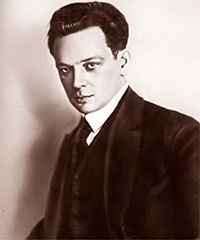
Yuri Tynianov

In a time of revolution a new form of literary theory also emerged. Russian Formalism was an influential school of literary criticism that involved a number of influential scholars including Viktor Shklovsky, Yuri Tynianov, Vladimir Propp, Boris Eichenbaum, Roman Jakobson, Boris Tomashevsky and Grigory Gukovsky. The movement may have been short lived from the 1910’s to the 1930’s but it played a big part in influencing modern criticism, including structuralism and post-structuralism.

The idea of Formalism is to study the mode, genre, discourse and forms of literature. Ignoring the social or cultural influences, Formalism choices to analyse the structure rather than analyse the meaning behind it. The approach takes a more scientific look at literature over the others at the time, but still influenced by other schools of thought like Ferdinand de Saussure’s linguistic theories and Symbolism.

While I don’t know much about literary theory, the concept of Formalism has been on my mind lately, and even been the subject of an interesting debate on Twitter. While this an out-dated school of thought, I do believe it is a useful form of literary criticism. While I wouldn’t recommend focusing on Formalism, it can serve as a basis into diving into the world of literary criticism. I have to wonder, is it just my university or does Formalism get taught as an early concept in other English lit courses?

By developing a basic understanding of mode, genre, discourse and forms, it allows us to ask questions we may not normally ask. Why is the text written in one perspective over another? What does the form say about its content? How does paradox, irony, ambiguity, or tension work in the text?  The idea is to help to develop critical thought, giving students a basis to work with.

Formalism is not a term used in the current subject I’m taking; it’s called Approaches to English Literature but the concept is the same. However recent trends in academic literary criticism suggest that maybe Formalism making a comeback. While I would never focus on Formalism, I think it is a useful skill to learn; I believe there is a use for this school of literary criticism. It may only be to develop skills needed for future studies. What are your thoughts on Formalism? Do you believe its useful or making a comeback? If you’ve studied it, do you believe it helped develop critical thinking?


Practical Classics by Kevin Smokler

Posted November 28, 2013 by Michael @ Knowledge Lost in Non-Fiction / 2 Comments

Practical Classics by Kevin SmoklerTitle: Practical Classics (Goodreads)
Author: Kevin Smokler
Published: Prometheus Books, 2013
Pages: 320
Genres: Non-Fiction
My Copy: Paperback

Buy: AmazonBook DepositoryKindle (or visit your local Indie bookstore)

Classics have a lot to say about life, the problem is the ones that are forced upon us during high school are normally hated or forgotten about. Teachers pick books that are designed to teach important lessons as well as develop critically reading skills. Kevin Smokler has decided to reread those classics and try to tell the reader why we should reread them.

Practical Classics: 50 Reasons to Reread 50 Books You Haven’t Touched Since High School is a collection of essays that often remind the reader what these classics have to offer but told in a very accessible and humours ways. I’m not sure where I first heard about this book, I want to say Books on the Nightstand but I can’t be too sure. I’ve always had an interest in classics and what is assigned in English classes around the place.

The only book I remember studying in High School was Romeo and Juliet and I have to admit I never read it, we ended up watching the movie instead; the Baz Luhrmann version was just released. So I never had a chance to learn about the classics and reading critically. These are new skills I’m still developing. When I suddenly gained an interest in reading and education and have often spent time thinking about what books I would want to teach (see this old post where I pick some books to teach).

Out of the 50 books in this novel; I think I only read a small portion of them so Smokler has really destroyed my TBR list with so many more novels. Not that it really is his fault; I will probably read most of them anyway. I’m interested in knowing why some of these books were chosen, I couldn’t work that out at times and really want to learn more about how they pick the books. Kevin Smokler stated that he reread the books he was assigned in high school and then consulted friends, teachers, etc. to get a nice round 50.

This doesn’t help answer the question I had but it was probably the most practical way to pick books. I’m just fascinated in the idea of studying literature and the process behind deciding what to teach. I’m taking the time to work through an English Lit course and I hope it doesn’t squash my passion for the topic to continue further in. I would love to know if there were books that could help satisfy my curiosity; I will continue to search for them.

I wasn’t much of a non-fiction reader for a long time (in fact I’ve only been a reader since 2009), but books about books are my newfound interest. Kevin Stoker’s book really was a fascinating read and I want people to recommend me some more non-fiction books that will help. Stoker mentioned two in his book that I am to pick up and I hope some of the readers of this will give me some more. If you are interested in learning why classics are important, or you are just interested in books about books, this is a nice addition.


My Upcoming Reading List

Posted November 22, 2013 by Michael @ Knowledge Lost in What are you Reading / 12 Comments

the sign of fourNext week I start a university course called Literature and Politics. I’m actually nervous and excited about starting this. I’ve been doing an English Literature course part time but work has been pretty full on so I’ve moved to online university. This will mean things will be a lot more flexible and should hopefully give me the time to manage both work and study without them interfering. What I wanted to share with you; the entire point of this post was my awesome reading list for the summer thanks to this course.
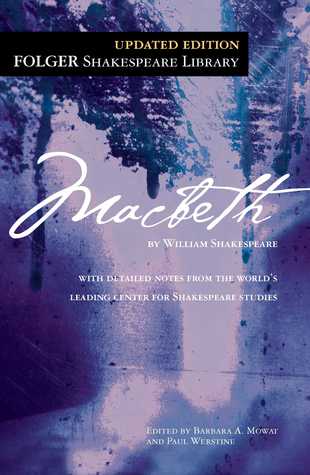
  • Antony and Cleopatra by William Shakespeare
  • Frankenstein by Mary Shelley
  • Heart of Darkness by Joseph Conrad
  • Loaded by Christos Tsiolkas
  • Robinson Crusoe by Daniel Defoe
  • The Sign of Four by Sir Arthur Conan Doyle

How awesome it this list? So many great books that I’ve read or excited to read. A reading list like this really does wonders to your nerves.


Guest Post: The Problem with Literature

Posted October 3, 2013 by Guest Post in Guest Posts, Literature / 0 Comments

Want to be the next Shakespeare? Forget literature. Shakespeare wasn’t trying to write enlightened literary fiction. He was writing the Elizabethan equivalent of daytime television – easily digestible, relatable stories (mostly stolen from elsewhere and given a quick spit and polish to make them look and sound new) that would appeal to an audience of mostly illiterate working-class people. He didn’t care about being a great artist or creating work that would last for centuries. He just wanted to make money.

I think modern literary authors forget that. They want to create art. They want to be taken seriously. God forbid their work be mistaken for trashy pulp fiction. God forbid it be accessible. True art, according to the modern literary author, is by nature elitist. In order to understand it, one must have more sophisticated tastes than the types of people who read mass-produced romances or pulpy sci-fi thrillers. One has to be discerning. Every great literary author wants to be remembered as the next iconic genius.

Except that our last iconic genius wrote exactly the kinds of fiction these aspiring greats treat with such derision. Hamlet, King Lear, Macbeth – these might be timeless classics, but to The Bard, they were how he paid the bills, and to the people who paid to see his plays performed, they were the equivalent of a good popcorn flick. We talk about Shakespeare, Kit Marlowe, Dickens, Conan Doyle as though they were trying to create enduring works of highbrow literature. They weren’t; they were writers working at their trade. It just so happens that they were very good at it, which is why we still enjoy their work today. But they had no lofty aspirations, no desire to be seen as anything more than working writers. Oh, sure, Shakespeare enjoyed the patronage of two successive monarchs. I’m not denying that he was a master wordsmith and a well-regarded one at that. But to the people who crowded into the globe to watch his work play out on stage, he was nothing more than an entertainer. Not an artiste, not a figure of reverence. He wrote theatre for the masses. He was Elizabethan England’s answer to JK Rowling, not Vonnegut.

If Shakespeare were alive today, he’d probably be writing for some wildly successful primetime drama. Dickens and Conan Doyle, were they to stick to the serial formats they preferred, would probably find a home in graphic novels. Byron was something of a poseur, but he wrote his generation’s equivalent of Harlequin romances. Jane Austen, the Bronte sisters? They’d have been penning this summer’s hottest chick lit. And you know what? There’s nothing wrong with that. There’s absolutely nothing wrong with writing things that people will enjoy just because they’re fun. There’s nothing wrong with writing to entertain, to captivate, to thrill. And just because work is engaging and accessible, doesn’t mean it can’t also be challenging, thought-provoking and enduringly popular.

The Bard was a genius at his craft, no doubt about it. I just came home from a fantastically staged production of Macbeth, a play still enjoyed by audiences around the world centuries after Shakespeare’s death. I hope to one day pass on my love of Shakespeare to my children. But I’ll also pass on my love of fantasy novels, detective mysteries, cheesy sci-fi and even the odd paranormal romance. Why not? Fiction is meant to be fun. Sure, it can also be a lot of other things, but if we don’t enjoy reading it on some level, what’s the point?

If you’re writing for an audience of people who think enjoying fiction for its own sake is below them, you’ll never be the next Shakespeare, or the next Marlowe, or the next Dickens or Mark Twain or Agatha Christie or Jane Austen. Hell, you won’t even be the next JK Rowling (and believe me – someday, we’ll talk about her work with the same reverence we reserve for the works of long-dead white men today). Don’t focus on creating literature. Focus on creating great entertainment. Take your readers somewhere new. Give them a means of escaping. Take an old story and make it sing again. Make it fun, for heaven’s sakes, because I can guarantee you that five hundred years from now, we won’t be talking about dry and dusty tomes written by pretentious poseurs with delusions of grandeur. We’ll be talking about what was popular, just like we do now. We’ll be talking about theatre for the masses. We’ll be talking about this generation’s Shakespeares. And if you’re not willing to do what he did – to write for all people, to amuse, to engage, to entertain – then you’ll never be one of them.

Read More


The Reader by Bernhard Schlink

Posted May 15, 2013 by Michael @ Knowledge Lost in Historical Fiction / 0 Comments

The Reader by Bernhard SchlinkTitle: The Reader (Goodreads)
Author: Bernhard Schlink
Translator: Carol Brown Janeway
Published: Orion, 1998
Pages: 216
Genres: Historical Fiction
My Copy: Personal Copy

Buy: AmazonBook Depository (or visit your local Indie bookstore)

The Reader tells the story of the teenage years of Michael Berg while recovering from hepatitis and his passionate affair with a mysterious woman twice his age. Later going on to study law and discovering that this woman was involved in the death march from Auschwitz. The book continues on through the war crimes trial and the relationship between the two after her imprisonment.

Bernhard Schlink was born in 1944 (one year before the war ending), studied law then became a professor of public law and the philosophy of law. His passion for reading comes from a teacher in his high school who encouraged his reading and discovery of literature. Later he discovers that this teacher was a member of the Gestapo and involved in some questionable practices. His first series of books featuring a sixty year old private investigator Gerhard Selb (Selb translates to Self) also had a questionable past during the war and his coming to terms with this. This is interesting since the books in the series are called; Self’s Punishment, Self’s Deception and Self’s Murder. Also he has a collection of essays called Vergangenheitsschuld which translates to Guilt about the Past, which leads you to believe that Bernhard Schlink has a fascination about the effect of World War II has on the next generation of Germans.

This is not a book about the Holocaust novel; while this historical event plays a role, this is rather a novel that gives you a lot of questions and problems to think through. Divided into three parts; the summer of love, the trial and imprisonment; The Reader explores three different scenarios as well as the notion of keeping secrets. At the start of the book Hannah comes across as Good Samaritan trying to help Michael who was throwing up in the street. Later he pursues her and she gets an impression that he is old enough to be out of school; he doesn’t correct her, thinking the papers he leaves behind was enough for her to know his true age but we later finds out she would never have looked at them. When she finds out, they are in bed together and he tells her that he is skipping classes to be with her. She throws him out and it’s not until very later in the book we discover just how important education is to her. Hannah is his first love, he is too young to fully understand the kind of relationship they are having, while Hannah remains guarded and tries to protect both her public and private shames.

While most people focus mostly on the relationship between the two, but there is so much more to look at in the novel. Years later Michael finds Hannah again in a trial and the reader is asked to consider two things; the nature of her guilt and the significance of her other secret (the one she is more ashamed of it). While she was never the ringleader of her charges and she was following orders, when it came to the damning report, she let the court believe she wrote it to continue to hide her illiteracy. This brings to the overall concept to the book; ignorance is not necessarily innocence. The pride to protect herself from people discovering of her illiteracy works against her though out the entire book. She gives up promotions and lands herself in prison all to protect this secret.

This leads into the third part; years later we find that Michael starts reading to Hannah once again. Sending cassettes both the reader and Hannah mistakenly get the impression that this is an act of affection and when Hannah eventually finds out,  we also find out just how cold he has been acting. I’m not sure if he was trying to gain back the power in their relationship or just the bitterness of his life doing it but we are led to believe he still cares about Hannah when all he really cares about is that summer fling when he was still a teenager.

The book wants you to recognise that you are the reader, and Hannah, in particular, wants you to realise just how blessed you are to be able to read this book. I remember there was a great movie adaptation of this book a while ago; while very meta to have a movie about reading, I’m surprised how well it came together. I didn’t remember much about this movie while I read this but it all come back to me as I discovered it in the book. It was a great feeling to remember as I read and not know what would happen next.

I really loved this book; there is that element of uncomfortableness with the relationship at the start, which really is something people can be afraid to talk about but with a book like this it can be scandalous.  There are also so many other interesting elements that I think are equally valuable; especially with the whole German shame towards what they did in World War II and the next generation having to deal with it. While the movie closely follows the book, it is still worth reading; I highly recommend it.


Heart of Darkness by Joseph Conrad

Posted May 8, 2013 by Michael @ Knowledge Lost in Classic / 0 Comments

Heart of Darkness by Joseph ConradTitle: Heart of Darkness (Goodreads)
Author: Joseph Conrad
Published: Oxford World's Classics, 1899
Pages: 225
Genres: Classic
My Copy: Personal Copy

Buy: AmazonBook DepositoryKindle (or visit your local Indie bookstore)

Heart of Darkness tells the tale of Charlie Marlow’s journey on an ivory transporter down an unknown river in the Congo. What he sees horrifies and perplexes him, calling into question the very basis of civilisation and human nature. The story follows this commercial agent and the object of his obsession, the notorious ivory-procurement agent Mr Kurtz. This novella has become an important piece in the western canon for its range of themes and scholarly values.

I remember reading this book a few years back and while I thought it was an interesting book, I never really grasped it completely (and I’m not sure if I ever will) but for comparison to what I know now and then, check out my review here. To begin with we need to gain an understanding of Joseph Conrad’s life because there are a lot of life experiences in this book. Born Josef Teodor Konrad Walecz Korzeniowski in Russian-ruled Poland in 1857; this part of Poland is now part of Ukraine. Both parents were political activists and as a result of their participation in the Polish independence movement they were exiled to Northern Russia in 1863. At sixteen he dropped out of school to work on a French merchant ship, sailing the West Indies as an apprentice. Later he joined a British ship where he served as a merchant for ten years, during this time he gained the rank of captain and became a naturalized British citizen. During a trip in 1890 sailing through the Belgian Congo and Congo River he got really sick and had to retire from sailing and focused his energy on writing. This means Joseph Conrad must have grown up speaking Polish and Russian, learning French at some point and then English. Although he often struggled to write in his adopted language, he is now considered one of the greatest prose stylists in English literature.

There are many themes explored in this book, so much so that I think I would need to keep reading this book again and again to discover them. Though major themes include slavery (the effect the British had on Africa) as well the author’s problems with Colonialism and Imperialism. There are a few other themes I would much prefer exploring. First of all, the idea of alienation; both Conrad and Marlow are both outsiders. The entire novel questions what alienation and loneliness can do to a person over an extended period of time, especially since they are in hostile environments. Even the doctor warns Marlow prior to his departure of changes to his personality that may be produced by a long stay in another country.  Prolonged solitude seems to have damaging effects on the sailors, which leads me into another major theme; insanity. In the case of Kurtz, the loneliness lead to literal madness, while others like Marlow’s predecessor, Captain Fresleven was described as a gentle soul that transformed into a violent one.

There are other themes I really would love to talk about but for the sake of keeping this review a decent length I will just highlight them. Heart of Darkness also looks at the way Belgium is exploiting the Congo, order verse disorder, duty verse responsibility, doubt verse ambiguity, race verse racism and finally violence and cruelty. All these, plus many more, are reasons why this book has been studied. It is a very difficult book to explore, I found myself rereading passages trying to get more out of it. I know at one point near the start of reading this I thought I would never get enough meaning out of this book but eventually it opened up to me.

There are a lot of symbols within the book as well, beginning with the title and the setting; Heart of Darkness deep in the heart of the Congo, the centre of the deep dark Africa. Even the fact that the entire story is told in the late afternoon as the sun sets is a motif of Africa. There are a lot more in this novel but I want to quickly talk about the movie adaptation Apocalypse Now. Sure there are some similarities but not enough to really consider the movie to be based on this novella. There are more similarities with Coleridge’s The Rime of the Ancient Mariner in the way the book starts out, also with Bram Stokers’ Dracula with the suspension between life and death. So how are they the similar, since one is set in the Congo and the other during the Vietnam War? The very basic answer would be that both look at the deterioration of humanity as a result of conflict, one via imperialism and one by war.

I would love to talk about the narrative and how there are two narrators, Marlow and someone anonymous. And how all the scenes on the Nellie are obviously an introductory and critique to the story that it doesn’t go away after the intro. Marlow’s narrative is often interrupted by this unnamed narrator as they listen to the story as a way for Conrad to tell the reader to notice different themes. There are also the proses in the book, poetic and while difficult, you can get swept away and not really notice just what Conrad is trying to do. So many things I want to talk about but I have to cut this review short.

Heart of Darkness is a really complex book but if you take the time to break it apart and explore the text critically, you’ll find there is so much to appreciate. It’s like a fine meal, it can be enjoyed without any thought, but if you take the time to see how each element complements each other you end up enjoying the novella a whole lot more. It all comes together with a sense of satisfaction that while you might not know everything Joseph Conrad was trying to say, you know enough for the book to have real value.


What Books Have Been Trending – October-December 2012

Posted December 29, 2012 by Michael @ Knowledge Lost in Book Trends / 0 Comments

As the year closes, let’s look at the books that have been trending for the past three months. I’ve been looking forward to doing this again; I’ve had so much fun with the other posts in this series. The only problem is, I tend to think it’s been a little slow over the past three months but let’s have a look anyway.

October

The Casual Vacancy was released at the end of September and continues strong this month. This novel sees J.K Rowling try her hand in adult fiction; When Barry Fairbrother dies in his early forties, the town of Pagford is left in shock. Pagford is, seemingly, an English idyll, with a cobbled market square and an ancient abbey, but what lies behind the pretty façade is a town at war.

Grimm Tales is a beautiful book of classic fairy tales. Author Philip Pullman has chosen his fifty favourite stories from the Brothers Grimm and retold them in his unique and brilliant voice. This retellings are apparently ‘clear as water’ and engaging.


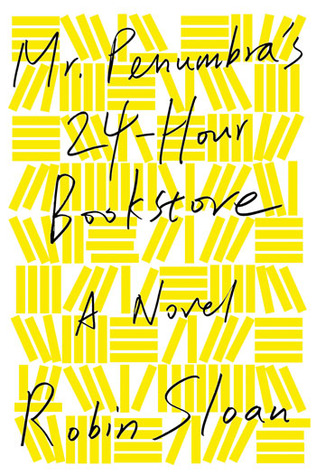
Mr. Penumbra’s 24-Hour Bookstore by Robin Sloan is a gleeful and exhilarating tale of global conspiracy, complex code-breaking, high-tech data visualization, young love, rollicking adventure, and the secret to eternal life—mostly set in a hole-in-the-wall San Francisco bookstore.
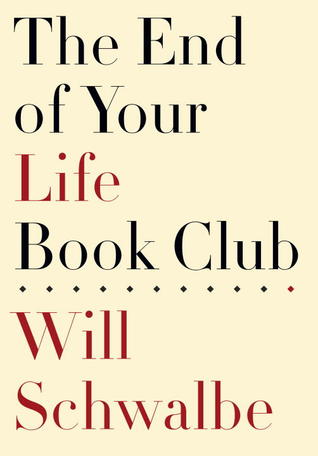
 

What are you reading? Will Schwalbe asks his mother, Mary Anne in The End of Your Life Book Club. Sitting in the waiting room of the Memorial Sloan-Kettering Cancer Center, Will and Mary Anne share their hopes and concerns with each other—and rediscover their lives—through their favourite books.


The epic story of The Passage continues with The Twelve by Justin Cronin. The two year wait had everyone wondering what happens next with the viral plague that had left a small group of survivors clinging to life amidst a world transformed into a nightmare.
 

November

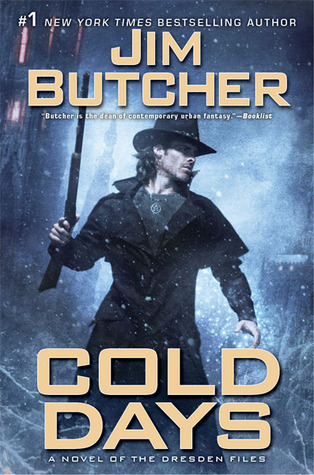
Harry Dresden is alive (spoiler alert) in the 14th book in the series; Cold Days. After being murdered by a mystery assailant, navigating his way through the realm between life and death, and being brought back to the mortal world, Harry realizes that maybe death wasn’t all that bad.
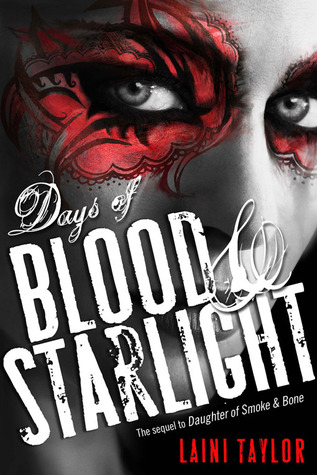
 

Once upon a time, an angel and a devil fell in love and dared to imagine a new way of living – Days of Blood and Starlight
continues the series after Daughter of Smoke and Bone. Karou must decide how far she’ll go to avenge her people. A YA novel filled with heartbreak and beauty, secrets and impossible choices.

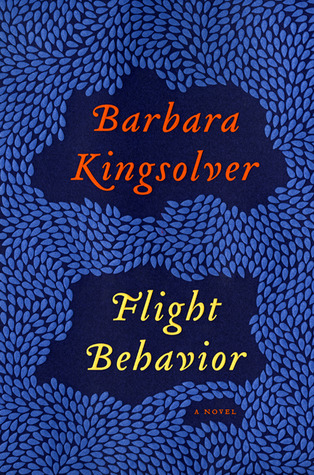
Set in the present day in the rural community of Feathertown, Tennessee, Flight Behaviour tells the story of Dellarobia Turnbow, a petite, razor-sharp 29-year-old who nurtured worldly ambitions before becoming pregnant and marrying at seventeen.
 

The first five stories in the Wool series have been put together in this omnibus. An epic story of life, love and survival at all odds and one of the most-talked and anticipated books of the year. In a ruined and hostile landscape, in a future few have been unlucky enough to survive, a community exists in a giant underground silo. Inside, men and women live an enclosed life full of rules and regulations, of secrets and lies.

December

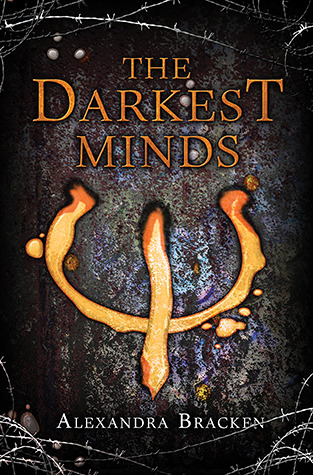
The Darkest Minds finds Ruby waking up on her tenth birthday, something about her has changed. Something alarming enough to make her parents lock her in the garage and call the police. Something that gets her sent to Thurmond, a brutal government “rehabilitation camp.”


Either this is a planned Christmas gift or the perfect holiday reading but I’ve seen a lot of mentions of Oh Dear Silvia by Dawn French. Who is in Coma Suite Number 5? A matchless lover? A supreme egotist? A selfless martyr? A bad mother? A cherished sister? A selfish wife? All of these. For this is Silvia Shute who has always done exactly what she wants. Until now, when her life suddenly, shockingly stops.

I thought it was a bit of a slow month for reading, I guess everyone is either busy or playing catch up with books missed though out the year. But then I noticed that there were a lot of classics being read. A Christmas Carol and for some weird reason Les Misérables and The Hobbit.

This year really has been a great year for books, not just for me but I’ve seen so many great books been talked about and read. I’m sure there are a lot of books coming out next year that are anticipated, so I would love to know what you are looking forward to as well as what hyped books I might have missed for the past three months.