Tag: marriage

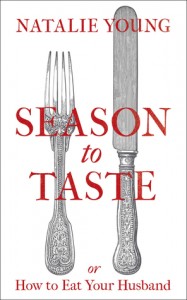
Season to Taste by Natalie Young

Posted May 22, 2014 by Michael @ Knowledge Lost in Contemporary / 6 Comments

Season to Taste by Natalie YoungTitle: Season to Taste (Goodreads)
Author: Natalie Young
Published: Tinder Press, 2014
Pages: 288
Genres: Contemporary
My Copy: Paperback

Buy: AmazonBook DepositoryKindle (or visit your local Indie bookstore)

As most people know, I love a good transgressive novel and Season to Taste or How to Eat Your Husband sounds like the type of book I was going to enjoy. The premise is simple; after thirty years of marriage Lizzie Prain has had enough.  A single blow with the shovel caves his head in and now she is free but she also has to dispose of his body. Her method appealed to her practical side; she was going to eat him.

The book sounds deliciously macabre and to some extent there are some dark moments but there was something incredibly wrong with this novel. Season to Taste is writing in two styles. Firstly you have the overall story but playing alongside of the plot is little notes Lizzie writes to herself, to remind her of what needs to be done. This serves as a psychological insight into her life as well as a shopping list and possible recipe ideas.

The major problem I had with this novel was with the protagonist. I could not tell if she was a sociopath that showed no remorse or her psyche was over looked. She felt rather flat overall; I wanted to believe that Lizzie was dead inside from a crippling marriage but every part of her felt fake and emotionless. This made the book rather dull and I found myself losing interest in the character and the novel really quickly.

Putting aside the dark nature of Season to Taste, I want to quickly touch on what this book was trying to explore. Lizzie Prain is fifty-three years old and had married for thirty years; she would not have known much of a life outside of childhood and marriage. This novel tries to explore the concept of new beginnings, life after marriage and finding yourself. This might have been effective if my interest was held. I feel like the remorse of killing her husband could have played a part in the novel; it would have been an interesting avenue to explore. The ideal of freedom, life after a bad marriage but the guilt that eats away at her; I feel like this would have made for a better read.

Killing her husband and eating him served more of a metaphor but it really didn’t work. New beginnings can be a good topic to write about and if you took out the killing and eating of her husband it might have worked. Granted I might not have picked up the book in that case; I think the author was on the right track but her attempt to go for the shock value didn’t pay off. Going for a light and humorous story doesn’t work when you are also try to be gruesome and dark at the same time. There are plenty of other novels that explore the psychology of a killer or sociopath but this isn’t one of them.


The Castle of Otranto by Horace Walpole

Posted September 19, 2013 by Michael @ Knowledge Lost in Classic, Gothic / 0 Comments

The Castle of Otranto by Horace WalpoleTitle: The Castle of Otranto (Goodreads)
Author: Horace Walpole
Published: Penguin, 1764
Genres: Classic, Gothic
My Copy: Audiobook

Buy: AmazonBook DepositoryKindle (or visit your local Indie bookstore)

Conrad, the heir to the house of Otranto, died under mysterious circumstances on the day of his wedding. His father, Manfred, lord of the castle, who feared the end of his dynasty, was determined to marry his son’s betrothed. However as Manfred tries to marry Princess Isabella, she escapes to a church and a number of supernatural events stand in his way. These terrifying omens soon threaten this unlawful union, as the curse placed on Manfred’s ancestor, who usurped the lawful Prince of Otranto, begins to unfold.

The Castle of Otranto established the Gothic as a literary genre and inspired Ann Radcliffe, Bram Stoker, Daphne Du Maurier and Stephen King. The Castle of Otranto has a unique blend of psychological realism, supernatural terror, guilty secrets and unlawful desires but I read this book as a critic on marriage. In 1773 The Marriage Act was passed, an act that is also known as “An Act for the Better Prevention of Clandestine Marriage”. The act was successful in preventing marriages not performed by an Anglican clergyman but also this act didn’t apply to royalty.

This act was passed eleven years before The Castle of Otranto was published and considering the fact that Horace Walpole was the Member of Parliament for Callington (1741–1754), Castle Rising (1754–1757) and King’s Lynn (1757–1768), I get the sense that he would have had strong opinions on the topic. From some quick research on Horace Walpole, I know that he had a strong interest in social and political issues. We can’t overlook his sexuality either, Walpole never married or had relationships with women; some claim he was asexual but I tend to side with the people that claimed he was a homosexual. Some of his closest friends including Anne Seymour Damer and Mary Berry are apparently lesbians as well. This information and the reading of this novel led me to interpret the fact that Walpole was against The Marriage Act.

Let’s look at the novel, Manfred was planning on ending his marriage with Hippolita and marry the much younger Isabella. The introduction of the Marriage Act (despite this book being set sometime between 1000 and 1200) meant that the marriage would have been easier to achieve and Isabella’s fear of Manfred more realistic. Putting aside Isabella’s reluctance to the marriage, there were also the supernatural events (the Church) standing in his way, in which I interpreted as the church still being against clandestine marriage despite it being possible for Manfred. I read the entire book as a metaphor of society and the church standing in the way of a desired marriage. This brings me to an interesting thought; Lord Manfred is considered the antagonist on the novel, portrayed as being deranged but I viewed this as the social view of homosexuality at the time.

There is so much more I can talk about here, like the archetype of Gothic characters (involving heroes and anti-heroes) and the setting (the Castle). While I have talked about Manfred, I want to quickly talk about Isebella and the castle. When Isebella tried to escape she turned into the outsider, a person thrown out of her community; this could also be used as a metaphor for Walpole’s feelings and sexuality. When she escaped she used the underground passages of the castle, which invokes all the characteristics of the Gothic genre; the darkness, obscurity, vastness, and the terror that may arising. Yet the castle and its mysterious characteristic could be a motif for Horace Walpole’s loneliness in the universe.

I won’t go into any more symbols, themes or motifs or this would turn into a really long review. My main interpretation of this novel is clear and I hope I have given you enough to back up my claims. While this isn’t my favourite example of Gothic literature, it was a great read and while short, there is a lot to digest. For all Gothic fans, I recommend checking out The Castle of Otranto; this is an excellent example of the gothic form.