Tag: Perfume

How Frankenstein Changed My Life

Posted June 14, 2018 by Michael @ Knowledge Lost in Literature / 2 Comments

Two hundred years ago, a book was published that literally changed my life. It is very rare to say that a book could have such a life changing effect on someone but in my case it is actually true. It happened about nine years, without going into too many details, I was not happy with myself. I was directionless and went through a self-destructive phase. While it was not just literature that saved me, I do have to give credit to my wife as well. Books ignited the spark in me that made everything else click into place. I am a very different person to who I was back then, I suddenly turned into a passionate and voracious reader thanks to Mary Shelley’s Frankenstein.

It all started with when I discovered a little radio show called The Culture Club by Craig Schuftan. This show explored similarities between music and the art world. This peaked my interest and I started reading his book Hey, Nietzsche! Leave Them Kids Alone which looked at the similarities modern rock had with the Romantic period. Looking at bands like My Chemical Romance, Weezer, and The Smashing Pumpkins. The Romantic poets were the rock stars of their time, and their angst felt very similar. I knew I had to read Frankenstein and it all fell into place from there. Reading this classic, I quickly identified with the creature Victor Frankenstein had created. Although his pain was far more real than my angst, I have people who care about me, I was just an outsider.

My feeling of not belonging in this world was similar to what I was reading in this novel. Frankenstein was the first book I picked up because of Hey, Nietzsche! Leave Them Kids Alone and I did that because of one of my favourite Smashing Pumpkin songs, Disarm. In this song Billy Corgan fantasises about cutting his parents limbs off, because he hated them for bring him into the world.

“It’s about chopping off somebody’s arms.. The reason I wrote Disarm was because, I didn’t have the guts to kill my parents, so I thought I’d get back at them through song. And rather then have an angry, angry, angry violent song I’d thought I’d write something beautiful and make them realize what tender feelings I have in my heart, and make them feel really bad for treating me like shit. Disarm’s hard to talk about because people will say to me ‘I listen to that song and I can’t figure out what it’s about.’ It’s like about things that are beyond words. I think you can conjure up images and put together phrases, but it’s a feeling beyond words and for me it has a lot to do with like a sense of loss. Being an adult and looking back and romanticizing a childhood that never happened or went by so quickly in a naive state that you miss it.”  — Billy Corgan on Disarm (RAGE, 1993)

This tenderness that Corgan reflects in Disarm is not dissimilar to the creatures own feeling. One of the most common themes I get while re-reading Frankenstein is this feeling of how society treats people who are different. For the creature, he came into this world and was immediately rejected by his creator. He was also rejected by everyone he encounters. He pleads with Victor Frankenstein to create him a companion; that is all he wants. He came into this world with love in his heart, but was denied it at every turn. Most of my early reading life focused on this idea of an outsider and how the world treated them. Books like American PsychoPerfume by Patrick Suskind and the Dexter Morgan series all deal with these monstrous characters and how the world and their situation has shaped them. I found comfort in the exploration of the outsider in literature. The idea of blaming society for the way I was felt good, but with my new found thirst for literature came a better understanding of myself and the way the world works. Nowadays I like to read transgressive fiction because it is very different to my own life but while writing this article I cannot help but wonder if it was originally because I identified with them more than with a protagonist that gets a happy ending.

Re-reading Frankenstein again I cannot help but reflect on how different each reading experience really is. There are so many different ways to read Frankenstein, commonly there is the idea of science taking things too fast, or the dangers of playing God. Or perhaps Mary Shelley wants to simply say actions have consequences. When I studied Frankenstein in university I knew a little more about Mary Shelley, so I was looking at Frankenstein with some context.

Before Shelley wrote Frankenstein she had given birth to a daughter, two months premature. This daughter only lived a few weeks, a year later she gave birth to William Shelley. After the birth of her son she suffered from postnatal depression. The birth of William happened a few months before the story of Frankenstein was conceived, so it wasn’t too surprising to see William’s name in the novel. William was Victor Frankenstein’s youngest brother, who was strangled to death by the monster. So, either Mary Shelley’s depression manifested an urge to strangle William, or there is something far more complex happening in the novel. Looking at the story arc of William’s death, we know a young woman is accused of the murder. So maybe there is something here to be said about the mother-child relationship, especially with the idea of maternal guilt and thinking about her lost daughter.

Maybe you want to explore this idea of creating life without the need of a woman, or maybe this is just a parody of creationism. Even the subtitle of ‘the Modern Prometheus’ means you can look at the similarities between this novel and Greek mythology. Paradise Lost by John Milton is another piece of literature that is often explored in relation to Frankenstein. I am struck by how many different ways we can look at Frankenstein and as I develop my own skills in analysing literature, I often return to this classic and see what I can find with a re-read. Mary Shelley is a very interesting person to read about, and I have picked up a few biographies on her, including The Monsters: Mary Shelley and the Curse of Frankenstein by Dorothy & Thomas Hoobler and Young Romantics: The Shelleys, Byron and Other Tangled Lives by Daisy Hay (my next one will be Romantic Outlaws: The Extraordinary Lives of Mary Wollstonecraft and Her Daughter Mary Shelley by Charlotte Gordon). I find knowing the context only enhances my enjoyment of a book. I know people read for many different reasons but for me it is all about educating and improving myself. I do read for escapism but I tend to enjoy a novel more if there is some interesting themes to explore.

For someone who has only been a reader since 2009, I feel like I have a lot of literature to catch up on but I still feel the urge to revisit my favourites over and over again. I started off wanting to re-read Frankenstein every year but that quickly faded away, but I still like to revisit the text, it still remains one of my favourites. Did you know there are two different editions of Frankenstein out there? The book was originally published in 1818 but it was then republished in 1831 with revisions made by Mary Shelley. While the 1831 edition is commonly the one that gets published, I like to switch between the two different editions.

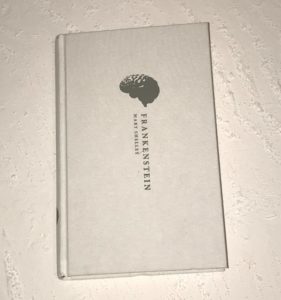
I have lost count of how many copies I own of Frankenstein. I own some beautiful editions including a new hardcover of the 1818 text from Oxford World Classics which I am currently reading. The book means so much I have copies all over the house, and one at work. Plus there is the ebook and audiobook edition I can access from my phone at any time. Literature plays such a huge part of my life, even I have trouble imagining my life without them. Frankenstein played a big part in my own transformation. All I can hope is that people continue to find something in this piece of classic literature. I will be re-reading this for years to come and I hope it continues to make an impact to people over the next two hundred years.

This beautiful edition of the 1818 text of Frankenstein was sent to my by Oxford World Classics

This review was originally published in the literary journal The Literati


Perfume: The Story of a Murderer by Patrick Süskind

Posted January 28, 2015 by Michael @ Knowledge Lost in Historical Fiction / 6 Comments

Perfume: The Story of a Murderer by Patrick SüskindTitle: Perfume: The Story of a Murderer (Goodreads)
Author: Patrick Süskind
Translator: John E. Woods
Published: Penguin, 1985
Pages: 263
Genres: Historical Fiction
My Copy: Library Book

Buy: AmazonBook DepositoryKindle (or visit your local Indie bookstore)

At birth Jean-Baptiste Grenouille was tossed aside into a pile of fish guts in the slums of eighteenth-century Paris. His mother believed he would be a still born, just like all the others and quickly got rid of him to continue working. From birth Jean-Baptiste was a little different; born without a scent but grows into a man with an absolute sense of smell. He quickly found work as a perfumer, learning the trade. He wanted to capture the scents of the world, but more importantly the one that intoxicated him; the scent of a beautiful young virgin woman.

When first published in German in 1985, Perfume: The Story of a Murderer (Das Parfum: Die Geschichte eines Mörders) was a literary sensation for author Patrick Süskind. Two years later it was translated into English by John E. Woods, who went on to win the PEN Translation Prize for his work with this book. The original cover (which sadly isn’t used now) was from the painting Nymphe et satyre by Antoine Watteau 1715-16, which in English translates to Nymphs and Satyr. The novel was the inspiration for Nirvana’s Scentless Apprentice, Rammstein’s Du riechst so gut, Red Head Girl by Air and so on.

The point I am trying to make is that this book was a huge success that went on to inspire many. This is actually a re-read for me and I first read this almost five years ago and found myself being completely captivated but the book. When I first reviewed the novel, I said that “I love an anti-hero and Jean-Baptiste Grenouille didn’t disappoint as the cold hearted, scent obsessed protagonist.” Which is true, but this time I wanted to look at the novel a little more in-depth.

Firstly, I found it interesting the way women where portrayed within this book. At birth and childhood, women are represented as carers but his mother, wet-nurses and the nuns all reject Jean-Baptiste Grenouille. Then when he grew into a man, the role of the woman changed from carer to the object of desire. However, for Jean-Baptiste, the idea of acceptance by a woman remained strong throughout his life, but he remained alone, which made him feel undesirable.

I had been thinking about Perfume since first reading the novel and I came to the conclusion that scent worked as a metaphor for lust in this book. A lust that Jean-Baptiste had towards young virgins; which is so typical and boring but I was interested in the way Süskind used smell to explore this idea of lust. While this still rung true for me the second time around, I also began to look at smell as a representation for class; the higher the social standing the better you smell.

Both ideas seem to come together at the end, when Jean-Baptiste releases the fragrance everyone smells the same; become equals. When it comes to theme of lust, everyone is over come with desire and the scent makes everyone attracted to each other. No one has to feel the way Jean-Baptiste felt, rejected from birth. However this scene left me curious, if everyone becomes desirable and equal; why is everyone straight in this scene. There is no mention of any same sex coupling and I felt a little perplexed by this; it is not like everyone is straight or no mention that the scent only attracts you to the opposite sex.

It is an interesting experience re-reading a book, I don’t often do it but I am starting to see the appeal. First time around, I really focused on the plot and when I picked up Perfume again all that came flooding back which allowed me to explore themes and ideas within the book. I was able to take what I thought previously and dive deeper into the novel which I found so much more rewarding. I think I have converted myself into a re-reader; I have already started reading The Master and Margarita again.


Measuring the World by Daniel Kehlmann

Posted December 28, 2014 by Michael @ Knowledge Lost in Historical Fiction / 4 Comments

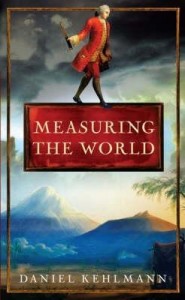
Measuring the World by Daniel KehlmannTitle: Measuring the World (Goodreads)
Author: Daniel Kehlmann
Translator: Carol Brown Janeway
Published: Quercus, 2005
Pages: 259
Genres: Historical Fiction
My Copy: Library Book

Buy: AmazonBook Depository (or visit your local Indie bookstore)

Measuring the World reimagines the life of German mathematician Carl Friedrich Gauss and geographer Alexander von Humboldt. The book follows a fictionalised account of their journey, along with Aimé Bonpland as they measure the world. Their methods where ground-breaking and this novel entangles their lives to explore their effects on science today.

This is not a book of science, this is historical fiction that explores the lives of two German scientists. While the subject matter may sound dull and fact heavy, Daniel Kehlmann handles the topic with skill. It is an impressive feat to make a subject that sounds boring come across exciting and interesting. Kehlmann’s writing skills turns the subject of science into a novel of elegance and beauty.

The two plots revolving around Carl Friedrich Gauss and Alexander von Humboldt worked well together and I found myself fully immersed in the whole experience. Having said that this is a book of science and German history so I feel hesitant in going into more details because I worry I will get the information wrong. That does make for short review but all I can really say is; read it.

Published in German in 2005 under the title Die Vermessung der Welt, Measuring the World turned into a huge literary sensation for the country. This book knocked bestsellers like Harry Potter and Dan Brown off the list. The only other German book that has achieved that (that I know of) was Perfume by Patrick Süskind.

This was a wonderful book and I learned a little about German and Prussian history. Carl Friedrich Gauss has sometimes been referred to as one of the greatest mathematicians of all time and Alexander von Humboldt as the second Columbus. Two great people of history I knew nothing about and I think the opportunity to learn something new while reading beautiful prose made for a wonderful experience.


Five Decent Movie Adaptation

Posted July 10, 2013 by Michael @ Knowledge Lost in Adaptations, Top 5 / 0 Comments

top-5Yesterday I did a Top Ten Tuesday list where I looked at ten of the Worst Movie Adaptations in my opinion. These were books that really don’t translate well to the screen. But as a counter balance I thought I would give you five good movie adaptations. Yes only five, there are not many adaptations that I feel work as well as the book. So in no particular order:

5. Bridget Jones’s Diary by Helen Fielding

4. Rebecca by Daphne du Maurier

3. A Clockwork Orange by Anthony Burgess

2. The Perks of Being a Wallflower by Stephen Chbosky

1. Scott Pilgrim Verse the World by Bryan Lee O’Malley

Also I would like to include The Virgin Suicides, Revolutionary Road, Perfume, Fight Club, The Road, American Psycho and Tinker, Tailor, Soldier, Spy which are not perfect but they are still pretty decent compared to some of the other adaptations out there. Now it’s your turn, what do you like that worked well as a book adaptation? Maybe next time I’ll look at decent Noir adaptations.


My Experience with the 1001 Books You Must Read Before You Die List

Posted October 27, 2012 by Michael @ Knowledge Lost in Literature / 29 Comments

One of my favourite bookish podcasts is The Readers; if you haven’t heard it before go and subscribe, it offers random book-based banter which has been both enjoyable to listen to and offers some interesting ideas for future blog posts. This post is inspired by the latest episode about the “1001 Books You Must Read Before You Die” list.

With the newly revised book being released earlier this month, I thought I would share my experience with this list. As most people know I was never much of a reader, I think I read about one or two books a year. In 2009 something clicked in my head (thanks to Craig Schuftan) and I wanted to read everything I could get my hands on. But I had a problem; I really didn’t know where to start. I found plenty of books that looked interesting but I wasn’t sure if they would fulfil my yearning.

So with no idea of what my literary tastes were and not knowing what books would be required reading. I turned to a “1001 Books You Must Read Before You Die” list which I found while searching books that were considered required reading for everyone. The thing I loved about this book was the fact that it was a combination of old and new books ranging from all different genres. This helped start my literary journey and find a real joy in being a literary explorer.

While I don’t read many books from the list now, I discovered the types of books and genres I really like and what hasn’t worked for me. Personally I would love to read every book on the list but as I discovered there are now four different editions. Do you read the entire list from one edition or combine the lot and read every book ever mentioned? I’ve come to the conclusion I would rather use the list as a guide in addition to discovering new books on my own accord as well.

I will always hold this list close to my heart because it did nurture my newly formed love of reading but it also helped my pretentious level as a book critic. I wish the publisher released a list of the books that have been removed from the new edition, I know there was a spread sheet that had the first three lists on it, so you can see which ones disappeared from each update and tick off all the books you’ve read but sadly that was taken down for copyright violations.  The publisher should look into something similar as I’m sure there are people out there that are willing to pay a small fee to have access to all the lists for referencing.

As a point of reference since beginning my reading journey back in 2009, I’ve now read over 400 books and seventy six of them were from the “1001 Books You Must Read Before You Die” list. The list is still a point of reference for me when I feel like I’m not reading books that are literary enough. While the list covers most genres and offers an interesting perspective on your reading life, it never really felt like it was full of highly literary novels. For me it was just a way to explore and cover the essentials in reading. Here are ten books from the ones I’ve read that I loved and highly recommend;

  1. Frankenstein by Mary Shelley
  2. Crime and Punishment by Fyodor Dostoyevsky
  3. Wuthering Heights by Emily Brontë
  4. Rebecca by Daphne du Maurier
  5. Slaughterhouse Five by Kurt Vonnegut
  6. Catch-22 by Joseph Heller
  7. The Big Sleep by Raymond Chandler
  8. Foucault’s Pendulum by Umberto Eco
  9. Perfume by Patrick Süskind
  10. A Clockwork Orange by Anthony Burgess