Tag: pulp

Grifter’s Game by Lawrence Block

Posted August 7, 2013 by Michael @ Knowledge Lost in Pulp / 0 Comments

Grifter’s Game by Lawrence BlockTitle: Grifter’s Game (Goodreads)
Author: Lawrence Block
Series: Hard Case Crime #1
Published: Hard Case Crime, 1961
Pages: 205
Genres: Pulp
My Copy: Personal Copy

Buy: AmazonBook DepositoryKindle (or visit your local Indie bookstore)

Leonard K. Blake is a conman hiding out in Atlantic City, but of course that’s not his real name, nor is it David Gavilan or Joe Marlin. He has a knack for telling a story and knows exactly what people want to hear in order to take advantage of them. Then he meets Mona, a blonde bombshell, bored wife to a millionaire. He can make a lot of money from this woman but when he steals a suitcase full of heroin from a train station that belongs to her husband things change. A brick of pure heroin will either make him rich or dead and so could Mona.

Originally released in 1961 under the name Mona and later released as Sweet Slow Death, Lawrence Block’s novel Grifter’s Game (the title he originally wanted to use) is the first book in the now popular Hard Case Crime series. This is a gritty noir at its best, something Block is known for and something readers come to expect from this imprint. A fast paced narrative that will keep the reader on its toes right to the end.

I’m not going to lie to you, while reading this book I have to think back on my past and all the dumb things I’ve done and I thought to myself, I might have been a pretty good grifter if I was born back then. Honestly I knew how to lie and manipulate, not something I’m proud of and not something I ever want to do again. So this book hit a little close to home with me and reminded me of the past I would rather leave behind; something that makes this a difficult book for me to read.

The more I read Lawrence Block, the more I like his style which is good because he has published a lot of books, most in different series so it’s always nice to read a standalone. From the snappy dialogue to the plotting, Block has really crafted his style that could rival some of the greats from the golden age of pulp. He really knows how to write both noir and hard-boiled novels that remain gritty and fresh, after so many books I’m not sure how he manages to do this.

Grifter’s Game is probably not the best novel to start with if you’ve never read Lawrence Block, but is definitely one worth trying. He really captured how I would picture an immoral, unsympathetic lowlife and somehow manages to still get the read to care about what happens. This was the perfect book to launch the Hard Case Crime imprint with.  It has everything you want in a pulp; plot, fast pacing, complex characters, gritty prose, great dialogue and the shocking end.


Joyland by Stephen King

Posted July 22, 2013 by Michael @ Knowledge Lost in Crime / 0 Comments

Joyland by Stephen KingTitle: Joyland (Goodreads)
Author: Stephen King
Series: Hard Case Crime #112
Published: Hard Case Crime, 2013
Pages: 283
Genres: Crime
My Copy: Hardcover

Buy: AmazonBook Depository (or visit your local Indie bookstore)

Devin Jones has gotten a job working as a ‘carnie’ in a small North Carolinian town. The amusement park Joyland was a site of the legendary unsolved murder. The house of Horrors was where this murder took place, half way through the ride a man cut the throat of his date and threw the body out of the carriage. It wasn’t until the end of the night that they found the dead body (most people thought it was part of the house of horrors) but by then the man was long gone.

Stephen King is best known for his fantastical and horror elements but since this was a Hard-Case Crime novel, I expected more of a pulp novel rather than what I got. There was that pulp and gritty whodunit element but true to King style there was some supernatural components within the novel as well which for me seemed unnecessary; I felt like King sets up the novel in his normal horror fashion and then completely forgets about it. It wasn’t till right near the end that he returned to this plot arc, almost like he needed to wrap everything up in a nice neat bow so he had to finish off that arc as quickly as possible. Without these supernatural elements the novel would remain just the same and maybe even more realistic. There is the fortune teller who gets more air time but then that could be just a character that is really good at reading people and wouldn’t need to be explained.

Both the whodunit and horror genre styles don’t really fit this book anyway; this is a coming of age novel, dealing with Devin’s first real job, his first heart break, first sexual experience, as well as friendship and loss. The story feels like a noir or pulp novel by the way it is written but that all takes a backseat to the building of characters. Not that there is anything wrong with that but in pulp novels it’s all about the minimalism and jamming the novel with a fast paced plot. Joyland didn’t do this and I struggle to find a reason why this book was added to the Hard-Case Crime series.

So once I got past my initial expectations, Joyland does turn out to be a fairly enjoyable novel. It’s not what I wanted but it was still good. I’ve not read much of King in the past (The Gunslinger and 11/22/63) and both those novels really were not what I would have expected from a Stephen King novel. I must remember to read some of his classic novels like The Shining, The Stand or It just to see if what I expect from this author is different. I never expected so much character development and I never expected his books to focus more on the relationship with other characters, but it seems I might be misinformed about his works.

Joyland mainly focuses on Devin’s heartbreak, the girl he thought was the one and everything was perfect. You know your typical young adult, love struck thinking that never seems to be correct. This heartbreak really affects Devin, as all first heartbreaks do, but then he meets single mum Annie and her son Mike. Mike is such a great character and probably the only one I actually liked within the book and the relationship between the three blossoms in a somewhat awkward way. I felt like King had a good handle on the difficult relationship but some of the directions he took left me perplexed. This plot arc took up about two hundred pages and that only left 80 pages to really return to the mystery of Joyland.

As much as I enjoyed this book, I feel this book wasn’t marketed properly, this is not a noir style mystery and I don’t think it deserved to be put in the Hard-Case Crime series. As a standalone Stephen King novel I probably wouldn’t have picked it up if it wasn’t marketed the way it was. Interestingly King didn’t release this book in eBook format, he wanted everyone to go into their local bookstore and buy the book. Yet he didn’t restrict the sales of the book on those online bookselling websites; so really his attempt to get people into bookstores failed. Don’t go into this novel expecting pulp, this is a coming of age story, with a dash of attempt at the pulp genre.


The Last Good Kiss by James Crumley

Posted May 12, 2013 by Michael @ Knowledge Lost in Pulp / 0 Comments

The Last Good Kiss by James CrumleyTitle: The Last Good Kiss (Goodreads)
Author: James Crumley
Series: C.W. Sughrue #1
Published: Vintage, 1978
Pages: 244
Genres: Pulp
My Copy: Personal Copy

Buy: AmazonBook Depository (or visit your local Indie bookstore)

James Crumley’s private investigator CW Sughrue finds himself searching for a runaway young woman, missing for ten years. But this is not how it started out; he was hired by a woman to find her ex-husband, Abraham Trahearne before he drinks himself to death. A confrontation in the bar that results in Trahearne being injured in hospital puts Sughrue in a position to look for this missing woman.

This hard-boiled novel is told in a way I don’t think has been done enough in a pulp crime novel. A parallel narrative exploring the problematic relationship between Sughrue and the wandering alcoholic novelist, and the three femme fatales in Trahearne’s life, just to make things more complex. Apart from that, you have the usual elements that make up a hard-boiled novel; alcohol, money, love, sex, power and violence.

Somehow James Crumley has a refreshing voice for this genre; I’m not sure if it is just that I’ve not read enough hard-boiled novels set in the seventies or there is something else there. I would put Crumley somewhere between Raymond Chandler and Jim Thompson; he doesn’t have the plotting skills and wit that Chandler has but he isn’t as violent and philosophical as Thompson. The narrative, while in a first person point of view, manages to switch between making the reader feel like they are in the same room trying to piece this mystery together, and then all of a sudden you are inside CW Sughrue head reading all his thoughts, emotions and memories. This isn’t easy to do but Crumley does this so seamlessly that you don’t really notice it happening. This narrative, mixed with the cynicism and low regard to society is what I think makes this book so refreshing.

This novel deals a lot with sex; Sughrue’s personal integrity and professional ethics are corrupted by the sexual desire towards Catherine; a desire she uses to manipulate him. Trahearne hasn’t been able to be creative because of his sexual desire with Melinda and his attraction towards his mother. Then there is Betty Sue, who just has a sexual desire towards everyone in the book. It’s important to know at the core of this books portrayal of sexual desire is the cynical belief that such corruption is unavoidable and even inevitable.

The Last Good Kiss also deals with the idea of identity and trying to escape your past, but ultimately realising you can’t run. Betty Sue hides her true self between layers of masks and other identities; she is running from her sexually exploitative time in San Francisco but it all comes back in the end. Trahearne can’t escape his infidelities, alcoholism and his ex-wife’s fury. All of them fail to realise that the past defines the present. Their mistakes in the past do not have to define their future but helps them grow; this book just ends up being a twisted celebration of life’s obstacles shaping our personality.

Admittedly I found myself being bored in parts of this book and wanting to skim read, but I persevered and found some interesting elements that stopped this from being a generic crime novel. CW Sughrue, is an alcoholic ex-army officer turned private investigator and that dark past is what makes me want to keep reading the series, just to discover what he is running from.  The Last Good Kiss has been described as the most influential crime novel of the last 50 years, influencing people like Michael Connelly, George Pelecanos, Dennis Lehane and even Neal Stephenson; that alone is an impressive reason to check this book out. While I think I prefer Jim Thompson for style and message, James Crumley is an author I plan to explore more of.


Shoot the Piano Player by David Goodis

Posted May 6, 2013 by Michael @ Knowledge Lost in Pulp / 0 Comments

Shoot the Piano Player by David GoodisTitle: Shoot the Piano Player (Goodreads)
Author: David Goodis
Published: Prion, 1956
Pages: 196
Genres: Pulp
My Copy: Library Book

Buy: AmazonBook Depository (or visit your local Indie bookstore)

Haunted by his past, Eddie plays to forget. Hiding from life, he plays nightly at a small joint on Skid Row; a place for hookers, lowlifes and crooks. A washed-up classical pianist, he finds himself bottoming out — he’s only care in the world is stroking the keys in this dive bar. When his brothers get in trouble with some gangsters, he finds himself being dragged into the chaos of his no-good family.

David Goodis really knows how to create a bleak world, which I did find myself being sucked into from the very start. Yet I tend to think that maybe Goodis missed the mark a little with this novel; there was something missing and the end result  was not as compelling as others in this genre. I think the narrative was a bit flat; do not get me wrong, I love the existentialism, alienation and angst that were coming from Eddie but I think it failed to be as melodramatic or psychological as I would like from a noir novel like this.

Eddie was suppose to be an empty shell, not even closely resembling his former self and I think here is where I had the problem. There was no real character development for Eddie as there was nothing really there.  He wasn’t hard-boiled, he was not witty or intelligent in any way; he just seemed to not care at all. Sure he tried to survive but as a character I thought of him as flat and boring. Lena, on the other hand, seemed like there was so much hidden from the reader but she never really got enough time in the book to explore that.

Another issue I found was the books was jammed back with dialogue and I feel like David Goodis was better at building atmosphere. I am not saying this is a bad book or that I did not enjoy it; I had a lot of fun reading this book. I just wanted to look at what let me down with the book as well as what worked. Shoot the Piano Player moves at a frenetic pace and if it wasn’t for the over use of dialogue to slow it down, this could of been a real page turner. This novel also feels really different to other noir novels; the style feels the same but there is something about this novel that makes it unique, possibly the execution of the plot but I cannot put my finger on it.

I have  mixed feelings about this novel, at times it is amazing then you turn the page and it almost flat lines. Almost like it had it’s own emotions and suffers from severe mood swings. This balance never felt right; I get the impression this would work a whole lot better as a movie. In fact I think the movie French noir classic directed by François Truffaut and starring Charles Aznavour in 1960 was what held this book firmly in place with the other great noir novels. I wonder if the movie was not a success would this book fade into obscurity like the rest of David Goodis’ novels.

I did not intend to be so hard on this novel, I wanted to enjoy it and to some extent I did. Just in the end the cons far outweighed the pros. I have yet to see “Tirez sur le pianiste” but if I get my hand on it I think I would be correct in assuming that it is better than the novel. Add more angst, existentialism, melodrama or psychological elements and fix my issues; that would be the perfect pulp novel. Although then you will be more likely be reading a Raymond Chandler, James M Cain or Jim Thompson novel.


What it Was by George Pelecanos

Posted April 17, 2013 by Michael @ Knowledge Lost in Pulp / 0 Comments

What it Was by George PelecanosTitle: What it Was (Goodreads)
Author: George Pelecanos
Series: Derek Strange and Terry Quinn #5
Published: Back Bay Books, 2012
Pages: 243
Genres: Pulp
My Copy: Personal Copy

Buy: AmazonBook Depository (or visit your local Indie bookstore)

Derek Strange left the police department to set up shop as a private investigator while his old partner Frank “Hound Dog” Vaughn remained. When a young woman comes to Strange to help find a costume ring, it leads him right to Vaughn’s active homicide case. Now both of them are working together trying to find a ruthless killer known as Red Fury.

George Pelecanos is best known as a writer for The Wire; I will admit I’ve not watched the show in its entirety but I thought I will try one of his books. I picked up this book because it was accessible but soon found out it was book five in a series about Derek Strange & Frank Vaughn. Luckily enough this read like a standalone and still felt like I learnt enough about the two to enjoy this book.

This book reminds me of those 1970’s pulp movies, but I don’t think I’ve ever read a novel with that same feel. You have the typical cool, badass African American who goes around kicking ass and then you have his former partner who is as hard-boiled as they come but since he is a cop he does things by the book. This is almost like a buddy cop situation but because they are not working together it doesn’t turn into anything formulaic.

Pelecanos packs a lot of detail into this novel; the cars, the clothes and the action packed plot but most of all the music. I cannot help but wonder if George Pelecanos was obsessed with music at the time of writing this book, because it really came through. Not only does he mention songs, albums and artists but who was playing what instrument and a little review of the song according to the character. Never have I read such an obsession with music since American Psycho.

I’m not sure if Strange had an afro but I can’t imagine him any other way with his bellbottom pants; it really was an image driven novel. I think with all the work George Pelecanos did with TV helped him world build and paint a picture. There were some clunky parts of the book but nothing really that would detract from the enjoyment of Pelecanos hard-boiled style.

I want to read more books in this series, as well as try out some of his other standalone novels. While this was book five, it was enough to convince me to explore more of this author’s catalogue, but I can’t help but wonder if reading this series out of order was one of my major problems with the book. I hear many people talking about The Night Gardener, so maybe that will be my next step into George Pelecanos style.


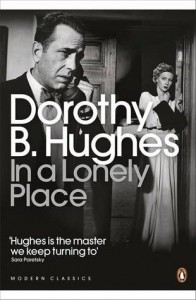
In A Lonely Place by Dorothy B. Hughes

Posted April 16, 2013 by Michael @ Knowledge Lost in Pulp / 0 Comments

In A Lonely Place by Dorothy B. HughesTitle: In A Lonely Place (Goodreads)
Author: Dorothy B. Hughes
Published: Penguin, 1947
Pages: 186
Genres: Pulp
My Copy: Personal Copy

Buy: AmazonBook Depository (or visit your local Indie bookstore)

Post World War II Los Angeles, the place you go to find the great American dream, but a stranger is preying on young women. Ex-airman, Dix Steele offers to help his detective friend solve the case and catch the serial killer in the hopes it will help him with the crime novel he is writing. Along the way he meets the luscious Laurel Gray—the femme fatale. The queen of noir, Dorothy B. Hughes blends psychological suspense with conventional hard-boiled and noir styles to give us In a Lonely Place.

Dorothy B. Hughes is known for her crime novels, 14 books primarily in the hard-boiled and noir genre and In a Lonely Place would be her most recognisable. This could be because of the Nicholas Ray adaptation starring Humphrey Bogart and Gloria Grahame or because of the psychological elements she brings to the genre. A lot of people will compare this novel with Patricia Highsmith’s The Talented Mr Ripley and while they are very similar I can’t help but thinking of the works of Jim Thompson as well. This might be because they all share the same influences Kafka, but more importantly Fyodor Dostoyevsky.

In a Lonely Place starts off like a typical noir novel and immediately the reader suspects there is something not quite right with Dix Steele. Could it be the fact that he is pretending to write a crime novel to sponge off his friends and family? Or the fact that he is a cynical misogynist? Maybe, but if you look a little closer at the writing you will find the answer. This is told in the first person but not by Dix Steele himself, like this person is with him at all times and sees everything Dix does. This sets up the psychological portrait of a woman-hating serial killer that really makes this novel work.

Towards the end of the book when Laurel Grey and the detective’s wife discover that Steele himself is the murderer, it comes as no great surprise. The book builds up like this big great reveal but there are so many elements throughout the book that give it away. I don’t think it was ever meant as a twist, just a way for Dix to find out himself. But through the whole book I was waiting and waiting for it to happen, I never really thought it would happen so late in the story.

The movie In a Lonely Place is vastly different to the book; for one thing Dix Steele is a successful screenwriter not a conman pretending to be a crime writer. Also true to Hollywood form, during the whole film everyone suspects Steele to be the killer but he turns out innocent. He still was a cynical vet but he never really had a chip on his shoulder towards the opposite sex, it felt like it was towards everyone. Also femme fatale Laurel Gray really wasn’t sassy or strong minded in the movie which was the biggest disappointment of them all.

Dorothy B. Hughes wanted to expose the misogyny of American society at that time with this book and she did a great job. The end result is this dark psychological tale that the movie adaptation butchered. Problem is I’ve seen the movie many times before finally reading the book, so it took me a long time to really get going. Both stories are worth checking out but trying to connect the film to the book doesn’t really do either of them any justice.

In a Lonely Place is worth reading; it’s nice to read a woman’s take on the noir genre. This really is a male dominated genre but women like Dorothy B. Hughes, Patricia Highsmith and Megan Abbott prove they can write noir just as well. The thing I loved most about this novel was that the influences of Fyodor Dostoyevsky’s Crime and Punishment were written all over this and yet Hughes made it her own. Make sure you check this novel out if you are a fan of hard-boiled, noir or even psychological thrillers.


The Big Nowhere by James Ellroy

Posted March 10, 2013 by Michael @ Knowledge Lost in Pulp / 0 Comments

The Big Nowhere by James EllroyTitle: The Big Nowhere (Goodreads)
Author: James Ellroy
Series: L.A. Quartet #2
Published: Vintage, 1988
Pages: 472
Genres: Pulp
My Copy: Personal Copy

Buy: AmazonBook Depository (or visit your local Indie bookstore)

The Big Nowhere is two separate tales eventually twisted together into one; an LA Sheriff’s Deputy tries to capture a brutal sex murderer while serving as a decoy to expose communism in Hollywood. Gangland intrigue and Hollywood sleaze, young deputy Danny Upshaw along with Buzz Meeks and Mal Considine find themselves caught in a hellish web of ambition, perversion, and deceit.

Like the other books in the L.A. Quartet, and other James Ellroy books for that fact, The Big Nowhere twists a story around actual events that took place at the time. The labour union battles facing the Hollywood studios, the aftermath of the notorious Sleepy Lagoon murder and the resultant Zoot Suit Riots all take place during this novel. Having read both The Black Dahlia and L.A. Confidential from this series, I have to say The Big Nowhere was a weaker novel compared to the others. The dark and violent plot was there but maybe violent sex crimes are just too far for me.

I’m not sure if it was the fact that sex murders are too disturbing or that I’ve read better crime novels now, but I felt like James Ellroy’s racist and offensive writing was taken a bit too far in this one. I really struggled to get through this book; I kept picking up this book and hitting a wall where I had to walk away for a while before going back. This is never a good sign for a book like this; I think James Ellroy was my first step into the world of noir and hard-boiled fiction but now I’ve read so many other novels I feel like it’s time to leave him behind. I will admit that I really did enjoy The Black Dahlia, L.A. Confidential and even American Tabloid from his latest series but I’m at a point where I need to decide if I want to read any more of his books. Are the others books in the Underworld USA Trilogy any good? Has he gotten less offensive with age? I keep wondering and hoping he has, because I think he’s a great writer I just can’t take anymore of the racism.

It’s really hard to enjoy a book like this when you take so much offence with the writing but there are some great noir elements throughout the book that were interesting to explore. Maybe with a little more tolerance I will return to his books because he does weave true crime elements with a great crime plot. I know the writing in supposed to reflect the times and how people spoke and acted towards other races but mixed with the graphic sex this book just become too difficult.


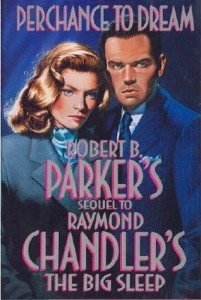
Perchance to Dream by Robert B. Parker

Posted February 25, 2013 by Michael @ Knowledge Lost in Pulp / 0 Comments

Perchance to Dream by Robert B. ParkerTitle: Perchance to Dream (Goodreads)
Author: Robert B. Parker
Published: Putnam, 1991
Pages: 217
Genres: Pulp
My Copy: Personal Copy

Philip Marlowe returns to the Sternwood mansion in the hills of Los Angeles, having been called by Norris, the butler. Marlow finds the older daughter, Vivian, still resides there and still dating gangster Eddie Mars but her younger sister Carmen, still tormented by the events of the original story, has been sent off to live at Resthaven, a psychiatric rehabilitation facility. When Carmen disappears from there, Marlowe is hired to find her.

As most people will know, I’m a huge Raymond Chandler fan, and I think Philip Marlowe is such a great character. I was a little concerned to see that Robert B. Parker was authorised to write a sequel to The Big Sleep. As far as I can see, he butchered the character, the series and it just was torture to read. Parker is something of an expert with all things to do with Chandler, having been hired to complete the 1958 unfinished Chandler novel; Poodle Springs. But being an expert doesn’t mean he can write like Chandler nor do any justice to Marlowe.

Parker’s take on Philip Marlowe is a disaster; I found none of the wit remained and as a Private investigator, he was a bit of a lightweight. The attempt at nostalgia turns into an unequivocally puerile attempt at Chandler’s coolly sardonic narrative. Chandler’s plots are like a shadowy figure in the background, making it difficult for the reader to predict just what will happen but Parker’s plot is thrown at the reader and nothing is surprising.

Hugely unnecessary, Perchance to Dream adds no significance to the series and is just pointless. While I want to read more of Marlowe’s adventures, if they are anything like this, it’s not worth it. I’m sure I can find fan-fic with better character development and plotting than this attempt at another Philip Marlowe novel. This is the only Robert B. Parker novel I’ve read and with the damage he’s done to my beloved Marlowe, I don’t think I would want to read anything by him again.


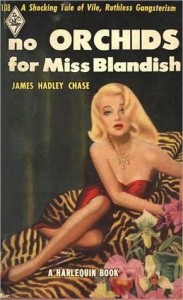
No Orchids for Miss Blandish by James Hadley Chase

Posted February 6, 2013 by Michael @ Knowledge Lost in Pulp / 0 Comments

No Orchids for Miss Blandish by James Hadley ChaseTitle: No Orchids for Miss Blandish (Goodreads)
Author: James Hadley Chase
Series: Dave Fenner #1
Published: Pan Macmillan, 1969
Pages: 188
Genres: Pulp
My Copy: Personal Copy

Buy: AmazonBook Depository (or visit your local Indie bookstore)

Dave Fenner has been hired to find Miss Blandish, kidnapped three months ago; the police have not found her despite the ransom being paid. The suspected kidnappers have disappeared, but the heiress is in the hands of Ma Grisson and her scary henchman Slim, who has wiped out their rivals and taken possession of the girl. The closer Fenner gets the more horrifying the situations appears; in No Orchids for Miss Blandish.

James Hadley Chase has a written a very raw book with No Orchids for Miss Blandish and you can see the obvious James M Cain influence though out this book. But you can’t really fault Chase for that, Cain was a master at noir and it feels like he has taken the genre to a whole new level. For a book written in 1938 I was surprised to see how violent and sexualised this novel is. But on reflection there was no real mention, Chase just hints very obviously and leaves the rest to the reader’s imagination.

From the very start this book hooks you in and takes you on a very dark journey. Written in three viewpoints you get an interesting perspective of what is going on. This was a gruesome depiction of gang life that puts a lot of the noir successors to shame; James Hadley Chase knows how to hit hard with his disturbing characters, fast pace and realistic violence.

Sure, this book may travel into the realms of predictable but this book moves so fast you don’t have time to stop and think about that. Dave Fenner has the makings of a good protagonist and I can’t wait to see where Chase takes him. There are actually two versions of No Orchids for Miss Blandish, the 1938 version which I was lucky to have read and the 1962 revision, because James Hadley Chase thought the world of 1939 too distant for a new generation of readers. When I get a chance I plan to read the revised edition; I’ve heard that it doesn’t really lose any of the raw and realism but it does have the odd mention of televisions.


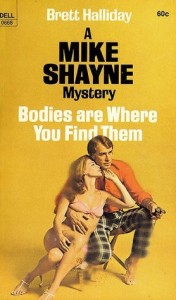
Bodies are Where You Find Them by Brett Halliday

Posted January 20, 2013 by Michael @ Knowledge Lost in Pulp / 0 Comments

Bodies are Where You Find Them by Brett HallidayTitle: Bodies are Where You Find Them (Goodreads)
Author: Brett Halliday
Series: Mike Shayne #5
Published: Dell, 1941
Pages: 188
Genres: Pulp
My Copy: Personal Copy

Buy: Hard to find visit your local Indie bookstore to order it

Mike Shayne is back, and yet again he finds himself unable to say no to a beautiful rich woman asking for his help. But maybe he will change his tune when she winds up dead in his bed and his is being accused of a crime he did not do. With the girl’s political stepfather eager to see Mike fry, will he find out just who is trying to frame him?

Bodies are Where You Find Them is the fifth (of over seventy) Mike Shayne book by Brett Halliday, but it is the first I’ve read.  Shayne is a heavy drinker, heavy fisted but a quick thinker. However the thing that really stood out with this character was the fact that he was a real anti-hero. I find with hard-boiled detectives they normally blur the line between good and evil but they always seemed to always be a hero; well in all the ones I’ve read, I’ll be happy to be proven wrong. But with Mike Shayne he often crossed the line, not particularly into evil but he was a deeply flawed detective that found me groaning at some of his actions.

The novel is a typical hard-boiled plot, with some political thriller aspects thrown in; Shayne has backed one candidate to be mayor and now he finds himself being framed. With the help of a reporter, he uncovers political corruption and dead bodies. You are never really sure exactly what is happening, I think this is because Shayne’s thought process really throws the reader off.

The Robert Downey Jr. movie Kiss Kiss Bang Bang is apparently based on this novel but I think it must be very loosely based; there are glimpses of a resemblance but nothing really that stands out apart from the idea of being constantly sidetracked  by the protagonists thoughts and unexpected bodies.

While this book wouldn’t be high up in my recommendations for pulp novels, it was an enjoyable read. There are some parts of the book that felt like they have been done to death but I do think Mike Shayne will go on to be a great protagonist; one I’ll love to hate. One thing that stayed in the back of my mind was the amount of cognac Shayne drank; seriously I kept imagining just how hard it would be to be a private investigator if you are plastered all the time. I wonder if anyone have written or filmed a satire about a PI that is too drunk to solve or do anything. Bodies are Where You Find Them is worth reading for pulp fans but if you are new to this genre maybe check out these recommendations.