Tag: The Great Gatsby

Fear and Loathing in Las Vegas by Hunter S. Thompson

Posted March 30, 2015 by Michael @ Knowledge Lost in Book of the Month, Classic / 2 Comments

Fear and Loathing in Las Vegas by Hunter S. ThompsonTitle: Fear and Loathing in Las Vegas (Goodreads)
Author: Hunter S. Thompson
Artist: Ralph Steadman
Published: Harper Perennial, 1971
Pages: 230
Genres: Classic
My Copy: Paperback

Buy: AmazonBook Depository (or visit your local Indie bookstore)

Journalist, Raoul Duke heads to Las Vegas with his attorney Dr Gonzo in order to cover the Mint 400 motorcycle race. After experimenting with some recreational drugs, LSD, ether, cocaine, cannabis and alcohol, their assignment was quickly abandoned. What follows is a series of hallucinogenic trips that end in disaster from trashed hotel rooms, car wrecks and much more. Fear and Loathing in Las Vegas: A Savage Journey to the Heart of the American Dream is a roman à clef, with autobiographical elements in which Hunter S. Thompson writes a retrospective of the 1960s countercultural movement.

Hunter S. Thompson was a journalist, but he was best known for his novel Fear and Loathing in Las Vegas. While working in Journalism he coined the term Gonzo journalism which is a writing style he adopted for his first person narratives. The style is a combination of fact and fiction that allows Thompson a more personal approach to his articles. Combining elements of sarcasm, humour, exaggeration and profanity it allowed a first person look into social criticism. Fear and Loathing in Las Vegas was a result of Gonzo journalism and was originally published as a two part series in Rolling Stone magazine in 1971.

When thinking about the life of Hunter S. Thompson, I find it hard to imagine him as someone who  critiques the 1960s counterculture. I think of him saying things like “I hate to advocate drugs, alcohol, violence, or insanity to anyone, but they’ve always worked for me.” Thompson has often stated that this novel was an exploration into the death of the American Dream but his views on counterculture are so fascinating. Drawing inspiration from his two favourite novels The Great Gatsby and On The Road, Thompson combines ideas of travelogue and the American Dream and goes on to show the reason why drug use was not the answer to social problems.

Fear and Loathing in Las Vegas is a pretty confronting novel; the descriptions of drug-induced hazes and lurid hallucinogenic trips are very vivid and confronting. I am pretty sure I have read this book in the past but I had not marked it as read on Goodreads, LibraryThing or even the spreadsheet I keep. However going into the novel everything felt so familiar and I cannot tell if it was due to the movie adaptation or if I have actually read the book before.

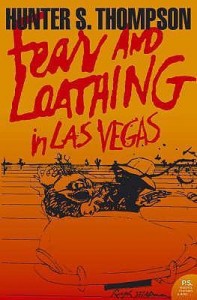
The experience of reading Fear and Loathing in Las Vegas is enhanced by the illustrations done by Ralph Steadman. My edition of the book stated in the introduction that Hunter S. Thompson requested the art to be done by Steadman because he believed this illustrator really understood the concept of Gonzo journalism. The novel is an interesting book and well worth exploring, and I was interested to see the satirical side and surprised at the way Thompson criticised his own lifestyle in this autobiographical novel.


Careless People by Sarah Churchwell

Posted December 19, 2013 by Michael @ Knowledge Lost in Non-Fiction / 3 Comments

Careless People by Sarah ChurchwellTitle: Careless People (Goodreads)
Author: Sarah Churchwell
Published: Virago, 2013
Pages: 358
Genres: Non-Fiction
My Copy: Paperback

Buy: AmazonBook DepositoryKindle (or visit your local Indie bookstore)

Since the publication of The Great Gatsby in 1925, it has been talked and talked about. Some people were forced to read it in high school, some hate it and others love it. No matter what you think about the book you can’t deny its significance. Careless People looks at The Great Gatsby, F. Scott Fitzgerald and what was happening during the Jazz era. More specifically the months when this classic too place.

I loved The Great Gatsby, the first time I read it I got little out of it (see review) but the second time around, I feel like I really understood it (see that review as well). Though I’ve come to realise this novel is full of layers and the more you read and research the more you will get out of this novel. It has been widely though that The Great Gatsby was autobiographical in nature so understanding F. Scott Fitzgerald is important when reading this classic critically.

Sarah Churchwell has made life a little easier for people that love and want to learn more about this novel. Careless People looks at the text and then different events that were happening at the time of writing this novel. She also talks about the Fitzgeralds (a very interesting couple) and tries to give us some context about the motivations and thoughts behind this Magnum opus.

So you get historical context as well as a unique look into the lives of the Fitzgeralds and what we call the Jazz Age. I really enjoyed this book, as a lover of The Great Gatsby (not the terrible movie) I found it fascinating to learn about just what has happening at that time, especially in New York and F. Scott Fitzgerald. One of the most interesting thinks I learnt from the book was about the lexicon, and new words coined at the time that are used today.

Something I often worry about when reading a non-fiction book like that is referencing. It is not common practice but I seem to respect a book more if I can see where information was found. Careless People did a great job with this; over 50 pages of notes and a bibliography so if you are interested (like me) you can look further and do some independent researching. Part biography, literary criticism, history and true crime, Careless People has a lot of information in it but it is only a scratching the surface on all accounts.

I wish I had this much to say about a book, especially the ones I love; I just want to dive in and learn all I can about it. I often struggle to write a review post, but one day I hope I can pull something off like this; keep an eye out for my 400 page reviews. It is clear that Churchwell is passionate about The Great Gatsby. This would be a great companion next time you read the classic, I can imagine how helpful it would be. I loved Careless People; I want to read more books like this, particularly about novels I love.


Top Ten Tuesday: The Worst Movie Adaptations

Posted July 9, 2013 by Michael @ Knowledge Lost in Adaptations, Top Ten Tuesday / 0 Comments

I had so much fun doing Top Ten Tuesday last week that I thought I would join in again. Top Ten Tuesday is a book blogger meme that is hosted by The Broke and the Bookish and this week the theme is: Top Ten Best/Worst Movie Adaptations. I want to look at ten books that should have never been made into movies because they never work and never will work in this particular format. These are mainly books that have a strong internal monologue, the emotions and inner turmoil is vital to the book and/or they are too many narrators to really work.

10. The Hitchhikers Guide to the Galaxy by Douglas Adams
There was a mini-series that wasn’t too bad but the latest attempt at adapting this movie was so bad. I’m a fan of Zooey Deschanel, Martin Freeman, Bill Nighy, Stephen Fry and John Malkovich but no one could save this movie.

9. Pride and Prejudice by Jane Austen
I’m sorry but the 2005 film just doesn’t work for me, there is none of Austen’s wit and only really covers the basic story. I only recently read Pride and Prejudice and adored it but most of the things I love about this book don’t translate to film.

8. Dune by Frank Herbert
David Lynch was faced with the impossible task of turning this seminal sci-fi classic into a movie and he failed, hard.

7. Catch 22 by Joseph Heller
One of those movies, I wish I could unsee. The book was so great, why would they destroy that with a film adaption?

6. Anna Karenina by Leo Tolstoy
The most recent adaptation was a horrible, horrible adaptation of such a wonderful book. It was weird how they did the movie and they left so much out. I’m not a fan of Keira Knightley so I was looking forward to the end. I’ve not seen any of the other adaptations of this classic and I never want to see them.

5. The Great Gatsby by F. Scott Fitzgerald
I keep meaning to write about the Baz Luhrmann version but keep putting it off. This is a book about unlikeable characters and symbolism, and that never worked. To be honest I don’t think Baz read the book and just tried to remake the old Robert Redford movie.

4. Dracula by Bram Stoker
I’ve never seen a Dracula movie that actually works, it’s hard to be faithful to Bram Stoker’s seminal piece of literature and still try to adapt it.

3. The Scarlet Letter by Nathaniel Hawthorne
I’m looking at you Demi Moore, Gary Oldman, and Robert Duvall. It doesn’t work and it shouldn’t be tried again. Try something like a modern retelling like Easy A, it’s not The Scarlet Letter but at least it works.

2. Crime and Punishment by Fyodor Dostoyevsky
Most of this novel plays out in the mind of Rodion Raskolnikov; mental anguish and moral dilemmas don’t translate on the screen, I never have watched a Crime and Punishment adaptation and I don’t think I ever will.

1. Frankenstein by Mary Shelley
No, just stop it, you will never get it right in a movie, you can’t tell both Victor and Monster Frankenstein’s story at the same time and explore their thoughts and emotion on the screen. Stop trying to ruin my favourite book.


My Top of the First Half of 2013

Posted July 4, 2013 by Michael @ Knowledge Lost in Top 5 / 0 Comments

top-5It’s that time of year, like most serious readers, we get to half way through the year and we start to reflect on what we liked most in the past six months of reading. I thought I might as well do a post about what I thought was great, but I always struggling with posts like this. Do you pick the best books you’ve read in the past six months or the best books released in that period? So normally I do a bit of both; a top five list of each to make a top ten list (which seems the norm).  When I started doing top five lists on this blog, I picked the number five because I thought I hadn’t read enough books to necessitate a top ten list, but it turns out maybe it was just easier, so I stuck with it.

Top Five Reads Released In the First Half Of 2013

5. TransAtlantic by Colum McCann

4. The Love Song to Jonny Valentine by Teddy Wayne

3. Tenth of December by George Saunders

2. Burial Rites by Hannah Kent

1. The Son by Phillipp Meyer

Top Five Reads Of the First Half Of 2013

5. Infinite Jest by David Foster Wallace

4. The Remains of the Day by Kazuo Ishiguro

3. The People of Forever Are Not Afraid by Shani Boianjiu

2. The Virgin Suicides by Jeffrey Eugenides

1. Pride and Prejudice by Jane Austen

With honourable mentions to Black Vodka, Gentlemen & Players, Main Street, The Unbearable Lightness of Being and Seating Arrangements. Also some great rereads include Lolita, The Great Gatsby and Heart of Darkness (which I really got a lot out the second time around).

Now it’s your turn to let me know of your favourite books, the new releases and the older books. It doesn’t matter; just what you discovered and loved.


Monthly Review – May 2013

Posted May 31, 2013 by Michael @ Knowledge Lost in Monthly Reading / 0 Comments

As May comes to a close, like all months, I want to have a quick look at what happened. First of all I managed to get fully up to date with my reviews; a few months ago I was about 20 reviews behind, waiting to be posted. Now when I finish a book the review will go up within a few days (sometimes more) and this frees me up to do other bookish posts. This is so exciting because I really like to write my thoughts about the world of literature without being confined to reviews. Also as you can see we are smack in the middle of being green with envy of everyone attending the Book Expo of America (BEA). I’m participating in Armchair BEA again and this will hopefully mean new blogs and new people to talk to. I’m also currently overseas so I’ve scheduled all these posts, I still have access to internet but I wanted to be free to comment and read instead of writing blog posts.

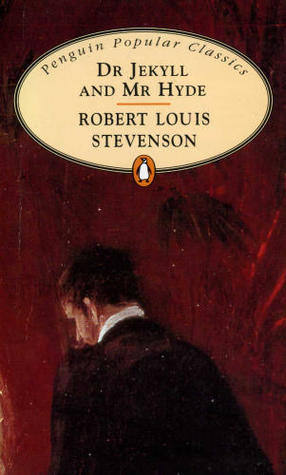
As for this month, the book club theme was Supernatural and we got to read the classic Victorian Gothic novella Strange Case of Dr Jekyll and Mr Hyde. My review went up yesterday and there have been some interesting discussions about the book and its influences in modern pop culture over at Goodreads if you’ve missed it. Next month’s book is going to be a little obscure, something I’ve not heard of; I’m really looking forward to diving into The Dud Avocado by Elaine Dundy.

Last month I was in the middle of a reading slump so I was worried that May would be a terrible month for me but I’m pleased to say the slump didn’t last long. I was able to read heaps of great books including Invitation to a Beheading, Main Street and The People of Forever Are Not Afraid. Interesting enough the highlight of the month was none of those books, but a reread of The Great Gatsby; I just enjoyed returning to that novel and then picking it apart trying to understand it. I would love to know what your highlights of the month were or even what you read this month.

My Monthly Reading


The Strange Case of Dr. Jekyll and Mr. Hyde by Robert Louis Stevenson

Posted May 30, 2013 by Michael @ Knowledge Lost in Classic, Gothic, Horror / 0 Comments

The Strange Case of Dr. Jekyll and Mr. Hyde by Robert Louis StevensonTitle: The Strange Case of Dr. Jekyll and Mr. Hyde (Goodreads)
Author: Robert Louis Stevenson
Published: Signet, 1886
Pages: 92
Genres: Classic, Gothic, Horror
My Copy: Personal Copy

Buy: AmazonBook DepositoryKindle (or visit your local Indie bookstore)

Robert Louis Stevenson’s classic gothic horror novella Strange Case of Dr Jekyll and Mr Hyde is probably known to many people; it’s been adapted many times and is often a symbol of the horror genre in pop culture. We all know the story; mild-mannered Dr Jekyll by day but at night, thanks to a potion, Mr Hyde is unleashed. But do we really know this tale; the tale of good and evil, or maybe the unleashing his secret inner persona, or maybe this is a story about dissociative identity disorder?

This is a reread for me so like I did in The Great Gatsby; I’m going to quote my old review (which is relatively short) but expand with what I know now. First we need some context; Robert Louis Stevenson had already had some success as a Victorian adventure writer before he came up with the idea of Dr Jekyll and Mr Hyde. He had already written Treasure Island and his collection of short stories New Arabian Nights; in fact it is believe that he came up with the idea while working on his revisions for the short story Markheim (which, in my opinion, is his best piece). So already you get a sense that he knows what he is doing and if you’ve read Markheim you can see the similarities clearly. It was the late into the Nineteenth Century where there were extraordinary technological advances being made and people had a growing pessimism towards a possible decline in arts and religion.

The Promethean personality is something we’ve seen in books like Dracula by Bram Stoker, but this novella has more in common with Mary Shelley’s Frankenstein. Both involve scientists that defy the laws of nature and God with major consequences. Also, they play on the concept of good and evil and the dangers of advancing sciences but they also have been written in a way that to this day people debate the meaning of the novel.

Some say this is a novella that looks at that great Victorian idea of inner conflict with humanity; that good and evil exist in us all and it is an internal struggle between the two. While others suggest that maybe Stevenson was interested in exploring mental health, especially when it comes to split personalities or what should be correctly called a dissociative identity disorder? When I first read this book I got a sense of both, saying “[That] it’s a vivid portrayal of a split personality, split in the sense that within the same person there is both an apparently good and an evil personality each being quite distinct from the other.”  As an interesting side note Vladimir Nabokov has famously argued that the “good versus evil” view within this novella is misleading, as Dr Jekyll himself is not, by Victorian standards, a morally good person.

“The novella’s impact is such that it has become a part of the language, with the phrase “Jekyll and Hyde” coming to mean a person who is vastly different in moral character from one situation to the next.” While this is true, the tale has left a bigger impact on pop culture than just one phrase and classic horror movies. Within comic books both The Hulk and Batman’s rival Two-Face have clear influences from this novella; in fact you might argue that all superheroes are influenced as well, all living a double life.  Even the framework has been used in other fables, gothic, horror and speculative fiction.

“Robert Louis Stevenson is an amazing writer and this book is well worth the read, I’ve always enjoyed a story that tries to explore two sides of a situation.” Not only does this highlight how much I’ve improved in my reviewing but it serves as a reminder of my interest in plots that explore both points of view. Frankenstein still remains my ‘go to book’ for this even though rereading Strange Case of Dr Jekyll and Mr Hyde has rekindled an interest in Robert Louis Stevenson’s thoughts on the whole “good versus evil” view. I much prefer Markheim and think I might go read it again now.


The Great Gatsby by F. Scott Fitzgerald

Posted May 17, 2013 by Michael @ Knowledge Lost in Classic / 0 Comments

The Great Gatsby by F. Scott FitzgeraldTitle: The Great Gatsby (Goodreads)
Author: F. Scott Fitzgerald
Published: Scribner, 1925
Pages: 180
Genres: Classic
My Copy: Paperback

Buy: AmazonBook Depository (or visit your local Indie bookstore)

Nick Carraway moves in next door to the young and mysterious millionaire, Jay Gatsby. Nick is soon following the dramas of Gatsby’s quixotic passion for Daisy Buchanan. Often hailed as the “Great American Novel”, F Scott Fitzgerald’s magnum opus is a portrait of the Jazz Age and the great American dream.

We all know the story, we’ve either been forced to read it in school or we’ve seen the movie, I wanted to reread this in the lead up the terrifying new adaptation by Baz Luhrmann. I remember reading it when I first started become a serious reader and I thought I would look at what I originally wrote and try and dissect and expand on it now that I think I’ve improved in reading critically.

First of all “One of the most interesting aspects of The Great Gatsby is the Point of View”, while this has probably been covered many times by people I will just cover this off again. Carraway tells the story of a group of destructive personalities but first you have to understand Nick before trying to understand the others.

Without going into anything controversial by claiming Nick Carraway was bisexual and in love with Jay Gatsby, let’s just say he idolised him. A Yale graduate, World War I veteran and relatively well off (inherited money), Carraway moves in next door to the charismatic and much talked about Jay Gatsby. But this leads to the question of just what is the relationship between Nick and Gatsby; is Jay using Carraway to get closer to Daisy? I think there friendship was real, Nick envied the person Jay was and he in return grew fond of Carraway.

The book does a decent job at shedding light on the egotistical, desire driven tendencies of human nature.” While this is true I think to expand on this you really need to look at what F Scott Fitzgerald was trying to do with this book, and to do that we must first look at the colour scheme (weird I know). There are two primary colours that play an essential role in this book. Firstly, green, the light over the river on the East Egg dock. The representation of Gatsby’s hopes and dreams, the green light represents the American dream. This would be considered objectification, that Gatsby believes that his American dream is to have Daisy.

The other major colour in this book is Gold or Yellow, the symbol of wealth and beauty. I think Yellow and Gold play as much of a significant role as the green light. This is true American goal; wealth and beauty, to be able to live without a care in the world. This is what I think Fitzgerald was trying to show us; like I said in my original review of this novel, these people are egotistical and desire driven and I think the author wanted us to see that. The problem with a carefree life is the fact that you don’t care about anything other than yourself and you don’t realise just how destructive that can be.

Carraway starts out starry eyed towards high society but slowly becomes more and more uncomfortable with the unrestrained materialism and lack of morality that comes with it.” I think that Carraway found himself sucked into high society and captivated by the presence of Gatsby. While in some respects he remains an outsider, he tries desperately to fit in and pursue the idea of the American Dream. The Great Gatsby tries to highlight the decline of this so called American dream, which originally was about discovery, uniqueness, and the pursuit of happiness but in the 1920s it seemed to decline and represent easy money and a social of leisure.

F. Scott Fitzgerald paints a unique literary picture of the time and life style, with interesting, snooty and slightly annoying characters.” I will admit that I sigh every time I read this sentence. Why was I the type of person that wanted likeable characters? Just because I hate these people, doesn’t mean that the book isn’t great and that they don’t have anything significant to teach. These people are supposed to be unlikeable, Fitzgerald isn’t trying to show us how great high society is; he wants to point out the flaws and what he sees as the decline of the American dream.

Everyone seems so self-absorbed and never think of each other; which helped drive the story beautifully.” We can probably argue if this really is the great American novel or even the great Jazz age novel. I know a lot of people hated this novel but I think there is so much this book can teach us and it’s less than 200 pages. F Scott Fitzgerald did a brilliant job of layering everything on top of each other that I feel the need to read this book again (already) just to see what I might pull out of it this time.

Someday I would like to do a post about motifs because there are so many recurring themes in the book, I think this would be a perfect novel to explore the idea of what a motif is. I read all the reviews from people that hate this book and I feel like I want to use that dreaded saying, “I don’t think you got what this book is trying to do”. But I hope this helps understand what this book really is about; while pointing out what you think I got wrong.

I reread this novel in anticipation of the new adaptation, which I’m scared about; I remember the old movie and think it failed to capture the true essence of this novel. This leads to two questions I want to ask the readers; “Is The Great Gatsby unfilmable?” and “Was Gatsby truly great?”.  I know my answers, so I’ll be interested to see what others think. I’m surprised how much fun I had dissecting my original thoughts and expanding on them.


Gatsby and My Hate for Movie Tie-In Covers

Posted May 9, 2013 by Michael @ Knowledge Lost in Literature / 0 Comments

gatsby

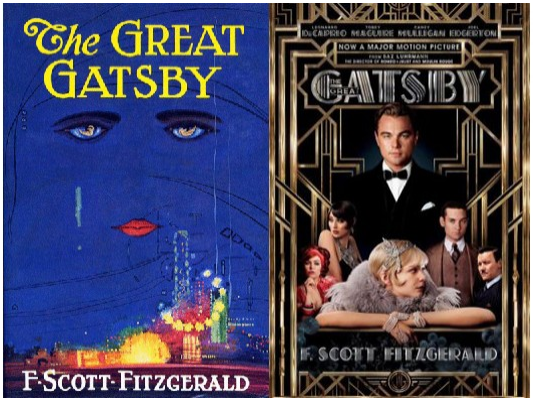
I had a little complaint about book covers changing a few days ago but now I feel the need to comment on something else cover related. Movie tie-in book covers are the worst thing out there, I know they help people recognise the book but they are just so ugly and should never be printed. The New York Times wrote an interesting article called Judging ‘Gatsby’ by Its Cover(s) in which they looked at the iconic Great Gatsby cover with the new movie cover.

Normally books go through different cover changes but when it comes to The Great Gatsby, the original cover is still the most recognised of all its covers. So when you see the movie tie-in cover it is a huge shock; do we really need a cover with Leonardo DiCaprio on it? The article is really interesting because it looks at how the original cover is out selling the movie tie-in and even an independent bookseller who refuses to sell the new cinematic edition. Saying “It’s just God-awful, ‘The Great Gatsby’ is a pillar of American literature, and people don’t want it messed with. We’re selling the classic cover and have no intention of selling the new one.”

There is even a little quote by Ernest Hemingway who called the original cover “garish” and wrote in his memoir A Moveable Feast that he was “embarrassed by the violence, bad taste and slippery look of it.” But that is probably a whole new blog post, maybe two (one to look at the complex relationship of F. Scott Fitzgerald and Hemingway).

I know I hate movie tie-in covers and go out of my way to avoid them at all cost. I know most people hate them, you can read The Week complain about them, even Books on the Nightstand had a conversation about them recently. But I want to know if there are any good movie-tie in covers out there and what you think about them?


Z: A Novel of Zelda Fitzgerald by Therese Anne Fowler

Posted February 22, 2013 by Michael @ Knowledge Lost in Historical Fiction / 0 Comments

Z: A Novel of Zelda Fitzgerald by Therese Anne FowlerTitle: Z: A Novel of Zelda Fitzgerald (Goodreads)
Author: Therese Anne Fowler
Published: St. Martin's Griffin, 2013
Pages: 384
Genres: Historical Fiction
My Copy: ARC from Netgalley

Buy: AmazonBook Depository (or visit your local Indie bookstore)

The beautiful and reckless Southern belle Zelda Sayre first met Lieutenant Francis Scott Key Fitzgerald at an Alabama country club dance in 1918; she was seventeen at the time. Scott had a big dream, to be a rich writer and he wanted Zelda to join him on this ride of a lifetime. Taking a chance on him, their life soon became a whirlwind of glamour and fame. Z is a fictionalised account of Zelda Fitzgerald and her life with the dashing F. Scott Fitzgerald who everyone wants to meet.

This Side of Paradise (1920)

The novel starts off with Zelda just shy of her 18th birthday, when she meets Scott, a man with big dreams and unlike all the others. The novel The Romantic Egotist was rejected multiple times and almost killed Scott’s dreams, but it was Zelda who kept pushing him to try again. Their attraction blossoms quickly and soon they find themselves engaged. Scott goes off to try and makes a life for them; Zelda doesn’t take too kindly to waiting and with a bit of pushing they are married. Just a little after This Side of Paradise is released with great success. The popularity of this novel turns them into celebrities; everyone wanted to get to know this new author and his scandalous wife.

The Beautiful and Damned (1922)

Life is good with their new found fame for this newlywed couple, but both are passionate people and slowly this started to cause issues. Firstly with the success of Sinclair Lewis’ novel Main Street, the popularity of This Side of Paradise fadeds quickly and soon this couple found themselves struggling to make ends meet. With all the short stories and  eventually the release of The Beautiful and Damned, which was largely based on their marriage, they were able to get back to living beyond their means.

The Great Gatsby (1925)

Scott began working on a new novel, which he was very passionate about. So passionate in fact that their marriage suffered again and Zelda planned on leaving. With a lot of beginning she eventually stayed and Scott continued to work on the novel that would eventually become The Great Gatsby. He was so passionate about what this novel would become, he could envision what was wrong with the drafts and what needed to be fixed to make it work, when it was released with mixed results, it really hurt him.

Save Me the Waltz (1932)

When Scott became friends with Ernest Hemingway, he started to spend most of his time with him. Scott loved truly loved Hemingway (platonically presumably) and with all the time he spent with him, Zelda and their daughter Scotty felt left out. Due to either boredom or isolation, Zelda’s behaviour became increasingly erratic and eventually she was diagnosed as a schizophrenic. Her novel Save Me the Waltz is a semi autobiographical account of her life and marriage.

Tender Is the Night (1934)

The failure of Save Me the Waltz, and her husband’s scornful criticism of her book by calling it “plagiaristic” and her a “third-rate” writer crushed her spirits and she never wrote creatively again. Scott became an increasingly heavy drinker, which caused many health problems for him as well, but while Zelda was hospitalised, he managed to write Tender is the Night, a book about the rise and fall of a promising young psychoanalyst and his wife (who was also his patient). These were the darkest years of their lives together and this was reflected in this novel.

The Love of the Last Tycoon (1941)

Zelda found out her husband had died of a heart attack from her parents, first thinking something was wrong with Scotty. His death, his legacy and her life afterwards were never really explored in this book. We do know that they were in debt when he died and most of his life insurance went towards covering those costs. His unfinished novel The Love of the Last Tycoon was completed by his friend, the literary critic, Edmund Wilson, based on the notes Scott had written but this wasn’t explored either.

I was really interested in reading about Zelda Fitzgerald after seeing Alison Pill’s brief performance of her in Midnight in Paris. I was more interested in her life than his; she seemed like a real fiery person and Z does really explore the first part of her life really well. The major problem I had was that I didn’t really find out enough about the struggles they faced from the 1930’s onwards. The bulk of the book takes place in the 1920’s and then really skips over their marriage and health issues. It completely missed life after his death all together.

I also had issues with the writing style, it just felt too modern and didn’t feel like how a person would talk in the 1920’s. To put it in perspective in the author notes at the end Therese Anne Fowler used the terms “Team Scott” and “Team Zelda” and the novel felt it was using modern phrases like this as well. While it was an interesting look at their lives, I can’t help wonder how much is actually true; fictionalised accounts of historical events are great but sometimes you need to know when creative licensing is in effect. I might have to read the biography Zelda by Nancy Milford and Save Me the Waltz to really know more about her life. I’m not sure why learning more about her life is more important than his life, but I’m just going to go with it.

Z is a great look at the quintessential “Flapper” of the Jazz Age and the Roaring Twenties but for me I wanted more of the other stuff. Glamour and Fame do have their hardships but it looks like they are nothing compared to what happened next. I really enjoyed learning about Scott and Zelda Fitzgerald; they had an interesting life and I know there was so much to cover. I know more about their lives than I thought I would and while I’m still not sure how much is true, it’s enough to make me want to continue exploring; right after I read every novel written by the Fitzgerald’s as well as Main Street by Sinclair Lewis.


Reading Lolita in Tehran by Azar Nafisi

Posted February 10, 2013 by Michael @ Knowledge Lost in Non-Fiction / 0 Comments

Reading Lolita in Tehran by Azar NafisiTitle: Reading Lolita in Tehran (Goodreads)
Author: Azar Nafisi
Published: Hodder, 2003
Pages: 347
Genres: Non-Fiction
My Copy: Library Book

Buy: AmazonBook Depository (or visit your local Indie bookstore)

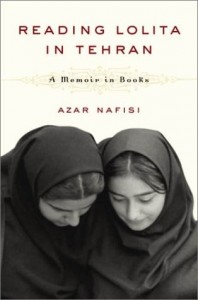
Reading Lolita in Tehran is a memoir of books read by Literature professor Azar Nafisi’s literature class during the revolution (1978-1981) up until her departure in 1997. Divided into four sections “Lolita”, “Gatsby”, “James”, and “Austen”, this memoir explores the lives of the students in a private literature class and the books that brought them all together. This is an inspired blend of memoir and literary criticism, and a moving look at the power of art and its ability to change and improve people’s lives.

I really enjoyed this book; the blend of literary criticism and memoir was really what hooked me. I especially loved the first part that focused on Lolita and the themes of oppression, authority figures trying to assert their dominance through events and a runaway convict. It was just an interesting insight from these Iranian students. It really made me want to read Lolita again and try to see what more I can get out of the book; luckily for me I might get that chance soon with the Literary Exploration book club.

I didn’t feel as strong of a connection with the other parts of this book, but I think I was just blown away by the insights into Lolita that the others didn’t have the same impact. The Great Gatsby looked at dreams and adultery all from the Iranian prospective. While Gatsby is about the American dream it was interesting to see it from a totalitarian mindset. James looks at some works of Henry James during the time of the Iran-Iraq war and the government who wants to control the liberal-minded. Lastly Austin looks at Jane Austin novels as well as the idea of abusive husbands, blindness and empathy.

This book comes together really well; you get to know these Iranian students and as well as explore some interesting ideas about the books from a perspective completely different to your own. While I would have preferred more literary criticism, I really got a lot of joy from reading this. There is a strong feminist theme throughout this book (since most of the students were women) that I suspect was the main draw card for many of the female readers of this book, and rightly so, this was an interesting look at these women. But for me, it was all about the books