Tag: The Sense of an Ending

My Thoughts on the Man Booker Changes

Posted September 30, 2013 by Michael @ Knowledge Lost in Literature / 0 Comments

man booker 2013People are talking about the changes to the Man Booker Prize and I thought I would weigh in as well. I’ve already talked about My Thoughts on the Man Booker and the love hate relationship I have with this award but I want to express my thoughts to this outrage. I follow the Man Booker and sometimes I’m impressed but I do not like the changes to the Man Booker Prize next year, and it’s not because of the inclusion of Americans.

The major change to the Man Booker is that this award will include all English written novels and I know people are upset with this. The only major English speaking country that wasn’t included in the Man Booker Prize before was America and people are upset that someone like Jonathan Franzen could win the award but I have to ask, what about the other American authors? I look at this year in American literature and I think books like The Son by Philipp Meyer, A Constellation of Vital Phenomena by Anthony Marra and All That Is by James Salter could have be nominated and I’d be happy to see them make the long list.

The major problem I have is with the change in the submission guidelines. Originally each publisher and imprint could nominate two books to be put forward for the prize but now to make room for other countries they have dropped it down to one submission each, it gets a little more concerning with the wildcard nominations. All publishers and imprints that get a book included in the longlist over the past five years get extra submissions.

  • 1 submission – publishers with no listing
  • 2 submissions – publishers with 1 or 2 longlisting(s)
  • 3 submissions – publishers with 3 or 4 longlistings
  • 4 submissions – publishers with 5 or more longlistings

The concern I have with this is the fact that some publishers will have a chance to grow and the little indie publishers might struggle. The Man Booker Prize is a huge money maker. The Nielsen Bookscan have released a list of the sale jumps for the Man Booker winners for the past 10 years, books like Wolf Hall and Bring Up The Bodies by Hilary Mantel and The Sense Of An Ending by Julian Barnes see a jump in sales of over 450% but the other books had a boost of about 700-2000%. This means that the Man Booker sales boosts can potential help a publisher with four books in a longlist while some of the little publishers could struggle to make one on the list.

Apart from worrying about the small publishers, I think the submission guidelines could mean some publishers can put forward more obscure book choices and some will only have one chance to make it onto the list and the worry is that they will submit the most popular book rather than an unknown book that deserves the attention. I know Folio is starting a new literary prize because the Man Booker Prize has become too readable (whatever that means) so they might be the one to watch in future years. What do you think of the changes? What are your concerns?

My Thoughts on the Man Booker

Posted September 7, 2013 by Michael @ Knowledge Lost in Literature / 0 Comments

man booker 2013The shortlist for the Man Booker Prize will be announced soon (September 10) and I thought I might talk about my feelings towards this prize. While I have a love/hate relationship with literary awards in general I seem to really like the longlist this year, but this hasn’t been always the case. My problem with literary prizes is that they feel more like popularity contests rather than judging books on their literary merit. Don’t get me started with the Stella prize because that is an argument that might give you the wrong idea about me (I do have similar problems with all awards that are exclusive). I digress and need to get back to the Man Booker Prize.

This prize is weird and I can’t get my head around it, some years there are a few books in the longlist that are so popular they you can’t help but know they would win; example Hilary Mantel’s Bring Up the Bodies and then other years (like this one) the longlist is so unusual and surprising that you have no idea what to expect. I don’t want to care about the Man Booker but really can’t help but get wrapped up with the hype. There have been some winners that were surprising and I ended up loving; Julian Barnes’ The Sense of an Ending is a great example of this. But I tend to be less interested in the winner and more interested with the longlist, I have a goal to one day read the entire longlist in that year. I don’t know if this will ever happen but I think it could be fun to try.

I’ve found some really interesting books in the long or shortlist; I personally think Deborah Levy’s Swimming Home was more deserving of the award last year than giving it to Hilary Mantel again. Last year’s longlist had some surprising books as well.   The Teleportation Accident by Ned Beauman was completely unexpected and I knew it was one I had to read, completely bizarre and full of unlikeable characters but brilliant. This year is no different, a mixed bag of books; I suspected TransAtlantic by Colum McCann and The Luminaries by Eleanor Catton might be favourites but I’m more interested in the unusual books like The Kills by Richard House, We Need New Names by NoViolet Bulawayo and A Tale for the Time Being by Ruth Ozeki.

I have no idea what will make the shortlist or what the favourite is for winning. I also don’t know how many of the books from the long list I will read as; of the announcement I had only read one. and now two. I would love to know what people have read and what they are predicting for appear in the shortlist or even to win. I still have no idea how I feel about the Man Booker Prize, I will continue having mixed feelings of it being a popularity contest, joining in on the hype and getting excited about the unusual books that make the list but never win. I know I didn’t really answer the question of how I feel about the Man Booker because I really don’t know but I will love to hear some arguments for and against this award.

This year’s Man Booker prize longlist

  • Five Star Billionaire by Tash Aw
  • We Need New Names by NoViolet Bulawayo
  • The Luminaries by Eleanor Catton
  • Harvest by Jim Crace
  • The Marrying of Chani Kaufman by Eve Harris
  • The Kills by Richard House
  • The Lowland by Jhumpa Lahiri
  • Unexploded by Alison MacLeod
  • TransAtlantic by Colum McCann
  • Almost English by Charlotte Mendelson
  • A Tale for the Time Being by Ruth Ozeki
  • The Spinning Heart by Donal Ryan
  • The Testament of Mary by Colm Tóibín

Why I’m Quitting Ratings

Posted June 8, 2013 by Michael @ Knowledge Lost in Literature / 0 Comments

fiction-genre-cloud-600x312Rating books is too hard, how can I give five stars to a book like Frankenstein, which is my all-time favourite novel and give five star ratings to other books like The Sense of an Ending, Super Sad True Love Story and The Marriage Plot. Sure I love those books and will reread them when I get a chance but really they are not on the same level as Frankenstein. Five Star ratings are the easiest ratings too, imagine comparing books with a 3, 3 and a half or 4 star rating. There are books there that really are not worthy to be sharing the same rating as others. Ratings are personal, often changing and are never really a true reflection of what I think about the book.

When I starting book blogging I thought a star rating is a good TL:DR way for people to see what I thought of a book but I’ve come to the realisation that maybe they do too much harm than good. So after weeks of wondering what to do about ratings I’ve decided to quit them for my blog. I probably will still rate books on Goodreads, but that is because that community is based more around ratings than reviews. It’s not an accurate representation and who knows I might quit rating there as well but I think it’s time to say goodbye to ratings on this blog.

In all honesty I would love to quit genres as well but as a literary explorer I think they need to stay, just so I knew which genres need to be focused on. My problem with genres is most books don’t fit neatly into a single genre and sometimes categorising books become too damaging. For now the genres have a place, unfortunately, but I don’t think ratings anymore. I’ve looked around the book blogger community and see a lot of blogs that don’t rate books and I think they have the right idea; trying to pick a rating for a book is hard and often it changes from day to day. I feel like I’m passionate about books and like to try and pick at books and write what I like and don’t like about a book then you see the stars and think the review doesn’t match that rating.

So let’s see how the blog goes without rating the books, if you want to know what I think of the book read my reviews or if you are lazy, check my Goodreads page. I feel like this is the right decision and I even think it is a liberating step as well. I don’t want to be constricted to telling people what star value a book is worth, read the book and find out for yourself. I rather talk about what I liked or didn’t like about each and every book.


Through the Window by Julian Barnes

Posted March 9, 2013 by Michael @ Knowledge Lost in Non-Fiction / 0 Comments

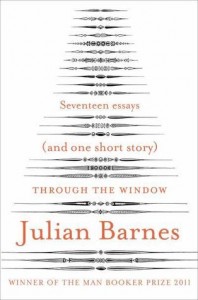
Through the Window by Julian BarnesTitle: Through the Window (Goodreads)
Author: Julian Barnes
Published: Vintage, 2012
Pages: 272
Genres: Non-Fiction
My Copy: Personal Copy

Buy: AmazonBook Depository (or visit your local Indie bookstore)

Julian Barnes won the Man Booker Prize in 2011 for his book The Sense of an Ending which has sparked a huge increase in this man’s popularity. To follow up (cash in) on the buzz the release of Through the Window followed soon after, which holds Seventeen Essays (and a Short Story) on the books and authors that have meant the most to him over his career.

I remember reading Julian Barnes’ essay A Life with Books, which really was just a look at his reading history and I absolutely loved it. So I was eager to read this collection to learn more about this wonderful author. What I found was this collection was very dry and this made it difficult to read. Barnes is a very intelligent man and he flexed his intellectual muscles to the point where it back very difficult to read for a pseudo intellectual like me.

While I found it interesting to read this author’s thoughts on Penelope Fitzgerald, Hemingway, Kipling, Madame Bovary, Ford Madox Ford and George Orwell I tend to think Barnes wasn’t connecting to the reader like he did with his novels or the essay A Life with Books. It felt more like reading an academic essay more than just someone’s passion for these authors and books.

This is a difficult collection to get through, but people interested in learning more about Julian Barnes or these topics might find something in this book for them. I read this book as soon as I finished Ramona Koval’s By the Book, A Reader’s Guide to Life so it was difficult to go from a book with so much passion for reading to something so dry.


The Sense of an Ending by Julian Barnes

Posted May 13, 2012 by Michael @ Knowledge Lost in Literary Fiction / 0 Comments

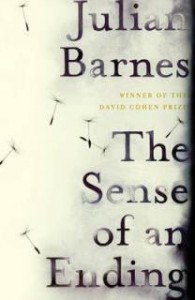
The Sense of an Ending by Julian BarnesTitle: The Sense of an Ending (Goodreads)
Author: Julian Barnes
Published: Jonathan Cape, 2011
Pages: 150
Genres: Literary Fiction
My Copy: Hardcover

Buy: Amazon (or visit your local Indie bookstore)

When I see a book that is only 150 pages, I automatically think the book won’t have much to offer, but then I remember some great novellas like, George Orwell’s Animal Farm, Anthony Burgess’s A Clockwork Orange, Robert Louis Stevenson’s Dr Jekyll and Mr Hyde and now Julian Barnes’s A Sense of an Ending. Winner of this year’s Man Booker prize A Sense of an Ending is the story I always wanted an angsty book about the teenage years to be like. I think back to Catcher in the Rye and think The Sense of an Ending is everything that classic should have been, all Catcher left me with was the need to slap Holden repeatedly.

The book follows the story of Tony Webster forty years later who receives an unexpected letter which leads him to remember his life forty years ago. The obsession with girls he had, his very first relationship and the memories of talking about philosophy, classical music and literature with his friends. This book is beautifully written, it was a real pleasure to read; it was intelligent, witty and I’d highly recommend it to everyone.