Tag: theology

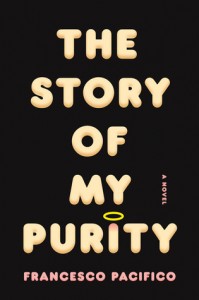
The Story of My Purity by Francesco Pacifico

Posted October 10, 2015 by Michael @ Knowledge Lost in Contemporary / 0 Comments

The Story of My Purity by Francesco PacificoTitle: The Story of My Purity (Goodreads)
Author: Francesco Pacifico
Translator: Stephen Twilley
Published: Hamish Hamilton, 2010
Pages: 293
Genres: Contemporary
My Copy: Library Book

Buy: AmazonBook DepositoryKindle (or visit your local Indie bookstore)

Thirty year old Piero Rosini wants to live a life of purity, wholly dedicated to God with a dream of become a modern day saint. Living in a sexless marriage, Piero spends his days working in a conservative Catholic publishing house. Although this publishing house was not conservative enough; they plan to publish a book that makes the claim that Pope John Paul II was secretly Jewish. He plans to leave and start an ultraconservative publishing house, where he can have more control over the content being released. The Story of My Purity is a novel that explores religion in relationship to faith, freedom and purity.

Living life with the idea of becoming a modern day saint, trying to do everything right and be perfect really sets up the satirical nature of this novel. Saint Augustine of Hippo’s autobiographical book Confessions comes to mind when I think about the difference between Saints and people who try to live a sinless life. I found that this novel really dealt with the idea of spirituality and religion in an interesting way. There is an exploration with the idea of freedom and faith when it comes to organised religion (in this case the Catholic Church).

A little understanding of theology really helps understand The Story of My Purity and the humour behind it. Firstly, when it comes to the seven deadly sins; it is alright to feel envy, greed and so on. The Church’s teaching on the seven deadly sins, is that these are gateways that can lead to trouble, so we should be aware of these feelings and learn to understand them. Although, there have been a lot of misconceptions around the deadly sins, that have led to the concept of Catholic guilt.

For Piero Rosini, he never learned to manage his lust, he went to a priest for help and was told not to think about women. Piero really took this advice on board to the point that he was unable to get an erection to consummate his one marriage. His sexless marriage was a result of him constantly trying to not think about sex, or feel a sexual attraction to his own wife. Although it proves impossible to not have sexual thoughts, and Piero’s life of purity began to unravel with the help of an attraction to his sister-in-law and spam emails.

The satirical nature of this novel comes from the fact people do not understand what the Church says about sex. Pope John Paul II did 129 lectures on the Theology of the Body, going through the Churches views on sex and sexuality. These lectures are about understanding your body, your desires and attraction. The theology should never feel restrictive by religion, rather we should be free and it should correct people’s misassumptions on the Churches teaching. Although the author may not have written this as a satire and this was actually his thoughts on Catholicism.

Unfortunately The Story of My Purity was not a great book, I loved viewing the book as a satire and exploring the theology behind it. However it did take a direction that I did not enjoy and ended up falling on its face. I am fascinated by theology and I feel like this could have been a great novel. The predictability of the book was just too much of a stumbling block for me. I am curious on Francesco Pacifico thoughts on Catholicism; I viewed the book as satire and would hate to think of it as anything else. I have also done a video review on this novel, if you are curious; although I think I talk about all the same ideas.

The Third Person Effect

Posted November 4, 2013 by Michael @ Knowledge Lost in Psychology / 0 Comments

psychologyMy wife and I were raised in in religious homes, she was raised Catholic and I come from a Pentecostal background. This often leads to some interesting debating on theology. While we are both accepting of each other’s theological views, both seem to think we are right. In psychology this is known as the Third Person Effect.

The hypothesis predicts that individuals overestimate the information they receive while generalise others. There is a misconception that the information an individual has is based on experience or fact and anyone that may disagree are falling for lies or propaganda from sources you may not know or trust. While in truth, most thinks that anyone who believes differently to themselves are gullible. That means most people believe they are far less susceptible to persuasion that they really are. We are smart, intelligent and thus not susceptible to these persuasions (more on the Dunning-Kruger Effect in the future).

We are affected by persuasion from the media, family, teachers, mentors and religious leaders. Yet we never want to believe that we are being persuaded, we don’t want to think that others influence our opinions. When we see something that may not align with our person ideals we can be defensive or automatically disregard the message as a lie or a persuasion for the weaker minded.

You’ve heard it all before; “I can see right through those lies” “People are such sheep or so stupid” and my favourite, the theosophy I want to live by; “I prefer to lead, not follow”. A lot of people think this, and with mass media and even con artists out there, so many of us must be delusional. We might even go to the extreme as to think we need to help them, stop them from falling into the trap. This could lead to censorship, banning or maybe something worse. The ‘them’ we often try to save could be anyone, children or gay and lesbians and so on.

From one extreme of a harmless debate on theology to censorship or brainwashing; these may not be connected but the whole idea of the Third Person Effect and persuasion is an interesting one. We want to think we are independent thinkers and see ourselves as having an open mind. When we disagree with someone do we automatically think they are wrong? We may not want to try and help this weak-minded people that are ignorant of ‘our’ truth but we might shake our head or feel sorry for them.

Points to think and comment on

  • We tend to think we are not like the people that we work with or went to school with or even live in the same location as us. We are unique but everyone else is thinking the same thing.
  • Mass media often use research and marketing to try and cut through the Third Person Effect.
  • How can we truly be open minded and independent thinkers?

The Testament of Mary by Colm Tóibín

Posted September 22, 2013 by Michael @ Knowledge Lost in Literary Fiction / 0 Comments

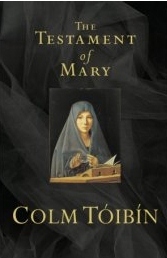
The Testament of Mary by Colm TóibínTitle: The Testament of Mary (Goodreads)
Author: Colm Tóibín
Published: Picador, 2013
Pages: 104
Genres: Literary Fiction
My Copy: Library Book

Buy: AmazonBook Depository (or visit your local Indie bookstore)

In the town of Ephesus, Mary lived alone. She had no interest in collaborating with the authors of the gospels. For her, the crucifixion of her son years ago has left her indifferent to the rest of the world. Whether or not she believes that his death was worth it, he was still her son and witnessing the events that lead to him dying have been very emotional. This is The Testament of Mary.

I read this book on the Nativity of Mary (September 8th); while I’m not Catholic it felt like the perfect day to read this novella. The book is both bitter sweet and full of rage; not for or against Catholicism. While the author Colm Tóibín is born Irish Catholic but now identifies as an atheist. While this book isn’t theologically sound, it was an interesting look into what it might have been like to watch Jesus’s journey on earth.

I never really thought about what it might have been like to witness miracles, resurrections and the crucifixion of Jesus. I couldn’t imagine what it would be like to be the mother of Jesus, let alone experiencing all these unexpected events involving her son. The rage, the compassion, the isolation and pride that Mary must of experience all comes into play in this novella.

The Testament of Mary is a tender and heart breaking book, not really religious or anti religious. The balance is just right. The only problem I have is the theology but I have to let this go and remind myself that this was a work a fiction. Being raised as a Pentecostal, I never really cared too much about the life of Mary apart from her giving birth to Jesus but then going onto marry a Catholic my views have changed a little. My views towards Mary may not be in line with my wife’s but that is beside the point.

A quick and interesting work of fiction into the life of Mary; I loved the way this book was written. It really had a way of sweeping me into a story and expressing the emotions she faced in an affectionate and sour way. We have no idea what Mary would have felt but I can only imagine the fixed emotions that went through her mind. While this novella is haunting and stubborn in it’s approach, it is a compassionate and provocative read; this doesn’t work to counteract each other but only highlights the beauty of the mixed emotions.


Spirituality and The Arts

Posted May 21, 2010 by Michael @ Knowledge Lost in Culture / 0 Comments

I just read an article from Time-Online called ‘The Spiritual History of English’, which talks about a book by Andrew Thornton-Norris of the same name. The book bases its arguments on the T.S Eliot’s premise that “culture of a people as an incarnation of its religion”. According to Thornton-Norris, literature is the result of liberalism in politics. He also claimed that previously “tradition prevented art or the individual – and relativism in belief” and as for modern art “Now almost every word that is written is a manifesto, a statement, a theology or anti-theology, rather than an unselfconscious work of art, a contribution to the tradition or communal enterprise, as it was in the Latin Classical tradition.”

I know spirituality has played a huge part in the Arts (eg. Caravaggio or any painter back then, John Milton’s Paradise Lost and Dante’s Divine Comedy) in the past but does it play much of a part now?