Tag: Virginia Woolf

My Life in Middlemarch by Rebecca Mead

Posted December 27, 2014 by Michael @ Knowledge Lost in Non-Fiction / 6 Comments

My Life in Middlemarch by Rebecca MeadTitle: My Life in Middlemarch (Goodreads)
Author: Rebecca Mead
Published: Crown, 2014
Pages: 293
Genres: Non-Fiction
My Copy: Library Book

Buy: AmazonBook DepositoryKindle (or visit your local Indie bookstore)

Rebecca Mead grew up in a coastal town in England and often dreamed of escaping to somewhere more exciting. She gained admission to Oxford and later become a journalist in the United States. When she was young Middlemarch was a favourite of hers and now as she re-reads this classic she is sharing her story along with it. My Life in Middlemarch is told partly as a bookish memoir, but also explores the life of George Eliot and her novel Middlemarch.

This book started off really well; in the prelude the reader gets to discover a bit about the life of Rebecca Mead. Beginning like a bookish memoir this insight into the author gave a fascinating look into her relationships with books, especially with Middlemarch. However as I progressed with My Life in Middlemarch, the memoir elements became fragmented and I found myself yearning to return to this style. I love bookish memoirs, I have been reading so many of them lately and this had the potential to be great but it had two other strands to weave into this book.

My Life in Middlemarch also looks at the life of George Eliot, which allows some perspective about this author. Though I had already done some extensive research. I know that the life of Eliot played a big part in understanding Middlemarch so my autodidactic nature kicked in and I learned a bit about her. I was reading Middlemarch with a reading guide as well, so I had the added advantage of gaining some insight as I read. Apart from access to George Eliot’s journals, I didn’t gain much information; it was a very broad strokes look at her life and I would have gained that information from Wikipedia. I would have been better off reading a biography or her journals instead.

Finally we come to the literary criticism within this book and yet again I felt a little disappointed. I would have liked to know what Rebecca Mead got from the book but instead she just referenced others people’s criticisms on the novel. Having smarter people’s insight into Middlemarch is useful but I would enjoy a personal opinion mixed in with all the references. It reminds me on how I write a research paper for university; I pack it with quotes and references that say what I want it to say but don’t offer much in the way of personal opinion

Combine these three parts and you have an accessible look at Rebecca Mead and her life with Middlemarch but it felt like a huge generalisation. There are some interesting elements worth exploring in this book and I feel like it could have done so much more. We have three interwoven strands within the book but nothing of substance from any of them. This would be an enjoyable book for someone that has not read Middlemarch but for me, I had just finished the classic and I picked this book up because I was not ready to move on.

Not Drowning, Reading by Andrew Relph

Posted December 7, 2014 by Michael @ Knowledge Lost in Non-Fiction / 4 Comments

Not Drowning, Reading by Andrew RelphTitle: Not Drowning, Reading (Goodreads)
Author: Andrew Relph
Published: Fremantle Press, 2012
Pages: 184
Genres: Non-Fiction
My Copy: Library Book

Buy: AmazonBook DepositoryKindle (or visit your local Indie bookstore)

As a child Andrew Relph had a reading disability, but he never let that stop him. He realised the value and importance of reading and writing and worked harder to learn these skills. Now a psychoanalyst and professional conversationalist, Relph’s book Not Drowning, Reading explores his relationship with books and how they fit into his life experiences.

The title Not Drowning, Reading is a fascinating one and also comes with an interesting backstory. It references a time the author almost drowned but also is a perfect metaphor for how Relph felt during his school years struggling with a reading disability. A feeling of struggling to keep his head above water and not get lost in the depths of the educational waters seems to give me an idea of the battle he was having internally. It is interesting to think that he went from an internal battle into a career helping others with psychological struggles.

Divided into essays on his life, Andrew Relph explores the impact literature has had on his life with continual references to his career as a psychoanalyst. Considering I have an interest in psychoanalysing literature, this was a fascinating read for me and gave me plenty to think about. Relph shares his love for authors like Martin Amis, Saul Bellow, William Shakespeare, Virginia Woolf and to my disappointment D.H. Lawrence. In fact his thesis was centred on Lawrence and the psychoanalysis.

For those people who don’t know, I consider Lady Chatterley’s Lover by D.H. Lawrence as one of the worst books I have ever read. I will admit that I just didn’t get the appeal and have never returned to Lawrence again. There are plenty of reviewers I respect and trust that love the works of D. H. Lawrence and while I hate to admit this, I feel like I need help in understanding the appeal. Lady Chatterley’s Lover was read when I first started out as a reader and there would be a lot I missed but I also suspect that it wasn’t the best starting point for me as a reader.

Now I have had a rant about D.H. Lawrence, I should return to Not Drowning, Reading by Andrew Relph. This memoir is a very deep look at his life and literature through the lens of psychoanalysis;  this reminds me I need to learn about these literary theories but for others it might come across as a little dense. I was completely immersed and fascinated by what Andrew Relph had to say but I am well aware that compared to other memoirs about literature this might be too heavy on theory for some readers.


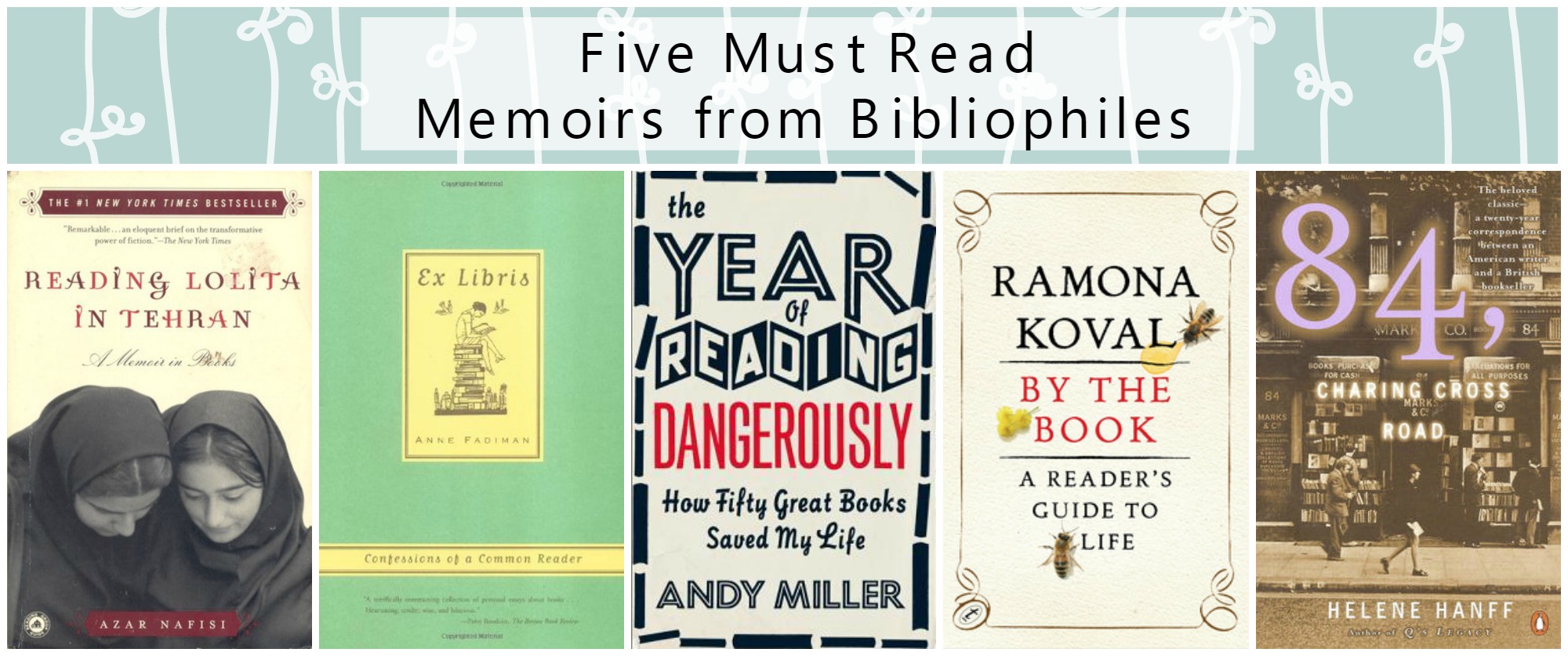
Five Must Read Memoirs from Bibliophiles

Posted October 23, 2014 by Michael @ Knowledge Lost in Top 5 / 26 Comments

As a book lover, I found that I get a lot of pleasure out of reading books about books. There is something about a book that revolves around other books that really works for me. Judging by the popularity of books like The Shadow of the Wind by Carlos Ruiz Zafón and more recently The Collected Works of AJ Fikry by Gabrielle Zevin I know I am not alone. I made a conscious effort to read more non-fiction this year and I quickly discovered a whole new genre that I enjoy; the bibliophile’s memoir. What could be better (also meta) than reading about someone reading, but be warned, it could also be damaging to your TBR list. So I thought I might offer five memoirs that people should read about reading and the reading life.

Memoirs from Bibliophiles

Read More


Mrs Dalloway by Virginia Woolf

Posted May 21, 2013 by Michael @ Knowledge Lost in Classic / 0 Comments

Mrs Dalloway by Virginia WoolfTitle: Mrs Dalloway (Goodreads)
Author: Virginia Woolf
Published: Oxford World's Classics, 1925
Pages: 185
Genres: Classic
My Copy: Personal Copy

Buy: AmazonBook Depository (or visit your local Indie bookstore)

Clarissa Dalloway goes around London preparing to host a party that evening. It’s a nice day and she finds herself being reminded of her youth in the Bourton and wondering about her life and her choice of husband; marrying the reliable Richard Dalloway instead of the mysterious and challenging Peter Walsh, as she never had the option to be with Sally Seton. These conflicts have been reintroduced when Peter pays her a visit.

The novel begins with Clarissa’s point of view and follows her perspective closely, travelling forwards and back in time and in and out of her mind to construct an image of her life. Clarissa is bubbly and lively, caring a great deal about what people think of her, but she is also self-reflective. She is often questioning life and constantly wondering whether happiness is truly possible. Though she is happy with her marriage to Richard she feels both great joy and dread towards her life and struggles to strike a balance between her desire for privacy and her need to connect with others.

Her husband Richard Dalloway is a member of the conservative government and plans to write a history of The Brutons, a great military family. He is a loving husband and father and devoted to social reform while appreciating English tradition. Peter Walsh is a close friend of Clarissa, once desperately in love with her. When she rejected his proposal, he moved to India; though frequently having romantic problems with women throughout the novel he is currently in love with a married woman in India. A socialist and highly critical of people, he is conflicted about everything in his life. Then there is Sally Sutton, a close friend of Clarissa in their youth, she was a wild handsome woman who would say anything. They were sexually attracted to each other as teenagers. Sally now lives in Manchester where she is married and is known as Lady Rosseter.

This is primarily a novel about life and relationships, with Clarissa reflecting on her life and wondering if she has made the right choices when it comes to marriage. There are so other themes that play a big part within this novel as well; some of these include disillusionment towards the British Empire, fear of death, oppression and balancing life between the need to keep up appearances and having some privacy. I won’t go into these themes in any detail, for the simple reason that I feel that Virginia Woolf leaves it very open to interpretation and it is up to the individual reader to make of it what they will.

For me, the major theme that came out was the struggle Clarissa had with trying to play the good hostess by drawing people together through her parties and her introverted nature. I saw Clarissa as an introvert, though she has a bubbly personality, she is often feels shrouded within her own reflective soul and thinks the ultimate human mystery is how she can exist in one room. She likes the idea of being independent and able to spend time to reflect but she is also aware of the inevitable loneliness that comes with a life of self reflection. If you understood something completely different from this novel, please let me know how you read this book in the comments below.

Now that I’ve looked at the themes of this novel, I want to have a quick look at some of the motifs and symbols used in Mrs Dalloway. The most important of them is time, which is so important to the structure, themes and characters of this novel that Virginia Woolf almost called it The Hours. Time keeps order to this novel; with all the thoughts, memories, and encounters within Mrs Dalloway, it becomes a vital element to the book. Also the old woman in the window across from house symbolises the life Clarissa desires; a private life with time to reflect. You also have things like the flowers with all their colour, varieties and beauty being a motif for emotions, Shakespeare and poetry representing these emotions as well and water suggesting the possibility of death.

Virginia Woolf can be a difficult author to read and requires a lot of thought but as I’ve now discovered with Mrs Dalloway, it is worth the effort. I remember reading To the Lighthouse and really struggling, but when I was told it was about sex, I thought I really missed the point. It’s a novel I plan to revisit again but as I mentioned in this review, I think Woolf writes her novels in such a way that you can interpret it anyway you want.

I don’t know if I would call myself a Virginia Woolf fan now, but I was really impressed reading and studying Mrs Dalloway. I will admit that that I’m planning to read A Room of One’s Own and reread To the Lighthouse. Maybe after that I might call myself a fan but I would recommend reading Virginia Woolf for all serious literature readers and studiers and anyone that needs to increase their pretentious levels. For me, Mrs Dalloway was both an interesting book and an interesting endeavour into improving my critical reading skills.


The Hanging Garden and Unfinished Novels

Posted May 28, 2012 by Michael @ Knowledge Lost in Historical Fiction / 0 Comments

The Hanging Garden and Unfinished NovelsTitle: The Hanging Garden (Goodreads)
Author: Patrick White
Published: Knopf Doubleday, Random House, 2012
Pages: 224
Genres: Historical Fiction
My Copy: Personal Copy

During my last book club gathering, we were talking about Patrick White’s unfinished novel; The Hanging Garden and this lead into a discussion of books being published after the author dies which the author never wanted to see the light of day. Patrick White never wanted this novel released; I believe he did tell someone to burn it because it wasn’t finished or anywhere near ready for readers. There are heaps of authors that have had books released that were never meant to be released including; Kurt Vonnegut, Virginia Woolf, Mark Twain, Ernest Hemingway, Leo Tolstoy and the most famous of them all was Franz Kafka’s The Trial. This does lead to some interesting topics; do you think books that the author never intended to be released should be published? Are publishers just using them as a money making gimmick? And lastly, if those manuscripts were submitted to a publisher by an unknown author, would they still be published?

Patrick White is a two time Miles Franklin award winner and has also won the Nobel Prize for Literature. His unfinished novel The Hanging Garden was only just recently published; it feels like an old novel in the sense that, while it’s nicely written; nothing ever happens in the book. This is very much a character driven book, focusing on the two characters and a wild garden. I think I’d be alright with reading a book like this if I didn’t have the feeling that the author hated every single one of his characters; he was mean and cruel to them all, not just the key characters. As a general rule I love dark and flawed characters but this just felt mean and even the attempts of being erotic felt awkward. I spent the whole book waiting for something to happen and I was left disappointed. Also, as this is an unfinished novel, I don’t know what the overall goal was with this book and I get the feeling that maybe Patrick White doesn’t either. There are parts of this book that are beautifully written and then there are parts that felt like the author’s ramblings. This is supposed to be an unedited book but while I think there was some editing done there are also parts of the book that clearly feel unedited. Including a few paragraphs that didn’t make sense and had no punctuation and then some notes to himself reminding him to explore or research some parts later. While I’m not a fan of this book, I think a lot of people might get a kick out of it. Either for the memories of the time and the place; the memorable characters, or just to see the thought process of once of Australian top authors of all time.

On this day 100 years ago, Patrick White was born