Tag: War

No Place to Lay One’s Head by Françoise Frenkel

Posted July 28, 2017 by Michael @ Knowledge Lost in Non-Fiction / 4 Comments

No Place to Lay One’s Head by Françoise FrenkelTitle: No Place to Lay One's Head (Goodreads)
Author: Françoise Frenkel
Translator: Stephanie Smee
Published: Vintage, 1945
Pages: 286
Genres: Non-Fiction
My Copy: Paperback

Buy: AmazonBook DepositoryKindle (or visit your local Indie bookstore)

I have seen a lot of comparisons between Françoise Frenkel’s memoir and Suite Française by Irène Némirovsky. They both depict the struggles of living in Nazi occupied France for a Jewish woman and both were works that were found by chance and published. I am yet to read Suite Française, although it sits on my shelf quietly waiting, so I am unable to speak to any more similarities. No Place to Lay One’s Head (Rien où poser sa tête) was originally published in 1945 with a limited run by the now defunct publishing house Verlag Jehebe. Thirty years later it was rediscovered in an attic in the south of France and republished in 2015. Thanks to the efforts of Australian translator Stephanie Smee, an English translation of this book was released this year.

This memoir gives an account of part of her life, from opening Berlin’s first specialist French bookstore in 1921 to her experience with the rise of the Nazi party. Françoise Frenkel, like many other Jewish people, suffered greatly, but what fascinated me about No Place to Lay One’s Head is what she left out of the book. There is no mention of her husband in Rien où poser sa tête at all. The only reason I know about his existence is because of the timeline in the back of the book.

Grief is a powerful emotion and people find their own ways to deal with the pain. Looking at this timeline I know that Frenkel and her husband Simon Raichenstein opened Maison du Livre français (which means House of the French Books) together. He was deported (due to the fact he was a Belarusian) and lived in France from 1933, until he was arrested in 1942 and sent to Auschwitz, where he was murdered. Françoise Frenkel ran the bookstore alone until she escaped Germany in 1939. I do not know if the two spent reunited in France, but I suspect that they may have. My suspicions are based on this idea of grief; Frenkel started writing No Place to Lay One’s Head in 1943 after she was able to so escape to Switzerland, and I get the feeling that the anger and sadness that comes through in the book might have been related to the one person she cannot bare to talk about.

I picked up this book in the hopes to explore the life of a specialist book seller in a rapidly changing political climate but I got something different. I would have loved more chapters on her time learning the trade in a second hand bookstore in the Rue Gay-Lussac. Or even exploring the idea of opening a specialist French bookshop in Germany and the impact it had. Maybe even something that compared the idea to Sylvia Beach opening Shakespeare and Company (a specialty book store dedicated to English language books) in France two years earlier. I love books about books and thought these would be some interesting topics to explore. However I got something completely different; something so devastating and yet full of beauty.

I am partial to a book that is able to deliver cruelty and shock in such an elegant way and I think No Place to Lay One’s Head was able to do just that. It is a weird feeling to go into a book hoping for one thing but finding something unexpected. This memoir is heartbreaking and to try and understand everything she was not saying, just made this book even more affecting. In the back of the book there is one picture of a dedication she wrote to a priest. “…I would be so grateful for your prayers – I seek inner peace; I am grieving for so many and know not where my family have been laid to rest.” I think that sums up the feeling Françoise Frenkel must have had when writing No Place to Lay One’s Head.


At The Theatre: Antigone

Posted April 24, 2016 by Michael @ Knowledge Lost in Culture / 0 Comments

antigone-web-banner-1

Recently I had the good fortune to be able to see the play Antigone by a small indie playhouse in my city. Now the story of Antigone comes from Greek mythology, she is the daughter (and sister) of Oedipus. Antigone is best known from the Sophocles’ play where she is trying to secure a ritual burial of her brother Polynices. This is against the wishes of King Creon who wants Polynices to stay out unburied as an example to all those who seek to fight against the throne of Thebes.

The play I saw was not the one written by Sophocles but rather the French written by Jean Anouilh’s in 1944. I do not know the difference between the Greek mythology, the play by Sophocles or the one I saw but I was very impressed with the play. Now Anouilh wrote this tragedy during the Nazi occupation of France and he purposely made it ambiguous to get past the German censorship. However knowing this you can clearly see the parallels between the French Resistance against the Nazi occupation and the Greek tragedy.

This play is about war and standing against the authority in order to do what is right. Antigone was dressed in white to represent good while everyone was in black. This is a very speech heavy play that explores the themes mostly through dialogue. For the most part the actors preformed this play wonderfully with the exception of one person, who I thought was a little flat. I really enjoyed the use of lighting to create shadows that turned the stage into what could be considered a dystopian world.

While this is a Greek play, it appeared very much like a French production with some Avant-garde elements playing through while keeping a very minimalist approach. I was impressed with the play and would love to see more indie performances in the future. Antigone was translated from the French by Lewis Galantière and I highly recommend this interpretation of the Sophocles play, especially in relation to World War II and the Nazi occupation of France.


A Meal in Winter by Hubert Mingarelli

Posted February 13, 2016 by Michael @ Knowledge Lost in Historical Fiction / 2 Comments

A Meal in Winter by Hubert MingarelliTitle: A Meal in Winter (Goodreads)
Author: Hubert Mingarelli
Translator: Sam Taylor
Published: Portobello Books, 2014
Pages: 138
Genres: Historical Fiction
My Copy: Paperback

Buy: AmazonBook Depository (or visit your local Indie bookstore)

Three German soldiers set off early one morning through the frozen Polish country side to search for Jews. If they are successful they will be able to do it again, if not they will have to go back to their job as executioners. Having found a man hiding in the woods they settle in an old abandoned house to warm up and share a meal. Tensions increase when an outspoken Polish man joins them to escape the cold. A Meal in Winter is a highly emotional French novella that is worth checking out.

It is hard to talk about this book, it is a very emotional book. It is the type of book that will rip out your heart, punch you a few times in the face and then end abruptly. Leaving you emotionally and physically drained and having to think about all the themes. I love A Meal in Winter because it really explores so many interesting ideas and themes and leaves you thinking well after finishing it.

This is such a quick read and explores the idea of following orders and issues of mortality. The Jewish man has done nothing wrong and these Nazi soldiers know this, but if they take him back as a prisoner then they might be able to go out searching again. Is it better to hunt or kill, both will end the same for the Jew, but which one would make you feel better about your actions?

I truly love what Hubert Mingarelli did with such a small book like A Meal in Winter. I have not been able to stop thinking about the book since I finished it. I love when a piece of literature leaves me contemplating about life and philosophical questions that I had not considered before. A Meal in Winter did just that and I think this short hundred page novella will stick with me for many years to come.


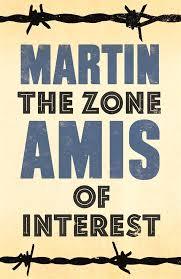
The Zone of Interest by Martin Amis

Posted May 16, 2015 by Michael @ Knowledge Lost in Historical Fiction / 2 Comments

The Zone of Interest by Martin AmisTitle: The Zone of Interest (Goodreads)
Author: Martin Amis
Published: Jonathan Cape, 2014
Pages: 320
Genres: Historical Fiction
My Copy: Library Book

Buy: AmazonBook Depository (or visit your local Indie bookstore)

Angelus Thomsen is an officer working at Auschwitz; on August 1942 he gains his first sight of Hannah Doll, the wife of the camp’s commandant. After a few encounters, their relationship becomes more intimate. Despite their attempts to be discreet, Hannah’s husband Paul becomes suspicious. He threatens a Jewish Sonderkommando into killing his wife. However things are not that simple and life is far more complex.

The Zone of Interest is Martin Amis’ fourteenth novel and the second to focus on the holocaust (his 1991 novel Time’s Arrow being the other). The novel is told from prospective of three narrators; Angelus Thomsen, Paul Doll and Szmul the Sonderkommando. This allows Amis to explore the three different sides of this budding romance and betrayal, however what it does not talk about is far more interesting. Thomsen and Doll are so focused on Hannah, while Szmul is unwillingly dragged into this complex situation.

I found the plot to be a bit flat and the ending of this novel anti-climactic but it was Martin Amis was not saying that really stuck out to me. The way Amis told the story allowed the reader focus on the melodrama of this love triangle but we have to remember this was set in Auschwitz. We can explore the indifference towards human suffering and the prisoner’s general psychology without the need to talk too much about this situation. Szmul’s narrative does focus more on the life in the concentration camp from a Jewish point-of-view but it is the Germans’ lack of interest that stuck with me. The more I think about this novel, the more I admire the way Amis wrote this book. I cannot think of another novel that explores an issue like this by actively trying to avoid the topic.

At the time of reading this book, I found this novel to be average. However, it was the post-reading experience that really stuck with me, and I really appreciate the satirical approach Martin Amis took. I am determined to try some more of his works; I need to find out if he uses satire consistently in his novels. I would love to know which novel I should check out next from Martin Amis.


Abandoning The Corners of the Globe

Posted September 21, 2014 by Michael @ Knowledge Lost in Historical Fiction / 0 Comments

Having recently read The Ways of the World by Robert Goddard I was so angry that the book ended mid story, I didn’t plan to continue. However I received The Corners of the Globe (book 2) in the mail and I decided to give it a go. I started reading and got a few chapters in before I remember the rage I had for the first one. I didn’t want to go through that again, so I flipped to the end of the book. There it was, the words ‘To be concluded’, and I abandoned the book on the spot.

Maybe I will read the book again when the final book is released but I suspect that I will have no interest in attempting it again. The story sounds entertaining enough but after The Ways of the World I have too much rage to be forgiving. It is a shame that Robert Goddard would do this to his fans, it doesn’t make me want to read anything else he has written.


The Ways of the World by Robert Goddard

Posted September 20, 2014 by Michael @ Knowledge Lost in Historical Fiction / 14 Comments

The Ways of the World by Robert GoddardTitle: The Ways of the World (Goodreads)
Author: Robert Goddard
Series: The Wide World Trilogy #1
Published: Bantam Press, 2013
Pages: 404
Genres: Historical Fiction
My Copy: Library Book

Buy: AmazonBook Depository (or visit your local Indie bookstore)

Set in Paris just after World War I, The Ways of the World takes a look at the battle for peace. James ‘Max’ Maxted was a Royal Flying Corps ace during the war but now finds himself in a completely new situation. While the world looks to Paris as diplomats and politicians try to negotiate peace, Max is trying to work out what happened to his father. Sir Henry Maxted was a British diplomatic who mysteriously died from a fall off the roof of his mistress’s apartment building. The authorities rule the death as a suicide but Max suspects there is something far more suspicious going on.

The Ways of the World is everything I expect from an espionage novel; nothing like the popular spy thrillers. I view the intelligence game as one of diplomacy and manipulation, not high tech weapons and action. Robert Goddard uses the murder mystery as a device to manipulate the story and keep up the pace. This is a successful tactic as the majority of the novel is told in conversations and the novel could have easily fallen into the realm of boring and tedious.

The Paris Peace Conference allowed the game of espionage to play out. France, Britain, America and Italy all have representatives there and inter-country politics feature heavily here. Each country has their own agenda and I really enjoyed watching this play out. As the host country, France also wanted to quash any notion of a diplomat being murdered and keep their image. This perfectly sets up the story that Robert Goddard wanted to tell.

However there is something terribly wrong with this book. There are three words that took me from loving this book to throwing it across the room. I actually didn’t physically throw this book across the room because it was a library book but I was very tempted. Those three words at the end of the novel that ruined everything were ‘To be continued’.

I am normally ok with a story continuing into a series, but when you end a book without a sense of closure, it really doesn’t work. When I was getting close to the end of the book, I wondered to myself how to possibly conclude the novel that quickly, and then I found out. This works well in a television show when people only have to wait a week for the next episode but in a book there is normally a year between them. This situation makes me so mad that I don’t think I can continue the series.


The Amazing Adventures of Kavalier & Clay by Michael Chabon

Posted August 21, 2013 by Michael @ Knowledge Lost in Historical Fiction, Literary Fiction / 0 Comments

The Amazing Adventures of Kavalier & Clay by Michael ChabonTitle: The Amazing Adventures of Kavalier & Clay (Goodreads)
Author: Michael Chabon
Narrator: David Colacci
Published: Fourth Estate, 2000
Pages: 659
Genres: Historical Fiction, Literary Fiction
My Copy: Personal Copy

Buy: AmazonBook Depository (or visit your local Indie bookstore)

The Amazing Adventures of Kavalier & Clay follows the story of two Jewish cousins. Joe Kavalier is an artist that escapes occupied Czech to America where he meets writer Sam Clay. During the golden age of comics Kavalier and Clay become major players in the industry creating many comic book heroes including The Escapist. The superhero is a Nazi-busting saviour who liberates the oppressed around the world.

I’ve read Michael Chabon before and the thing I really enjoyed about his novels is that they are full of intertextual goodness. With The Yiddish Policemen’s Union, it blends his literary style with elements of alternative history and noir. The Amazing Adventures of Kavalier & Clay blends with elements of the comic book genre. This is what impresses me the most with Chabon’s style and makes me keen to read The Telegraph Avenue (which I hope blends elements of music into his style). I wonder if all his books are full of intertextuality and will love to find some other novelists that do this; it really works for me but maybe it’s just my love for literary fiction and the genres he blends with it.

There is so much more going on with the novel. The Escapist is used to play out all Kavalier’s fantasies of being a magician/escape artist but he uses the comic books to spread his propaganda towards the Nazis. Most of this novel is set before World War II in America before the world really knew the extent of what the Third Reich were up to. Michael Chabon is a Jewish novelist and his heritage seems important to him and this comes through in his novel.

This novel deals with so many different literary themes; escape from oppression, coming of age, family and relationships. Just writing that sentence makes me think that Chabon might have over done it but really this book comes together beautifully. I don’t often use the terms like magnum opus and tour de force but having read the novel and people’s impressions of this book, it really seems to fit.

Kavalier and Clay become legends in the comic book world and as the world and industry changes, they are repeatedly asked to change and conform but they never compromise. They had a clear message they wanted to say and they refused to change that message. I’m impressed with everything about this book from the blending of comic books and its culture, Jewish mysticism and world history to the character development, proses and my overall opinion of the novel.

If you’ve never read a Michael Chabon novel then I recommend it; I’m not saying start with this novel but look for one with a theme that interests you. Out of the two I’ve read, I’ve been impressed with them both but I have to say The Amazing Adventures of Kavalier & Clay is masterfully crafted and deserves all the praise it received. I have Telegraph Avenue on the shelf and I’m interested in trying Wonder Boys soon as well. The Escapist was made into a comic by Dark Horse Comics but I think it was part of a promotion for this book. Also the film rights for the book have been sold but with the luck it’s been having I’m doubtful it will ever be made.


A Constellation of Vital Phenomena by Anthony Marra

Posted August 2, 2013 by Michael @ Knowledge Lost in Historical Fiction, Literary Fiction / 5 Comments

A Constellation of Vital Phenomena by Anthony MarraTitle: A Constellation of Vital Phenomena (Goodreads)
Author: Anthony Marra
Published: Hogarth, 2013
Pages: 416
Genres: Historical Fiction, Literary Fiction
My Copy: ARC from Publisher

Buy: AmazonBook DepositoryKindle (or visit your local Indie bookstore)

In a small village in Chechnya, an eight year old Havaa watches as her father is abducted by Russian soldiers. Their neighbour, Akhmed was also watch and takes Havaa as he knows he will be the only person that might be able to help her. They seek shelter at a bombed-out hospital, where they meet Sonja, a tough and strong minded doctor who has no desire to risk it. All three people’s worlds are turned upside down in such a short period of time. Slowly intricate patterns are revealed that bind these three companions together and ultimately seals their fate.

A Constellation of Vital Phenomena takes place mainly in 1994; not too long after the dissolution of the Soviet Union (1991) and the Chechen-Ingush ASSR split (1992). Now The Chechen Republic was fighting for their independence. In the First Chechen War the Russian Federation tried to seize control only to be fought off by the locals. It wasn’t till 1996 did Boris Yeltsin’s government declare a ceasefire and eventually a peace treaty was signed. During this war it was estimated that 5,500 Russian soldiers died, between 3,500 and 7,500 Chechen militants, but the real loss was on the civilians, with between 30,000 and 100,000 deaths, around 200,000 injured and 500,000 displaced by the conflict. I wish I could tell you that we are the end of conflict with Chechnya but in 1999 the Second Chechen War was launched and the Russian Federation eventually seized control in 2009.

Now that we have an idea of what was happening in the country at the time, we get an idea of the danger that faces the three main characters. This isn’t necessarily a book about war, or the politics behind it (which basically comes down to oil) but rather the connections that link Havaa, Akhmed and Sonja together. The hardships each of them face only serves to build this beautiful story and flush out the character development. A glimpse of three different people struggling to survive this war torn land and debut author Anthony Marra managed to make this novel both compelling and emotional.

All three characters are so different you get so many perspectives within A Constellation of Vital Phenomena that will leave you pondering the novel well after you put it down. For me, I thought of Akhmed as a traditional Chechen Muslim, caught up with the past and tradition. While Sonja is the strong minded woman trying to smash through the glass ceiling, then you have Havaa an intelligent young girl that knows nothing else apart from war. You also have other characters that look at other ways the war effects the people, from abduction, smuggling, sex trafficking, amputation, punishment, torture and the list goes one. For a novel so focused on the character development and relationship of three characters, it’s impressive how it manages to deal with so many other issues.

I’ve always had a keen interest on Russian literature, plus my fascination with the motherland; so I knew I had to read this book. The collapse of The Union of Soviet Socialist Republic is an interesting topic and the instability that ensued afterwards makes for a great backdrop. I will admit I didn’t know much about Chechen history so I had to bone up a little, unable to break a bad habit I was on the Wikipedia page for Chechnya just to get more information. I feel stupid for this but I didn’t realise the majority of Chechnya were Muslims; for some reason I thought they would have been Russian Orthodox. With the help of understanding the geographical location (which helped make more sense of their Islamic influences) as well as history, I really connected with this novel.

It wasn’t just understanding Chechnya or the character development I loved about A Constellation of Vital Phenomena, it was also exquisitely written. I was sucked in by the imagery and the beauty of the prose; I was surprised this was Anthony Marra’s first novel. I would have thought he had been doing this so well , the writing was wonderful and the whole novel was masterfully executed. I hope he writes a new novel soon because I know I’m eagerly waiting to see what he does next.

A Constellation of Vital Phenomena is sure to be one of those books that make my ‘Best of 2013’ list, I was very impressed with everything about it. For an American writer, his grasp on Chechnya seems authentic. I don’t know much about his life so I can’t judge, he might have spent some time in the country or has friends or family from there; I do know he wrote a prize winning short story called Chechnya, but that looks like the basis of this novel (based around Sonja, the hospital and her sister). Go out and pick up a copy of this novel, it is well worth reading.


The People of Forever Are Not Afraid by Shani Boianjiu

Posted May 4, 2013 by Michael @ Knowledge Lost in Young Adult / 0 Comments

The People of Forever Are Not Afraid by Shani BoianjiuTitle: The People of Forever Are Not Afraid (Goodreads)
Author: Shani Boianjiu
Published: Hogarth, 2012
Pages: 320
Genres: Young Adult
My Copy: ARC from Publisher

Buy: AmazonBook Depository (or visit your local Indie bookstore)

Lea, Avishag and Yael grow up in a small town on the Israel/Lebanon border leaving normal teenage lives. The People of Forever Are Not Afraid tells the story of these three normal Israeli girls from passing notes in school, talking about boys to turning eighteen and being conscripted into the army. Winner of the National Book Foundation’s “5 Under 35” authors to watch list in 2011, Shani Boianjiu’s debut novel is a coming of age novel unlike any before. Growing up in this intense war torn world changes everything, even for three normal teenage girls.

First thing I would like to say is I was hugely impressed with The People of Forever Are Not Afraid, I never expected to find a New Adult novel that offers so many different elements. While this seems to be marketed as a Young/New Adult novel, I think this is because the old “coming of age” formula seems to go hand and hand with these two genres. Though this is so much different; these three girls are plucked from their normal teenage lives, put into the army and forced to grow up rather quickly.

There are some really interesting themes throughout this novel. Firstly there are the major themes of growing up as an Israeli girl and conscription, and Shani Boianjiu is the voice of experience here; at the age of 18, she entered the Israeli Defence Forces and served for two years. So you get the sense that maybe this novel is semi-autobiographical but not knowing much about the author I wonder which of the three girl’s best resembles her. Though I have a feeling that Lea, Avishag and Yael all have an element of Boianjiu in them; I like how she has the three different personalities within the book to help show the how war really effects a person.

This brings us to the theme of War; while for the most of the book they are living in a perpetual state of war, the conflict between Israel and Lebanon still puts them into real danger. Though the reader has to ask themselves if eighteen too young to deal with war; they are still in a state of self-discovery when they are thrown into such an extreme situation. I know it is part of their heritage but when you talk about war and even RPG children (“children who tried to shoot RPGs at soldiers and ended up burning each other because they were uninformed, and children”) you really have to wonder how old is old enough to deal with war.

Finally, the book looks at the influence western society has on the Middle Eastern culture; I’m sure girls thought about boys and sex but there is a definite changing that comes through in the novel. References to Dawson’s Creek and Mean Girls and the whole attitude towards relationships (breaking up every week) and sex really feels more like something from an American teen drama than an Israeli town. I don’t know much about their culture but I know enough about pop-culture and the difficulties that western society has on Muslim and Jewish heritage to notice this real culture clash.

The People of Forever Are Not Afraid really is an interesting New Adult novel; it is smart and thought provoking and yet it’s really funny as well. I remember the cheesy lines made me chuckle like the idea of a mother not wanting her daughter to have a party because she was worried that her friends will break her hymen. All these elements seem to work together to produce a novel that is both easy to read and unlike anything I’ve read before.

I was never sure what to make of The People of Forever Are Not Afraid but I’m glad I had a chance to read this novel. It’s a debut novel that shows us that Shani Boianjiu is an author to watch in the future. It’s not without its flaws, the repetitiveness got to me a little but in the end all the good aspects of this book outshined any problems. It’s the type of novel that made me want to turn back to page one and start reading it again. I’m not a fan of Young Adult and New Adult novels in general but I can’t help but recommend this one to all readers.


The Lions of Al-Rassan by Guy Gavriel Kay

Posted April 10, 2013 by Michael @ Knowledge Lost in Fantasy / 2 Comments

The Lions of Al-Rassan by Guy Gavriel KayTitle: The Lions of Al-Rassan (Goodreads)
Author: Guy Gavriel Kay
Published: Harper Voyager, 1995
Pages: 548
Genres: Fantasy
My Copy: Personal Copy

Buy: AmazonBook Depository (or visit your local Indie bookstore)

The peninsula of Al-Rassan has been split into three kingdoms; formerly under Jaddite control and known as Esperana. The split between the three Jaddite factions in the north and some Asharite kingdoms in the south makes for a volatile relationship of political and religious indifferences. The book centres on three protagonists from different races; Jehane bet Ishak, a Kindath physician in Fezana; Rodrigo Belmonte, a Jaddite captain of a company of cavalry and Ammar ibn Khairan, an Asharite poet, mercenary,
and advisor to King Almalik of Cartada.

The major theme I found in this book was one of religious indifference; the three main kingdoms in this book are actually based on the three major religions, the Kindath, based on the Jews; the Asharites, based on the Muslims; and the Jaddites, based on the Christians. The problem I had with this novel, it becomes incredibly confusing and hard to keep up; you practically have to keep a graph to remember which person is from where and what religion they are based on. I think one of the hardest things with High Fantasy is that all the weird names, races and everything else makes it too confusing.

This is a really complex story and even without the religious metaphors, you still have to have wrap your head around the medical practices of Jehane bet Ishak and all the other physicians in Al-Rassan. As well as military strategies mentioned by Rodrigo Belmonte, Ammar ibn Khairan and King Almalik of Cartada, plus many more overly thought out issues that Guy Gavriel Kay decides to inject into this novel. Luckily this world is the basis of some of his books so while he loves his metaphors, all the world building should translate into his other books.

The world is based around Moorish Spain which helps put the architecture and people’s behaviours into perspective. Even some of the characters are based loosely on Moorish historical figures such as El Cid and Ibn Ammar. Historical fantasy is apparently the genre type for The Lions of Al-Rassan but I cannot say that I have ever heard of this genre type but with a little bit of research I have since found out it is a pretty common sub-genre. Blending elements of the historical into a high fantasy setting and sometimes adding a mystical thread, this genre mixes elements of alternative history but sets it in a completely different world (with common elements); One Thousand and One Nights being the most known novel within the genre.

While this really is not my type of novel, I sometimes felt like the plot was not moving fast enough and other times felt completely lost, The Lions of Al-Rassan somehow managed to keep me. I give full credit to Guy Gavriel Kay’s writing style; the language and the similes helped paint a beautiful scene and overall story. Then the conflict between Jews and Muslims and Christian metaphor was really what interested me the most and kept me going. While fantasy has never been a strong suit for me, it really felt like a template just to explore the author’s thoughts on something so complex and misunderstood as religion. You can see the similarities between the factions and exploring this volatile world from a military strategy perspective really spotlights the political roadblocks that stand in the way for harmony.

This really ended up being something much more than I expected. Proving high literature can be found in any genre. If I had the time and knowledge, I think this would be a great book to pick apart and explore, though that would require deep looks into the theology of the three religions, history of Moorish Spain as well as military strategies. I am sure there must be an academic out there that took the time to look at this book but for me, I just enjoyed my brief visit to the world of Al-Rassan.