
Tag: William Gibson

First Steps: Cyberpunk

Posted August 17, 2013 by Michael @ Knowledge Lost in First Steps / 0 Comments

literary stepsFirst Steps is a new segment that was inspired by the Literary Exploration Reading Challenge. Each week or two, we look at books from different themes, genres or maybe authors and suggest some that are worth trying. Not necessarily all easy to read books but the ones that are worth the time and effort. My goal is to have First Steps guide you to some great books in places you don’t normally venture to.

Cyberpunk is a genre I have found many people struggle with, especially in the Literary Exploration Reading Challenge. I’m not sure if this is a lack of recommendations or they just not sure what this genre is all about. Cyberpunk is a futuristic world that focuses on “high tech and low life[s]” (according to What is cyberpunk? From Cyberpunked: Journal of Science, Technology, & Society 2009). Think post-industrial dystopian worlds with advanced technology and cybernetics; science fiction normally with a touch of thriller, mystery or pulp.

Movie examples would include Blade Runner, Ghost in the Shell, Tron, The Matrix and Surrogates. On TV think Dark Angel or Dollhouse and in video games there are heaps of examples but the best two are; Deus Ex or Watch Dogs. This is a genre that is almost dying out, technology advancement has been accepted by most and often used in science fiction or dystopian novels, but it does leave behind a couple of new sub genres; steampunk and dieselpunk.

Snow Crash by Neal Stephenson

This book is big but lots of fun; it follows two protagonists hunting down a virus in the not so distant future. A world where the United States has yielded most of its power to private organizations and entrepreneurs. Everything has been franchised, from armies, highways to even suburbs.
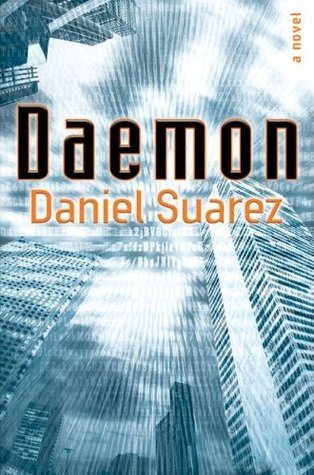


Daemon by Daniel Suarez

Technology controls almost everything in our modern world, from remote entry on our cars and the flight controls of our airplanes to the movements of the entire world economy. But what if some computer designer has been planting a dormant daemon in everything that he creates that will take full control of everything connected to a computer when he dies.


Altered Carbon by Richard K. Morgan

In the twenty-fifth century, technology has advanced so much that human personalities can be digitally stored on what is known as a Stack. These stacks can be downloaded into new bodies or sleeves, so when you die your stack can be stored indefinitely and you can be resleeved and continue living. Death is impossible, or is it?


Neuromancer by William Gibson

This is a seminal cyberpunk novel by the legend himself; William Gibson. The first novel to ever win the “Triple crown” in science fiction (winning the Nebula Award, the Philip K. Dick Award, and the Hugo Award). This follows the story of a low-level hustler, hacker and thief in the dystopian underworld of Chiba City, Japan.
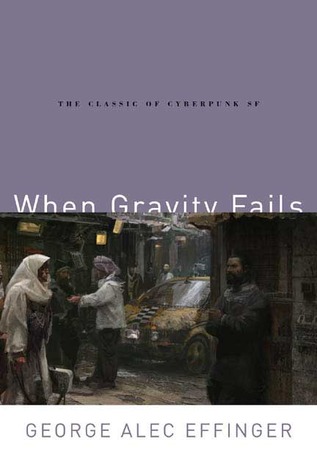


When Gravity Fails by George Alec Effinger

A new kind of killer roams the streets of the Arab ghettos of Budayeen, a madman whose bootlegged personality cartridges range from a sinister James Bond to a sadistic disemboweler named Khan. The unique blend of Middle Eastern culture and religion and cyberpunk noir makes this highly recommended.
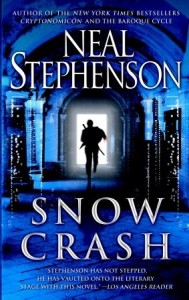

Snow Crash by Neal Stephenson

Posted June 26, 2013 by Michael @ Knowledge Lost in Speculative Fiction, Thriller / 0 Comments

Snow Crash by Neal StephensonTitle: Snow Crash (Goodreads)
Author: Neal Stephenson
Published: Bantam Press, 1992
Pages: 440
Genres: Speculative Fiction, Thriller
My Copy: Personal Copy

Buy: AmazonBook Depository (or visit your local Indie bookstore)

In a time in the not so distance future where the federal government of the United States has yielded most of its power to private organizations and entrepreneurs, franchising individual sovereignty reigns supreme. Merchant armies complete national defence, highway companies compete for drivers and the mafia own the pizza delivery game. Hiro Protagonist, “Last of the freelance hackers and greatest swordfighter in the world”, finds himself without his pizza delivery job when a young skateboard “Kourier” named Y.T. tries to hitch a ride on his vehicle. Leading them on a grand scale adventure trying to uncover just what exactly Snow Crash is.

Like all of Neal Stephenson books, you can expect this one to cover subjects like  history, linguistics, anthropology, archaeology, religion, computer science, politics, cryptography, and philosophy, all while keeping to his cyberpunk thriller style. He says this book was named after the early mac software failure mode:

“When the computer crashed and wrote gibberish into the bitmap, the result was something that looked vaguely like static on a broken television set—a ‘snow crash’”

His goal, was to take the reader on a “full tour of Sumerian culture, a fully instantiated anarcho-capitalist society, and a virtual meta-society patronized by financial, social, and intellectual elites.” Snow Crash is a pseudo-narcotic or is it something far worse; Hiro and Y.T (short for Yours Truly) slowly discover that it is in fact a computer virus capable of infecting the brains of careless hackers in the Metaverse (the successor to the internet) and a mind altering virus in reality.

One of the things I liked most about Snow Crash was the fact that Neal Stephenson showed us how to write a kick ass teenage girl protagonist. Young Adult novels like to use a strong teenaged girl as a main character but few of them really know how to make her great; most are just Katniss clones. While Y.T’s narrative wasn’t as focused as that of Hiro, it was more of a pleasure to read, she seemed to accomplish the most in the entire book and she did it her own way without compromising her character. Sure, she did manage to get into some trouble and make some bad choices but she’s human, I expect them to struggle and fall and recover from their mistakes.

While this was a fun and exciting novel there are some things that I just didn’t like; firstly each ethical group portrayed the stereotypical extreme.  The mafia, the rednecks from New South Africa, the Pentecostals, Mr. Lee’s Greater Hong Kong and so on, all felt very much like the cliché versions of these cultures and Stephenson played on the stereotypes a little too heavily. I know they were only minor plot arcs but it still felt like it was overdone. The most interesting people in the book are the ones living outside their cultural and ethnic groups; Hiro, Y.T and Raven.

Then there is my biggest problem with the book, which is a similar problem I had with Reamde and that is I feel like Neal Stephenson turns some chapters into a Wikipedia articles just to give us all the interesting information he has on a subject he is exploring. In this book it is every time the librarian talks, there is heaps and heaps of interesting, and sometimes irrelevant, information and the way Stephenson tried to stops it become and wall of text is the awkward attempt to make it sound like a conversation. Hiro keeps interrupting the librarian’s information with very simplified reiteration, agreements and metaphors, I found it incredible annoying.

Overall this was a fast paced cyber thriller with some weird and unusual tangents and twists. Stephenson has some interesting ideas about the future of the world but for some reason I never feel a strong connection to his books. I think I prefer William Gibson’s style and take on the future cyber world but can’t fault Stephenson for what he does. Not that I’ve read many books from this author and there are plenty more I want to read, maybe I just feel like he over simplifies and draws his novels out a little too much.


My Search for Good Steampunk Literature

Posted April 12, 2012 by Michael @ Knowledge Lost in Literature / 7 Comments

Steampunk and literature is an odd combination and I’ve often found it hard to find decent examples of this genre. It has gotten to the point where it is easier to look for the genre Alternate History instead of trying to find good Steampunk that isn’t the generic mass produced Young Adult novels. I’m not saying all Steampunk or YA novels are mass produced rubbish but when I look at the most popular Steampunk list on Goodreads I find the top ten are pretty much 4 different YA book series;

  • Parasol Protectorate series by Gail Carriger
  • Leviathan series by Scott Westerfeld
  • The Clockwork Century series by Cherie Priest
  • The Infernal Devices series by Cassandra Clare

I’ve not read many books from these series but I tend to think of those books are either Paranormal Fiction or Fantasy with very small elements of Steampunk. I know this genre is hard to categorise because it often features elements of science fiction, fantasy, alternate history, horror, and paranormal but from a literary point of view it’s hard to find to find exceptional novels in this genre. Often this genre is generalised as Victorian alternative history featuring anachronistic technology, or futuristic innovations.

So if we leave out the obvious influences, such as Jules Verne, H.G. Wells and even Mary Shelley are there any Steampunk novels that a wannabe literary snob like me would consider worthy? I can only think of two.

The Difference Engine by William Gibson & Bruce Sterling

Often considered one of the first Steampunk novels this had pretty much everything  I want in a Steampunk novel; the Victorian/Sci-Fi mix worked really well and it was nice to read a book with one of my heroes, Lord Byron, in it. The book follows a world changing with the invention of a mechanical and analytical computer. The book focuses not only on the technological boost but also the social change that come with it. Although at times it did drag on a little, this is definitely a recommended read for someone interested in getting a feel for the Steampunk genre.

Angelmaker by Nick Harkaway

Having recently mentioning this book in my trending books post, I thought Imight read this book before everyone else does. I’m glad I did. I hope this book gets read by many people; it has so much to offer. Angelmaker is a Steampunk adventure unlike anything I’ve read before, featuring a mystery involving Joe Spork the son of a gangster, a spy and his quest to stop the evil villain Shem Shem Tsien and his doomsday device. While this book  may feel more like a plot for a Bond movie the writing is what makes this book so great; while many people compare the style to Charles Dickens, I think that it was the Victorian writing style that made this book such a standout.

I’m interested in the Steampunk genre, so I would love to know what people think about it and what they would recommend to others. I will continue my search from great books,

even in the Steampunk genre and I hope to never rule out a popular YA books as good literature.


IO9’s 20 Science Fiction Novels That Will Change Your Life

Posted April 15, 2010 by Michael @ Knowledge Lost in Listology / 0 Comments

I just stumbled across a list of 20 Science Fiction Novels that Will Change Your Life on the io9 blog. While I haven’t read all the books there are some great choices there and I thought I should share it with my readers as well. Whether you agree or not, this is an interesting list;

  1. Frankenstein (1818), by Mary Shelley
  2. The Time Machine (1895), by H.G. Wells
  3. At the Mountains of Madness (1931), by H.P. Lovecraft
  4. I, Robot (1955), by Isaac Asimov
  5. The Dispossessed (1974), by Ursula LeGuin
  6. Kindred (1979), by Octavia Butler
  7. Wizard (1979), by John Varley
  8. Consider Phlebas (1987), by Iain M. Banks
  9. He, She, and It (1991), by Marge Piercy
  10. Sarah Canary (1991), by Karen Joy Fowler
  11. A Fire Upon the Deep (1992), by Vernor Vinge
  12. The Bohr Maker (1995), by Linda Nagata
  13. The Sparrow (1996), by Mary Doria Russell
  14. Cryptonomicon (2000), by Neal Stephenson
  15. The Mount (2002), by Carol Emschwiller
  16. Perdido Street Station (2002), by China Mieville
  17. Down and Out in the Magic Kingdom (2003), by Cory Doctorow
  18. Pattern Recognition (2003), by William Gibson
  19. Newton’s Wake (2004), by Ken MacLeod
  20. Glasshouse (2006), by Charles Stross

For those of you not familiar with io9, it’s a blog part of the gawker network that focuses on the subjects of science fiction, futurism and advancements in the fields of science and technology.