Tag: Wuthering Heights

Mini Review – Books About Books

Posted September 17, 2015 by Michael @ Knowledge Lost in Non-Fiction / 4 Comments

As most people are aware, I am a big fan about books about books. I am fascinated about people’s journeys and relationships with books. As a big fan of books, I like to learn about how people view and write about books; I use this as a way to inspire me to improve as well as give me some new ideas on how to approach this topic. Sadly I am so far behind in my book reviewing so I need to resort to some mini reviews. However it is a good chance to talk about four very different books about books in one hit.
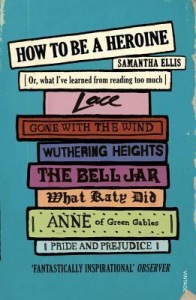
Mini Review – Books About BooksTitle: How To Be a Heroine (Goodreads)
Author: Samantha Ellis
Published: Chatto & Windus, 2014
Pages: 272
Genres: Non-Fiction
My Copy: Library Book

Buy: AmazonBook DepositoryKindle (or visit your local Indie bookstore)

Samantha Ellis is a playwright and journalist who decided to write about the woman in fiction that have influenced her life. The subtitle to How to be a Heroine is “…What I’ve Learned from Reading too Much” and this really encapsulates what Ellis is doing within the book. This is less of a bookish memoir or literary criticism and more of a revisit to some of her favourite books throughout her life and talking about it through the lens of feminism. This book includes references to The Little Mermaid, Anne of Green Gables, Pride and Prejudice, The Bell Jar and Wuthering Heights.

While this is a very important topic to discuss, I felt a bit of a disconnect to the book in general. There was times where I felt that Samantha Ellis was being dismissive and cynical towards literary criticism. Because I am fascinated and passionate about learning literary theory, I felt that her feelings towards the topic really took me away from truly enjoying the book. I did however enjoy the way Ellis analysed the good and bad qualities about each story and told the story about her relationship with the books mentioned. I think if it was not for that one thing that bugged me about How to be a Heroine I might have had a completely different experience while reading this book.

Mini Review – Books About BooksTitle: Where I'm Reading From: The Changing World of Books (Goodreads)
Author: Tim Parks
Published: Harvill Secker, 2014
Pages: 244
Genres: Non-Fiction
My Copy: Library Book

Buy: AmazonBook DepositoryKindle (or visit your local Indie bookstore)

Tim Parks is a translator, critic and even a professor of literature, so when I discovered his book Where I’m Reading From, I was excited to see what he had to say on the topic. I went into this book thinking it was a bookish memoir but found out this was a collection of essays he had written for The New York Review of Books. Some of the topics discussed in this book include, Why we read, Should you finish every book you start?, How is the Nobel Prize like the World Cup?, Why do you hate the book your friend likes? and so many more topics. I was very interested in what he had to say about translations, and the concept of how we are reading a second-hand story.

There is so much within Where I’m Reading From that I did not agree with, but I still found it interesting to read someone else’s perspective on the topics. It really got more thinking about the state of literature and the bureaucracy behind the industry and awards in far greater detail. In a lot of ways this book reminded me of What Is Literature? by Jean-Paul Sartre, although Tim Parks’ book was a lot more accessible and did not make me feel stupid. I also did a video review for this book on my YouTube channel.

Mini Review – Books About BooksTitle: Postmodernism: A Very Short Introduction (Goodreads)
Author: Christopher Butler
Series: A Very Short Introduction #74
Published: Oxford University Press, 2003
Pages: 144
Genres: Non-Fiction
My Copy: Audiobook

Buy: AmazonBook DepositoryKindle (or visit your local Indie bookstore)

I like to think I am a fan of post-modern literature, but ask me to explain it, I will have a hard time. Post-modernism is often referred to when talking about art, films, architecture, music and literature but what does it actually mean? I picked up Postmodernism: A Very Short Introduction in the hopes of understand it a little more but I still do not think I can explain it. For me, I view post-modernism, as a reaction to modernism which seemed to reject past thinking in favour of innovations like stream-of-consciousness. Post-modernism still found value in the past techniques and theories and found interesting ways to use them in new and exciting ways. Post-modernism wanted to invoke thought and criticism; within its literature you might find something bizarre or weird that you just need to talk about.

I know my view on the topic is very broad and it is far more complex but that is what I love about post-modern literature. I want books that force me to think critically about what I am reading and post-modernism forces you to do just that. In Postmodernism: A Very Short Introduction, Christopher Butler tries to equip us with the basic ideas behind post-modernism to allow us to recognise and understand the theories more easily. This is still a very complex movement but I am starting to understand why I love it. This is a good starting point, if you are actually interested in the critical thinking side of this movement.


Mini Review – Books About BooksTitle: My Reading Life (Goodreads)
Author: Bob Carr
Published: Penguin, 2008
Pages: 432
Genres: Non-Fiction
My Copy: Library Book

Buy: AmazonBook Depository (or visit your local Indie bookstore)

Bob Carr is a former Australian politician and member of the Labour Party; during his career he was a Senator, Premier of New South Wales and the Minister for Foreign Affairs. My Reading Life is a literary memoir about the books he has read and have influenced him; this was written during a period where he was not in politics. Carr divides the book into topics, focusing mainly on the political, which is obviously a reflection of his interests.

One of the things I did not like about this book was the way Bob Carr kept his political face on throughout the entire thing. I would have liked him to drop his public persona and just have a more real conversation about books. I understand that he was still political and he became the Minister of Foreign Affairs after publishing this but I would have preferred a more honest look at literature. I do hope that no Russian’s read this book after he become the Minister of Foreign Affairs, because to me it felt like Carr liked Russian lit but hated everything else about this country. There was some interesting insights made within the book and overall a decent memoir, just a little too guarded.


Outlander by Diana Gabaldon

Posted March 18, 2013 by Michael @ Knowledge Lost in Historical Fiction, Romance / 0 Comments

Outlander by Diana GabaldonTitle: Outlander (Goodreads)
Author: Diana Gabaldon
Series: Outlander #1
Published: Dell, 1991
Pages: 870
Genres: Historical Fiction, Romance
My Copy: Audiobook

Buy: AmazonBook DepositoryKindle (or visit your local Indie bookstore)

Claire Randall found herself time travelling from 1945 to 1743. She was just back from the war and reunited with her husband on a second honeymoon but then she walks through an ancient stone circle and finds herself in the midst of a war torn Scotland being raided by the Highland clans. She finds a young Scot warrior and becomes a woman torn between fidelity and desire.

Contrary to popular belief, I didn’t read this book along with the Vaginal Fantasy book club; I did it because this is my wife’s favourite series and I needed a romance novel for the Literary Exploration challenge. I’m not really a fan of romances (Wuthering Heights is still the greatest Romance of all time) so I wasn’t sure what I was getting into here but be warned, even though I want to talk about all the things that didn’t work for me, it doesn’t mean this wasn’t an enjoyable read.

First of all I want to talk about Claire Randall; here is this strong former combat nurse that finds herself in the past. While she is scared and confused I never felt that her desperation was believable; I felt like the inner turmoil of Claire never really played out and I was left to believe she wanted to be there. Also she is suppose to be portrayed as a strong independent woman but all I saw was a loud mouth nag that put up no fight and just married Jamie with no reluctance at all.

Jamie Fraser suffers from instalove; as soon as he saw Claire he was madly in love with her. Then when they finally got married, the virgin becomes the greatest lover known to man; how is that possible? Also Jamie is supposed to be this great Scottish warrior but all I ever see him do is get into trouble and winding up caught or with severe wounds. Not to mention the abuse towards Claire; sure it was a sign on the time to discipline his wife but this isn’t sexy and is just over done.

Finally the plot; I tend to think this book goes in a repetitive circle, which consists of sex, more sex, conflict, sex, being caught, wife beating and then more sex. This is the entire plot arc and it keeps repeating itself for over 800 pages. Makes me wonder what makes a romance novel, I never felt there was an ounce of romance or love; just lots of sex.

I know this is a series of a great love between Jamie and Claire and there was a flicker of this from Jamie but never felt that come through from Claire. I wonder if sex is a substitute for love here or does this reflect more in the books that follow. Apart from everything I didn’t like about the book, the characters and the writing was pretty good. I wanted more inner conflict from Claire as0 the narrator but that is just a personal preference. I’m always interested in the inner thoughts of a protagonist, especially when they find themselves in an unusual situation.

I’m not sure if I will continue the Outlander series but I would like to think that the romance starts in the next book. I’m curious to know if this is the case; I’m a little hesitant to invest in another 800 pages if it’s just more of the same. Romance novels are not really my thing, but I did like the slight speculative fiction element with the time travel. I hope that aspect of the plot gets explored in greater detail with the other books. Now I’m curious to read The Time Travellers Wife and see how it compares.


My Experience with the 1001 Books You Must Read Before You Die List

Posted October 27, 2012 by Michael @ Knowledge Lost in Literature / 29 Comments

One of my favourite bookish podcasts is The Readers; if you haven’t heard it before go and subscribe, it offers random book-based banter which has been both enjoyable to listen to and offers some interesting ideas for future blog posts. This post is inspired by the latest episode about the “1001 Books You Must Read Before You Die” list.

With the newly revised book being released earlier this month, I thought I would share my experience with this list. As most people know I was never much of a reader, I think I read about one or two books a year. In 2009 something clicked in my head (thanks to Craig Schuftan) and I wanted to read everything I could get my hands on. But I had a problem; I really didn’t know where to start. I found plenty of books that looked interesting but I wasn’t sure if they would fulfil my yearning.

So with no idea of what my literary tastes were and not knowing what books would be required reading. I turned to a “1001 Books You Must Read Before You Die” list which I found while searching books that were considered required reading for everyone. The thing I loved about this book was the fact that it was a combination of old and new books ranging from all different genres. This helped start my literary journey and find a real joy in being a literary explorer.

While I don’t read many books from the list now, I discovered the types of books and genres I really like and what hasn’t worked for me. Personally I would love to read every book on the list but as I discovered there are now four different editions. Do you read the entire list from one edition or combine the lot and read every book ever mentioned? I’ve come to the conclusion I would rather use the list as a guide in addition to discovering new books on my own accord as well.

I will always hold this list close to my heart because it did nurture my newly formed love of reading but it also helped my pretentious level as a book critic. I wish the publisher released a list of the books that have been removed from the new edition, I know there was a spread sheet that had the first three lists on it, so you can see which ones disappeared from each update and tick off all the books you’ve read but sadly that was taken down for copyright violations.  The publisher should look into something similar as I’m sure there are people out there that are willing to pay a small fee to have access to all the lists for referencing.

As a point of reference since beginning my reading journey back in 2009, I’ve now read over 400 books and seventy six of them were from the “1001 Books You Must Read Before You Die” list. The list is still a point of reference for me when I feel like I’m not reading books that are literary enough. While the list covers most genres and offers an interesting perspective on your reading life, it never really felt like it was full of highly literary novels. For me it was just a way to explore and cover the essentials in reading. Here are ten books from the ones I’ve read that I loved and highly recommend;

  1. Frankenstein by Mary Shelley
  2. Crime and Punishment by Fyodor Dostoyevsky
  3. Wuthering Heights by Emily Brontë
  4. Rebecca by Daphne du Maurier
  5. Slaughterhouse Five by Kurt Vonnegut
  6. Catch-22 by Joseph Heller
  7. The Big Sleep by Raymond Chandler
  8. Foucault’s Pendulum by Umberto Eco
  9. Perfume by Patrick Süskind
  10. A Clockwork Orange by Anthony Burgess

Five Books That Changed My Life

Posted May 21, 2012 by Michael @ Knowledge Lost in Top 5 / 0 Comments

As most of you may know, I never use to be much of a reader; it was only last year that I decided to discipline myself to read more. So I thought I might as well share with you five books that really had strong effects on me and my views on life.

  • Markheim – This short story by Robert Louis Stevenson is definitely my favourite of his works I’ve read so far. The concept is amazing, but I won’t give you any spoilers.
  • Slaughterhouse-Five – And so it goes…nothing could have prepared me for a book like this. It’s unique in its style and left me pondering it for months after reading it.
  • Wuthering Heights – I know one reader that would be happy to see this on my list. The reason it does grace this list is the simple fact, that it defied all expectations. I went into this book thinking I knew what the story was about, but it shattered every expectation and left me with a dark and beautiful tale.
  • Frankenstein – It is apparent that this book has changed my life. I’ve mentioned it before in reference to pop culture and even a Smashing Pumpkins song. This book is simply a brilliant book on very real social issues.
  • Hey! Nietzsche! Leave them kids alone! – This book is the reason this blog exists. Craig Schuftan opened my eyes to a world I didn’t know by providing some interesting connections between the Romantic Period and today’s music scene.

What Would You Read in an Introduction to Fiction Course?

Posted February 1, 2011 by Michael @ Knowledge Lost in Education, Literature / 16 Comments

Currently on the curriculum for the Ohio State University course, An Introduction to Fiction is Twilight by Stephanie Meyer. I’ve also heard of some other high schools and universities using it as an introduction to fiction or gothic fiction courses. At first I felt sorry for all the future English majors who will have to read this book. But I thought, instead of bad mouthing the book (which is so easy to do), I would take some time and think about what I would want to see in an introductory course of fiction.

I started by compiling a list of topics I would want to cover if I ever did a course about fiction. I narrowed it down to ten key topics when looking at fiction;

  1. Plot
  2. Characterisation
  3. Dialogue
  4. Point of view
  5. Setting
  6. Style
  7. Narrative
  8. Themes
  9. Genres
  10. Concepts/Issues


It was the last point that stood out to me more than any of the other topics. When looking at good fiction, I would want to look at the issues that drive the discussions about these books. With this I picked out five books that would explore moral, social, philosophical or intellectual issues. When picking the books, I also tried to pick different genres and writing styles that make for a great read.


So if I was to create an introduction to Fiction course, my reading list would include;

I would love to know what you would pick for a reading list if you were to lead a similar course.


Five Books That Changed My Life

Posted April 12, 2010 by Michael @ Knowledge Lost in Literature / 0 Comments

As most of you may know, I never use to be much of a reader; it was only last year that I decided to discipline myself to read more. So I thought I might as well share with you five books that really had strong effects on me and my views on life.

  • Markheim – This short story by Robert Louis Stevenson is definitely my favourite of his works I’ve read so far. The concept is amazing, but I won’t give you any spoilers.
  • Slaughterhouse-Five – And so it goes…nothing could have prepared me for a book like this. It’s unique in its style and left me pondering it for months after reading it.
  • Wuthering Heights – I know one reader that would be happy to see this on my list. The reason it does grace this list is the simple fact, that it defied all expectations. I went into this book thinking I knew what the story was about, but it shattered every expectation and left me with a dark and beautiful tale.
  • Frankenstein – It is apparent that this book has changed my life. I’ve mentioned it before in reference to pop culture and even a Smashing Pumpkins song. This book is simply a brilliant book on very real social issues.
  • Hey! Nietzsche! Leave them kids alone! – This book is the reason this blog exists. Craig Schuftan opened my eyes to a world I didn’t know by providing some interesting connections between the Romantic Period and today’s music scene.

Wuthering Heights by Emily Brontë

Posted February 18, 2010 by Michael @ Knowledge Lost in Classic, Romance / 0 Comments

Wuthering Heights by Emily BrontëTitle: Wuthering Heights (Goodreads)
Author: Emily Brontë
Published: Penguin, 1847
Pages: 260
Genres: Classic, Gothic, Romance
My Copy: Paperback

Buy: Amazon (or visit your local Indie bookstore)

Wuthering Heights must be one of the first novels where the protagonists can be considered antagonists or anti-heroes. It’s a story of love turning into bitter hatred. The orphan Heathcliff and Catherine were in love but when Catherine’s parents both die, Heathcliff runs away from Wuthering Heights. A few years later Catherine married Edgar and Heathcliff comes back (later that same year). In attempt to hide his broken heart Heathcliff marries Isabella but the pain continues to consume him turning him into a violent and emotional abusive man. The story follows the bitterness towards both families. The wounds were deep and their children Catherine and Linton were faced with the difficult task of mending the families division.

Emily Brontë really knows how to paint a picture with her writing. Wuthering Heights, though very dark is full of passion, love, hate and all emotions in between. The book keeps hinting at a silver lining but often holds it back making you want it more. Emily didn’t hold back when writing this book, she really puts a spot light on emotional abuse and hatred, even used the word ‘slut’ a few times in the book. The depiction of mental and physical cruelty in this book will make it difficult to read for some; you’ll either love or hate this book. While not all full of darkness, there’s a beauty in the story sometimes missed in books nowadays.