Month: December 2014

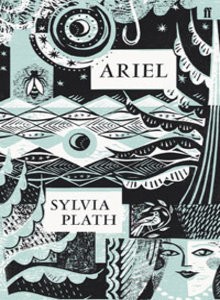
Ariel by Sylvia Plath

Posted December 5, 2014 by Michael @ Knowledge Lost in Poetry / 0 Comments

Ariel by Sylvia PlathTitle: Ariel (Goodreads)
Author: Sylvia Plath
Published: Faber & Faber, 1965
Pages: 81
Genres: Poetry
My Copy: Library Book

Buy: AmazonBook Depository (or visit your local Indie bookstore)

It feels like Sylvia Plath’s life overshadowed her literary value; her autobiographical novel The Bell Jar was like a confessional and people tend to read it for all the juicy bits. Ariel is a collection of poems published posthumously, just a few years after her suicide. It is true that we have Plath to think for advancing the confessional poetry form and exploring topics previously taboo like suicide, mental illness and domestic abuse.

I would like to thank Meg Wolitzer’s book Belzhar for pushing me into reading more of Sylvia Plath. The book explores a struggling student that was sent to a private school that put her in a special English class. This class spent the semester journaling and reading Plath, most importantly The Bell Jar but also Ariel. That book made me want to re-read The Bell Jar which I loved but instead decided it was time to give her poetry a go.

However I am very aware that I don’t know how to review poetry let alone a whole collection, so this is more about my experience with this book. I feel like I am becoming a better reader but if you ask me to read out loud I am going to struggle. So I decided this is an issue I needed to work on and I read Ariel to my wife (she read some of it to me as well). This may seem like a romantic and intimate thing to do with your partner but Plath has a way of killing any sexy moods.

I loved the experience but I am struck with a sense that Sylvia Plath might have been a poor choice to begin with. She has a very strong sense of imagery and plays a lot with metaphors; some of which I picked up on but there was some stuff that went over my head. Poetry is meant to be read out aloud and I thought this would help with my understanding as well as develop my skills. However I found it extremely difficult to work out punctuation in these poems. Some sentences span over a few stanzas but my natural impulse was to pause after ever line.

Having said that, this was a wonderful experience and while the poems are often dark and depressing I am glad I shared this moment with my wife. Ariel kind of reminds me of those people on the internet that overshare about their lives and you can’t help but be glued to what they write even if it annoys you. Sometimes I think, that is too much information but Sylvia Plath seems to get to the heart of that raw emotion.

Sylvia Plath was an incredibly intelligent and complex woman; I can’t help being fascinated by her. I want to learn more about her life, and understand the emotion behind her writing. Take for example her poem “Daddy”; there is this anger toward her father as well as some holocaust imagery that I just want to understand. I am going to have to find a biography on Plath’s life because I think this places a big part in her writing. Can anyone recommend me a good biography?


Tragedy of Macbeth by William Shakespeare

Posted December 4, 2014 by Michael @ Knowledge Lost in Classic / 2 Comments

Tragedy of Macbeth by William ShakespeareTitle: Tragedy of Macbeth (Goodreads)
, 1606
Pages: 249
Buy: AmazonBook DepositoryKindle (or visit your local Indie bookstore)

I probably don’t need to go into too much detail about the plot of Macbeth as most people are aware of what it is about. The Tragedy of Macbeth is obviously a tragedy the legendary playwright William Shakespeare, and is often considered his darkest play. Set in Scotland, the play explores the destructive psychological and political effects that form when evil is used as a method of gaining power. It is generally believed that this was written between the Elizabethan Era and the Jacobean Era, around about 1599 to 1606.

The Elizabethan Era was generally regarded as a ‘golden age’ for England. Colonialism was strong, England has dominating the seas (defeating the Spanish Armada) and there was great commercial wealth to be found in the ‘New World’. However the Jacobean Era was different; James VI of Scotland inherited the throne in 1603 and things seemed to change drastically. The ‘Gunpowder Plot’ of 1605 failed to assassinate the king and the plotters were executed. This possibly led to the King commissioning a new translation of the bible; the ‘King James Version’ was first published in 1611.

The reason I talk about these two eras is that there seems to be a connection to Macbeth. Set in Scotland, Macbeth seems to reflect the atmosphere of the Jacobean Era and there has been speculation to the play alluding to the Gunpowder Plot. However to try to draw direct correlations between Macbeth and the political situations of the time would require a lot of speculation. I just added this information into this review because there are connections that I feel would be relevant or interesting to readers of this play.

I was lucky enough to have experienced Macbeth as a play being performed before ever reading it for my university course. There is something about the performance that was essential to critically reading the text; I already understood the plot, the tone and the overall emotions behind the words and this allowed me to grasp a lot more out of the play. One thing that I picked up in reading Macbeth that I seemed to have missed was the importance of gender roles within the play.

Let’s look at one example which appears in Act 1 scene 7. Within the scene Macbeth is having second thoughts about killing the king and taking the crown. Lady Macbeth scolds Macbeth and manipulates him to go through with his original plan. How does she do this? Simply by calling him a coward and telling him he is not a man. She even suggested that she is more of a man and stated  she would kill her own child; taking that child from her breast and smash its head against a wall.

There are other themes that are prominent within Macbeth, but the idea of masculinity verses femininity seems to stick with me the most. This idea that claiming you are more of a man than someone else is a common occurrence but the way Shakespeare presented this graphic manipulation really stuck with me. Obviously feminist literary studies would have a field day with this play. I have been picking more and more issues to do with feminism within literature, but I would rather be looking at Marxism or psychoanalyst; why does this keep happening?

Macbeth is this wonderfully dark play that has a lot to offer; I can see why Shakespeare remains a legend. I am not really sure how to review a play like this; there is so much to talk about with plot and theme, however I would rather people discover that for themselves. I do feel like this review turned into something that would resemble a Jackson Pollock with random thoughts flicked onto a page but I wanted to get some of my thoughts down.


Wonder Boys by Michael Chabon

Posted December 3, 2014 by Michael @ Knowledge Lost in Contemporary / 6 Comments

Wonder Boys by Michael ChabonTitle: Wonder Boys (Goodreads)
Author: Michael Chabon
Published: Harper Perennial, 1995
Pages: 384
Genres: Contemporary
My Copy: Library Book

Buy: AmazonBook DepositoryKindle (or visit your local Indie bookstore)

Grady Tripp is a writer of a few novels; following the success of his award winning novel The Land Downstairs he has set out to write his follow up. Seven years later his manuscript for Wonder Boys was over 2600 pages long and nowhere closer to being finished. In his personal life things were messed up, his wife has walked out on him, and his mistress Sara has revealed she was pregnant. Wonder Boys (1995) is Michael Chabon’s second novel following the success of his debut book The Mysteries of Pittsburgh (1988).

Michael Chabon spent five years writing a book called Fountain City following The Mysteries of Pittsburgh. Fountain City ballooned into a 1500 page novel about an architect building the perfect baseball stadium in Florida. Chabon stated that he “never felt like [he] was conceptually on steady ground.” Without telling his agent or publisher he abandoned the book and started Wonder Boys which steamed from the melodrama involved around Fountain City. The main character, Grady Tripp is apparently based on one of Chabon’s professors from University of Pittsburgh who had a 3000 pages manuscript which eventually was published in 2001.

This being my third novel by Michael Chabon, I was struck by how different this book was to the other two. The Amazing Adventures of Kavalier & Clay and The Yiddish Policemen’s Union play with intertextuality and genre blending but Wonder Boys didn’t have this at all. Sure there were some similarities, the frequent use of metaphors and recurring themes (particularly with Jewish identity) were still present but it felt very different. Wonder Boys felt raw and emotional, and now understanding the fate of Fountain City I can see the birth of this book.

Chabon plays on the ideas of how we view the stereotypical struggling writer; a person surrounded in melodrama. Wonder Boys is set over the course of one weekend in which Grady’s third wife has left him and his mistress has told him he will be a father. To make things worse, his mistress is the chancellor of the university he works at and her husband in the head of the English department, which makes him his boss. The drama continues to unfold as his agent has arrived in town in the hopes to get a peek at his new novel, which is far from finished. However that is not the half of Grady’s problems and this novel is overly dramatic to give the reader a chance to re-examine the ideas they have of a struggling writer; not all of them are Grady Tripp or Hank Moody (Californication).

Michael Chabon wanted to play with the idea of drama as a reflection of the internal struggle that is experienced with a novel that just isn’t working. Everything is over the top, much like the 1600 page novel that needs to be trimmed down and turned into a more accessible novel. However everything that Grady tries to do to make his life a little less complicated just makes everything worse. This metaphor plays out throughout the entire novel and I had to wonder if it is better to abandon the novel and start again or continue trying to fix it (this plays out near the end of this book but I won’t give spoilers). The fact this book is full of anxiety and raw emotions only serves to enhance the experience and the metaphor.

Wonder Boys was also turned into a movie starring Michael Douglas, Tobey Maguire, Katie Holmes and Robert Downey, Jr. I haven’t seen the movie yet but I can see what it working on a very fundamental level but I am not sure how it would translate. The movie does seem to have a cult classic status so maybe it translated onto the screen perfectly.

Yet again I find myself being impressed with the works of Michael Chabon and a little sad that is takes me so long to read another novel of his. I have Telegraph Avenue on my TBR bookcase waiting for me but it is a bit of a tome. I have so many big books I would love to read but they still scare me, I really need to work on this problem. Wonder Boys is a wonderful and emotional journey and a great place to start if you have never read Michael Chabon before.


The Elegance of the Hedgehog by Muriel Barbery

Posted December 2, 2014 by Michael @ Knowledge Lost in Contemporary / 3 Comments

The Elegance of the Hedgehog by Muriel BarberyTitle: The Elegance of the Hedgehog (Goodreads)
, 2006
Pages: 325
Buy: AmazonBook Depository (or visit your local Indie bookstore)

Renée Michel is a concierge for an upscale apartment building that is inhabited by bourgeois families. Renée is an intelligent autodidact that hides herself from the residents of this elegant apartment, trying to confirm every stereotype they might have towards a concierge. However a precocious girl named Paloma suspects there is something more about Renée. When a wealthy Japanese business man moves into the building, he sees right through the concierge’s façade and tries to befriend her for some intellectual conversations.

The Elegance of the Hedgehog is a highly successful novel by Muriel Barbery who obtained her agrégation in philosophy before becoming a professor for the Université de Bourgogne. The publication I read was a Europia edition that was translated by novelist and Literary translator Alison Anderson. L’Élégance du hérisson was translated into more than forty languages and has also been adapted into the 2009 movie The Hedgehog (Le hérisson) staring Josiane Balasko, Garance Le Guillermic and Togo Igawa.

This novel is full of allusions towards works of literature, music, films, and paintings, which is one of the reasons I loved this book. While it might come across as pretentious and somewhat cynical The Elegance of the Hedgehog plays a lot with the ideas of stereotypes, class-consciousness and acceptance. A philosophical novel that explores ideas of how we present ourselves to the world and if we should pretend to be someone different, if that is what others expect from you.

There are plenty of philosophical ideas running through this novel that presents different ideologies, Muriel Barbery has stated that literature is an effective way to explore philosophy. Having sat through plenty of long and boring philosophy classes she wanted a way to explore the ideas in a more effective and interesting way. I suspect people can get lost in the pretentious nature of this book but also the ending; however I think it was a fitting ending for the novel.

I found The Elegance of the Hedgehog to be a beautiful, if not recherché little novel and I enjoyed every moment of it. I wanted to turn back to page one and start again; I think there is plenty within this book to offer its readers. If you pay close attention to the book you might also notice that most of the book was told in a first person, present day nature that makes for a fresh look at the story that I didn’t notice till near the end. I know I should have paid more attention but this is one of the main reasons I wanted to re-read the book.

Lovers of philosophy and literature would love this book but also anyone interested in Marxism.  I know I didn’t talk much about the class struggle within the book but that is because I have much to learn in this area. The Elegance of the Hedgehog is an intelligent novel, full of references to literature, witty and smart humour with a satirical nature. The way this French novel translates into an elegant English novel is a testimony to Alison Anderson’s ability but she had a great piece of literature to work with. I would highly recommend this novel to everyone but maybe that isn’t a good idea, I think you have to be in the right frame of mind or mood to truly enjoy this book.