Author: Michael @ Knowledge Lost

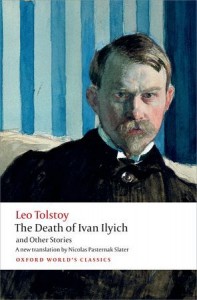
The Death of Ivan Ilyich by Leo Tolstoy

Posted January 15, 2015 by Michael @ Knowledge Lost in Classic / 0 Comments

The Death of Ivan Ilyich by Leo TolstoyTitle: The Death of Ivan Ilyich (Goodreads)
Author: Leo Tolstoy
Translator: Nicolas Pasternak Slater
Published: Oxford World's Classics, 1884
Pages: 256
Genres: Classic
My Copy: Paperback

Buy: AmazonBook DepositoryKindle (or visit your local Indie bookstore)

Ivan Ilych’s life revolved around his career; as a high court judge he takes his job very seriously. However after he falls off a ladder, he soon discovers that he is going to die. The Death of Ivan Ilyich is a novella that deals with the meaning of life in the face of death. A masterpiece for Leo Tolstoy written after his religious conversion in the late 1870s.

Something that was fascinating about The Death of Ivan Ilyich is the drastic change in writing style when comparing it to Anna Karenina and War and Peace. I am not just referring to the length, but that does play a big part. I have read somewhere that Tolstoy intentionally made Anna Karenina and War and Peace so long because he wanted to replicate life and the journey the characters face. Allowing the reader to experience every decision and moral dilemma that the character is facing, exploring the growth or evolution of each and every person within the novels.

The Death of Ivan Ilyich takes a more focused approach, dealing with major questions revolving around the meaning of life, death and spirituality. Leo Tolstoy had a major conversion in the late 1870s and the questions in this novel were the questions he was asking himself. Whether or not Ivan Ilyich found the answers he was looking for is up to the reader but it is believed that Leo Tolstoy was still looking for the same answers well after finishing this novella.

There is a lot of pain and torment that appears in this book, which reflects the authors search for answers and that is what really stood out for me. Not only was I reading a spiritual/existential struggle of the protagonist but Tolstoy’s own feeling really came out within the pages. This is what makes this a masterpiece that explores the tortured artist in great detail. I don’t want to say much more, this is the type of book people have to read and make their own mind up about the themes presented, but it is worth reading.


Cherry Bomb by Jenny Valentish

Posted January 10, 2015 by Michael @ Knowledge Lost in Contemporary / 0 Comments

Cherry Bomb by Jenny ValentishTitle: Cherry Bomb (Goodreads)
Author: Jenny Valentish
Published: Allen & Unwin, 2014
Pages: 384
Genres: Contemporary
My Copy: Paperback

Buy: Book Depository (or visit your local Indie bookstore)

Nina and Rose Dall have always dreamed of being rock stars. Influenced by her aunty Alannah Dall, a pop sensation in the 1980’s, Nina along with her cousin started a punk band known as The Bain-Maries until being signed and renamed The Dolls. Cherry Bomb tells the story of The Dolls rise to fame and the wild ride they faced while navigating the Australian music scene.

Cherry Bomb is told much like a memoir, where Nina Dall is recounting the career of The Dolls. This allowed Jenny Valentish the ability to write a coming of age story that mixes a “rise to fame” journey with a social commentary of the music industry. Before writing her debut novel, Valenstish worked as a music publicist and journalist with her time spent as a columnist for NME and an editor for Triple J’s magazine Jmag. This knowledge on the music industry allowed her to write a social commentary that focuses on the way woman are treated within the industry.

I picked up this book thinking it was a contemporary and fun read, which it mainly was; I was pleasantly surprised to find the social criticism. Cherry Bomb has shades of The Love Song of Jonny Valentine by Teddy Wayne and High Fidelity by Nick Hornby throughout the novel but for the most part it felt fresh. I was particularly fascinated by the playlist in the back on the book and would love to see a Spotify (Jenny Valentish does have a Cherry Bomb playlist, but it is different to The Doll’s playlist in the back of the book) playlist just so I can list to all those songs.

While this might be something different from what I normally read, I do try to explore all kinds of literature so hopefully people aren’t too surprised to see me read this one. However I will mention that I picked up this novel because the blurbs for the book were all done by Australian musicians, instead of other authors and I thought that was a unique concept and made me feel that Jenny Valentish may have captured the music industry correctly. Cherry Bomb is an entertaining read full of sex, drugs and rock and roll and I look forward to reading Valentish’s next novel.

EDIT: The good people from Allen and Ulwin have already created the Cherry Bomb Spotify playlist.


In the First Circle by Aleksandr Solzhenitsyn

Posted January 9, 2015 by Michael @ Knowledge Lost in Classic / 0 Comments

In the First Circle by Aleksandr SolzhenitsynTitle: In the First Circle (Goodreads)
Author: Aleksandr Solzhenitsyn
Translator: Harry Willets
Published: Harper Perennial, 1968
Pages: 784
Genres: Classic
My Copy: Paperback

Buy: AmazonBook DepositoryKindle (or visit your local Indie bookstore)

Moscow, Christmas Eve 1949; a man makes a phone call to the American embassy to warn them about the Soviet Atom Bomb project. This call was caught on tape and quickly disconnected by The People’s Commissariat for Internal Affairs (NKVD). A brilliant mathematician named Gleb Nerzhin, was taken as a sharashka (known as zeks) prisoner and ordered to help track down the mystery caller. The zeks know that they have it better than a “regular” gulag prisoners but they are faced with the moral dilemma; to aid a political system they oppose or be transferred to the deadly labour camps.

Aleksandr Solzhenitsyn is a Russian author as well as a historian; he was also a critic of Soviet totalitarianism which found himself in prison much like Gleb Nerzhin. He was accused of anti-revolutionary propaganda under Russian SFSR Penal Code (Article 58 paragraph 10) which is a ‘catch-all’ criminal offence that could be used against anyone that might threaten the government. During the period of Stalinism, the crime of “propaganda and agitation that called to overturn or undermining of the Soviet power” jumped from a six month prison sentence to seven years of imprisonment, with possible internal exile for two to five years. On 7 July 1945, Solzhenitsyn was sentenced to seven years in a labour camp for comments he made in private letters to a friend. After his sentence ended, Solzhenitsyn was then internally exiled for life at Kok-Terek, which is in the north-eastern region of Kazakhstan.

The First Circle was self-censored before Aleksandr Solzhenitsyn even attempted to get it published in 1968. Originally the book was 96 chapters long but the censorship turned the novel into 87 chapters. Some changes included the man telling another doctor to share some new medicine with the French instead of warning the Americans about the atom bomb. All mention of the Roman Catholics and religion was also removed. It wasn’t till 2009 a new English translation (not sure of the details on the Russian editions) saw the book restored and uncensored; now with the title In The First Circle.

The title alone is fascinating and it allows the reader to pick up on the whole metaphor before starting the novel. Looking at Dante’s Inferno, it is easy to find that the first circle of hell is limbo. In the epic poem Virgil introduces Dante to people like Socrates, Plato, Homer, Horace and Ovid. The time between Jesus’ crucifixion and resurrection is often referred to as the Harrowing of Hell, in which he descended into limbo and brought salvation to the righteous. However in Dante’s Inferno this meant that Christ saved people like Noah, Moses, Abraham and King David, but a lot of the intellectuals where left. This is metaphor for the penal institutions, making reference to all the intellectuals and political thinkers arrested under Stalin’s Russia.

This novel made me feel a lot smarter than I actually am, there is a lot of information within In The First Circle however Aleksandr Solzhenitsyn presented them in accessible way. Going into the book I knew a little about Solzhenitsyn’s life and the metaphor in the title was explained in the Goodreads synopsis. So I was able to witness how everything came together without doing any research. The book sometimes goes into Russian history; I was fascinated with everything I learnt.

I have read so many books set in Cold War Russia but I don’t think there have been many actually written by a Russian. Aleksandr Solzhenitsyn has lead an interesting life and I am keen to read more of his novels before attempting The Gulag Archipelago, his three volume book on the history of a gulag labour camp. If you have paid attention to my best of 2014 list you would have noticed that In The First Circle did make the list. This was a wonderful book that was both thrilling and educational, I would recommend it to anyone interested in Russian history, especially the Cold War era.


Jane Eyre by Charlotte Brontë

Posted January 3, 2015 by Michael @ Knowledge Lost in Classic / 4 Comments

Jane Eyre by Charlotte BrontëTitle: Jane Eyre (Goodreads)
Author: Charlotte Brontë
Published: Oxford World's Classics, 1847
Pages: 542
Genres: Classic
My Copy: Paperback

Buy: AmazonBook DepositoryKindle (or visit your local Indie bookstore)

When Jane Eyre was originally published, it was called Jane Eyre: An Autobiography edited by Currer Bell (Charlotte Brontë’s pen-name), which in itself is a fascinating insight into this classic novel. The idea Charlotte Brontë wanted this to be viewed as an autobiography implies this is more of a social commentary more than a classic gothic novel. This is what I want to focus my review on; what did she want to say about the world when she wrote this book?

Most people know the plot of Jane Eyre, so we can skip that and go right into the analysis. Bildungsroman is the primary genre of Jane Eyre, which is basically a coming of age story that documents the psychological and moral growth of its protagonist, which is interesting because on the surface there doesn’t seem to be much growth for Jane Eyre. Apart from the class struggle; Jane Eyre was an educated orphan who always believed she was low class. She constantly discriminates against herself about her class and this ultimately allows Mr Rochester to be the dominating force he is in their relationship. However it isn’t until Jane has money and returns to find Rochester blind and cripple, that she agree to marry him; what does that say about the social balance?

Though there is a whole idea of independence that plays out within this novel as well. I never thought that Jane Eyre and Mr Rochester had any chemistry and the first proposal was forced upon her. Thankfully it was revealed that Rochester was already married and Jane got out of the position she was in. She had to learn independence and the ability to make decisions for herself. This was tested when St. John (which I discovered is meant to be pronounced together like sin-jun) asked her to marry him.

There is a strong sense of religious morality at the core of Jane Eyre, just look at when St. John proposed to Jane Eyre, it allowed her to played with the idea of a moral decision. There is also an equilibrium between moral duty and earthly happiness that comes into play in this scene. Jane sees John as a brother but he tries to pressure her by implying that it is her Christian duty to marry him and work as a missionary in India. Her refusal to marry him but still travel to India as a missionary was met with disdain. John tries to emotionally blackmail her into marriage using God’s will as ammunition, even though there is no love and would only be a marriage of convenience.

I know I may have asked a few too many questions in this review, but there are some interesting thoughts to be had about Jane Eyre. I am not going to go into how Mr Rochester is the Byronic hero, the gothic themes, or how people should view this book as a Romantic novel and not a romantic book. Personally I think there are interesting elements within this classic book but Charlotte Brontë is my least favourite of all the Brontë sisters. This is the first time reading Jane Eyre and I might read it again at some point; but I hope I offered some interesting insights into the book.


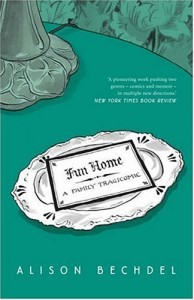
Fun Home by Alison Bechdel

Posted January 2, 2015 by Michael @ Knowledge Lost in Graphic Novel, Non-Fiction / 0 Comments

Fun Home by Alison BechdelTitle: Fun Home: A Family Tragicomic (Goodreads)
Author: Alison Bechdel
Artist: Alison Bechdel
Published: Houghton Mifflin Harcourt, 2006
Pages: 234
Genres: Graphic Novel, Non-Fiction
My Copy: eBook

Buy: AmazonBook DepositoryKindle (or visit your local Indie bookstore)

Fun Home: A Family Tragicomic is a graphic memoir that chronicles the childhood of Alison Bechdel, growing up in rural Pennsylvania and her complicated relationships with her father. Alison Bechdel is best known as the person whom the Bechdel test was named after. The Bechdel test is a simple method that can be used to determine if a work of fiction (or movie) is gender biased. To pass the Bechdel test there must be at least two women, who talk to each other about something other than men.

Fun Home is a non-linear account of Alison Bechdel’s childhood with a strong focus on her relationship with her father. A complex relationship, Bruce Bechdel was a funeral director and a high school English teacher. He was obsessed with restoring the family’s Victorian home and often viewed his children as free labour. He was often cold and prone to abusive rage, Alison’s relationship with her father was a difficult one. At 44, he stepped in front of a truck and was killed; while never confirmed, Alison believed her father completed suicide.

After his death, Alison discovered her father was a closeted homosexual who had sexual relationships with his students and babysitters. Alongside this, Fun Home follows Alison’s own struggle with her sexual identity,coming out to her parents before actually knowing her sexual preferences. The graphic novel centres on Alison Bechdel’s thoughts about whether her decision to come out triggered her father’s suicide.

This is a fascinating insight into the mind of Alison Bechdel, not only as a memoir but the struggles that she faced while trying to understand her own identity. Drawn in a gothic style, Bechdel uses blue shading to give her art a dramatic feel. She even uses childhood diary entries to help capture the mood and feel. The dramatic artwork and emotionally charged writing complement each other and really help drive the story.

While I enjoyed Blue is the Warmest Color more as a coming of age story and a struggle with sexuality, Fun Home still remains a wonderful graphic memoir than really packs an emotional punch. Graphic novels and memoirs often get pushed aside and disregarded as works of literature but every now and then comes a work of art that proves this idea wrong. It happened with Art Spiegelman’s Maus and Persepolis by Marjane Satrapi; but Fun Home seemed to be the most common example that comics (I use the term comic as a catch all for graphic novels and memoirs as well) need to be taken more seriously.

I have been reading more comics of late and I have been impressed with the way art and writing can work together to tell a story. I like these graphic novels/memoirs that capture raw emotion, in the writing or art and I am trying to find more like this. While comics by Marvel and DC are a lot of fun, there are so many other works out there that explores this art from an interesting and new way. I really enjoyed Fun Home, it wasn’t a comfortable read but the experience was well worth the effort.


Monthly Review – December 2014

Posted December 31, 2014 by Michael @ Knowledge Lost in Monthly Reading / 2 Comments

A Christmas CarolNow that 2014 is officially coming to an end it is time to do some reflecting on the year. I think 2014 has been a great year for personal growth for me as a reader and a blogger. I have pushed myself to improve and read more critically and I believe it is starting to pay off. While I am not fully satisfied yet, blogging and reading are passions of mine and I will continue to work towards improvement. One of the biggest steps I made this year was actually joining BookTube and in the New Year, I am curious to see if that will help me in my reading and blogging.

I have already posted a ‘Best of 2014‘ post a few days earlier but I want to also point out the introduction to ‘What I Think About When I’m Not Blogging‘ on my blog which is where I am trying to push myself and my writing with some bookish personal essays. I love this section and I plan to do it more often in the coming year; hopefully this will allow people to see the natural progression of my writing and watch it improve. Other highlights on my blog include; My Vacation (the Literary Highlights), Plot, Character, Style, and Themes, A Rant about my TBR, and Contemporary Fiction Vs. Literary Fiction. Of course I wouldn’t be that pretentious if I didn’t mention that this year I also wrote My Bookish Manifesto, in which I set out some goals to help me improve as a book blogger and critic. I haven’t been keeping to those goals too well but it is still a very important post and I should reflect on it some more.

As it is also the end of the month so I should also talk about my December reading. This month I have been reading a lot of classics and books in translation; after almost six months I finally finished Middlemarch by George Eliot. I loved this book and taking my time with it allowed me to reflect and absorb everything that was happening. Obviously taking your time with a book isn’t always an option but this is the kind of book you can dip in and out of and still experience everything that is wonderful with this classic. To aid my reading of Middlemarch, I used a reading guide called Eliot’s Middlemarch by Josie Billington and I think this was a huge help and allowed me to get historical and personal context into George Eliot’s writing. I wasn’t ready to leave the world of Middlemarch so after this book I picked up Rebecca Mead’s memoir called My Life in Middlemarch, but sadly it didn’t work for me.

I realised that I hadn’t read much Russian literature this year and after enjoying Roadside Picnic by Arkady & Boris Strugatsky in November I knew I had to rectify this situation. Most people who read my blog or know me will know that I love Russian history and literature. Thankfully I spent ten days with In The First Circle by Aleksandr Solzhenitsyn, which allowed me to learn so much about the Soviet era, since most novels I have read on this subject are not by someone who lived through it. I also read The Death of Ivan Ilyich by Leo Tolstoy because it was a short read and finished off all the Tolstoy I need for the ‘1001 Books You Must Read Before You Die‘ list.

More books in translation included the German novel Measuring the World by Daniel Kehlmann, the Norwegian book A Man in Love by Karl Ove Knausgård and a French graphic novel in Blue is the Warmest Color by Julie Maroh. I even read a few more classics in Jane Eyre by Charlotte Brontë and A Christmas Carol by Charles Dickens. But it wasn’t all older book, I also read some contemporary novels including The Girl on the Train by Paula Hawkins, Authority by Jeff VanderMeer and All the Birds, Singing by Evie Wyld.

It has been a great year and I hope that 2015 will be just as great. Please let me know what books you read this month.

Read More


A Christmas Carol by Charles Dickens

Posted December 30, 2014 by Michael @ Knowledge Lost in Book of the Month, Classic / 4 Comments

A Christmas Carol by Charles DickensTitle: A Christmas Carol (Goodreads)
Author: Charles Dickens
Published: Oxford World's Classics, 1843
Pages: 438
Genres: Classic
My Copy: Paperback

Buy: AmazonBook DepositoryKindle (or visit your local Indie bookstore)

When it comes to Christmas books, A Christmas Carol by Charles Dickens is probably the first book that comes to mind. Published in 1843, this novella was an instant success and has been a beloved classic since then. I am not going to go into a plot summary because I believe most people know the story but if you don’t, go watch A Muppet’s Christmas Carol. Told in five staves (similar to stanzas or verses) this book has been adapted so many times that A Christmas Carol has just become a part of the Christmas period.

While compassion, forgiveness and getting into the Christmas spirit is the major theme of this novella, one thing that really stuck with me is Dickens’ ideas of isolation and loneliness. While it is true that Ebenezer Scrooge never indicates he is feeling alone, since the death of Jacob Marley seven years earlier there is a sense that he has falling in despair. Marley died on Christmas Eve and appeared to be Scrooge’s only companion, which leads to a disdain for the holiday period.

Charles Dickens wanted to emphasise the importance of being with friends and family, especially during Christmas. However I got the sense that he may have treated the idea of isolation poorly. Sure, Scrooge was a grumpy old man who was tight with his money but I got no real indication that he was unhappy to be alone. Scrooge could have been an introvert and enjoyed the quiet solitude; is that really such a bad thing?

Then all of a sudden Scrooge is cured from his rationality and becomes an extravert. This is a little strange, Scrooge’s emotional and psychological makeup might not be pleasant or agreeable to the popular worldview but they were his own thoughts. Scrooge was a financial supporter of The Poor Law Amendment Act of 1834 and didn’t want to give money to a charity that worked against his political ideology.

I am not bagging out A Christmas Carol, I do enjoy it but as I was re-reading this novella I kept wondering what this story is saying if we take out the element of Christmas. Basically this is the story of curing someone of his or her personality. I had a lot of fun looking at this book from another point of view, it just gave me a lot more to think about. A Christmas Carol is a nice quick story about the importance of being with your friends and family during this holiday period. Next year I might try Truman Capote’s collection of stories about Christmas.


My Top Five Reads of 2014

Posted December 29, 2014 by Michael @ Knowledge Lost in Top 5 / 18 Comments

top-5It is that time of the year where we talk about the ‘best of’ 2014. When I say ‘best of’ I am referring to my favourites of the year. I have once again divided my list into books released in 2014, the backlist and non-fiction. I have done it this way because I have had a strong focus on non-fiction this year and want to recognise my favourites. I also don’t want my ‘best of’ list to be dominated by classics, thus the reason for the first two lists.
Top Five Reads from 2014
5. Grasshopper Jungle by Andrew Smith
4. Station Eleven by Emily St. John Mandel
3. Ms. Marvel, Vol. 1: No Normal by G. Willow Wilson
2. Belzhar by Meg Wolitzer
1. All That is Solid Melts into Air by Darragh McKeon

Top Five Reads from the Backlist in 2014
5. In The First Circle by Aleksandr Solzhenitsyn
4. The Odyssey by Homer
3. War and Peace by Leo Tolstoy
2. The Sorrows of Young Werther by Johann Wolfgang von Goethe
1. Middlemarch by George Eliot

Top Five Non-Fiction Reads in 2014
5. What We See When We Read by Peter Mendelsund
4. Levels of Life by Julian Barnes
3. In Cold Blood by Truman Capote
2. Ex Libris: Confessions of a Common Reader by Anne Fadiman
1. The Dark Path: A Memoir by David Schickler

Now it is your turn to let me know of your favourite books, the new releases and the older books. It doesn’t matter; just what you discovered and loved.


Measuring the World by Daniel Kehlmann

Posted December 28, 2014 by Michael @ Knowledge Lost in Historical Fiction / 4 Comments

Measuring the World by Daniel KehlmannTitle: Measuring the World (Goodreads)
Author: Daniel Kehlmann
Translator: Carol Brown Janeway
Published: Quercus, 2005
Pages: 259
Genres: Historical Fiction
My Copy: Library Book

Buy: AmazonBook Depository (or visit your local Indie bookstore)

Measuring the World reimagines the life of German mathematician Carl Friedrich Gauss and geographer Alexander von Humboldt. The book follows a fictionalised account of their journey, along with Aimé Bonpland as they measure the world. Their methods where ground-breaking and this novel entangles their lives to explore their effects on science today.

This is not a book of science, this is historical fiction that explores the lives of two German scientists. While the subject matter may sound dull and fact heavy, Daniel Kehlmann handles the topic with skill. It is an impressive feat to make a subject that sounds boring come across exciting and interesting. Kehlmann’s writing skills turns the subject of science into a novel of elegance and beauty.

The two plots revolving around Carl Friedrich Gauss and Alexander von Humboldt worked well together and I found myself fully immersed in the whole experience. Having said that this is a book of science and German history so I feel hesitant in going into more details because I worry I will get the information wrong. That does make for short review but all I can really say is; read it.

Published in German in 2005 under the title Die Vermessung der Welt, Measuring the World turned into a huge literary sensation for the country. This book knocked bestsellers like Harry Potter and Dan Brown off the list. The only other German book that has achieved that (that I know of) was Perfume by Patrick Süskind.

This was a wonderful book and I learned a little about German and Prussian history. Carl Friedrich Gauss has sometimes been referred to as one of the greatest mathematicians of all time and Alexander von Humboldt as the second Columbus. Two great people of history I knew nothing about and I think the opportunity to learn something new while reading beautiful prose made for a wonderful experience.


My Life in Middlemarch by Rebecca Mead

Posted December 27, 2014 by Michael @ Knowledge Lost in Non-Fiction / 6 Comments

My Life in Middlemarch by Rebecca MeadTitle: My Life in Middlemarch (Goodreads)
Author: Rebecca Mead
Published: Crown, 2014
Pages: 293
Genres: Non-Fiction
My Copy: Library Book

Buy: AmazonBook DepositoryKindle (or visit your local Indie bookstore)

Rebecca Mead grew up in a coastal town in England and often dreamed of escaping to somewhere more exciting. She gained admission to Oxford and later become a journalist in the United States. When she was young Middlemarch was a favourite of hers and now as she re-reads this classic she is sharing her story along with it. My Life in Middlemarch is told partly as a bookish memoir, but also explores the life of George Eliot and her novel Middlemarch.

This book started off really well; in the prelude the reader gets to discover a bit about the life of Rebecca Mead. Beginning like a bookish memoir this insight into the author gave a fascinating look into her relationships with books, especially with Middlemarch. However as I progressed with My Life in Middlemarch, the memoir elements became fragmented and I found myself yearning to return to this style. I love bookish memoirs, I have been reading so many of them lately and this had the potential to be great but it had two other strands to weave into this book.

My Life in Middlemarch also looks at the life of George Eliot, which allows some perspective about this author. Though I had already done some extensive research. I know that the life of Eliot played a big part in understanding Middlemarch so my autodidactic nature kicked in and I learned a bit about her. I was reading Middlemarch with a reading guide as well, so I had the added advantage of gaining some insight as I read. Apart from access to George Eliot’s journals, I didn’t gain much information; it was a very broad strokes look at her life and I would have gained that information from Wikipedia. I would have been better off reading a biography or her journals instead.

Finally we come to the literary criticism within this book and yet again I felt a little disappointed. I would have liked to know what Rebecca Mead got from the book but instead she just referenced others people’s criticisms on the novel. Having smarter people’s insight into Middlemarch is useful but I would enjoy a personal opinion mixed in with all the references. It reminds me on how I write a research paper for university; I pack it with quotes and references that say what I want it to say but don’t offer much in the way of personal opinion

Combine these three parts and you have an accessible look at Rebecca Mead and her life with Middlemarch but it felt like a huge generalisation. There are some interesting elements worth exploring in this book and I feel like it could have done so much more. We have three interwoven strands within the book but nothing of substance from any of them. This would be an enjoyable book for someone that has not read Middlemarch but for me, I had just finished the classic and I picked this book up because I was not ready to move on.