Author: Michael @ Knowledge Lost

My Vacation: Literary Highlights

Posted September 5, 2014 by Michael @ Knowledge Lost in Literature / 13 Comments

I’m not sure if I need to write about my experiences overseas because there wasn’t much literary happening. There was a lot of nerdy fun and sightseeing but that really isn’t that interesting to share, especially on a book blog but I will give you my literary highlights. As most people know I went to the United States of America for about six weeks, while there, I visited Los Angeles, San Diego, San Francisco, Yellowstone, New York, Boston, Toronto and Las Vegas. This was a pretty busy vacation and I didn’t get to go to every bookshop I hope to; in fact I only managed to complete three books in those six weeks. Here are some bookish highlights;
Coronado, California

While this little island off the coast of San Diego is best known for the Hotel del Coronado which appeared in the classic film Some Like It Hot, it has one other attraction. Coronado was a vacation spot for L. Frank Baum; in fact the Hotel del Coronado was the inspiration for the Emerald City in The Wizard of Oz. In Coronado I visited the holiday house of L. Frank Baum as well as bought a Wizard of Oz anthology from a nice little indie bookshop called Bay Books.
City Lights Books

If you ever find yourself in San Francisco don’t forget to visit City Lights, it is an amazing store. Not only is it an amazing independent bookstore, it is also a literary landmark. You won’t find the beat generation hanging out there anymore but you will find plenty of books. The store specialises in world literature, the arts, and progressive politics; it even has its own publishing company.

Library Hotel

One of the highlights of the trip was this amazing hotel; I don’t think I could bring myself to stay anywhere else when in New York. Each room is numbered by the dewy decimal system and have a different subject; we stayed in the Health and Beauty room. They also have a reading room where you can spend time reading, drinking or snacking. I think it is awesome that they allow their guest read their books and if you don’t finish it before check out you can mail it back.
Strand Books

Another amazing bookshop was Strand books, yet another indie bookstore but this one offers 18 miles of used and rare books to browse through. It is a real treat to visit a bookstore that is so packed with books and bookshelves; it is the type of bookstore that I love visiting.

Trident and Brattle Books
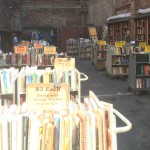
While in Boston there were two great stores, Trident Books and Brattle Book Shop. Trident books were located around the corner from where we stayed and offered a wonderful place to browse through their books and enjoy breakfast. Seriously, a good indie bookstore with a café that does a great meal and tea is my idea of perfection. Then Brattle Books was the type of used bookstore you can get lost in. But the real novelty was the alley full of books.

Like I said before, I didn’t visit all the stores I wanted to get to. A combination of too many sights to see and weird locations did make it difficult. It was a great holiday and I returned with a large pile of books. Highlights from my bookish mail include Belzhar by Meg Wolitzer and You by Caroline Kepnes. I just have to find the time to read everything.


Monthly Review – August 2014

Posted August 31, 2014 by Michael @ Knowledge Lost in Monthly Reading / 0 Comments

In cold bloodAs most people know, I have been on vacation to the United States. While this has a great six weeks off, it did come with some disadvantages. I may talk about all the bookshops I visited while in America in a future post but I am sad to say during this holiday I only managed to finish three books. While away, the book club read the true crime classic In Cold Blood by Truman Capote, a book I read before vacation so I wouldn’t miss out. I wasn’t able to get involved with the discussions but it was good to see it happening while I was enjoying myself.

Looking at the Literary Exploration book club, it is great to see things happening without my involvement. It looks like next month we will be preparing for the movie adaptation of Gone Girl for our Thriller theme. Obviously I’m talking about our great book club but if you are not aware, the book discussion and everything else happens over on the Goodreads forums, so feel free to join in there.

While I’m not happy with the amount of books I read, I really did enjoy the three books anyway. Cannot pick a highlight from The Paying Guests by Sarah Waters, The Year of Reading Dangerously by Andy Miller and Dept. of Speculation by Jenny Offill; you’ll just have to wait for the reviews. What have you been reading and what have your highlights been?

Read More


In Cold Blood by Truman Capote

Posted August 30, 2014 by Michael @ Knowledge Lost in Book of the Month, Non-Fiction / 0 Comments

In Cold Blood by Truman CapoteTitle: In Cold Blood (Goodreads)
Author: Truman Capote
Published: Penguin, 1965
Pages: 336
Genres: Non-Fiction
My Copy: Library Book

Buy: AmazonBook DepositoryKindle (or visit your local Indie bookstore)

In 1959 a farmer from Holcomb, Kansas was killed along with his wife and two of his four children by a couple of two-bit thieves. This brutal crime spawned a desperate search for the killers who left bloody footprints at the murder scene. From petty crime to mass murder, In Cold Blood tells the story from murder to the gallows where they were executed by hanging.

In the Truman Capote literary masterpiece, it is easy to consider In Cold Blood a crime novel; it has shades of pulp and southern gothic throughout the book. However this journalistic investigation has often been cited as the first and best example of the non-fiction genre known as true crime. While there have been true crime books before In Cold Blood, this book did redefine the genre. Capote likes to call his book a non-fiction novel which he defined in an interview with The New Your Times as “a narrative form that employed all techniques of fictional art, but was nevertheless immaculately factual”.

However this is not just a book about the brutal murder of the Clutter family; we also get a Capote’s depiction of rural America. Outside the details of the crime, the author paints a descriptive backdrop of Kansas, the way he sees it. Religion, masculinity, femininity, the nuclear family and small town communities all play a big part in developing the scene. When he talks about the crime, the reader gets to explore the psychological motivations of murder and awaiting execution.

There is the issue of mental illness that needs to be explored when talking about In Cold Blood. It is almost like Truman Capote wants to challenge the reader to consider if Perry and Dick suffered from an untreated mental illness. There are shade of delusional, depression, schizophrenia and a sociopathic personality that comes through when talking about these two people but as this is 1959 I expect no psychological consult or treatment were given to these men; the court rejected the request.

I expected a true crime book but I feel like In Cold Blood was trying to do something similar to One Flew Over the Cuckoo’s Nest by Ken Kesey and The Bell Jar by Sylvia Plath. I was very impressed with this book and I feel like Capote may have ruined true crime and even narrative non-fiction for the rest of the authors in these genres. Capote’s investigational skills and mastery over the written word is what makes this book a masterpiece.


Wicked by Gregory Maguire

Posted August 28, 2014 by Michael @ Knowledge Lost in Fantasy / 0 Comments

Wicked by Gregory MaguireTitle: Wicked: The Life and Times of the Wicked Witch of the West (Goodreads)
Author: Gregory Maguire
Series: The Wicked Years #1
Artist: Douglas Smith
Published: Harper Collins, 1995
Pages: 538
Genres: Fantasy
My Copy: Paperback

Buy: AmazonBook DepositoryKindle (or visit your local Indie bookstore)

We all know the story of The Wizard of Oz; if we haven’t read the 1900’s classic written by L. Frank Baum we probably saw the 1930’s film starring Judy Garland. What if was to tell you that the Wizard is not as sympathetic as he wants you to believe? In fact, the Wizard could be considered a classic example of a nutcase dictator. It is all about perspective; some may see the Wizard as great and powerful but in the eyes of Elphaba he is just an old fool.

Wicked by Gregory Maguire tells the untold story from the perspective of Elphaba (known to some as the Wicked Witch of the West) and is the basis of the award winning Musical. It is important to first state that unlike L. Frank Baum’s series of books, this is not directed at children. This is social and political commentary, full of sex and violence; it just so happens to use the world of Oz as its basis. As a nod to the world created, the Wicked Witch of the West was named using the initials of L. Frank Baum; Elphaba (L-F-B).

This novel works like an origin story for Elphaba, which gives the world a whole different perspective. In The Wizard of Oz everyone uses names like The Wicked Witch of the West and gossip about how evil she is but we never really hear the other side of the story. As a reader we tend to take what is written at face value; if someone is said to be evil we accept this fact without any consideration. Wicked also plays on the female archetype that seems to associate intelligent and age with witch-like characteristics.

What I enjoy about Wicked is the way the reader gets to explore these concepts of good and evil. I am reminded of Frankenstein with the approach to this topic. Elphaba is different, born with green skin and sharp teeth; a monster that society tries hard to reject. From her parents, to the world around her, we get to explore the harsh nature of society towards something outside the norm. Elphaba herself believes she is soulless and evil but I seem to view this as a projection of the ideas imposed on her by society.

We follow the life of Elphaba through this novel and this allows Gregory Maguire to give a critique of our society from the perspective of someone that is considered evil. Are people born evil, do they choose to be evil or are they pushed into evil by society? These are just some of the questions we have to ask ourselves when reading Wicked; the whole fate verse free will play heavily within the novel. There is also a critique on guilty verse blame, family life, religion and gender role that come across within Wicked as well.

My wife has been telling me I need to read this novel for a while now and for some reason I kept putting it off. Not because I don’t trust my wife’s opinion; she said it had a Frankenstein vibe to it but I kept getting distracted by other books. I finally picked this book up because I didn’t want to see the Broadway musical before reading the book. I am glad I was pushed into reading Wicked; it is definitely my type of novel. I wonder what the next book in the series is like.


Top Ten Tuesday: Books I Really Want To Read But Don’t Own Yet

Posted August 26, 2014 by Michael @ Knowledge Lost in Top Ten Tuesday / 6 Comments

toptentuesdayIt’s Tuesday again which means time for another round of Top Ten Tuesday; I like joining in on this meme because I have a set topic to work with. Top Ten Tuesday is a book blogger meme that is hosted by The Broke and the Bookish and this week the theme is: Books I Really Want To Read But Don’t Own Yet. I’m looking forward to going through my wishlist and picking ten books. So here we go;

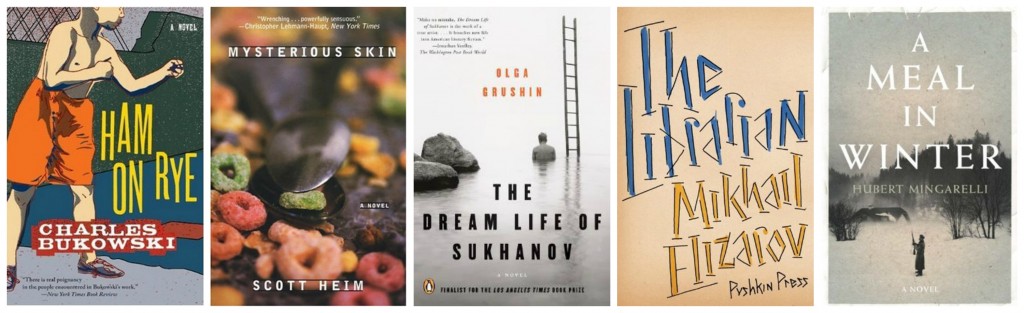
  • Ham on Rye by Charles Bukowski
  • Mysterious Skin by Scott Heim
  • The Dream Life of Sukhanov by Olga Grushin
  • The Librarian by Mikhail Elizarov
  • A Meal in Winter by Hubert Mingarelli

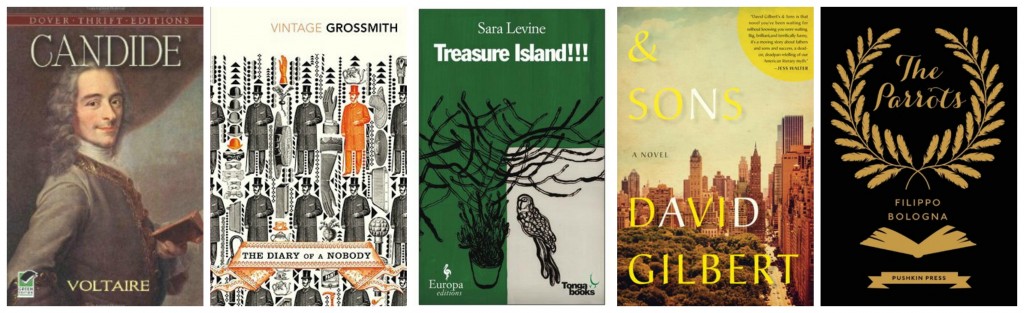
  • Candide by Voltaire
  • The Diary of a Nobody by George Grossmith
  • Treasure Island!!! by Sara Levine
  • & Sons by David Gilbert
  • The Parrots by Filippo Bologna

just_a_girl by Kirsten Krauth

Posted August 23, 2014 by Michael @ Knowledge Lost in Contemporary / 0 Comments

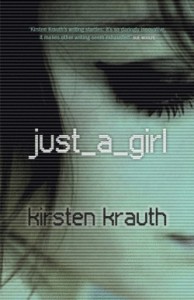
just_a_girl by Kirsten KrauthTitle: just_a_girl (Goodreads)
Author: Kirsten Krauth
Published: University of Western Australia Publishing, 2013
Pages: 272
Genres: Contemporary
My Copy: ARC from Publisher

Buy: AmazonBook Depository (or visit your local Indie bookstore)

“I’m just a girl, Take a good look at me. Just your typical prototype” – Just a Girl by No Doubt.

just_a_girl tells the story of Layla, a fourteen year old girl navigating the waters of adulthood and a budding sexuality. The novel is told from the three different perspectives, Layla, her religious mother Margot, and Tadashi, a stranger on a train. Through these three different sets of eyes we begin to see the complexities of growing up beginning to form.

This novel is marketed as “Puberty Blues for the digital age, [or] Lolita with a webcam”, a description that I’m not too pleased about but I can see where it comes from. just_a_girl (also Layla’s screen name) serves as a psychological look into a teenager’s life in a world that that forces her to grow up far too quickly. It is that type of thought provoking novel that gives you far more questions than answers.

What I loved about this book is the way that Kirsten Krauth looks at the life of a teenager girl but never blames or suggests that her problems are the cause of one thing. Can we blame the internet for the struggles that Layla faces? Maybe, but it is not the sole cause. We could accuse her mother for being ignorant and too focused on religion but then what teenager wants to share that much detail with their parents? I could go on; there are so many little defining factors that make up this struggle.

just_a_girl is a novel that explores different facets of growing up, isolation, loneliness, friendship, love, relationships, religion, sex and the digital world. Layla feels like she has to navigate through life on her own and the reader gets to watch this progress from three different points of view. The three narratives all bring balance and complement each other; With Layla we have a sense of confusion and urgency, Margot provides some ignorance and concern towards her daughter in a stream of consciousness, while Tadashi has a gentle, quiet observation of what he sees happening.

The raw emotion that Kirsten Krauth invests into her debut novel is the real reason just_a_girl works. There is something real and honest with everything that is going on within the pages. This is both scary and uncomfortable but it raises so many important questions. I won’t list some of the questions I asked, it is something that each reader needs to discover for themselves.

Layla struggles to navigate her life, trying to make a connection is such great topic to explore and Krauth did it so well. I was very impressed with this novel, even if I would never associate it with Lolita; I think the two novels are vastly different and comparing to a masterpiece just isn’t fair to a debut author. I could stick all the standard ‘dark’, ‘gritty’ or ‘transgressive’ labels to just_a_girl but I would rather say that is thought provoking and asks some very important questions. It is nice to see a contemporary Australian debut take a risk and pull it off, I highly recommend just_a_girl.


Mr. Mercedes by Stephen King

Posted August 21, 2014 by Michael @ Knowledge Lost in Crime, Thriller / 0 Comments

Mr. Mercedes by Stephen KingTitle: Mr. Mercedes (Goodreads)
Author: Stephen King
Published: Hodder, 2014
Pages: 496
Genres: Crime, Thriller
My Copy: Paperback

Buy: AmazonBook Depository (or visit your local Indie bookstore)

When I picked up Stephen King’s new novel Mr Mercedes, I felt anxious and nervous. This novel has been billed as King’s first hard-boiled detective novel and it reminded me of his past attempts at pulp fiction. Joyland was billed as a pulp novel and by all accounts it had the makings of a good dime-store novel but the end result felt like King stuck to what he does best and only paying homage to the genre. Mr Mercedes has all the hallmarks of a hard-boiled novel, a brooding and jaded detective, a femme fatale and mysterious villain but this read more like a cat and mouse suspense thriller. Don’t get me wrong, this novel is a homage to detective fiction; Philip Marlow gets a mention and a fedora even makes an appearance. Though the third person narrative and chapters focusing solely on the killer meant we are in a thriller and I had to adjust my expectations.

Bill Hodges is a retired cop with not much to do; when he was on the force he was highly decorated but now he is left alone with the thoughts of all his unsolved cases. One of those cases was the psycho-loner who ploughed down a crowd of people in a stolen Mercedes. One day Hodges receives a letter from this killer taunting him into a little game of cat and mouse. This is a high-stakes race against time; can Hodges catch the Mercedes Killer before he strikes again?

I found it interesting that Stephen King picked the fundamental character archetypes found in hard-boiled fiction, in particular to Bill Hodges, and made it his own. On the other hand the plot felt into the typical tropes found in suspense thrillers. So we have a book that is walking a fine line between homage and cliché. When it comes to hard-boiled detectives, there has been a great evolution in the genre and character archetype; it was felt a little dated to see an old white guy again. I felt it to be unnecessary, in fact I am struggling to think of any ethnicity within the book that didn’t come across as stereotypical. It was a shame because you can do so much with a hard-boiled detective and still keep him as a homage to 1940’s crime novels.

I get the impression that maybe Stephen King is the kind of writer that sticks to the tried and true methods of writing within a genre. As prolific author, I’m beginning to question if he ever takes a risk in his writing. I am not one to judge King’s work, I’ve only read a few of his books (I think five) but they all seem to follow the typical tropes found within their genres. Does he take risks?

It is starting to bug me this whole ‘old white guy’ category of novels all feature non-multicultural characters and if we do have some ethnicity, they all feel a little too stereotypical. It isn’t necessary in today’s novels; there is room to explore some diversity within a book. I won’t go into anything about feminism because I fear I would give spoilers with what I want to say but we need more strong/independent women in novels like this.

Having had a bit of a rant, I found that I’ve managed to talk about the novel and not give any spoilers. I did in fact enjoy the ride this took me on, it was predictable and typical of the genre but sometimes it is fun to go on that journey again. In fact (with the exception of On Writing) I think this is the first Stephen King novel that I have actually enjoyed. I find some parts of his other books entertaining but on a whole they do not work for me. Maybe I’ve just read the wrong King novels. Bill Hodges is returning in another two more novels and I will be picking them up and using the books as a little entertaining read when I need them.


Top Ten Tuesday: Books People Have Been Telling Me I MUST Read

Posted August 19, 2014 by Michael @ Knowledge Lost in Top Ten Tuesday / 17 Comments

toptentuesdayIt’s Tuesday again which means time for another round of Top Ten Tuesday; I like joining in on this meme because I have a set topic to work with. Top Ten Tuesday is a book blogger meme that is hosted by The Broke and the Bookish and this week the theme is: Books People Have Been Telling You That You MUST Read. I went through my Goodreads recommendations and picked ten books from there.

ttt-19-8-1

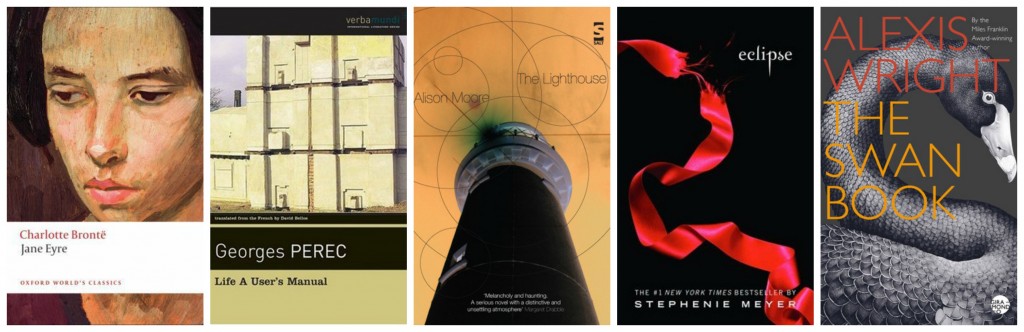
  • Jane Eyre by Charlotte Brontë
  • Life: A User’s Manual by Georges Perec
  • The Lighthouse by Alison Moore
  • Eclipse by Stephenie Meyer (mean people)
  • The Swan Book by Alexis Wright

ttt-19-8-2

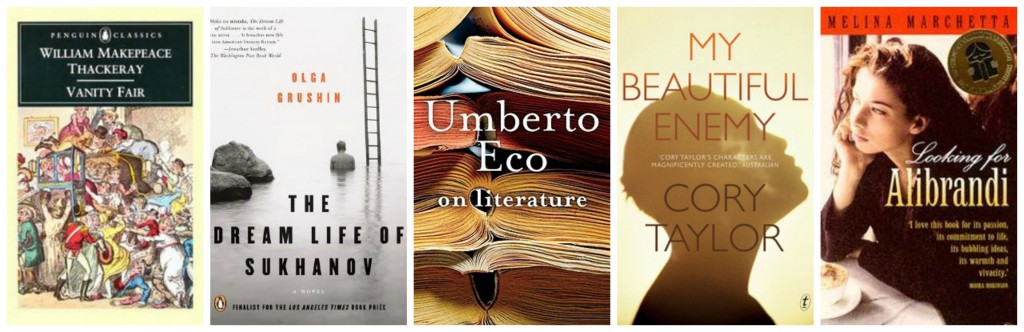
  • Vanity Fair by William Makepeace Thackeray
  • The Dream Life of Sukhanov by Olga Grushin
  • On Literature by Umberto Eco
  • My Beautiful Enemy by Cory Taylor
  • Looking for Alibrandi by Melina Marchetta

Time for some Cultural Studies

Posted August 17, 2014 by Michael @ Knowledge Lost in Education / 4 Comments

ms marvelWhile writing a review for Ms. Marvel: No Normal I came to the burning realisation that I don’t know how to review art work. As a result of this realisation, I had to leave out any thoughts of the art. This got me thinking, I have a book blog that has been a great tool for developing my skills in reviewing and talking about literature. This blog sadly still gets neglected a little too much but I think I can make use of it for developing my skills.

Knowledge Lost was created to allow me to talk about what I have learnt and I can apply them into a blog post. So I have to wonder why I am not trying to socially critique all things pop-culture. Thanks to two recent books I’m starting to see issues relating to feminism (The Fictional Woman by Tara Moss) and sexuality (Grasshopper Jungle by Andrew Smith) in everything I see. I’ve decided to practice these skills and start critiquing movies, TV shows and obviously art. The goal is to improve my writing skills in these areas and gives me an excuse to look more into pop-culture.

I have plans to talk about a few topics already, so I’m hoping that this blog is going to be neglected less. If you read my book blog you may have seen my manifesto where I have decided to write every day. So stay turned, it might not be as educational as before but this blog is now my new playground to practice and develop my abilities. I think the term for this is cultural studies, it is very similar to literary criticism but it applies to all things related to pop-culture.


Plot, Character, Style, and Themes

Posted August 16, 2014 by Michael @ Knowledge Lost in Literature / 0 Comments

While listening to an episode of the Bookragous podcast they had a topic on Plot, Character, and Style and I thought that was interesting and maybe something I can explore further. For those of you that are not aware the concept was taught to one of the podcasters in how to help sell books. If you are not sure what to recommend, ask the customer to rate plot, character and style in the order of personal preference. This can help narrow the type of book to recommend which is a nice idea but my initial reaction was, ‘This wouldn’t work for me.’

When picking books, my preference is towards a book that explores interesting themes; I want a book that challenges me and offers me some new idea to explore. I know I’m different but recently in a review of Divergent I wondered if people read books for plots or themes. I suspect I’m the odd one out but I had it in my head that people like themes over plot. However, I think I may be the only person that picks up a book thinking it will explore some nice themes rather than plot, characters or style.

If I were to pick preferences, I would say style is the most important thing in a book, characters have to be interesting but plot doesn’t really matter as much. I would want the characters to be developed and complex; if you have a good style and characters you don’t need a plot at all. This obviously comes down to personal preferences, but this does bring me to one of my bête noires, likeable characters.

I hate it when people say they don’t like a book because the characters are not likeable. What is the point of that? Why would you want all characters to be likeable? I know this post is about to turn into a rant but I need to say it. In life we know that not everyone is going to be good or likeable, so why except differently in a book. We read to discover new worlds and experience new things; it is impossible to explore some themes or subjects if everyone is likeable.

Look at The Catcher in the Rye as an example; would this modern classic work if the characters were likeable? I have to admit that I read The Catcher in the Rye when I first started reading and I didn’t enjoy it because Holden was whiny and annoying. This is something I hate to admit because I’ve been an advocate for unlikeable characters and transgressive fiction as of late. I feel like I have come to a point in my life where I’m going to have to reread The Catcher in the Rye again just so I can get it right.

To get back on track, let me know in the comments below what your preferences are between plot, characters and style. Also do you think themes are important in a book or am I just a minority. We can also complain/debate about hating books because of unlikeable characters in the comments as well. I just wanted to explore my thoughts in a stream of conscious style; that is why this is a little all over the place.