Author: Michael @ Knowledge Lost

Alif the Unseen by G. Willow Wilson

Posted March 23, 2014 by Michael @ Knowledge Lost in Fantasy / 0 Comments

Alif the Unseen by G. Willow WilsonTitle: Alif the Unseen (Goodreads)
Author: G. Willow Wilson
Narrator: Sanjiv Jhaveri
Published: Allen & Unwin, 2012
Pages: 433
Genres: Fantasy
My Copy: Paperback

Buy: AmazonBook DepositoryKindle (or visit your local Indie bookstore)

Alif is the online persona of a grey hat working in the United Arab Emirates, taken from the first letter in the Arabic alphabet. Alif is a 23 year old Arab/Indian, working in internet security who fell in love with an Arab aristocratic woman he met online. Their relationship is doomed from the start; her family would never accept someone outside her social class, let alone an Indian. Her father has already arranged a more suitable suitor for her; a mysterious and powerful man who is known online as ‘the Hand’, the states leading internet censor. In an attempt to get the girl, Alif has made a powerful enemy, one that forces him to go underground into the world of Jinn’s (genies), ghouls, demons and all the others that remain unseen.

Debut author G. Willow Wilson set out to write a book that can bring her three loves together. A love of comic books and all things geeky, as well as her love of literary fiction and that of her Muslim heritage. The result is Alif the Unseen, a rich blend of cyberpunk and urban fantasy that explores the Arabic culture as well as looks as many social-political issues. Personally I think Wilson set out to expose the bias that the online community has no social consciousness, and educate the world on Muslim culture as well as explore the societal impact of hackivism.

I picked up this novel because G. Willow Wilson is the writer behind the new Ms. Marvel; the fourth character to take on this superhero and is the first Muslim character to have their own Marvel series. After reading the first issue, I wanted to check out Alif the Unseen. I knew it was a cyberpunk/urban fantasy blend but now I expected a strong Arabic or Muslim presence. I didn’t except a literary approach to this genre, but I was pleasantly surprised, Wilson has a lot to say on the Middle East social-politically speaking but also she educates the reader on a culture that is possibly unfamiliar to them.

G. Willow Wilson also takes on Middle Eastern folklore and myths and blends these fables with a religious element. Take jinn for example, we know them as genies but Islamic belief divides sentient beings into three categories. These are Malayka (angels), Nas or Banu Adam (human) and Jinn (the hidden ones). Angels are genderless and have no free will, but humans and Jinn’s are gendered and have free will, this is why Islamics believe Satan was a Jinn and not an angel, as it is impossible for an angel to disobey the will of God. Also playing a role in the story is the hamsa (or the hand of Fatima) which is like a good luck charm in Islamic culture. In the Judeo-Christian world this is often called the hand of Mary or Miriam.

I also want to talk about hackivism. In this novel Alif lives in a heavily censored world; the government believes in having a tight control on what is on the internet. Alif is a grey hat; this is a hacker that doesn’t work for a cooperation of the government.  The term comes from the old western metaphor where the good guys wore white hats and the villains had black hats. A grey hat would be someone whose activities and practices fell in a grey area. For Alif, it was a matter of free speech (and possibly money). He provided security for enemies of the Arad stats, militant Islamists and even pornographers. Sites that the government wants to shut down often turned to Alif or another grey hat for internet security.

I can probably go on and talk more about the range of topics that are going on in Alif the Unseen, but I fear I don’t have the knowledge of Middle Eastern folklore or culture, Islam and hackivism. One of the things I enjoy most about reading is the ability to explore different cultures and learn about the world. Alif the Unseen took me into the rich world of the United Arab Emirates and looked at many social issues, in particular class and religion. I’m not much of a fantasy reader but I do seem to prefer urban fantasy, add in the cyberpunk and literary elements and I’m happy. Alif the Unseen will entertain and educate all its readers; most people will just read it for the entertainment but I hope they take a little understanding with them.


The Gospel of Loki by Joanne M. Harris

Posted March 22, 2014 by Michael @ Knowledge Lost in Fantasy / 2 Comments

The Gospel of Loki by Joanne M. HarrisTitle: The Gospel of Loki (Goodreads)
Author: Joanne Harris
Narrator: Allan Corduner
Published: Hachette, 2014
Pages: 302
Genres: Fantasy
My Copy: Audiobook

Buy: AmazonBook Depository (or visit your local Indie bookstore)

If you’ve been on the internet (especially Tumblr) in the last few years, chances are that you would know who Loki is. Popularised by Marvel Comics and the recent Thor movies Loki is originally found in Norse mythology. Joanne Harris, best known for novels like Chocolat and Five Quarters of the Orange, tries her hand at fantasy under the name Joanne M. Harris. The Gospel of Loki follows the story of the trickster god, Loki, from his recruitment by Odin from the realm of Chaos to become a Norse god.

“Loki, that’s me.

Loki, the Light-Bringer, the misunderstood, the elusive, the handsome and modest hero of this particular tissue of lies. Take it with a pinch of salt, but it’s at least as true as the official version, and, dare I say it, more entertaining.

So far, history, such as it is, has cast me in a rather unflattering role.

Now it’s my turn to take the stage.”

Told from the perspective of Loki, The Gospel of Loki starts off in a playful tone as you can see by the above text. This tone continues throughout the novel, keeping a light and entertaining look at the ultimate trickster. Joanne Harris picked a challenging topic to tackle for her first attempt in Fantasy. Trying to get the balance between the Norse mythology and the popular conceptions as told by Marvel would be problematic. I don’t pretend to know much about the mythology and possibly less about the Marvel comics but I think Harris captured the character really well. We can debate whether Marvel follows the mythology or not but what I got in this novel was the mischievous, unreliable, jokester that I expect from Loki.

To play devil’s advocate, I must point to the title of this novel, The Gospel of Loki. The word gospel suggests that this is the unquestionable truth of Loki’s life, a first-hand account of what happened. Loki is an unreliable character and since he is often known as a lying, manipulative, demon-born anti-hero, the only source of truth (or as close as allowed) can only come in first person. My problem would be the modern tone of the whole novel; the mythology was formed hundreds of years ago, so I expected the language to be different. I expected the writing to feel dated, something Fantasy does really well but this novel felt like it was set in current times.

Overall this is an entertaining novel that explores the mythology of Loki in an interesting way. While each chapter seems to be a little story that interconnects with the overall plot, it also gives glimpses into Loki’s character. You get an in-depth look into Loki, learning about his story and life lessons. With such detail into the primary character, it’s a little sad to see that all the other characters were so flat, especially his adoptive brother Thor. Then again, Loki is so narcissistic that going into details about everyone else would feel a fake.

I’m of two minds with this novel, on one hand I think Harris did a great job in giving me a brief (but unofficial) look into the life of Loki. Everything I’ve read of hers I’ve liked and for a fantasy novel, The Gospel of Loki worked really well. Then again, this was a fantasy novel and I often struggle with them, but I think this was far too modern which stopped the story from ringing true. I have to wonder what someone with a detailed knowledge of Loki, the Norse god or Marvel super villain thinks of this book.


War and Peace by Leo Tolstoy

Posted March 20, 2014 by Michael @ Knowledge Lost in Classic / 2 Comments

War and Peace by Leo TolstoyTitle: War and Peace (Goodreads)
Author: Leo Tolstoy
Translator: Aylmer Maude, Louise Maude
Published: Oxford World's Classics, 1869
Pages: 1392
Genres: Classic
My Copy: Personal Copy

Buy: AmazonBook DepositoryKindle (or visit your local Indie bookstore)

When people thing of big books often War and Peace by Leo Tolstoy is mentioned. This Russian classic depicts the French invasion of Russia in 1812. True to Tolstoy form, War and Peace also looks at classes and the impact of the Napoleonic invasion on the Tsarist society. While this book can be considered an epic historical war novel, for me this was a work of philosophical ideas. This is one of the hardest books to review, not because I have nothing to say but rather there is so much to cover and I have no idea where to start.

Just to put things into perspective, I started this book in October and have been slowly chipping away at it for four months. It is a hard battle and you really need to take your time with a book like this because Tolstoy has a lot to say. This is the kind of book that feels like you‘ve climbed a mountain when you finally finish and you can just feel your pretentious levels rising. For those interested, I read the Oxford World’s Classics edition which has the translations by Aylmer and Louise Maude. Many people debate on which translation is the best but I thought going with an Oxford World’s Classics would be a safe bet; I love this publisher and know I’m always getting a decent copy of the book.

Right off the bat you are flung into this world and you meet so many people. Tolstoy has an amazing ability to give the reader a sense of a person with a few lines, so even the minor characters in this book get some sort of personality. There are hundreds (over 500) characters within War and Peace and I often found it difficult to keep up with them all but thanks to Leo Tolstoy’s writing ability I could relax a little because even if I forgot about a character, when they reappear further in the book I still had a sense of who they are. This is possible due to the way this book was originally written and I will talk more on that later.

Most of the major characters within War and Peace are members of the aristocracy and it is interesting to see them all fighting for a higher position in society, government or the military. People like Boris rise in society while others like the Rostov fall, Dolokhov gets demoted while Pierre plots an assassination. Not only do we have the Napoleonic war happening within these pages, a battle for social standing rages through this novel. It is all about power but paradoxically the people with the most power within this book are the ones that seem to give up control.

If you don’t have the knowledge of Russian or Napoleonic history, this novel accommodates the reader. I found myself at times looking up information about the history just to satisfy my curiosity but as the book progressed, my research subsided. It is in Leo Tolstoy’s style to give you as much information as possible, this does make the book longer but for me I think it was a huge bonus. But you must realise this is a work of fiction and most of the people are fictional. Tolstoy was telling a story of the invasion and the harsh nature of war. You can even look at the second epilogue and read more of the authors thoughts on the subject and the philosophical ideas held within this book.

War and Peace was originally serialised in the literary magazine The Russian Messenger between 1865 and 1867. This magazine plays host to many of Leo Tolstoy and Fyodor Dostoyevsky’s novels. This means that originally people read War and Peace over the course of three years. This means at times the novel may feel repetitive and covering plot points done before but this is just a result of the original format. It comes in handy with characters as they are reintroduced and because I took my time reading this classic, it became a vital part.

There is so much going on within War and Peace and it took me a long time trying to work out what I wanted to say and what to leave out. This is the kind of book that needs to be revisited in the future, Tolstoy has a lot to say and I’m interested in exploring the themes. I loved this book; it is a roller-coaster of emotions and philosophical ideas. I’ve only scratched the surface of what is happening in this novel and then wrote a small amount of what I discovered. I can’t imagine ever being able to fully understand the brilliance of Tolstoy and War and Peace. For me, Fyodor Dostoevsky is a better writer but Leo Tolstoy has a unique ability to capture the lives of everyone involved in one war.


Top Ten Tuesday: On My Autumn 2014 TBR List

Posted March 18, 2014 by Michael @ Knowledge Lost in Top Ten Tuesday / 10 Comments

toptentuesdayIt’s Tuesday again which means time for another round of Top Ten Tuesday; I like joining in on this meme because I have a set topic to work with. Top Ten Tuesday is a book blogger meme that is hosted by The Broke and the Bookish and this week the theme is: On My Autumn 2014 TBR List. I’m not sure if I’ll get to all these books; I’m sure others will get in the way but here are ten books I plan to read over the next few months.

  • Equilateral by Ken Kalfus
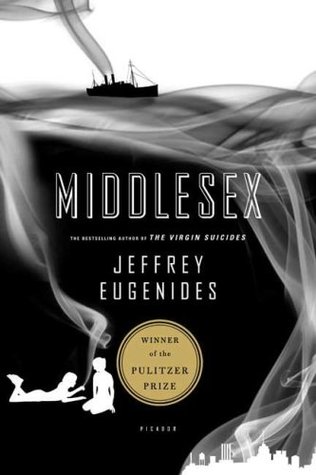
  • Middlesex by Jeffrey Eugenides
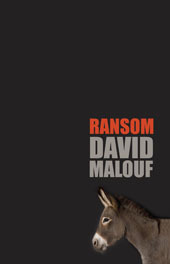
  • Ransom by David Malouf
  • Shovel Ready by Adam Sternbergh
  • The Girl with All the Gifts by M.R. Carey

  • The Historian by Elizabeth Kostova
  • The Magicians by Lev Grossman
  • The Secret Garden by Frances Hodgson Burnett
  • The Wives of Los Alamos by TaraShea Nesbit
  • The Yellow Papers by Dominique Wilson

Abandoning The Luminaries

Posted March 15, 2014 by Michael @ Knowledge Lost in Historical Fiction / 13 Comments

The LuminariesRecently The Readers (which is a fantastic podcast) did an episode on when you have to finish a book. This has got me thinking a lot as I was reading a book for book club that I wasn’t enjoying. I feel like I need to finish a book in order to participate in the discussion but this particular book was over 800 pages and after 200 pages I was ready to throw in the towel. The book was The Luminaries and I have now abandoned the book, but I thought it would be a good opportunity to talk about the book, and the need to finish or abandon a book.

By all accounts, I should have loved The Luminaries; it has murder, mystery and it is a detective story cleverly disguised as literary fiction. Eleanor Catton is a talented writer and there is no denying that, the proses in The Luminaries are spectacular but some will argue that the words don’t match the time period. For me the problem with this novel is the believability and the fact that it takes too long to say what it needs to say. For the very start it felt repetitive, Walter Moody was introduced as a person on the run, trying to find his own fortune. Moody had brought shame to his family, but doesn’t want to go into the details; this takes up about 40 pages of the book. I felt like this wasn’t building mystery or developing the character, it just went around and around in circles.

As for the believability I first need to talk about my life. I was raised in a small mining town called Charters Towers. In the 1870s, this town was attracting prospectors from all over the world, so much so that it was the second biggest city in Queensland at the time. During the gold rush Charters Towers produced over 200 tonnes of gold from 1871–1917. The history of Charters Towers felt nothing like Hokitika 1866 from the book. The miners in this novel are nothing like my experience of miners (or others involved in the goldrush), the book lacked the drinking to access, over use of swearing, constantly fighting and over playing Cold Chisel. The Gold rush should be a dark and violent time but The Luminaries was based around twelve people that do nothing but talk.

The Luminaries won the Man Booker Prize in 2013 and my experience doesn’t match that of the people that have finished the book. General consensus seems to be that this book gets really good at page 600. I have to wonder if it is worth pushing through 600 pages for 200 pages of greatness. Big books always scare me and I was reading War and Peace at the same time, so I had an amazing book running alongside a book that wasn’t working for me. I wanted to finish this book for book club but in the end, there are too many books to read and left this book with 600 pages to go.

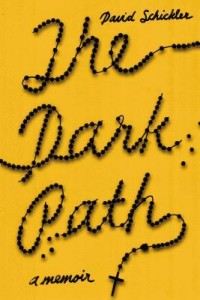
I’ve never really been good at abandoning books and I really felt like I had to finish this book but in the end it wasn’t working and The Dark Path by David Schickler was calling me. Have you ever felt that you had to finish a book? Normally I feel that I have to finish a book club book. This is the first one I abandoned; I love to hate a book but 800 pages is a big investment. Also when it comes to abandoning books, do you have a set page count you give a book to impress you? Have you ever considered writing a review of a book you abandoned? I would love to hear your thoughts on when you have to finish a book or abandon it.


The Dark Path by David Schickler

Posted March 13, 2014 by Michael @ Knowledge Lost in Non-Fiction / 2 Comments

The Dark Path by David SchicklerTitle: The Dark Path (Goodreads)
Author: David Schickler
Published: Riverhead Trade, 2013
Pages: 336
Genres: Non-Fiction
My Copy: Hardcover

Buy: AmazonBook DepositoryKindle (or visit your local Indie bookstore)

If I was Catholic, I would want to be a Jesuit; they seem to be the most pretentious of all the Catholic congregations. Not that I would want to be a priest as I’m married but for David Schickler the desire to be a priest was a driving force in his life. The Dark Path is a memoir of Schickler’s struggle between a call to priesthood and his attraction to women. A memoir that explores his faith, sex and the internal conflict, The Dark Path is a funny and boldly honest look at his struggle.

I grew up in a strict religious home, though not Catholic, but I really connected with The Dark Path. Growing up, my parents were ministers and I often felt the pressure to join the ministry. Though it isn’t as daunting as becoming a priest, it made this book relatable. I’m often drawn to books with an internal struggle and when I first heard about this book, I knew it was something I had to read. The whole idea of choosing a life in service to God or giving into your sexual urges is an interesting topic and Schickler tackled it in a way that remained respectful to both choices.

While this is a book about religion and Catholicism in general, I think of this book as a struggle to decide what path to take. In our high school and college years we all face choices that will affect the rest of our lives and The Dark Path is essentially about those decisions. As I’ve had a strong religious upbringing there was just so much in the book that I could relate to and enjoy, this does make my review very biased but I can’t help it. I also married a Catholic so I had the opportunity to learn more about Catholicism while also having someone to answer all my questions I had in the book.

David Schickler has written one novel which is mentioned in this memoir called Kissing in Manhattan and also co-created the TV show Banshee, which I haven’t had an opportunity to watch. I have to wonder if both the novel and show portray a similar element of struggle in the characters as well as maybe a hint of religious politics because I think he captured this really well in this book. I get a sense that his writing style is dark, gritty and transgressive. You can see hints of this in his writing but he still managed to make this memoir hilarious and heart-warming.

There is so much I want to say about this book but I don’t want to give too much of the book away.  The Dark Path is the first book to receive a 5 star rating for 2014 and I hope to find many people to talk to about this memoir. If you have a religious background and want to read about a struggle of faith then I highly recommend The Dark Path. I plan to go read Kissing in Manhattan soon and maybe even try and get a hold of Banshee.


Top Ten Tuesday: All Time Favourite Books in Pulp Fiction

Posted March 11, 2014 by Michael @ Knowledge Lost in Top Ten Tuesday / 8 Comments

toptentuesdayIt’s Tuesday again which means time for another round of Top Ten Tuesday; I like joining in on this meme because I have a set topic to work with. Top Ten Tuesday is a book blogger meme that is hosted by The Broke and the Bookish and this week the theme is: Top Ten All Time Favourite Books in Pulp Fiction. I wanted to do something a little different to others and still use a genre that means a lot to me. When referring to Pulp, I’m referring to Hard-Boiled and Noir crime novels. If you need an introduction to these genres, there are some brilliant guest posts on this blog by blahblahblahtoby that breaks down Pulp Fiction into The 1930’s – 1940’sThe 1950’sThe 1960’s – 1980’sThe 1990’s – Onwards.

  • Red Harvest by Dashiell Hammett
  • The Black Dahlia by James Ellroy
  • The Long Goodbye by Raymond Chandler
  • The Postman Always Rings Twice by James M. Cain
  • They Shoot Horses Don’t They? by Horace McCoy

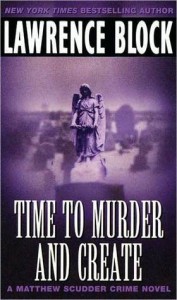
Time to Murder and Create by Lawrence Block

Posted March 8, 2014 by Michael @ Knowledge Lost in Pulp / 0 Comments

Time to Murder and Create by Lawrence BlockTitle: Time to Murder and Create (Goodreads)
Author: Lawrence Block
Series: Matt Scudder #2
Published: Orion, 1976
Pages: 170
Genres: Pulp
My Copy: Audiobook

Buy: AmazonBook Depository (or visit your local Indie bookstore)

Matthew Scudder is back and this time a small-time stoolie named Jake “The Spinner” Jablon has come to him for help. This informer has found a new line of business in blackmail but now one of his clients has figured it was better to kill than keep paying for his silence. After an attempt on his life goes wrong, The Spinner turns to Scudder to be his avenging angel if he ever does wind up dead. Only problem is when he eventually was found floating in the river, Scudder had to work out just who finally caught up to The Spinner and killed him.

Having just finished War and Peace (a review that is quite difficult to write) I felt the need to read something quick and easy. The Matthew Scudder series is just that, 1970’s hard-boiled with a gritty and fast paced style to it. Scudder is a former New York Police officer who now does ‘favours’ for people as he isn’t a licenced Private Investigator. One of the things I really like about Lawrence Block’s hard-boiled detective is the fact that there are signs that he isn’t what he claims to be. It’s revealed that Scudder was a corrupt cop and you can see the corruption start to seep into his PI work. Hard-Boiled characters normally walk that fine line between good and evil but with Matthew Scudder I get the sense that he can’t walk a straight line.

You might have noticed that I’ve been trying to write critical reviews lately but when it comes to a book like Time to Murder and Create it is hard to have in-depth criticism. This is pure escapism, a quick and entertaining read full of dark gritty characters that all have a secret to keep.  Like In the Midst of Death, Time to Murder and Create wasn’t as good as The Sins of the Fathers, the series started off strong but now it feels like those crime shows on TV where there is just a new case every time and nothing new or exciting.

If I ever need a quick easy palate cleaner, then I might return to the Matthew Scudder because sometimes you need mindless entertainment. I have an idea of what I would like to see with this character but I don’t think they will go in that direction. Sometimes I wish I had the skills to write a hard-boiled crime series, just because they are fun to read and I have never found a series that lived up to the excitement of Raymond Chandler’s Philip Marlowe series and I’m frustrated enough to want to create my own. If anyone has a recommendation for a great hard-boiled crime series, please let me know.


On Such a Full Sea by Chang-rae Lee

Posted March 6, 2014 by Michael @ Knowledge Lost in Dystopia, Literary Fiction / 0 Comments

On Such a Full Sea by Chang-rae LeeTitle: On Such a Full Sea (Goodreads)
Author: Chang-rae Lee
Published: Little Brown and Company, 2014
Pages: 352
Genres: Dystopia, Literary Fiction
My Copy: Library Book

Buy: AmazonBook DepositoryKindle (or visit your local Indie bookstore)

Dystopian literary fiction is an often under-appreciated and underutilised literary tool. Chang-rae Lee steps away from the historical novels he normally writes to give us On Such a Full Sea, a dystopian novel set over a hundred years into the future. The novel tells the story of a teenage girl Fan who works in the high walled, self-contained labour colony know as B-Mor (formally the city of Baltimore) who goes searching for the man she loves as he has mysteriously disappeared.

I often enjoy a novel that disguises political discourse with the dystopian fiction genre. Think 1984’s message on totalitarianism, Fahrenheit 451 on censorship, Super Sad True Love Story on Globalisation. On Such a Full Sea also has a political message but it is far more subtle. The thing about literary criticism and political discourse is that you can often find differing opinions; was this novel on the harsh reality of immigration, slavery, human trafficking, removal of individuality or something more? I’m not going to go into too much detail on this; you can discover that on your own.

I want to have a quick look at the dystopian world that Lee has created as it follows a similar style to that of George Orwell’s 1984. These walled communities are more like labour camps, designed to keep people in rather than out. The workers are being watched and controlled by fear; rather than by governmental oversight, the labours are been monitored by The Charters, which to me feels like middle management. In this future most of the American cities have been abandoned due to crushing debts and disease and the Chinese cities are suffering from major air and water pollution. The solution, to relocate and occupy America; this is why Fan and the others are found working in B-Mor.

The harsh realities of this dystopian world are often drowned out by the beauty in Chang-rae Lee’s writing. You can spend so much time being swept away by the writing that the plot really does take a back seat. This works only because the plot isn’t really as strong as I would have liked it to be. There are times I found myself enjoying the writing and not really paying enough attention to the plot only to have something shocking happen that snaps me back to attention. I would have liked a stronger plot, it really was a big downfall for me, not that plotless books are bad it’s just the particular story called for it.

I picked up this book because Chang-rae Lee mentored my current literary obsession Gary Shteyngart and helped him get his first book published. My first thought was On Such a Full Sea sounds very similar to Super Sad True Love Story. I expected to read a similar book about the struggles of Chinese immigrants but I’m happy to see the two novels are very different. There are a few similarities but not enough to compare them; Shteyngart uses satire and humour where Lee takes a more serious approach.

The plot may sound basic but On Such a Full Sea is a stunning yet surprising novel. This is actually my first Chang-rae Lee novel and while I enjoyed this novel, I’m not in a hurry to read his back list. Lee joins the ever growing list of serious novelists trying their hand at genre fiction. I for one am happy to see an increase in literary genre fiction; you can do some interesting things with genre fiction and blend that with the discourse of literary fiction the results are often amazing.


Top Ten Tuesday: Popular Authors I’ve Never Read

Posted March 4, 2014 by Michael @ Knowledge Lost in Top Ten Tuesday / 14 Comments

toptentuesdayIt’s Tuesday again which means time for another round of Top Ten Tuesday; I like joining in on this meme because I have a set topic to work with. Top Ten Tuesday is a book blogger meme that is hosted by The Broke and the Bookish and this week the theme is: Popular Authors I’ve Never Read. This is going to be interesting, I don’t often read popular authors but these ten might shock or disappoint you, maybe one day I’ll read them but I don’t follow the crowd.

  • J.K. Rowling
  • J. R. R. Tolkien
  • Nicholas Sparks
  • John Irving
  • Charlotte Brontë
  • Mary Roach
  • Melina Marchetta
  • Ian McEwan
  • Anton Chekhov
  • Mark Twain