Author: Michael @ Knowledge Lost

Miami Blues by Charlies Williford

Posted August 27, 2013 by Michael @ Knowledge Lost in Pulp / 0 Comments

Miami Blues by Charlies WillifordTitle: Miami Blues (Goodreads)
Author: Charlies Williford
Series: Hoke Moseley #1
Published: Penguin, 1984
Pages: 284
Genres: Pulp
My Copy: Paperback

Buy: AmazonBook DepositoryKindle (or visit your local Indie bookstore)

After landing in Miami, Freddy Frenger Jr. (or Junior as he prefers to be called) steals three wallets and begins to plan his new life. While leaving the airport he snatches a suitcase and leaves a corpse of a Hare Krishna behind. Detective Hoke Moseley is on the case; chasing Junior and his new hooker girlfriend through luxury hotels and the suburban streets of Miami.

If this sounds really familiar then you’ve probably seen the 1990 movie of the same name starring Alec Baldwin and Jennifer Jason Leigh. While there are some major differences to the two, the majority of the book is exactly the same. I’m a little disappointed when I found out this was the first in the Hoke Moseley series, because I always thought of the detective as a supporting role. In the movie Junior steals Moseley’s badge and starts pretending to be a cop to con people; this was the best part of the movie. Sadly in the book there isn’t much of that going on.

Charlies Williford is an author of fiction, poetry, an autobiography, and literary criticism but he is best known for his hard-boiled writing. I think it is weird that he was a poet and literary critic as well as pulp writer, but then again I really shouldn’t be. It’s just an interesting fact about the author.  When you think 1980’s hard-boiled novels, Miami Blues is probably going to be one of the top nominations on that list. Charlies Williford was such a prolific writer, with over forty novels published, it is kind of sad that he is best known for the Hoke Moseley series that he wrote very late in his life. I wonder what some of his other books were like, there seems to be a whole lot of hard-boiled novels in the 1950’s and 1960’s that look interesting.

This book is an example of the noir sub-genre Florida glare which is basically a crime novel set in Florida where the heat and the culture play a role in the story as well. Noir is typically associated to LA and there have been some writers out there that wanted to depict Florida as the perfect location for crime stories as well. Some examples of this include the Travis McGee (by John D. MacDonald), Jack Ryan (by Elmore Leonard), and Dexter Morgan (by Jeff Lindsay) series and I’m sure many more. It is an interesting concept though do we really need another genre? I like how the heat of Florida plays a part in the book and the environment is almost like a supporting character.

This was a quick read and one of the rare cases where I think I prefer the movie over the book. I wonder if there are any more noir novels where a character pretends to be a cop in order to con people; I’m sure there are plenty out there, I like the concept and would like to read more of them. I think I’ll have to try another Charlies Williford, maybe something earlier. Does anyone want to recommend me a good Charlies Williford novel?
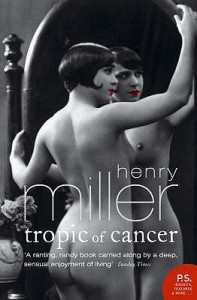

Tropic of Cancer by Henry Miller

Posted August 24, 2013 by Michael @ Knowledge Lost in Classic, Erotica / 0 Comments

Tropic of Cancer by Henry MillerTitle: Tropic of Cancer (Goodreads)
Author: Henry Miller
Published: Harper Collins, 1934
Pages: 336
Genres: Classic, Erotica
My Copy: Library Book

Buy: AmazonBook DepositoryKindle (or visit your local Indie bookstore)

Tropic of Cancer is probably best known for being about sex, a book that was banned for over thirty years. An autobiographical novel of a struggling writer living in Paris in a community of bohemians. A fictionalised account of Miller’s life living underground, with prostitutes, painters and other writers.

This is an odd novel, not necessarily good but a literary landmark. Without Henry Miller we may never have books like Lolita, Naked Lunch, A Sport and a Pastime and even Tampa. On the plus side, we may never have Fifty Shades of Grey. This novel pushed the boundaries of literature in the 1930’s and found itself being banned, which developed a cult following that helped influence the future of literature. I tend to think, much like Lady’s Chatterley’s Lover, if it wasn’t for the banning of the book, this novel wouldn’t be a classic; it would have just faded away into obscurity.

There are some advantages to reading this book, there are the autobiographical elements but then Miller focuses on his friends and colleagues. Almost off topic, like he is commentating on what is happening in their lives. Then it gets a little more complex because there is a stream of consciousness reflecting on the occasional epiphany. The whole narrative gets really confusing with its non-linear approach, the tangents and reflections. It makes the whole book hard to read and in the end not really enjoyable.

I can’t help but compare this novel to The Dud Avocado, the sexual adventures in Paris is similar but Tropic of Cancer wasn’t as interesting and a female lead makes for a less sex obsessed narrative and tends to focus on life abroad as well. I can’t help thinking just how narcissistic Henry Miller must have been with all those autobiographical novels of his life; do people still do that? Or is this just a thing of the past, pushing the boundaries.

I have to give Henry Miller one thing; he doesn’t hold back, he will expose the good, the bad and the disturbing parts of his life. If I ever wrote a book like this (which I have no interest in doing anyway) I would be more inclined to hold back, to paint myself in a more favourable light; Miller doesn’t do that at all. There isn’t much I can say about this book, it’s about sex and that is about it. The stream of consciousness part was interesting but I still find that difficult to read. I would probably tell people to skip this and read The Dud Avocado or something similar but for the book snobs (like myself) if you do read this book I hope you get something out of it apart from the historical significance of a book like Tropic of Cancer.


Questions of Travel by Michelle de Kretser

Posted August 22, 2013 by Michael @ Knowledge Lost in Literary Fiction / 0 Comments

Questions of Travel by Michelle de KretserTitle: Questions of Travel (Goodreads)
Author: Michelle de Kretser
Published: Allen & Unwin, 2012
Pages: 528
Genres: Literary Fiction
My Copy: Personal Copy

Buy: AmazonBook Depository (or visit your local Indie bookstore)

Laura Fraser is an artistic Australian, who lost her mother at a very early age and her father was cold and distinct towards her, as was her brother. On the other side of the world Ravi Mendes’ life was almost the complete opposite to Laura, but still struggles in life at times; currently he is determined to break into the computer science industry. Alternating from one character to the other, Michelle de Kretser’s Questions of Travel explores why we are all influenced by travel.

Questions of Travel won the Miles Franklin award this year but if it wasn’t for my book club I would never have read it and I think that might have been a mistake. This novel is almost a post-modernist novel in the experimental way the author approached it. I read this book as if the two characters are sitting me down and going through their photo album and telling the story related to each picture. Slowly we get the full story but there are a lot of pieces we have to fill in for ourselves. The reason I thought this was just the way it was written and you have these really short chapters but every now and then you get a long one. Also the dates on each chapter become more specific as we got closer to the present day, almost like the character remembers the year rather than the decade now.

While reading this novel I got the impression that Michelle de Kretser was trying to explore the whole philosophy behind travel; why we do it? What we love about it? That feeling you get being in a strange country. This was a really interesting approach she took and really worked well with the experimental writing style. The author used to write for the Lonely Planet and throughout this novel you can see her small digs at these books and the bureaucracy behind them. Little things like this really helped lighten the mood for the novel.

Questions of Travel has some beautiful language throughout the book and you find yourself really taking the time to enjoy the book (even though I didn’t have much of that before my next book club meeting). This novel demanded more time than I gave it and I might have missed so much but due to time restrictions I had to power through it. There were times I found some great quotes and I wanted to write them down but I was in too much of a hurry (also I never seem to do that but am trying to make more of an effort).

The novel is both thought provoking and emotional; you’ll experience the highs and lows of the two main characters and even if you have found a favourite, both characters offer interesting insights to life and travel. Also on a positive note, this novel also offers one of the best opening chapters I’ve read in recent times, it comes out of nowhere and smacks you in the face. I spent days trying to decide if I liked this book and what I liked about it and that right there is why I enjoyed it; like Slaughterhouse-Five the time spent afterwards thinking about it is what I will remember more than the book itself. I’m not sure if I would recommend this novel to many people, you’d have to be willing to read experimental or post-modernist novels to really enjoy what Michelle de Kretser is doing.


The Amazing Adventures of Kavalier & Clay by Michael Chabon

Posted August 21, 2013 by Michael @ Knowledge Lost in Historical Fiction, Literary Fiction / 0 Comments

The Amazing Adventures of Kavalier & Clay by Michael ChabonTitle: The Amazing Adventures of Kavalier & Clay (Goodreads)
Author: Michael Chabon
Narrator: David Colacci
Published: Fourth Estate, 2000
Pages: 659
Genres: Historical Fiction, Literary Fiction
My Copy: Personal Copy

Buy: AmazonBook Depository (or visit your local Indie bookstore)

The Amazing Adventures of Kavalier & Clay follows the story of two Jewish cousins. Joe Kavalier is an artist that escapes occupied Czech to America where he meets writer Sam Clay. During the golden age of comics Kavalier and Clay become major players in the industry creating many comic book heroes including The Escapist. The superhero is a Nazi-busting saviour who liberates the oppressed around the world.

I’ve read Michael Chabon before and the thing I really enjoyed about his novels is that they are full of intertextual goodness. With The Yiddish Policemen’s Union, it blends his literary style with elements of alternative history and noir. The Amazing Adventures of Kavalier & Clay blends with elements of the comic book genre. This is what impresses me the most with Chabon’s style and makes me keen to read The Telegraph Avenue (which I hope blends elements of music into his style). I wonder if all his books are full of intertextuality and will love to find some other novelists that do this; it really works for me but maybe it’s just my love for literary fiction and the genres he blends with it.

There is so much more going on with the novel. The Escapist is used to play out all Kavalier’s fantasies of being a magician/escape artist but he uses the comic books to spread his propaganda towards the Nazis. Most of this novel is set before World War II in America before the world really knew the extent of what the Third Reich were up to. Michael Chabon is a Jewish novelist and his heritage seems important to him and this comes through in his novel.

This novel deals with so many different literary themes; escape from oppression, coming of age, family and relationships. Just writing that sentence makes me think that Chabon might have over done it but really this book comes together beautifully. I don’t often use the terms like magnum opus and tour de force but having read the novel and people’s impressions of this book, it really seems to fit.

Kavalier and Clay become legends in the comic book world and as the world and industry changes, they are repeatedly asked to change and conform but they never compromise. They had a clear message they wanted to say and they refused to change that message. I’m impressed with everything about this book from the blending of comic books and its culture, Jewish mysticism and world history to the character development, proses and my overall opinion of the novel.

If you’ve never read a Michael Chabon novel then I recommend it; I’m not saying start with this novel but look for one with a theme that interests you. Out of the two I’ve read, I’ve been impressed with them both but I have to say The Amazing Adventures of Kavalier & Clay is masterfully crafted and deserves all the praise it received. I have Telegraph Avenue on the shelf and I’m interested in trying Wonder Boys soon as well. The Escapist was made into a comic by Dark Horse Comics but I think it was part of a promotion for this book. Also the film rights for the book have been sold but with the luck it’s been having I’m doubtful it will ever be made.


Top Ten Tuesday: Things That Make Your Life as a Book Blogger Easier

Posted August 20, 2013 by Michael @ Knowledge Lost in Top Ten Tuesday / 23 Comments

toptentuesdayIt’s Tuesday again which means time for another round of Top Ten Tuesday; I like joining in of this meme because I have a set topic to work with. Top Ten Tuesday is a book blogger meme that is hosted by The Broke and the Bookish and this week the theme is: Top Ten Things That Make Your Life as a Book Blogger Easier. This is an interesting topic and took me a while to compile a list of then but here you go.

1. Goodreads
As a book blogger I want to be able to look at what is being read by others, what is trending and what people think of the books. I’ve found all the book bloggers I follow are on Goodreads as well and it makes it easier to see what books are trending so you can get onto that book before the public.

2. Twitter
Out of all the social networks, for a book blogger, Twitter is the essential one. I create lists of authors, publishers, readers and book bloggers; this way I always have my finger on the pulse of what is happening in the world of literature. Also follow me @knowledgelost or my blog @litexploration on Twitter (shameless self-promotion).

3. The Library
I know I will never be able to buy all the books I want and this year I went on a semi book buying ban (only allowing myself to buy book club books and essentials). The idea was to reduce the amount of unread books on my shelf but instead it taught me to use the library more.

4. Bloglines
It was a sad day when Google Reader died, bloglines isn’t as good but it was the best replacement I’ve found. As a blogger I want to connect with other bloggers so instead of getting bombarded with emails a RSS reader is a life saver.

5. eReader
I know paperback books are better but as a book blogger I feel I will run out of bookcase space quickly, so an eReader is a great way to store books. I also like the continence of being able to carry a lot of books around at once. An eReader will also be helpful for my next point.

6. NetGalley and Edelweiss
Both a blessing and a curse, NetGalley and Edelweiss are great ways to request digital ARCs to read and review. When I started as a book blogger, I never used these sites but I’ve started to use them more lately; just have to remind myself not to go overboard.

7. The Reading Room
I’m not sure if this is the case with other countries but as an Australian book blogger, The Reading Room has been a great source for physical and digital ARC’s. They have a first in first serve approach and all they ask in return is for you to post the review on their site as well. Similar to Goodreads but useful if you want ARCs.

8. Ultimate Book Blogger Plugin
As a self-hosted WordPress user there are heaps of usefully plugins to make my life easier but as a book blogger the Ultimate Book Blogger Plugin is the biggest time saver. Takes a little extra time creating a post because I fill out the extra details but it auto updates my review list and gave me a whole lot of other useful advantages.

9. Wikipedia
I know it is probably the worst place to go for research but a quick search will give me a whole lot of useful information. I tend to use Wikipedia as a starting point for researching but if I only need a little info, it tends to be the default destination.

10. Bloomsbury Australia
I know it’s weird to have a publisher on a list of “Things That Make Your Life as a Book Blogger” but they have been wonderfully and encouraging. They were one of the first to approach me with an offer of ARCs and seem to be one of the biggest supporters of Australian book bloggers. They deserve to be recognised because they do great work.

I’m sure there are more I could list but there you have it, my top ten. I look forward to see what other people list, maybe I will find some useful tools.


Fadeout by Joseph Hansen

Posted August 18, 2013 by Michael @ Knowledge Lost in Pulp / 9 Comments

Fadeout by Joseph HansenTitle: Fadeout (Goodreads)
Author: Joseph Hansen
Series: Dave Brandstetter #1
Published: University of Wisconsin Press, 1970
Pages: 187
Genres: Pulp
My Copy: Personal Copy

Buy: AmazonBook DepositoryKindle (or visit your local Indie bookstore)

Dave Brandstetter is an insurance investigator who is hired to investigate a death claim of a local celebrity, whose car plunged off a bridge in a storm. In the absence of a body the insurance company needs to send their own investigator before handing over $150,000 (works out to be about $900,000 by today’s standards). As the investigation continues Brandstetter is convinced that Fox Olson is still alive and he must find him before the would-be killer does.

Dave Brandstetter embodies the tough, no-nonsense persona of most classic Hard-boiled detectives with one major difference; he’s openly gay. As most people know, I have a love for the hard-boiled detective and I’m always looking for new and interesting takes on this genre. I’ve found that in Joseph Hansen’s Fadeout. There are a few reasons why I plan to continue the series and I thought rather than talk about the book, it would be nice to mention what will make me continue with the other eleven novels.

First of all, I’ve never read a pulp novel like this before; a homosexual protagonist would have been controversial in 1970. This would have been near the beginning of the gay pride movement and Hansen must have gone through a lot of hardship with writing this character and being a homosexual as well. With all the stigma and prejudices towards homosexuality back then (and let’s face it, it’s still around today) it was refreshing to see a protagonist who is proud and comfortable with his sexuality (I get sick of seeing homosexuals in literature being portrayed as unstable or disturbed) .

From the very first page of Fadeout, we find out that Dave Brandstetter has just lost a long term partner to cancer, so now we have this fresh new angle as well. Joseph Hansen has been quoted in saying the following about this topic;

“There was room in the form to say important things about men and women and how they cope with life.”

So we have this protagonist that is both tough as nails and maybe cynical of life after this tragic loss but we also get to watch him deal with his grief. Throughout Fadeout you witness Dave Brandstetter struggle with loneliness, sexual desire and even alienation and you really get an idea of just how hard it must be for him. It’s something I don’t think I’ve seen in a hard-boiled novel before and it seems to work really well, I feel for Brandstetter and have a better understanding of just what makes this man tick and that connection makes me want to continue the series.

Lastly, something I didn’t see too much of in Fadeout but I feel like this would be an element that Joseph Hansen would work into the series; I can see it coming. Dave Brandstetter is an insurance investigator, in most hard-boiled novels you have the detective hired by someone close to the victim to solve the puzzle. In this series you have the investigator working against the people; working for the insurance company. Mix that with people’s prejudices and you have a protagonist that will have to struggle to solve any mystery because people will close up and refuse to talk to the man. I like the whole idea; sort of like an anti-hero, he wants to solve the crime or mystery but he has the best interest of the insurance company in mind and not the people. If Hansen uses this throughout the rest of the series, it could really open it up to some interesting and new situations.

Judging by the difficulty of getting a hold of this book, I’m inclined to think this series is cult classic but then you look at the blurbs on the book and think this is a series I should have known about and really is a classic in its own right. I’m sure it will be difficult to get a hold of the other eleven books but I think it will be worth the effort. I want to see if my predictions are correct and also see what Joseph Hansen does with the series. Highly recommend Fadeout; it has the makings of a classic hard-boiled novel but then you have added elements to make it stand out.


First Steps: Cyberpunk

Posted August 17, 2013 by Michael @ Knowledge Lost in First Steps / 0 Comments

literary stepsFirst Steps is a new segment that was inspired by the Literary Exploration Reading Challenge. Each week or two, we look at books from different themes, genres or maybe authors and suggest some that are worth trying. Not necessarily all easy to read books but the ones that are worth the time and effort. My goal is to have First Steps guide you to some great books in places you don’t normally venture to.

Cyberpunk is a genre I have found many people struggle with, especially in the Literary Exploration Reading Challenge. I’m not sure if this is a lack of recommendations or they just not sure what this genre is all about. Cyberpunk is a futuristic world that focuses on “high tech and low life[s]” (according to What is cyberpunk? From Cyberpunked: Journal of Science, Technology, & Society 2009). Think post-industrial dystopian worlds with advanced technology and cybernetics; science fiction normally with a touch of thriller, mystery or pulp.

Movie examples would include Blade Runner, Ghost in the Shell, Tron, The Matrix and Surrogates. On TV think Dark Angel or Dollhouse and in video games there are heaps of examples but the best two are; Deus Ex or Watch Dogs. This is a genre that is almost dying out, technology advancement has been accepted by most and often used in science fiction or dystopian novels, but it does leave behind a couple of new sub genres; steampunk and dieselpunk.

Snow Crash by Neal Stephenson

This book is big but lots of fun; it follows two protagonists hunting down a virus in the not so distant future. A world where the United States has yielded most of its power to private organizations and entrepreneurs. Everything has been franchised, from armies, highways to even suburbs.


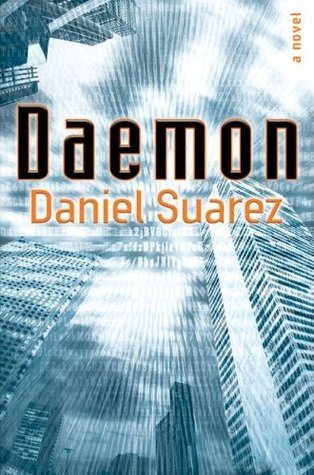
Daemon by Daniel Suarez

Technology controls almost everything in our modern world, from remote entry on our cars and the flight controls of our airplanes to the movements of the entire world economy. But what if some computer designer has been planting a dormant daemon in everything that he creates that will take full control of everything connected to a computer when he dies.


Altered Carbon by Richard K. Morgan

In the twenty-fifth century, technology has advanced so much that human personalities can be digitally stored on what is known as a Stack. These stacks can be downloaded into new bodies or sleeves, so when you die your stack can be stored indefinitely and you can be resleeved and continue living. Death is impossible, or is it?


Neuromancer by William Gibson

This is a seminal cyberpunk novel by the legend himself; William Gibson. The first novel to ever win the “Triple crown” in science fiction (winning the Nebula Award, the Philip K. Dick Award, and the Hugo Award). This follows the story of a low-level hustler, hacker and thief in the dystopian underworld of Chiba City, Japan.


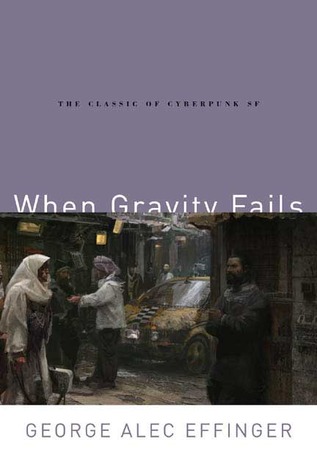
When Gravity Fails by George Alec Effinger

A new kind of killer roams the streets of the Arab ghettos of Budayeen, a madman whose bootlegged personality cartridges range from a sinister James Bond to a sadistic disemboweler named Khan. The unique blend of Middle Eastern culture and religion and cyberpunk noir makes this highly recommended.


The Lost City of Z by David Grann

Posted August 16, 2013 by Michael @ Knowledge Lost in Non-Fiction / 2 Comments

The Lost City of Z by David GrannTitle: The Lost City of Z (Goodreads)
Author: David Grann
Published: Knopf Doubleday, 2009
Pages: 351
Genres: Non-Fiction
My Copy: Library Book

Buy: AmazonBook DepositoryKindle (or visit your local Indie bookstore)

The Lost City of Z tells the story of Percy Fawcett, a legendary British explorer who disappeared in 1925 along with his son looking for an ancient lost city in the Amazon. For decades explorers, archaeologists and scientists have tried to find any evidence of this lost city of El Dorado which Fawcett has called Z. it is believed that over 100 people have perished or disappeared in this search in David Grann explores this topic in the book The Lost City of Z: A Tale of Deadly Obsession in the Amazon.

While my wife was away in Chile and Brazil I thought I would read a book set in that continent so after a bit of research and cross checking with what my library had I decided on David Grann’s The Lost City of Z. Maybe not the best book to read while she was away but I want to read more non-fiction and this sounded really interesting. For centuries Europeans believed the Amazon concealed the glittering kingdom of El Dorado and they obsessed with it. Those who did go searching for El Dorado often disappeared or died. The mysteries of the Amazon remained mysteries because the explorers didn’t understand what was in the uncharted jungles of Brazil.

Percy Fawcett has been referred to as a “Nietzschean explorer” spouting “eugenic gibberish” so it was interesting to read about his obsession with finding this lost city as well as everyone else who were determined to find El Dorado. Exploring an unknown jungle without any idea of what dangerous plants, animals and maybe tribes you find doesn’t sound like a great adventure to me but it was interesting to read about mysteries surrounding these quests. For me this book makes the Amazon sound really dangerous; many disappearing or dying and some even going insane but I was fascinated by the book and enjoyed reading it (even though my wife was in Brazil at the time).

I’m never really sure how to write a review for a non-fiction book but I hope I gave you enough information and expressed my thoughts well enough for this book. I think David Grann wrote this book in a really accessible way but at times I felt like he idolised Percy Fawcett; like he was enlightened where others call him a Nietzschean explorer, which isn’t necessarily a bad thing at all. A book that took me out of my comfort zone and I’m thankful for that. The book gets bonus points for referencing and endnotes; I might not have used them but I respect a non-fiction book more if it offers me references to back up what it is saying.


You by Austin Grossman

Posted August 15, 2013 by Michael @ Knowledge Lost in Contemporary / 0 Comments

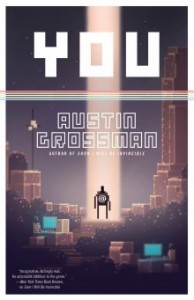
You by Austin GrossmanTitle: You (Goodreads)
Author: Austin Grossman
Published: Mulholland Books, 2013
Pages: 383
Genres: Contemporary
My Copy: Library Book

Buy: AmazonBook Depository (or visit your local Indie bookstore)

Russell was a nerd in high school but he seems to have left that part of his life behind. That is until he is employed by a games company called Black Arts. This company was the brainchild of two visionary game designers who once were Russell’s closest friends. Reunited with his former nerd crew, Russell soon finds himself in a race to save his job and the Black Arts legacy.

This book rang my nerd bells and I was excited to read this one; Austin Grossman has been working in the video gaming industry since the early 1990’s. A video game designer at Looking Glass Studios, he has contributed in the wiring and design of many games including System Shock, Deus Ex and Tomb Raider: Legend. I still consider myself a nerd, not so much a gamer anymore but I still enjoy playing my X-Box every now and then, so You seemed like a book for me.

Unfortunately there are parts of this book that worked really well but then the characters felt so underdeveloped and the plot nonsensical. This was recommended to me as something similar to Ready Player One which feels a little inaccurate. Ready Player One was almost like a love letter to the 1980’s and really played on the reader’s nostalgia. While You does try be nostalgic it only really works if you were a hard-core gamer in the 1980’s and 1990’s; there are games I recognised but there were also a lot I’ve never heard of or never played.

I’m not sure if You is meant to be a coming of age story of both Russell and the video gaming industry or if Grossman was going for the Hollywood hacker style plot. I felt at times that someone should have started yelling ‘Hack the planet’. Either way I don’t think the plot was developed enough and became lost in the geek talk. Then you have the characters, they seem to be completely underdeveloped. I never got a sense of any of the characters and that did feel like a letdown.

There are some interesting insights into gaming culture and the video game industry. So much so that if Austin Grossman abandoned the little plot he had and removed the characters, this would have made for a great non-fiction book. I’d be interested in getting insights into the gaming industry, especially in the 1990’s and 2000’s when I was a huge gamer. Maybe a memoir, or something similar to You but as non-fiction, would have been a better way to go; you’ll still get to talk about the industry and you can still gain that nostalgia Grossman was clearly after.

It’s hard to decide if I like You or not; there are some interesting elements but as far as plot and character development, it really fell short. You have to be a gamer or interested in gaming to really enjoy any parts of this novel. This really did limit him; at least with Ready Player One it mentioned music, movies and books from the 1980’s to help include the non-gamers. I’ve already said it but I really would have enjoyed this book more if it was non-fiction.


Top Ten Tuesday: Books Set in War Times

Posted August 13, 2013 by Michael @ Knowledge Lost in Top Ten Tuesday / 15 Comments

toptentuesdayI think I might be addicted to Top Ten Tuesday, I like joining in and having a set topic to work with. Top Ten Tuesday is a book blogger meme that is hosted by The Broke and the Bookish and this week the theme is: Top Ten Books with X Setting, I’ve decided to look at books set in war times, because it sounds like a different theme. I’ve read some really great novels set in war times and this is a good time to share them with the world.

10. Dog Soldiers by Robert Stone
9. All That I Am by Anna Funder
8. The Yellow Birds by Kevin Powers
7. Painter of Silence by Georgina Harding
6. Maus by Art Spiegelman
5. The People of Forever Are Not Afraid by Shani Boianjiu
4. Billy Lynn’s Long Halftime Walk by Ben Fountain
3. A Constellation of Vital Phenomena by Anthony Marra
2. Slaughterhouse Five by Kurt Vonnegut
1. Catch 22 by Joseph Heller