Author: Michael @ Knowledge Lost

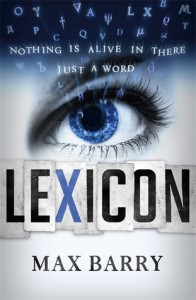
Lexicon by Max Barry

Posted August 12, 2013 by Michael @ Knowledge Lost in Thriller / 0 Comments

Lexicon by Max BarryTitle: Lexicon (Goodreads)
Author: Max Barry
Narrator: Heather Corrigan, Zach Appelman
Published: Hachette, 2013
Pages: 384
My Copy: Personal Copy

Buy: AmazonBook DepositoryKindle (or visit your local Indie bookstore)

They are an ancient secret society known only as the Poets; words are their weapons and the art of manipulation is their game. When one young woman breaks the rules for love, things start to unravel. Street-wise runaway Emily Ruff finds herself as a new recruit, training in a facility disguised as an exclusive school outside of Arlington, Virginia. She learns to use language to manipulate minds. While an innocent man is ambushed in an airport bathroom; they claim he is the key to winning a secret war that rages on. Lexicon is a fast paced thriller that explores the power of language and coercion.

I’ve been meaning to read a Max Barry novel for a while now; they all seem to be corporate or in the case of Jennifer Government marketing satires but never got around to trying them. Then Lexicon was released and it seems to tick a few of my boxes to make me sit up and take notice of it. While this has been getting a bit of buzz in America (well done fellow Australian, Max Barry) I just knew I had to read this one. I wasn’t trying to jump on the bandwagon it just seemed like my type of book and I had an opportunity to read it, so I took it.

While this is obviously a fast paced thriller (as I think most of Barry’s books) I can see where the idea a satire comes into play with his works. In Lexicon we look at modern ideas on privacy, identity and information and using an old idea that language is power we can see how Max Barry is toying with the idea that all those things we hold sacred can be manipulated and lost.  This is where the corporate satire comes into play; even in Lexicon, privacy, identity and data-collection are all important and need to be protected and Barry plays with the readers fears to suck them into his thrilling world.

Not only is this a thrilling and addictive read, I really enjoy the way the two different stories are weaved together. You get the story of Emily as she discovers this secret society and learns to coerce through the power of language and then you get the other plot thread and discover what happened in Broken Hill. I love the way this was done and it’s nothing new but it worked really well for a book like this one.

The problem with reviewing a book like Lexicon is there are so many things I want to say about the book but I think anything I do say will possibly be a spoiler. Max Barry really knows how to mix satire into a thriller and produce an altogether addictive read. I hate to do this normally but in an effort to give people an idea what this novel is like; Rebecca Schinsky (from Bookriot) says this about the Lexicon;

“Imagine X-Men plus The Magicians with a side of Nick Harkaway”

Which is a good way to describe the book; the X-Men idea really works as a way to describe the training facility disguised as an exclusive school that Emily is training at. I’ve not read The Magicians but it’s been on my TBR for a while but I tend to avoid fantasy that but I love the Nick Harkaway shout out. Angelmaker was my favourite book of 2012, it is also an addictive thriller with some literary merit and I think this is definitely the case with Lexicon. I know this seems like a glowing review, I did really enjoy it and highly recommend it but it does have flaws but honestly I didn’t care, I was immersed and wanted to know what happens next.


Twilight by Stephenie Meyer

Posted August 9, 2013 by Michael @ Knowledge Lost in Romance / 0 Comments

Twilight by Stephenie MeyerTitle: Twilight (Goodreads)
Author: Stephenie Meyer
Series: Twilight #1
Published: Little Brown and Company, 2005
Pages: 434
Genres: Romance, Young Adult
My Copy: Library Book

Buy: Book Depository (or visit your local Indie bookstore)

I don’t think I need to tell people what this book is about; rather I need to explain my actions,which I have done in a blog post called Reading Twilight, where you can read what made me pick this book up and just how crazy I was. Also you can read my live tweeting of the book which was the only way I was able to get through the story without rage quitting.

Twilight is an escapist book, plain and simple; I don’t fit in the demographic of this book so I’m reading it and looking at how this would translate in real life and not the fantasy.  I want to take the time and look at the book as well as the difference between reality and the fantasy. I might be a little harsh  and I’m not trying to make anyone that enjoys this book and the fantasy feel bad; this is just how I see the book.

First of all let’s look at Isabella Swan; the everywoman of the book but this is assuming that women are post-feminist, co-dependent, quick to fall in love women that are full of angst or have a morbid obsession with death. I’ve been told that women do fantasise about the post-feminist lifestyle but in reality most of them don’t want to be stuck in the kitchen. The little descriptions we do have about Bella has been made out to be a needy woman with no notion of independence and what she really wants; I hated her from the start. Apparently the lack of descriptions about Belle is so that female readers can put themselves in her shoes and live out this fantasy but really do people even like Bella, let alone be in her shoes?

Then you have the love interest, Edward Cullen who I tend to associate with Mr Rochester (whose name is also Edward) since I know there is this link to the Brontë sisters that tries to be made but really comparing the two feels futile, the only links I see have to do with sexuality and proto/post-feminism. I get the sense that Edward Cullen is supposed to be this Byronic hero but all I see is the type of man  woman need to run away from; a jealous, controlling asshole that stalks his girlfriend. Now the Byronic hero is as Lord Macaulay describes it “a man proud, moody, cynical, with defiance on his brow, and misery in his heart, a scorner of his kind, implacable in revenge, yet capable of deep and strong affection.” While there are similarities between Edward Cullen and the Byronic hero (to me anyway) he doesn’t really fit the mould.

Someone told me that the blood in Twilight is a metaphor of adolescent sexuality which is interesting and explains why Stephenie Meyer went to all that effort in explaining why Belle got nauseous at the sight and smell of blood. This brings up another fantasy; the older more experienced man. While I don’t really want to compare this book to other novels (I’m sorry Brontë’s and the whole Romantic era) but this is almost like a polar opposite to Tampa. One explores the fantasy of a younger partner; getting them before they have been tainted by the world which is problematic because that person ends up being the one to corrupt and break that young man. Twilight looks at the older partner; but not in the same in-depth way. this plays out the fantasy and it’s up to the reader to look for the problems with a naive woman dating an older man (hint reverse the roles in Tampa or read Lolita). I’m not saying it doesn’t work, because it does work; I’m just looking at Twilight critically and wanted to look at fantasy verses reality.

I’m sure there are positive themes within this novel that you can explore like, sacrifices you make for the one you love, true love conquers all and even overcoming the bad within you to be a better person or vampire. I think those themes are in the book but for me they feel problematic, firstly Edward continues to tell Bella that she should run away but they never do and I got frustrated with them repeating the same conversation over and over and never making the sacrifice for the good of the other. Then I don’t believe this is a good example of true love, they hardly knew each other and they were madly in love, they never sacrifice for the good of the other and they are co-dependant, jealous, stalkers; to me this is not true love, this is a teenage relationship or something creepy. Finally overcoming the bad within to be a better person, the only example of that is the vampires eat animals rather than humans.

I’m going to overlook the obvious problem with the vampire mythology because it’s been done to death but I want to leave you with one thought (which you can answer in the comments if you like). Stephenie Meyer obviously has an interest in the romantic era and the Brontë sisters but is Twilight reflecting the ideas made by the romantic poets or has it missed the point completely? As you can see I didn’t like this book at all and I read it too fast to try and pull any more critical thoughts from the novel, but I think I have enough ammunition against Twilight. I hope I didn’t offend the people that enjoy this book, it’s escapism and I’m reading it critically so that might be my problem.

Read More


Why I Book Blog

Posted August 8, 2013 by Michael @ Knowledge Lost in Literature / 21 Comments

logoI thought I would answer a question that has been spinning around in my head for a few days; why do I book blog? I thought this would be an easy question to answer but the more I think about it the more I realize there is more to it. This is why I thought I’d turn this into a post. The short answer is that I’m obsessed with books and like to talk about them but that is only scratching the surface.

I started blogging about in 2009; this was when I started becoming a reader. I was reading a book called Hey! Nietzsche! Leave Them Kids Alone! by Craig Schuftan which took half a year to read. Not because it was a hard, big or boring book but because it just sparked a passion in me and I spent so much time doing my own research and reading the books and poetry mentioned within this one book. With one book my passion for learning, reading and blogging was born. Knowledgelost was a blog that I still maintain (even though I’m slack with writing new posts) where I would take what I was learning and tried to explain it to myself in a post. I found this a really effective way to learn and enjoyed doing it, I was surprised that I was getting readers; I wasn’t catering to them.

As my passion grew, I decided I was going to start a book blog just so I had a place to talk about my interest more and it is sort of like a diary of my reading journey. While I did transfer some of my literary posts from Knowledgelost over my intention with the blog was just to document the books I’d been reading as well as any bookish thoughts I’d been having. I know that I did lose focus and ended up with (at one point) over 15 book reviews waiting to be posted. So I did have to play the catch up game, but now that I’m relatively up to date, I want to refocus.

My goal for this future will remain to be the reading journey model and while I would love to have other contributors to share their thoughts or books they enjoy; I don’t hold my breath. I consider myself a literary explorer and I feel like I’m still playing catch up with the people that have been serious readers most of their lives, but I like the path I’m taking with the blog and just have to remind myself what I’m doing so I don’t lose focus. There are posts like First Steps and Top 5 that might not seem to fit into the reading journey model but I like lists and if I’m thinking about a certain genre or theme it’s a way to talk about it. I write the First Steps post as if I was recommending books to someone asking about those topics. There are also literary news posts, that are not consistent but I do like to keep a record of them. Most news items are long/short list or prize winner announcements.

This is probably a boring post and there is no need to post this but I’ve been thinking about this and want to keep a record of my goals as a reminder of why I book blog. I know it might make this blog seem very selfish and me-focused but that is how I approach blogging. I write for me and what interests me and if people want to read that or add their comments, that is just a bonus. I hope this blog is still going in five, ten years from now and I hope the focus doesn’t change. I would love to be involved in a big book blog with multiple contributors and multiple bookish posts going up a day but I don’t know how that would work and personally I think that would be a completely different blog. But maybe that’s a post for another time.


Grifter’s Game by Lawrence Block

Posted August 7, 2013 by Michael @ Knowledge Lost in Pulp / 0 Comments

Grifter’s Game by Lawrence BlockTitle: Grifter’s Game (Goodreads)
Author: Lawrence Block
Series: Hard Case Crime #1
Published: Hard Case Crime, 1961
Pages: 205
Genres: Pulp
My Copy: Personal Copy

Buy: AmazonBook DepositoryKindle (or visit your local Indie bookstore)

Leonard K. Blake is a conman hiding out in Atlantic City, but of course that’s not his real name, nor is it David Gavilan or Joe Marlin. He has a knack for telling a story and knows exactly what people want to hear in order to take advantage of them. Then he meets Mona, a blonde bombshell, bored wife to a millionaire. He can make a lot of money from this woman but when he steals a suitcase full of heroin from a train station that belongs to her husband things change. A brick of pure heroin will either make him rich or dead and so could Mona.

Originally released in 1961 under the name Mona and later released as Sweet Slow Death, Lawrence Block’s novel Grifter’s Game (the title he originally wanted to use) is the first book in the now popular Hard Case Crime series. This is a gritty noir at its best, something Block is known for and something readers come to expect from this imprint. A fast paced narrative that will keep the reader on its toes right to the end.

I’m not going to lie to you, while reading this book I have to think back on my past and all the dumb things I’ve done and I thought to myself, I might have been a pretty good grifter if I was born back then. Honestly I knew how to lie and manipulate, not something I’m proud of and not something I ever want to do again. So this book hit a little close to home with me and reminded me of the past I would rather leave behind; something that makes this a difficult book for me to read.

The more I read Lawrence Block, the more I like his style which is good because he has published a lot of books, most in different series so it’s always nice to read a standalone. From the snappy dialogue to the plotting, Block has really crafted his style that could rival some of the greats from the golden age of pulp. He really knows how to write both noir and hard-boiled novels that remain gritty and fresh, after so many books I’m not sure how he manages to do this.

Grifter’s Game is probably not the best novel to start with if you’ve never read Lawrence Block, but is definitely one worth trying. He really captured how I would picture an immoral, unsympathetic lowlife and somehow manages to still get the read to care about what happens. This was the perfect book to launch the Hard Case Crime imprint with.  It has everything you want in a pulp; plot, fast pacing, complex characters, gritty prose, great dialogue and the shocking end.


Top Ten Tuesday: Books I Wish Could Have Had Sequels

Posted August 6, 2013 by Michael @ Knowledge Lost in Top Ten Tuesday / 0 Comments

toptentuesdayI think I might be addicted to Top Ten Tuesday, I like joining in and having a set topic to work with. Top Ten Tuesday is a book blogger meme that is hosted by The Broke and the Bookish and this week the theme is: Top Ten Books I Wish Could Have Had Sequels. This was a little tough but decided to divide the list and tell you five worlds I’d like to return to and then five stories I would like see been continued; these are normally characters I really enjoy reading about and wonder what happened to them after the book (I know, I know they ceased to exist).

Five worlds I would love to return to;

  1. Super Sad True Love Story by Gary Shteyngart
  2. Ready Player One by Ernest Cline
  3. The City & the City by China Miéville
  4. The Night Circus by Erin Morgenstern
  5. The Shining Girls by Lauren Beukes

Five stories that I’d like to see continue;

  1. Gentlemen & Players by Joanne Harris
  2. The Perks of Being a Wallflower by Stephen Chbosky
  3. The Marriage Plot by Jeffrey Eugenides
  4. Looking for Alaska by John Green
  5. The People of Forever Are Not Afraid by Shani Boianjiu

First Steps: Graphic Novels

Posted August 3, 2013 by Michael @ Knowledge Lost in First Steps / 11 Comments

literary stepsFirst Steps is a new segment that was inspired by the Literary Exploration Reading Challenge. Each week or two we look at what books from different themes, genres or maybe authors and suggest some that are worth trying. Not necessarily all easy to read books but the ones that are worth the time and effort. My goal is to have First Steps guide you to some great books in places you don’t normally venture to.

Graphic Novels is something I have found many people struggle with in the Literary Exploration Reading Challenge; they often don’t know where to start or are just scared to try one. I got the impression that they thought they were more of a guy thing or they were not into superheroes. So I wanted to offer some suggestions that would cover both.

Jimmy Corrigan, the Smartest Kid on Earth by Chris Ware

This graphic novel follows the story of a lonely and emotionally-impaired “everyman” who is given, at age 36, the opportunity to meet his father for the first time. Jimmy Corrigan is a self-conscious, mother-pleasing, middle-aged man with the angst of a teenage boy. An interesting and emotional story.

Ghost World by Daniel Clowes

This quasi-autobiographical story follows the adventures of two teenage girls facing the prospects of growing up. The art style of this Graphic novel is amazing, even though it’s mainly in black and white there are shadings of green that come through as well.


Persepolis by Marjane Satrapi

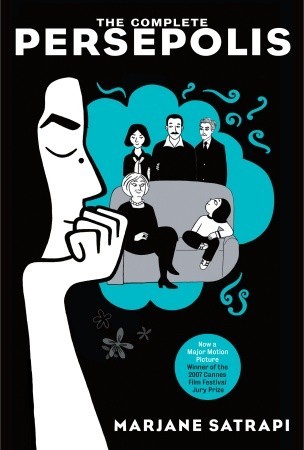
Persepolis is the autobiography of Satrapi, growing up within a large and loving family in Tehran during the Islamic Revolution. Balancing the plot between her private and public life, in a country plagued by political upheaval.


Maus by Art Spiegelman

The only graphic novel I know of that has won the Pulitzer Prize. Maus is the complete story of Vladek Spiegelman and his wife, living and surviving in Hitler’s Europe. The Jews are mice and the Nazis are cats, this is a brilliant way to tell this type of story.


Scott Pilgrim by Bryan Lee O’Malley

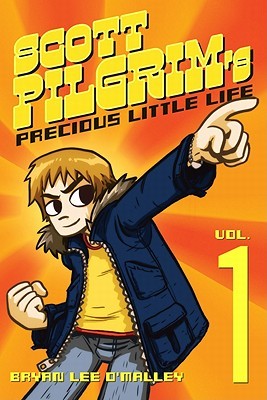
I love this series, it follows the story of Scott Pilgrim and how he has to battle his new girlfriend’s seven evil exes. Something he would never have planned on, but love makes you do funny things. While this is six short graphic novels, I highly recommend reading the entire series. Also there is a faithful movie adaptation that is well worth seeing too The only real difference is Michael Cera doesn’t look like Scott Pilgrim.

There are many more great graphic novels out there but I hope I’ve given you a good place to start. Feel free to suggest some more graphic novels and even recommend some to me that I should check out. I’m tempted to do a similar post with more of your superhero type graphic novels but we will see how that goes.


A Constellation of Vital Phenomena by Anthony Marra

Posted August 2, 2013 by Michael @ Knowledge Lost in Historical Fiction, Literary Fiction / 5 Comments

A Constellation of Vital Phenomena by Anthony MarraTitle: A Constellation of Vital Phenomena (Goodreads)
Author: Anthony Marra
Published: Hogarth, 2013
Pages: 416
Genres: Historical Fiction, Literary Fiction
My Copy: ARC from Publisher

Buy: AmazonBook DepositoryKindle (or visit your local Indie bookstore)

In a small village in Chechnya, an eight year old Havaa watches as her father is abducted by Russian soldiers. Their neighbour, Akhmed was also watch and takes Havaa as he knows he will be the only person that might be able to help her. They seek shelter at a bombed-out hospital, where they meet Sonja, a tough and strong minded doctor who has no desire to risk it. All three people’s worlds are turned upside down in such a short period of time. Slowly intricate patterns are revealed that bind these three companions together and ultimately seals their fate.

A Constellation of Vital Phenomena takes place mainly in 1994; not too long after the dissolution of the Soviet Union (1991) and the Chechen-Ingush ASSR split (1992). Now The Chechen Republic was fighting for their independence. In the First Chechen War the Russian Federation tried to seize control only to be fought off by the locals. It wasn’t till 1996 did Boris Yeltsin’s government declare a ceasefire and eventually a peace treaty was signed. During this war it was estimated that 5,500 Russian soldiers died, between 3,500 and 7,500 Chechen militants, but the real loss was on the civilians, with between 30,000 and 100,000 deaths, around 200,000 injured and 500,000 displaced by the conflict. I wish I could tell you that we are the end of conflict with Chechnya but in 1999 the Second Chechen War was launched and the Russian Federation eventually seized control in 2009.

Now that we have an idea of what was happening in the country at the time, we get an idea of the danger that faces the three main characters. This isn’t necessarily a book about war, or the politics behind it (which basically comes down to oil) but rather the connections that link Havaa, Akhmed and Sonja together. The hardships each of them face only serves to build this beautiful story and flush out the character development. A glimpse of three different people struggling to survive this war torn land and debut author Anthony Marra managed to make this novel both compelling and emotional.

All three characters are so different you get so many perspectives within A Constellation of Vital Phenomena that will leave you pondering the novel well after you put it down. For me, I thought of Akhmed as a traditional Chechen Muslim, caught up with the past and tradition. While Sonja is the strong minded woman trying to smash through the glass ceiling, then you have Havaa an intelligent young girl that knows nothing else apart from war. You also have other characters that look at other ways the war effects the people, from abduction, smuggling, sex trafficking, amputation, punishment, torture and the list goes one. For a novel so focused on the character development and relationship of three characters, it’s impressive how it manages to deal with so many other issues.

I’ve always had a keen interest on Russian literature, plus my fascination with the motherland; so I knew I had to read this book. The collapse of The Union of Soviet Socialist Republic is an interesting topic and the instability that ensued afterwards makes for a great backdrop. I will admit I didn’t know much about Chechen history so I had to bone up a little, unable to break a bad habit I was on the Wikipedia page for Chechnya just to get more information. I feel stupid for this but I didn’t realise the majority of Chechnya were Muslims; for some reason I thought they would have been Russian Orthodox. With the help of understanding the geographical location (which helped make more sense of their Islamic influences) as well as history, I really connected with this novel.

It wasn’t just understanding Chechnya or the character development I loved about A Constellation of Vital Phenomena, it was also exquisitely written. I was sucked in by the imagery and the beauty of the prose; I was surprised this was Anthony Marra’s first novel. I would have thought he had been doing this so well , the writing was wonderful and the whole novel was masterfully executed. I hope he writes a new novel soon because I know I’m eagerly waiting to see what he does next.

A Constellation of Vital Phenomena is sure to be one of those books that make my ‘Best of 2013’ list, I was very impressed with everything about it. For an American writer, his grasp on Chechnya seems authentic. I don’t know much about his life so I can’t judge, he might have spent some time in the country or has friends or family from there; I do know he wrote a prize winning short story called Chechnya, but that looks like the basis of this novel (based around Sonja, the hospital and her sister). Go out and pick up a copy of this novel, it is well worth reading.


Monthly Review – July 2013

Posted July 31, 2013 by Michael @ Knowledge Lost in Monthly Reading / 0 Comments

This month we looked at the satirical novel and read Kurt Vonnegut’s modern classic Cat’s Cradle. This was a lot of fun for me; even though I’ve read the novel, I’m becoming a big fan of Juvenalian satire. While it might have been a little difficult for others, it is always great to go out of our comfort zones and read something great. Next month we are dipping into some non-fiction when we read Death in the Afternoon by Ernest Hemingway, considered one of the best books ever written about bullfighting.

My wife has been away for almost three weeks and in that time I thought I might have gotten a lot of reading done, but sadly this was not the case. I’ve done pretty well for myself but nothing amazing, it seems like a regular month for me; reading wise. The biggest highlight for the month would have to be A Constellation of Vital Phenomena by Anthony Marra but I did hit rock bottom as well and read Twilight by Stephenie Meyer. I would love to know what your highlights or lowlights of the month were and even what you read this month.

My Monthly Reading


Cat’s Cradle by Kurt Vonnegut

Posted July 30, 2013 by Michael @ Knowledge Lost in Book of the Month, Science Fiction / 0 Comments

Cat’s Cradle by Kurt VonnegutTitle: Cat's Cradle (Goodreads)
Author: Kurt Vonnegut
Published: Dial Press, 1963
Pages: 287
Genres: Science Fiction
My Copy: Personal Copy

Buy: AmazonBook DepositoryKindle (or visit your local Indie bookstore)

John (Jonah) is an everyman, he tells us about the times he planned to write a book about America and the importance of what they did the day Hiroshima was bombed. He finds himself involved with the children of Felix Hoenikker (a fictional Nobel laureate physicist and known in the book as the father of the atomic bomb). The Hoenikkers lead him to discover a crystal known as Ice-Nine, which they have kept secret and is an alternative structure of water.

Like most of Kurt Vonnegut’s books that I’ve read (with the exception of Breakfast of Champions) Cat’s Cradle is this bizarre journey that isn’t necessarily enjoyable to read but when you finish the book and reflect you start to see the brilliance. I remember with Slaughterhouse-Five when I ended the book I gave it a 2 star rating; it was just plain weird but the book never left my thoughts. I digested what I had read and began to understand and slowly that rating grew and now I think it is a work of genius.

As Cat’s Cradle begins to twist and turn in true Vonnegut style you eventually end up in the bizarre and fictitious island of San Lorenzon. The book continues with more twists until it becomes apparent that Ice-Nine can be a very destructive material. The novel is laced in  laced with irony and parody, this is part of Vonnegut’s satirical humour and you have to except that he knows what he is doing and let him take you on this journey.

What I think Kurt Vonnegut and the narrator of Cat’s Cradle is trying to tell us as readers is the discovery of Ice-Nine can truly benefit mankind but then you find a military application for it and everything changes. This is a warning, with the amazing advances in technology without any growth in an ethical awareness human annihilation is a real possibility. Vonnegut was living in the Nuclear age when this book was written, the threats felt real and it was what had most people worried. The confrontation between technology and morality is ever present within this modern classic.

But there is a parallel (but similar) message running through Cat’s Cradle as well. John is often known as Jonah in the novel and you have to think biblical for this one. Jonah is a biblical prophet that goes to Nineveh (after much drama) and tells them of their destruction. The people repent and God takes pity on them and the city is spared. A symbolic message; a cautionary warning to the readers of Jonah’s (aka John) prophetic findings that could lead to the end of the world.

In true Vonnegut form, this book will take you on an interesting ride with no possible way of predicting the outcome. The book satirises science, technology, the arms race and even organised religion in this classic post-modern sci-fi novel. It is always hard to talk about a Vonnegut book or even try to explain his literary style, but if you like a dark comedy, science fiction or satire novel then Kurt Vonnegut is always a good choice. I would recommend starting with Slaughterhouse-Five as that is probably considered his magnum opus.  Although I wasn’t a fan of Breakfast of Champions, I feel like I’m a true fan of what Vonnegut does and Cat’s Cradle is a good example of that.