Author: Michael @ Knowledge Lost

Shoot the Piano Player by David Goodis

Posted May 6, 2013 by Michael @ Knowledge Lost in Pulp / 0 Comments

Shoot the Piano Player by David GoodisTitle: Shoot the Piano Player (Goodreads)
Author: David Goodis
Published: Prion, 1956
Pages: 196
Genres: Pulp
My Copy: Library Book

Buy: AmazonBook Depository (or visit your local Indie bookstore)

Haunted by his past, Eddie plays to forget. Hiding from life, he plays nightly at a small joint on Skid Row; a place for hookers, lowlifes and crooks. A washed-up classical pianist, he finds himself bottoming out — he’s only care in the world is stroking the keys in this dive bar. When his brothers get in trouble with some gangsters, he finds himself being dragged into the chaos of his no-good family.

David Goodis really knows how to create a bleak world, which I did find myself being sucked into from the very start. Yet I tend to think that maybe Goodis missed the mark a little with this novel; there was something missing and the end result  was not as compelling as others in this genre. I think the narrative was a bit flat; do not get me wrong, I love the existentialism, alienation and angst that were coming from Eddie but I think it failed to be as melodramatic or psychological as I would like from a noir novel like this.

Eddie was suppose to be an empty shell, not even closely resembling his former self and I think here is where I had the problem. There was no real character development for Eddie as there was nothing really there.  He wasn’t hard-boiled, he was not witty or intelligent in any way; he just seemed to not care at all. Sure he tried to survive but as a character I thought of him as flat and boring. Lena, on the other hand, seemed like there was so much hidden from the reader but she never really got enough time in the book to explore that.

Another issue I found was the books was jammed back with dialogue and I feel like David Goodis was better at building atmosphere. I am not saying this is a bad book or that I did not enjoy it; I had a lot of fun reading this book. I just wanted to look at what let me down with the book as well as what worked. Shoot the Piano Player moves at a frenetic pace and if it wasn’t for the over use of dialogue to slow it down, this could of been a real page turner. This novel also feels really different to other noir novels; the style feels the same but there is something about this novel that makes it unique, possibly the execution of the plot but I cannot put my finger on it.

I have  mixed feelings about this novel, at times it is amazing then you turn the page and it almost flat lines. Almost like it had it’s own emotions and suffers from severe mood swings. This balance never felt right; I get the impression this would work a whole lot better as a movie. In fact I think the movie French noir classic directed by François Truffaut and starring Charles Aznavour in 1960 was what held this book firmly in place with the other great noir novels. I wonder if the movie was not a success would this book fade into obscurity like the rest of David Goodis’ novels.

I did not intend to be so hard on this novel, I wanted to enjoy it and to some extent I did. Just in the end the cons far outweighed the pros. I have yet to see “Tirez sur le pianiste” but if I get my hand on it I think I would be correct in assuming that it is better than the novel. Add more angst, existentialism, melodrama or psychological elements and fix my issues; that would be the perfect pulp novel. Although then you will be more likely be reading a Raymond Chandler, James M Cain or Jim Thompson novel.


Understanding Satire

Posted May 5, 2013 by Michael @ Knowledge Lost in Literature / 2 Comments

juvenalI was reading a review the other day, when I saw them say “being a satire, I expected it to be funny” which, at the time, really annoyed me: I wanted to become that guy who replies with “I don’t think you get it”. The truth of the matter is I was someone that thought satire was a form of comedy for a very long time too. I think it wasn’t until someone called 1984 a satirical novel did I actually think “hang on, maybe I need to look up this word”. So I thought instead maybe this could make a good blog post.

First of all, while satire can be funny, humour is not the essential component. The main purpose of satire (in a literary sense) is to offer a constructive social criticism or to shame society into improving. Using wit, irony and sometimes sarcasm to put a spotlight on issues the author feels need to be looked at; normally social, political or religion topics. This is only a brief explanation of my thoughts on satire; I might have missed something because it is a lot more complex than this anyway.

Satirical literature is often divided into two different categories as well; Horatian and Juvenalian (although not mutually exclusive). Horatian satire looks at some social vice through playful, light-hearted humour or wit. Named after the Roman satirist Horace, this form of satire uses wit, exaggeration and self deprecation to indentify stupidity (rather than major issues) within modern society. This is the type of satire more people think of when they think about satirical books; examples of this type of satire within literature can include Adventures of Huckleberry Finn by Mark Twain, The Screwtape Letters by C.S. Lewis, The Giver by Lois Lowry and Gulliver’s Travels by Jonathan Swift.

There is another form of satire named after Roman satirist Juvenal; this is the one that includes books like Fahrenheit 451 by Ray Bradbury, A Clockwork Orange by Anthony Burgess, American Psycho by Bret Easton Ellis, Lord of the Flies by William Golding, Brave New World by Aldous Huxley and 1984 by George Orwell. Juvenalian satire addresses social evil through scorn, fury and ridicule. This form of satire doesn’t often involve humour (though a book like Catch 22 by Joseph Heller would be included) but more a pessimistic, ironic or sarcastic nature towards moral and social indignation.

So, as you can see, there are two very different types of satire within literature, there is a lot more to look at regarding these types of novels. My hope with this post is that people understand the difference between Horatian and Juvenalian satire. Not only should we remember that satire is not always funny but we need to remember that it is not an indication of the satirist persona. Criticising Mark Twain as racist and calling Huckleberry Finn offensive is to miss the point completely. Jonathan Swift was not really suggesting that Ireland can ease their economical troubles by selling their children as food for the rich in A Modest Proposal (1729) and if you read it any other way what would you think of the author? He does say children are a delicious, nourishing and wholesome food, whether stewed, roasted, baked, or boiled; do you really think Swift was proposing cannibalism and infanticide?

I’m a big fan of satire, there are times where it is in bad taste or misses the mark but this is not the fault of the literary genre but the delivery of the message. I personally prefer Juvenalian satire in my literature but when it comes to movies and TV I think maybe a combination of both. I would really love to hear other people’s thoughts on satire; am I missing anything? Is there anything you feel needs to be added? Or what novels do you like in both Horatian and Juvenalian satire.


The People of Forever Are Not Afraid by Shani Boianjiu

Posted May 4, 2013 by Michael @ Knowledge Lost in Young Adult / 0 Comments

The People of Forever Are Not Afraid by Shani BoianjiuTitle: The People of Forever Are Not Afraid (Goodreads)
Author: Shani Boianjiu
Published: Hogarth, 2012
Pages: 320
Genres: Young Adult
My Copy: ARC from Publisher

Buy: AmazonBook Depository (or visit your local Indie bookstore)

Lea, Avishag and Yael grow up in a small town on the Israel/Lebanon border leaving normal teenage lives. The People of Forever Are Not Afraid tells the story of these three normal Israeli girls from passing notes in school, talking about boys to turning eighteen and being conscripted into the army. Winner of the National Book Foundation’s “5 Under 35” authors to watch list in 2011, Shani Boianjiu’s debut novel is a coming of age novel unlike any before. Growing up in this intense war torn world changes everything, even for three normal teenage girls.

First thing I would like to say is I was hugely impressed with The People of Forever Are Not Afraid, I never expected to find a New Adult novel that offers so many different elements. While this seems to be marketed as a Young/New Adult novel, I think this is because the old “coming of age” formula seems to go hand and hand with these two genres. Though this is so much different; these three girls are plucked from their normal teenage lives, put into the army and forced to grow up rather quickly.

There are some really interesting themes throughout this novel. Firstly there are the major themes of growing up as an Israeli girl and conscription, and Shani Boianjiu is the voice of experience here; at the age of 18, she entered the Israeli Defence Forces and served for two years. So you get the sense that maybe this novel is semi-autobiographical but not knowing much about the author I wonder which of the three girl’s best resembles her. Though I have a feeling that Lea, Avishag and Yael all have an element of Boianjiu in them; I like how she has the three different personalities within the book to help show the how war really effects a person.

This brings us to the theme of War; while for the most of the book they are living in a perpetual state of war, the conflict between Israel and Lebanon still puts them into real danger. Though the reader has to ask themselves if eighteen too young to deal with war; they are still in a state of self-discovery when they are thrown into such an extreme situation. I know it is part of their heritage but when you talk about war and even RPG children (“children who tried to shoot RPGs at soldiers and ended up burning each other because they were uninformed, and children”) you really have to wonder how old is old enough to deal with war.

Finally, the book looks at the influence western society has on the Middle Eastern culture; I’m sure girls thought about boys and sex but there is a definite changing that comes through in the novel. References to Dawson’s Creek and Mean Girls and the whole attitude towards relationships (breaking up every week) and sex really feels more like something from an American teen drama than an Israeli town. I don’t know much about their culture but I know enough about pop-culture and the difficulties that western society has on Muslim and Jewish heritage to notice this real culture clash.

The People of Forever Are Not Afraid really is an interesting New Adult novel; it is smart and thought provoking and yet it’s really funny as well. I remember the cheesy lines made me chuckle like the idea of a mother not wanting her daughter to have a party because she was worried that her friends will break her hymen. All these elements seem to work together to produce a novel that is both easy to read and unlike anything I’ve read before.

I was never sure what to make of The People of Forever Are Not Afraid but I’m glad I had a chance to read this novel. It’s a debut novel that shows us that Shani Boianjiu is an author to watch in the future. It’s not without its flaws, the repetitiveness got to me a little but in the end all the good aspects of this book outshined any problems. It’s the type of novel that made me want to turn back to page one and start reading it again. I’m not a fan of Young Adult and New Adult novels in general but I can’t help but recommend this one to all readers.


Burial Rites by Hannah Kent

Posted May 3, 2013 by Michael @ Knowledge Lost in Historical Fiction / 0 Comments

Burial Rites by Hannah KentTitle: Burial Rites (Goodreads)
Author: Hannah Kent
Published: Picador, 2013
Pages: 352
Genres: Historical Fiction
My Copy: ARC from Publisher

Buy: AmazonBook Depository (or visit your local Indie bookstore)

In a small town in northern Iceland 1829, Agnes Magnusdottir is waiting her execution for her part in the brutal murder of two men. District Officer Jon Jonsson, his wife and two daughters have been appointed to act as Agnes jailors leading up to her death. Horrified to have a convicted killer living with them leads to the drama that is Hannah Kent’s Burial Rites.

I remember hearing about this book when Waterstones released their Waterstones Eleven list for 2013. This list is their picks for the most promising Fiction debuts of the year. While I’ve never really known of this list till this year I was very interested to discover some books that I thought I would need to get my hands on. Books that I immediately added to my list included Idiopathy by Sam Byers, The Universe Versus Alex Woods by Gavin Extence, Pig’s Foot by Carlos Acosta and of course Burial Rites. Hannah Kent is an Australian author and Deputy Editor for Kill Your Darlings, an independent literary publication. I was surprised how much buzz this book got leading up to its release and the fact that she sold the manuscript to so many countries before people had a chance to read it and talk about it.

Burial Rites is told from multiple perspectives.  There is a first person narrative from Agnes which appears to be unreliable as she doesn’t seem to have a clue about some of the things going on around her. Then there are all the other perspectives which are told in third person, I thought I would get annoyed with the switching perspective and the reliable third person verse the unreliable first but really it didn’t bother me at all. The way the story progresses you don’t really notice too much in the change and it really helps the reader to understand what is happening in this little town even if Agnes is unaware.

The differing opinions towards Agnes were really fascinating, in this sense I found myself being reminded of Crime and Punishment. The psychology of each character gets explored, from Agnes’ acceptance and waiting for her fate to Jon’s fear of corruption to the compassion, understanding and a whole range of issues. As the novel progresses and people learn more about Agnes and/or the crime, you can see the way they change in behaviour. I was so drawn to the way Hannah Kent really explored her characters and the way they behave towards Agnes as they learn more about the whole situation.

This is based on real events; Agnes Magnusdottir was the last application of capital punishment in Iceland and while I didn’t find much about the crime and the execution, I did feel like Kent has researched enough for this novel. Using historical events to write fiction is a trick thing to do, sometimes you can get it right, like in the case of this novel and Wolf Hall, but sometimes you just mess too much with the personalities of who you want to portray and it doesn’t feel authentic, A Treacherous Likeness is a good example of this. I’m sure it helps that a quick search of Agnes Magnusdottir doesn’t give you much information apart from being convicted for the murders of Nathan Ketilsson and Pétur Jónsson so it is hard to tell just how accurate this novel is. Though I feel like I know a little more about the last execution in Iceland than originally (which was nothing); even if it was learnt from a historical novel.

Burial Rites was a great read, I found myself being sucked into the world and enjoying the way each character was explored. Trying to pronounce the Icelandic names is always hard but I’m pleased to see there is a little guide at the start of the book to help with pronunciation. A brilliant debut novel from Hannah Kent and she will be one Australian author I will be watch in the future. This psychological novel really is worth reading, but then again I do enjoy a novel that explores the psychological elements of murder.


Monthly Review – April 2013

Posted April 30, 2013 by Michael @ Knowledge Lost in Monthly Reading / 0 Comments

As we draw April to a close I have to admit that while I’ve almost caught up on all my book reviews for this blog, I’m feeling like I’m in a reading slump. It’s a new feeling for me that is causing frustration; I recently started a new job which has been mentally draining me so I hope that is the only reason behind this slump. But rather than focus on my frustration, let’s talk about the positives. You might have noticed I’ve been posting a book review up practically every day, this was because I got so far behind in reviews I would read a book and want to talk about it but waited two months for it to go live. While a book review every second day was a great idea I managed to get too far behind and now that I’m almost fully up to date I can go back to what I wanted to do with this blog. While reviews are important part of this blog and my reading journey I want to leave some room for some bookish related posts that aren’t reviews. Maybe some guest posts, my lovely wife has done some great ones in the past and a huge thanks to Mish and Toby for their posts as well. I want to generate some interesting posts that aren’t just reviews; so with any luck this will happen soon (I have an interesting one about satire planned).
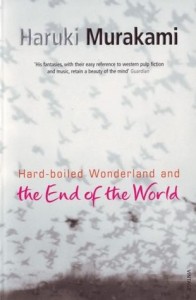
As for this month; the book club focused on Japanese literature and read Hard-Boiled Wonderland and the End of the World by Haruki Murakami which I really enjoyed and you can read my review here. I know many people are Murakami fans but to be honest, the only other novel I’ve read of his was 1Q84 and I didn’t enjoy it. I’m looking forward to what the book club does next month when we read The Strange case of Dr Jekyll and Mr Hyde for our supernatural theme. If you haven’t gotten involved with this book club and are interested in exploring literature with us, then you can do so over on Goodreads.

My reading this month was rather unproductive, I did manage to read ten novels but most of them were in the first half of the month and I think many of them were under 200 pages. My highlights included Burial Rites by Hannah Kent, The Son by Philipp Meyer, Mrs. Dalloway by Virginia Woolf and of course this month book pick for book club. But the book that stood out the most was The Reader by Bernhard Schlink, which I remember enjoying the movie but only remembered what happened as I read through this novel. I think I got sucked into this world that I didn’t want to leave, sadly that only lasted for a day then the book was over;the ups and downs of reading. What was your month of reading like? What were the highlights?

My Monthly Reading


Hard-Boiled Wonderland and the End of the World by Haruki Murakami

Posted April 29, 2013 by Michael @ Knowledge Lost in Book of the Month, Literary Fiction, Magical Realism / 0 Comments

Hard-Boiled Wonderland and the End of the World by Haruki MurakamiTitle: Hard-Boiled Wonderland and the End of the World (Goodreads)
Author: Haruki Murakami
Translator: Alfred Birnbaum
Published: Vintage, 1985
Pages: 400
Genres: Literary Fiction, Magical Realism
My Copy: Personal Copy

Buy: AmazonBook Depository (or visit your local Indie bookstore)

In the future, Tokyo remains the technology powerhouse it is today. With the major advances in technology, data security has become more valuable; problem is all codes can be broken if you know how. The Calcutec is a human data processor/encryption system who has been trained to use his bio-algorithms implant and subconscious for encryption. A new comer to a strange, isolated walled town known as “The End of the World” is assigned a job as a dream reader. As he finds acceptance within the town, his mind begins to fade; or has it only been suppressed?

Hard-Boiled Wonderland and the End of the World tells the story of a split between two parallel narratives from different worlds. The consciousness and the unconscious mind; “Hard-Boiled Wonderland” refers to The Calcutec’s life as an encryption machine while “The End of the World” is his subconscious world. The two stories are told in alternating chapters as the reader slowly discovers the mysteries connecting these two worlds together. Hard-Boiled Wonderland is a homage to Raymond Chandler and hard-boiled fiction, as well as to science fiction and cyberpunk and “The End of the World” has similarities to Franz Kafka’s The Castle.

The major theme within this book is the nature of consciousness; both narratives are constructed around this general idea. While the odd numbered chapters refer to the conscious mind and the even-numbered chapters the subconscious, it is interesting to note they link together with similar themes; for example the song Danny Boy appeared in consecutive chapters. Even characters are shared between consciousnesses; the object of the narrator’s desire, the librarian is a perfect example of this.

Beyond that, the concept of subconscious being able to be controlled or shaped plays out in the entire book. This brings me to another major theme within this novel; the morality of science. The scientific experiments been done on the narrators mind in the attempt to separate the conscious and the subconscious in an attempt create more secure encryptions is an interesting topic. It reminds me a little of Frankenstein when it looks at the dangers of science and its moral implications. The Professor’s experiment killed about twenty people and while he feels remorse for the tragedy he also feels like it was the right choice in the name of progress.

While there are many more themes that would be interesting to explore I wanted to look at character. In both narratives there are no names for any of the characters, each is referred to by their occupation or a general description; from the Narrator, known as The Calcutec, the Librarian, the Old Man, the Professor, the Big Guy and the Chubby Girl. I never really payed too much attention to this while reading the book but referring to a girl as “the Chubby Girl” did bother me; it wasn’t till the very end that I was bothered by the lot. I couldn’t understand why this book was so frustratingly vague and incomplete with character and setting descriptions, I don’t know what the reason behind it would be, except for maybe removing any obstructions that might hinder the understanding of the novel.

Even the narrative is offering a very limited view of what is actually happening but slowly most of the mysteries do become clearer but the entire focus was on the subtext of this book. This wasn’t meant to be about great characters or scenes; this was all about exploring the themes as a way to get Haruki Murakami’s thoughts on the subject across. In a sense, this is what Murakami excels at; if it wasn’t for these well thought out ideas his books would just be odd and weird. This is my second Murakami novel and the first one I’ve actually enjoyed.

I’ve finally discovered what makes Haruki Murakami an author to take notice of; I didn’t find the same thing with 1Q84, I thought it was long winded and repetitive but Hard-Boiled Wonderland and the End of the World really worked for me. I have some issues with the novel, obviously the vagueness was one of the major ones, but overall this was a really interesting journey for me.


The Thirteenth Tale by Diane Setterfield

Posted April 28, 2013 by Michael @ Knowledge Lost in Crime / 0 Comments

The Thirteenth Tale by Diane SetterfieldTitle: The Thirteenth Tale (Goodreads)
Author: Diane Setterfield
Published: Atria Books, 2006
Pages: 406
Genres: Crime, Gothic
My Copy: Personal Copy

Buy: AmazonBook DepositoryKindle (or visit your local Indie bookstore)

Amateur biographer Margaret Lea finds a mysterious handwritten letter waiting for her one night. The letter is a request from what could be considered Britain’s most prolific novelist Vida Winter. Winter’s wishes to recount her life’s story but has been notorious for her abilities to evade journalists’ questions in the past, making up a different story for every journalist. This project will force both women to confront the mysterious paths that have been haunting them and if we are lucky we might find out the mystery of The Thirteenth Tale.

The Thirteenth Tale is a tapestry of two threads weaved together, Margaret’s story both past and present as well as Winter’s past. A gothic mystery that deals with death, identity, isolation and for me it felt like it was a novel about how evil twins are. I’m not sure if it was the current mood I was in when reading this book but I felt like this book was trying too hard to be something it couldn’t live up to. Two alternating narratives can be a difficult literary technique to get right but I never really felt it worked. Sure, many people loved this book but I wonder if they were too caught up in the narrative to notice the problems.

It is true, the writing in the novel is spectacular and I did find myself being swept away in this gothic narrative but then when I reflect back, I notice all the flaws. The novel sets out to piece together the puzzle of both Margret and Ms Winter but some of the pieces were lost and we are left with all these holes. I’m not satisfied with the amount of questions that were left unanswered, I was just left feeling disappointed and have no desire to try and reread this in the hopes to find what I might have missed.

For a gothic novel, I felt like it moved into the realm of clichés; from the mysterious manor to the mysteries of their pasts, everything felt rather predictable in that aspect. I felt like this book was borrowing rather heavily on some gothic classics, there were elements of Rebecca here and even the Brontës. Now I haven’t read Jane Eyre but with the amount of references made to this book in The Thirteenth Tale, I suspect that this was a major source for Diane Setterfield gothic attempts. I never felt like there was anything new or interesting with the plot of this book.

I wish I knew what make people give this book such a high rating, sure the writing was beautiful but I felt like Diane Setterfield tried to do too much in her first novel and it didn’t quite work. Maybe if you are new to the Gothic genre this might be a decent contemporary novel to give you a taste of what to expect but I feel like this book left me high and dry. I would recommend Sarah Waters over Diane Setterfield but ultimately I would rather some of the gothic classics.


Life After Life by Kate Atkinson

Posted April 26, 2013 by Michael @ Knowledge Lost in Historical Fiction / 18 Comments

Life After Life by Kate AtkinsonTitle: Life After Life (Goodreads)
Author: Kate Atkinson
Published: Knopf Doubleday, 2013
Pages: 480
Genres: Historical Fiction
My Copy: Personal Copy

Buy: AmazonBook Depository (or visit your local Indie bookstore)

What if you had the chance to live your life again and again, until you finally got it right?

Ursula Todd is born in a snowstorm in England in 1910 but dies before she can take her first breath. During that same snowstorm she was born again and lives to tell the tale; again and again. Life after Life tells the story of Ursula’s lives, as with each new life she makes small changes that send her on a completely different path.

I feel like I’m the only person on the planet that thought this book was overhyped and over rated. Sure Kate Atkinson has this trippy ability to create this bleak world while still managing to add some wit and compassion but it wasn’t the writing that was at fault. The premise of the book makes it sound really good but let’s face it; it is just Groundhog Day in disguise.  The book is clever, but it tries too hard to be clever and it didn’t really turn out the way it should have; for me anyway. This book is getting so many rave reviews, I feel like I am a black sheep just telling people it did not work.

As I said before, there is nothing wrong with the writing; Kate Atkinson has created this lyrical narrative and I did find myself being swept away in the words. I even felt like at times I was reading this book without thinking about what was happening; a few times I had to stop and process before continuing. I almost found myself not noticing a death and Ursula’s life starting again and that could have got me completely lost. I did feel like Kate Atkinson did however overdo the twists and it turned out to be a roundabout way to retell the same story over and over again with different outcomes. This could have worked; and it sounds like it worked for many people but I sadly wasn’t one of them.

I wonder if Kate Atkinson was trying something different and experimental where she could play with the character’s death and life, explore the concept of life’s choices and their consequences but because there were no real penalty to Ursula’s life I wonder if it really worked? Do you ever have déjà vu? (I don’t think so, but I could check with the kitchen) Life after Life just seems to repeat the same scenes, some readers might gain a sense of familiarity and for me it just felt like I wasn’t getting anywhere.

Life after Life is the kind of book you should probably read in a real cold climate; the snowy, dark and sometimes bleakness of the novel seems to call for it. Maybe read snuggled up on a dark winters night and don’t forget your booties ’cause it’s cooooold out there today (It’s coooold out there every day. What is this, Miami Beach?).  It is just the book that would work better in the cold; though it is never cold here in Townsville, maybe that’s why it didn’t work for me.

I really wanted to enjoy this book; I will try another Kate Atkinson novel because I really think she has a great style. Just so happened Life after Life was not for me and I know people loved this book and will probably complain about this review but at least it was just an excuse to put some Groundhog Day quotes into something. This book has had so many positive reviews so maybe it is just me, if the book sounds like something you’d like then don’t let this review stop you, is it too early for flapjacks?


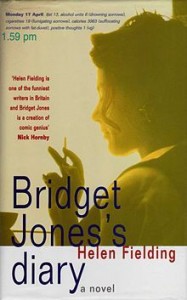
Bridget Jones’s Diary by Helen Fielding

Posted April 25, 2013 by Michael @ Knowledge Lost in Chick Lit / 0 Comments

Bridget Jones’s Diary by Helen FieldingTitle: Bridget Jones's Diary (Goodreads)
Author: Helen Fielding
Series: Bridget Jones #1
Published: Pan Macmillan, 1996
Pages: 310
Genres: Chick Lit
My Copy: Personal Copy

Buy: AmazonBook Depository (or visit your local Indie bookstore)

Bridget Jones’s Diary is the year in the life of a thirty-something single working woman living in London. While she writes about her career, problems, family, friends, and a quest for a romantic relationship she is also on a quest for self improvement. To quit smoking, cut down on drinking, lose weight and develop Inner poise, this novel is a comical look at the modern woman.

First of all, I think of this book as a pseudo feminist novel; while there are plenty of elements in the novel that could be considered a critique of feminism; this is more satire than anything else. Bridget wants to be that kind of woman but she never gets there, she tries to come across as a strong independent working woman who does what she wants when she wants, but when it all comes down to it, what she wants is a man. Interesting enough the strongest feminist is the mother who has legitimate feminist ideals, but not portrayed in a very positive light.

There is this idea that Bridget Jones’s Diary is based on Pride and Prejudice but I have some issues with this and I will try to explore some of my basic thoughts on this. Firstly Bridget is not Elizabeth Bennett; she would like to be, but in the book her personality would be more like Lydia. Her goal is to become more like Lizzie but her relationship with Daniel Cleaver (possible the Wickham of the story) shows us that she is living a life of self gratification. If we are going to compare characters to those in Pride and Prejudice, then Bridget’s mother might start off as a Mrs Bennett but in the end turns into a Lydia as well. Mark Darcy is obviously Mr Darcy and probably the only character that closely resembles the original character. There is also the desire to find a husband (or mate) due to the pressures put on them by their mothers as well as the perception of running out of time. In Lizzie’s case, she was at the age where she needs to seriously consider getting married as it was expected of her and in Bridget’s case it was more to do with her biological clock.

Here is how I think the comparison was made; in the novel Bridget was obsessed with the BBC TV adaptation of Pride and Prejudice, she considered Lizzie and Darcy the idea of the a great romance and wanted to find her own Mr Darcy. She loves the lake scene with Colin Firth in the wet white shirt (not in the book), so when it come to moment where Bridget realises who’s the right man for her, the book tries to replicate the scene with the description of Mark Darcy coming in dirty and sweaty and her attraction to him at that moment. Obviously since the movie had Colin Firth playing Mark Darcy, they were able to replicate this scene a lot better and this is why the ending was changed.

I don’t know much about Chick Lit so it is hard to talk about the writing and how it compares to other books in this genre but I have some thoughts I want to explore. First of all, this novel is almost like a soliloquy; obviously being a diary she is expecting no one else to read her thoughts, so she can express feelings that she would never consider sharing with others. The diary takes the reader through the year with her, as it happens, not with the wisdom of hindsight or any wisdom at all. The only problem is that it blurs the line between a first person narrative and third; there are parts of the book where it would be obscure to think Bridget was writing down everything happening, minute by minute as it was happening. This is to help add to the comedy of the book but to me it added to the absurdity.

Lastly I want to talk about Bridget Jones; the modern woman, obsessed with romance but still wanting to appear as a strong independent woman. She starts the diary in an effort try to improve herself but it also suggests that she is self-absorbed. What really got me was her negative body image; each day she weighed herself and throughout the course of the entire book the most she ever weighed was 9.6 stone (just over 60kg or 132 pounds) and she considers herself overweight by that? I know she compares herself to people on TV but it’s just ridiculous. Also with the amount of calories, cigarettes and alcohol she drinks, I’m surprised she is so under weight and that is where the satire started to frustrate me.

Overall, I was entertained by this book; as a novel it did have its issues and is riddled with chick lit clichés. As a satirical novel, it worked on some levels but most of the time it had to rely on the chick lit elements to help push it through. I didn’t remember much about the movie, except for the fountain scene and Renée Zellweger putting on weight for the role. Which when comparing it to the book doesn’t make sense but on a personal level, I think it was an improvement; she looked fantastic. Overall the book was quirky but the real surprise for me was the wit and irony used throughout the novel; enough to entertain me.


A Treacherous Likeness by Lynn Shepherd

Posted April 24, 2013 by Michael @ Knowledge Lost in Crime, Historical Fiction / 5 Comments

A Treacherous Likeness by Lynn ShepherdTitle: A Treacherous Likeness (Goodreads)
Author: Lynn Shepherd
Published: Corsair, 2013
Pages: 336
Genres: Crime, Historical Fiction
My Copy: Personal Copy

Buy: AmazonBook Depository (or visit your local Indie bookstore)

In 1850, a young detective takes on a new case unlike anything seen before; Charles Maddox’s client is the surviving son of Percy Bysshe Shelley and Mary Shelley. Maddox has to track down some papers concerning the Shelleys that could be used for blackmail and ruin their literary legacy. This will take him into investigating the dark lives of not just Percy Bysshe Shelley but all the young Romantics and question the cause of death for Shelley’s first wife, Harriet.

This was a really difficult book to review but I will try hard to be fair and explore the two contradicting opinions I have about this book. First of all, I read this book with not much knowledge of the Romantics; I knew basics but I hadn’t explored them as much as I would have liked. I’ve been a fan of this literary movement even since the start of my reading life and most of you know that Frankenstein remains my favourite novel of all time. So when I heard about this book, I knew I wanted to read it.

Reading the book, I found it interesting; the writing style really reminded me of the time. Yet at times I felt like the writing was trying to reflect the time and sometimes it just did not feel right. I found myself rereading paragraphs trying to pick up what bothered me about them. I never really found the problem, I do not even think it was the writing that was my problem but more of the tone, but more on that later. When it comes to the mystery, everything felt pretty straightforward, piece by piece slowly revealed until the reader finally knows what was going on.

While I did have some problems with the book, all in all I was enjoying the book and would give it a rating of three stars, maybe three and a half. I didn’t find out much about the protagonist Charles Maddox as I would have liked but this could be because this detective appears in Lynn Shepherd’s other novel Tom-All-Alone. If I had read this book first I might have a different opinion towards Maddox. Which brings me to my problems; A Treacherous Likeness would have been a decent novel if it wasn’t using literary legends. This book made me want to explore more about the Romantic Movement, to its credit, but this was also its downfall.

After finishing this novel, I’ve been dipping in and out of three different books; The Monsters: Mary Shelley and the Curse of Frankenstein by Dorothy & Thomas Hoobler; Young Romantics: The Tangled Lives of English Poetry’s Greatest Generation by Daisy Hay; and Footsteps: Adventures of a Romantic Biographer by Richard Holmes. All these Non-Fiction books are vastly different but I picked them to get more of an insight on the lives of the Shelleys. Now the Romantics are wonderfully complex people with equally complex relationships and I don’t understand what their lives were like but the creative licence this author took in A Treacherous Likeness to weave this story through only leads me to think one thing. With all I’ve learnt about Percy Bysshe Shelley and the others I’ve come to the conclusion that Lynn Shepherd mustn’t like them at all.

I’ve got more to learn about the lives of the great poets but after reading some of the non-fiction of the time and reflecting back on A Treacherous Likeness I can’t help thinking, while the author has excellent knowledge on these people there has to be hatred towards them as well. In A Treacherous Likeness there are the controversial statements of Mary Shelley not writing Frankenstein, killing her baby and with Percy Bysshe Shelley’s help pushing Harriett to suicide. While they have merit and we can’t be sure if these are true or not they still point towards a dislike of these people, Mary Shelley in particular. This could be the author’s attempt to weave her story through the facts and create this complex mystery; for me, after all the research it just comes across in a negative way.

I have a lot to learn about the Romantic Movement and I have to give A Treacherous Likeness credit for the re-spark in my interest in these people. I am not trying to be negative towards Lynn Shepherd; I think she has a great writing style and hope that she continues writing historical mysteries. I would prefer if it wasn’t based on real people because when it comes to the Romantics and Mary Shelley, I still adore them and don’t like to read anything that paints them in a horrible light. Sure they were not the nicest people, they made many mistakes but we can’t deny what they did for literature. I think I will have to try Tom-All-Alone one day just so I’m not judging this author on just one experience; her writing is worth reading, I just had some issues with this novel.