Author: Michael @ Knowledge Lost

Nothing Lasts Forever by Roderick Thorp

Posted April 22, 2013 by Michael @ Knowledge Lost in Thriller / 0 Comments

Nothing Lasts Forever by Roderick ThorpTitle: Nothing Lasts Forever (Goodreads)
Author: Roderick Thorp
Series: Die Hard #1
Published: Graymalkin Media, 1979
Pages: 246
Genres: Thriller
My Copy: ARC from Netgalley

Buy: AmazonBook Depository (or visit your local Indie bookstore)

Retired NYPD Detective Joe Leland visits his daughter in Los Angeles on Christmas Eve to spend the holiday period with her. He meets her at her place of work, the 40-story office that houses the headquarters of the Klaxon Oil Corporation. Only to find the building been taken by a group of Cold War-era German terrorists. Lead by Anton “Little Tony” Gruber, their plans are to steal documents that will publicly expose the Klaxon Corporation. With the help of LAPD Sergeant Al Powell, Leland must fight the terrorist one by one to save the hostages, and more importantly his daughter and grandchildren.

Nothing Lasts Forever by Roderick Thorp was re-released in December 2012 after being out of print for 20 years and if you haven’t guessed it by now, this is the novel Die Hard is based on. My biggest issue with the book was it was very similar to the classic movie (which I’ve seen so many times), yet it was missing all the one liners and humour. Most of the most iconic scenes do come from the book, including crawling around the elevator shafts, C4 down the elevator shaft, jumping off the roof with a fire hose and the gun tapped to his back. I’m surprised just how faithful to the book the movie does seem but then when you expect him to say “Now I have a machine gun, Ho Ho Ho” or something similar Leland says something similar but different and it just doesn’t feel right.

The similarities seem to be so numerous that it is almost pointless to read the book, especially if you know the movie back to front. The major differences between the book and the movie (not including names and slight character changes) include that Terrorist were really out to expose the company rather than  robbing them and the ending was less Hollywood in the end. I feel this is one of the rare cases where the movie outshines the book, even if it is similar overall the movie was amazing and the book was fading away into obscurity (up till the rerelease). McClane is a far better character than Leland but interesting enough the book seems to focus a lot more on the complexity of the protagonist’s mind in regards to family, guilt and his alcoholism but I felt it didn’t work too well.

The book does feel like it’s aged too much, the political views on terrorism seem so dated, but if you read this book as just an action novel you probably can overlook this and even forgive it. I never was able to do this, I just felt like their responses to the hostile takeover felt wrong and somewhat amateurish. This is obviously to make sure Leland had to remain the single man that can save the 72 hostages but part of me was a little annoyed by that. One man taking on the world makes for a great story but I’m always bothered by that and while it’s entertaining in a book I feel like I question it more than I would with a movie.

Nothing Lasts Forever is a little darker than Die Hard but there is no real competition when comparing the two. Die Hard is a classic action film and spawned some great (and terrible) sequels. The book was interesting to explore but really there are more books out there that deserve the time; stick to the film. Interestingly enough, Nothing Lasts Forever was intended as a sequel to the 1966 film The Detective starring Frank Sinatra, then as a follow up to Commando (1985) starring Arnold Schwarzenegger. Both actors declined the role; after being rewritten, the script turned into a standalone film which has become one of the greatest Action movies of all time.
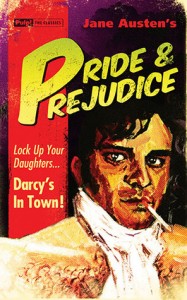

Pride and Prejudice by Jane Austen

Posted April 21, 2013 by Michael @ Knowledge Lost in Classic / 13 Comments

Pride and Prejudice by Jane AustenTitle: Pride and Prejudice (Goodreads)
Author: Jane Austen
Published: Pulp! The Classics, 1813
Pages: 320
Genres: Classic
My Copy: Personal Copy

Buy: AmazonBook Depository (or visit your local Indie bookstore)

Jane Austen’s Pride and Prejudice is often considered one of the greatest novels of all time; the story of proud William Darcy and the prejudices of Elizabeth Bennet. From Lizzie’s perspective their spirited courtship plays out on the page; in this witty comedy of manners, upbringing, morality, education, and marriage in early 19th century society.

Most of you would already know this story; you’ve probably seen an adaptation or two in your time. For me, I was never interested in reading this book, I knew what it was about but I never knew what to expect. Eventually I had to read this book, in part for university and because it’s a classic that will always remain on the 1001 Books You Must Read Before You Die List. This is the novel that just will not die; 200 years later since this was published the book still sits very often in the top ten in a lot of bookstores and other literary lists. It’s been adapted multiple times as well as been retold many times (highlights include Lost in Austen & The Lizzie Bennet Diaries). The novel has also inspired a range of other books including books by Georgette Heyer, Agatha Christie and Helen Fielding.

First of all I want to look at Jane Austen’s attempt to play with the traditional quest format to offer us this rather clever novel. Let’s look at the novel from a traditional storytelling point of view. The potential princes in this novel; Darcy was considered clever and cold, Mr Wickham was too hot, then there was Mr Collins, the one that could save the ‘castle’ who should be just right, but he was not warm but tepid and boring. The pattern is reshaped and slowly the princess’ heart has been won, even if she doesn’t know it straight away. Then Austen needs to make the suitor eligible to win over the heroine; so she sends him on a quest to win Lizzie’s heart. Then like all quest stories, the story ends abruptly, with a marriage and a happy ending. This ancient pattern only provided the basic story structure for Jane Austen to weave her story into.

The interesting thing about this novel is the fact that this book has no physical action in the entire book; the novel rather concerns itself with the complexity of courtship and marriage in the landowning classes in provincial England. Austen writes about the people she knows, doing the activities we would expect them to do. Yet she manages to write it with such wit and skill that the novel refreshing and remained so popular.

Elizabeth Bennet is clearly Austen’s favourite in the book; the character is stronger and smarter than even the men in the book. Yet she goes to great lengths to make sure that this is believable. While she is clever, Lizzie still has romance/the sublime on her mind; her references to the Lake Distracts could be considered evidence of this. I feel like Jane Austen is trying to show that a woman like Lizzie should be deserving of the family home more than someone like Mr Collins. The Bennet’s are not middle class in this novel; Mr Bennet doesn’t work, he is a man of leisure, landowners but without a son their property will be inherited by Mr Collins. So we have this impending doom (according to Mrs Bennet) with only one hope of saving the family, marriage. When Lizzie Bennet rejects Mr Collins and eventually marries Darcy, Austen tries to tell us that character matters more than rank when it comes to romance, but then there is still a whole lot to do with rank and class that remains within the novel.

At the start of the novel Lizzie and Darcy hate each other but by the end they are the perfect couple. So what is Austen trying to tell us with this change in momentum? To do this let’s look at the other relationships; First off there is some evidence that Mr and Mrs Bennet got married at a very young age, lust had brought the two together and there might have been a pregnancy. Now that the lust has cooled they find they have nothing in common. Mr Collins and Charlotte are almost the opposite; there is no passion in their marriage, it was more of a business arrangement, no kids and unhappy in their marriage. Mr Bingley and Jane are just smitten with each other; there is no real evidence that there is anything more than just an infatuation. So when it comes to Lizzie and Darcy, they are written as the opposite, they are not smitten, they have to make their way there. They develop a healthy respect and admiration as well as love. All the details are focused on Lizzie and Darcy; all the other characters are rather underdeveloped, they feel more like caricatures, yet we still need to look at the other couples to see what Austen was trying to achieve.

Now I want to look more at the writing and style rather than character and plot. Pride and Prejudice started off as an epistolary novel, it has been said that this was originally written as a series of letters; this is why there is a huge lack of character description. This is also a novel of wit so let’s focus more on how Jane Austen achieves that.

“It is a truth universally acknowledged, that a single man in possession of a good fortune must be in want of a wife.”

Looking at the very first line we get a sense of Austen’s ironical attacks; Bingley and Darcy both have women lined up but both don’t seem too keen to marry. Single men with large fortunes have the luxury of doing what they want. It is only Mrs Bennet that is trying to convince the reader that the opening line is indeed true. Just in the first few lines we can see the subtlety of Austen’s language. This book is full of other slight digs at society and it took me a second read through to really see them, but they are there and I suspect that is why this book continues to remain popular; no matter how many times you read this book there is still something to discover.

Jane Austen likes to dig at the concepts at Class and Courtship, but more so towards love and marriage. It is interesting to see that many people read this book at face value and just gloss over any attempt at irony in this book. This book is riddled with discursive and dramatic irony but to Jane Austen’s credit she was able to do it in such a subtle way that it can be easily overlooked or missed. For a cynical person like me, it was this irony that I respect the most. I love that you can read this book as a great romance or as an ironic look at love and marriage. While the irony plays out in the book, Jane Austen’s fundamental optimism makes sure no damage was done and the outcome is a happy one.

I expected Pride and Prejudice to be a romance, exploring the courtship of Lizzie and Darcy, which it is, but I was so pleased that there was so much more in this novel to explore. I read this novel and then went back and reread this novel right away; this was mainly because I needed to for Uni but I found this deliciously cynical voice come through the second time that changed my opinion of this book. I’m not sure if Jane Austen’s novels are always so ironic but if they are, she has found herself a new fan.


Ghostman by Roger Hobbs

Posted April 20, 2013 by Michael @ Knowledge Lost in Thriller / 0 Comments

Ghostman by Roger HobbsTitle: Ghostman (Goodreads)
Series: Ghostman #1
, 2012
Pages: 336
Buy: AmazonBook Depository (or visit your local Indie bookstore)

When a casino heist goes bad, there are a lot of loose ends to tidy up. Loose ends like a million dollars and only 48 hours to find it. The Ghostman is sent into find the money and make sure the crime isn’t connected back to his employer. Only problem is he is in the Wolf’s territory now and he wants the Ghostman’s head in a bag; if they can find him.

First of all, this is a pretty stereotypical heist novel, with all the normal thriller elements that you expect, the double crosses, the cops, the clearly laid out plan, it is all there in this book. So why did I enjoy this book more than I should have? The Ghostman, let’s just call him Jack Delton as that is the name he uses the most in the novel, is nothing really special. There isn’t much character development; he continues to remain an enigma the entire time. Yet there is something about him that I liked; he has the ability to hide in plain sight, to blend in and he is pretty much a grifter sent in to clean up the mess. He is also a pretentious book worm; he admits to reading a lot in the book and has a soft spot for Homer and epic Greek poetry. These elements of his character, and the fact he knows how to handle himself when things get rough, really come together to make a character I enjoyed reading about.

All other characters in the book were completely underdeveloped and just felt like backdrops that got in the way of Jack Delton’s tasks. But then again, you do need conflict and twists and turns to drive a story like this; there was nothing too shocking about the plot, I would have loved a good twist or maybe a darker narrative but all in all, Ghostman was a lot of fun to read.

This is Roger Hobbs’s debut novel and he is only 24 years old which makes you wonder; where did he learn all the skills to pull off a casino heist and cover it up? The detail put into the different ways of doing things was incredibly detailed, so much so that you can’t help but think this is the voice of experience. My main problem was that I felt like sometimes the author was dumbing down the information too much; I think he wanted to make sure every reader knew what was happening but the information felt over done.

Delton spends all this time tying up all the loose ends from the heist, that at times I thought things were going to end up incredibly neat and, to an extent, it did, but I was glad to see not everything goes to plan. I thought maybe Delton had a complex plan to get himself out of mess but instead he decided to live by the motto “Flectere si nequeo superos, Acheronta movebo” If I cannot move Heaven, I will raise Hell. Simple but effective, but then again that’s the book in a nutshell.

I still don’t have no idea what really made this book so enjoyable; there really isn’t much in the novel that was special, it all felt like it was done before. In the end I was just sucked into the story and enjoyed the ride; it is a good heist novel and I think it will give most thriller writers a run for their money. Sure it was predictable and nonsensical but sometimes you just need some light entertaining junk to read. It is still worth checking out, even if it is just to see what Roger Hobb can do and then spend some time trying to work out how he researched this book.


A Sport and A Pastime by James Salter

Posted April 19, 2013 by Michael @ Knowledge Lost in Erotica / 0 Comments

A Sport and A Pastime by James SalterTitle: A Sport and a Pastime (Goodreads)
Author: James Salter
Published: Farrar, Straus and Giroux, 1967
Pages: 200
Genres: Erotica
My Copy: Library Book

Buy: AmazonBook Depository (or visit your local Indie bookstore)

1950’s France, an American middle-class college drop-out Philip Dean begins a love with a young French girl. But this sad, tender story of their erotic affair has been captured by a witness, a self-consciously unreliable narrator. This narrator freely admits that some of the observations are his own fantasy of the couple making A Sport and A Pastime an intensely carnal account of this affair and in part a feverish dream.

James Salter’s writing in this book is really interesting; he creates this wonderful imagery with the scenery, the colours, the smells and when it comes to the erotic side of this story this continues in a way that never felt crude or overdone. Sure the descriptions might feel really tame for our generation but there is a real lyrical way about the whole book that really worked for me. I will admit that I’ve not heard of James Salter before but I’m very impressed with his style that I would be curious to read more.

The relationship with Philip Dean and the French girl, Anne-Marie, is just wonderfully portrayed; there is no sense of love between the two, only raw passion. Anne-Marie has a healthy sexual appetite and she wasn’t afraid to tell him what she wanted which I find a little rare, especially considering the year this was written. While she feels like she is dominating at time, there are other times she feel really submissive and I think Salter did a wonderful job in getting that balance right.

The unreliable narrator was tricky to get used to; a friend of Philip’s from Yale, he was on holidays enjoying regional France but he seemed rather obsessed with this affair.  You never quite know what is real and what is made up in his head, sometimes he will tell you but most of the time you are left wondering. It would be weird having a narrator standing beside the bed while you have sex so you have to assume that most of the sex is either his own fantasy or word of mouth.

I do like the way James Salter used this narrator to create this almost dreamlike story and I expect there is a lot more in the novel worth exploring. With a reread or two, I’m sure you will discover some interesting elements. I think Salter was trying to explore the emotions behind sex but sometimes that feels a little ambiguous; the tenderness, thrill, passion all come out rather clear but at times I thought there was an element of boredom and selfishness that was also coming out, just not as well.

A Sport and A Pastime is a wonderfully lyrical novel worth sinking your teeth into, the short sentences really give it a poetic feel throughout the whole book. I wasn’t sure what I was expecting but I am glad I gave it a try. I have to wonder why James Salter never had commercial success, was it because he was a misogynist? His style reminds me a bit Steinbeck and Hemingway and yet he isn’t as popular as the two. I’m not sure if I would read much more in the erotic genre but I will have to check out some Henry Miller or Anaïs Nin in the future.


Ex-Heroes by Peter Clines

Posted April 18, 2013 by Michael @ Knowledge Lost in Fantasy / 0 Comments

Ex-Heroes by Peter ClinesTitle: Ex-Heroes (Goodreads)
Author: Peter Clines
Series: Ex-Heroes #1
Published: Broadway, 2012
Pages: 274
Genres: Fantasy
My Copy: Personal Copy

Buy: AmazonBook Depository (or visit your local Indie bookstore)

There are not more no super villains for these Crusaders for justice but a zombie apocalypse has given them a new challenge. Hulled up in a film studio-turned-fortress, the Mount, these heroes do their best just to survive in a world overwhelmed but these hungry corpses. While the ex-humans walk the streets night and day these superheroes can no longer call themselves heroes, they are fighting to survive like everyone else; they are Ex-Heroes.

This book has been a little bit of a success story as of late, Peter Clines published the first two books of this trilogy with a tiny little publisher known as Permuted Press. But it was not until one of the editors of Ready Player One got sick of Goodreads recommending him this series did things change. After finally caving and reading Ex-Heroes this editor loved the book so much that he went out and acquired the series for Crown Publishing group. Now this book seems to pop up everywhere, and the new buzz has really brought new life into this book.

I really like the concept of superheroes in a zombie apocalypse; they are no longer heroes, they have to fight for survival just like everyone else. Yet there is a part of them that wants to still protect the innocent and they do try. There is this whole inner turmoil coming out in these ex-heroes that I love, this is the end of the world and while they want to be heroes again they need to think about their own lives as well. The conflict within themselves is what drew me to this novel the most.

Sure, there are other wonderful zombie apocalypse elements within the book, it is jammed pack with action and yet there is a story arc  that feels very much like a super villain’s rise to power which I think will develop over the next few books too. Also you will find a heap of nerd references in Ex-Heroes; not really to the same extent to Ready Player One but they are there and for a nerd like me they are always fun to discover.

Ex-Heroes feels like an attempt to try something new in the Zombie Apocalypse genre. Blending his love for Superheroes and Zombies, Peter Clines has produced this wonderful action-packed adventure that is worth checking out. I’m interested to see where the next couple of books take us and wish Clines best of luck for the future success of this series.


What it Was by George Pelecanos

Posted April 17, 2013 by Michael @ Knowledge Lost in Pulp / 0 Comments

What it Was by George PelecanosTitle: What it Was (Goodreads)
Author: George Pelecanos
Series: Derek Strange and Terry Quinn #5
Published: Back Bay Books, 2012
Pages: 243
Genres: Pulp
My Copy: Personal Copy

Buy: AmazonBook Depository (or visit your local Indie bookstore)

Derek Strange left the police department to set up shop as a private investigator while his old partner Frank “Hound Dog” Vaughn remained. When a young woman comes to Strange to help find a costume ring, it leads him right to Vaughn’s active homicide case. Now both of them are working together trying to find a ruthless killer known as Red Fury.

George Pelecanos is best known as a writer for The Wire; I will admit I’ve not watched the show in its entirety but I thought I will try one of his books. I picked up this book because it was accessible but soon found out it was book five in a series about Derek Strange & Frank Vaughn. Luckily enough this read like a standalone and still felt like I learnt enough about the two to enjoy this book.

This book reminds me of those 1970’s pulp movies, but I don’t think I’ve ever read a novel with that same feel. You have the typical cool, badass African American who goes around kicking ass and then you have his former partner who is as hard-boiled as they come but since he is a cop he does things by the book. This is almost like a buddy cop situation but because they are not working together it doesn’t turn into anything formulaic.

Pelecanos packs a lot of detail into this novel; the cars, the clothes and the action packed plot but most of all the music. I cannot help but wonder if George Pelecanos was obsessed with music at the time of writing this book, because it really came through. Not only does he mention songs, albums and artists but who was playing what instrument and a little review of the song according to the character. Never have I read such an obsession with music since American Psycho.

I’m not sure if Strange had an afro but I can’t imagine him any other way with his bellbottom pants; it really was an image driven novel. I think with all the work George Pelecanos did with TV helped him world build and paint a picture. There were some clunky parts of the book but nothing really that would detract from the enjoyment of Pelecanos hard-boiled style.

I want to read more books in this series, as well as try out some of his other standalone novels. While this was book five, it was enough to convince me to explore more of this author’s catalogue, but I can’t help but wonder if reading this series out of order was one of my major problems with the book. I hear many people talking about The Night Gardener, so maybe that will be my next step into George Pelecanos style.


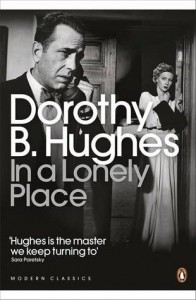
In A Lonely Place by Dorothy B. Hughes

Posted April 16, 2013 by Michael @ Knowledge Lost in Pulp / 0 Comments

In A Lonely Place by Dorothy B. HughesTitle: In A Lonely Place (Goodreads)
Author: Dorothy B. Hughes
Published: Penguin, 1947
Pages: 186
Genres: Pulp
My Copy: Personal Copy

Buy: AmazonBook Depository (or visit your local Indie bookstore)

Post World War II Los Angeles, the place you go to find the great American dream, but a stranger is preying on young women. Ex-airman, Dix Steele offers to help his detective friend solve the case and catch the serial killer in the hopes it will help him with the crime novel he is writing. Along the way he meets the luscious Laurel Gray—the femme fatale. The queen of noir, Dorothy B. Hughes blends psychological suspense with conventional hard-boiled and noir styles to give us In a Lonely Place.

Dorothy B. Hughes is known for her crime novels, 14 books primarily in the hard-boiled and noir genre and In a Lonely Place would be her most recognisable. This could be because of the Nicholas Ray adaptation starring Humphrey Bogart and Gloria Grahame or because of the psychological elements she brings to the genre. A lot of people will compare this novel with Patricia Highsmith’s The Talented Mr Ripley and while they are very similar I can’t help but thinking of the works of Jim Thompson as well. This might be because they all share the same influences Kafka, but more importantly Fyodor Dostoyevsky.

In a Lonely Place starts off like a typical noir novel and immediately the reader suspects there is something not quite right with Dix Steele. Could it be the fact that he is pretending to write a crime novel to sponge off his friends and family? Or the fact that he is a cynical misogynist? Maybe, but if you look a little closer at the writing you will find the answer. This is told in the first person but not by Dix Steele himself, like this person is with him at all times and sees everything Dix does. This sets up the psychological portrait of a woman-hating serial killer that really makes this novel work.

Towards the end of the book when Laurel Grey and the detective’s wife discover that Steele himself is the murderer, it comes as no great surprise. The book builds up like this big great reveal but there are so many elements throughout the book that give it away. I don’t think it was ever meant as a twist, just a way for Dix to find out himself. But through the whole book I was waiting and waiting for it to happen, I never really thought it would happen so late in the story.

The movie In a Lonely Place is vastly different to the book; for one thing Dix Steele is a successful screenwriter not a conman pretending to be a crime writer. Also true to Hollywood form, during the whole film everyone suspects Steele to be the killer but he turns out innocent. He still was a cynical vet but he never really had a chip on his shoulder towards the opposite sex, it felt like it was towards everyone. Also femme fatale Laurel Gray really wasn’t sassy or strong minded in the movie which was the biggest disappointment of them all.

Dorothy B. Hughes wanted to expose the misogyny of American society at that time with this book and she did a great job. The end result is this dark psychological tale that the movie adaptation butchered. Problem is I’ve seen the movie many times before finally reading the book, so it took me a long time to really get going. Both stories are worth checking out but trying to connect the film to the book doesn’t really do either of them any justice.

In a Lonely Place is worth reading; it’s nice to read a woman’s take on the noir genre. This really is a male dominated genre but women like Dorothy B. Hughes, Patricia Highsmith and Megan Abbott prove they can write noir just as well. The thing I loved most about this novel was that the influences of Fyodor Dostoyevsky’s Crime and Punishment were written all over this and yet Hughes made it her own. Make sure you check this novel out if you are a fan of hard-boiled, noir or even psychological thrillers.


Addition by Toni Jordan

Posted April 15, 2013 by Michael @ Knowledge Lost in Chick Lit / 0 Comments

Addition by Toni JordanTitle: Addition (Goodreads)
Author: Toni Jordan
Published: Sceptre, 2008
Pages: 243
Genres: Chick Lit
My Copy: Library Book

Buy: AmazonBook DepositoryKindle (or visit your local Indie bookstore)

Grace Lisa Vandenburg is obsessed with numbers; she counts everything. Her whole life is centred around numbers; how many banana’s to buy, how many bits of an orange cake to take, how many brushes to take for her hair or even teeth. Everything was organised but then something went wrong and now she survives on disability checks and tutoring. Here only real connection in the world was a portrait of Nikola Tesla; that is until she met Seamus Joseph O’Reilly who changed everything.

Addition is a quirky chick lit novel of predictability but still has a few elements I was not expecting. Firstly the obsession with Tesla meant that there was a lot of talk about this great twentieth-century inventor, which really was the main reason I enjoyed this book.  She talked a lot about Nikola Tesla and I found myself learning some interesting facts that lead to researching more about this great man. Honestly this might annoy people but I love a book that pushes me to explore more.

Grace’s OCD was also handled really well by the author; I was worried it would turn into something similar to The Silver Linings Playbook but I was wrong. Mental health is a difficult subject to write but I like the way Toni Jordan handled Grace’s obsession with numbers. There was a mix of emotions regarding Graces obsessive-compulsive disorder that were explored in the book from misunderstanding, accepting, desire to change, anger and hatred, as well as many more that I would expect Grace to experience while trying to live with an unusual compulsion. I could not imagine just what Grace would really be going through but I do think this might be a pretty faithful to what might happen.

The main focus of Addition is the quirks of Grace and the romance between her and Seamus; here is where everything starts to feel too much like everything I would expect from a chick lit novel. The romance blossoms in a typical funny and emotional way which I admit I was worried about. Seamus really does not understand this obsessive-compulsive disorder and tries to change Grace.  For a while there I thought he would succeed and this would have killed the book completely but then I realised that this was a chick lit novel and that meant there had to be a conflict to force the two characters to make a decision on if they should be together or not.

There was one major problem I had at the start of the book that forces me to wonder if I should bother continuing or not. This was the poor research, two facts in the book near the start of the book (maybe more) that really threw me. Both felt like really stupid mistakes that I don’t think were intentional that put a major dampener on my enjoyment. One was about the Big Ben using Roman numerals IIII instead of IV and the other was when she called Thomas Edison ‘the telephone guy’.

While I did have some issues with Addition, in the end I did end up really enjoying the story a lot more than I anticipated. It was quirky and funny, even if it was completely generic in all the other aspects. I really think the OCD helped this book the most, it was fascinating to see how Grace handled her situation, to the point where I thought there was nothing wrong with her and this wasn’t a mental health issue just a harmless obsession and quirk.


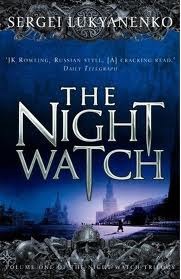
The Night Watch by Sergei Lukyanenko

Posted April 13, 2013 by Michael @ Knowledge Lost in Fantasy / 0 Comments

The Night Watch by Sergei LukyanenkoTitle: The Night Watch (Goodreads)
Author: Sergei Lukyanenko
Translator: Andrew Bromfield
Series: Watch #1
Published: Arrow, 1998
Pages: 576
Genres: Fantasy
My Copy: Library Book

Buy: AmazonBook Depository (or visit your local Indie bookstore)

Walking the streets of Moscow with the rest of the population are the Others, possessors of supernatural powers capable of entering the Twilight, a shadowy parallel that few know exists. Each Other owes allegiance to the Light or Dark side, The Night Watch follows Anton, a young Other of the Light, who must patrol the streets protecting ordinary people from the vampires and magicians of the Dark.

I’ve been trying more and more fantasy (in my quest to be a literary explorer) and with the success of some recent urban fantasy and The Lions of Al-Rassan, I thought I might try some Russian fantasy. This novel revolves around a confrontation between two opposing supernatural groups; the Night Watch, an organisation that polices the actions of the Dark Others, and the Day Watch, who police the Light Others. Now to help wrap your head around the novel, I first must explain just what are the Others; these are humans that while they live into the real world they can step into the Twilight (the supernatural world). Why do the Watch need to help police these two sides? The balance between Light and Dark must be kept at all times.

I thought my love of Russian literature would help me through this novel but in the end there was no saving this one. While the premise was excellent and the whole battle between good and evil in a police procedural type urban fantasy novel can really work (see The Dirty Streets of Heaven) but not in this book. Straight off the bat the whole book took a very long time to build momentum, I think I was a quarter of the way through the book when I started to enjoy it then Bam! a completely new story. Turns out these are three completely independent stories and each one of them was a very slow burn that ended too quickly. My major problem with the entire book that I had to spend so much time building the story then finally getting sucked into the plot only to have it end too soon.

There were so many interesting elements worth exploring, I would have liked to see more of the Post-Soviet Russia that this book (like most modern Russian literature) hints at but regrettably never really explored. Russia has this amazingly rich history that has sparked so many great novels and authors and I truly think Sergei Lukyanenko could be one of them with some work. Like Dostoyevsky, Lukyanenko tries to inject the novel with philosophical ideas on morality and this could have really worked in his favour had he stuck with one story right through to the end.

Personally I think Sergei Lukyanenko did not do himself any favours by dividing this book into three short tales; none of them really stood out and I really think the first of the three had the most potential if he explored it in greater detail and developed a more complex plot. The tension between Anton and Kostya Saushkin could have made for some really interesting philosophical discussion on morality, evil and the effects it has on the world around you. Plus the sexual tension between the two didn’t hurt either but that is when this short story ended abruptly. I felt disappointed at the miss opportunity.

The Night Watch really didn’t work for me; there was so much it could have done but I feel it shot itself in the foot when anything complex started to surface. On the front of the cover was a blurb that said “J.K. Rowling Russian style” which feels like a marketing ploy that I doubt it did itself any favours; it does not make me want to read the Harry Potter series. The second book in the pentalogy of Watches is called Day Watch which intrigues me but because it is broken into little stories as well, I think I will give it a miss. The Night Watch has left me with the need to explore some more of Sergei Lukyanenko’s novels but this is his most recent series, which makes me worry that he has not perfected his craft.


Infinite Jest by David Foster Wallace

Posted April 12, 2013 by Michael @ Knowledge Lost in Literary Fiction / 0 Comments

Infinite Jest by David Foster WallaceTitle: Infinite Jest (Goodreads)
Author: David Foster Wallace
Published: Back Bay Books, 1996
Pages: 1079
Genres: Literary Fiction
My Copy: Personal Copy

Buy: AmazonBook Depository (or visit your local Indie bookstore)

In the not so distant future, the residents of a Boston halfway house for recovering addicts and the students of the Enfield Tennis Academy both search for the master copy of a bizarre movie that is so entertaining the viewers die in a state of catatonic bliss. That movie is called Infinite Jest and it is said that anyone who watches it will lose all desire to do anything but watch it. This semi-parodic novel questions what entertainment is and why it dominates our lives.

I’m not going to lie, this book is both lengthy and difficult to read but in the end it is worth the effort. You will need three bookmarks for this book, one for where you are up to, another for the endnotes and the third for the timeline that sits around page 80. You do need to read the endnotes, this book relies heavily on them; they include definitions, side thoughts, in depth details and even a filmology. You will also need to know the timeline because David Foster Wallace likes to jump around a bit, so it helps to keep up. This is where it gets tricky; in the book’s future each year has a corporate sponsorship, so you have Year of the Whopper, Year of the Tucks Medicated Pad, Year of the Trial-Size Dove Bar and so on. It helps to know in what order the years are in so you can piece it all together. While all this might help you keep track of what’s going on there is still the fact that this book is piled with subplot after subplot and you will have to keep track of more characters than A Game of Thrones novel. You will need to keep notes and it might even be a good idea to get a study guide because this book will take you on a very interesting ride.

As I said before, this book is not easy; I took my time with it and slowly chipped away at this book for two months but I still think I’ve missed a lot. While there are some tangents that happen in the endnotes, this book jumps around so much that sometimes you get lost and have to go back. There shouldn’t be any shame in doing this as Wallace’s writing voice is a postmodern mixture of high- and low-brow linguistic traits which is very difficult to become familiar with. He also uses juxtaposes, colloquialisms and polysyllabic and highly esoteric words so you will need to spend some time researching.

Now that I’ve talked about the difficulties of reading the book, I should probably talk about my thoughts on it. Infinite Jest starts off rather dense, you really need to push through the first few hundred pages before things start to make any real sense. So why is this book considered a masterpiece, magnum opus or anything else it has been referred to? It’s not to read; rather it is a book that will challenge us, to rattle us out of complacency. For me I think David Foster Wallace has the ability to take something like substance addiction, recovery programs, depression, abuse, death, relationships, popular entertainment and even tennis and look at it in a very careful way. The way Wallace explores each topic may make you feel uncomfortable and it is confronting but you do gain a deeper understanding.  Yet the book doesn’t remain dry and depressing; Wallace has a very unique way of using humour to basically satirise the issues without making fun of them.

This book is a parody and comment on American culture, yet this is also a semi-autobiographical novel of the issues facing the author. Creating this funny but bitter sweet novel that I found difficult not to associate with the life of David Foster Wallace; his depression that lead to his suicide.  There is a lot going on in this novel and to go through all the major themes within this novel would probably turn this review into something too long to read so if you want to talk about themes I’ll leave that for the comments. So just a brief overview; the main character Hal Incandenza is an intelligent tennis prodigy dealing with the intense pressure put on him to succeed in a junior Tennis Academy, dealing with a drug addiction and the ongoing strain (both physical and emotional) to reach his full potential. While that is an understated summary, all the subplots makes it hard to cover, this is just the basis of the book.

Addiction and depression would be the two major themes in the most brutally confronting depiction of the struggles I’ve ever read. No other book has given me the insight like this one. I feel like the depiction of depression is often wrong in books and movies; depression is a complex thing, it’s not a state, it’s an overall feeling that can’t be shaked. One of the characters in the book; Kate tried to commit suicide because “[she] just didn’t want to feel this way anymore” and “[she’d] rather feel nothing than this”. This tragically honest view on depression really opened my eyes on the state of mind and the struggles that people dealing with depression go through, and for this only, Infinite Jest was worth reading.

The futuristic America created in Infinite Jest feels very much like western society now, just with the increased corporate involvement but that is the way the world is heading. I am reminded of dystopian classics with his satire of society and the social/cultural commentary. It really covers a lot of interesting topics and, while it is difficult, well worth reading.

This is one of those books I plan to re-read once I have a degree in Literature behind me; while I got a lot out of this novel, I am hit with the feeling that I’ve only scratched the surface. This is rather impressive novel overall, never have I seen a novel with over 60% of Goodreads users rating the book five stars and for good reason, the book covers a lot of topics and does it really well. Blending serious topics with an awkward sense of humour is balanced perfectly, and I highly recommend reading Infinite Jest; even if it is only to increase your pretentious levels.