Category: Regular Segments

Monthly Review – August 2014

Posted August 31, 2014 by Michael @ Knowledge Lost in Monthly Reading / 0 Comments

In cold bloodAs most people know, I have been on vacation to the United States. While this has a great six weeks off, it did come with some disadvantages. I may talk about all the bookshops I visited while in America in a future post but I am sad to say during this holiday I only managed to finish three books. While away, the book club read the true crime classic In Cold Blood by Truman Capote, a book I read before vacation so I wouldn’t miss out. I wasn’t able to get involved with the discussions but it was good to see it happening while I was enjoying myself.

Looking at the Literary Exploration book club, it is great to see things happening without my involvement. It looks like next month we will be preparing for the movie adaptation of Gone Girl for our Thriller theme. Obviously I’m talking about our great book club but if you are not aware, the book discussion and everything else happens over on the Goodreads forums, so feel free to join in there.

While I’m not happy with the amount of books I read, I really did enjoy the three books anyway. Cannot pick a highlight from The Paying Guests by Sarah Waters, The Year of Reading Dangerously by Andy Miller and Dept. of Speculation by Jenny Offill; you’ll just have to wait for the reviews. What have you been reading and what have your highlights been?

Read More


In Cold Blood by Truman Capote

Posted August 30, 2014 by Michael @ Knowledge Lost in Book of the Month, Non-Fiction / 0 Comments

In Cold Blood by Truman CapoteTitle: In Cold Blood (Goodreads)
Author: Truman Capote
Published: Penguin, 1965
Pages: 336
Genres: Non-Fiction
My Copy: Library Book

Buy: AmazonBook DepositoryKindle (or visit your local Indie bookstore)

In 1959 a farmer from Holcomb, Kansas was killed along with his wife and two of his four children by a couple of two-bit thieves. This brutal crime spawned a desperate search for the killers who left bloody footprints at the murder scene. From petty crime to mass murder, In Cold Blood tells the story from murder to the gallows where they were executed by hanging.

In the Truman Capote literary masterpiece, it is easy to consider In Cold Blood a crime novel; it has shades of pulp and southern gothic throughout the book. However this journalistic investigation has often been cited as the first and best example of the non-fiction genre known as true crime. While there have been true crime books before In Cold Blood, this book did redefine the genre. Capote likes to call his book a non-fiction novel which he defined in an interview with The New Your Times as “a narrative form that employed all techniques of fictional art, but was nevertheless immaculately factual”.

However this is not just a book about the brutal murder of the Clutter family; we also get a Capote’s depiction of rural America. Outside the details of the crime, the author paints a descriptive backdrop of Kansas, the way he sees it. Religion, masculinity, femininity, the nuclear family and small town communities all play a big part in developing the scene. When he talks about the crime, the reader gets to explore the psychological motivations of murder and awaiting execution.

There is the issue of mental illness that needs to be explored when talking about In Cold Blood. It is almost like Truman Capote wants to challenge the reader to consider if Perry and Dick suffered from an untreated mental illness. There are shade of delusional, depression, schizophrenia and a sociopathic personality that comes through when talking about these two people but as this is 1959 I expect no psychological consult or treatment were given to these men; the court rejected the request.

I expected a true crime book but I feel like In Cold Blood was trying to do something similar to One Flew Over the Cuckoo’s Nest by Ken Kesey and The Bell Jar by Sylvia Plath. I was very impressed with this book and I feel like Capote may have ruined true crime and even narrative non-fiction for the rest of the authors in these genres. Capote’s investigational skills and mastery over the written word is what makes this book a masterpiece.


Monthly Review – July 2014

Posted July 31, 2014 by Michael @ Knowledge Lost in Monthly Reading / 0 Comments

The Monk -This month we looked at the gothic and surprisingly satirical novel The Monk by Matthew Lewis. This was a lot of fun for me; I’m becoming a big fan of Juvenalian satire and was surprised to see what this gothic classic did with its social critique. While it might have been a little difficult for others, it is always great to leave our comfort zones and read something great. Next month we are dipping into some non-fiction when we read In Cold Blood by Truman Capote, which is considered one of the best books in the true crime genre.

As most might know, I’m currently on vacation so I have scheduled a whole lot of posts. This means, I’m not entirely sure what the next book will be but the theme was Thriller. At the point of scheduling it looked like a race between Gone Girl by Gillian Flynn and Child 44 by Tom Rob Smith. I have had a good reading month but I as this was written half way through the month I won’t share what I read this month. However I did enjoy The Monk and Wicked: The Life and Times of the Wicked Witch of the West by Gregory Maguire. What have you been reading this month and what were the highlights?

Read More


Monthly Review – June 2014

Posted June 30, 2014 by Michael @ Knowledge Lost in Monthly Reading / 2 Comments

DivergentAs we close out the first half of 2014, I thought I might give a quick update on what’s been happening with the Literary Exploration Reading Challenge. I’m really impressed with the book club’s efforts so far, with over thousand books being read by 106 participants with a 39% completion rate so far. This means we have a lot to catch up on; personally I’ve managed to complete 23 of my 36 books and almost tempted to go for another round. It’s been a lot of fun and I’m pleased to see how many people have enjoyed reading out of their comfort zones.

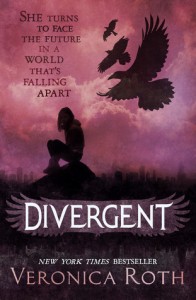
This month’s book club book Divergent had some really interesting reactions; not many liked it but I really enjoyed the discussions. I don’t want to say too much about the book but it was fun live tweeting this book and I was very pleased with my review. Next month we return to book that will probably get a better reaction when we read a gothic classic, The Monk by Matthew Lewis.

I had a very interesting reading month and I think I have to blame two amazing books for this, The Fictional Woman by Tara Moss and Grasshopper Jungle by Andrew Smith. Both books have altered the way I view books, especially The Fictional Woman; I tend to pick up on the feminist ideals in most books now and you will notice this will come across in all future reviews. Also you might have noticed that thanks to my book blogging manifesto that I’m writing more non-review posts too. I hope this is a positive change in my blogging and my reviews as well.

Read More


Divergent by Veronica Roth

Posted June 29, 2014 by Michael @ Knowledge Lost in Book of the Month, Dystopia, Young Adult / 6 Comments

Divergent by Veronica RothTitle: Divergent (Goodreads)
Author: Veronica Roth
Series: Divergent #1
Published: Harper Collins, 2011
Pages: 489
Genres: Dystopia, Young Adult
My Copy: Library Book

Buy: AmazonBook DepositoryKindle (or visit your local Indie bookstore)

A futuristic, post-apocalyptic Chicago is where the dystopian world of Divergent is set; where everyone is divided into five factions. At 16 you are required to take an aptitude test; this will determine which faction you are best suited for. Abnegation are selfless, Amity are peaceful, Candour are honest, Dauntless are brave and Erudite are intelligent. Following the aptitude test comes the Choosing Day (terrible name) where you are required to pick which faction you wish to belong to based on your score and personal preference. For some, like Celeb Prior this means giving up his family and moving from Abnegation to Erudite.

The novel, Divergent follows Beatrice Prior (later known as Tris) who is one of those rare people who have to hide the fact that the aptitude test was inconclusive. In this world she is known as divergent and would be considered an outcast and a danger to society if this was to come out. Tris’ test shows she has an aptitude towards three factions; Dauntless, Erudite and Abnegation. She picks Dauntless where she is trained up to be courageous and reckless, tools she believes maybe useful if her test scores ever come out.

I read this novel as a social critique; the idea of cliques and groups taken to the extreme. You know what I’m talking about; society likes to create rivals, in sports teams, smart phones, gaming consoles, etc., but more importantly when it comes to DC verse Marvel comic’s social-political stands. In this world the Abnegation are the governing body, since they are the selfless they are tasked with looking after everyone. However the Erudite are conspiring to take control, and a step that they believe will advance the world both socially and technologically.

This makes the novel sound more complex that it actually is; in reality I found that Veronica Roth liked to wave the symbolism in the readers face forcing them to take notice. It is like a child who is proud at what she has produced; jumping up and down and explaining everything detail over and over again in the hopes that we will think she is brilliant. The symbolism is prominent in the story, she didn’t need to try and draw extra attention to it. Most readers are smart enough to figure it out and those who don’t are only interested in the plot.

Take the title of the novel and the factions, if you look at abnegation, amity, candour, dauntless, erudite and divergent in the dictionary you pretty much how the entire book worked out already. However Roth reminded us again and again what each word meant. Reminds me of that old writing tip ‘show, don’t tell’. While this is not always true, I feel within the context of Divergent, it would have been a better solution.

There are a lot of interesting themes within the novel and I really wish Roth had let people discover them on their own; I don’t like having everything pointed out to me. The whole concept of social structures and classes would have given a literary theorist in the school of Marxism a lot to work with. There are other themes including courage verse recklessness, power, choices, secrets and even guilt that made the novel bearable.

While the novel has a protagonist fighting against a totalitarian state, the book is full of Christian themes and concepts. At times you can see Abnegation being depicted as weird/cult-like faction in the back drop of a controlling society but then they come through as righteous and merciful. There is a Christian misconception that stems from the Age of Enlightenment, which seems relevant in some radical churches that still believe that intellectualism is a dangerous thing. This comes across in the novel as well as some other Christian ideals. Veronica Roth states she is a Christian but has also claimed that Divergent is not a religious novel. She even believes that most Christians would consider the novel to be profane. It is unclear if Roth is an advocate for intellectualism or warning the reader of its dangers.

Yet another issue I found with Divergent was the characters and world building felt a little flat; I think Roth spent too much time explaining everything that the plot and the setting suffered. I didn’t care what happened to any of the characters; in fact thought they were all two dimensional, which is possibly the case with most of the characters. The idea of each faction just acting like a giant cookie cutter, forcing everyone to fit into that mould is clear.  The divergents (I’m not going to name them) should have been richer, more fleshed out characters. The dystopian world borrows heavily from 1984 and The Hunger Games although it sometimes forgets this and reverts back to a more generic present day world. Then realising the book has gotten off track reverts to borrow again from previous dystopian novels.

Finally I would like to focus a little on the feminist qualities of Divergent, since reading The Fictional Woman this seems to be an area of focus for me. The concept of a woman trying to figure out her place in the world is a positive step for equality; however Divergent also reverts to two old archetypes that need to stop. I’m talking about the idea of a wise intelligent older woman being depicted as a witch or evil character and the female heroine needs to have a female enemy. Divergent does tackle the idea of what happens to a woman when she becomes more successful than the men she is competing against, and while it is not pretty it is a very real issue that needs to be looked at more often.

I would have liked this novel a lot more if the message was subtle and ambiguous; I just feel like everything got over done. As a reader I like to look for the messages but if the author hits me over the head with it and then proceeds to explain everything I lose interest. Dystopian fiction has a unique ability to tackle social issues and just because a book is aimed for a young adult audience doesn’t mean they need to be everything explained to them. I have to wonder how many YA lovers read the book for the themes rather than the plot. I suspect the majority of them read for the story and they probably prefer not to be stepped through themes either. If Veronica Roth left the themes in place and focused on the plot, this may have been a better book.


Monthly Review – May 2014

Posted May 31, 2014 by Michael @ Knowledge Lost in Monthly Reading / 2 Comments

2998May has been a big month. Firstly, I participated in a 24-hour read-a-thon at the end of April, which put my very behind in my reviewing. I think I went into May with eleven reviews I still needed to write; I know the 24-hour read-a-thon was not the sole reason to be so far behind. I get on a roll with my reading and it is much more fun reading than writing reviews. Also in this month I wrote my book blogging manifesto, which resulted in big changes for myself. I have since started writing every day and this has caused an increase in blog posts. Finally there was Armchair BEA, which I participated in for the third year. All in all, a great month for blogging.

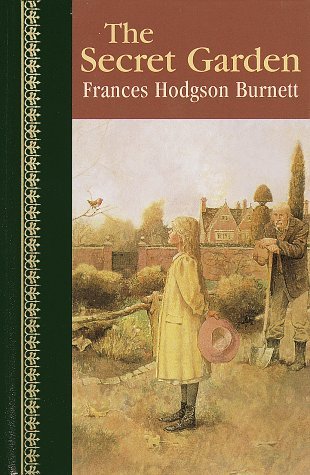
Looking at the Literary Exploration book club, we tackled children’s literature and read Frances Hodgson Burnett’s classic The Secret Garden. I loved this book, not because it was children’s literature but what it did with the Gothic, the psychological and The Romantic. I’m glad we finally took on children’s literature and look forward to when I do it again. As a reminder next month we are moving onto young adult literature and reading Divergent by Veronica Roth and I’m not looking forward to it but will be reading.

This month has not only been a good month for blogging but also a decent month for reading. I completed 12 books this month and highlights include, not only The Secret Garden but also Young Romantics by Daisy Hay, The Love Affairs of Nathaniel P by Adelle Waldman and The Sex Lives of Siamese Twins by Irvine Welsh. However, the book that stuck with me the most was How To Talk To A Widower by Jonathan Tropper, however my review won’t be out for another few days.

Read More


Monthly Review – April 2014

Posted April 30, 2014 by Michael @ Knowledge Lost in Monthly Reading / 2 Comments

The MagiciansApril has been an interesting month; I expected to get heaps of reading done and, to one extent, I have done just that. But also, I got rather sick during my time off and that did limit some of the reading time I was so excited about. Overall April was a great month, with plenty of books read and some extra time off work. I hope everyone else’s April was just as fruitful without any illnesses.

This month our book club read was The Magicians by Lev Grossman as part of our fantasy challenge. This was an interesting selection, more coming of age than fantasy, check out my review to find out what I thought. Next month we are going to dive into The Secret Garden by Frances Hodgson Burnett. This is a classic novel and is part of our children’s literature theme; I can’t remember what this is about so this will be a new experience for me and I will also be using the novel for The Literary Exploration Reading Challenge. If you’re not aware, the book discussion and everything else will be happening over on the Goodreads forums, so feel free to join in there.

I read some decent books in April included the first Veronica Mars novel The Thousand-Dollar Tan Line plus others along the lines of The Fever by Megan Abbott, The Wives of Los Alamos and Summer House with Swimming Pool by Herman Koch. The biggest highlight will have to be The Sorrows of Young Werther by Johann Wolfgang von Goethe, which will probably get read over and over again. What have you been reading this month and what were the highlights?

Read More


The Magicians by Lev Grossman

Posted April 29, 2014 by Michael @ Knowledge Lost in Book of the Month, Fantasy / 4 Comments

The Magicians by Lev GrossmanTitle: The Magicians (Goodreads)
Author: Lev Grossman
Series: The Magicians #1
Published: Thorndike Press, 2009
Pages: 691
Genres: Fantasy
My Copy: Library Book

Buy: AmazonBook DepositoryKindle (or visit your local Indie bookstore)

Quentin Coldwater is about to graduate high school; his future is catching up with him.  Suddenly an offer to a very exclusive private college has become a real possibility, but this is no ordinary university, this is a school of magic. Not only will Quentin have the normal college experience of sex, love, booze and friendship, he will also discover his magical abilities. Not just a coming-of-age novel, Quentin will also discover that the world of Fillory from a children’s fantasy series he obsesses over is very real.

Lev Grossman’s The Magicians on the surface reads like a cliché fantasy novel but there is something deeper here. If you think of The Magicians as a homage to series like Harry Potter, The Golden Compass and Narnia, you can focus on the coming-of-age element of the novel. I found similarities to The Neverending Story but if I looked deeper I would say this is more of a magical version of The Catcher in the Rye. Quentin Coldwater follows the Holden Caulfield archetype, full of angst, self-loathing and all the normal teenage boy awkwardness, almost to the point where he could be considered an antihero.

Quentin not only has to work through his new found magical abilities, this only takes a side plot to what is really happening in The Magicians. The novel depicts and often amplifies the prototypical teenage boy experience, the depression, angst and emotional carelessness. The idea of magic being a gift turns out to be more a curse for Quentin. Unlike Harry Potter this novel looks at the magic being a curse, choosing Brakebills to get an education was possibly a downfall in his adolescent life, or at least that would be how Quentin will view it.

This is not an escapist novel; in many cases The Magicians is anti-fantasy. Viewing magic as a curse was an interesting way to view life and the fantasy genre. While it does this in a very interesting way, the homage to children’s fantasy novels was a bit over the top, while trying to avoid being a cliché; it ended up falling face first into the formulaic. I would have liked to explore the ideas of education and growing up with a gift/curse more than the actual fantasy elements but that might have risked alienating the target audience.

The Magicians is not without its flaws; in fact this novel could have been so much better if it took a more focused approach. The coming of age elements were interesting, the homage and Fillory parts of the novel were annoying and I think it would have worked out better without them. If the next books in the series continue to explore magic as a curse, I will gladly read it but I’m not interested in the Fillory story arch.


Monthly Review – March 2014

Posted March 31, 2014 by Michael @ Knowledge Lost in Monthly Reading / 0 Comments

middlesex

As March comes to a close it is time to look at our reading journey for the month again. This month we took a look at Middlesex by Jeffrey Eugenides, a fascinating look into Greek heritage and intersexuality. I hope everyone has had a wonderful month of reading and had time to fit this award-winning novel into their busy schedule. Still a lot of action happening with the reading challenge as well; looks like two hundred books been added this month. For those who don’t know about the reading challenge, there is still time to join in the fun, so check out my post here.

A reminder that next month’s book will be The Magician by Levi Grossman for our fantasy theme. I haven’t read this novel before but I’ve heard good things. Marketed as Harry Potter for adults, which makes me a little worried. I’ve not read Harry Potter before but always cautious when a book is marketed to be the next of anything.

Highlights for my month’s reading included Middlesex of course but also By Blood We Live by Glen Duncan, and Alif the Unseen by G. Wilson Willow. The biggest highlight was Truman Capote’s Breakfast at Tiffany’s, an exciting novella that surpassed all my expectations; heaps better than the movie. What have you been reading this month and what were the highlights?

Read More