
 Title: Middlesex (Goodreads)
Author: Jeffrey Eugenides
Published: Bloomsbury, 2002
Pages: 529
Genres: Literary Fiction
Buy: Amazon, Book Depository, Kindle (or visit your local Indie bookstore)
When Jeffrey Eugenides set out to write Middlesex he wanted to “[tell] epic events in the third person and psychosexual events in the first person”. He had decided that the voice “had to render the experience of a teenage girl and an adult man, or an adult male-identified hermaphrodite”. This was no easy task; he had to seek expert advice about intersexuality, sexology, and the formation of gender identity. His motivation came from reading the 1980 memoir Herculine Barbin and being unsatisfied by the lack of detail about intersex anatomy and his emotions.
”I was born twice: first, as a baby girl, on a remarkably smogless Detroit day in January of 1960; and then again, as a teenage boy, in an emergency room near Petoskey, Michigan, in August of 1974.”
If you’ve read Jeffrey Eugenides before you will know he doesn’t just stop at one issue, Middlesex is also loosely based on his life and is used to explore his Greek Heritage. While the book’s main protagonist is Cal Stephanides, Middlesex is a family saga that explores the impact of a mutated gene over three generations. Starting with Cal’s grandparents, the novel looks at their escape from the ongoing Greco-Turkish War and emigrating from Smyrna in Asia Minor to the United States. This section has similar themes to most immigration stories, looking at Greek and US culture in the 1920’s as well as their efforts to assimilate into American society. However this is overshadowed by the fact that Cal’s grandparents are also brother and sister.
Middlesex continues to follow the Stephanides family through the story of Cal’s parents and eventually his life. While the reader gets glimpses of Cal’s life throughout the novel, the last part is where we really explore how the 5-alpha-reductase deficiency (a recessive condition that caused him to be born with female characteristics) impacted his life. While I got the impression that this was the main focus of the novel and to some extent it is, I was expecting to explore the struggle and emotions behind his condition to a greater extent.
Jeffrey Eugenides has a lot going on his novels and you really need to be a literary critic to enjoy Middlesex to the full extent. I love Eugenides because he is too smart for his own good, on a basic level you can enjoy his novels but there is so much going on underneath that rereading is almost essential. Middlesex is a family saga but there are elements of romance, history, coming of age and, because of his Greek heritage, tragicomedy. You could spend hours exploring the hysterical realism and metafictional aspects from this book. For example; does Cal’s condition have any bearing on where he is narrating this novel from? Berlin, a city that also was divided into two (East and West). Also, why does the narrative style switch between first and third person? Some parts of the story are told in first person but Cal would never have been able to recount what happened in that kind of detail. Is this to evoke confusion within the reader, forcing them to just feel a fraction of what Cal must be feeling?
This is an incredibly complex novel and I feel like I’ve only scratched the surface of what Jeffrey Eugenides has done. This is in fact the third of his novels I’ve read and sadly that is all of them for now. While I did enjoy Middlesex I found more joy from The Virgin Suicides (which deals with suicide) and The Marriage Plot (dealing with mental illness). I really appreciate the themes Eugenides explores and the complexities of his novels, but personal opinion is going against the norm here. Middlesex is probably his most recognised novel; it even won the Pulitzer Prize for Fiction.
Don’t let the complexity of Middlesex put you off reading this fantastic novel; sure, there is a lot there but it still worth picking up. You can spend as much time as you want exploring its depths but in the end you’ll come away with something. It is a compelling read that will stay with you well after finishing it. This is the perfect type of novel to pick up for a book club.

 Hard to believe that the first month of 2014 is over, it has been amazing to see how much excitement people are having towards
  Title: Tinker, Tailor, Soldier, Spy (
 This is the end of 2013 and what a great year we have had. Let’s have a quick look back at the year for the book club on
  Title: And Then They Were None (
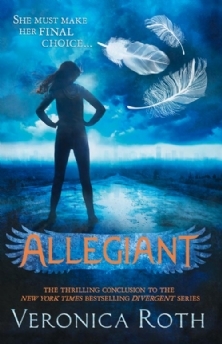 The faction-based society that Tris Prior once believed in is shattered—fractured by violence and power struggles and scarred by loss and betrayal. Told from a riveting dual perspective, Allegiant, by #1 New York Times best-selling author Veronica Roth, brings the Divergent series to a powerful conclusion while revealing the secrets of the dystopian world that has captivated millions of readers in Divergent and Insurgent.
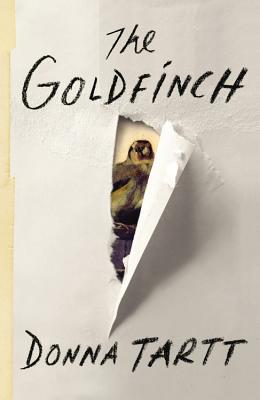 The Goldfinch follows a young boy in New York City, who miraculously survives an accident that takes the life of his mother. Alone and determined to avoid being taken in by the city as an orphan, Theo scrambles between nights in friends’ apartments and on the city streets. He becomes entranced by the one thing that reminds him of his mother, a small, mysteriously captivating painting that soon draws him into the art underworld.
 Bridget Jones is back! Set in the present, Mad About the Boy will explore a different phase in Bridget’s life with an entirely new scenario. Pondering these and other modern dilemmas, Bridget Jones stumbles through the challenges of loss, single motherhood, tweeting, texting, technology, and rediscovering her sexuality in—Warning! Bad, outdated phrase approaching!—middle age.
 If Elizabeth Bennet had the washing of her own petticoats, Sarah often thought, she’d most likely be a sight more careful with them. Jo Baker’s
 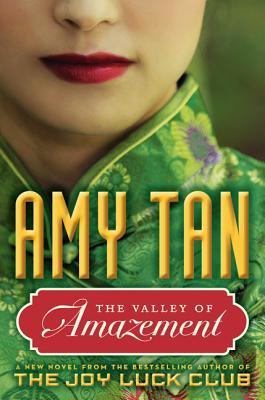 Spanning fifty years and two continents, The Valley of Amazement is a deeply moving narrative of family secrets, the legacy of trauma, and the profound connections between mothers and daughters, that returns readers to the compelling territory Amy Tan so expertly mapped in The Joy Luck Club. With her characteristic wisdom, grace, and humour, she conjures a story of the inheritance of love, its mysteries and senses, its illusions and truths.
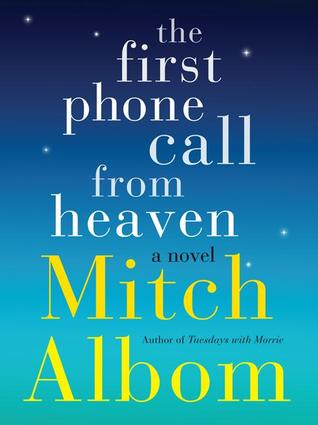 The First Phone Call from Heaven tells the story of a small town on Lake Michigan that gets worldwide attention when its citizens start receiving phone calls from the afterlife. Is it the greatest miracle ever or a massive hoax? Sully Harding, a grief-stricken single father, is determined to find out. An allegory about the power of belief–and a page-turner that will touch your soul—Mitch Albom’s masterful storytelling has never been so moving and unexpected.
 Bellman & Black is a heart-thumpingly perfect ghost story, beautifully and irresistibly written, its ratcheting tension exquisitely calibrated line by line. Its hero is William Bellman, who, as a boy of 11, killed a shiny black rook with a catapult, and who grew up to be someone, his neighbours think, who “could go to the good or the bad.” And indeed, although William Bellman’s life at first seems blessed—he has a happy marriage to a beautiful woman, becomes father to a brood of bright, strong children, and thrives in business—one by one, people around him die.
 Pawn is the first book in The Blackcoat Rebellion series; You can be a VII, if you give up everything. For Kitty Doe, it seems like an easy choice. She can either spend her life as a III in misery, looked down upon by the higher ranks and forced to leave the people she loves, or she can become a VII and join the most powerful family in the country.
 His whole life, Danny Kelly’s only wanted one thing: to win Olympic gold. Everything he’s ever done – every thought, every dream, every action – takes him closer to that moment of glory, of vindication, when the world will see him for what he is: the fastest, the strongest and the best. His life has been a preparation for that moment. A searing and provocative novel by the acclaimed author of the international bestseller
  A compulsively readable, deeply human novel that examines our most basic and unquenchable emotion: want. With his critically acclaimed first novel, Jonathan Miles was widely praised as a comic genius “after something bigger” whose fiction was “not just philosophically but emotionally rewarding”. With a satirist’s eye and a romantic’s heart, Miles captures the morass and comedy of contemporary life in all its excess. Bold, unblinking, unforgettable in its irony and pathos, Want Not is a wicked, bighearted literary novel that confirms the arrival of a major voice in American fiction.
 One book. Two readers. A world of mystery, menace, and desire. A young woman picks up a book left behind by a stranger. Inside it are his margin notes, which reveal a reader entranced by the story and by its mysterious author. She responds with notes of her own, leaving the book for the stranger, and so begins an unlikely conversation that plunges them both into the unknown. S., conceived by filmmaker J. J. Abrams and written by award-winning novelist Doug Dorst, is the chronicle of two readers finding each other in the margins of a book and enmeshing themselves in a deadly struggle between forces they don’t understand, and it is also Abrams and Dorst’s love letter to the written word.
 It’s a night like any other on board the Icarus. Then, catastrophe strikes: the massive luxury spaceliner is yanked out of hyperspace and plummets into the nearest planet. Lilac LaRoux and Tarver Merendsen survive. And they seem to be alone. A timeless love story, These Broken Stars sets into motion a sweeping science fiction series of companion novels. The Starbound Trilogy: Three worlds. Three love stories. One enemy.
 Mickey Haller gets the text, “Call me ASAP – 187,” and the California penal code for murder immediately gets his attention. Murder cases have the highest stakes and the biggest paydays, and they always mean Haller has to be at the top of his game. Haunted by the ghosts of his past, Mickey must work tirelessly and bring all his skill to bear on a case that could mean his ultimate redemption or proof of his ultimate guilt. The Gods of Guilt shows once again why “Michael Connelly excels, easily surpassing John Grisham in the building of courtroom suspense”.
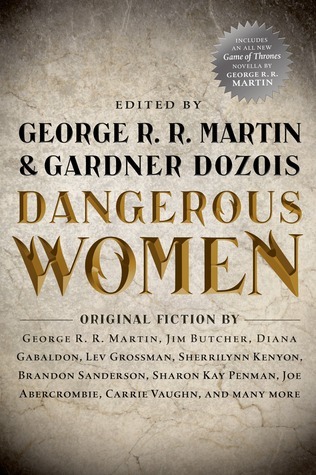 All new and original to this volume, the 21 stories in Dangerous Women include work by twelve New York Times bestsellers, and seven stories set in the authors’ bestselling continuities—including a new “Outlander” story by Diana Gabaldon, a tale of Harry Dresden’s world by Jim Butcher, a story from Lev Grossman set in the world of The Magicians, and a 35,000-word novella by George R. R. Martin about the Dance of the Dragons, the vast civil war that tore Westeros apart nearly two centuries before the events of A Game of Thrones. Also included are original stories of dangerous women–heroines and villains alike–by Brandon Sanderson, Joe Abercrombie, Lawrence Block, and many others.
 Now that November is coming to an end, I feel like I need to breathe a sigh of relief. I feel like I’ve been in a major reading slump during this month, but on reflecting it wasn’t as bad as I originally thought, there was a period of a few weeks where I struggled to finish anything but in the end I was able to manage nine books; not too bad.
 Title: The Bone People (