The Gap of Time by Jeanette Winterson

Posted June 2, 2016 by Michael @ Knowledge Lost in Contemporary / 0 Comments

The Gap of Time by Jeanette WintersonTitle: The Gap of Time (Goodreads)
Author: Jeanette Winterson
Series: Hogarth Shakespeare
Published: Hogarth, 2015
Pages: 320
Genres: Contemporary
My Copy: Library Book

Buy: AmazonBook DepositoryKindle (or visit your local Indie bookstore)

I have not read many of Shakespeare’s plays. I remember in high school I did do Romeo and Juliet and all I remember is watching the movie. Since starting my reading journey, I have now read Macbeth and Antony and Cleopatra. Hogarth have announced that they will be releasing modern retellings (they are calling them cover versions) of Shakespeare plays in celebration of the 400th anniversary of his passing. This will be including books by Howard Jacobson, Anne Tyler, Margaret Atwood and Jeanette Winterson. The first novel in this series is Jeanette Winterson’s interpretation of The Winter’s Tale called The Gap of Time.

I had to read The Gap of Time for book club and I will admit I was nervous, having never read the original play, but was happy to finally check out something by Jeanette Winterson. I am not sure if not reading The Winter’s Tale, put me at a disadvantage but I approached this book as a new story, not knowing what parts are influenced directly from the original text. I noticed many themes of identity, jealousy, forgiveness, parenting, power, race and sexuality but unsure if this was the work of Winterson. I know Jeanette Winterson often explores sexual identity in her novels but that does not mean William Shakespeare did not have an interest in the topic.

I read this book more like a coming of age story, exploring the idea of family in a modern day setting. There are elements of romance but for the most part it was a story of discovery and identity. It was playful (with quotes from Shakespeare in the text) and at times tragic. I think this is a balance that Shakespeare does really well in the plays I have read and Jeanette Winterson seemed to capture this really well in The Gap of Time.

I found this to be an enjoyable novel even if I could not compare it to the original text. I am impressed with Jeanette Winterson but I would be more interested in checking out what she can do without being constrained to a pre-set plot. Oranges Are Not the Only Fruit and Sexing the Cherry are both books I would love to read in the near future. As for the Hogarth cover versions, I am not sure how many I will read. There are some great authors being selected but I think reading the original text beforehand would be a huge advantage. Only problem is, I have a huge reading list already and not sure when I will get a chance to read more Shakespeare.


On My Bookish Existential Crisis

Posted May 31, 2016 by Michael @ Knowledge Lost in Project 5000 / 8 Comments

lots-of-booksHave you ever stopped to think about just how many books you may read in your lifetime? I have, and I had an existential crisis thinking about it. It all happened when a BookTube friend (time to read!) was talking to me about the amount of books she will read in her lifetime. I was sitting in a church thinking about the numbers and I began to freak out. My wife got really worried and obviously asked me what was wrong. I said that if I read a hundred books for fifty years I will only read five thousand books and this is not enough books.

I freaked out about the numbers for a few days and while I do not recommend having an existential crisis, I think it is very valuable to think about your reading in terms of numbers. Think about the books you want to read and the books you have read. Does your reading history reflect the type of books you want to read, or are you willing to try everything. I am of the believe that there is literary merit in all genres but that does not mean I want to spend my time reading books in those genres trying to find something great.

I have a reading goal of reading the entire 1001 Books you must Read Before you Die list, which would be a fifth of my reading journey. But then you think about the changes that are made in each update (why has there not been an update recently?), this list might end up consuming a quarter of your reading journey if you pay attention to all the books that were on the list.  The 1001 books list has served me well in the past, especially when I started my reading journey. This list gives me a way to close reading gaps and the chance to try different genres and styles to see what I like. I know now what my reading tastes are, so I often wonder if this list still has a purpose in my reading journey.

Having thought about the amount of books I will or will not read in my life, I decided I needed to focus on what I want to read. I have a limited amount of time, so I should be reading what I want to read. I began a reading project which I called Project 5000, to remind myself to be more focused. My plan is to read what interests me and remind myself not to waste time on books that do not instantly grab my attention. I talk a lot about Project 5000 a lot on BookTube and on Twitter, because I was looking at ways to remind myself to be more focused in my reading.

The suggestion I was given was to pick ten books and put it on my nightstand, and only allow myself to read from those choices. This still gives me a little variety and allows me to pick books that are interesting me at the time. It also means that I can feel like I am accomplishing something as I watch the ten books dwindle down to nothing. I want to be reading what interest me but I also need to find a balance between my main literary interests and trying other books that sound great.

I know I am interested particularly with post-war literature. By this I mean post-World War 2 till the end of the cold war. There are so many changes happening in the world that fascinate me. From the birth of pulp literature, counter-culture, punk rock, dirty realism and post modernism. There are so many interesting socio-political event and technological advances that helped shaped the world. The idea of impending doom allowed for some interesting changes in people and literature. While my reading extends to other topics, like transgressive and translated literature, I am just fascinated by the world before the internet closed the gaps in globalisation.

My first ten picks

  1. City on Fire by Garth Risk
  2. Fever at Dawn by Péter Gárdos (translated by Liz Szasz)
  3. Chess by Stefan Zweig (translated by Anthea Bell)
  4. The Dead Lake by Hamid Ismailov (translated by Andrew Bromfield)
  5. Madame Bovary by Gustave Flaubert (translated by Christopher Moncrieff)
  6. Nightwood by Djuna Barnes
  7. Don Quixote by Miguel de Cervantes (translated by Edith Grossman)
  8. Ask the Dust by John Fante
  9. When the Doves Disappeared by Sofi Oksanen (translated by Lola Rogers)
  10. Solzhenitsyn : A Soul in Exile by Joseph Pearce

I was very happy with the choices I made, I thought it was an accurate representation of what I wanted to read and I had found a solution that would work for me. However this was not the case, first of all I had a huge pile of books from the library waiting for me to pick up. This threw a small spanner in the works of my reading but ultimately I did not want it to take away from my focus. While I did detour with the library books, I am up to my last two books from the list, When the Doves Disappeared and Solzhenitsyn : A Soul in Exile.

I learnt that organisation is impossible when it comes to reading, I need to allow for library books, book-club and other random mishaps to take me on a detour but I will always end up getting back to the books on my nightstand. I have no idea how to fit re-reading into Project 5000; that is another complex question that I need to answer. It is a struggle to focus on the books I have picked and not get distracted by other books but I think I am better off in the long run. I have picked my next ten books to put on my nightstand and I do hope this solution continues to work for me. Allowing me to plan my reading and still give me the freedom I desire.


The Tsar of Love and Techno by Anthony Marra

Posted May 25, 2016 by Michael @ Knowledge Lost in Short Stories / 4 Comments

The Tsar of Love and Techno by Anthony MarraTitle: The Tsar of Love and Techno (Goodreads)
Author: Anthony Marra
Published: Hogarth, 2015
Pages: 320
Genres: Short Stories
My Copy: Paperback

Buy: AmazonBook DepositoryKindle (or visit your local Indie bookstore)

When I first read A Constellation of Vital Phenomena, I knew I had found a new favourite author in Anthony Marra. I was constantly recommending the novel to everyone and always took notice when someone suggested a book was the next Constellation. They were right with both All that is Solid Melts into Air and Girl at War. When I heard that Marra had another book coming out I was so excited. Then when it was released, there was no Australian publication and it would cost about $50 to get a copy delivered to me. I thought about just getting the audiobook but I really wanted a physical copy. Thankfully the Perth Writers Festival announced Anthony Marra as a guest and we quickly got an Australian edition of The Tsar of Love and Techno.

Unlike A Constellation of Vital Phenomena, The Tsar of Love and Techno is a collection of interconnecting stories. While it could be considered a collection of short stories, there is a common thread that allows this book to be read more like a novel. Beginning in 1930s Leningrad where a failed portrait artist finds himself with the task of airbrushing people out of existence. The people being removed from the pictures are the people the state have sent off to the Gulag for their counter-revolutionary behaviours. He finds himself removing his brother from pictures but instead of whipping him out of the memories completely he ends up putting his face in the crowds of other pictures.

There is something wonderfully captivating about the writing of Anthony Marra, and I think it goes further than just my love of Russian literature. I cannot help but be absorbed in his stories, eager to know what happens next. I love the way he explores Russian history and looks at ideas of war, censorship, family, love and the soviet government. A Constellation of Vital Phenomena does a good job of exploring the lives of ordinary people during war and The Tsar of Love and Techno is all about the people living in Russia during different periods of time.

While I think A Constellation of Vital Phenomena will always have a special place in my heart and everyone should read that book, The Tsar of Love and Techno is still worth the attention. I know some people have issues reading short story collections but I think this works as a novel. I am eagerly waiting the next Anthony Marra novel but I know I will have to wait a while. I just hope I do not have to suffer the same fate with The Tsar of Love and Techno, and Australia will release at the same time as the rest of the world.


The Brothers Karamazov by Fyodor Dostoevsky

Posted May 23, 2016 by Michael @ Knowledge Lost in Classic / 4 Comments

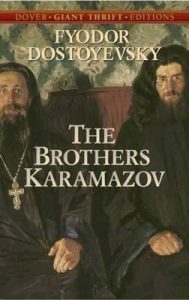
The Brothers Karamazov by Fyodor DostoevskyTitle: The Brothers Karamazov (Goodreads)
Author: Fyodor Dostoevsky
Translator: Constance Garnett
Published: Dover Thrift, 1880
Pages: 736
Genres: Classic
My Copy: Paperback

Buy: AmazonBook DepositoryKindle (or visit your local Indie bookstore)

Written in the final years of Fyodor Dostoevsky’s life (he died four months after it was published), The Brothers Karamazov is probably his most philosophical novel. It tells the story of four very different brothers who all got involved in the murder of their own father. While similarities can be made between this novel and Crime and Punishment as they share similar themes, they are still vastly different. Rather this book deals more with life, death and the meaning of life.

“The mystery of human existence lies not in just staying alive, but in finding something to live for.”

At the start of the novel we meet Fyodor Pavlovich Karamazov, who fathers three sons during his two marriages and is rumoured for have fathered a fourth illegitimate son. He often makes the list when people talk about ‘the most disgusting characters’ in literature, or similar topics. This forms the basis of the plot and the brothers grow up with very different lives, separated from their father and each other. As a result these four brothers are very different; Dmitri is a sensualist, Ivan a rationalist (an atheist), Alexei is a novice in the Russian Orthodox Church and Pavel, well let’s just say, silent and sly.

The very different personalities of these brothers is what allows Fyodor Dostoevsky to explore all his philosophical ideas. One of the major themes in this novel is that of religion and while questioning faith is a common theme in modem literature at the time, in Russia it was considered big deal. In 987 Vladimir the Great sent out envoys to study the various religions of neighbouring nations in order to pick the right religion for Russia. Seems a little unorthodox (no pun intended) but eventually the nation adopted Orthodoxy. What became Russian Orthodoxy was embraced by all of Russia and had its own vision of creating a country of love and humility.

This is important because The Brothers Karamazov is not about questioning the existence of God but rather the role of the church when it comes to morality. It should be noted this was at a time where the Russian Socialism movement was gaining some traction and their goal was to create heaven on earth. With characters of vastly different ideals, Dostoevsky was able to explore the ideas he had floating in his head from different angles. Was Christianity simply a mask for the authority? In one of the most famous chapters Ivan talks about “The Great Inquisitor” which is a powerful argument of scepticism and against religious faith.

Other major themes found in the novel are that of fate and free will. This is closely connected with the ideas around religion. For Alexei, he has the freedom to commit to the order of the church, something that seems like a paradox to someone like Dmitri. Fyodor Dostoevsky explores the psychological makeup of control by society and authority. This plays into the Socialist debate at the time; do we have free will, when we are being controlled by the church or the Tsar. Or maybe we have the freewill but blindly follow the laws put in place by the church and the authority without question.

For Ivan, he lives by the philosophy that “everything is permitted”, which leads to another major theme, that of justice and morality. The murder of Fyodor Karamazov is at the centre of this theme, as well as the trail the follows. The Brothers Karamazov essentially wants the reader to question life, question their beliefs, and the roles of earthly or divine justice. The justice system found in the novel appears to be weird and problematic. The innocent are found guilty, the jury are manipulated by lawyers and the book even questions harsh punishments; like exile to Siberia. It is here we wonder about the different between morality and the laws imposed upon us.

There is so much more you can get out of The Brothers Karamazov (for example family) but for me, this reading through was about questioning life in the lead up to death. I really liked how Fyodor Dostoevsky used the different brothers to explore the different angles and question his own beliefs. Dostoevsky often wrote about society, religion, politics and ethics, however in his final years while writing The Brothers Karamazov, we get the sense that he was thinking more about his own life and his legacy. In fact his tombstone is inscribed with the verse from John 12:24; “Verily, verily, I say unto you, Except a corn of wheat fall into the ground and die, it abideth alone: but if it dies, it bringeth forth much fruit.” Most people know that I’m a fan of Fyodor Dostoevsky and I am so glad to have read The Brothers Karamazov however next time I plan to read it in the David McDuff translation, rather than this one translated by Constance Garnett.


Submission by Michel Houellebecq

Posted May 18, 2016 by Michael @ Knowledge Lost in Contemporary / 0 Comments

Submission by Michel HouellebecqTitle: Submission (Goodreads)
Author: Michel Houellebecq
Translator: Lorin Stein
Published: William Heinemann, 2015
Pages: 256
Genres: Contemporary
My Copy: Paperback

Buy: AmazonBook DepositoryKindle (or visit your local Indie bookstore)

Have you ever picked up a book and then wanted to cancel all your plans just so you can spend time reading? It is a nice feeling and one that I experienced with Michel Houellebecq’s novel Submission. I know this not an experience you would want to have all the time, but I am sure my wife was happy to spend more time playing Dragon Age. However, I think it is a rare treat to be so captivated by a book that everything else needs to be placed on hold. I have been wanting to read Houellebecq for a very long time and now that I have experienced his writing, I am upset that I waited so long.

Submission takes place in the near future, 2022 to be exact. France is about to hold their presidential election and two candidates are looking to be the favourites. The next leader could be Marine Le Pen of the Front National party or Muhammed Ben Abbes of the emerging Muslim Fraternity. Turning the political debate into one of Nationalism or the embrace of a new party with religious ties. The nationalist believe France should be for the French, while the Muslim Fraternity would be a big shift in France’s culture. For starters, it would be the first non-Catholic religious party to gain power, not to mention the impact this will have on the country, both religious and culturally speaking.

At the heart of this novel is François, a middle-aged academic who feels like his life is slowly disintegrating into nothing. His lifelong obsession with the ideas and works of nineteenth-century novelist Joris-Karl Huysmans (best known for his novel À rebours, published in English as Against Nature or Against the Grain) has gotten him nowhere. He is alone and even more concerning to him; his sex drive has diminished completely. While the political backdrop makes for a very interesting novel, Submission looks at the ideas of isolation, love, change and faith.

Michel Houellebecq has been the centre of a bit of controversy, he has a tendency to say things that offend and comes across as vulgar; he’s been accused of being a nihilist, misogynist, cynical and Islamophobic. This is often the persona Houellebecq puts forward in interviews, but it is worth remembering he is a satirist and the persona they put on is not necessarily a true reflection of their actual personality. Michel Houellebecq often writes about controversial topics in order to get people to think about the topic. Atomised (known as The Elementary Particles in America) in 1998 took on cloning and Platform (2001) was on sexual tourism as well as having Islamic themes. In fact, if you look at all his novels, he often explores sex (cloning), tourism (or art) and religion. Even went as far as to have Houellebecq charged in 2002 with racial hatred towards Islam but he was later acquitted by the court.

The novel Submission was published on the 7th January 2015, that day Michel Houellebecq was on the front of the French satirical magazine Charlie Hebdo. On this day brothers Saïd and Chérif Kouachi forced their way into the offices of Charlie Hebdo with assault rifles and sadly killed 11 people and injuring a further 11. This sad event was not a result of Houellebecq being on the cover but rather a macabre coincidence.

I never felt that Michel Houellebecq’s Submission was anti-Islamic, or hate filled in anyway. I did think this was dangerous writing, I suspect the author is an arsehole, but still think this novel is exploring an important topic. Houellebecq has a great ability to make the reader think about life, religion, and philosophy. I had such an enjoyable experience with this book I went and picked up another one of his novels right away.


At The Theatre: Antigone

Posted April 24, 2016 by Michael @ Knowledge Lost in Culture / 0 Comments

antigone-web-banner-1

Recently I had the good fortune to be able to see the play Antigone by a small indie playhouse in my city. Now the story of Antigone comes from Greek mythology, she is the daughter (and sister) of Oedipus. Antigone is best known from the Sophocles’ play where she is trying to secure a ritual burial of her brother Polynices. This is against the wishes of King Creon who wants Polynices to stay out unburied as an example to all those who seek to fight against the throne of Thebes.

The play I saw was not the one written by Sophocles but rather the French written by Jean Anouilh’s in 1944. I do not know the difference between the Greek mythology, the play by Sophocles or the one I saw but I was very impressed with the play. Now Anouilh wrote this tragedy during the Nazi occupation of France and he purposely made it ambiguous to get past the German censorship. However knowing this you can clearly see the parallels between the French Resistance against the Nazi occupation and the Greek tragedy.

This play is about war and standing against the authority in order to do what is right. Antigone was dressed in white to represent good while everyone was in black. This is a very speech heavy play that explores the themes mostly through dialogue. For the most part the actors preformed this play wonderfully with the exception of one person, who I thought was a little flat. I really enjoyed the use of lighting to create shadows that turned the stage into what could be considered a dystopian world.

While this is a Greek play, it appeared very much like a French production with some Avant-garde elements playing through while keeping a very minimalist approach. I was impressed with the play and would love to see more indie performances in the future. Antigone was translated from the French by Lewis Galantière and I highly recommend this interpretation of the Sophocles play, especially in relation to World War II and the Nazi occupation of France.


Hide and Seek by Ian Rankin

Posted April 22, 2016 by Michael @ Knowledge Lost in Crime / 4 Comments

Hide and Seek by Ian RankinTitle: Hide and Seek (Goodreads)
Author: Ian Rankin
Series: Inspector Rebus #2
Published: Wheeler Publishing, 1991
Pages: 397
Genres: Crime
My Copy: Library Book

Buy: AmazonBook DepositoryKindle (or visit your local Indie bookstore)

Detective Inspector John Rebus is back following the case in Knots and Crosses; this time he finds himself on a case that that may have supernatural elements to it. The body of a drug addict is found in a squat, in between two burnt down candles and a pentagram painted on the wall next to it. While most people were quick to discard this of a heroin overdose, Rebus is determined to investigate to find the true circumstances surrounding this death. What transpires is something far more sinister than a simple overdoes, is it murder? Or even worst, is it a conspiracy?

One thing that I really enjoyed about Knots and Crosses was the way Ian Rankin took on a different approach to the crime genre. The crime took a back seat in the story and the novel spent most of the time developing characters and building the backstory that will set up the rest of the series. I understand that Hide and Seek would not be able to continue developing John Rebus as a character the same way Knots and Crosses but I still expected more. I knew Rankin could write a crime novel that was not formulaic or unoriginal, but Hide and Seek was not on the same level as the first book in the series.

It has been come out that Hide and Seek was Ian Rankin’s attempt in presenting a modern take on The Strange Case of Dr Jekyll and Mr Hyde. A story that fascinates Rankin; he has even filmed a documentary (Ian Rankin Investigates Dr Jekyll and Mr Hyde) exploring the origins of this classic from fellow Scottish writer Robert Louis Stevenson. There are a few nods to the classic found in this book from ‘Hide’ in the title of the novel and the private member’s club known as the Hyde club.

Ian Rankin found himself in the middle of a scandal when a case featuring similarities to the novel became apparent. This scandal was mentioned in parliament and two lawyers opened an investigation into Rankin to determine if there was any connection. While any allegations made towards Ian Rankin turned out to be false, this real life scandal gave this book some extra attention in the public eye.

I was very disappointed with Hide and Seek and will continue my search for a new crime series. I have very particular taste, but mostly I want a series that is dark, gritty, original and does not feel like a ‘crime of the week’ situation; is this too much to ask for? I thought Inspector Rebus may have been a good series to explore, but this novel convinced me otherwise. Not sure if the next book (Tooth and Nail) is any good but I do not think I will be finding out.


Hausfrau by Jill Alexander Essbaum

Posted April 21, 2016 by Michael @ Knowledge Lost in Contemporary / 0 Comments

Hausfrau by Jill Alexander EssbaumTitle: Hausfrau (Goodreads)
Author: Jill Alexander Essbaum
Published: Pan Macmillan, 2015
Pages: 336
Genres: Contemporary
My Copy: Library Book

Buy: AmazonBook DepositoryKindle (or visit your local Indie bookstore)

Lisa Benz is a thirty-something American living in Switzerland with her new husband. While he is off working as a banker, she is alone to look after the kids; she cannot do much else because she has yet to learn German. Lisa wants to be the perfect mother and wife but she is unhappy and alone. Hausfrau is the punchy debut novel from poet Jill Alexander Essbaum.

If you look at Jill Alexander Essbaum’s Goodreads profile, you will see that she is obsessed with many things, including puns, sex, God and words. These kind of obsessions lead her to become a poet; her collections of poetry often feature religious and erotic imagery within them. I have heard mixed reviews of Hausfrau in the past, but when I heard her on the Literary Disco podcast, I knew I had to check it out. I think Essbaum’s love for putting words in the right way helped to release a strong debut novel.

The novel follows the life of Lisa Benz, who is unhappy and alone, which leads her to make some bad decisions. Hausfrau is a typical domestic novel exploring one person’s unhappiness in their marriage. However this book still feels fresh and different to the others, not just because it is the wife who is making terrible choices. I found Jill Alexander Essbaum took an interesting take on the importance of communication and the idea that a marriage should be a partnership. She explores the breakdown of the marriage and makes it obvious the root causes.

I really enjoyed Hausfrau and it was nice to see a destructive female character for a change; it always feels like the husband is the one that ruins everything. Jill Alexander Essbaum really knows how to write and I am very interested in trying her poetry, especially her erotic religious poetry. I think Essbaum will be an author to take notice of in the future and I eagerly await her next novel.


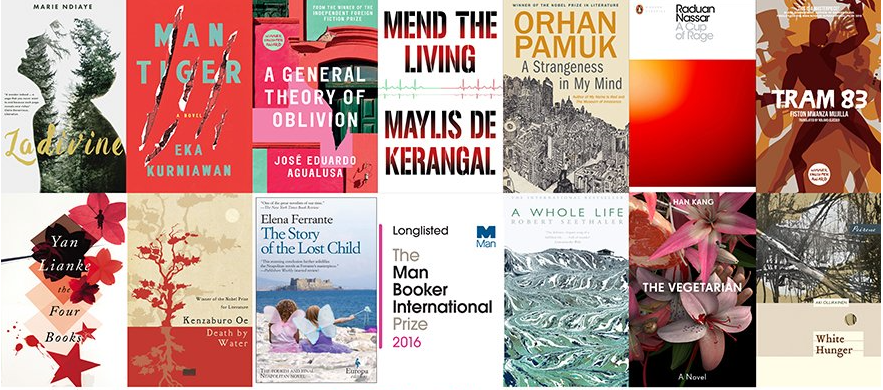
The 2016 Man Booker International Prize Longlist

Posted March 9, 2016 by Michael @ Knowledge Lost in Literary Prizes / 2 Comments

  • A Cup of Rage by Raduan Nassar (translated by Stefan Tobler)
  • A General Theory of Oblivion by José Eduardo Agualusa (translated by Daniel Hahn)
  • A Strangeness in My Mind by Orhan Pamuk (translated by Ekin Oklap)
  • A Whole Life by Robert Seethaler (translated by Charlotte Collins)
  • Death By Water by Kenzaburō Ōe (translated by Deborah Boliver Boehm)
  • Ladivine by Marie Ndiaye (translated by Jordan Stump)
  • Man Tiger by Eka Kurniawan (translated by Labodalih Sembiring)
  • Mend the Living by Maylis de Kerangal (translated by Jessica Moore)
  • The Four Books by Yan Lianke (translated by Carlos Rojas)
  • The Story of the Lost Child by Elena Ferrante (translated by Ann Goldstein)
  • The Vegetarian by Han Kang (translated by Deborah Smith)
  • Tram 83 by Fiston Mwanza Mujila (translated by Roland Glasser)
  • White Hunger by Aki Ollikainen (translated by Emily Jeremiah & Fleur Jeremiah)

Voices from Chernobyl by Svetlana Alexievich

Posted February 20, 2016 by Michael @ Knowledge Lost in Non-Fiction / 0 Comments

Voices from Chernobyl by Svetlana AlexievichTitle: Voices from Chernobyl (Goodreads)
Author: Svetlana Alexievich
Translator: Antonina W. Bouis
Published: Aurum Press, 1997
Pages: 288
Genres: Non-Fiction
My Copy: Hardcover

Buy: AmazonBook DepositoryKindle (or visit your local Indie bookstore)

In 2015, Svetlana Alexievich won the Nobel Prize for literature, thus resurging some buzz for her 1997 book Voices from Chernobyl: The Oral History of a Nuclear Disaster. Originally translated into English in 1999 by Antonina W. Bouis, the book was also released in a new translation by Keith Gessen in 2005. This translation went on to help Alexievich win the National Book Critics Circle Award for General Nonfiction in 2005. Svetlana Alexievich is a Belarusian journalist who set out to interview more than 500 eyewitness accounts of the 1986 Chernobyl disaster. She interviews people involved with the clean-up, including firefighters and liquidators (a name given to the clean-up team), as well as politicians, physicians and citizens. The book Voices from Chernobyl is just a few of the stories that came from the interviews.

I found a copy of Antonina W. Bouis’ translation at a fete and picked it up for $2, not because it was so cheap but because it was the first time I have seen this book for sale. I have been wanting to read this book for a while, as part of my interest toward Russian history and the Soviet era. The preface of the book offers a few facts that I was unaware of, at the time of publishing, Belarus still had over 20% of the land contaminated by nuclear fallout. The reason this book was published was mainly because Russia and Ukraine are normally associated with this horrible disaster and Belarus is often forgotten about. Even though around 70% of the radiation fell onto this small country.

I picked up Voices from Chernobyl back in November 2015 but due to a loss of a family member I had to put it aside. I did slowly work my way through the book one devastating story at a time and found this book to be a very emotional journey. It not only explored the physical devastation but also the psychological and cultural impact the Chernobyl disaster. I do not think I have ever found a book that explores the impact of nuclear accident quite like this.

It is hard to review a book like this; it is not a comfortable read but it provides some valuable insights into such a devastating event. Most people know that I love the Soviet era and ever since reading All That Is Solid Melts into Air by Darragh McKeon, I knew I needed to know more about this disaster. I think this is an important book to read. I would have preferred to read the Keith Gessen translation, because my research shows that to be a better translation. I think this is my biggest problem with Voices from Chernobyl and should not deter people from picking up this book.