Let the Right One In by John Ajvide Lindqvist

Posted August 23, 2015 by Michael @ Knowledge Lost in Horror / 10 Comments

Let the Right One In by John Ajvide LindqvistTitle: Let the Right One In (Goodreads)
Author: John Ajvide Lindqvist
Translator: Ebba Segerberg
Published: Quercus, 2009
Pages: 519
Genres: Horror
My Copy: eBook

Buy: AmazonBook DepositoryKindle (or visit your local Indie bookstore)

Twelve-year-old boy, Oskar is having a hard time with life. While he has a loving mother, his alcoholic father is very absent in his life. At school, Oskar is the constantly being bullied. One day he meets Eli, and a friendship is formed between the two. However Eli is not a normal girl and it is quickly revealed that she is in fact a vampire. Let the Right One In by Swedish writer John Ajvide Lindqvist is a horror novel unlike any other that I have read before.

While Let the Right One In is a gothic horror that explores the unusual relationship between a 12-year-old boy and a vampire, for me this novel was something completely different. I found this to be a book that explores the darker side of humanity; looking at issue of alcoholism, divorce, bullying, abuse, self-mutilation, murder and paedophilia. Think of it more of an existential look at life and the horrors of the world around us.

I do not want to go into too much detail about what to expect when reading this novel. I just enjoyed the way it looked at the way we handle the horrors of the world from the view point of a struggling boy trying to cope with his situation. The relationship between Oskar and Eli is complicated, and unusual. This allows John Ajvide Lindqvist to explore so many interesting issues and push the reader to contemplate more of the world around them.

Most people would be familiar with the plot of this novel by the movie adaptation done in 2008, which was then horribly remade again by Hollywood in 2010 under the name Let Me In. I saw the Swedish version many years ago and felt it to be a brilliant movie but I have not re-watched it since reading the novel. I did however watch the American addition and it made me very angry. I feel like Hollywood is too afraid to deal with the dark side of humanity if it involves a twelve year old boy. Also America has a terrible habit of trying to remake movies that are already brilliant, I understand some people do not want to read subtitles but they do it to movies that are already in English as well. Soon there will also be a TV show based on this novel, which is set to air on A&E later this year.

I am so glad to have read Let the Right One In; I had a great time exploring the world. This is an extremely dark novel and this will not be everyone. I am curious to see what the TV show will be like but I will not be holding my breath. If you are willing to explore the dark side of humanity you will find Let the Right One In to be a compelling and thought provoking novel.

Movie Review: Trainwreck (2015)

Posted August 22, 2015 by Michael @ Knowledge Lost in Movie-Comedy / 2 Comments

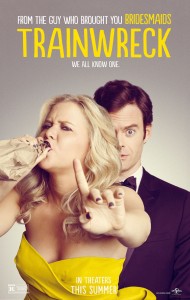
Trainwreck-posterTitle: Trainwreck
Released: 2015
Director:
 Judd Apatow
Stars: Amy SchumerBill HaderTilda Swinton
Genre: Comedy

The latest romantic comedy from Judd Apatow is something completely different and will hopefully shake up Hollywood a little. In his last movie. Apatow took on the story of life after 40, in the movie This Is 40, which starred Paul Rudd and Leslie Mann. While Judd Apatow’s movies are problematic when he directs a movie, I often get the sense he wants to take on some real issues. Both The 40-Year-Old Virgin and Knocked Up had some positives messages hidden behind all the cheap gags and as for Funny People, well it was a little forgettable so I could not tell you what the message was with that movie.

Trainwreck was the first movie that Judd Apatow directed that he did not write, with the exception on The 40-Year-Old Virgin which he co-wrote with Steve Carrell. This time the screenplay was written by the lead Amy Schumer. Schumer has been taking the comedy world by storm, after first appearing on NBC’s Last Comic Standing in its fifth season; where she placed fourth. Now she has her own hit show, Inside Amy Schumer as well as being a critically acclaimed stand-up comedian.

In Trainwreck Amy Schumer plays a journalist named Amy working for a men’s magazine S’Nuff. She was brought up to believe that monogamy was not realistic and now Amy spends most nights getting drunk, stoned and getting laid, despite the fact that she is dating a gym junkie (played by pro-wrestler John Cena). She is assigned by her boss (Tilda Swinton) to write an article on a sports doctor named Aaron (Bill Hader) despite the fact the fact she believes sports is not intellectual enough to be interesting. The film continues on the very formulaic romantic comedy path after this.

What I loved about this movie is the way Amy Schumer took the same formula and reversed the gender roles. While this is a boring plot line, the idea of taking the outdated clichés of the dating world and shaking it on its head is very refreshing. The movie does not stop there; there are even slight nods to penicil movies in this genre, including a blowjob scene in shot in the famous location found in the Woody Allen movie Manhattan. If I was a better film critic I would be able to pick up on all the homages made within the movie; one day I hope to be able to do so.

I had a lot of fun watching this movie and I think the stand out performance should go to John Cena for his portrayal of a homoerotic meathead. I did see was more of John Cena than I would like but thankfully his penis was still able to say his catch phrase “You can’t see me”. Even though the formula to Trainwreck is the same old plot, there is still something very true about the movie. I cannot criticise the plot because I have been in the same boat as Amy. Hopefully this is one step closer to a change in Hollywood; Trainwreck has been positively received but only time will tell.


August 2015 Mini-Reviews

Posted August 21, 2015 by Michael @ Knowledge Lost in Historical Fiction, Romance, Science Fiction / 4 Comments

August 2015 Mini-ReviewsTitle: Black Girl / White Girl (Goodreads)
Author: Joyce Carol Oates
Published: Fourth Estate, 2006
Pages: 272
Genres: Historical Fiction
My Copy: Library Book

Buy: AmazonBook DepositoryKindle (or visit your local Indie bookstore)

Black Girl / White Girl tells the story of Genna Hewett-Mead who is reflecting on a traumatic event in her past. Fifteen years ago, in 1975 while attending an exclusive women’s liberal arts college near Philadelphia, her roommate Minette Swift died a mysterious and violent death. Minette was a scholarship student and one of the few African American women to be let into the college. Genna, a quiet woman of privilege got to witness the effects of racism first hand as the racist harassment escalated from vicious slurs to something far worse. However whoever was responsible for this murder still remains a mystery to this day. I had never read Joyce Carol Oates before and I thought this may be my chance to experience her writing. The premise of this novel intrigued me and I was looking forward to uncovering the mystery at play. However, this turned out to be a novel about reflecting on the changing times; I was interested in learning about racism within America during the time of civil rights movements but this focused too much on Genna.

I understand that Joyce Carol Oates may not want to write a novel from the perspective of a person of colour, since she is Caucasian and probably could not do the situation any justice. Rather she took on the perspective of a woman of privilege experiencing the issue first hand. This may have made the book a little more autobiographical and allowed Oates to still explore the issue of racism. While I enjoyed this book, I did not find anything special about it. Maybe this was not the best example of Joyce Carol Oates’ writing but I will try more of her novels in the future.


August 2015 Mini-ReviewsTitle: The Testimony (Goodreads)
Author: James Smythe
Published: Harper Collins, 2012
Pages: 368
Genres: Science Fiction
My Copy: Library Book

Buy: AmazonBook DepositoryKindle (or visit your local Indie bookstore)

First there was static and the whole world freaked out. Then came a voice that said “My Children, Do not be afraid”. People said it was God, others said it was the government and still others believed it was aliens. The whole world was brought to a halt but no one had the answers. The Testimony details the apocalypse from the perspective of twenty six people around the world. James Smythe is a master at writing science fiction that will really make you ponder life and The Testimony is no different.

I was curious to check out James Smythe’s debut novel ever since I discovered his novels. The Machine was my first Smythe and still remains my favourite although many do prefer The Explorer. For me, while The Testimony was a thrilling read, it just was not on the same level as the other books I have read. Dealing with so many different perspectives was a great way to capture the different opinions and question the events. However this novel was not overly impressive, still a great book but if I compare if to James Smythe’s other novels, it falls short. This is proof on just how far Smythe has improved and makes me excited to read something new by this great author.


August 2015 Mini-ReviewsTitle: The Firebird (Goodreads)
Author: Susanna Kearsley
Published: Sourcebooks Landmark, 2013
Pages: 539
Genres: Historical Fiction, Romance
My Copy: Audiobook

Buy: AmazonBook DepositoryKindle (or visit your local Indie bookstore)

Nicola has a rare gift, she can touch an item and glimpse the lives of its previous owners. When she holds a small wood carving called The Firebird she sees a glimpse of Catherine I, wife and later successor to the Tsar Peter the Great. The Firebird is a fresh take on the time traveling romance genre, blending it with the ever popular paranormal romance genre. This is the second book in the Slains series by Canadian author Suzanna Kearsley.

My wife is a big fan of Kearsley and since this novel is partly set in Russian she thought I should check it out. There is some interesting aspects of the life and times of Peter the Great and allowed me to learn a little more about Russian history and culture. However there is something about this novel that I did not like. The Firebird is a story with no conflict and no antagonist and for me this meant it was a really boring novel. I understand people would read this book for the romance but I was uninterested in that story line, I was reading this for the Russian setting. Obviously I am the wrong person to judge The Firebird, it really was not my type of book.


The Two Faces of January by Patricia Highsmith

Posted August 14, 2015 by Michael @ Knowledge Lost in Crime, Thriller / 0 Comments

The Two Faces of January by Patricia HighsmithTitle: The Two Faces of January (Goodreads)
Author: Patricia Highsmith
Published: Sphere, 1964
Pages: 306
Genres: Crime, Thriller
My Copy: Library Book

Buy: AmazonBook Depository (or visit your local Indie bookstore)

Con artist Chester MacFarland is wanted by the police back in America, but here in Greece, he feels free to roam with his young Colette. That was until he accidently kills a police officer in his hotel room. The young American law graduate, Rydal Keener is there to help them escape the city. This accident has brought the three together but is this for the best or is there something else at play?

Patricia Highsmith is often referred to as the queen of suspense and The Two Faces of January does not do anything to contradict this. The title alone gives the reader a pretty clear idea of what to expect; the month of January is named after the Roman god Janus. Janus has two faces, one looking to the future while the other looks at the past. The term Janus-faced means “having two sharply contrasting aspects or characteristics”. In the biography Beautiful Shadow: A Life of Patricia Highsmith by Andrew Wilson, Highsmith stated that the title was a reference to the flux-like nature of the characters that she likes to create.

When it comes to character development, Patricia Highsmith really shines like no other. She has a great ability to create complex characters that feel authentic, and that is an ability that I find lacking in a lot of suspense novels. In The Two Faces of January, Highsmith creates a love triangle that is actually interesting to read about. There is the homoerotic relationship between Chester and Rydal and Colette is also quite taken by this young law graduate. This turns the book into more of a psychological look at the shifting nature of relationships rather than a thriller. It does depends on how the reader decides to read The Two Faces of January but for me the depth is what stood out for me.

I probably should mention that The Two Faces of January was adapted into a movie back in 2014 starring Viggo Mortensen, Kirsten Dunst and Oscar Isaac. This was the directorial debut for Hossein Amini, who is best known writing the screenplay for the novels Drive and Our Kind of Traitor; he even wrote the script for The Two Faces of January. I know I need to have more Highsmith within my reading life and I am thinking about re-reading The Talented Mr Ripley, before continuing on with the series. I have noticed there are new editions of the Highsmith’s novels lately and I think I should take advantage of the availability while they are easily accessible.


Aquarium by David Vann

Posted August 12, 2015 by Michael @ Knowledge Lost in Contemporary / 6 Comments

Aquarium by David VannTitle: Aquarium (Goodreads)
Author: David Vann
Published: Text, 2015
Pages: 259
Genres: Contemporary
My Copy: Paperback

Buy: AmazonBook DepositoryKindle (or visit your local Indie bookstore)

Caitlin is a twelve-year-old leaving with her mother in subsidised housing next to the Seattle airport. Every day after school she visits the local aquarium where she spends her time studying the fish. She dreams of becoming an ichthyologist when she grows up. One day she meets and befriends an old man by one of the fish tanks. This new friendship leads Caitlin to a dark family secret and causes her once blissful relationship with her mother to fracture.

I have great respect for David Vann as a writer; while I have only read Dirt previously, I have found his ability to write family dysfunction mesmerising. Dirt was a very uncomfortable read and when Goat Mountain was released in 2013 I was not emotionally prepared to tackle another Vann novel. Goat Mountain still sits on my shelf waiting for me but I could not resist picking up Aquarium and reading it.

David Vann frequently writes about the domestic life, exploring the way family members react to each other and often lead to arguments. Within Aquarium, Vann looks at how destructive secrets can be and how the suffering of a parent can greatly affect their children. Parents often have this idea that they need to protect their children from the horrors of the world, which is fair enough. However, what happens when a family secret comes out? In Aquarium, Caitlin’s mother is unable to handle the situation leaving her to try and navigate this big revolution alone.

Aquarium is a coming of age story of a twelve year old being thrust into adulthood and trying to navigate the world alone. Without the family drama, Caitlin has enough to worry about with the changes in hormones and her body. However do not confuse this with a young adult novel; David Vann tackles some dark themes (although this is more accessible than Dirt) and Caitlin is reflecting on the situation later in her life. This allows for a nice blend of maturity and naiveté to come through in the writing.

While this was not as dark as I expected, I think Aquarium is a great introduction to David Vann. I still need to read Goat Mountain, Caribou Island and Legend of a Suicide before I can give a more informed opinion but I recommend Aquarium if you want to try Vann out. If I compare this novel to Dirt, it is a light read about the family life but, in reality, it is a dark grim bildungsroman that deals with abuse and sexuality. Emotionally prepare yourself when going into a book like Aquarium; it is worth the journey.


Becoming a Philosopher

Posted August 11, 2015 by Michael @ Knowledge Lost in Philosophy / 2 Comments

Friedrich NietzscheWhile watching videos from the School of Life YouTube channel recently, in particular the video on Friedrich Nietzsche. I found myself feeling so envious towards people like Nietzsche and Alain de Botton (who was a founder of School of Life) because they are so smart, talented and make me feel like I have so much to learn. This is interesting, since Nietzsche believes envy is an important part of life; it is useful for understanding what we want to achieve and what we are working towards. In his 1887 book On the Genealogy of Morality (Zur Genealogie der Moral) Nietzsche theorises that the concepts of morality are controlled by the powerful (in his time, the clergy), therefore the concept of good and evil is subjective. While he never talks directly about envy, Nietzsche has often criticised the church for portraying envy as a sin and something we should feel guilty about. This is not the current teaching of the church regarding the seven deadly sins, these are just gateways we should be wary about because they can lead to sin. However this misconception can lead to an emphasis on envy which is leading people to feel insufficient with themselves, and that tends to leads to guilt rather than driving ambition.

Luckily in my case, my envy towards people like Friedrich Nietzsche is making me feel ambitious. I was thinking about life, and I asked Twitter how to become a philosopher and the first response I got back was “Be a dick to Plato”. This may not sound helpful but it really does cut to the core purpose of philosophy. If you look up philosopher in the dictionary you get something along the lines of “a person who offers views or theories on profound questions in ethics, metaphysics, logic, and other related fields.” Critically questioning ideas and theories, even the ones Plato wrote about, in essence would make you a philosopher.

My wife, in all her wisdom, said without thinking that everyone should be a philosopher. The ideas behind philosophy are to think about life and the world around us and to assess, accept, reject or expand on the ideas that have been presented to us. Granted, I have not worked out a way to make a career out of philosophy but the reason I started this blog was to story my thoughts and ideas in the one location. Literature has been a huge part of my life and has helped me to critically question the ideas I am faced with.

I have no formal background but I do believe academia does not have all the answers when it comes to philosophy. In the past education was the job of the clergy and the church. Universities were originally created during the decline of religion as a place for people to find meaning to life, ask questions, share ideas and be part of a community. However if you look at the state of today’s universities, you may not even find anything close to this idea. Rather, it feels like a place to tell people what they need to do in order to be qualified for the degree they are pursuing.  I have been in many classes where there is no questioning, no sharing of ideas and no community; you are given a print out and you get assessed on how well you align to the ideas found on the page. Can you imagine going to university in the hopes to become a teacher and then being taught how to teach a class with methods that are never recommended for a classroom setting?

While it is true that you’ll learn something by reading a piece of paper and writing about it (that is essentially what I do here), academia does not seem to be promoting a philosophical lifestyle. My autodidactic journey feels like it aligns with what I want to achieve more than academia does. I question what I read but when it comes to writing about it, I am doing so for myself. I am not being assessed on how well I align to the teacher’s ideas. Rather, I write to practise expressing my opinions and document my learning process.

Granted, if you want to make a living in philosophy, then working in academia would be useful but I often question the way academic papers are written. Reading some philosophical ideas that are written in an academic format can be very difficult, it makes me feel stupid and question my own intellect. I know I have a lot to learn but I think academic writing is more designed to sound smart so people will think the author knows what they are talking about. If I was to say “God is a woman” you might agree or reject my statement without any thought. However if I say “God is a woman and I have a hundred page academic paper to back that up”, your reaction might be a little different. You may think I am still wrong but it might take longer to reach that conclusion. If you disagreed with me but still chose to read the hundred pages, things could be different once again; you might question your own beliefs before accepting or rejecting mine. The purpose of a paper like this would be to express opinions and challenge ideas, however I prefer a more casual approach to writing.

I believe we can start a conversation about ideas without the need to alienate people with overly complex academic papers. If people are willing to share and exchange ideas there are people willing to listen and challenge. I call myself a philosopher because I like to question ideas and explore my thoughts via my writing. Also my twitter bio says I am a philosopher so it must be true. I hope to continue to learn and explore ideas, to question and challenge my way of thinking and if needed, I will be a dick to Plato.


Get Shorty by Elmore Leonard

Posted August 8, 2015 by Michael @ Knowledge Lost in Pulp / 0 Comments

Get Shorty by Elmore LeonardTitle: Get Shorty (Goodreads)
Author: Elmore Leonard
Series: Chili Palmer #1
Published: William Morrow, 1990
Pages: 304
Genres: Pulp
My Copy: Library Book

Buy: AmazonBook DepositoryKindle (or visit your local Indie bookstore)

Chili Palmer is a shylock with mob connections working in Miami. However he is sick of the grind and it seems that his friends in the industry have a bad habit of dying. While chasing a deadbeat across America, he eventually ends up in Hollywood, where he decides to stay and start a new life. Besides, he has a killer idea for a movie and this is the town where dreams can come true…or do they?

It is no secret that Elmore Leonard has a bitter opinion towards Hollywood and Get Shorty allowed him to vent his feelings. In 1984 Leonard won an Edger Award (Best Novel) for his novel LaBrava and during the hype, Cannon Films brought the rights for a film adaptation. Dustin Hoffman had signed on to play former Secret Service agent Joe LaBrava in what was dubbed “the richest star deal in entertainment history”.  Elmore Leonard had to do multiple rewrites (all unpaid) at the request of the star only to have Hoffman terminate his contract citing ‘contract desputes’. The reason behind Hoffman’s departure from the project was due to some advertising; Cannon Films two full page ads in some trade papers which showed him pictured under the heading “Welcome to the Cannon Family Dustin Hoffman”. His contract granted him final approval to all advertising for the upcoming movie.

When reading Get Shorty you get a real sense of Elmore Leonard’s bitterness towards Hollywood and the failed movie. According to IMdb Dustin Hoffman is 5’5” and his depiction in the novel is the over compensating Michael Weir (who was portrayed by Danny DeVito in the film adaptation). Despite what Leonard may have thought about the movie industry, Get Shorty turned into one of the great satires depicting Hollywood. The film adaptation was the next of his novels to make the transition to the screen, this time with only minor changes to the main plot. This lead the way to a range of great Elmore Leonard adaptations, from Jackie Brown, Out of Sight, Be Cool, 3:10 to Yuma and the TV show Justified.

Get Shorty is probably one of the best modern crime novels I have read in a long time. I tend to find that modern authors in the genre do not explore social issues within their books. Elmore Leonard was one of the best crime novelists and it was sad to lose him back in 2013. I plan to read the next book in the Chili Palmer series, Be Cool and I think I should rewatch the movies sometime soon as well.


Glitch: an new Australian Gothic

Posted August 7, 2015 by Michael @ Knowledge Lost in Film & Television / 0 Comments

glitchRecently I had the joy of binge watching Glitch, a new Australian drama created by Tony Ayres & Louise Fox that aired throughout July. Glitch has been often compared to Les Revenants (which has been remade into the American show The Returned), however I have not seen those shows to compare. The show starts off in a small fictional town where police officer James Hayes (played by Patrick Brammell) is called to the cemetery to investigate a disturbance.

The development of Glitch has been a long process, actor Rodger Corser has even defended the show to the media. In an interview to The New Daily Corser has stated; “This [Glitch] is definitely not ‘Oh great, we will do an Australian version of another show’. From what I know this show was pitched before that [The Returned] came along. Sometimes it’s a long process from getting a first draft to getting funding”. Whether the concept has been done before, there is something fresh and new about Glitch that I just cannot put my finger on. It might be a combination of the Australian aesthetic, the gothic feel, great actors and, of course, a thrilling script (written by Louise Fox, Kris Mrksa and Giula Sandler.

The visuals of this series is what stood out to me the most while watching Glitch. What can only be described as Australian gothic, this series uses dramatic lighting and art direction to real capture the mood. Shot during the summer nights in the Victorian town of Castlemaine, this allows for dramatic natural lighting without relying on artificial ones. I appreciate the stylisation of Glitch that was made possible by the cinematographer Simon Chapman (The Loved Ones, The Little Death) and art director Juliet John (The Boys, The Bank).

glitch screenshot

The ABC took a new approach with this show, catering to the Netflix culture; all episodes of this show was made available on their own catch-up service iView while also airing weekly on ABC1. This is a unique approach, allowing everyone to view their show in their preferred method. This show was shadowed in mystery, the idea of waiting between episodes sounded painful to me. The question I ask myself is; “is this the solution broadcast networks need to take to battle against Netflix and torrents?” I do not know the answer (yet) but I think this could be the future of television.


10:04 by Ben Lerner

Posted August 5, 2015 by Michael @ Knowledge Lost in Literary Fiction / 0 Comments

10:04 by Ben LernerTitle: 10:04 (Goodreads)
Author: Ben Lerner
Published: Granta, 2014
Pages: 241
Genres: Literary Fiction
My Copy: Library Book

Buy: AmazonBook Depository (or visit your local Indie bookstore)

10:04 tells of a time with increasingly frequent super storms; the novel is bookended with Hurricanes Irene and Sandy (although they are never referred to by name). Our unnamed narrator has also been diagnosed with Marfan syndrome, which is almost always fatal. Faced with the state of the world and his own mortality, this narrator must question his legacy. Not just biologically but as a writer he must consider what he will leave behind.

A Brooklyn based writer, this narrator starts off early within the novel talking about just what kind of life he has. In one particular passage he describes visiting the Metropolitan Museum, a frequent occurrence, with a friend. “We often visited weekday afternoons, since Alex was unemployed, and I, a writer.” The two like to look at all the melodrama found in the 19th century, in particular his favourite; a painting of Joan of Arc. This passage not only sets up an introduction to our narrator and his female friend Alex but also an indication of what type of novel to expect here.

Ben Lerner has an uncanny ability to write a unique novel that is both beautiful and moving but at the same time remaining hilarious and intelligent. I will admit that the novel did make me feel stupid so many times but I love a book that makes me work to fully grasp it. I always get a real sense of accomplishment when I finish a book like 10:04. For those that are hesitant about reading a book that might make them feel dumb, I think 10:04 is worth the effort and the challenge.

This novel explores a lot of interesting themes from friendship, sex, memory, legacy, art and politics; think of this as a book that explores the landscape of the contemporary life. The narrator is a bit pretentious but then again the circles he hangs out in are full of pseudo-intellectuals. The New York literary scene has been done time and time again, however I am a huge fan of this setting and I think there are so many opportunities to explore interesting ideas. 10:04 did exactly that.

It seems like Ben Lerner is going to be one of those authors that the literary world will need to watch. His first novel Leaving the Atocha Station was met with critical acclaim, showing up on all the major literary magazines’ best books of the year list. A novel I have yet to read but if it is anything like 10:04, I know I will love it. Ben Lerner manages to capture so many emotions in one single narrative, 10:04 is just a great book and I expect to see many more great novels from Ben Lerner in the future.


Monthly Review – July 2015

Posted July 31, 2015 by Michael @ Knowledge Lost in Monthly Reading / 2 Comments

July Highlight
July Highlight

It feels like a bit of a cliché to yet again say how fast this month has gone, but it is once again a true statement. This is not entirely true, work days feel like they drag on and on, with so many stressful situations; I can see just how big of an impact it is making to my reading life. I much rather sit and watch television (or YouTube videos) after a difficult day of work than try and do any reading. Having said that, I still managed to read nine books in the month of July which seems to be my average for the year.

The first novel I read was One Night in Winter which was in part a campus novel, exploring a romantic poet (Alexander Pushkin) set in Moscow just after World War II. The author, Simon Sebag Montefiore normally writes non-fiction and has written a few biographies about Joseph Stalin. I found this to be an enjoyable novel with some flaws but what I appreciated were the endnotes. Montefiore goes through all the historical inaccuracies and explains why he made these changes for this novel.

After that I read Nest by Inga Simpson which is a contemporary novel about missing children, and I had a few problems with this one. If I focused on the nature writing, then I would call this book beautifully descriptive and stunning but my issue was with the mystery in the plot. All the descriptive writing about nature felt like a way to avoid discussing what was happening with the children. So I ended up thinking this book was just far too evasive and I ended up being frustrated by this.

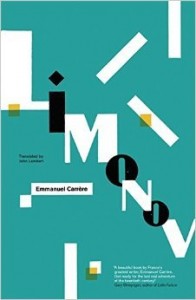
Emmanuel Carrère’s memoir on Eduard Limonov was my next book and I felt like this one read so much like a novel. Translated from the French by John Lambert, Limonov is an amazing book about the leader of the National Bolshevik Party in the 2000s. The media often portrayed Limonov as a terrorist but reading through this biography reminded me just how the media is influenced by the political leaders in charge of running the country (in this case Vladimir Putin).

Next came a novel everyone is talking about, and that is A Little Life by Hanya Yanagihara. I have a bit of a love/hate relationship with this book, and I really appreciate that from a novel like this. There is so many parts in the novel where you just want to throw the book at the wall. I then went onto re-read Interview with the Vampire by Anne Rice and this time around it was not an enjoyable read. I wanted to explore the character development of Louis, Lestat, and Claudia but since this novel is only 300+ pages and covers over 400 years this was impossible.

Then I went on to finally read In the Miso Soup by Ryū Murakami (translated by Ralph McCarthy) which has been on my TBR for a very long time. This was a short psychological horror that dealt a lot with culture clash and the idea of trying to solve loneliness with sex. I read another short novella called By Night In Chile by Roberto Bolaño (translated by Chris Andrews) and this is the story of Jesuit priest Father Urrutia who believe he is going to die. In the course of the night this priest reflects on his lives in a feverish daze. It starts off as a tender book but then you start questioning this narrator as it becomes clear that not everything he is saying is actually true.

I went on to read yet another novel in translation, The Story of My Purity by Francesco Pacifico (translated by Stephen Twilley) which tells the story of Piero Rosini who is determined to be a modern saint. Things do not go to plan, as he tries to live a pure life; I enjoyed the way this book explores theology and invoked a lot of questions about religion and how people often have a misconception on what the Catholic Church teaches on the topic of sex. Finally I decided to pick a mindless mystery novel, so I thought World Gone By by Dennis Lehane was the right choice. This did not require much effort to read and with my job stress I thought that was what I needed. However I think I may have outgrown modern crime novels and all the tropes found in the bestsellers.

As far as my reading goes, July was a pretty great month. In fact July was a good month, except when it came to working. At the moment I am currently reading The Windup Girl by Paolo Bacigalupi, Mislaid by Nell Zink, The Green Road by Anne Enright and The Lucifer Effect by Philip G. Zimbardo so I have plenty to read going into August. I also plan to read some Richard Brautigan in the month of August, I have an omnibus that feature Trout Fishing in America, The Pill vs. the Springhill Mine Disaster and In Watermelon Sugar in it, so I will try to read all three books. Let me know how July was for you and what you plan to read in August.

Read More