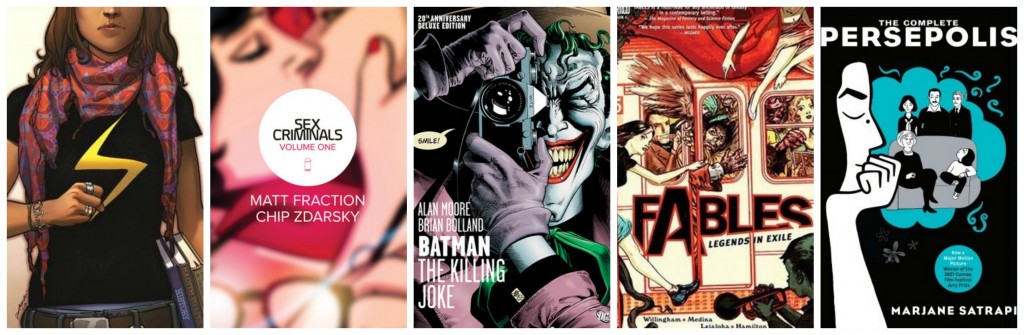
Ms. Marvel, Vol. 1: No Normal by G. Willow Wilson

Posted August 14, 2014 by Michael @ Knowledge Lost in Graphic Novel / 14 Comments

Ms. Marvel, Vol. 1: No Normal by G. Willow WilsonTitle: Ms. Marvel, Vol. 1: No Normal (Goodreads)
Author: G. Willow Wilson
Artist: Adrian Alphona, Sara Pichelli
Published: Marvel Comics, 2014
Pages: 120
Genres: Graphic Novel
My Copy: eBook

Buy: AmazonBook Depository (or visit your local Indie bookstore)

The new series of Ms. Marvel brings about an exciting new direction for Marvel Comics. Kamala Khan is the fourth character to take on the name Ms. Marvel and for the first time ever, we see a Muslim headlining the pages. Co-created Sana Amanat (editor), G. Willow Wilson (writer), and Adrian Alphona (artist) the new Ms. Marvel was created out of the need for a strong Muslim superhero. However, this is not only a hero that deals with struggling with their superpowers but a minority struggling to fit in with the American culture.

The comic depicts a 16 year-old Pakastani-American Muslim in New Jersey struggling with fitting in, family, religion, school and all the normal teenage struggles. Then one day she has an encounter with Ms. Marvel and she confesses that she wishes she was like her. This wish was granted and now Kamala has to work out not only what it means to be a Muslim woman in America but how to use her new shape shifting powers.

“This is not evangelism. It was really important for me to portray Kamala as someone who is struggling with her faith. Her brother is extremely conservative, her mom is paranoid that she’s going to touch a boy and get pregnant, and her father wants her to concentrate on her studies and become a doctor.” – G. Willow Wilson

What I found exciting about the new Ms. Marvel is the way this series tries to break the stereotypes. As a teenage Muslim living in America, Kamala has all these ideals and stereotypes projected onto her and she has to navigate through it all and work out who she is. Ms. Marvel represents everything she wants to be; a strong, beautiful woman standing for good. However when she becomes Ms Marvel she quickly realises that being a superhero doesn’t solve the struggle of a misfit. This new Ms. Marvel series isn’t just a struggle with new found powers; it is the everyday struggles she faces. Kamala slowly works out that her new powers, religion or heritage is not what defines her but they do play important roles in the person she wants to be.

“As much as Islam is a part of Kamala’s identity, this book isn’t preaching about religion or the Islamic faith in particular. It’s about what happens when you struggle with the labels imposed on you, and how that forms your sense of self. It’s a struggle we’ve all faced in one form or another, and isn’t just particular to Kamala because she’s Muslim. Her religion is just one aspect of the many ways she defines herself” – Sana Amanat

Interestingly there are a few mentions where Ms. Marvel is referred to as Captain Marvel, unfortunately I don’t know the back story of this but I think it is a positive step. Ms. Marvel was originally created as the female counterpart to Captain Marvel. The move to turn Ms. Marvel into Captain Marvel means that the female superhero is no longer considered the counterpart but a strong and dominate hero in her own right.

You may noticed that I haven’t mentioned anything about the art work and this is because I’m new to reviewing graphic novels and have not learned how to talk about art yet. I hope to learn to critically analyse the art but for now I’m leaving it out of this review, not because it is bad but because I don’t know what to say apart from it being good. No Normal is the conclusion of the first arc (first 5 issues) and I’m really looking forward to seeing where this series goes. I think it is fresh and exciting change for the better in the world of comics.

Top Ten Tuesday: Books I’m Not Sure I Want To Read

Posted August 12, 2014 by Michael @ Knowledge Lost in Top Ten Tuesday / 0 Comments

toptentuesdayIt’s Tuesday again which means time for another round of Top Ten Tuesday; I like joining in on this meme because I have a set topic to work with. Top Ten Tuesday is a book blogger meme that is hosted by The Broke and the Bookish and this week the theme is: Books I’m Not Sure I Want To Read. These are ten books that are on my shelf but I’m lacking motivation to read them. I think I need to be convinced to one way or another.

ttt-12-8-1

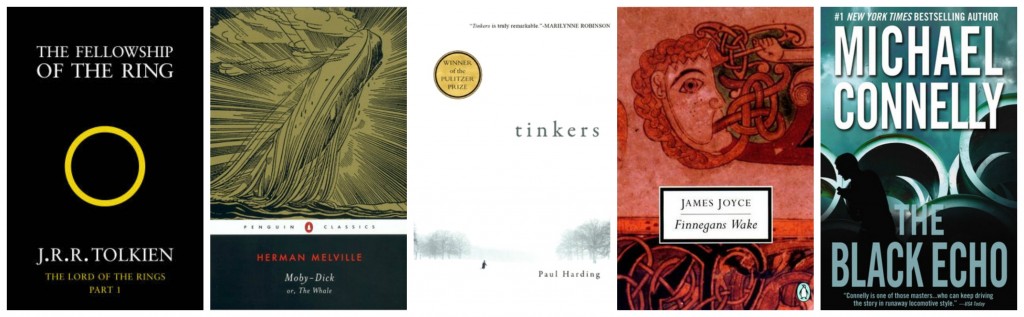
  • The Lord of the Rings by J.R.R. Tolkien
  • Moby-Dick; or, The Whale by Herman Melville
  • Tinkers by Paul Harding
  • Finnegans Wake by James Joyce
  • The Black Echo by Michael Connelly

ttt-12-8-2

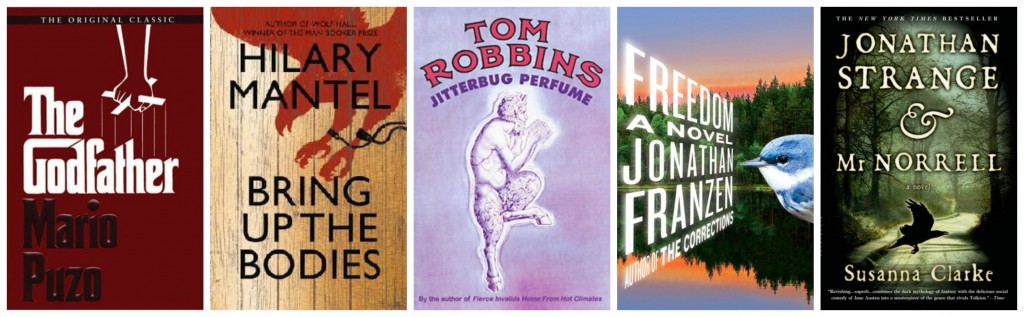
  • The Godfather by Mario Puzo
  • Bring Up the Bodies by Hilary Mantel
  • Jitterbug Perfume by Tom Robbins
  • Freedom by Jonathan Franzen
  • Jonathan Strange & Mr Norrell by Susanna Clarke

Grasshopper Jungle by Andrew Smith

Posted August 9, 2014 by Michael @ Knowledge Lost in Science Fiction, Young Adult / 3 Comments

Grasshopper Jungle by Andrew SmithTitle: Grasshopper Jungle (Goodreads)
Author: Andrew Smith
Published: Hardie Grant Egmont, 2014
Pages: 441
Genres: Science Fiction, Young Adult
My Copy: Library Book

Buy: AmazonBook DepositoryKindle (or visit your local Indie bookstore)

Sixteen-year-old Austin Szerba is just a normal teenager, who spends most of his time hanging out with his best friend Robby and his girlfriend Shann. There isn’t much to do in this small Iowa town except skate, smoke and dream of the day they can escape; that was until Austin and Robby accidentally brought on the end of the world. Now there is an unstoppable army of six-foot tall praying mantises on the rise that could end the existent of humanity.

“History is full of decapitations, and Iowa is no exception.”

Grasshopper Jungle is told as the history of the end of the world from the perspective of Austin Szerba. Unlike a diary, Austin prefers to document the entire history, interweaving the story of the story of his Polish legacy with the ending of the world, feeling it is important to have an account of what happened in this small town. This young adult novel is a cheesy sci-fright survival story, full of outlandish monsters and comical situations.

The beauty of this novel doesn’t come from the wacky plot it is with the protagonist himself. While the world is ending, Austin is struggling with his hormones and sexuality. At the heart of this novel is just a sixteen-year-old kid trying to make sense of his feelings; his hormones are always racing and everything under the sun seems to make him horny. Stuck in a small town mid-western where his Christian school had harsh words to him for reading The Chocolate War by Robert Cormier because it featured masturbating Catholics makes for an interesting backdrop. You have a situation where no one wants to talk about sexuality, but condemning masturbation and gay-bashing is perfectly acceptable.

“Stupid people should never read books.”

This is the type of book I like to read; it may have a bizarre plot happening but then it is also exploring an internal struggle. For Austin and most teenagers, their budding sexuality can be a confusing time; emotions are running wild and it is very easy to confuse on feeling for another. Robby has identified himself as a homosexual and it becomes clear in the novel that he has feeling for Austin. This makes it tricky; who does Austin talk to about his confusing feelings? He can’t ask his best friend, his girlfriend, a teacher or most adults. There was an awkward and funny scene within the novel where he attempts to ask his father.

One of the biggest things I took away from this novel is to do with labels; Robby identifies as a homosexual but doesn’t let that term define him. For obvious reasons he has to keep his sexual preferences a secret from the town but is out to the people he trusts. While Austin is struggling it has been suggested on a few occasions not to stop trying to define his sexuality and just be himself. This is a beautiful theme to have within this book and I would love to see the entire world take this on board. Obviously as a straight male, my sexuality was never a defining feature and I’m probably not the right person to be advocating this, but it is a great message.

“Do you think I’m queer, Rob?” I asked.
“I don’t care if you’re queer,” Robby said. “Queer is just a word. Like orange. I know who you are. There’s no one word for that.

I’m glad to have found a YA novel exploring such an important issue and I wish I knew of more like this. I feel like the majority of YA novels are not offering the help that a teenager might need. As an adult, it was interesting to see just how this book explored the topic of sexuality and continuously suggested to not let it define Austin. Sure, there is still a struggle and he is facing conflicting emotions; as a reader we watch him bumble along and make a fool of himself countless times, but this captures teenage life. I find myself being very impressed with Grasshopper Jungle, it is a fun and enjoyable read but at the heart of it, it has an important message.


Tigerman by Nick Harkaway

Posted August 7, 2014 by Michael @ Knowledge Lost in Literary Fiction, Thriller / 0 Comments

Tigerman by Nick HarkawayTitle: Tigerman (Goodreads)
Author: Nick Harkaway
Published: William Heinemann, 2014
Pages: 372
Genres: Literary Fiction, Thriller
My Copy: ARC from Edelweiss

Buy: AmazonBook DepositoryKindle (or visit your local Indie bookstore)

Nick Harkaway is fast becoming a favourite author of mine; Angelmaker was his take on the espionage novel while The Gone-Away World (I hate to admit this but still haven’t read this one) saw him take on the post-apocalyptic. His third novel Tigerman is his take on the superhero genre. While you might be surprised to see me speaking so highly on genre fiction, it is Harkaway’s approach that needs to be admired. His novels have a real focus on the genre but still manage to blend a high amount of literary fiction into the book and this is done so masterfully that you can read it without looking at the themes if you are so inclined (I don’t know why).

Lester Ferris is a sergeant in the British Army, serving in Afghanistan. That was until he was reassigned to the island of Mancreu, where he can serve out his remaining time before retirement without burning out. Mancreu is a former British colony on the verge of destruction. The island is described as the most toxic place on the planet; this is all thanks to the years of pollution and chemical dumping. The United Nations and the World Health Organisation has sent representatives to turn Mancreu into an “Interventional Sacrifice Zone”, which basically means everyone leaves so we can obliterate the island.

This island gives the novel an interesting background; on one hand it is home to a range of ethnicities, from Arabs, Africans, Asians and of course Europeans. Since this is a former British colony you can look at this novel through the lens of post-colonialism and get some great value out of it. Also, as the island is scheduled for destruction there is  a typical side effect; the lack of laws being enforced has led to a hotbed of unwanted criminals. Using the island to support their smuggling operations, a ring of illicit ships known as ‘the black fleet’ lurk in the bay.

Now you have a protagonist in Lester Ferris who is on the verge of burning out. He is nearly forty and has no family to speak of, his life seems to be the army and the horrors he would have seen serving in Afghanistan may have ruined him. His job is to try and keep the peace without stirring anything up; his position as a sergeant in the British Army on this former colony is purely decorative and he has been sent there to keep him out of the way.

On the island, he friends a street smart, comic obsessed kid which sparks a pseudo-paternal instinct within him. He doesn’t know how to look after a kid but the desire is there. He turns to a masked hero known as Tigerman in the effort to make the island a little better without causing a diplomatic incident. The concepts of being a vigilante and paternal instincts play a big part of Tigerman.

I find that Nick Harkaway often uses a great deal of wit, ambition and irony within his novels and I find Tigerman to be a much more mature offering. Harkaway has already proved his skills in the world of genre fiction but now his is flexing some serious literary muscle. Tigerman is proof that he should be taken seriously as a literary author for this emotionally touching and intellectually satisfying novel. For a fan of literary theories there is plenty to explore in Tigerman; I personally would put on my feminist, post-colonial or psycho-analytical hat if I was to approach this novel as a literary theorist, but I can see many different ways to go about analysing this novel. That is before considering all the intertextuality that runs wild within the novel.

This may be the fanboy within me speaking but I was yet again very impressed with Tigerman. I still hold a special place in my heart for Angelmaker and I think that will always remain my favourite but I have to wonder why I have not read The Gone-Away World yet. I have The Gone-Away World on my shelf and will make sure that I visit it in the not too distant future. What can I say, I’m impressed with Nick Harkaway and I love his unique and well balanced blend of wonderfully energetic genre fiction and smart, witty literary fiction.


Top Ten Tuesday: Books I’d Give To Readers Who Have Never Read Graphic Novels

Posted August 5, 2014 by Michael @ Knowledge Lost in Top Ten Tuesday / 10 Comments

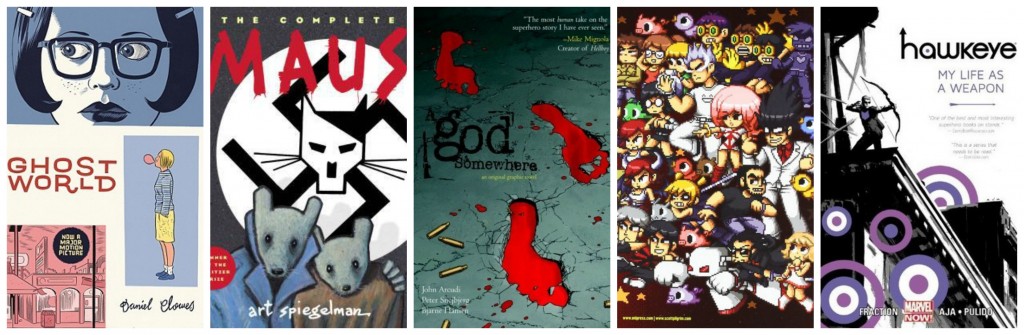
toptentuesdayIt’s Tuesday again which means time for another round of Top Ten Tuesday; I like joining in on this meme because I have a set topic to work with. Top Ten Tuesday is a book blogger meme that is hosted by The Broke and the Bookish and this week the theme is: Books I’d Give To Readers Who Have Never Read Graphic Novels. I wrote a post recently for Boomergang Books and have also done a First Steps post on the topic but lets revisit the topic.

ttt-19-8-1

ttt-19-8-2


Monthly Review – July 2014

Posted July 31, 2014 by Michael @ Knowledge Lost in Monthly Reading / 0 Comments

The Monk -This month we looked at the gothic and surprisingly satirical novel The Monk by Matthew Lewis. This was a lot of fun for me; I’m becoming a big fan of Juvenalian satire and was surprised to see what this gothic classic did with its social critique. While it might have been a little difficult for others, it is always great to leave our comfort zones and read something great. Next month we are dipping into some non-fiction when we read In Cold Blood by Truman Capote, which is considered one of the best books in the true crime genre.

As most might know, I’m currently on vacation so I have scheduled a whole lot of posts. This means, I’m not entirely sure what the next book will be but the theme was Thriller. At the point of scheduling it looked like a race between Gone Girl by Gillian Flynn and Child 44 by Tom Rob Smith. I have had a good reading month but I as this was written half way through the month I won’t share what I read this month. However I did enjoy The Monk and Wicked: The Life and Times of the Wicked Witch of the West by Gregory Maguire. What have you been reading this month and what were the highlights?

Read More


The Monk by Matthew Lewis

Posted July 30, 2014 by Michael @ Knowledge Lost in Classic, Gothic / 0 Comments

The Monk by Matthew LewisTitle: The Monk (Goodreads)
Author: Matthew Lewis
Published: Oxford World's Classics, 1795
Pages: 456
Genres: Classic, Gothic
My Copy: Paperback

Buy: AmazonBook DepositoryKindle (or visit your local Indie bookstore)

When The Monk was first published in 1796 it was surrounded by heated hatred and scandal. One critic claimed that The Monk was full of “Lust, murder, incest, and every atrocity that can disgrace human nature”; a line that now seems to commonly appear in the synopsis. While this novel is a transgressive gothic novel and possibly one of the first books to feature a priest in such a villainous way there is so much more going on within the pages. To begin, we must look at the context, and it is not surprising that this novel had so much anger towards it when it was released. The reader has to understand that this novel was released in a period of time where everything was changing. The church still played a huge role in English society but across the channel the French Revolution was raging on, so in the middle of a changing society came a novel that tried to explore the political and religious authoritarianism of the church.

The Monk is set in a sinister monastery in Madrid, were Ambrosio struggled between maintaining his monastic vows and falling to temptation. We follow this monk as desire turns to obsession, to rape and then murder in order to conceal the guilt. Ambrosio is a celebrated and devout monk of 30 years but we read his downfall due to desire and pride. This novel is a social commentary of everything wrong with the church as the author sees it. The Monk follows the story of Ambriosio’s disillusion, from a well-respected Monk, serving God to a psychologically scared man.

Matthew Lewis wrote this novel at 19 years old and I think it is important to mention that I don’t view The Monk as an indictment of God or the Church but more critique of the corrupting power that comes with the priesthood. When I read this I got the impression that Lewis wanted to explore the hidden struggles that come with the vows of a monk as well as the effects of power. When we think about all the evil the church has done, it is not God or religion that is to blame but rather the people. Guilt and power can corrupt and essentially we are looking at a man going to great lengths to disguise his transgressions.

This is not an easy read and I found myself struggling at times to get through this book but there is so much going on I found it hard to believe that when this was first published it was dubbed this gothic classic to be crude and lacking of depth. In the heavily censored edition of this novel published in 1798 saw all words like lust and desire removed from the text. Even words like enjoyment were removed and any mention of sex; I can’t imagine how the essence of The Monk would have remained with this heavily edited edition. While there was plenty of hatred toward the novel, the critics seemed to have mixed feelings towards it. Samuel Taylor Coleridge both praised and judged harshly in his article found in The Critical Review, saying “[the] underplot… is skilfully and closely connected with the main story, and is subservient to its development” and “The Monk is a romance, which if a parent saw in the hands of a son or daughter, he might reasonably turn pale.”

However The Monk looks at more than just the monastery, it even looks at what seems like an anti-feminist movement going on within the Church. The convent seems like a harsh place to live, the women brutally treated and never allowed to succeed. Woman are seen as the downfall of the monks and other woman but there is so much lust, desire and sexual misconduct that happens inside the walls of convents and monasteries. Matilda posed as a man in order to get close to Ambrosio, at first it wasn’t to seduce but to bask in his brilliance. She is portrayed as a she-devil but is it really her fault that Ambrosio gave into his earthly desires. As one critic stated “It is Ambrosio’s sexual ignorance and hence ‘innocence’ that makes him vulnerable to Matilda’s seduction” (Blakemore, 1998). This made me ponder and question the whole approach to life in a monastery, especially in an era where priests are more likely to be sexually ignorant.

I’ve mentioned a few times that The Monk was met with hatred and I think this is still true today; people tend to see the book as anti-religious, anti-Catholic and immoral but this is a problem with taking text to literally. The Monk is a satire and socially critiques the church in what feels like a comedic kind of approach. It happens that this is also a transgressive gothic novel so we have a very brutal and dark approach to the themes Matthew Lewis wants to explore. Near the start of the book I read the line “She was wise enough to hold her tongue. As this is the only instance known of a Woman’s ever having done so, it was judged worthy to be recorded here” and thought it was a little harsh; I soon began to see a real tongue in cheek approach emerging from this dark novel.

I started off thinking this was a gothic novel and it was going to be dark and serious but I soon found myself adjusting my approach. Once I got past my initial misconceptions I started to settle into this book and ended up really enjoying The Monk. It took a while to get into a groove and found the first part of the book to be particularly difficult to get through. Then the plot started to settle in and I was able to explore the themes and enjoy the journey I was taken on. I’m so glad I finally got around to reading this gothic classic, it is weird but wonderful. I hope everyone else enjoys it as much as I did.


Top Ten Tuesday: Authors I’ve Read the Most Books From

Posted July 29, 2014 by Michael @ Knowledge Lost in Top Ten Tuesday / 8 Comments

toptentuesdayIt’s Tuesday again which means time for another round of Top Ten Tuesday; I like joining in on this meme because I have a set topic to work with. Top Ten Tuesday is a book blogger meme that is hosted by The Broke and the Bookish and this week the theme is: Ten Authors I Own The Most Books From. I don’t catalogue all the books I own very well so here are the authors I’ve read the most books from.

  • Edgar Allan Poe
  • James Ellroy
  • Bryan Lee O’Malley
  • Jeff Lindsay
  • Raymond Chandler
  • Stephen King
  • Robert Louis Stevenson
  • Lawrence Block
  • Philip K. Dick
  • James M. Cain

Wow, that’s surprising and revealing


Write 750 Words Every Day

Posted July 27, 2014 by Michael @ Knowledge Lost in Writing / 2 Comments

writeRecently I have been trying to build a habit of writing every day. This was in the hopes to build good writing habits and improve my writing abilities. I decided to use a site called 750 words to help develop this habit. Basically the site sends me a reminder every day to write 750 words. It is a great little site, I’ve been using it to write drafts for my future blog posts and get down my blogging ideas as I go. I have written a lot of thoughts about the books I’ve been reading as I go along and I’ve noticed it has already started to have a positive effect on my blogging.

Not only have I got a record of my thoughts throughout the novel, it has helped me connect those thoughts I tend to forget about with a much larger idea. I’ve been notoriously bad at note taking and keeping a record of what I have thought of a book while reading but this has been a huge help. Not only have I forced myself to sit down and write about books but also since I need to make 750 words a day I often write more drafts and I’m hoping that shows through in my blogging.

One of the negatives I have notice about forcing myself to write is I am starting to get anxious about my writing. The other day I found myself getting upset with my wife for cutting into my writing time. I try to set a time to write every day after work and sometimes I finish it before she gets home but not all the time. My finger muscles are starting to hurt, I thought I typed enough as it is but it turns out that maybe I haven’t been and at times I have to type through the pain. Who knew that fingers had so many muscles that could hurt?

There is one really cool thing about the 750 words site that I find really cool and that is the stats. The site has put together so much information; I didn’t even know I needed that much detail but it has been interesting to see what it says. It analyses the text via a few different systems; a Regressive Imagery Dictionary (for the emotions), and a Linguistic Inquiry and Word Count system. I’m not sure what that means but it is interesting to look at the statistics it provides.

Currently I am on a 21 day streak and this post will go towards the 22nd day. I’ve averaged around 1200 words a day and it takes me about 47 minutes to complete 750 words. This is only a small glimpse of the data it gives you; it even has a daily breakdown. Some of the data is a little strange; I’m still trying to work out how I got a PG rating for sexual content from my review on The Secret Garden. I could have mentioned the secret garden being a metaphor for her sexuality but I don’t think I went down that road in that review. This post was actually rated PG for sexual content and violence if that makes any sense. It even tends to think I’m an extrovert in my writing, mostly feeling self-important and talking about leisure activities (I’m guessing that is books).

I am not sure how the data would help but it does provide me with some entertainment. I am more excited about the 21-day streak, I hope I continue to develop some positive writing habits and improve. Let me know if you have any suggestions that might help me improve as a writer and develop a good writing routine. Lastly I have to mention that 750 words is free to try for thirty days, might be enough to get you into a good habit. I’m not sure if I’m going to pay the $5 a month to keep my 750 words account but I think the positive impact it has had in my writing is pushing me towards continuing.


Rant about my TBR

Posted July 26, 2014 by Michael @ Knowledge Lost in Literature / 24 Comments

I’ve been thinking a lot about my TBR piles lately. I have this weird love-hate relationship and at the moment I’m feeling very stressed over it. You know that feeling you get when you see the piles of books you have on your shelves to read and you get that feeling that you have books coming in faster than being read? How do you deal with that?

I recently watched a vlog about killing their TBR and taking a minimalist approach to their bookshelf. I love that idea but I can’t help but feel like that would never work (for me anyway). I buy or receive books and I have every intention of reading them but then more books come in and those are new, exciting and shiny and they distract you from the books you already have.

I’m not the kind of person that can just organise my reading and have a pile of books to read and not waver. When I finish one book I tend to pick up whatever I’m in the mood for at the time. I love this reading on a whim approach to reading and it takes me through some interesting journeys but it isn’t very efficient. What about all those ARCs that I should be reading or those new books on my bookshelf? I have to force myself to read my book club books at times and that isn’t really ideal but it needs to be done.

This is a bit like a rant at the moment but I don’t know the answer, what should I do with my TBR? I’ve thought about culling my bookshelf and even getting rid of books I’ve not read just so I can have room for new books but that sounds scary. I know I can buy the book again if I decide I need to read it but giving up books is hard, too hard in fact. I probably can look at my shelves and wonder about some of the books. I know I’ve brought books in the past, excited to read them but then I lose interest and they just sit there waiting. I know it is the hype that is problem but I tend to think that my reading tastes have evolved so much that I’ve outgrown those books as well.

I need to take a year off work and dedicate my entire time to reading the books on my bookshelf; I think that is the only way I’m going to get a handle on my TBR. I’ve tried giving up buying books for a year but that didn’t work, it just forced me to use the library more, and I still use it frequently. I know, as far as problems go, this is a pretty decent problem to have but I just felt like ranting and wanted to know if people had advice for dealing with a TBR that won’t stop growing.