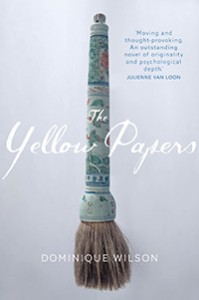
The Yellow Papers by Dominique Wilson

Posted April 10, 2014 by Michael @ Knowledge Lost in Historical Fiction / 0 Comments

The Yellow Papers by Dominique WilsonTitle: The Yellow Papers (Goodreads)
Author: Dominique Wilson
Published: Transit Lounge, 2014
Pages: 348
Genres: Historical Fiction
My Copy: Paperback

Buy: AmazonBook DepositoryKindle (or visit your local Indie bookstore)

In an effort to learn the secrets of the West, China sent a group of boys to America to be educated. This was following their defeat in the two Opium Wars in 1872. Seven-year-old Chen Mu was one of the boys sent to America; but at nine he fled to Umberumberka, a mining town in outback Australia. The Yellow Papers is a story of love, obsession and friendship set against a backdrop of war and racial prejudice.

The title refers to a Chinese tradition of determining a soul is at rest; this involves a priest determining if the death fell on a lucky day or not as well as performing some rituals. I couldn’t find much information about this process but the book suggests that the family is given yellow papers to indicate the soul is at rest. Also it may be interesting to note that the colour yellow is considered lucky in Chinese culture but Westerners use it as a racial slur. You might think this information would be useful and paid a big part in the novel, especially when it comes to tackling racism, but it doesn’t.

One of my major gripes with the novel is the fact that it attempts to look at a subject but ends up just glossing over it. The Yellow Papers tries to be a big sweeping historical epic but compact into 300 pages. This means that there are huge gaps that we have to fill in for ourselves and while this isn’t necessarily a bad thing it does detach the reader from the novel. The novel could go into detail about racism, culture clashing, even the Opium Wars but this book avoids dealing with these subjects in great detail.

While The Yellow Papers is essentially the story of Chen Mu, this book is broken into three parts that shifts into different focalisation.  Chen Mu, Edward and Ming Li are the primary focus on the three parts. While Chen Mu is not a well-developed character by any count, Edward and Ming Li’s development fell flat. Both characters are two dimensional with no real indication on personality or motivation. This causes The Yellow Papers to start off well but plateaued out a third of the way through the novel.

There is some beauty within the text; some of the syntax reviews great imagery. While Dominique Wilson never really gives us much to do with scenery, the discourse is often very revealing. “Since that evening the thought that she could not love him had festered like a cancer in his belly.” This sentence hit me pretty hard; the idea of not being love and cancer being used in the same sentence, an idea that suggests being unloved is both unwanted and weighed heavily on him. Sentences like this are found throughout the novel and what saved this book from abandonment.

I wasn’t happy with The Yellow Papers at all and while I see some beauty in Dominique Wilson’s writing, I think she needed to flesh this one out a lot more. It is her first novel and I’m sure she learnt from writing it; her next novel will really determine my opinion of her style. As I’ve said, I found beauty in the syntax, enough to try her again.

Top Ten Tuesday: Important Books

Posted April 8, 2014 by Michael @ Knowledge Lost in Top Ten Tuesday / 12 Comments

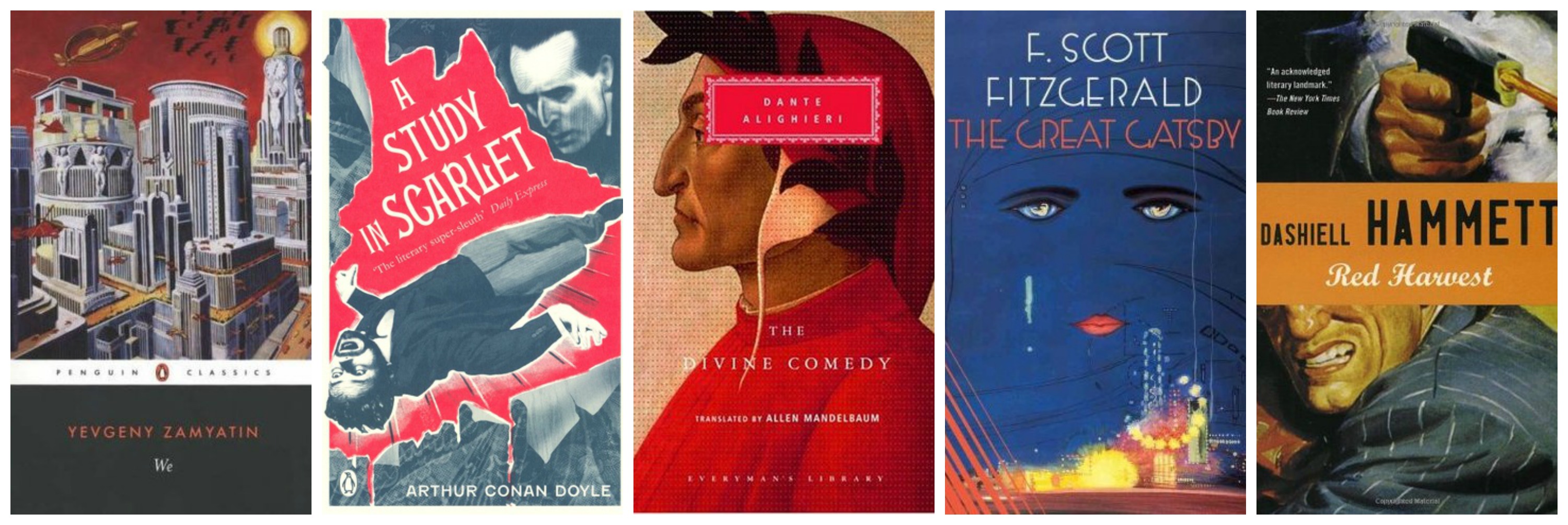
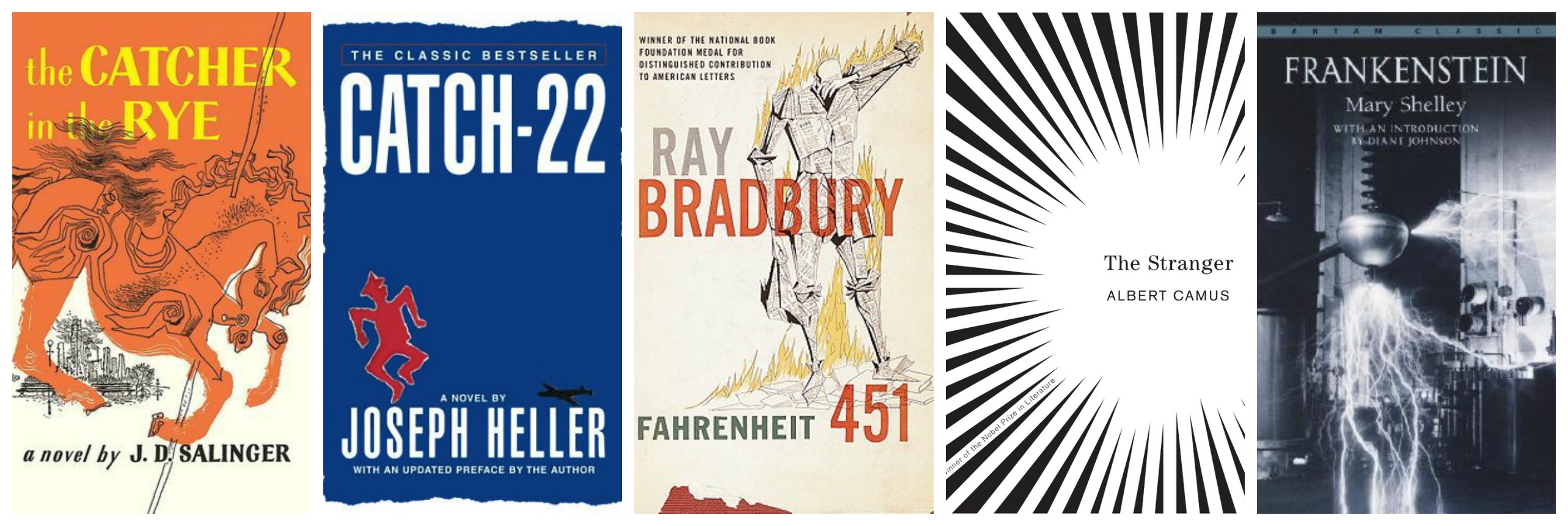
toptentuesdayIt’s Tuesday again which means time for another round of Top Ten Tuesday; I like joining in on this meme because I have a set topic to work with. Top Ten Tuesday is a book blogger meme that is hosted by The Broke and the Bookish and this week the theme is: Most Unique Books. I’m not sure if I can find ten books that did something different from the norm, so I’m going to do books (that I’ve read) that are important for the way they helped shape or change the world of literature.

ttt-7-4-1

  • We by Yevgeny Zamyatin – this novel is credited as the first dystopian novel.
  • A Study in Scarlet by Arthur Conan Doyle – May not be the first detective novel but it revolutionised the genre.
  • Divine Comedy by Dante Alighieri – An collection of epic poems that dive into the realms of Hell, Purgatory and Heaven
  • The Great Gatsby by F. Scott Fitzgerald – for it’s commentary of the Jazz age and the American dream.
  • Red Harvest by Dashell Hammett – may not be the first pulp novel but it is credited for being Hard-Boiled fiction to a wider audience.

ttt-7-4-2

  • The Catcher in the Rye by J.D. Salinger – for the way it adolescent alienation and angst
  • Catch-22 by Joseph’s Heller – a satirical look at the military and its bureaucracy
  • Fahrenheit 451 by Ray Bradbury – Censorship, book banning and the importance of literature.
  • The Stranger by Albert Camus – because we need a bit of existentialism in our literature.
  • Frankenstein by Mary Shelley (of course) – this novel deals with a wide range of topics; Romanticism, science, feminism and so on, as well as being a milestone in Horror and Science-Fiction.

A Two Year Reflection

Posted April 6, 2014 by Michael @ Knowledge Lost in Literature / 4 Comments

One of the things I love about book blogging is just expressing my bookish thoughts, the stuff I’ve been thinking about. My goal was to post a non-review at least once a week (Saturday) but sometimes life gets in the way, you get busy and fall behind on book reviews. I’m pleased to say I’ve written all my book reviews so now I can get back to what I love about book blogging. Two years ago (this month) I started book blogging, my newfound love for literature was evident on my now neglected autodidactic blog Knowledge Lost and I felt the need to document my reading journey.

While this book is a documentation of my reading journey over the past few years, I also want to share my bookish thoughts. It is interesting to see how much they change over the course of a few years. So this post is kind of like a reflection of the past few years and see how much things have changed. Surprisingly for two years of blogging, Literary Exploration has just over 600 posts and over 340 of those are book reviews. While I would like to see more non-review posts, I’m very happy with the direction this blog has taken.

Over the past few years you can see just how much my reading (see my infographic) and book reviews have improved, as I grow as a reader so does this blog. I’ve gone from avoiding re-read books to wanting to re-read favourites just so I can blog about those books. That is one of the biggest problems with book blogging, so many books I’ve read before blogging that I need to re-read just so I can add them to my review list. My literary wall of shame is now a little less shameful (I should write a new one), I still dislike eucatastrophic endings and I’m still planning to complete the 1001 Books You Must Read Before You Die list.

As for literary studies, most people know that I’m now starting at university part time, but I feel like my autodidactic studies are more educational. Those concepts of metafiction, satire and formalism (post coming soon) are all concepts I feel like I’ve got a handle on but still hope to learn about in more detail. If I were ever to teach an introduction course to literature, I probably would still pick the same books as those in this post.

It’s been a great two years, I love book blogging and I don’t plan to let up anytime soon. If I was better at self-editing I would probably try to post every day but unfortunately that is still a pipe dream. Though pop-culture is still destroying literature, books are still better than their movie adaptations. Books are here to stay, even if it feels like there is less and less people reading. I hope book bloggers are here to stay as well, but I would love to see more male bloggers out there.


Breakfast at Tiffany’s by Truman Capote

Posted April 3, 2014 by Michael @ Knowledge Lost in Classic / 2 Comments

Breakfast at Tiffany’s by Truman CapoteTitle: Breakfast at Tiffany’s (Goodreads)
Author: Truman Capote
Narrator: Michael C Hall
Published: Penguin, 1958
Pages: 157
Genres: Classic
My Copy: Audiobook

Buy: AmazonBook DepositoryKindle (or visit your local Indie bookstore)

Breakfast at Tiffany’s is a romantic comedy starring Audrey Hepburn that the Library of Congress has recently deemed “culturally, historically, or aesthetically significant”. It was a cheesy and mildly offensive (Mickey Rooney’s character) adaptation of Truman Capote’s novella of the same name. I recently had a chance to read Breakfast at Tiffany’s before rewatching the classic film and as I expected, another Hollywood butchering.

Breakfast at Tiffany’s tells the story of the unnamed narrator and Holly Golightly who are tenants in the same Upper East Side brownstone. The novella follows the narrator’s observations the life of this Manhattan café society girl. Holly has no job, but she survives by socialising with wealthy men who in turn give her money and expensive gifts.

It is important to note that Truman Capote has stated that Holly Golightly is not a prostitute; this is a popular misconception that I believe is debunked in the novel (but doesn’t mean it’s wrong). There is a conversation about three thirds of the way through this novella where Holly says she could never be a prostitute, she can’t separate love and sex. Even Capote came out and say that she wasn’t a prostitute, saying in an interview that “[Holly] was the prototype of today’s liberated female and representative of a whole breed of girls who live off men but are not prostitutes. They’re our version of the geisha girl.”

It is hard not to compare Breakfast at Tiffany’s the novella with the movie, everyone has seen the movie but I wish the book was celebrated for its brilliance. The movie has a focus on romance but that’s way off. What I found in the novel was friendship, isolation and on a very basic level hopes and dreams. There was an element of love in the novella but less traditional love, more of a focus on unrequited love (the wealthy men’s towards Holly) and love between friends.

I do have to wonder if the unnamed narrator has an autobiographical element to him. Both the narrator and Truman Capote share the same birthday, (the same birthday as me, 30th of September). I don’t know much more about Capote’s life but sharing a birthday makes me wonder. Holly was modelled after multiple women in Capote’s life, women he considered friends. I might find a biography of Truman Capote to learn more about it.

I listened to the audiobook of this novella read by Michael C. Hall and all I can think of was Dexter Morgan. The unnamed narrator in Breakfast at Tiffany’s had a similar narration style to that of Dexter and I kept waiting for something slightly sinister to happen. None of the characters were sociopaths like Dexter but I do think it enhanced my experience.

I loved this novella and highly recommend it to anyone who hasn’t read it. I didn’t remember reading much from the movie when I picked up this book; luckily, I think that might have tainted the experience. Capote’s writing was incredible and I feel like I need to read more of his, In Cold Blood is obviously a priority, although a biography might be beneficial first.


Top Ten Tuesday: “Gateway” Books In My Reading Journey

Posted April 1, 2014 by Michael @ Knowledge Lost in Top Ten Tuesday / 8 Comments

toptentuesdayIt’s Tuesday again which means time for another round of Top Ten Tuesday; I like joining in on this meme because I have a set topic to work with. Top Ten Tuesday is a book blogger meme that is hosted by The Broke and the Bookish and this week the theme is: Top Ten “Gateway” Books In My Reading Journey. Basically a list of books that played a significant role in my reading journey, from the start, discovering Russian literature, breaking reading slumps and so on.

PicMonkey Collage

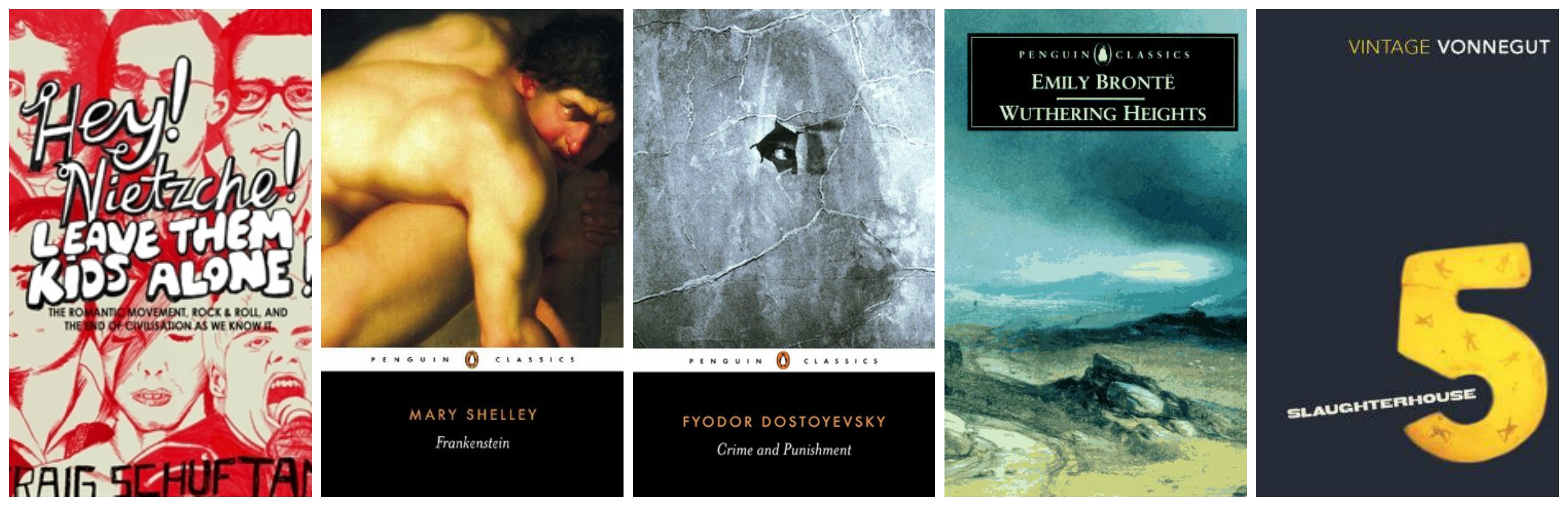
  • Hey! Nietzsche! Leave Them Kids Alone! by Craig Schuftan – started my love of reading, the Romantics and learning
  • Frankenstein by Mary Shelley – the book that really started my passion for reading
  • Crime and Punishment by Fyodor Dostoyevsky – cemented my passion for Russian literature
  • Wuthering Heights by Emily Brontë – found a love for the Victorian gothic novel
  • Slaughterhouse Five by Kurt Vonnegut – developed an interest in philosophical science fiction

PicMonkey Collage2

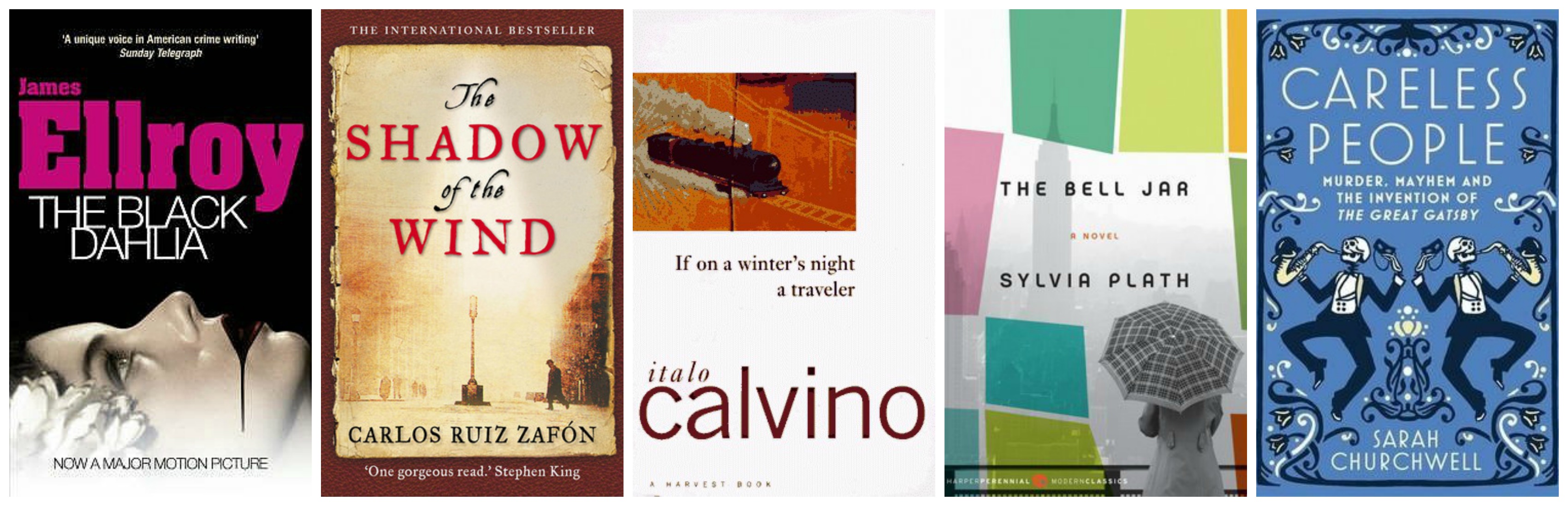
  • The Black Dahlia by James Ellroy – developed an interest in mysteries and pulp fiction
  • The Shadow of the Wind by Carlos Ruiz Zafón – the book you recommend to everyone as a gateway book
  • If on a Winter’s Night a Traveler by Italo Calvino – an interest in post-modernism (sadly not much of an understanding yet)
  • The Bell Jar by Sylvia Plath – broke a major reading slump last year
  • Careless People by Sarah Churchwell – I credit this book for a new interest in non-fiction

Monthly Review – March 2014

Posted March 31, 2014 by Michael @ Knowledge Lost in Monthly Reading / 0 Comments

middlesex

As March comes to a close it is time to look at our reading journey for the month again. This month we took a look at Middlesex by Jeffrey Eugenides, a fascinating look into Greek heritage and intersexuality. I hope everyone has had a wonderful month of reading and had time to fit this award-winning novel into their busy schedule. Still a lot of action happening with the reading challenge as well; looks like two hundred books been added this month. For those who don’t know about the reading challenge, there is still time to join in the fun, so check out my post here.

A reminder that next month’s book will be The Magician by Levi Grossman for our fantasy theme. I haven’t read this novel before but I’ve heard good things. Marketed as Harry Potter for adults, which makes me a little worried. I’ve not read Harry Potter before but always cautious when a book is marketed to be the next of anything.

Highlights for my month’s reading included Middlesex of course but also By Blood We Live by Glen Duncan, and Alif the Unseen by G. Wilson Willow. The biggest highlight was Truman Capote’s Breakfast at Tiffany’s, an exciting novella that surpassed all my expectations; heaps better than the movie. What have you been reading this month and what were the highlights?

Read More


Middlesex by Jeffrey Eugenides

Posted March 30, 2014 by Michael @ Knowledge Lost in Book of the Month, Literary Fiction / 6 Comments

Middlesex by Jeffrey EugenidesTitle: Middlesex (Goodreads)
Author: Jeffrey Eugenides
Published: Bloomsbury, 2002
Pages: 529
Genres: Literary Fiction
Buy: AmazonBook DepositoryKindle (or visit your local Indie bookstore)

When Jeffrey Eugenides set out to write Middlesex he wanted to “[tell] epic events in the third person and psychosexual events in the first person”. He had decided that the voice “had to render the experience of a teenage girl and an adult man, or an adult male-identified hermaphrodite”. This was no easy task; he had to seek expert advice about intersexuality, sexology, and the formation of gender identity. His motivation came from reading the 1980 memoir Herculine Barbin and being unsatisfied by the lack of detail about intersex anatomy and his emotions.

”I was born twice: first, as a baby girl, on a remarkably smogless Detroit day in January of 1960; and then again, as a teenage boy, in an emergency room near Petoskey, Michigan, in August of 1974.”

If you’ve read Jeffrey Eugenides before you will know he doesn’t just stop at one issue, Middlesex is also loosely based on his life and is used to explore his Greek Heritage. While the book’s main protagonist is Cal Stephanides, Middlesex is a family saga that explores the impact of a mutated gene over three generations. Starting with Cal’s grandparents, the novel looks at their escape from the ongoing Greco-Turkish War and emigrating from Smyrna in Asia Minor to the United States. This section has similar themes to most immigration stories, looking at Greek and US culture in the 1920’s as well as their efforts to assimilate into American society. However this is overshadowed by the fact that Cal’s grandparents are also brother and sister.

Middlesex continues to follow the Stephanides family through the story of Cal’s parents and eventually his life. While the reader gets glimpses of Cal’s life throughout the novel, the last part is where we really explore how the 5-alpha-reductase deficiency (a recessive condition that caused him to be born with female characteristics) impacted his life. While I got the impression that this was the main focus of the novel and to some extent it is, I was expecting to explore the struggle and emotions behind his condition to a greater extent.

Jeffrey Eugenides has a lot going on his novels and you really need to be a literary critic to enjoy Middlesex to the full extent. I love Eugenides because he is too smart for his own good, on a basic level you can enjoy his novels but there is so much going on underneath that rereading is almost essential. Middlesex is a family saga but there are elements of romance, history, coming of age and, because of his Greek heritage, tragicomedy. You could spend hours exploring the hysterical realism and metafictional aspects from this book. For example; does Cal’s condition have any bearing on where he is narrating this novel from? Berlin, a city that also was divided into two (East and West). Also, why does the narrative style switch between first and third person? Some parts of the story are told in first person but Cal would never have been able to recount what happened in that kind of detail. Is this to evoke confusion within the reader, forcing them to just feel a fraction of what Cal must be feeling?

This is an incredibly complex novel and I feel like I’ve only scratched the surface of what Jeffrey Eugenides has done. This is in fact the third of his novels I’ve read and sadly that is all of them for now. While I did enjoy Middlesex I found more joy from The Virgin Suicides (which deals with suicide) and The Marriage Plot (dealing with mental illness). I really appreciate the themes Eugenides explores and the complexities of his novels, but personal opinion is going against the norm here. Middlesex is probably his most recognised novel; it even won the Pulitzer Prize for Fiction.

Don’t let the complexity of Middlesex put you off reading this fantastic novel; sure, there is a lot there but it still worth picking up. You can spend as much time as you want exploring its depths but in the end you’ll come away with something. It is a compelling read that will stay with you well after finishing it. This is the perfect type of novel to pick up for a book club.


The Black-Eyed Blonde by Benjamin Black

Posted March 28, 2014 by Michael @ Knowledge Lost in Pulp / 6 Comments

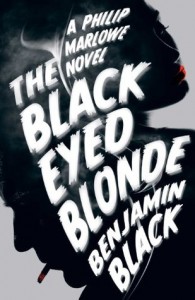
The Black-Eyed Blonde by Benjamin BlackTitle: The Black-Eyed Blonde (Goodreads)
Author: Benjamin Black
Series: Philip Marlowe #10
Published: Mantle, 2014
Pages: 256
Genres: Pulp
My Copy: ARC from Netgalley

Buy: AmazonBook DepositoryKindle (or visit your local Indie bookstore)

Resurrecting iconic literary characters is tricky business and when John Banville (under the pseudonym Benjamin Black) signed on to write another Philip Marlowe novel, I was worried. Most people know I am a huge fan of Marlowe, the hard-boiled detective created by Raymond Chandler, but something in me had to know if The Black-Eyed Blonde was any good. Now I’m left to decide if to review this as a Philip Marlowe novel or cliché pulp.

The premise is simple; a blonde bombshell, Clare Cavendish, seeks out Marlowe to find her missing lover Nico Peterson. If we look at the tropes of pulp fiction, in particular hard-boiled detective novels than we must suspect Clare to be the femme fatale and the case would be full of unexpected twists and turns. In both aspects The Black-Eyed Blonde failed to deliver anything interesting; Clare was attractive and seductive but never really had an air of mystery about her and the case felt too cut and dry.

Now let’s look at the protagonist; clearly not Philip Marlowe but someone trying to impersonate this great detective. Marlowe is a modern day knight in shiny armour; in a world of corruption he is incorruptible. He is also a flawed character; Raymond Chandler’s Marlowe is a loner, bitter, cynical, quick witted with a silver tongue. The Marlowe portrayed here was a much older, slower babbling mess; nothing really rang true. You can look at the amount of alcohol Chandler’s Marlowe drinks and wonder just how a man can function but in this novel while he drank a lot, the Mexican beers don’t sit right. Also you have to wonder about the dialogue; the Marlowe in The Black-Eyed Blonde talked differently, I tried to place the way he spoke and all I could think was this character was from Brooklyn.

Since nothing in this book felt like a Philip Marlowe novel, I tried to read The Black-Eyed Blonde in the same way I would read any other pulp. I tried to separate my love of Philip Marlowe and Raymond Chandler’s writing to give a fair review but it is hard to separate the two. Even if I judge The Black-Eyed Blonde as a standalone novel I still feel like the whole thing was a bit flat. There are some decent moments in this book and I was mildly entertained, however I doubt I will ever read a Benjamin Black novel again based on this experience.

I really want to see more Philip Marlowe stories but everyone who attempts it seems to butcher the character. The Black-Eyed Blonde was better than Perchance to Dream but the bar was set so low that I think Benjamin Black must have tripped over it. Do yourself a favour; stick to Raymond Chandler. If you’ve never read a Philip Marlowe novel start with The Lady in the Lake, it is a good introduction to the character and the style without being overly complex. For me, I may just reread the series (an excuse to blog about them) and try Chandler’s short stories.


By Blood We Live by Glen Duncan

Posted March 26, 2014 by Michael @ Knowledge Lost in Horror, Literary Fiction / 4 Comments

By Blood We Live by Glen DuncanTitle: By Blood We Live (Goodreads)
Author: Glen Duncan
Series: Bloodlines #3
Published: Knopf Doubleday, 2014
Pages: 368
Genres: Horror, Literary Fiction
My Copy: Hardcover

Buy: AmazonBook Depository (or visit your local Indie bookstore)

It’s a sad day for me; Glen Duncan’s Bloodlines trilogy has finally come to an end. This series has been a favourite of mine and I have been desperate to get my hands on By Blood We Live. If you don’t know, this trilogy started off as a bit of a joke for Glen Duncan. One New Year’s Eve party he jokingly claimed that he would write a page-turner with werewolves, and “none of my usual philosophical angst or moral inquiry.” Having recently been dumped from a publisher (he had no best sellers and had won no awards) the move towards literary genre fiction was a recipe for success for Duncan.

In the early planning stages, Glen Duncan had planned to write a “clever narrative with a memorable antihero at its feral, furry heart”. Being disappointed by the recent wave of popular paranormal novels (Twilight, etc) Duncan drew from the horror novels he loved (Frankenstein and Dracula) as well as his favourite werewolf movie (An American Werewolf in London); the end result was The Last Werewolf. It was Duncan’s take on the werewolf novel; remaining true to the mythology, unlike other paranormal novel The Last Werewolf was gritty, violent and over sexed. Jake Marlowe is the last werewolf alive, with the pending extinction of his new race, will he give up? The novel was nothing like other horror novels I read, this was dark and literary.

Then came Talulla Rising, which continued the story, this time from the point of view of Talulla Demetriou; a strong female protagonist that both kick-assed and was full of inner torment (my catnip). Where The Last Werewolf looked at life and loneliness, Talulla Rising forced more on love and family. It has been a two year wait but finally By Blood We Live was finally released to conclude this fantastic trilogy.

In By Blood We Live we follow both Remshi, 20,000-year-old vampire that has been haunted by Talulla in his dreams. Having half the novel from a vampires perspective is an interesting change for fans of the series. This novel focuses on survival and humanity, which are both common elements in a paranormal novel but a nice way to tie this trilogy together. Talulla is been pursued by a Vatican-based Militi Christian group of monster hunters who have taking the place of the now defunct WOCOP (World Organisation for the Control of Occult Phenomena).  Remshi tries to uncover why Talulla haunts him as well as trying to stop the recklessness of a newly turned vampire.

While I wasn’t disappointed by By Blood We Live, I felt like this book wasn’t as great as its predecessors. It did conclude the trilogy and there were some great moments within the novel, I just felt like it had less to say than the first two. The literary wasn’t as prominent, almost like Glen Duncan is moving into the realm of best-selling author. While he does deserve the success, I would hate to see Duncan throw away any sign of the literary in his future novels. Rest assured that the dark and gritty feel to this series is still there. Something I must have looked in the first two novels was the amount of literary and pop culture references have been made; I know they were always in this series but I noticed them so much more in this novel.

I loved this series and I plan to reread them sometime in the near future; I know I’ll need to return to these witty and dark novels. I also have to try some of his other books, I know he said he wasn’t going to add his “usual philosophical angst or moral inquiry”, but I’m so glad he did, it really works for him. I hope Glen Duncan continues on his literary genre fiction journey and I’m eagerly awaiting what he does next. Has anyone else read this series? Or does anyone want to try to predict what genres his next book will cover?


Top Ten Tuesday: Books on my Bookish Bucket List

Posted March 25, 2014 by Michael @ Knowledge Lost in Top Ten Tuesday / 12 Comments

toptentuesdayIt’s Tuesday again which means time for another round of Top Ten Tuesday; I like joining in on this meme because I have a set topic to work with. Top Ten Tuesday is a book blogger meme that is hosted by The Broke and the Bookish and this week the theme is: Books on my Bookish Bucket List. These are books I plan to read to increase my pretentious levels but feel like I need to become a better reader first.

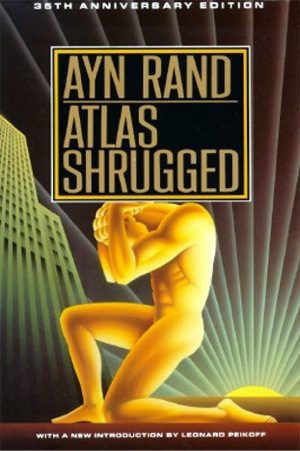
  • Atlas Shrugged by Ayn Rand
  • Don Quixote by Miguel de Cervantes Saavedra
  • Finnegans Wake by James Joyce
  • In Search of Lost Time by Marcel Proust
  • Middlemarch by George Eliot

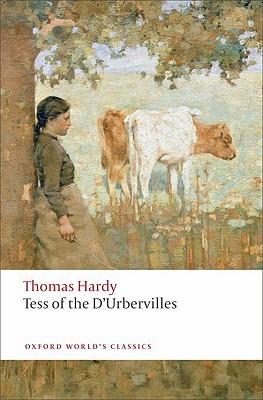
  • Tess of the D’Urbervilles by Thomas Hardy
  • The Brothers Karamazov by Fyodor Dostoevsky
  • The Iliad and the Odyssey by Homer
  • The Savage Detectives by Roberto Bolaño
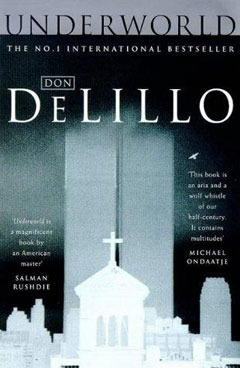
  • Underworld by Don DeLillo