Why I Read Confronting Books

Posted November 21, 2013 by Michael @ Knowledge Lost in Literature / 4 Comments

I listen to a lot of bookish podcasts and one of my favourites is The Readers. This week on The Readers they talked about Comforting vs. Confronting Reading which got me thinking. So I thought I would try to articulate my response about Confronting Reads. I read a lot of confronting books and I have been thinking about why I do this for a while now. When The Readers spoke about this topic I thought it was time to blog about it.

One of the reasons I like confronting reads has something to do with my interest in transgressive fiction. I like to understand the mind-set of flawed characters and how their minds work. I have an interest in psychology, while I doubt I’ll ever fully understand it completely. It is the same reason why I like TV shows where the men always make mistakes. There is something about getting into the mind of someone who is making mistakes so you don’t have to.

Consider this; if you read Lolita by Vladimir Nabokov, Tampa by Alissa Nutting, The Yearning by Kate Belle, Me and Mr Booker by Cory Taylor and other books with similar themes, does that make you more likely to be a paedophile? I think not. Reading is an emotional experience and if you are part of the suffering and the mistakes of the protagonist, then you probably don’t want to experience it in a more extreme and realistic way. For me, I read about serial killers because I want to understand why a person would have that desire to kill without having first hand experience. Does that make sense or am I missing something here?

There are also many other reasons to read a confronting book; most of these books are satirical and are trying to send a message. Look at Tampa, not only is this a disturbing look at a female sexual psychopath, it is also a look at the schoolboy fantasy of an older woman or the fantasy of getting a boy before he has been corrupted by society; trying to show the reader that these fantasies are extremely damaging. A young boy is not developed enough to handle a purely sexual relationship with an older woman without getting attached or if you get a man before he is corrupted, you are just doing the corrupting.

I find a confronting novel far more enjoyable, I like the macabre and I like a darker plot, but most of all I like that satirical messages in these book (read my post on Satire if you still think it is meant to be humorous). The lessons learnt and the experiences had, may prevent me from making the same mistakes. I’ve made plenty of bad mistakes in my past and the consequences are not pretty. I much rather someone else experience them while I enjoy the book with a cup of tea in my hand. What do you think about confronting reads? Are there more reasons to read them that I haven’t covered here? Let me know in the comments.


Harvest by Jim Crave

Posted November 20, 2013 by Michael @ Knowledge Lost in Historical Fiction / 0 Comments

Harvest by Jim CraveTitle: Harvest (Goodreads)
Author: Jim Crave
Published: Picador, 2013
Pages: 272
Genres: Historical Fiction
My Copy: Library Book

Buy: AmazonBook Depository (or visit your local Indie bookstore)

A group of strangers arrive in the woodland borders and put up a make-shift camp. That same night a manor house is set on fire. Following that the harvest is blackened by smoke, the strangers are cruelly punished and there is suspicion of witchcraft afoot. Harvest tells the story of the economic progress following the Enclosure Acts that disrupted the pastoral paradise of a small remote English village.

Jim Crave uses the tragedies, pillaging and other disruptions in an effort to evoke the effects of England’s fields being irrevocably enclosed. I never really knew when this book was set but upon researching the Enclosure Acts I’ve since found that this novel is most likely set sometime between 1750 and 1860. This Act basically removed the existing rights the locals had to carry out activities like cultivation, cutting hay, grazing animals, using other resources such as small timber, fish, and turf.

While some people saw these acts as the building blocks to a capitalist future, others thought of this as an attack on the peasantry. You know the old complaint, parliament are only looking after the major landowners; the rich get richer. Sometimes the enclosures were carried out with force and extreme measures were used.

In Harvest we read about a pastoral idyll as it starts to unravel with the major changes in land rights. Jim Crave’s look on the subject is done in an interesting way; I didn’t read this book as a depiction of changes in land rights. I read this as a community so cut off from the rest of the world that it started imploding as soon as outsiders were introduced. Sure, the whole point of the book was the Enclosure Acts; my brain just took a different direction.

While this book felt a little dark, like life was harsh and cruel; all the things I enjoy in a novel, it just didn’t feel right. I felt the grittiness and yet I felt a little bored and disappointed by Harvest. I’m not sure if it was a problem with the novel, I felt like I was in a reading slump and I was forcing myself to complete the book before I needed to return it to the library.

Then again, the first impression is often the correct one. I spent a lot of time thinking if this was a problem with the novel or a problem with me at the time. In any case, it doesn’t matter, I didn’t enjoy it and I’m not sure revisiting it later will change my mind. Well written with the normal historical fiction tropes, but I felt like the novel dragged on. This should have been catnip for me but I just couldn’t find a connection.


Top Ten Tuesday: Books I’d Recommend to my Dad

Posted November 19, 2013 by Michael @ Knowledge Lost in Top Ten Tuesday / 10 Comments

toptentuesdayIt’s Tuesday again which means time for another round of Top Ten Tuesday; I like joining in of this meme because I have a set topic to work with. Top Ten Tuesday is a book blogger meme that is hosted by The Broke and the Bookish and this week the theme is: Books I’d Recommend to X Person. I decided to pick my dad as he’s the biggest reader in my family (apart from me) and he is the only person I get an opportunity to buy books for as presents. I normally buy him a book that I love but I’m not sure if he reads them; he normally reads old classics. So here are some great books a little out of his comfort zone (but not too much, just enough to broaden his horizon’s) but still brilliant reads.

  1. Shadow of the Wind by Carlos Ruiz Zafón (actually a default recommendation for everyone)
  2. If on a Winter’s Night a Traveler by Italo Calvino
  3. A Constellation of Vital Phenomena by Anthony Marra
  4. The Bell Jar by Sylvia Plath
  5. The Remains of the Day by Kazuo Ishiguro
  6. Burial Rites by Hannah Kent
  7. The Marriage Plot by Jeffrey Eugenides
  8. The Trial by Franz Kafka
  9. Ethan Frome by Edith Wharton
  10. Main Street by Sinclair Lewis

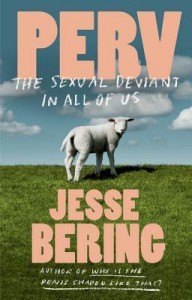
Perv: The Sexual Deviant in All of Us by Jesse Bering

Posted November 17, 2013 by Michael @ Knowledge Lost in Non-Fiction / 2 Comments

Perv: The Sexual Deviant in All of Us by Jesse BeringTitle: Perv: The Sexual Deviant in All of Us (Goodreads)

, 2013
Pages: 288
Buy: AmazonBook Depository (or visit your local Indie bookstore)

Jesse Bering, award-winning columnist and psychologist, wants to talk about perversions. We are deviants in one form or another; we may not be paedophiles, or into voyeurism and exhibitionism but there maybe something in our past we rather not discuss. In Perv, Jesse Bering looks at the psychology of having a fetish outside the norm and compares it to the difficulties he faced growing up in the 70s and 80s as a gay man.

This is an interesting book; it doesn’t condone sexual abuse or committing a sex crime. This rather looks at the psychology of paraphilia’s and makes the reader think about it in a different light. Just because someone has a fetish for something unusual doesn’t make them any less human. Bering looks at cultural thought, imprinting, conditioning and compares them to his own struggles as a homosexual.

While he looks at things like zoophiles, paedophiles and bestiality, he also looks at other perversions. Cross dressing, bondage, sadism and tries to get the reader to accept people as human. Just because they have this desire doesn’t mean they are committing crimes, these people are struggling and dealing with the guilt. As Bering states, sometimes they often feel like they have three options in life; depressive sleep, being institutionalised or suicide. Neither of these solutions seems effective at solving the problem.

I thought I had a decent understanding of the GSM (Gender and/or sexual minority or LGBT if you prefer) lifestyle but this just throws so many questions. I’m not comparing GSM with paedophilia, I’m just saying that the psychology of sex is so complicated and how can you treat people with paraphilia without a decent grasp on it. Especially a paraphilia that was so rare that no one bothered to find the Greek name for it.

There wasn’t much about paraphilia’s as I wanted; I was hoping to learn more about these ‘out of the norm’ sexual preferences. Not because I want to make fun of them, the whole thing is just fascinating. My favourite paraphilia discovered from this book is auto-plushophilia (look it up). I think this book looked at paraphilia’s in a new light, I hope this will help me understand them a little better and make it easier to accept them. I now think the Diagnostic and Statistical Manual of Mental Disorders approach to paraphilia’s are very dated and destructive. If psychologists don’t approach the treatment of these people struggling in a more accepting and human way then these people will never get the help they are seeking.


Book Buzz or Manipulation?

Posted November 16, 2013 by Michael @ Knowledge Lost in Literature / 8 Comments

Recently I found myself reading, and discussing on twitter, a particular piece found on the NetGalley tumblr page. This article is a typical puff piece about how great NetGalley is and what they can do to create book buzz and make a book popular. It was transcript of a speech Lindsey Rudnickas (NetGalley’s Digital Marketing Manager) gave on ‘“Book Buzz & Discoverability in the Future of Storytelling’. Basically she was saying, give NetGalley your business and we can make your upcoming book a hit.

Sure, this was a typical marketing pitch but it left a bad taste in my mouth. I felt more like a tool (the literal meaning of tool) rather than a book blogger. I use NetGalley and have enjoyed the benefits of getting to read a book before it’s released from publishers as well. I just wondered are we just tools used to manipulate people into buying the books they want to promote.

This is a little cynical but it was worth taking the time to think about. I have the opportunity to be in direct contact with some people who work marketing for a publisher. Most of them are friendly and supportive of book bloggers. We just have to remember this whole thing is a win-win situation for both the blogger and the publisher.

I know most people know this but this article made me feel more manipulated that I wanted. Should I feel manipulated? Out of the 272 reviews post so far (as of the 4th of November) 64% of the books are book I own, 19% are provided by a publisher, NetGalley or a similar service and 17% are library books. This is nothing to be ashamed of; I think if I read what I want to read then I shouldn’t feel this way.

It was just something to think about; I’ve often said these publicists could save money by being selective with what books they send to the bloggers. I know some of them will be more selective or communicate with the blogger before sending out books. This whole strategy of sending every blogger the same book may seem weird but reading this article I can see what they want to achieve. If there are a heap of reviews on the one book (positive or negative) the book will be recognised, talked about and there we have buzz.

So how do you feel about ARCs or Galleys? Do they over take your life? As a blogger do you think you have a healthy balance between what you want to read and what has been sent to you? Do you feel manipulated? Let me know in the comments; maybe I’m one of the few but at least it was something to think about.


Guest Review: Laura Lamont’s Life in Pictures

Posted November 14, 2013 by jus_de_fruit in Guest Posts, Historical Fiction / 2 Comments

Guest Review: Laura Lamont’s Life in PicturesTitle: Laura Lamont's Life in Pictures (Goodreads)
Author: Emma Straub
Published: Pan Macmillan, 2012
Pages: 256
Genres: Historical Fiction
My Copy: Paperback

Buy: AmazonBook DepositoryKindle (or visit your local Indie bookstore)

I haven’t found much time to read in recent times. This book has been with me for a while, but I’ve now finished reading it. I never felt like this book was a compulsive page-turner, but it was something enjoyable and familiar that I could easily pick up and return to in the rare times of quiet that I can spend reading.

I don’t feel this book ever had any form of climax; as the title suggests, this book is about life. Laura Lamont, originally Elsa Emerson, grows up in Wisconsin, but eventually finds her way to Hollywood and becomes an actress, wins an Oscar, falls in love, has some children. It could be the story of any woman, although most of us probably lack an Oscar. Beyond the backdrop of Hollywood, this story is pretty ordinary. I found it easily to relate to Laura at different stages in her life.

I think this story is really about the roles we play in our lives. Daughter, Sister, Friend, Lover, Wife, Mother, Grandmother.  Life constantly changes us. I think that the acting aspects may have just highlighted these changes more. Laura becomes quite famous, and struggles when she starts to disappear from the public eye. We are constantly changing, becoming different versions of ourselves, to fit the life that happens around us. Sometimes we yearn for the past, other times we look to the future, and there are even moments of contentment where we are happy just where we are in this moment.

I imagine this book would make a great holiday read, or like me, something that is easy to return to when other things are overtaking your life.

This is a guest post by Mary; not only is she my wonderful wife, she is also my editor and helps moderate the Literary Exploration group on Goodreads. Big thanks to her for this post and everything she does to help me with this blog.


You Are Not So Smart by David McRaney

Posted November 13, 2013 by Michael @ Knowledge Lost in Non-Fiction / 2 Comments

You Are Not So Smart by David McRaneyTitle: You Are Not So Smart (Goodreads)
Author: David McRaney
Narrator: Don Hagen
Published: Gotham, 2011
Pages: 301
Genres: Non-Fiction
My Copy: Audiobook

Buy: AmazonBook DepositoryKindle (or visit your local Indie bookstore)

We all believe we are rational and logical beings but just how accurate is that? You Are Not So Smart explores a range of different psychological and sociological ideas to show how much we don’t know. From cognitive biases, confirmation biases to the spotlight effect this book explores many ideas in a light hearted and accessible way.

I don’t know much about psychology but this book really gave me an interesting insight into cognitive biases. This is what I would call pop psychology; little pieces of information to think about without going into great detail. I never read the You Are Not So Smart blog but this book seemed interesting and I was curious about how the mind works.

Now that I’ve read this book, I have started listening to the You Are Not So Smart podcast, but haven’t read much of the blog. From what I can see, every chapter is a blog post, same format, same style and word for word. Makes it easy to write a book and if you are passionate about a topic it seems to work well.

The book started off really bland for me, I thought I would struggle to get through the book but then I became accustomed to the style. Then I was fascinated and couldn’t stop talking and thinking about what I learnt. As many people know, I have this blog to blog about my autodidactic adventures. It  is weird; I thought going to university would give me more to blog about but it didn’t. This book has given me some good posts, and an interest in psychology.

I’m beginning to see the appeal to non-fiction, if it is fascinating, gets me thinking and gives me more blog posts from Knowledge Lost, then I’m happy. I’m going to try to read more non-fiction and I’m hoping to learn more about psychology. Yet another category to add to the blog that has been neglected for far too long.

This is easy to read and, as I said, took me a little while to get use to but I’m a fan. I’ll even read his next book; even if it is the same. I’ve been listening to the podcast and it has given me a few other books to read. Including the book I’ll be reviewing next, Perv: The Sexual Deviant in All of Us (review in a few days). Pop psychology, told in an easy and sometimes humorous way, but then again isn’t that what pop psychology is meant to be?


Top Ten Tuesday: Covers I Wish Could Be Redesigned

Posted November 12, 2013 by Michael @ Knowledge Lost in Top Ten Tuesday / 8 Comments

toptentuesdayIt’s Tuesday again which means time for another round of Top Ten Tuesday; I like joining in of this meme because I have a set topic to work with. Top Ten Tuesday is a book blogger meme that is hosted by The Broke and the Bookish and this week the theme is: Top Ten Covers I Wish Could Be Redesigned.

13519596

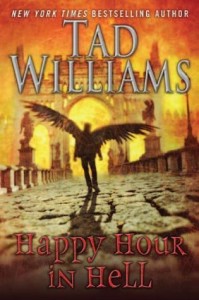
  • Happy Hour in Hell by Tad Williams – it’s tacky and doesn’t seem to match book 1 in the series.
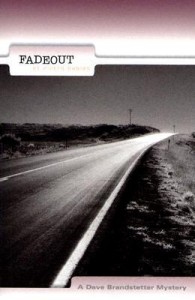
  • Fadeout by Joseph Hansen – great novel; very boring and unappealing cover.
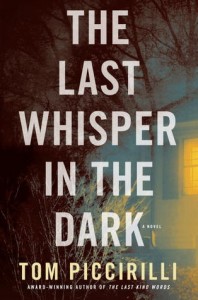
  • The Last Whisper in the Dark by Tom Piccirilli – when you compare it to the first book, it just doesn’t stand out as much.
  • Boy Meets Boy by David Levithan – not a bad cover, I just think it could use with a makeover.
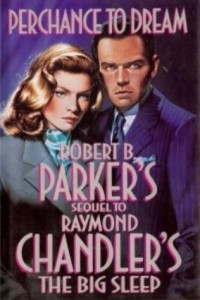
  • Perchance to Dream by Robert B. Parker – even though it was a terrible book, the cover doesn’t seem to match the Philip Marlowe series.
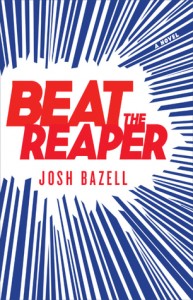
  • Beat the Reaper by Josh Bazell – the original cover is catchy but I don’t feel like it really says anything about the novel.
  • Prodigal Son by Dean Koontz – dull and unimpressive.
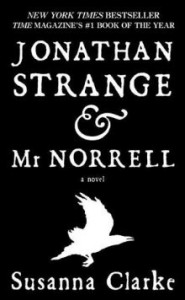
  • Jonathan Strange & Mr Norrell by Susanna Clarke – just feels really plain.
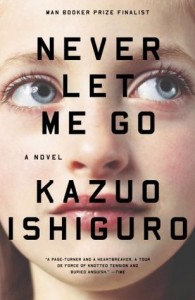
  • Never Let Me Go by Kazuo Ishiguro – that face is just too much.
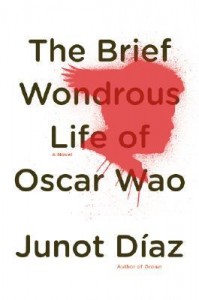
  • The Brief Wondrous Life of Oscar Wao by Junot Díaz – while not so bad, it could be improved.


High Fidelity by Nick Hornby

Posted November 11, 2013 by Michael @ Knowledge Lost in Contemporary / 4 Comments

High Fidelity by Nick HornbyTitle: High Fidelity (Goodreads)
Author: Nick Hornby
Published: Penguin, 1995
Pages: 245
Genres: Contemporary
My Copy: Paperback

Buy: AmazonBook DepositoryKindle (or visit your local Indie bookstore)

Rob Fleming is a thirty something London record store owner who has just lost his girlfriend Laura. Rob recalls his five most memorable break ups and then proceeds to get in touch with these girls in order to find out why they all ended up leaving him. Over at Championship Vinyl, Rob and his employees Dick and Barry spend their time demonstrating their vast music knowledge and constructing top five lists for every situation imaginable.

I really loved the movie High Fidelity, one of my favourites for a long time. So I’ve always meant to read the book and I finally got myself a copy. I devoured the book, faster than I expected. The book and the movie are very similar with not many noticeable differences, I was really happy about that. Problem with seeing the movie first is the fact that I keep picturing John Cusack, Iben Hjejle and every character. The only character I couldn’t remember was Ian and I imagined Peter Serafinowicz instead of Tim Robbins.

The only Nick Hornby movie I’ve read prior to High Fidelity was Juliet, Naked and I really didn’t get on to well with it. I was worried that I might have similar problems with this novel. Likely everything think I loved about the movie, comes from the book. The quirky nature, the themes and all those top five lists. Makes me want to watch the movie all over again. Weird but I prefer the movie, John Cusack is a great actor and I think it works better with the aid of audio and visual stimulation.

The thing I loved High Fidelity is the whole self-discovery plot. Rob Fleming begins the novel telling us about his top five breakups and how Laura didn’t hurt him as much as the others. This leads him to contact these five women and find out why everyone leaves him. What he discovered was the opposite and he learns more about himself than expected. The novel ends with not happiness but a deeper understanding of himself and what he must do to achieve a better life.

His love is so centred around his passion for music; he has to learn how to balance his life better. For music lovers, especially those who have an understanding in 80’s and 90’s music should appreciate this novel. For a romantic comedy, Hornby has this unique way of taking the genre that’s demographic is women and writing it with the male reader in mind.

If you liked the movie, then I’m not sure you really need to read the book. If you loved it, like I did then why not experience it in its original format (it’s like the Vinyl vs. CD debate). While it is very similar to the movie it was an enjoyable experience, one I would repeat sometime. It is a short novel so there is no real reason not to read it, except the movie is less time consuming.


A Tale for the Time Being by Ruth Ozeki

Posted November 10, 2013 by Michael @ Knowledge Lost in Contemporary, Magical Realism / 7 Comments

A Tale for the Time Being by Ruth OzekiTitle: A Tale for the Time Being (Goodreads)
Author: Ruth Ozeki
Published: Text, 2013
Pages: 422
Genres: Contemporary, Magical Realism
My Copy: Library Book

Buy: AmazonBook Depository (or visit your local Indie bookstore)

Sixteen year old Nao lives in Tokyo and has decided to take her own life. Her life isn’t great, being bullied in school, her parents are depressed but before she ends her misery she has one task to complete. She wants to document the life of her great-grandmother Jiko. She writes a diary to tell the story of her life. On the Pacific coast of Canada, a few months after the tsunami that hits Japan, Ruth finds a Hello Kitty lunchbox on the beach, inside there was a diary.

Starting with the story of Nao, A Tale for the Time Being was a fascinating look at the Japanese modern culture with references to pop-culture. It made me want to read more books like this; the Japanese culture, while similar is very different and unusual. The only problem with Nao was the fact I didn’t believe she was a struggling teenage girl, all references to being bullied or having a hard life seem to come across as non-issues. I think if someone is struggling to the point of suicide then these issues would be a major focus and never downplayed. This really became the underlining issue with this novel.

I expected this to be brutal and dark but it felt like it wasn’t taken seriously in the effort to make the book light hearted and humorous. The writing was beautiful but I felt it was too flowery and at times preachy. Ruth Ozeki is not just a novelist; she is also a Zen Buddhist priest. Now I have nothing against Buddhism and I think we need religious equality for all people but for some reason this felt heavy. I like books that teach me something I don’t know and A Tale for the Time Being does just that but I felt like it overdid this. I get that Ozeki is passionate about Zen Buddhism, it really showed, there is nothing wrong with that, just a little priggish.

As for the other major character (Ruth), which I couldn’t see as anything else but the author was rather dull in caparison. Nao’s story was fascinating, learning about Jiko was interesting but Ruth felt full of self-pity and two dimensional. I found myself wanting to skip over her story and return to Nao. Personally I think the Ruth character played no real part in the novel and cutting her chapters out completely would have worked just as well.

While the Zen Buddhist element did feel preachy the major downfalls were the believability of Nao’s struggle and Ruth. This is just too light and whimsical for me this really became a distraction from the themes and ideas the novel was trying to achieve. There was so much going for this but the negatives started to outweigh the positives. I must be one of the few that thought this novel wasn’t amazing.