The Mysteries of Udolpho by Ann Radcliffe

Posted October 4, 2013 by Michael @ Knowledge Lost in Classic, Gothic / 0 Comments

The Mysteries of Udolpho by Ann RadcliffeTitle: The Mysteries of Udolpho (Goodreads)
Author: Ann Radcliffe
Published: Oxford World's Classics, 1794
Pages: 693
Genres: Classic, Gothic
My Copy: Library Book

Buy: AmazonBook DepositoryKindle (or visit your local Indie bookstore)

Emily St. Aubuert was imprisoned by her evil guardian, Signor Montoni. We follow her misadventures from his dark fortress in the Apennines as she suffers physical and psychological terror. The Mysteries of Udolpho is told in a dream-like hallucination that gives the reader a sense of Emily’s psychological state.

Writing a synopsis for this novel was one of the hardest things about this review. There are so many fragments in this book which makes it difficult to summarise what this book is about. Written in four volumes, Ann Radcliffe’s gothic romance manuscript has reported to have been brought for £500 in 1794, I’m not sure if that takes into account the inflation, if not that seems huge I can’t imagine an author receiving that much for a book nowadays.

This classic novel is a quintessential gothic romance but there are fragments of so many other genres with the supernatural, psychological mysteries that fill the pages. I really wanted to enjoy this book but I found it incredible wordy and at the time I was not in the right frame of mind for it, but I will do my best to be fair. The major downfall for me was the extensive descriptions of the landscapes; in particular Pyrenees and Apennines which while stunning just caused the book to drag on.

Emily is orphaned after the death of her father and taken in by her aunty Madame Cheron who married an Italian brigand Count Montoni. As romance between Emily and Valancourt, Montoni became increasingly frustrated and Cheron disapproved, believing him too poor, until she realised his aunt is Madame Clairval. When Count Montoni and Madame Cheron married he refused to allow Emily to married as he figured he could sell her. The major theme I got from this novel was the idea of indifference and the cruelty that can go along with it. Count Montoni is the definition of the gothic villain archetype; evil, sinister, greedy, and motivated by money. Even his marriage to Madame Cheron is for mercenary reasons and tried to force her to sing over her estates.

The novel is not all dark and gothic, I did mention that this was a gothic romance.  Emily’s devotion to Valancourt is unshakeable and his heart seems to belong to her as well. He does make some mistakes and his behaviour eventually causes Emily to renounce him but even after that her thoughts were always towards him. The devotion or loyalty is always fighting against the gothic themes of this novel as you expect from a novel like this. Even the romance between Annette and Ludovico’s is not always happy, especially when he locks her up for her safety. Gothic romance is an unusual genre and you always get a sense that the entire book is fighting to counteract the romance, but then this is the type of book I enjoy.

This is a hard novel to review, there are so many plot lines and if I go off and talk about each of them this post will just go on and on. I know trying to condense the review down to a blog post doesn’t really do the book justice but I tried to focus on the main plot line. While the book felt wordy and dragged on,  this was an interesting book, one I feel needs to be revisited sometime in the future. It would be interesting what I can pull out of the book once I have improved my critical reading skills. Have you read this classic? If so I would love to know your thoughts on it.

Guest Post: The Problem with Literature

Posted October 3, 2013 by Guest Post in Guest Posts, Literature / 0 Comments

Want to be the next Shakespeare? Forget literature. Shakespeare wasn’t trying to write enlightened literary fiction. He was writing the Elizabethan equivalent of daytime television – easily digestible, relatable stories (mostly stolen from elsewhere and given a quick spit and polish to make them look and sound new) that would appeal to an audience of mostly illiterate working-class people. He didn’t care about being a great artist or creating work that would last for centuries. He just wanted to make money.
I think modern literary authors forget that. They want to create art. They want to be taken seriously. God forbid their work be mistaken for trashy pulp fiction. God forbid it be accessible. True art, according to the modern literary author, is by nature elitist. In order to understand it, one must have more sophisticated tastes than the types of people who read mass-produced romances or pulpy sci-fi thrillers. One has to be discerning. Every great literary author wants to be remembered as the next iconic genius.

Except that our last iconic genius wrote exactly the kinds of fiction these aspiring greats treat with such derision. Hamlet, King Lear, Macbeth – these might be timeless classics, but to The Bard, they were how he paid the bills, and to the people who paid to see his plays performed, they were the equivalent of a good popcorn flick. We talk about Shakespeare, Kit Marlowe, Dickens, Conan Doyle as though they were trying to create enduring works of highbrow literature. They weren’t; they were writers working at their trade. It just so happens that they were very good at it, which is why we still enjoy their work today. But they had no lofty aspirations, no desire to be seen as anything more than working writers. Oh, sure, Shakespeare enjoyed the patronage of two successive monarchs. I’m not denying that he was a master wordsmith and a well-regarded one at that. But to the people who crowded into the globe to watch his work play out on stage, he was nothing more than an entertainer. Not an artiste, not a figure of reverence. He wrote theatre for the masses. He was Elizabethan England’s answer to JK Rowling, not Vonnegut.

If Shakespeare were alive today, he’d probably be writing for some wildly successful primetime drama. Dickens and Conan Doyle, were they to stick to the serial formats they preferred, would probably find a home in graphic novels. Byron was something of a poseur, but he wrote his generation’s equivalent of Harlequin romances. Jane Austen, the Bronte sisters? They’d have been penning this summer’s hottest chick lit. And you know what? There’s nothing wrong with that. There’s absolutely nothing wrong with writing things that people will enjoy just because they’re fun. There’s nothing wrong with writing to entertain, to captivate, to thrill. And just because work is engaging and accessible, doesn’t mean it can’t also be challenging, thought-provoking and enduringly popular.

The Bard was a genius at his craft, no doubt about it. I just came home from a fantastically staged production of Macbeth, a play still enjoyed by audiences around the world centuries after Shakespeare’s death. I hope to one day pass on my love of Shakespeare to my children. But I’ll also pass on my love of fantasy novels, detective mysteries, cheesy sci-fi and even the odd paranormal romance. Why not? Fiction is meant to be fun. Sure, it can also be a lot of other things, but if we don’t enjoy reading it on some level, what’s the point?

If you’re writing for an audience of people who think enjoying fiction for its own sake is below them, you’ll never be the next Shakespeare, or the next Marlowe, or the next Dickens or Mark Twain or Agatha Christie or Jane Austen. Hell, you won’t even be the next JK Rowling (and believe me – someday, we’ll talk about her work with the same reverence we reserve for the works of long-dead white men today). Don’t focus on creating literature. Focus on creating great entertainment. Take your readers somewhere new. Give them a means of escaping. Take an old story and make it sing again. Make it fun, for heaven’s sakes, because I can guarantee you that five hundred years from now, we won’t be talking about dry and dusty tomes written by pretentious poseurs with delusions of grandeur. We’ll be talking about what was popular, just like we do now. We’ll be talking about theatre for the masses. We’ll be talking about this generation’s Shakespeares. And if you’re not willing to do what he did – to write for all people, to amuse, to engage, to entertain – then you’ll never be one of them.

Read More


Longbourn by Jo Baker

Posted October 2, 2013 by Michael @ Knowledge Lost in Historical Fiction / 0 Comments

Longbourn by Jo BakerTitle: Longbourn (Goodreads)
Author: Jo Baker
Published: Knopf Doubleday, 2013
Pages: 368
Genres: Historical Fiction
My Copy: ARC from Netgalley

Buy: AmazonBook DepositoryKindle (or visit your local Indie bookstore)

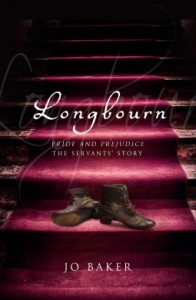
Longbourn follows the daily lives of the servants of the Bennet house. Sarah is an orphaned housemaid who spends her day doing laundry, polishing the floor and emptying chamber pots. The house is blooming with romance and heartbreak, not just for the Bennet sisters. One day a mysterious new footman arrives and the servants’ hall is under threat of been completely upended.

A unique reimagining, this novel tells the story of Pride and Prejudice told from the people serving the Bennet’s. I get the sense that this book was inspired more by Downton Abbey more than Jane Austen but never really seems to live up to either. All the drama of Bingley, Wickham, Mr Collins and Mr Darcy play out as a background characters for the drama that is happening with the servants.

I only read Pride and Prejudice earlier this year and absolutely loved it so I was a little wary of trying a spin off novel. The idea of a novel in the style of Downton Abbey did interest me but I felt let down. I got nether Austen’s wit and humour nor the drama for Downton. Some of Austen’s memorable characters didn’t seem to line up too well in this novel either; Mr Bennet comes to mind, his sarcastic humour appears completely absent in this novel. This could be written off as the servant’s perception of the Bennets and other characters.

There are some redeeming qualities in Longbourn; the novel seemed historically accurate, and while I don’t know for sure if this is correct, it did felt like this novel aligns with what I’ve read in Pride and Prejudice. Also I have to admire the way Jo Baker wrote; she is no Jane Austen but the prose was still elegant and I found myself continuously being impressed with her style while always looking for ways she may have ruined Austen’s masterpiece.

I always felt like the Bennets were wealthy enough to allow Mr Bennet to be a man of leisure but not enough to stop Mrs Bennet from worrying. So when servant hall in Longbourn seem smaller than what you would normally expect, it didn’t come as a surprise to me. The arrival of a new footman means that Mr Bennet has finally given into the demands of his wife and in comes the mysterious James. While the servant’s seem pleased with the new addition, Sarah doesn’t and soon she becomes aware of his interests towards her. You can probably guess where this is going and I won’t spoil it for you.

I spent most of the book worried that Baker will do damage to a true classic and I think this did detract from my enjoyment but for the most of it I was pleasantly surprised with the outcome. I did how ever feel as if this novel dragged on in parts and the fact that this was marked as a book for Downton Abbey fans seemed completely wrong. If you are a Downton fan I would recommend The Remains of the Day by Kazuo Ishiguro well before I recommend Longbourn.


Monthly Review – September 2013

Posted September 30, 2013 by Michael @ Knowledge Lost in Monthly Reading / 0 Comments

Now that September comes to a close, I would like to hear what people thought of The Pillars of the Earth. Did you read it? Did you find it long winded? Or any other comments you want to make of this novel. Personally I had some difficulty reading this, and while I wouldn’t say I really enjoyed this book, I did find the approach a little childish at times.

Next month’s book we will be reading the psychological classic, The Bell Jar but Sylvia Plath. I’m sure this book will spark some interesting conversations but it may also cause fights. I hope everyone reading and discussing the novel manages this book without struggling. Also as a reminder that November we will be reading The Bone People by Keri Hulme as part of the Dysfunctional Families theme and we will be looking for a book to fit the Mystery theme to wrap up the year. If you’re not aware, the book discussion and everything else will be happening over on the Goodreads forums, so feel free to join in there.

During the month I’ve read some great books; some of the highlights from the month’s reading included Dexter’s Final Cut, London Falling, Player One and Skinner. But my favourite of the month is a book I’ve only just started but already obsessed with, If on a Winter’s Night a Traveler by Italo Calvino. I’ve spent more time re-reading or reading aloud sections and writing quotes on Tumblr. If this wasn’t a library book I would have highlighted the entire book. It has just been a wonderful experience reading this book for the first time.

Monthly Reading


My Thoughts on the Man Booker Changes

Posted September 30, 2013 by Michael @ Knowledge Lost in Literature / 0 Comments

man booker 2013People are talking about the changes to the Man Booker Prize and I thought I would weigh in as well. I’ve already talked about My Thoughts on the Man Booker and the love hate relationship I have with this award but I want to express my thoughts to this outrage. I follow the Man Booker and sometimes I’m impressed but I do not like the changes to the Man Booker Prize next year, and it’s not because of the inclusion of Americans.

The major change to the Man Booker is that this award will include all English written novels and I know people are upset with this. The only major English speaking country that wasn’t included in the Man Booker Prize before was America and people are upset that someone like Jonathan Franzen could win the award but I have to ask, what about the other American authors? I look at this year in American literature and I think books like The Son by Philipp Meyer, A Constellation of Vital Phenomena by Anthony Marra and All That Is by James Salter could have be nominated and I’d be happy to see them make the long list.

The major problem I have is with the change in the submission guidelines. Originally each publisher and imprint could nominate two books to be put forward for the prize but now to make room for other countries they have dropped it down to one submission each, it gets a little more concerning with the wildcard nominations. All publishers and imprints that get a book included in the longlist over the past five years get extra submissions.

  • 1 submission – publishers with no listing
  • 2 submissions – publishers with 1 or 2 longlisting(s)
  • 3 submissions – publishers with 3 or 4 longlistings
  • 4 submissions – publishers with 5 or more longlistings

The concern I have with this is the fact that some publishers will have a chance to grow and the little indie publishers might struggle. The Man Booker Prize is a huge money maker. The Nielsen Bookscan have released a list of the sale jumps for the Man Booker winners for the past 10 years, books like Wolf Hall and Bring Up The Bodies by Hilary Mantel and The Sense Of An Ending by Julian Barnes see a jump in sales of over 450% but the other books had a boost of about 700-2000%. This means that the Man Booker sales boosts can potential help a publisher with four books in a longlist while some of the little publishers could struggle to make one on the list.

Apart from worrying about the small publishers, I think the submission guidelines could mean some publishers can put forward more obscure book choices and some will only have one chance to make it onto the list and the worry is that they will submit the most popular book rather than an unknown book that deserves the attention. I know Folio is starting a new literary prize because the Man Booker Prize has become too readable (whatever that means) so they might be the one to watch in future years. What do you think of the changes? What are your concerns?


The Pillars of the Earth by Ken Follett

Posted September 29, 2013 by Michael @ Knowledge Lost in Book of the Month, Historical Fiction / 0 Comments

The Pillars of the Earth by Ken FollettTitle: The Pillars of the Earth (Goodreads)
Author: Ken Follett
Series: The Pillars of the Earth #1
Published: Pan Macmillan, 1989
Pages: 1088
Genres: Historical Fiction
My Copy: Audiobook

Buy: AmazonBook DepositoryKindle (or visit your local Indie bookstore)

The Pillars of the Earth follows the building of a cathedral in the town of Kingsbridge, England in the middle of the 12th century. Set during the time of King Stephen and the Anarchy, it explores the lives of Tom Builder and his family as he finally gets to achieve his dream of being master builder for a cathedral. There are forces that are working against the completion of this church for reasons of power and greed.

Ken Follett was an author of trashy thrillers before turning his hand to the epic novels. So it is not surprising that the novel attempts to explore themes of intrigue and conspiracy against this historical event. I’ve only ever read one other Follett novel (The Eye of the Needle) and while I thought this was a better book they are very similar.

One of the biggest problems I had with both novels is Ken Follett’s approach to women. In particular his creepy schoolboy approach to breasts, I’m not saying I’m not a fan but the way Follett’s writes about them, reminds me of George R. R. Martin and Haruki Murakami. I don’t know about you but it felt like every woman in Kingsbridge has massive breasts and if they didn’t they will be forever alone. On the plus side they won’t be raped either; but all the large breasted women ended up married and the flat chested ones were left for bigger boobs.

One of the positives of this novel was the cathedral; it was the most interesting character in the whole novel. We get to witness the rise in gothic architecture in the Romanesque age and I found the insights into the architectural evolution were so interesting. This seems to be the most researched part of the novel and I think was the only reason to read this book.

My wife loves this novel and I can see why people will enjoy this novel but considering that her favourite novels include this and Outlander makes me worry. She seems to be interesting in epic novels with incredibly flawed men. I hope she isn’t trying to tell me anything but I can appreciate her passion towards these epics.

Every man in the novel seems overly flawed with the exception of the asexual Prior. I know Follett’s loves sexual frustrated men and he struggled to write Prior Philip’s so he decided to make him completely uninterested in sex. Which is a huge contrast to every other male in the book. At times I had to stop reading this novel out of frustration but managed to power through.

I think if you really love this epic you don’t mind how long this novel is but if not this feels like it could use a good editing. This book sits at over a thousand pages and there is so much padding that could have been cut out to bring this book back down to at least 750. The themes in this novel didn’t feel like they were executed properly; there are many medieval novels that talk about the corruption of the Christian church, abuse of power, greed and gender politics. What The Pillars of the Earth did that felt unique was explore passion and base an entire novel around the construction of this one cathedral. The passion and architecture is the key to this book and really without them it would have just been a thriller written as a historical novel.

While I had a lot of problems with The Pillars of the Earth, I did like parts of this novel and enjoyed raging at the other parts. I can know join in on the cultural conversation for this novel, but maybe I’m too late for this. I read Twilight for the same reason and do enjoy raging in reviews but I can’t say this was a bad read. I respect everyone who loved this book and I’m not saying that because my wife loved it, I just can see what would interest people here.


What Books Have Been Trending – July-September 2013

Posted September 28, 2013 by Michael @ Knowledge Lost in Book Trends / 0 Comments

Hard to believe the year is almost over and it’s time for a quarterly post that I really enjoy doing. There are always great books out there and I love to just highlight some books that seemed to have been trending in different circles for the past three months. Like always this is not accurate, I had to use my own judgement to culling most books so we can cover more genres.

July

The White Princess opens as the news of the Battle of Bosworth is brought to Princess Elizabeth of York, who will learn not only which rival royal house has triumphed, Tudor or York, but also which suitor she must marry: Richard III her lover, or Henry Tudor her enemy.


A chilling and intense first novel, the story of a solitary young woman drawn into an online world run by a charismatic web guru who entices her into impersonating a glamorous but desperate woman. An ingeniously plotted novel of stolen identity, Kiss Me First is brilliantly frightening about the lies we tell—to ourselves, to others, for good, and for ill.
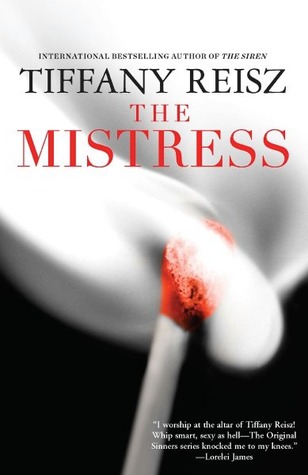
The final book in The Original Sinners Series; The Mistress follows Nora Sutherlin as she has being held, bound and naked. Under different circumstances, she would enjoy the situation immensely, but her captor isn’t interested in play. Or pity.


Who is A. N. Dyer? & Sons is a literary masterwork for readers of The Art of Fielding, The Emperor’s Children, and Wonder Boys—the panoramic, deeply affecting story of an iconic novelist, two interconnected families, and the heartbreaking truths that fiction can hide.
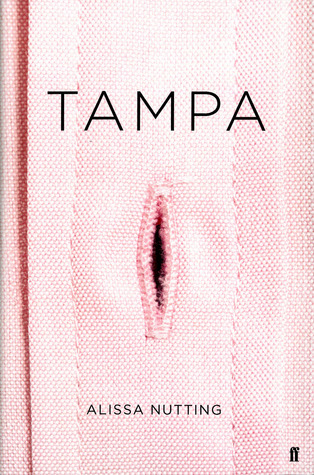
 

Celeste Price is an eighth-grade English teacher in suburban Tampa. She’s undeniably attractive. She drives a red Corvette with tinted windows. Her husband, Ford, is rich, square-jawed, and devoted to her. But Celeste’s devotion lies elsewhere. She has a singular sexual obsession—fourteen-year-old boys.
 

August

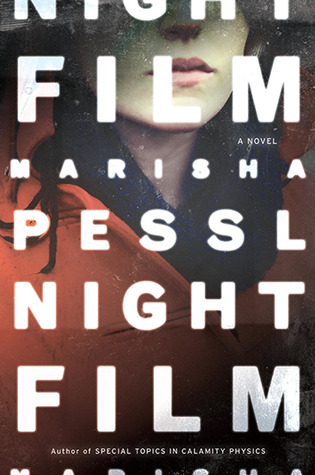
Brilliant, haunting, breathtakingly suspenseful, Night Film is a superb literary thriller by The New York Times bestselling author of the blockbuster debut Special Topics in Calamity Physics. A spellbinding new novel by the dazzlingly inventive Marisha Pessl, will hold you in suspense until you turn the final page.
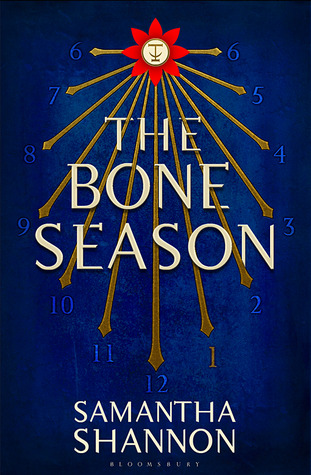
 

The Bone Season introduces a compelling heroine—a young woman learning to harness her powers in a world where everything has been taken from her. It also introduces an extraordinary young writer, with huge ambition and a teeming imagination. Samantha Shannon has created a bold new reality in this riveting debut.
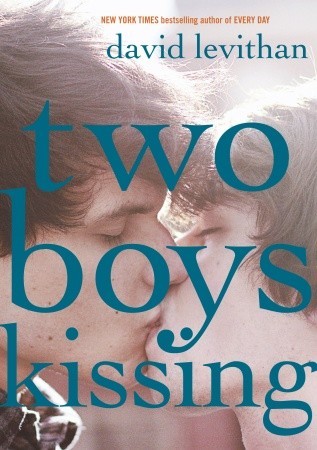
 

Two Boys Kissing by David Levithan tells the based-on-true-events story of Harry and Craig, two 17-year-olds who are about to take part in a 32-hour marathon of kissing to set a new Guinness World Record—all of which is narrated by a Greek Chorus of the generation of gay men lost to AIDS.
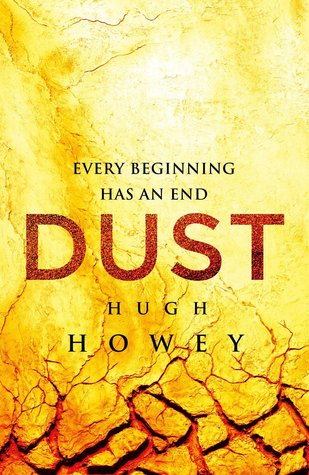
 

Dust is the final book in the Solo series by Hugh Howey. Jules knows what her predecessors created. She knows they are the reason life has to be lived in this way. And she won’t stand for it. But Jules no longer has supporters. And there is far more to fear than the toxic world beyond her walls. A poison is growing from within Silo 18. One that cannot be stopped. Unless Silo 1 step in.

Never Go Back is an epic and interrupted journey all the way from the snows of South Dakota, former military cop Jack Reacher has finally made it to Virginia. His destination: a sturdy stone building a short bus ride from Washington D.C., the headquarters of his old unit, the 110th MP. It was the closest thing to a home he ever had.


September

Fangirl is a coming-of-age tale of fan fiction, family and first love. Cath is a Simon Snow fan. Okay, the whole world is a Simon Snow fan . . . But for Cath, being a fan is her life — and she’s really good at it. She and her twin sister, Wren, ensconced themselves in the Simon Snow series when they were just kids; it’s what got them through their mother leaving.

Suspenseful, sweeping, piercingly intimate, The Lowland expands the range of one of our most dazzling storytellers, seamlessly interweaving the historical and the personal across generations and geographies. This masterly novel of fate and will, exile and return, is a tour de force and an instant classic.
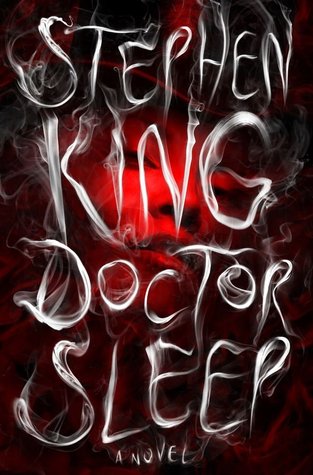
 

Doctor Sleep sees Stephen King return to the characters and territory of one of his most popular novels ever, The Shining, in this instantly riveting novel about the now middle-aged Dan Torrance (the boy protagonist of The Shining) and the very special twelve-year-old girl he must save from a tribe of murderous paranormals.


Told with wit, dizzying imagination, and dark humour, Booker Prize-winning Margaret Atwood’s unpredictable, chilling and hilarious MaddAddam takes us further into a challenging dystopian world and holds up a skewed mirror to our own possible future. An unexpectedly finish to the trilogy.


More Than This tells the story of a boy called Seth drowns, desperate and alone in his final moments, losing his life as the pounding sea claims him. But then he wakes. He is naked, thirsty, starving. But alive. How is that possible? He remembers dying, his bones breaking, his skull dashed upon the rocks.


Now it’s your turn, let me know of the books that you are surprised that didn’t make this list (there were heaps of them). What have you read and enjoyed and what do you expect to trend next quarter? I’m expecting Goldfinch by Donna Tartt will be trending next month, do you have any predictions?


My Notorious Life by Madame X by Kate Manning

Posted September 27, 2013 by Michael @ Knowledge Lost in Historical Fiction / 0 Comments

My Notorious Life by Madame X by Kate ManningTitle: My Notorious Life by Madame X (Goodreads)
Author: Kate Manning
Published: Bloomsbury, 2013
Pages: 438
Genres: Historical Fiction
My Copy: ARC from Publisher

Buy: AmazonBook DepositoryKindle (or visit your local Indie bookstore)

Based on the life of Ann Trow, better known as Madame Restell, an abortionist in Victorian New York City. My Notorious Life by Madame X is the journal of Axie Muldoon found in an attic that tells the story of a daughter of an Irish Immigrant who was orphaned (with her brother and sister) as a child. The kids were broken up and Axie went on to work as a maid and then assistant to a midwife and abortionist. Here she learnt the tricks of the trade, from the lunar tonics (for relief of female complaints), midwifery and abortions.

This is a fictionalised story of what Madame Restell might have gone through. For Axie she witnessed first hand the trials women go through, from period pains all the way to a pregnancy that will bring shame to their family. In an age before any real understanding of women’s fertility cycles and contraception, pregnancy can mean the final days for a woman. Even for Axie, she was too afraid to have sex for the fear of dying.

Axie Muldoon is a stubborn and fiery woman, who stands firm in her beliefs and won’t stop helping women even when the papers and police are after her. I like the way that this novel didn’t suggest abortion as the answer; Axie often would try to help woman in other ways before resorting to such a drastic measure. There are a lot of interesting ideas on Victorian feminism and this novel tries to explore this, and is often successful at this.

An epistolary novel that explores Axie Muldoon’s life in the form of journal entries meant that you get an insight into what made her tick and motivated her. I really enjoyed the insights and what happened in this novel will both shock, disturb and get you thinking. Without going into my opinions on abortion, I have to say that this book is more a look at how women were treated in Victorian times and the understanding of women. This is what I got out of this book and what makes this one worth reading.

I’m not saying this was a great book; it was seriously flawed but there was some interesting topics explored. I can’t say I enjoyed this one; I often felt it dragged on and Axie’s husband really bothered me. There were fragments in the book that felt came together too cleanly and personally I prefer some untidiness or unresolved tension. I would say I’m happy it was an interesting book but not going to actively recommend this one to people.


First Steps: Banned Books

Posted September 26, 2013 by Michael @ Knowledge Lost in First Steps / 0 Comments

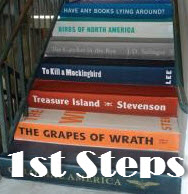
literary stepsFirst Steps is a new segment that was inspired by the Literary Exploration Reading Challenge. Each week or two, we look at books from different themes, genres or maybe authors and suggest some that are worth trying. Not necessarily all easy to read books but the ones that are worth the time and effort. My goal is to have First Steps guide you to some great books in places you don’t normally venture to.

To celebrate banned book week and because I’ve been asked for some suggestions on what to read, I thought I would share a couple of books that you should check out. I’m not going to focus on high literature or the controversial books but rather some great reads in a few different genres and styles.

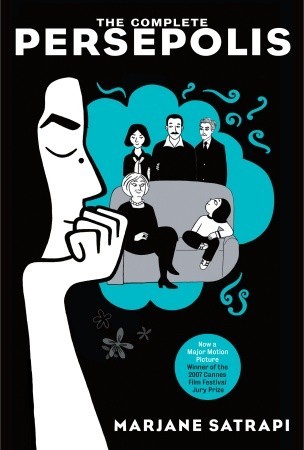
Persepolis by Marjane Satrapi

Persepolis is the autobiography of Satrapi, growing up within a large and loving family in Tehran during the Islamic Revolution. She balances the plot between her private and public life, in a country plagued by political upheaval. I can’t recommend this graphic novel enough, if you have never tried a comic then try this one.


Fahrenheit 451 by Ray Bradbury

The ultimate book about the problems with banning books and ironically it managed to get banned. Guy Montag is a fireman, his job is to burn books; the source of all discord and unhappiness. Guy is unhappy with his life and there is discord in his marriage. A terrifyingly prophetic novel of a post-literate future.


Alice’s Adventures in Wonderland by Lewis Carroll

Yes, this book was banned; a classic children’s novel that is probably the best example of the literary nonsense genre. This book plays with logic and narrative structure making this book popular among adults as well as children. I love this book and it is full of witty and amusing puns.


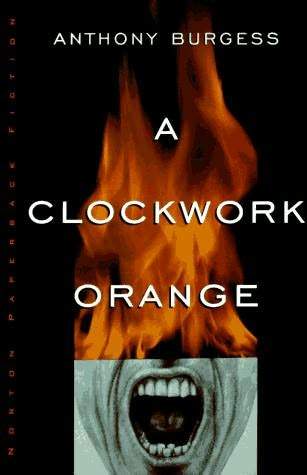
A Clockwork Orange by Anthony Burgess 

One of my favourite dystopian novels out there, A Clockwork Orange is just weird and a real khorosho (horrorshow). A Clockwork Orange tells the story of Alex, your humble narrator; a disturbing 15 year old anti-hero, until the government tried some experimental behaviour-modification treatment on him.


Frankenstein; or, The Modern Prometheus by Mary Shelley

My all-time favourite, a book I read again and again. There are so many different themes you can pull out of this novel and it infuses elements from the Romantic Movement, gothic, horror and science fiction. Everyone has an idea of what this book is about but just how different is it to its pop culture references.


Lolita by Vladimir Nabokov

I can’t recommend banned books without Lolita getting a look in. The highly controversial novel of Humbert Humbert, a middle-aged literature professor and his obsession with twelve year-old Dolores Haze. You may not enjoy reading this book but you might enjoy having read it.

Feel free to suggest some more banned books and even recommend some to me that I should check out. I have plans to read Eleanor & Park by Rainbow Rowell (a recent addition to the banned books list) this week but I can’t seem to get a copy, so I might be late with my banned book reading.


Golden Parasol by Wendy Law-Yone

Posted September 25, 2013 by Michael @ Knowledge Lost in Non-Fiction / 0 Comments

Golden Parasol by Wendy Law-YoneTitle: Golden Parasol (Goodreads)
Author: Wendy Law-Yone
Published: Chatto & Windus, 2013
Pages: 320
Genres: Non-Fiction
My Copy: Paperback

Buy: AmazonBook Depository (or visit your local Indie bookstore)

Ed Law-Yone was the proprietor of The National In Burma 1962 while there was a military coup. His daughter Wendy Law-Yone was left with the manuscript of his father’s auto-biography and asked to tell his story. Golden Parasol is the memoir of the daughter of a Burmese journalist, political prisoner and revolutionary and follows her memories of her father, imprisonment and escape from the country.

I’m not much of a non-fiction reader, as much as I try, and while this isn’t a topic that interests me, I’m still glad to have read it. Wendy Law-Yone is a novelist and her memoir of her father’s life reads like a novel which really helped me to get through this book  I don’t know much about Burma (now known as Myanmar) but now I know a little about the coup in 1962 (also suspect a CIA conspiracy).

Ed Law-Yone seemed to be a complex and colourful character, and if his daughter makes you question his character a little bit, chances are there was something off about him. What he did in the effort to bring democracy to Burma was extraordinary but that doesn’t mean he was a good man. I got the sense that Wendy was a little angry towards him. I’m not saying that he was a bad man but reading between the lines maybe there was a little bit of bitterness between the two; maybe a little neglect or annoyance towards all the time she spent at the newspaper.

When I read a memoir or biography (what’s the difference?) I tend to take what is written with a little grain of salt. I try to work out what might have been left out; I just wonder what secrets lay behind the writing. I really like how chapter 2 started, with some text from Ed’s manuscript and Wendy’s comments in-between (almost a little playful or sarcastic) and was a little disappointed that this tactic was abandoned but I think that would have made for a more difficult read.

Golden Parasol may not be the type of book I normally pick up and I didn’t think I would enjoy this one. I was interested in the narrative and how easy the author made this to read. I’m glad to have read this one, it wasn’t fantastic but it was an interesting insight. My struggle with non-fiction continues, I think I would be better off reading topics I’m interested in instead of something like Golden Parasol.