Knowledge, Truth & The Encyclopédie

Posted May 14, 2012 by Michael @ Knowledge Lost in Culture / 5 Comments

Often when we think of the concept of ‘truth’, we tend to think about knowledge. Nowadays we have been getting a little lazy when looking for truth, by using Google or Wikipedia; before these tools we often went to the encyclopaedia. In 1750 France, two people took on a task to change the way we think; the project was called Encyclopédie, ou Dictionnaire raisonné des sciences, des arts et des métiers, par une société de gens de lettres, mis en ordre par M. Diderot de l’Académie des Sciences et Belles-Lettres de Prusse, et quant à la partie mathématique, par M. d’Alembert de l’Académie royale des Sciences de Paris, de celle de Prusse et de la Société royale de Londres (Encyclopaedia: or a Systematic Dictionary of the Sciences, Arts, and Crafts, by a Company of Men of Letters, arranged by M. Diderot of the Academy of Sciences and Belles-lettres of Prussia: as to the Mathematical Portion, arranged by M. d’Alembert of the Royal Academy of Sciences of Paris, to the Academy of Sciences in Prussia and to the Royal Society of London).

Originally the Cyclopedia which was a project by Ephraim Chambers in 1728 but this was abandoned and Denis Diderot and Jean le Rond d’Alembert set out to create an entirely new encyclopaedia. Apart from editing and compiling Denis Diderot and Jean Le Rond d’Alembert were contributors; Diderot helped with economics, mechanical arts, philosophy, politics and religion and d’Alembert with contemporary affairs, mathematics, philosophy, religion and science. Some of the most notable contributors of this project also included;

  • Louis-Jean-Marie Daubenton for natural history
  • Baron d’Holbach  for science (mainly chemistry and mineralogy), politics and religion
  • Chevalier Louis de Jaucourt for economics, literature, medicine and politics
  • Jean-Baptiste de La Chapelle for mathematics
  • Jean-Jacques Rousseau for music and political theory
  • Anne Robert Jacques Turgot, Baron de Laune for economics, etymology, philosophy and physics
  • Voltaire for history, literature and philosophy

Modern society owes a lot to the age of Enlightenment and this Encyclopaedia project; not only did it change the way we find knowledge in the search for truth but it also created a global standard of cataloguing and preserving our knowledge. In the words of Denis Diderot himself;

“The goal of an encyclopaedia is to assemble the knowledge scattered far and wide on the surface of the earth, to expose its general system to our fellow men with whom we live and to transmit it to those who will follow us, so that […] our sons, by becoming more educated, might become at the same time more virtuous and happy.”

While this was not the only encyclopaedia at the time or even before (Ephraim Chambers’ Cyclopedia in London and Novalis’ Enzyklopädie in German) the Encyclopédie project seems to be the one that is more often referred to when looking at the history of the encyclopaedia. This could be effects of the Age of Enlightenment and its reputation with knowledge and truth, or it could be the fact that it is often referred to as the intellectual preparation for the French Revolution. However I think it was more to do with the famous “preliminary discourse” written by Jean Le Rond d’Alembert which explored the structure of the encyclopaedia articles as well as the background of the learned men that wrote each article. The significance of this is the ability to check the credibility of each article and quite possibly the start of referencing.
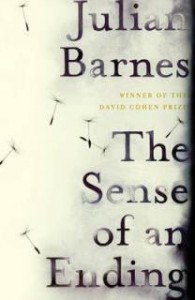

The Sense of an Ending by Julian Barnes

Posted May 13, 2012 by Michael @ Knowledge Lost in Literary Fiction / 0 Comments

The Sense of an Ending by Julian BarnesTitle: The Sense of an Ending (Goodreads)
Author: Julian Barnes
Published: Jonathan Cape, 2011
Pages: 150
Genres: Literary Fiction
My Copy: Hardcover

Buy: Amazon (or visit your local Indie bookstore)

When I see a book that is only 150 pages, I automatically think the book won’t have much to offer, but then I remember some great novellas like, George Orwell’s Animal Farm, Anthony Burgess’s A Clockwork Orange, Robert Louis Stevenson’s Dr Jekyll and Mr Hyde and now Julian Barnes’s A Sense of an Ending. Winner of this year’s Man Booker prize A Sense of an Ending is the story I always wanted an angsty book about the teenage years to be like. I think back to Catcher in the Rye and think The Sense of an Ending is everything that classic should have been, all Catcher left me with was the need to slap Holden repeatedly.

The book follows the story of Tony Webster forty years later who receives an unexpected letter which leads him to remember his life forty years ago. The obsession with girls he had, his very first relationship and the memories of talking about philosophy, classical music and literature with his friends. This book is beautifully written, it was a real pleasure to read; it was intelligent, witty and I’d highly recommend it to everyone.


Looking for Alaska by John Green

Posted May 11, 2012 by Michael @ Knowledge Lost in Young Adult / 0 Comments

“How will I ever get out of this labyrinth?” — Simón Bolívar

Looking for Alaska by John GreenTitle: Looking For Alaska (Goodreads)
Author: John Green
Published: Puffin, 2005
Pages: 221
Genres: Young Adult
My Copy: Paperback

Buy: AmazonBook Depository (or visit your local Indie bookstore)

I don’t think I’ve ever started a review with a quote, but these famous last words really are relevant to this book. Looking for Alaska tells the story of Miles; a kid obsessed with memorising famous last words. He is leaving a school where he has no friends to go to a boarding school. The reason; well according to Miles it is because of François Rabelais’ famous last words “I go to seek a Great Perhaps”. At this new school Miles experiences a lot of firsts, first friends, first cigarette, first kiss, first love and first heartbreak.

Alaska is the beautiful girl that Miles has a crush on and I can see why; she is a great character. She is an outspoken book nerd who, while she can get rather emotional, is the kind of female friend every high school boy dreams of having; obsessed with sex, flirting and teasing but ultimately one of the guys. But the thing I liked about Miles and Alaska (as well as the other characters) is their emotions and the way they act seem so familiar. It is easy to connect and understand what they are going through. It is hard to get the emotions right, and make them feel real; I know most YA books miss this completely but John Green makes it look so easy.

I really connected with Looking For Alaska, and I could probably talk about the awkwardness of the characters (including the awkward blow job), the views on religion and philosophy and even the pranks and mischief they get up to; but I will leave that for the readers to discover. I think the main thing I took away from this book is the fact that John Green wrote a book exactly like the stories I’ve attempted to write when I was in high school. The feeling of loneliness, being a geek, having a crush; Green captured this perfectly and he showed me how an expert writes a YA book about love and lost. I know I’ve been on a bit of a John Green kick lately, I’ve even been watching his YouTube channel constantly but I don’t think this will stop anytime soon, I can’t wait to read another one of his books.


Talulla Rising by Glen Duncan

Posted May 9, 2012 by Michael @ Knowledge Lost in Horror / 0 Comments

Talulla Rising by Glen DuncanTitle: Talulla Rising (Goodreads)
Author: Glen Duncan
Series: Bloodlines #2
Published: Knopf Doubleday, 2012
Pages: 368
Genres: Horror
My Copy: ARC from Edelweiss

Buy: Amazon (or visit your local Indie bookstore)

Glen Duncan’s back with the follow up to the brilliant 2011 novel The Last Werewolf. I’ve been looking forward to see how the story continues as I personally felt the last novel left off with a bit of a cliff-hanger. Talulla Rising continues the story, now from the point of view of Talulla Demetriou; an exciting strong female protagonist, whom I loved simply because she is both kick-ass and full of inner torment. The novel kicks off with a brief look back at Talulla’s life before being turned, a slightly too small of a glimpse but enough to give you an idea of the type of woman she was before becoming a werewolf.

Like the last novel, Talulla Rising continues the memoir style; not only is there a focus on the inner struggle between the human and wolf side but now Talulla has her mother’s side thrown into the mix. WOCOP (World Organisation for the Control of Occult Phenomena) have taken Talulla’s newly born son and she is racing to save him before he is used in a horrible blood-drinking ritual. While she is trying to get her son back she is still getting hunted by WOCOP (as Glen Duncan puts it in the book, think CIA meets Keystone Kops meets Spanish Inquisition) as well. As the story progresses you get a sense of just how twisted this organisation.

Talulla Rising is a fast paced, exciting novel; dark, gritty and over sexed. I really love how Glen Dunan takes a popular genre that has been selling well and makes it literary and enjoyable to read again. If the constant excitement of this novel doesn’t keep you going then the dark humour throughout this book will. From the slight pokes of other authors in literature to Talualla remembering that her first human tasted like onions and whiskey; the humour in this book was pleasing. But when it comes done to it, in the end, the thing I loved the most about this book and the one that come before this, is the internal struggle; there is something about that that always pleases me. I’m looking forward to seeing how Glen Duncan wraps up this trilogy when he releases By Blood We Live; hopefully next year.


Question Tuesday: What Is Your Reading History?

Posted May 8, 2012 by Michael @ Knowledge Lost in Question Tuesday / 0 Comments

Welcome to a new section from my blog which I like to call Question Tuesday; each Tuesday I’ll be asking a question relating to reading and book blogging. I have a lot of questions already I want to cover but I want to leave it open for others to ask me questions as well via comments or via twitter. The first question I’m going to cover is my reading history.
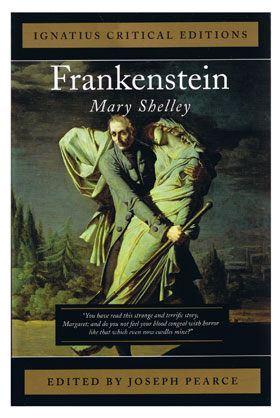
While my parents go through phrases of reading a lot and not reading at all (depending on how busy they are), I was never much of a reader when I was young. I think I would read a book a year, and only because I was told I needed to read. It wasn’t till 3 years ago that I started reading (a lot). It all started with a radio segment (The Culture Club on Triple J) where they drew similarities from songs currently on high rotation with poets (mostly from the romantic era). This started my love for reading; the gateway books were Hey! Nietzsche! Leave Them Kids Alone! by Craig Schuftan (the author was responsible for The Culture Club) and Frankenstein by Mary Shelley.  Now I’m playing catch up; trying to read all the classics as well as newer book. I’ve set myself a goal of reading at least 100 books a year in the hope that sooner or later I might actually be caught up.


Culling My To-Read List

Posted May 7, 2012 by Michael @ Knowledge Lost in Literature / 0 Comments

My to-read list on Goodreads has always been a dumping ground for books that look interesting and I hope to read some time in the future. But I’ve come to realise that I normally read on a whim and don’t often refer to my to-read list when picking the next book to read. I much prefer picking something that looks interesting at the time and just reading it. I’ve actually got two to-read lists on Goodreads; one is the generic list (which had over 300 books in it) and the other was the to-read on shelf list referring to all the books I actually own and need to read. I’ve decided to take matters into my own hands; my to-read list has now gone from over 300 books to just under 100 books. I was brutal in doing this cull and removed anything I couldn’t remember why I wanted to read it or books that have lost appeal and have past their used by date.

Now that I have under a hundred books on my to-read list, I feel a lot better about the list. It is now a better representation of what I actually want to read and less of a dumping ground. Now my next problem is to tackle my to-read-on-shelf list and reduce the number of books on that list. Currently there are 78 books on that list so I better get reading.


The Redbreast by Jo Nesbø

Posted May 6, 2012 by Michael @ Knowledge Lost in Crime / 0 Comments

The Redbreast by Jo NesbøTitle: The Redbreast (Goodreads)
Author: Jo Nesbø
Translator: Don Bartlett
Series: Harry Hole #3
Published: Harvill Secker, 2000
Pages: 368
Genres: Crime
My Copy: Personal Copy

Buy: Amazon (or visit your local Indie bookstore)

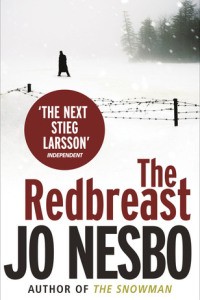
When they advertise Jo Nesbø as ‘The Next Steig Larsson’, I’m inclined to pass on this author. But since a lot of people seem to be raving about this author, I thought I better check him out, especially when they class his Harry Hole series as hard-boiled. I’ve found the only reason they are calling him the next Larsson is simply because he is another Scandinavian crime writer; which means some overly graphic murders, Nazis and an expected twist. The Redbreast is the third book in the Harry Hole novel but the first available in English. Hole is investigating neo-Nazi activity which leads him to further explore Norway’s activities on the Eastern Front during WWII.

Throughout the book it switches between telling the story of Harry Hole in 1999 and the man he is hunting Daniel Gudeson during the World War II. I like how Nesbø switched between the two times and characters to flush out the back story that was leading up to a much bigger current day threat. But that is where I stopped liking this book; I just felt this book was generic and too predictable for my liking. I want to be shocked, excited and enjoy myself when reading crime novels; one out of three just doesn’t cut it.

Now to address the genre issue; Harry Hole could be classed as a hard-boiled detective, as he drinks, smokes and seems to be a very bitter man. However, this novel seems to missing some of the elements that makes hard-boiled novels what they are; for starters where was the dark and gritty realism that I’ve come to love in pulp novels. Also the book was missing a femme fetale as well as the strong dialogue with hints of wittiness and/or irony. This felt more like the generic bestseller crime formula and if we are going to call Jo Nesbø ‘hard-boiled’,  we would have to let Michael Connelly in as well; and we don’t want that.

While this was in fact a fun book to read, I went into this book expecting something more pulp like and ended up getting generic. I’m sure there are plenty of people that will love this book, just don’t expect pulp; you’ll be sadly disappointed. If you are interested in knowing more about pulp fiction,  check out my blog entries on pulp for recommendations.


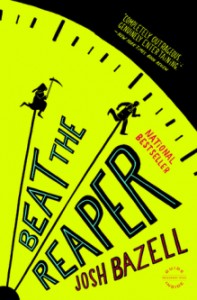
Beat The Reaper by Josh Bazell

Posted May 5, 2012 by Michael @ Knowledge Lost in Thriller / 0 Comments

Beat The Reaper by Josh BazellTitle: Beat The Reaper (Goodreads)
Author: Josh Bazell
Series: Peter Brown #1
Published: Little Brown and Company, 2008
Pages: 310
Genres: Thriller
My Copy: Personal Copy

Buy: Amazon (or visit your local Indie bookstore)

I was recommended this book last year, and while it looks interesting, I kept putting this book off. I’m not sure why I did, as this book was so much fun to read. Think mob book (in the style of Lock Stock and Two Smoking Barrels or Snatch) meets Scrubs but with a much darker sense of humour. Beat the Reaper by Josh Bazell tells the story of Peter Brown, an intern for Manhattan’s worst hospital. Dr. Brown is in the Federal Witness Protection Program having previously been a mob hitman named Pietro Brwna. I know, the feds lacked imagination and yet the mob failed to find him until one of them ends up being a patient of Dr. Peter Brown.

The humour alone makes this book worth reading, but then on top of that you have the story of a kick ass doctor in what would make a great blockbuster movie if it was directed by someone like Guy Ritchie or Quentin Tarantino. Having said that there are rumours of this book being made into a movie (New Regency acquired the rights in 2009) or even a TV series (HBO started development in 2011) but both seemed to be interested in Leonardo DiCaprio as the protagonist. I can’t see DiCaprio as Peter Brown; I often imagined him more of Vinnie Jones type character even though he probably isn’t right for the role either.

While I think it would make a great adaptation, I’m not going to hold my breath for one; let alone a good one. Beat the Reaper could be the next sleeper hit; with an increasing cult following, this book was well worth the read. All readers interested in an edge of your seat action novel, or a dark medical/mob read should go out and grab a copy of this book. I can’t wait to get my hands on the next book in this series.


Confessions of a Reader

Posted May 4, 2012 by Michael @ Knowledge Lost in Literature / 6 Comments

While most people know my story, I wasn’t much of a reader until a few years ago when something clicked and I started reading and wanting to read almost everything in sight. I’ve been playing catch up with everyone else for the past few years. While I claim to be a bibliophile, I’ve still got a lot to catch up on. My name is Michael and these are by reading confessions:

I haven’t borrowed a book from the library in about a year While I love libraries and my local librarians are awesome people, I think I like books too much to borrow them. I don’t think I would want to return them. Plus I’m now more of an e-reader and still waiting for a digital local library.

Short story collections often bore me: While it’s great to read some quick stories, when reading a whole book full of short stories – especially on the one topic – it often gets boring and becomes a struggle. I think the fact that I read it straight through instead of a little at a time is my main problem.

I still groan at the thought of reading some genres: While I do try to keep an open mind to new and recommended book, I tend to avoid or put off reading some genres. I’m not sure if this is simply because I haven’t experienced enough good books in these genres but fantasy, magic realism, romance and paranormal romance novels never seem appealing.

Large books often scare me:  I will try to read them but I don’t like the idea of investing in a long story when I can read two or three books instead. I’ve written a post previously about this same issue.

I’ve never read Jane Austin:  I probably should. I know she is one of the most famous writers but I have so many other books to read and none of her books really interest me.

I read literary books with the hope to look cool: Even though I’ve realised that I’ve enjoyed most of them. My main motivations for reading books like 1Q84 by Haruki Murakami, Extremely Loud and Incredibly Close by Jonathan Safran Foer, A Visit from the Goon Squad by Jennifer Egan and The Shipping News by Annie Proulx in an effort to look more like a literary elitist.

I rarely complete a book series: I can only think of two book series that I’ve read completely through, most of the time I read one of the books just to test the series out and move onto more interesting novels. I haven’t finished The Hunger Game series and I only read the first two books from the Song of Ice and Fire series to keep in front of the Game of Thrones TV series.

Audiobooks have replaced my music in the car and while I do work or exercise. I like being able to listen through a novel during those times where I’m doing mundane tasks. I often have an audiobook and an ebook on the go at the same time. It’s surprisingly easy to read two books at the same times if one of them is an audiobook.

I’m addicted to Goodreads: This is an effect of my reading and a need to keep a record of all the books I’ve read and want to read. I’m now part of a few groups on Goodreads and spend most of my work day on the site.

I own multiple copies of Frankenstein and even a few other books. I love Frankenstein and I need more copies of it, so I can have a copy of the book in every part of the house. Most multiple copies of books are by accident but when it comes to Frankenstein it was intentional.

I’m sure I can keep going with my confessions but I think I will stop with those ten. I would love to know what you would confess about your reading habits.


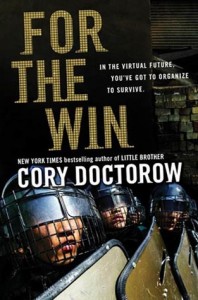
For The Win by Cory Doctorow

Posted May 1, 2012 by Michael @ Knowledge Lost in Young Adult / 0 Comments

For The Win by Cory DoctorowTitle: For The Win (Goodreads)
Author: Cory Doctorow
Published: Tor, 2010
Pages: 480
Genres: Young Adult
My Copy: Audiobook

Buy: Amazon (or visit your local Indie bookstore)

I’m not sure if I’ve just read a novel or had a lesson in economics. Cory Doctorow’s dystopian novel For the Win tells the story of the exploitation of an online role playing game’s economy. In the running of what could be classed as electronic sweatshops throughout Asia, gold farmers suffer from very poor work conditions in the effort to mine gold and find virtual treasure to sell to first world customers. The novel has a typical ‘unite and rise against authority to improve our lifestyle’ plot but add a Massively Multiplayer Online Role Playing Game (MMORPG) this book makes for some interesting concepts. While this book is a book about slave labour, gangsters and forming a revolution, this book also dives into the world of global finance in a very educational way.

This book reminds me of Neal Stephenson’s novel Reamde, in the sense that it explores the world of gaming from the perspective of gold farming. While Stephenson focused on all the aspects of creating a MMORPG for the purposes of gold farming and money laundering, For the Win focuses on the concept of the in-game financial system and how fragile global economy can be. The author floods the book with many different financial theories and uses the games economy to help the reader understand just how global finances work. While this novel focuses on the in-game aspects of economics, the theories taught are very real.

Like Reamde, For the Win made me thing of an aspect of gaming that I never released existed. While Reamde hired a geologist to create the world of T’Rain’s mining system; For the Win had an economist working for the game developers. This book was a real eye opener while still making a great story. To begin with I had trouble keeping up with all the characters Doctorow tried to introduce, characters from USA, India and China; but slowly I started to get a feel for which character was which. I don’t think Cory Doctorow spent enough time exploring his characters, I felt like I only got a glimpse of each character and I would have liked more. For the Win is a book for gamers, but non-gamers might also enjoy the thrilling ride this takes the reader on. It is more than just a lesson in economics and it is more than a novel about unionising Gold Farming. While very predictable this ended up being a great read.