Monthly Review – April 2012

Posted April 30, 2012 by Michael @ Knowledge Lost in Monthly Reading / 0 Comments

April has been a great month, not only with the amount of reading that I’ve been able to do but also with the celebration of, firstly, my wife’s birthday and then my sister-in-law’s. Also during the month I was able to take a mini vacation from work, a great chance to recharge and enjoy some reading. In terms of reading, I managed to read more books than I imagined, including some great recent releases, a chilling classic and unfortunately a high amount of below average novels.

Surprisingly, I read a few Magic Realism books with The Snow Child by Eowyn Ivey and the massive 1Q84 by Haruki Murakami; while this genre is weird and not really my style, it was good to experience some the genre first hand. I also read a few novels that have recently been adapted into movies in preparation for their releases; The Rum Diary by Hunter S. Thompson and Extremely Loud and Incredibly Close by Jonathan Safran Foer. Overall this month has been a great month of reading for me, knocking out twelve different books.

Highlights for this month included the steampunkish action adventure novel Angelmaker by Nick Harkaway; imagine if Charles Dickens wrote a good James Bondish novel and that is what you’ll find in this book.  Also the dark disturbing story of a woman suffering the effects and after effects of a very unhealthy relationship in Elizabeth Haynes’ brilliant debut novel Into the Darkest Corner. As well as the Henry James classic, a gothic horror masterpiece; The Turn of the Screw.

April’s Books


Light Reading?

Posted April 27, 2012 by Michael @ Knowledge Lost in Literature / 2 Comments

Recently my mother complained about my taste in books, calling them difficult or weird books to read. This led to her saying that she wouldn’t trust me to recommend her a book because she wants light and frivolous books. I’ve recommended her two books in the past; one was The Shadow of the Wind by Carlos Ruiz Zafón which was not really light or frivolous but it is just a brilliant story and it has something for everyone in it; everyone except my mother. The other book was a lot lighter and easier to read, it was the exciting debut novel, S.J. Watson’s Before I Go To Sleep; which she didn’t like either. So what do I recommend to someone that doesn’t want to think or feel any sad thoughts?
Light reading is an interesting concept. While some people read too many romance novels that it can’t be healthy (Yes, you know who you are but at least you try my book recommendations), others turn to fantasy, science fiction and thrillers in the hopes to escape reality. Everyone has a different concept of light reading. For me; I think I do a lot of light reading but my concept of light reading normally involves pulp fiction or a dark thriller. Then again I seem to enjoy reading all types of books and find great pleasure in reading literary fiction, classics and others books people might think isn’t light.

Which brings me to an interesting article, found on Book Riot about The Problems of Reading for Pleasure, which talks about people’s favourite books and how they are never the type of books they actually read. The author of this article tries to understand why crime and romance novels are so popular but they never seem to on people’s favourite books list. Also he mentions the fact that maybe diversity in reading will lead to a richer and more diverse reading life. I love this article because it pleases the book snob in me and it also raises a very interesting point.

While I hope people are willing to try new genres and willing to listen to recommendations from fellow bibliophiles, I wonder; do people know a reader like my mother? What do you recommend and do you secretly try to help expand their minds with great literature that may also be light and enjoyable for the reader.

I thought about this for a long time and I think I’ve found some books I would recommend to my mother;

  • Looking for Alaska by John Green
  • The Night Circus by Erin Morgenstern
  • The Curious Incident of the Dog in the Night-Time by Mark Haddon

The Hunger Games: The Book vs The Movie

Posted April 22, 2012 by Michael @ Knowledge Lost in Young Adult / 3 Comments

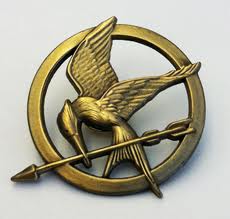
Normally I would stand by a simple truth; “The book is always better than the movie” but that is not always true. In the case of The Hunger Games, I’m not going to say the book is better than the movie.   I think they were both great but I can’t pick one over the other. If you haven’t been living under a rock, you would have heard of this book and the movie adaptation but just in case you haven’t, let me quickly sum it up. The Hunger Games is the story of a 16 year old girl that takes the place of her younger sister to compete in the annual televised event ‘The Hunger Games’. This is an event where a young boy and girl are called up randomly to participate in a fight to the death for survival for the entertainment of the rich and powerful.

Katniss is a strong character, with all the normal awkwardness you would expect from a teenager; having to deal with love, death and loneliness in this dystopian world that she lives in. But in the book it tends to focus a little too much on the cutesy teenage girl aspect and less on the darkness of her situation. The movie does have this same element but a lot of this has been cut down to make room for the main plot line.  When it comes to the violence, the book seems more violent and the movie felt a little anti climatic at the end. Also I’ve found in the movie the tributes were very two dimensional and very annoying but when reading the book I didn’t notice this at all. Capital’s fashion was terrible in the movie and I was glad I didn’t have to be subjected to seeing it while reading the book. In the end, the movie slightly departs from the book but it really sets up the next movie (If it gets made) really well.

While I’m talking about this movie, I want to know what was with all the racism with the twelve year old from Division 11? In the book it mentions she had dark skin but people seemed so shocked when in the movie she turned out to be an African American. It shouldn’t matter what colour her skin was all that should matter is that Amandla Stenberg played the role perfectly.

The faults I had with the movie balanced out my problems with the book. I don’t think I can pick one over the other. I’m interested in seeing how the series plays out as a movie adaptation but at the same time I don’t have much of an interest to continue the series. I think as a stand-alone book, it’s fantastic; but if I try to predict the rest of the series and all I can see are love-triangles, fighting authority and a lot more romance. If this isn’t the case, I might read the other books; but at the moment I just think it works better as a single story. Problem is, if they are making the movies I feel inclined to read the book before seeing the movie.


Past The Shallows by Favel Parrett

Posted April 20, 2012 by Michael @ Knowledge Lost in Literary Fiction / 0 Comments

Past The Shallows by Favel ParrettTitle: Past The Shallows (Goodreads)
Author: Favel Parrett
Published: Hachette, 2011
Pages: 272
Genres: Literary Fiction
My Copy: Personal Copy

Buy: Amazon (or visit your local Indie bookstore)

Past the Shallows tells the story of Miles and Harry, growing up in a remote Tasmanian fishing village with their father. While the book tries to deal with overcoming personal fears, loss of their mother and, more recently, their grandfather and trying to survive their bitter alcoholic father, this book tends to be far too familiar. When I first started reading this book I first thought it reminded me of The Shipping News by Annie Proulx, a glimpse of The Man Without a Face by Isabelle Holland (when talking about George) and  then it moved on to even more familiar territory which seems to be covered in just about every book and movie out there.

One of the main problems I had with this book was that I started off liking Miles and Harry but then, as I kept reading. I began to stop caring about them,  and in the end I really didn’t care about them at all. There were so many characters that could have been good but didn’t appear in the book to fully understand them. Mr Roberts was one example. I also spend a lot of time trying to work out Miles and Harry’s older brother Joe; I wasn’t sure whether to like him or hate him but in the end I just didn’t care. The stand out character for me in this book wasn’t a person but the ocean, the dark deeps that Harry feared wasn’t necessary a typical character but seemed to have the best personality in the book.

The novel seemed to be more a book of the bonds of brotherhood and family. The two boys are confronted with the painful family secrets while having to deal with their dad. Favel Parrett does a great job of turning the word ‘Dad’ into a chilling and sinister word that makes the actions of the father more impacting to the reader. The lifestyle of this small country town, while different to the one I grew up in brings back so many memories; small country show, show bags and farm animals.

Favel Parrett’s debut novel is at times gut wrenching and shocking but I never went away from this book feeling like I had just read something interesting. It all felt way too familiar and that left me wanting to read something new and maybe unpredictable. I adored the writing style in Past the Shallows, it was almost poetic and it just pushed me through this book with such ease; even in the parts of the book I wasn’t enjoying.

Nominated for the Miles Franklin award (an annual literary prize for the best Australian novel) this year I think the book stands a good chance. While I thought it was a decent read, I never felt emotional towards it; but I’m sure there were tears shed and hearts broken from many readers. I think the lyrical poses are enough to make this one of the better literary works in Australia from last year. Having said that the book is up against some other great novels (which I haven’t read yet) including All That I Am by Anna Funder and The Street Sweeper by Elliot Perlman; so I will be interested to see whether or not this book takes out the top prize.

I will admit that I don’t read nearly enough Australian novels; I’m still trying to play catch up with all the classics and other great literary works; but I do plan to fix that. Maybe when next year’s Miles Franklin short list is announced I will have a better idea of what books are worth reading. But for now I do believe that Past the Shallows is a great debut novel by Favel Parrett.  I’m looking forward to seeing what she comes up with next; hopefully another book that is hauntingly beautiful.

 This book was read as part of my local National Year of Reading program; I also live tweeted my way through this book and that can be found here; http://sfy.co/pJq


My Search for Good Steampunk Literature

Posted April 12, 2012 by Michael @ Knowledge Lost in Literature / 7 Comments

Steampunk and literature is an odd combination and I’ve often found it hard to find decent examples of this genre. It has gotten to the point where it is easier to look for the genre Alternate History instead of trying to find good Steampunk that isn’t the generic mass produced Young Adult novels. I’m not saying all Steampunk or YA novels are mass produced rubbish but when I look at the most popular Steampunk list on Goodreads I find the top ten are pretty much 4 different YA book series;

  • Parasol Protectorate series by Gail Carriger
  • Leviathan series by Scott Westerfeld
  • The Clockwork Century series by Cherie Priest
  • The Infernal Devices series by Cassandra Clare

I’ve not read many books from these series but I tend to think of those books are either Paranormal Fiction or Fantasy with very small elements of Steampunk. I know this genre is hard to categorise because it often features elements of science fiction, fantasy, alternate history, horror, and paranormal but from a literary point of view it’s hard to find to find exceptional novels in this genre. Often this genre is generalised as Victorian alternative history featuring anachronistic technology, or futuristic innovations.

So if we leave out the obvious influences, such as Jules Verne, H.G. Wells and even Mary Shelley are there any Steampunk novels that a wannabe literary snob like me would consider worthy? I can only think of two.

The Difference Engine by William Gibson & Bruce Sterling

Often considered one of the first Steampunk novels this had pretty much everything  I want in a Steampunk novel; the Victorian/Sci-Fi mix worked really well and it was nice to read a book with one of my heroes, Lord Byron, in it. The book follows a world changing with the invention of a mechanical and analytical computer. The book focuses not only on the technological boost but also the social change that come with it. Although at times it did drag on a little, this is definitely a recommended read for someone interested in getting a feel for the Steampunk genre.

Angelmaker by Nick Harkaway

Having recently mentioning this book in my trending books post, I thought Imight read this book before everyone else does. I’m glad I did. I hope this book gets read by many people; it has so much to offer. Angelmaker is a Steampunk adventure unlike anything I’ve read before, featuring a mystery involving Joe Spork the son of a gangster, a spy and his quest to stop the evil villain Shem Shem Tsien and his doomsday device. While this book  may feel more like a plot for a Bond movie the writing is what makes this book so great; while many people compare the style to Charles Dickens, I think that it was the Victorian writing style that made this book such a standout.

I’m interested in the Steampunk genre, so I would love to know what people think about it and what they would recommend to others. I will continue my search from great books,

even in the Steampunk genre and I hope to never rule out a popular YA books as good literature.


Cybersex with George RR Martin

Posted March 16, 2012 by Michael @ Knowledge Lost in Literature / 5 Comments

I’ve now read the first two books of The Song of Ice and Fire series (also known as Game of Thrones, thanks to the TV series) by George RR Martin. While I do like the epic story that is slowly coming together in this book, I have one big issue with these books. While reading the book I feel like I’m having cybersex with a creepy old man. This old man is living out all of his fantasies on to the pages of his book and I feel very very dirty when reading it. Every sick and twisted fantasy has come alive on the pages of these books, from lactating breasts, BDSM, rape and even incest. It sometimes feels like it’s a 15 year old writing the scenes but knowing he is now 65 years old doesn’t help at all. Lines like “It tastes salty sire; like the sea” doesn’t help his case and sound very tacky. I will continue reading the series; only to keep ahead of the television series but I’m not in a hurry for more cybersex.


Reamde and my Fears of Large Novels

Posted February 15, 2012 by Michael @ Knowledge Lost in Literature, Thriller / 5 Comments

reamdeI don’t normally read books that are over 1000 pages and after reading Reamde, I’m a little reluctant to read something this big again. Not that there was anything wrong with this book; but sitting at over 1100 pages, it was a big task chipping away through this book. Neal Stephenson provides a story full of nerdism, thrills and a lot of action, dipping into aspects of organised crime and terrorism. My first thought of this book was the MMORPG (Massively Multiplayer Online Role-Playing Game) game that this book is based around; every aspect of this game is covered in this book. It takes all the aspects he liked about World of Warcraft and gave it a face lift, threw out all the parts he didn’t like, even going to the extent of making the world geographically accurate for people interested in mining. But the underlining reason for T’Rain, is the gold farming market; while Blizzard tries to crack down on farming, this game is based around a potential money laundry scheme. While T’Rain was created for sinister reasons, the creation of the game and the employee of popular fantasy writers turned the game into a huge success. Just reading about this game made me want to play it. This game serves as a background for the main plot in Reamde.

While there is a lot happening in Reamde, the main plot is centred around a virus, which encrypts files and hold them for ransom for T’Rain gold. This virus affects a computer containing sensitive documents of the Russian Mob, who do not wish to pay the ransom but set out to hunt down the people behind the virus and make an example of them. Along the way many people become involved including the T’Rain founder, a T’Rain employee, some Chinese gold farmers/hackers, a Russian mercenary, a Hungarian hacker, the CIA, MI6 and some international terrorists.

While I enjoyed the ride that Reamde took me on, I can’t help thinking that there is a lot of fat that needs to be trimmed. I’m not sure if being a bestselling author Neal Stephenson had the freedom to fatten this book up, or the editors didn’t do a good job, or they intentionally left the book this long; but I think that this book could haveeasily been turned into a 700-800 page novel without losing any of the plot. While this book was really enjoyable for a nerd like me, I still can’t help but wonder; does it need to be this big?

Which brings me to the point of this blog post; do you find big novels daunting? I know some people prefer a longer novel, because they are not ready to leave a world so quickly; it’s possible these people are fast readers or not so easily distracted. I often think that I tend to get bored with the world, often wishing for it to end. This could be because I’m easily distracted, or because I’m impatient and want to move onto a new book; I often procrastinate reading by reading another book. I’m just curious how people view large novels; would you prefer them or do you try to avoid them? In the past I think I would avoid them, often dreading reading books that are more the 600 pages but I’ve come to the realisation that I can’t put them off for too long. My to-read pile is growing at an alarming pace and the amount of larger novels are making me feel a little uneasy.

In the past I think my average novel is about 280-300 pages long (thank goodness for pulp novels and their need to wrap up in under 300 pages) but I’ve had to push myself to tackle some of the bigger novels. There are too many classics that need to be read and there are a few recent releases that seem to be critically acclaimed that I’ve got my eye on. Personally my reading goal is 100 books a year but maybe next year I should focus on a page count instead of trying to push myself to read 100 books. Please let me know your thoughts of larger novels; I would love to know the pros and cons of them.


Homonyms

Posted February 7, 2012 by Michael @ Knowledge Lost in Linguistics / 2 Comments

Slightly off topic, but with the upcoming university studies, I may start talking about the beauty and complexity of the English language. I know most people know the basics but I’m writing this out of interest and as a refresher. We all have an idea what a homonym is, but do you know the difference between a homographs, homophones, heteronyms, polysemes and capitonyms? Well, there are only slight differences but I will try to explain them all now.

To begin with I just want to remind people what a Homonym is; a word that is spelt and pronounced the same but has different meanings. The word comes from the Greek word homonumos which means ‘having the same name’.

But that is the literal meaning; Homonym seems to also be an umbrella definition that includes other linguistic concepts that are related. Below are examples of them;

Homographs: these are normally words that are spelt the same regardless of their pronunciation.

Homophones: refer to words that share the same pronunciation regardless of their spelling.

Heteronyms: are subsets of homonyms; they are spelt the same but have a different pronunciation and often meaning (normally referred to as Heteronyms and Heterographs).

Polysemes: have different but related meaning; for example man (male) or man (the human species) or man (an adult male).

Capitonyms: are words have a different meaning when it capitalised; for example march (the rhythmical walk) and March (the third month of the year).

To make things easier here is a chart to help see the differences;

Term Meaning Spelling Pronunciation
Homonym Different Same Same
Homograph Different Same Same or different
Homophone Different Same or different Same
Heteronym Different Same Different
Heterograph Different Different Same
Polyseme Different but related Same Same or different
Capitonym Different when
capitalized
Same except for
capitalization
Same or different

While I knew the concepts of homonyms, I never realised there was so many different concepts that are related to it. Linguistics is normally divided into three different aspects of study; form, context and meaning. Even though homonyms are a very tiny fraction of the study of linguistics, I find it interesting that it seems to hit on all three parts of the science. I hope people have learned something new or at least found something interesting to think about.


Remakes and Modernisations

Posted December 14, 2011 by Michael @ Knowledge Lost in Literature / 8 Comments

With recent rumours of another American Psycho movie adaption, I thought I might throw my two cents in about remakes and modernisations. First of all, I’ll start with American Psycho; I’ve read the book and seen the 2000 cult classic. Whether you liked it or not, there is no denying that the movie captured the essence of the book, with all its darkness and satire. Also, let’s face it; can you really imagine anyone else but Christian Bale playing Patrick Bateman? Ellis has said he would approve of the remake if Miles Fisher plays the lead (if you have seen the music video ‘This Must Be The Place’ then you will know why). But I can’t see the remake working as it is said it will also be a modernisation; I don’t see how the dark comedy will translate at all.

Apart from this movie, there have been many books that have been remade into movies and modernised but how often does it really work? With superhero and comic book franchises, it works because there are so many different avenues and story lines to explore but with a book you really are bound to the same story.

This brings me to a modernisation that I’ve actually enjoyed, two in fact, both from the same book. This Book was Nathaniel Hawthorne’s classic novel ‘The Scarlet Letter’. The first modernisation was the film Easy A, which took the concept of The Scarlet Letter and transferred into a modern high school environment. This movie took the concept of adultery and the effects of passing judgment and applied it to the high school issue of bullying. It was incredibly main-stream but I enjoyed it none-the-less.

The second was something I’ve not seen before, I modernisation in book form; this was Hillary Jordan’s young adult novel ‘When She Woke’. Like most YA novels, this is set in a dystopian society in the not so distant future. In the world, The Church governs all and the church is pretty much like Westboro church. As a form of punishment Hannah Payne has her skin altered bright red so the world will know her sins. Now she has to live in a society that will judge her without knowing her.

The concept of remake of a remake or modernisation done like When She Woke is new to me and I wonder how many books are remakes or modernisations. Which brings me to another thought; what is the difference between a remake and a homage? The lines seem to blur between the two but I would love to know your thoughts in the comments below.