Format: Hardcover

Young Philby by Robert Littell

Posted February 12, 2013 by Michael @ Knowledge Lost in Thriller / 0 Comments

Young Philby by Robert LittellTitle: Young Philby (Goodreads)
Author: Robert Littell
Published: Bloomsbury, 2013
Pages: 261
Genres: Thriller
My Copy: ARC from Publisher

Buy: AmazonBook Depository (or visit your local Indie bookstore)

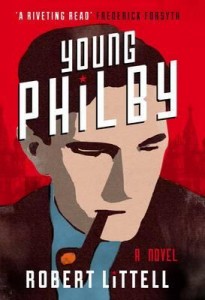
Kim Philby could possibly be the most notorious double agent in espionage history. Recruited by the Secret Intelligent Service during World War II, he began spying for the Russians on the British intelligence service. Robert Littell’s Young Philby follows what little we know about his early years up till what made him a great double (or should we say triple?) agent.

Kim Philby was a real high-ranking British intelligence officer who worked as a double agent serving as both an NKVD and KGB operative. Robert Littell takes what little we know about this famous spy and tries to recount a fictionalised version of his life, but does it really cover the truth? It’s hard to recount a story when you don’t know the real thoughts that went through the person’s head and I think this was the one major thing that was lacking. I can understand, being a fictionalised version of his life, the author didn’t want to speculate on his motivations, but I really wanted more on his psychological profile.

As an espionage novel goes, this is no John le Carré; there is a sense of complexity with the double agent idea but I found it really easy to follow. I love le Carré’s ability to write these massively complex espionage novels that really take you on a journey of the unexpected and I would have liked a bit more of that from Robert Littell but he was probably confined to the facts. This was a compelling read and I love a good spy story but I think the narrative did need a little more work to put it among the great espionage novels.

Fast pacedand shifting perspectives really helped driving this novel and the cover alone makes this book worth purchasing. If you don’t know much about the life of Kim Philby, this would be a good place to start; learn about the Cambridge Five, the defection to Russia or just explore a good cold war spy story. I’m glad I got a chance to read Young Philby; I didn’t know much about the man but he did have an interesting life. These fictionalised accounts of history may not be 100% accurate but they do make it easier to get a sense of what happened.


What I Talk About When I Talk About Running by Haruki Murakami

Posted January 26, 2013 by Michael @ Knowledge Lost in Non-Fiction / 0 Comments

What I Talk About When I Talk About Running by Haruki MurakamiTitle: What I Talk About When I Talk About Running (Goodreads)
Author: Haruki Murakami
Translator: Philip Gabriel
Published: Knopf Doubleday, 2007
Pages: 180
Genres: Non-Fiction
My Copy: Library Book

Buy: AmazonBook Depository (or visit your local Indie bookstore)

What I Talk About When I Talk About Running is a memoir by Haruki Murakami where he talks about his interest in running. From running for pleasure to competing in over twenty marathons and an ultramarathon. Part training log, travelogue and reminiscence, this is a memoir of Murakami’s passion for running.

Now I’m not a runner and I don’t think I ever will be but I like to read about people being passionate about a topic and although this was brief, the passion was not in short supply. Most people know Haruki Murakami for his postmodern novels which include Hard-Boiled Wonderland and the End of the World, Norwegian Wood, The Wind-Up Bird Chronicle and 1Q84. This is an unusual memoir, not just because it only focuses on one interest, but because I don’t think any other authors have written something like it.

The book tries to explore why he is so passionate about running and why he runs. For a non runner reading this book for its memoir aspects, it’s just interesting the approach he takes. It’s like seeing Murakami’s thought process on the page; not offering tips or anything, just being nostalgic about past runs or discussing plans for a marathon or just tracking his daily runs.

For me this is nothing special, but for people obsessed with running this would be an interesting read. I read just to see the passion he has towards running, as well as the fact it was mentioned in Metroland and I want to be a book hipster. I was surprised how well this worked, like a stream of conscious of Haruki Murakami’s love of running.


The Slap by Christos Tsiolkas

Posted January 25, 2013 by Michael @ Knowledge Lost in Literary Fiction / 53 Comments

The Slap by Christos TsiolkasTitle: The Slap (Goodreads)
Author: Christos Tsiolkas
Published: Allen & Unwin, 2008
Pages: 485
Genres: Literary Fiction
My Copy: Personal Copy

Buy: AmazonBook Depository (or visit your local Indie bookstore)

To celebrate Australia Day (January 26th) Book’d Out and Confessions from Romaholics have hosted a blog hop/giveaway. In celebration of Australian literature I am giving away a copy of one of my favourite Australian novel (open internationally).

At a suburban barbeque, one slap will change the lives of these people. Christos Tsiolkas unflinchingly looks at domestic life in the Australian suburbs in the twenty first century. The slap and its consequences cause everyone to question their own families and the way they live, their expectations, beliefs and desires. A gripping novel of loyalty and happiness, compromise and truth from the very start to the end.

You’ll either love it or hate it; Christos Tsiolkas’ controversial novel The Slap is heavy reading and very confronting and it all starts with a Slap. The Slap starts at a barbeque for group of family and friends, when one adult slaps an unrelated child the universal tension begins. The book changes perspectives of the different characters at the Barbeque to show different emotions and feelings about the events.

The Slap goes through topics like Discipline, Child Raising, Family Life, Adultery, Friends verse Family, Gossip and Multiculturalism. While the characters are extremely flawed and sometimes you want to slap them, don’t let that put you off. If you are not a fan of course language, be warned it does feature very heavily in this book. Apart from that the writing, the characters and plot are well crafted, I have noticed women seem to hate this book more than men, it could be because of the subject matter. But it doesn’t matter whether you think the child deserved to be slapped (He did), or if the adult should have known better (he should have) this book is going to challenge you in one way or another.

The Slap will play with your emotions all the way through this book and you will rage at the characters and want to slap them senseless. But the turmoil and the internal monologue of all the characters was done really well and makes for an excellent read. It’s like you have an intimate look into the head of all the characters involved in this one incident at a barbeque. It’s a compelling read all the way to the end.


To celebrate Australia Day, I am giving away a copy of this book to one of my lucky readers. Entries are open to all my readers as I plan to send a copy of this book via book depository, so if you would like to win a copy of this book, enter below.

a Rafflecopter giveaway

Make sure you pop over to Book’d Out to see the others involve in this blog hop with other chances to win.


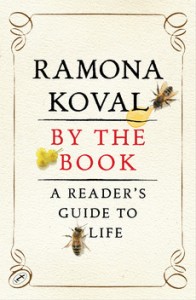
By the Book by Ramona Koval

Posted January 2, 2013 by Michael @ Knowledge Lost in Non-Fiction / 0 Comments

By the Book by Ramona KovalTitle: By the Book (Goodreads)
Author: Ramona Koval
Published: Text, 2012
Pages: 239
Genres: Non-Fiction
My Copy: Personal Copy

Buy: Book Depository (or visit your local Indie bookstore)

Ramona Koval’s By the Book: A Reader’s Guide to Life is a memoir of the author’s reading journal. From her mother’s influences to her first library card all the way though to her career as a literary journalist. Ramona Koval writes this as a love story to the books that have influenced her life and career.

Not only is this book very easy to read, it might even offer some interesting titles for you to read. I know my ‘to read’ list suffered especially with the introduction to Richard Holmes; I’ve now added a heap of his books to my wish list. I almost read this in a sitting and I would’ve if I didn’t have to go to bed. I was drawn to Kaval’s literary journey and the reasoning behind reading some of the books.

It might be just me but I find people’s reading histories really interesting and give me a little confidence in my own journey. Personally I think I have an interesting journey and this book as inspired me to document it in better detail. I’ve started to build a slight obsession with memoirs about people’s reading history’s having recently read Books: A Memoir by Larry McMurtry and moving onto Through the Window by Julian Barnes after finishing this one. I have asked my readers for recommendations similar to these books in a recent blog post so I hope to read many more memoirs of bibliophiles.

By the Book is an entertaining read with some real gems; like borrowing Kafka from a library at a very young age and asking her mother to buy her a copy of the Kama Sutra. By the Book is not only an entertaining reading journey but hopefully it will inspire reader to share their own history with the world; I know I would like to read about them. It might be just my love of books and books about books but I really enjoyed this biography and recommend it to all serious readers.


The Cocktail Waitress by James M. Cain

Posted October 28, 2012 by Michael @ Knowledge Lost in Pulp / 0 Comments

The Cocktail Waitress by James M. CainTitle: The Cocktail Waitress (Goodreads)
Author: James M. Cain
Series: Hard Case Crime #109
Published: Hard Case Crime, 2012
Pages: 270
Genres: Pulp
My Copy: Hardcover

Buy: AmazonBook Depository (or visit your local Indie bookstore)

Joan Medford is a young beautiful woman in an unhealthy marriage, but when her husband dies in a suspicious car accident, does that mean her life will improve? No, she now has to take a job as a cocktail waitress to make ends meet and somehow make enough money to finally be able to take her son back from her mother in law. On the job, two men take a special interest in her, one really gets Joan’s blood racing and the other is a very wealthy older man who tips very generously if she gives him her attention.

It’s no secret that I’m a huge James M. Cain fan; The Postman Always Rings Twice and Double Indemnity are two classic noir novels that I highly recommend but there is another side to this author. Cain wrote a very emotionally charged noir novel called Mildred Pierce which makes up the top three essential Cain novels. The Cocktail Waitress really reminds me of Mildred Pierce, you have all the noir elements plus the female protagonist not to mention the emotionally charged plot. This is a previously unfinished novel by Cain but don’t let that worry you, he did finish the novel but he had not finished the revisions before he died, but it took over thirty years for this book to finally come out. The editor, Charles Ardai used Cain’s notes to finish the revisions of this book and it still reads and feels very much what you expect from a book by this Noir master. He was even quoted in saying; “Together with Dashiell Hammett and Raymond Chandler, James M. Cain is universally considered one of the three greatest writers of noir crime fiction who ever lived, and for fans of the genre, The Cocktail Waitress is the Holy Grail. It’s like finding a lost manuscript by Hemingway or a lost score by Gershwin – that’s how big a deal this is.”

Joan is everything you want from the protagonist; strong, witty and beautiful. She knows what she want (her son back) and she is determined to make her life better on her own. But the drama of working in a cocktail lounge might be a little too much for her. Her mother in law is now convinced that cocktail waitress is just code from something more. Joan’s on a mission and won’t let anyone or anything stand in her way; which makes her a great femme fatale.

The Cocktail Waitress is a fast paced, hard hitting novel with complexity; a well-crafted book that was just a joy to read.  I loved the sinister elements that transported this from just an emotional journey to a classic James M. Cain style noir novel. I’m so glad that Charles Ardai took the time and effort in finishing this book so we can all enjoy it. If you liked Mildred Piece then you are going to love reading The Cocktail Waitress.

“Here, long after anyone would have expected it, is the voice of James M. Cain, as fresh and as relevant as ever. The Cocktail Waitress will involve you, and then shock you with an ending you’ll never forget. This is a true rarity: a reader’s novel that’s also a literary event.” – Stephen King


The Hanging Garden and Unfinished Novels

Posted May 28, 2012 by Michael @ Knowledge Lost in Historical Fiction / 0 Comments

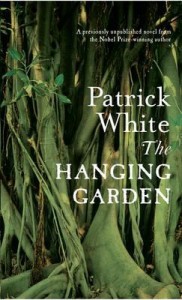
The Hanging Garden and Unfinished NovelsTitle: The Hanging Garden (Goodreads)
Author: Patrick White
Published: Knopf Doubleday, Random House, 2012
Pages: 224
Genres: Historical Fiction
My Copy: Personal Copy

During my last book club gathering, we were talking about Patrick White’s unfinished novel; The Hanging Garden and this lead into a discussion of books being published after the author dies which the author never wanted to see the light of day. Patrick White never wanted this novel released; I believe he did tell someone to burn it because it wasn’t finished or anywhere near ready for readers. There are heaps of authors that have had books released that were never meant to be released including; Kurt Vonnegut, Virginia Woolf, Mark Twain, Ernest Hemingway, Leo Tolstoy and the most famous of them all was Franz Kafka’s The Trial. This does lead to some interesting topics; do you think books that the author never intended to be released should be published? Are publishers just using them as a money making gimmick? And lastly, if those manuscripts were submitted to a publisher by an unknown author, would they still be published?

Patrick White is a two time Miles Franklin award winner and has also won the Nobel Prize for Literature. His unfinished novel The Hanging Garden was only just recently published; it feels like an old novel in the sense that, while it’s nicely written; nothing ever happens in the book. This is very much a character driven book, focusing on the two characters and a wild garden. I think I’d be alright with reading a book like this if I didn’t have the feeling that the author hated every single one of his characters; he was mean and cruel to them all, not just the key characters. As a general rule I love dark and flawed characters but this just felt mean and even the attempts of being erotic felt awkward. I spent the whole book waiting for something to happen and I was left disappointed. Also, as this is an unfinished novel, I don’t know what the overall goal was with this book and I get the feeling that maybe Patrick White doesn’t either. There are parts of this book that are beautifully written and then there are parts that felt like the author’s ramblings. This is supposed to be an unedited book but while I think there was some editing done there are also parts of the book that clearly feel unedited. Including a few paragraphs that didn’t make sense and had no punctuation and then some notes to himself reminding him to explore or research some parts later. While I’m not a fan of this book, I think a lot of people might get a kick out of it. Either for the memories of the time and the place; the memorable characters, or just to see the thought process of once of Australian top authors of all time.

On this day 100 years ago, Patrick White was born


The Red House by Mark Haddon

Posted May 18, 2012 by Michael @ Knowledge Lost in Literary Fiction / 0 Comments

The Red House by Mark HaddonTitle: The Red House (Goodreads)
Author: Mark Haddon
Published: Jonathan Cape, Random House, 2012
Pages: 272
Genres: Literary Fiction
My Copy: ARC from Publisher

Buy: Amazon (or visit your local Indie bookstore)

It’s hard to review a book like this; Mark Haddon is a very talented writer and he has some brilliant techniques employed into this novel. However, I can’t help comparing this book to The Curious Incident of the Dog in the Night-Time and ultimately I think this book lacked something to make this book great. With the huge success of The Curious Incident of the Dog in the Night-Time, I can’t help but think that Mark Haddon has gotten overly confident with his writing. While it was refreshing and enjoyable to read a book with so many interesting writing techniques; I never really connected with the plot or the characters. I was so excited about reading another book by this author and I feel I made a rookie mistake by going into a book with such high expectations.

The Red House is the story about a well off physician, Richard, and his new family (recently married a woman with a sixteen year old daughter) taking a vacation. Richard invites his sister Angela and family to join them as they hadn’t seen each other since the funeral of their mother, fifteen years ago. Angela’s husband Dominic and three children are not as well off as Richard and took advantage of the offer as they wouldn’t be able to afford a vacation any other way. Together for a week in a rented cottage in Wales starts to show the cracks in everyone’s relationship and exposes just how dysfunctional the family really is.

Mark Haddon is contently switching between narrators in this book, I think I counted eight different points of views throughout this book (might be more) and one of those was an all-seeing third person narrative. With the narrative always changing and each character only giving a glimpse of an insight, this book started off a little confusing and hard to keep track of all of the main characters. One thing I’ve found that Haddon did in this book as well as The Curious Incident of the Dog in the Night-Time that I really liked was that he wasn’t afraid to expose the inner voice of each character and allowing the reader an insight into the flaws and thoughts of each one of the characters. There were also a lot of references to pop-culture within this book that was quite enjoyable to read; especially all the references to each book the main characters were reading.

The Red House was actually a nice easy read and I was surprised how fast I got through this book; this could have been all the blank pages throughout the book. While I never really connected with this book the writing styles used throughout this book were interesting and almost experimental at times. Some of it worked and some of didn’t, I think Mark Haddon was overly confident when he wrote this book and it seemed to come through in the novel. I’m sure many people will love and enjoy this book and don’t let my opinion stop you from reading it. For me I struggled making that connection and I tried and tried to enjoy this book but it just didn’t quite get there.


The Sense of an Ending by Julian Barnes

Posted May 13, 2012 by Michael @ Knowledge Lost in Literary Fiction / 0 Comments

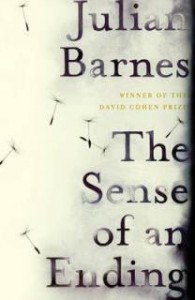
The Sense of an Ending by Julian BarnesTitle: The Sense of an Ending (Goodreads)
Author: Julian Barnes
Published: Jonathan Cape, 2011
Pages: 150
Genres: Literary Fiction
My Copy: Hardcover

Buy: Amazon (or visit your local Indie bookstore)

When I see a book that is only 150 pages, I automatically think the book won’t have much to offer, but then I remember some great novellas like, George Orwell’s Animal Farm, Anthony Burgess’s A Clockwork Orange, Robert Louis Stevenson’s Dr Jekyll and Mr Hyde and now Julian Barnes’s A Sense of an Ending. Winner of this year’s Man Booker prize A Sense of an Ending is the story I always wanted an angsty book about the teenage years to be like. I think back to Catcher in the Rye and think The Sense of an Ending is everything that classic should have been, all Catcher left me with was the need to slap Holden repeatedly.

The book follows the story of Tony Webster forty years later who receives an unexpected letter which leads him to remember his life forty years ago. The obsession with girls he had, his very first relationship and the memories of talking about philosophy, classical music and literature with his friends. This book is beautifully written, it was a real pleasure to read; it was intelligent, witty and I’d highly recommend it to everyone.


The Man in the High Castle by Philip K. Dick

Posted August 11, 2010 by Michael @ Knowledge Lost in Classic, Science Fiction / 0 Comments

The Man in the High Castle by Philip K. DickTitle: The Man in the High Castle (Goodreads)
Author: Philip K. Dick
Published: Vintage, 1962
Pages: 259
Genres: Classic, Science Fiction
My Copy: Personal Copy

Buy: Amazon (or visit your local Indie bookstore)

For those who haven’t read this month’s Book club book, the alternate reality classic The Man in the High Castle by Philip K Dick, I will try not to give away too much of the story. Most of you are aware of the basic plot outline, but I will just give you a quick overview before talking about the interesting concepts I found within the book. Set in 1962, 14 years after a longer World War II, life is under totalitarian Fascist imperialism as the war was won by Imperial Japan and Nazi Germany. Having divided the world the Axis Powers are now conducting intrigues against each other in North America.

Alternate Reality

With Japan and Germany being in power, the world is a much different place; more of a dystopian society, where everyone is considered racially superior to the Americans. The last remaining Jews are in hiding and continually being hunted down. The book actually deals with justice and injustice; gender and power; the shame of cultural inferiority and identity; and the effects of fascism and racism upon culture.

Metafiction

The Man in the High Castle focuses the story around a popular and banned novel written by Hawthorne Abendsen (The Man in the High Castle). The book entitled The Grasshopper Lies Heavy portrays an alternate reality where  Japan and Germany lost the war and America and England become the victors. Changing racialist-cultural tensions and creating a liberal, democratic, capitalist society.

I Ching

In this novel the I Ching (Book of Changes) is often consulted by the characters as an oracle. I Ching is an ancient Chinese book of divination and was used by Philip K Dick to determine the plot particulars. In two separate interviews Philip K Dick has said;

“I started with nothing but the name, Mister Tagomi, written on a scrap of paper, no other notes. I had been reading a lot of Oriental philosophy, reading a lot of Zen Buddhism, reading the I Ching. That was the Marin County zeitgeist, at that point; Zen Buddhism and the I Ching. I just started right out and kept on trucking.”

“In the event, he blamed the I Ching for plot incidents he disliked: “When it came to close down the novel, the I Ching had no more to say. So, there’s no real ending on it. I like to regard it as an open ending.”

Philip K Dick’s classic science fiction novel has a lot of interesting aspects to it. I think it could easily be one of those books you could spend hours discussing all the little characteristics to it. Another book that challenges your views on society by showing what life could be like if the war turned out differently. Reflected above were just the major aspects to this book.


Alice’s Adventures in Wonderland by Lewis Carroll

Posted June 27, 2010 by Michael @ Knowledge Lost in Childrens, Classic / 0 Comments

Alice’s Adventures in Wonderland by Lewis CarrollTitle: Alice's Adventures in Wonderland (Goodreads)
Author: Lewis Carroll
Published: Penguin, 1889
Pages: 239
Genres: Childrens, Classic
My Copy: Personal Copy

Buy: Amazon (or visit your local Indie bookstore)

One thing I think Lewis Carroll did right in Alice’s Adventures in Wonderland was the way he wrote a book suitable for kids and still enjoyable for adults. The characters in the book are so amazing that you can’t help but fall in love with them. Stand out characters for me included the philosophical Cheshire Cat and the melancholy Mock Turtle. The whole story was witty and full of amusing puns and is considered one of the best examples of literary nonsense. Alice’s Adventures in Wonderland overall is an enjoyable, well written and constructed tale and a surprisingly enjoyable book to read. I could possibly go on about the philosophy, the homages, or even the reflects to English society in the 19th century; but I will leave all that for the comments below. Read the book, enjoy the book and discuses the book. I really think this is one of those brilliant books that has so many elements worth discussing.